Kuching Travel Guide: Sarawak’s Capital & Gateway to Borneo Rainforest (2026)
Your complete kuching travel guide for 2026. Explore Bako National Park, see orangutans at Semenggoh, discover White Rajah heritage, and taste UNESCO-recognized Sarawak cuisine in Borneo's most charming city.
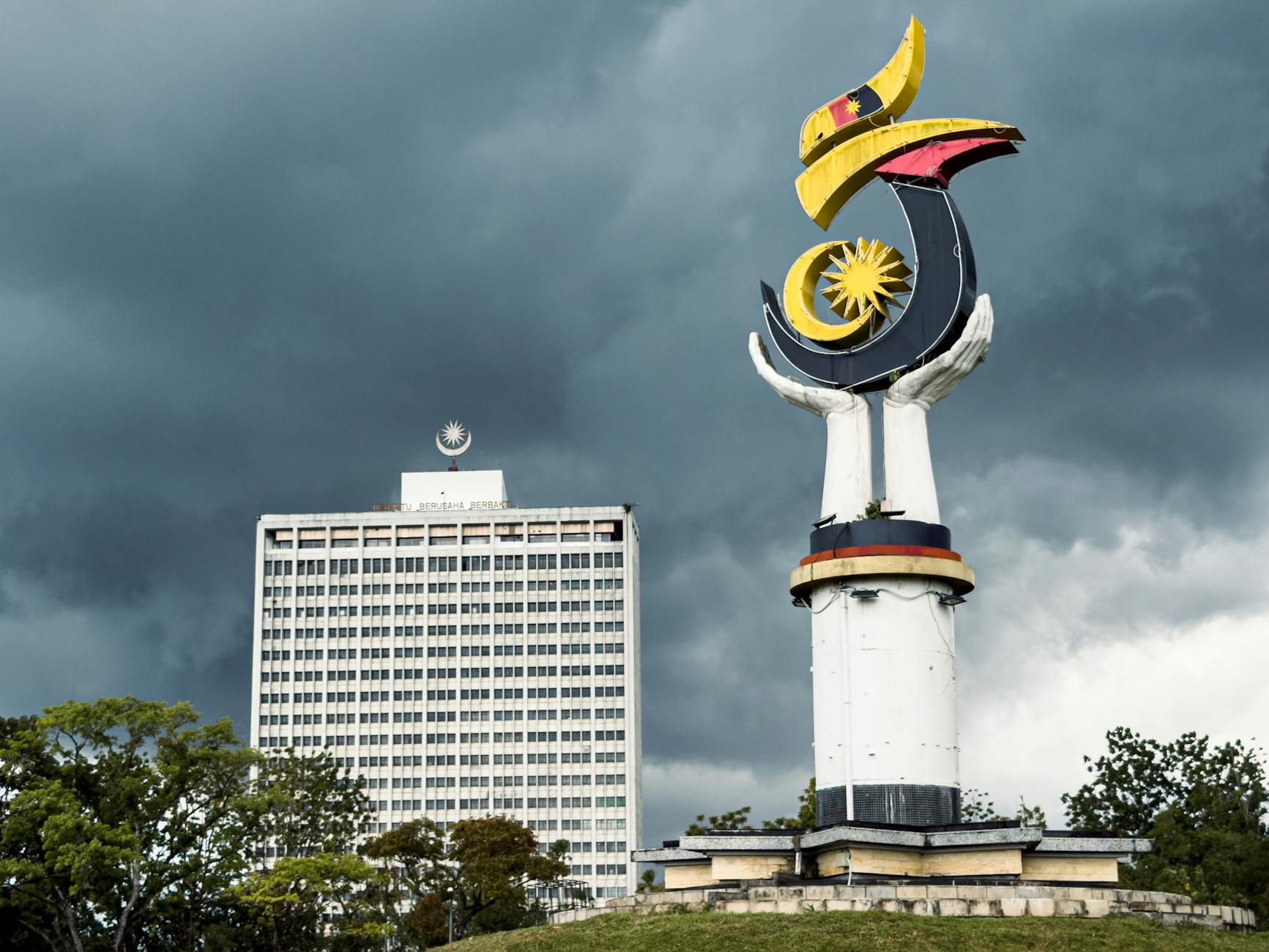
Kuching is the kind of city that surprises people. The Sarawak capital earned UNESCO Creative City of Gastronomy status in 2021 — the first in Malaysia — for a food scene driven by 40-plus indigenous ethnic groups and a Chinese community whose culinary traditions run back generations. Add wild orangutans 24 kilometres from the city centre, a colonial waterfront built by a British adventurer who became king of his own tropical realm, and Bako National Park’s improbable concentration of wildlife in 27 square kilometres, and you have one of the strongest arguments for crossing the South China Sea from the peninsula. Unlike Kuala Lumpur or Penang, Kuching rewards without crowds.
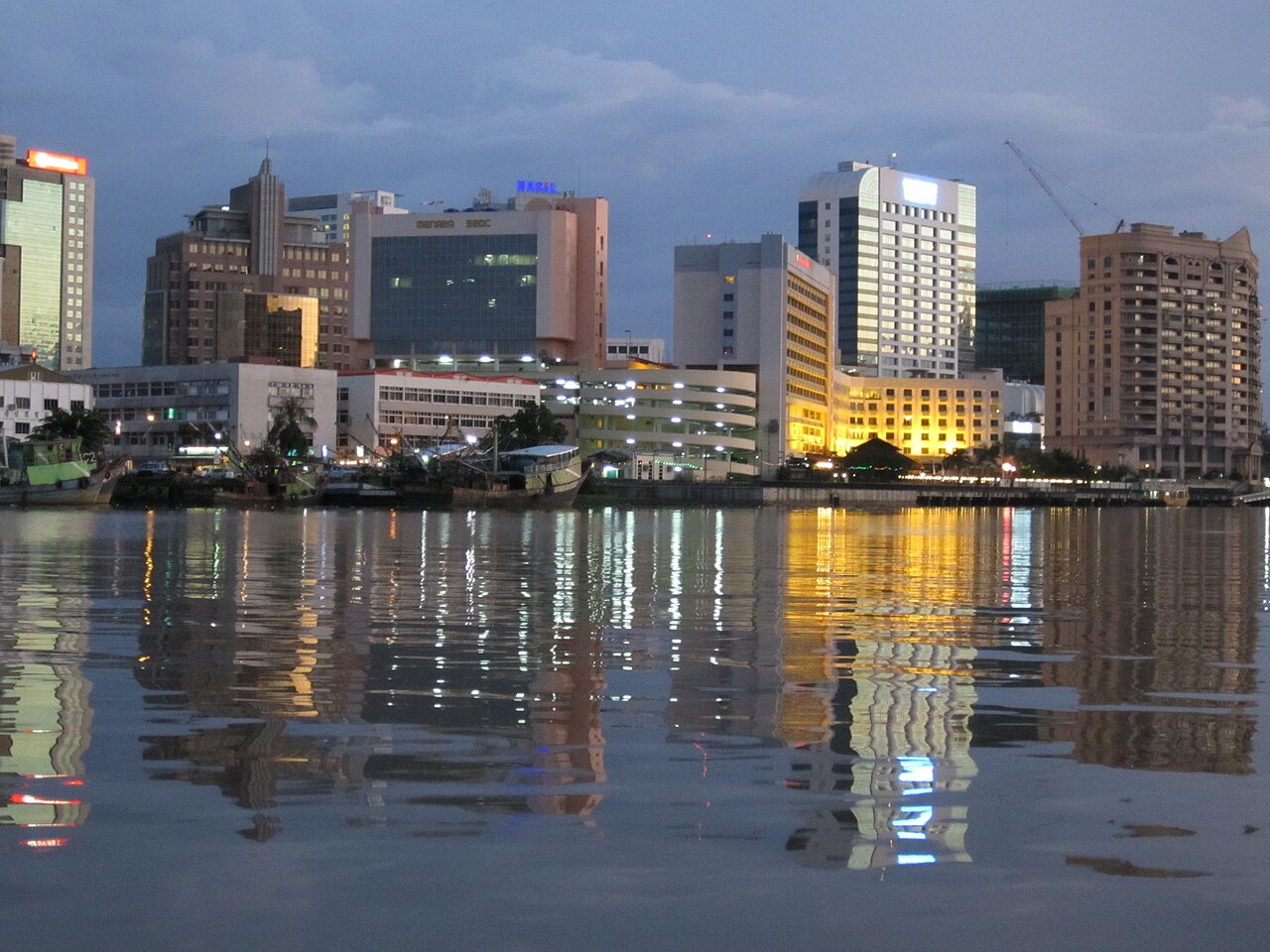
Bako National Park: Borneo Wildlife in 27 Square Kilometres
Bako is Sarawak’s oldest national park — just 37 kilometres from Kuching — and the most productive single day trip for wildlife in Malaysian Borneo. That 27-square-kilometre peninsula at the mouth of the Bako and Kuching rivers packs in seven distinct ecosystems: mixed dipterocarp rainforest, mangrove, beach vegetation, cliff vegetation, kerangas heath forest, padang grasslands, and peat swamp. Kuching is among the most likeable cities in our ranking of the best places to visit in Malaysia.
Getting There
Drive 37 kilometres from Kuching to Bako village jetty (around 45 minutes), then a 20-minute boat ride to park headquarters at Telok Assam. The boat ride earns its reputation — sandstone sea cliffs sculpted into arches and stacks line the approach, and the mangrove channels are atmospheric in morning light. Boats cost about RM60 per boat return, shareable with other visitors. Aim to arrive at the park by 8 or 9 AM.
Proboscis Monkeys and Wildlife
The proboscis monkey — pot-bellied, bulbous-nosed, endemic to Borneo, and classified as endangered — is the star. Around 275 live in Bako, and they are reliably spotted around headquarters and along the Telok Paku and Telok Delima trails, particularly late afternoon when troops settle in riverside trees for the night. Long-tailed macaques patrol the headquarters buildings with complete boldness. Silver langurs, bearded pigs, monitor lizards, hornbills, kingfishers, and serpent eagles fill out the wildlife list. The flora matches it: carnivorous pitcher plants, wild orchids, and the distinctive vegetation of the kerangas heath forest.
Trails
Sixteen marked trails range from 30-minute walks to full-day treks. The Lintang Loop (3 to 4 hours, moderate) circuits multiple ecosystems with good wildlife odds. Telok Paku is short, flat, and the most reliable route for proboscis monkey sightings. Tajor Waterfall requires 3 to 4 hours each way through dense rainforest. Telok Limau — a secluded beach accessible only via a challenging full-day trail — is the reward for serious hikers. Ask park staff about saltwater crocodile risk before swimming at any beach.
Park entrance fee is RM20 for foreign adults. Overnight accommodation at the park is strongly recommended — dawn and dusk are when wildlife is most active, and these windows are only accessible to overnighters. Book through the Sarawak Forestry website well in advance.
Semenggoh Wildlife Centre: Orangutans Half an Hour Away
Established in 1975, Semenggoh is 24 kilometres south of Kuching and one of the most accessible orangutan encounters in all of Borneo. The centre rehabilitates animals that were kept as illegal pets, orphaned, or found injured. Successfully rehabilitated orangutans roam freely in the surrounding forest but return to the centre during scheduled feeding sessions.
Feeding sessions run at around 9 AM and 3 PM. Rangers place fruit on platforms; the orangutans descend through the forest canopy dramatically. A large adult male arriving overhead is genuinely striking — these animals are powerful and the canopy descent is nothing like a zoo enclosure. Morning sessions are busier but often more productive. Arrive 30 minutes early for a good viewing position. Entry is RM10 for foreign adults. Grab from Kuching costs about RM20 to RM30. Best sightings are April to November; during the fruiting season (roughly November to February), natural food abundance in the forest means the orangutans are less likely to come to the platform.
The White Rajah Legacy: Kuching’s Colonial History
From 1841 to 1946, Sarawak was ruled as a personal kingdom by the Brooke family — the White Rajahs. James Brooke, a British adventurer, helped the Sultan of Brunei suppress a rebellion and was granted Sarawak’s governorship as reward, subsequently expanding it through three generations of family rule. The colonial architecture they left on Kuching’s waterfront is among the most distinctive in Southeast Asia.
The Kuching Waterfront
A 900-metre promenade along the southern bank of the Sarawak River, lined with colonial buildings, restaurants, craft stalls, and gardens. The best evening walk in Kuching — sunset light falls on the north bank buildings, and the traditional tambang wooden boats crossing for RM1 add to the atmosphere. Musical fountains, cultural sculptures, and an observation tower mark the route.
Fort Margherita and the Brooke Gallery
Built in 1879 by Charles Brooke and named after his wife Ranee Margaret, Fort Margherita was designed to guard the river approach against pirates. The whitewashed fort sits on a north-bank hill, reached by tambang and a short walk through the Malay kampung. Inside, the Brooke Gallery chronicles the dynasty through artifacts, photographs, and interactive displays — the best single introduction to Sarawak’s unusual colonial history.
The Old Courthouse and the Astana
The Old Courthouse (1874) is the most impressive colonial structure on the south bank — a Baroque-inspired complex with a clock tower that served as the Brooke administrative centre. It now houses a tourism office, galleries, and the Ranee boutique hotel. The Astana, a three-bungalow palace built in 1870 as Charles Brooke’s wedding gift to Ranee Margaret, sits on the north bank and is now the Governor of Sarawak’s official residence. Not open to the public, but easily admired from the waterfront.
Cat Statues and the Cat Museum
Kuching means “cat” in Malay, and the city leans into it. Cat statues appear at intersections, along Jalan Padungan, and scattered through neighbourhoods. The Cat Museum in the Kuching North City Hall (4 kilometres from the centre) houses over 4,000 cat-related artifacts across four galleries. Lighthearted, and a good 45-minute stop for families.
Sarawak Cultural Village: Seven Indigenous Communities
Thirty-two kilometres from Kuching at the foot of Mount Santubong, the Sarawak Cultural Village is a living museum representing seven ethnic communities: Iban, Bidayuh, Penan, Orang Ulu, Melanau, Malay, and Chinese. Guided tours move through authentic reconstructed longhouses and traditional houses where community members demonstrate weaving, cooking, music, and daily activities.
At the Iban longhouse — reached via a notched log staircase — you encounter drums, gongs, Pua Kumbu weaving demonstrations, rice wine, and the hanging skulls from the headhunting era. At the Bidayuh house, you try blowpipe shooting. The Orang Ulu house showcases beadwork and wood carving. The visit ends with a 45-minute cultural dance performance featuring each community’s traditional dances to live music. Allow 2 to 3 hours total. Entry RM90 for foreign adults, RM57 for children. The village is also the venue for the Rainforest World Music Festival in June or July — one of Borneo’s most celebrated cultural events.
What to Eat in Kuching
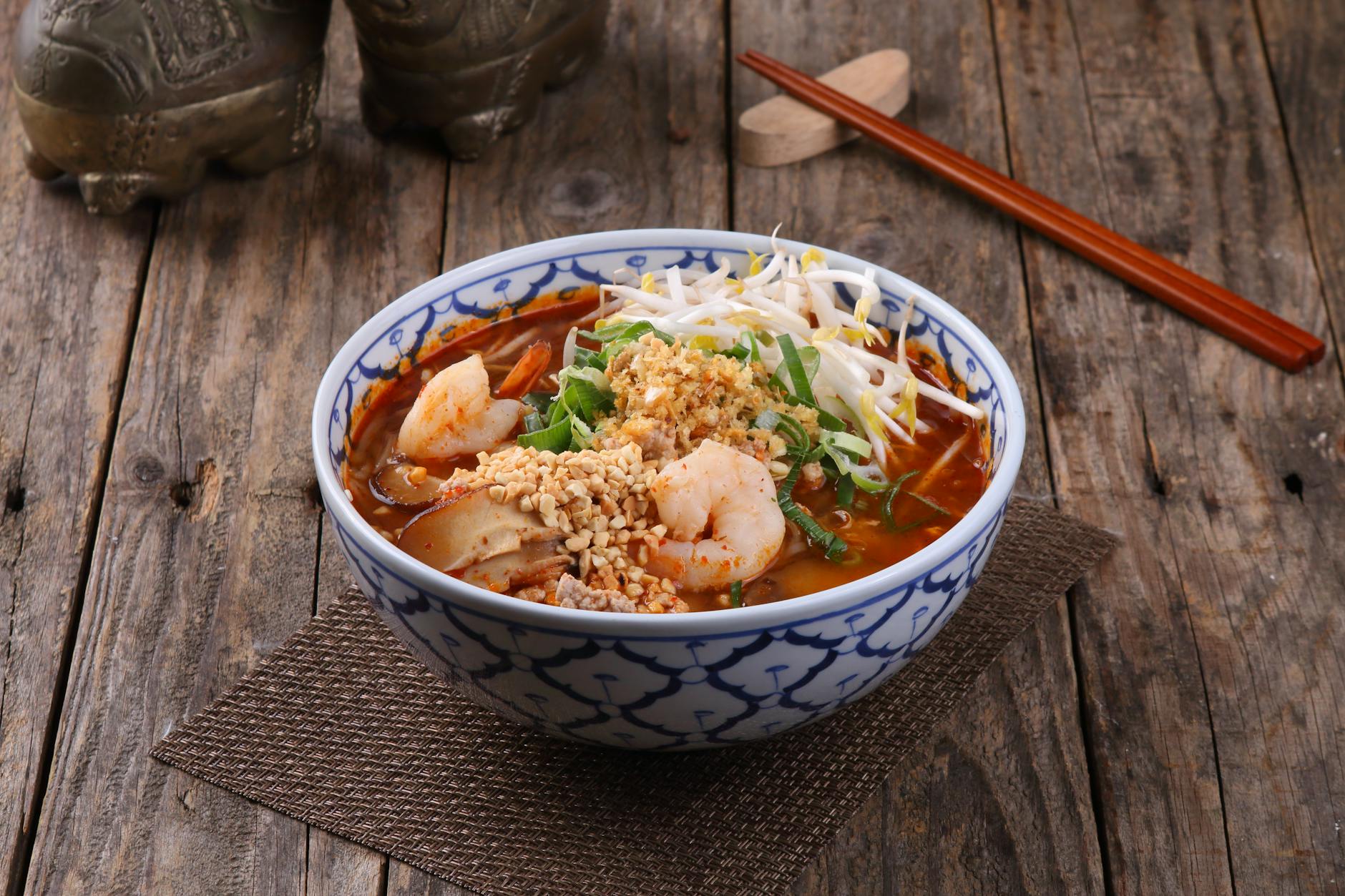
The UNESCO gastronomy designation is not honorary. Kuching’s food is genuinely extraordinary — driven by the diversity of Malay, Chinese, Iban, Bidayuh, Melanau, and other indigenous culinary traditions layered over generations in one city.
Sarawak Laksa
The city’s signature dish: a spicy noodle soup built on a base of sambal belacan, tamarind, garlic, galangal, and lemongrass, enriched with coconut milk. Served with rice vermicelli, prawns, shredded chicken, egg strips, fresh coriander, and lime. Simultaneously spicy, sour, creamy, and deeply savoury. Anthony Bourdain declared it should be the breakfast of gods. Chong Choon Cafe, Choon Hui Cafe, and Mom’s Laksa are the benchmark stops.
Kolo Mee
Springy egg noodles tossed in pork lard, shallot oil, and soy sauce, topped with minced pork, char siu, and sometimes wonton dumplings. Simple, addictive, and argued about passionately by locals as to which kopitiam does it best. Noodle Descendants and Hon Hin Cafe are the consistent recommendations.
Manok Pansoh, Midin, and Umai
Manok Pansoh (bamboo chicken) is a traditional Iban and Bidayuh dish: chicken, lemongrass, ginger, and tapioca leaves stuffed into a bamboo tube and roasted over an open fire. The bamboo imparts a subtle woody fragrance to the meat. Find it at Lepau Restaurant, which specialises in indigenous Dayak cuisine. Midin stir-fry uses a wild jungle fern unique to Sarawak — crunchy, nutty, stir-fried with garlic and belacan. Umai is the Melanau answer to ceviche: raw fish marinated in lime juice with shallots, chili, and salt.
Kueh Lapis Sarawak and Sarawak Pepper
Kueh Lapis Sarawak — the layered butter cake built in meticulous multicoloured strata — is Sarawak’s most famous sweet and an excellent edible souvenir. Sarawak pepper (black and white) is internationally sought after by chefs; a bag of genuine Sarawak pepper from the market is lightweight and worth far more than airport gift versions.
Where to Eat
Top Spot Food Court on the roof of a multistory car park is Kuching’s most famous seafood spot — fresh fish cooked to order, open-air, with city views and prices that stay honest. James Brooke Bistro on the waterfront handles both local and Western dishes with river views. Lepau Restaurant is the place for authentic Dayak food. Chong Choon Cafe is the laksa institution. Any kopitiam on Carpenter Street or Jalan Padungan handles breakfast kolo mee and teh tarik competently.
Getting to Kuching
By Air
Kuching International Airport (KCH) is 11 kilometres from the city centre; Grab or taxi costs RM25 to RM35. Direct flights from KL take about 1 hour 45 minutes; AirAsia, Malaysia Airlines, and Batik Air operate multiple daily services. Budget fares start from RM100 to RM250 one way when booked ahead. Direct connections also link Kuching to Kota Kinabalu, Johor Bahru, Penang, and internationally to Singapore and Pontianak in West Kalimantan.
Many travellers visit both Kuching and Kota Kinabalu on a Borneo trip — flights between the two cities are short (about 1 hour 15 minutes) and reasonably priced. If you are combining east and west Malaysia on a single itinerary that includes Langkawi or Melaka, an open-jaw flight (fly into KL, out from Kuching, or vice versa) removes backtracking entirely.
By Land from Kalimantan
Kuching connects by road to Pontianak in West Kalimantan via the Tebedu-Entikong border crossing. Express buses cover the route in 8 to 10 hours — useful for travellers combining Malaysian and Indonesian Borneo on a single overland journey.
Getting Around Kuching
The city centre is compact and walkable — most hotels, restaurants, museums, and waterfront attractions sit within easy walking distance. Grab handles anything beyond the centre for RM5 to RM15. Tambang boats cross the Sarawak River for RM1 per trip, reaching Fort Margherita and the north bank. Car rental works for wider Sarawak exploration. For guided day trips to Bako, Semenggoh, and more remote sites, Kuching has a well-developed tour operator infrastructure covering everything from budget group trips to private customised excursions.
Where to Stay
Budget (under RM100/night): Singgahsana Lodge and Marco Polo’s Guesthouse near Carpenter Street are the established backpacker choices, both within walking distance of the waterfront. Budget hotels along Jalan Padungan offer private air-conditioned rooms from RM50 to RM90.
Mid-range (RM100-RM350/night): The Ranee Boutique Suites in the Old Courthouse complex is the most atmospheric option — heritage building, central waterfront location, excellent breakfast. Meritin Hotel offers modern rooms at strong value. Riverside Majestic Hotel provides river views at mid-range prices.
Luxury (RM350+/night): Hilton Kuching is the premier city hotel with river-view rooms and a large pool. The Waterfront Hotel overlooks the Sarawak River directly. For resort-style accommodation outside the city, Cove 55 at Santubong is a secluded coastal property near the Sarawak Cultural Village and Damai Beach.
Day Trips from Kuching
Kubah National Park (22 km): A compact rainforest reserve known for its palm and orchid diversity, crystal streams, and natural bathing pools. The Matang Wildlife Centre nearby rehabilitates orangutans and sun bears. Good for a half-day combined with Semenggoh.
Gunung Gading National Park (100 km): The best place in Sarawak to see the Rafflesia — the world’s largest flower, growing to one metre in diameter, blooming for only a few days at a time. Sightings are never guaranteed but park staff will know when one is blooming. Good jungle trekking regardless.
Annah Rais Bidayuh Longhouse (1 hour south): A real, living longhouse community — not a cultural village recreation. Walk the open bamboo verandah, visit the pangah head house, and bathe in the natural hot springs nearby. Guided tours available; a small entrance fee supports the community directly.
Practical Tips
Best time: March to October for the most reliable weather. The wet season (November to February) brings afternoon showers but mornings stay clear and temperatures remain consistent at 23 to 33 degrees Celsius year-round.
How many days: 3 to 4 days minimum — one day each for the city waterfront, Bako, and Semenggoh, plus time for the food scene. A full week adds the Cultural Village, Kubah, and Gunung Gading at a more relaxed pace.
Budget: Excellent value by any measure. Budget travellers manage RM120 to RM180 per day on accommodation, food, transport, and basic activities. Meals at kopitiams run RM8 to RM20 for something genuinely good. Mid-range travellers budget RM250 to RM400 per day for comfortable hotels and guided tours.
Cultural respect: Sarawak has over 40 indigenous ethnic groups. Remove shoes before entering longhouses, ask permission before photographing people, and accept food or drink offered as hospitality — refusing can cause offence. Follow your guide’s direction in all cultural settings.
Currency and connectivity: Malaysian Ringgit throughout. ATMs are available in the city centre; cash is essential for markets, food stalls, tambang boats, and park fees. Prepaid SIMs (Celcom, Digi, Maxis) at the airport run RM20 to RM40 for a tourist data package. WiFi is good at hotels and cafes; limited at Bako and remote parks.
Kuching sits at the far end of most Malaysia itineraries — after the peninsula highlights — and it rewards the extra flight. Those who include it alongside Cameron Highlands and Melaka on a two-week Malaysia trip consistently rate it as the most memorable destination of the trip. Borneo’s Sarawak capital is less polished than Penang, less frenetic than KL, and unlike anywhere else on the route.
What to Buy in Kuching
Kuching is one of the best places in Malaysia for genuine handcraft items from living indigenous traditions. The craft market on Main Bazaar opposite the waterfront is the best single stop: fixed prices, reliable provenance, and a good range across ethnic groups. Items worth looking for include hand-woven Pua Kumbu fabric from Iban weavers (large pieces are expensive for good reason — they take weeks to produce), hand-carved wooden masks from Orang Ulu traditions, rattan baskets from Bidayuh craftspeople, and Penan beadwork.
Sarawak pepper — black and white — is the most practical souvenir: a sealed bag bought at the weekend market costs far less than the same pepper sold at international gourmet retailers. Kueh Lapis Sarawak in gift-boxed form travels well and makes a strong impression. Tualang wild honey from Sarawak’s forest is available at some health food shops and the Sunday market; harder to find but genuinely distinctive in flavour. The Sunday Market at Jalan Satok (Saturday evening into Sunday morning) is the largest and most local market in Kuching — produce, plants, jungle materials, and breakfast food stalls with almost no tourist infrastructure, which is exactly the point.
Photography in Kuching
The waterfront at golden hour — Old Courthouse clock tower, Fort Margherita across the river, tambang boats on the water — is the signature Kuching shot. Best light is 30 to 60 minutes before sunset from the south bank promenade. The Astana on the north bank catches evening light well when viewed from the waterfront opposite.
At Bako, the boat approach through sandstone sea cliffs provides extraordinary landscape photography — book the earliest morning boat for the best light on the rust-red cliff faces. Proboscis monkeys in the riverside trees at dusk need a long lens (200mm minimum), but the canopy-above-water compositions are worth attempting. At Semenggoh, position near the feeding platform with the same lens. The animals descend close enough for environmental shots showing the full forest canopy context.
Kuching for Families
Kuching handles families well. Bako’s boat ride, beach, and bold macaques around headquarters are immediately engaging for children. Semenggoh’s orangutan feeding sessions have the drama of animals descending from the canopy rather than animals behind glass. The Cat Museum is a self-contained 45-minute family stop. Sarawak Cultural Village’s hands-on demonstrations — blowpipe shooting, fire-starting — directly engage older children in ways that passive museum visits rarely manage.
The waterfront is child-friendly at any hour. The RM1 tambang boat crossing is exciting for young children. Top Spot Food Court’s open-air setting and wide menu suits groups with varying preferences. The city’s low crime rate and compact walkable centre let families move around independently without significant logistical overhead.
Combining Kuching with the Rest of Malaysia
Kuching sits on a different island from the peninsula, which means it functions as a separate chapter of a Malaysia trip rather than a day extension. The most efficient structure is to fly from KL to Kuching (or vice versa) and treat Sarawak as a dedicated segment of 4 to 7 days before returning to the peninsula or continuing onward to Kota Kinabalu in Sabah.
For a two-week Malaysia itinerary, a natural routing is KL (2 nights) then Cameron Highlands (2 nights) then Penang (2 nights), then fly to Kuching for 3 nights before flying back to KL for departure. This covers highland cool air, the west-coast heritage food scene, and Borneo’s Sarawak capital without retracing steps. The Kuala Lumpur travel guide covers transport connections from the capital in full. If the itinerary extends to Langkawi, an open-jaw flight from Penang with a return from Kuching saves backtracking to KL mid-trip. Combining Kuching with Melaka works the UNESCO double — two very different expressions of Malay-Chinese-colonial cultural layering, one on the peninsula and one deep in Borneo.
Safety and Health in Kuching
Kuching is one of the safest cities in Malaysia — crime rates are low, the local population is welcoming, and the tourism infrastructure is well established. Standard travel precautions apply: watch your belongings in crowded market areas, use Grab or authorised transport rather than unmarked vehicles, and follow safety instructions during nature excursions. At Bako, always check with park staff before swimming at any beach — saltwater crocodiles are present. On jungle trails, leech socks or tucked trousers are advisable after rain. Carry water on any hike longer than an hour.
Health-wise, no vaccinations are specifically required for Sarawak beyond standard travel recommendations (hepatitis A, typhoid, tetanus). Malaria risk in Kuching city itself is negligible, though travellers heading into remote forested areas further into Sarawak’s interior should check current recommendations with a travel health clinic before departure. Dengue fever exists in Malaysia; use insect repellent and wear long sleeves in the early morning and evening when mosquitoes are most active.
1 note