Penang Food Guide: Why It’s Asia’s Street Food Capital (2026)
The ultimate Penang food guide covering essential dishes from char kway teow to asam laksa, the best hawker centres in George Town, Nyonya cuisine, kopitiam culture, Michelin-recognized stalls, and practical tips for navigating Asia's greatest street food destination.
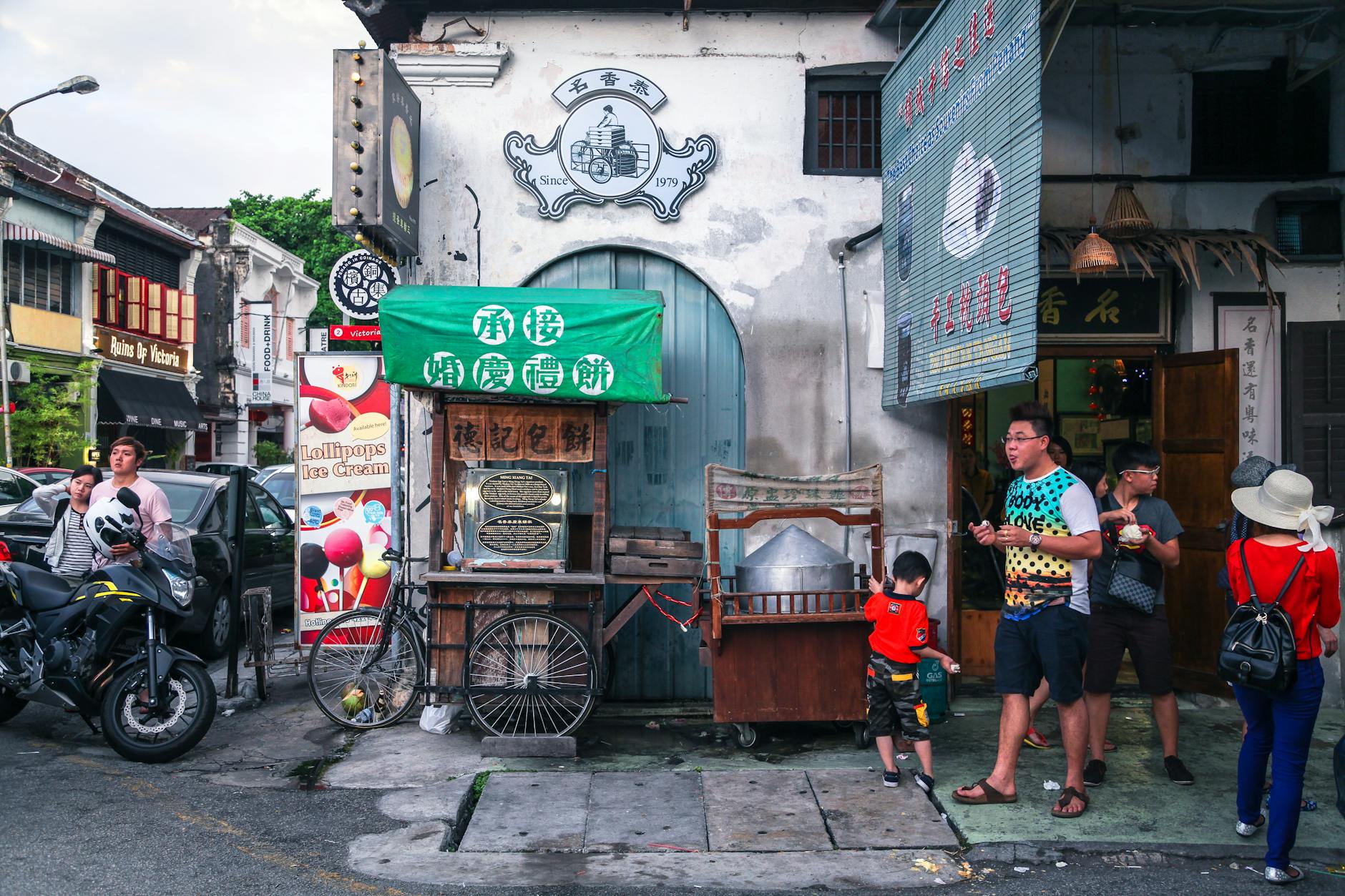
Ask any Malaysian where the food is best and you’ll hear a pause before the answer. It almost always ends with Penang. The island sits off the northwest coast of the peninsula and packs more hawker stalls, more generational recipes, and more sheer eating culture into its 300 square kilometres than anywhere else in the country. Hokkien, Teochew, Malay, Tamil, and Nyonya traditions collide here — and then blend in ways that happened only in Penang.
This guide covers the essential dishes, the neighbourhoods worth knowing, prices, timing, and practical logistics. For a broader look at must try malaysian food across the whole country, that guide covers all fifty dishes. For how the food differs state by state, see the malaysian food by region breakdown. Penang leads the regional section of our Malaysian food guide.

What Makes Penang Food Different
Penang was a major trading port for centuries. Hokkien and Teochew Chinese, Tamil and Malayali Indian traders, Malay communities, and later British colonists all arrived and stayed — and they cooked. Over generations these traditions didn’t merely coexist. They borrowed, argued, and fused into something new.
The Nyonya or Peranakan cuisine came from Chinese immigrants marrying into Malay families, combining Chinese technique with Malay spice. The nasi kandar tradition was built by Tamil Muslim traders who carried their pots through George Town on a shoulder pole. Hokkien immigrants slow-cooked prawn heads into the broth that became the island’s most iconic noodle soup. Every dish here has a story and a community behind it.
Competition between stalls drives quality hard. Many are run by the same family for three or four generations. The grandfather cooked it one way; the granddaughter cooks it almost the same way, but sharper. That relentless refinement is what you taste.
Essential Penang Dishes
Char Kway Teow
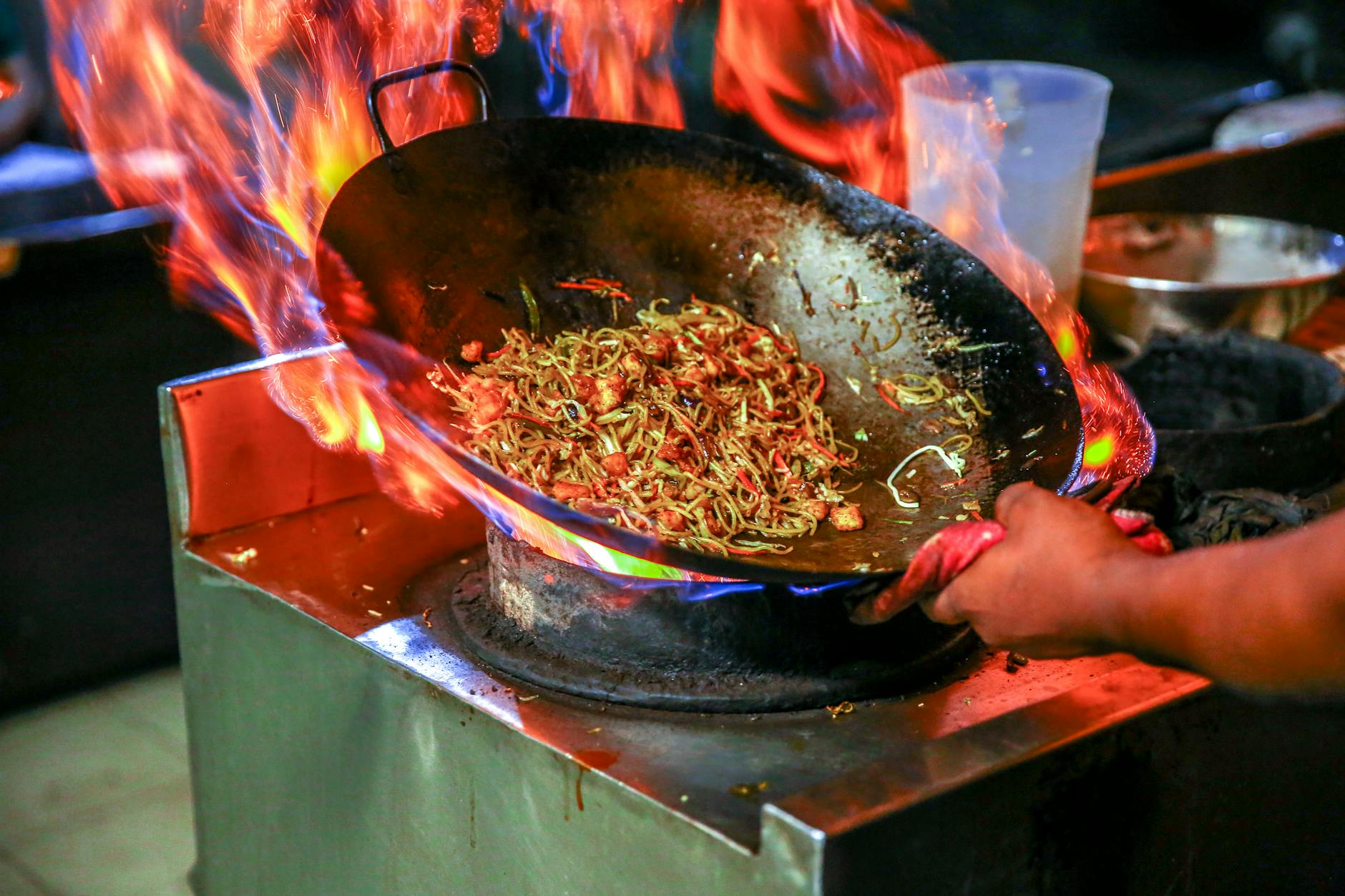
Flat rice noodles, a charcoal flame, prawns, cockles, Chinese sausage, bean sprouts, egg, chives, and dark soy. On paper it sounds simple. In practice it’s one of the most technically demanding dishes in Malaysian hawker cooking. The entire game is wok hei — the scorching, slightly smoky quality that only happens when a skilled cook works a well-seasoned wok over intense charcoal heat. You cannot replicate it on a gas ring.
The most discussed stall is Siam Road Charcoal Char Kway Teow, where veteran hawker Tan Chooi Hong has been cooking the same dish for decades. Queues routinely run an hour. Ah Leng Char Koay Teow does a duck egg version — richer and creamier — that has its own devoted following. A plate runs RM8–12. Go early in the session; quality sometimes dips when the coal starts to fade.
Asam Laksa
This is not a coconut curry soup. Penang asam laksa is built on a tangy fish broth — mackerel, tamarind, lemongrass, torch ginger flower, and herbs — simultaneously sour, spicy, and deeply savoury. Thin rice vermicelli in a bowl, topped with cucumber, pineapple, raw onion, mint leaves, and a spoonful of thick shrimp paste stirred through. CNN Travel ranked it seventh on their world’s 50 best foods list. It deserves that and more.
The Pasar Air Itam laksa stall, near the base of Kek Lok Si Temple, has served what many consider the definitive version for decades. A bowl costs around RM6. Joo Hooi Cafe on Penang Road — operating since 1970 — has a Michelin Bib Gourmand and draws both locals and food tourists. Weekday mornings have shorter queues.
Hokkien Mee
Don’t confuse this with KL Hokkien mee. In Penang, Hokkien mee is a prawn noodle soup — the broth built from hours of simmering prawn heads, prawn shells, and pork bones until it turns deep orange and intensely savoury. Yellow noodles and rice vermicelli, topped with prawns, pork slices, water spinach, and hard-boiled egg. Sambal on the side for heat.
The stock is everything here. Stalls that rush it produce thin, flat broth. The best versions — found at New Lane and along Penang Road — have a richness that lingers. RM6–10 a bowl.
Nasi Kandar
Penang’s Tamil Muslim community built this tradition. Steamed rice, loaded with multiple curries ladled over it — fried chicken, fish curry, squid, vegetable dishes — the gravies mixing together on the plate. The banjir style means extra curry poured over everything until the rice is drenched. The layering creates flavour combinations that no single curry could produce alone.
Hameediyah Restaurant on Lebuh Campbell is Malaysia’s oldest nasi kandar establishment. Its recipes haven’t changed. Line Clear, despite the queue and the no-frills setup, draws serious crowds for its curry selection. Both are open through the night.
Cendol
Shaved ice, coconut milk, gula melaka palm sugar syrup, and green pandan rice flour jelly strips. Cold, creamy, slightly earthy, and sweet. On a hot Penang afternoon — which is every afternoon — a bowl of cendol is an act of self-preservation.
Penang Road Famous Teochew Cendol has been operating since 1936. The mark on the wall is a famous mural of a child eating cendol. A bowl is RM4.50 and the queue forms all day. Haji Cendol and Coconut Shake (open since 1927) offer variations including cendol durian and cendol kacang merah.
Oh Chien (Oyster Omelette)
Fresh oysters fried with egg and starch into a crispy, gooey pancake. Penang’s version uses large oysters, and the edges should be properly crispy while the centre stays soft and custardy. Served with chili dipping sauce. Bee Hooi Coffee Shop has been serving it for over thirty years. New Lane Hawker Centre at night, with the stall lit up and the hot plate sizzling, is the best setting to eat it.
Curry Mee
Spicy coconut curry broth with yellow noodles and rice vermicelli, topped with tofu puffs, cockles, shrimp, cuttlefish, bean sprouts, and mint leaves. The sambal served alongside is what regulates heat — add it incrementally. A rich, complex bowl, not a light lunch option.
Rojak and Pasembur
Two different things under the same general name. Fruit rojak is a mix of tropical fruits and vegetables dressed in a thick, dark shrimp paste sauce — sweet, spicy, and pungent. Indian rojak (called pasembur in Penang) is a salad of deep-fried fritters, tofu, prawn crackers, hard-boiled eggs, and vegetables drenched in sweet-spicy peanut sauce. Kareem Pasembur Rojak on Lebuh Union has been operating since 1945, makes its own sauce, and runs around twenty-five different items.
Chee Cheong Fun
Penang’s version is distinct. Silky steamed rice noodle rolls served with a generous slathering of thick dark prawn paste called hae ko, chili sauce, and sesame seeds. The smooth noodles against the intensely savoury shrimp paste is a Penang-specific flavour combination you won’t find replicated elsewhere. Best served fresh, still warm from the steamer. Look for vendors at morning markets or on mobile carts at the edges of wet markets.
Popiah
Fresh, unfried spring rolls: julienned jicama, carrots, bean sprouts, egg, tofu, and prawns, rolled in a thin wheat flour skin brushed with sweet sauce and chili paste. The filling is cooked slowly until it develops a deep, savoury sweetness. The seafood popiah stall at Medan Selera Padang Brown has been serving their version for over sixty years. Not fried — soft, delicate, and entirely different from the fried spring roll you might be expecting.
Wan Tan Mee
Springy egg noodles tossed in dark soy, sesame oil, and lard, topped with char siu pork, leafy greens, and plump dumplings filled with minced pork and shrimp. The noodles should bounce. The dry version is more popular than the soup version. RM6–9 at hawker stalls across George Town.
Nasi Lemak
Present on every Malaysian table nationwide, but Penang’s versions have their own character. Ali Nasi Lemak is famous for plates starting at RM2 — coconut rice, sambal with a distinctly Penang spice profile, crispy anchovies, peanuts. For a deeper look at the dish itself and its variations across the country, the nasi lemak guide covers every style.
Dim Sum
Weekend morning dim sum is a ritual in Penang. Restaurants like Tai Tong and Zim Sum open at 6 AM for steamer baskets of har gow prawn dumplings, siu mai, char siu bao, and cheong fun. The quality rivals cities where dim sum costs three times as much. A full dim sum breakfast for two runs RM25–40.
Where to Eat in Penang: Area by Area
George Town Historic Centre
The UNESCO World Heritage zone is the centre of gravity for Penang’s food scene. Armenian Street, Chulia Street, and Penang Road form a tight triangle where dozens of celebrated stalls sit within easy walking distance of each other.
Kimberley Street is worth anchoring an evening around. The cluster of stalls here — duck kway chap noodle soup, chicken feet and kway teow soup, charcoal char kway teow, and traditional si koh soup dessert — has earned multiple Michelin Bib Gourmand recognitions. String lights, colonial shophouses, and the smell of charcoal: it’s the Penang food experience as advertised. Lebuh Keng Kwee nearby has the famous Teochew cendol stall, a good asam laksa shop, and a kopitiam with outstanding char kway teow — all within a few hundred metres.
Gurney Drive Hawker Centre
The most famous and most visited hawker centre on the island. Around a hundred stalls along the seafront promenade, covering the full range of Penang’s dishes. The sea breeze and sunset views add something to the experience. Prices run slightly higher than at neighbourhood centres because of the location and foot traffic. Arrive before 6 PM to avoid the worst of the evening queue.
New Lane (Lorong Baru)
Around 4 PM every afternoon the street closes to traffic and hawker stalls set up on both sides. Char kway teow and oh chien here are among the best on the island. Plastic stools, open sky, locals and visitors mixed together — this is the more atmospheric version of Penang hawker eating, without the organised structure of Gurney Drive.
Air Itam
At the base of Penang Hill and near Kek Lok Si Temple. Locals argue the asam laksa here beats anything in George Town. Prices are lower, the crowd is more neighbourhood than tourist, and the stalls also do solid Hokkien mee, chee cheong fun, and morning market fare. Worth the extra twenty minutes from the city centre.
Balik Pulau
On the western side of the island, this quiet rural area is known for its durian orchards and a laksa that locals quietly insist beats everything else on the island. The pace here is completely different — no tourist infrastructure, just genuine kampung eating. Worth a half-day trip if you have the time.
Batu Ferringhi
The beach resort strip has a nightly market along Jalan Batu Ferringhi with local hawker food alongside the souvenir stalls. Long Beach Cafe does beachfront seafood. Food here skews more toward tourist tastes, but the evening atmosphere is easy and the variety is reasonable for a night when you don’t want to travel back into George Town.
Nyonya Cuisine in Penang
Nyonya or Peranakan cooking deserves time on its own. Chinese technique applied through Malay spices, herbs, and ingredients — the result is neither fully Chinese nor Malay, and it’s unlike anything you can get elsewhere. Must-try dishes include Nyonya laksa, inche kabin spiced fried chicken, jiu hu char stir-fried jicama with shredded cuttlefish, pie tee crispy pastry cups, and the range of kuih traditional cakes. Auntie Gaik Lean’s Old School Eatery has Michelin recognition for its authentic Nyonya cooking. Several heritage restaurants in George Town hold recipes that have been passed through families for generations.
Penang’s Drinks and Kopitiam Culture

Kopitiam Coffee
The traditional kopitiam coffee shop is as central to Penang’s food culture as the hawker stalls themselves. Kopi is coffee beans roasted in butter and sugar, producing a smooth, rich brew with a flavour profile unlike Western-style espresso. The vocabulary takes five minutes to learn: kopi-o is black with sugar; kopi-o kosong is black no sugar; kopi-c uses evaporated milk; kopi-gao means extra strong. Soft-boiled eggs and kaya toast alongside is the classic Penang breakfast, RM5–7 total.
Many of the island’s best hawker stalls operate within kopitiams — the coffee shop provides tables and drinks while independent food stalls set up inside. Understanding this arrangement is essential for navigating Penang’s food scene. When you sit in a kopitiam, you order drinks from the kopitiam operator and food from the individual stalls.
Nutmeg Juice
Unique to Penang and virtually impossible to find anywhere else. Made from the flesh of the nutmeg fruit — the spice that once drove colonial trade routes through this port — it tastes somewhere between cola and cinnamon, slightly sweet and spiced. Served ice-cold, sometimes mixed with sour plum. Order it at a hawker stall along Gurney Drive. It’s RM3–5 and you won’t find it again when you leave the island.
Teh Tarik
Strong black tea mixed with condensed milk, poured back and forth between containers held at arm’s length until it froths. At a busy mamak stall the performance is part of the order. The pulling aerates the tea, cools it to drinking temperature, and creates a thick froth on top. Sweet, creamy, strong. Order it with roti canai. RM2–3.
Other Drinks Worth Ordering
Air mata kucing (dried longan and winter melon) is a cooling drink at most hawker stalls. Fresh sugarcane juice pressed with lime is sold at stalls throughout the island. Barley water, plain or with winter melon, is a traditional cooling option. And ask for a Michael Jackson — the local name for soy milk mixed with grass jelly — which is exactly as strange and good as it sounds.
Michelin Recognition
The 2026 Michelin Guide to Malaysia gave Penang 74 entries: two Stars, 33 Bib Gourmand awards, and 39 Selected listings. For a city where most celebrated food costs under RM15, this is a significant validation. The Bib Gourmands are particularly relevant for hawker tourists — they highlight the stalls and kopitiams that serve outstanding food at street prices.
Kimberley Street’s hawker cluster holds multiple Bib Gourmands. Joo Hooi Cafe’s asam laksa on Penang Road is recognised. Several char kway teow specialists and Nyonya restaurants round out the list. That said, some of the island’s finest food comes from stalls that have no guide recognition at all. The Michelin list is a starting point, not the full picture.
Food Prices and Budget
Most hawker dishes cost RM5–12, drinks RM2–5. A full day of eating — breakfast, a morning snack, lunch, afternoon kopi, dinner, and a hawker centre wander — runs RM35–50 per person. That’s roughly USD 8–11.
To make that concrete: roti canai and teh tarik for breakfast at RM5, a bowl of cendol mid-morning at RM4.50, asam laksa for lunch at RM6, afternoon kopi and kaya toast at RM5, char kway teow for dinner at RM10, and Gurney Drive rojak and a drink in the evening at RM12 — comes to RM42.50 for an entire day of eating at places that have been running for decades. The comparison with similar food cultures in Tokyo or Hong Kong is stark. Penang is remarkable value.
Mid-range Nyonya restaurants and heritage dining spots run RM30–70 per person. Upscale waterfront and hotel dining goes RM100 and above. For most visitors the hawker route gives better food and better value than anything in those upper price bands.
How Long to Spend in Penang for Food
Three to four days at minimum. Rushing is counterproductive — the best food in Penang requires queuing, and eating too fast between meals defeats the purpose. Spread the essential dishes across meals over three days: one day focused on George Town’s Kimberley Street and Penang Road area, one day covering Air Itam, Gurney Drive, and New Lane, and one day for nasi kandar breakfast, Nyonya lunch, and an evening market.
If Penang is part of a broader Malaysia trip, our kuala lumpur food guide covers the next major eating city in depth, while the guide to malaysian street food maps the hawker culture across the full country — Ipoh, Malacca, Kuching, and beyond.
Penang Food Festivals
The George Town Festival (typically August) is an international arts event with food programming woven through it. The Penang International Food Festival runs for a month and covers cooking demonstrations, food walks, and chef collaborations. George Town Heritage Day on July 7 celebrates the city’s UNESCO status with street festivals centred on hawker food and cultural performances.
Ramadan brings bazaar markets with spreads of Malay food and dishes cooked only during the fasting month. Chinese New Year and Deepavali each have their own food traditions, with special menus and seasonal treats at hawker stalls and restaurants. Timing a visit around any of these adds a layer to the experience.
Practical Tips for Eating in Penang
Cash and Payment
Carry ringgit in small denominations. Most hawker stalls are cash only. ATMs are widely available through George Town; money changers on Chulia Street and Lebuh Pantai are competitive. Some newer centres accept e-wallet payments via Touch ‘n Go or GrabPay, but cash is the safe default.
Timing
Breakfast stalls often open at 6 AM and close by mid-morning. Dim sum restaurants fill up before 9 AM on weekends. Dinner stalls begin around 5 PM; the evening rush hits 7–9 PM. Famous stalls close on specific days — check before making a special trip. Weekday mornings have shorter queues than weekend mornings at almost every celebrated stall.
Queues and Tables
Half-hour to hour queues at famous stalls during peak hours are normal. Visit slightly before or after the main meal rush where possible. Table sharing with strangers is expected at busy hawker centres — ask to join a partially occupied table and it’s fine. The tissue packet system reserves tables: placing a packet of tissues on a table signals it’s taken and everyone respects this unwritten rule.
Food Tours
Heritage on a Plate and A Chef’s Tour are among the well-regarded guided options. A tour typically costs RM150–250 per person and covers six to ten stops over three to four hours, with the guide providing context on the vendors, techniques, and history behind each dish. Useful for first-time visitors who want orientation before going solo.
Penang’s food culture isn’t preserved behind glass somewhere — it’s what the island does every day, at every meal, across every community. A plate of charcoal char kway teow at Siam Road, a bowl of asam laksa at Air Itam, a cendol on Penang Road at 3 PM: these are the things people come back for. And they do come back. Usually more than once.
For the Penang travel guide covering beaches, heritage sites, and logistics beyond food, that guide handles the broader trip planning.
Getting Around the Penang Food Scene
George Town is walkable for the core food areas, but Penang is still an island and some of the best eating is spread out. A Grab ride from George Town to Air Itam runs RM8–12. Gurney Drive is about RM10–15 from the heritage zone by Grab. Batu Ferringhi is 30–40 minutes north — worth it for an evening market, not practical for a quick meal. Balik Pulau on the western side requires either a rental car or a Grab with a specific destination in mind.
Renting a bicycle works well for the George Town UNESCO core — the streets are relatively flat and the heritage zone is compact. Many kopitiams open before dawn, so a morning cycling loop hitting a breakfast stall before 7 AM, a dim sum restaurant at 8 AM, and a cendol queue at 10 AM is entirely achievable and deeply satisfying.
Halal and Dietary Options in Penang
Muslim visitors will find extensive halal options throughout Penang. Nasi kandar restaurants are inherently halal and operate around the clock. Mamak stalls serve halal roti canai, mee goreng, and teh tarik at all hours. The Malay hawker stalls at Gurney Drive and neighbourhood markets are halal-certified. Look for the halal certification displayed at the stall or ask directly — the phrase halal tak? (is it halal?) is universally understood.
Vegetarians have good options at Indian restaurants for banana leaf rice and thosai, at Chinese vegetarian restaurants concentrated around Penang Road and Kimberley Street, and at hawker centres where specific stalls are clearly vegetarian. Yong tau foo is customisable and easy to eat meat-free. For the full picture on vegetarian eating across Malaysia, the must try malaysian food guide flags which dishes are naturally plant-based.
A Day-by-Day Eating Itinerary for Penang
Day 1 — George Town core: Start at a kopitiam on Lebuh Chulia for kopi and kaya toast by 7:30 AM. Walk to Kimberley Street for mid-morning chee cheong fun or a bowl of duck kway chap. Lunch at Joo Hooi Cafe for asam laksa. Afternoon cendol at Penang Road Famous Teochew Cendol. Dinner at New Lane for char kway teow and oh chien under the open sky.
Day 2 — Nasi kandar and seafood: Breakfast at Hameediyah for the original nasi kandar — arrive before 9 AM to beat the queue. Walk the Lebuh Keng Kwee area for a second breakfast of popiah if you have room. Lunch at a Penang Road kopitiam for Hokkien mee. Afternoon at Gurney Drive: satay, rojak, fresh coconut. Dinner at a seafood restaurant near Batu Ferringhi or back at Gurney for the full hawker spread.
Day 3 — Nyonya and Air Itam: Weekend morning dim sum at Tai Tong or Zim Sum (get there by 8 AM). Late morning Grab to Air Itam for the market laksa. Afternoon rest — you’ll need it. Early dinner at Auntie Gaik Lean’s for Nyonya cooking, then a walk back through George Town’s lit-up streets for a bowl of cendol or ais kacang as a final dessert.
Three days structured this way gives you the essential stalls, the key neighbourhoods, and enough pacing to actually enjoy each meal rather than rush through them. Food in Penang is worth slowing down for.
2 notes