Vegetarian Food in Malaysia: The Complete Guide for Plant-Based Travelers
Malaysia offers incredible vegetarian and vegan food options, from Indian banana leaf rice and Chinese Buddhist mock meat restaurants to modern vegan cafes. This complete guide covers traditional dishes, the best vegetarian restaurants, and practical tips for plant-based travelers.
At 7am on a Tuesday, the mamak stall two blocks from KL Sentral already has a queue. The man behind the griddle folds roti canai with the automatic grace of someone who has done it ten thousand times, then ladles thick yellow dhal over the top. Your breakfast costs RM2. It takes three minutes. It is, without exaggeration, one of the best things you will eat in this country.
That scene repeats itself every morning across Malaysia — in George Town, in Ipoh, in Johor Bahru — and it tells you something essential: plant-based eating here is not a niche. It is woven into the everyday food culture of a country shaped by three major culinary traditions, each of which brings its own deep vegetarian heritage. India contributed centuries of meatless cooking. China brought Buddhist vegetarian restaurants that have fed entire cities for generations. The Malay kitchen, despite its reputation for meat and seafood, has always had a parallel repertoire of vegetable dishes that most visitors never discover. Layer on top of that a modern vegan scene that has expanded dramatically since 2020, and you have one of the most genuinely rewarding countries in Southeast Asia for plant-based travelers.
This guide covers the full picture: the traditional dishes you should know, the restaurants worth seeking out, how to eat well by destination, and the practical details that make the difference between an easy trip and a frustrating one. For context on the broader food landscape, the must try malaysian food guide runs through the national classics — this article focuses specifically on what vegetarians and vegans can eat, order, and find across the country.
Why Malaysia Is Great for Vegetarian Travelers
The structural reason is simple: three communities, three sets of culinary traditions, all in the same country.
The Indian community, roughly seven percent of the population, brought South Indian vegetarian cooking that is now a permanent fixture of Malaysian food culture. Banana leaf rice restaurants, South Indian tiffin stalls, and mamak spots serving roti canai with dhal exist in every Malaysian city and most towns. This is not fusion or adaptation — it is the real thing, practiced by families who have cooked this way for generations.
The Chinese community brought Buddhist vegetarian restaurants. These are not health food shops in the Western sense. They are busy, full-service restaurants that have spent decades perfecting mock meat preparations — wheat gluten, soy protein, konjac, mushrooms — crafted to reproduce the texture and flavour of pork, duck, and seafood with genuine skill. You find them in every Malaysian town, often near temples, recognisable by their signage and the trays of prepared dishes visible from the street.
The Malay kitchen is the one that surprises people. The reputation is for rendang, satay, and seafood sambal — and those do dominate — but beneath that surface layer is a set of vegetable-forward dishes that have always been there. Sayur lodeh. Gado-gado. Ulam with sambal. Tempeh goreng. These are not afterthoughts. They are central to how Malay households eat, even if hawker stalls do not always foreground them for tourists.
Add the modern vegan restaurants that have opened in KL and Penang in recent years, and the picture is complete. Malaysia feeds vegetarians and vegans well — not despite its food culture, but because of it.
Traditional Malaysian Vegetarian Dishes
Understanding the traditional vegetarian dishes available in Malaysia changes how you navigate hawker centres and food courts. Many of the most beloved dishes are either naturally plant-based or have reliable vegetarian versions — once you know what to look for, you can eat extremely well from the standard street food circuit.
Roti Canai with Dhal
If you eat nothing else, eat this. Roti canai is a flaky, layered flatbread cooked on a flat griddle, and at mamak restaurants across the country it arrives with a bowl of thick lentil dhal as the standard accompaniment. The dhal varies by stall — some are mild and creamy, some are dark and deeply spiced — but it is always vegetarian. Roti telur (with egg) and roti bawang (with onion) are also vegetarian. A single roti canai with dhal runs RM1.50 to RM3. Mamak restaurants are open almost around the clock, which means this dish is available for breakfast, lunch, dinner, and the meal you eat at midnight after everything else has closed. It is one of the great bargains in Malaysian food.
Nasi Lemak (Vegetarian Version)
Malaysia’s most iconic dish — nasi lemak — has vegetarian versions, but you need to know how to order them. The base components are coconut rice, sambal, roasted peanuts, and cucumber slices, all naturally plant-based. The problem is the traditional sambal, which typically contains belacan (fermented shrimp paste), and the standard accompaniment of fried anchovies. Vegetarian versions replace the anchovies with extra peanuts, fried tempeh, or mock meat, and use a sambal made without shrimp paste. Some modern vegan restaurants go further, adding plant-based egg and mock chicken. At dedicated vegetarian restaurants, you can order nasi lemak without worrying about hidden ingredients. At ordinary Malay stalls, always ask about the sambal before ordering.
Thosai and South Indian Breakfast Dishes
South Indian breakfast dishes are among the most reliably vegetarian foods in Malaysia and among the best. Thosai is a fermented rice and lentil crepe, crisped on a hot griddle and served with coconut chutney and sambar. The variations are worth exploring: masala thosai comes filled with spiced potato, onion thosai is made with caramelised onion cooked into the batter, paper thosai is drawn thin and wide and arrives looking almost translucent. Idli — soft steamed rice cakes — and vadai — savoury lentil fritters — round out the South Indian morning options. These dishes are naturally vegan when made without ghee, which many Indian restaurants in Malaysia will do on request if you ask directly.
Banana Leaf Rice
The banana leaf rice meal is a proper event. A fresh banana leaf gets laid in front of you and piled with white rice, then surrounded by vegetable curries, sambar, rasam, papadum, and pickles. The curries rotate daily — potato curry, cabbage poriyal, bitter gourd, fried okra, various dal preparations — but the variety is always good. Most banana leaf restaurants offer unlimited refills on rice and most accompaniments, making this one of the most generous meals in Malaysia relative to its price: RM8 to RM15 for a full spread. The best banana leaf restaurants are concentrated in neighbourhoods with large Indian populations: Brickfields in KL, Little India in Penang, and the area around Jalan Masjid India.
Sayur Lodeh
This Malay vegetable curry is comfort food in the most direct sense: mixed vegetables — cabbage, long beans, eggplant, tofu, tempeh, tofu puffs — simmered slowly in coconut milk with lemongrass, galangal, turmeric, and chili. The result is mild, fragrant, and filling. Sayur lodeh appears at Malay food stalls and nasi campur establishments throughout the country. The catch is that some preparations include dried shrimp or shrimp paste for depth, so ask before ordering if strict vegetarianism matters to you.
Gado-Gado
Gado-gado is one of those dishes that needs no adaptation: blanched and raw vegetables — bean sprouts, spinach, cabbage, cucumber, long beans — piled with fried tofu, tempeh, and hard-boiled egg, then dressed with a rich peanut sauce that carries sweet, savoury, and slightly spicy notes all at once. It is naturally vegetarian, available at Malay and Indonesian food stalls, and filling enough to constitute a proper meal. The peanut sauce varies enormously between stalls, and finding a great version is one of the small pleasures of eating your way through Malaysia.
Rojak
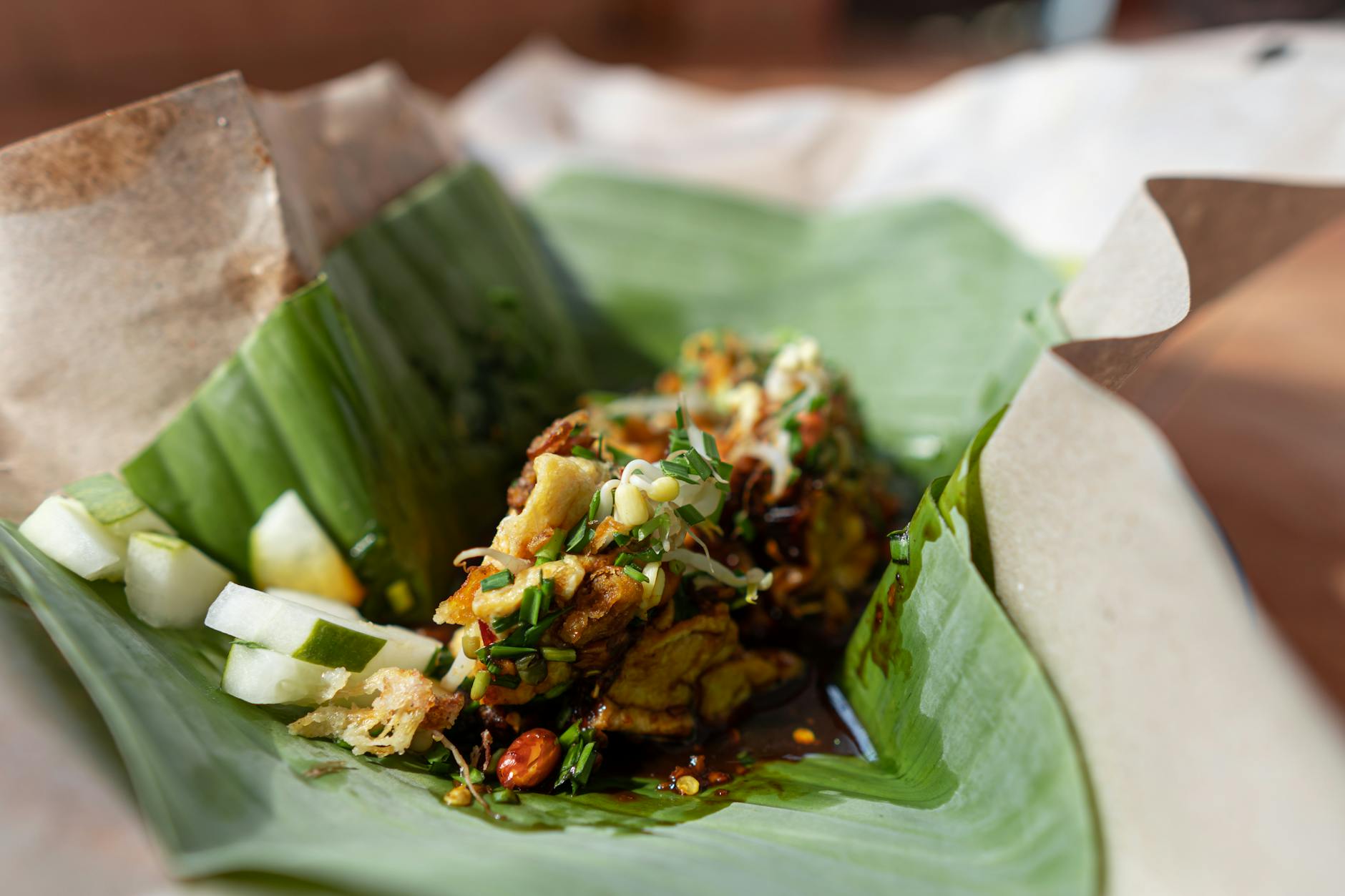
Malaysian rojak splits into two distinct styles. Fruit rojak combines tropical fruits — pineapple, mango, jicama — with fried tofu and dough fritters, tossed in a thick dark sauce made from tamarind, sugar, chili, and prawn paste. The fruit components are naturally plant-based, though the sauce traditionally contains shrimp. Indian rojak, also called pasembur, is the more reliably vegetarian option: fried fritters, tofu, boiled potato, and a sweet-spicy peanut sauce. It turns up regularly at malaysian street food markets and is popular for good reason — cheap, quick, and genuinely satisfying.
Tempeh and Tofu Dishes
Tempeh and tofu are not alternatives to meat in Malaysia — they are central ingredients with their own cooking traditions. Tempeh goreng (deep-fried tempeh slices, crispy outside, tender within) is one of the most satisfying things you can order from a Malay stall. Sambal goreng tempeh, cooked in a spicy chili paste, is richer and more complex. On the tofu side: tauhu sumbat is tofu puffs stuffed with vegetables and bean sprouts; tauhu bakar is grilled tofu served with peanut sauce; tau foo fah is a delicate silky tofu dessert served with ginger syrup. You encounter these across the entire country, in hawker centres, at market stalls, and in sit-down restaurants alike.
Mee Goreng and Nasi Goreng (Vegetarian)
Fried noodles and fried rice are everywhere, and vegetarian versions are widely available. At mamak stalls and Malay restaurants, ordering mee goreng sayur or nasi goreng sayur tells the cook you want the vegetable version. These dishes come with tofu, egg, and vegetables, seasoned with soy sauce and chili. One caution: some hawkers use oyster sauce or shrimp paste even in vegetable versions unless you specify otherwise. Say it before they start cooking — the flavouring goes in early and cannot easily be removed after.
Chinese Buddhist Vegetarian Restaurants
Chinese Buddhist vegetarian restaurants deserve their own section because they are unlike anything in most other countries. These are not quiet health food establishments. They are busy, efficient restaurants that have spent generations developing one of the most technically sophisticated vegetarian cooking traditions in the world.
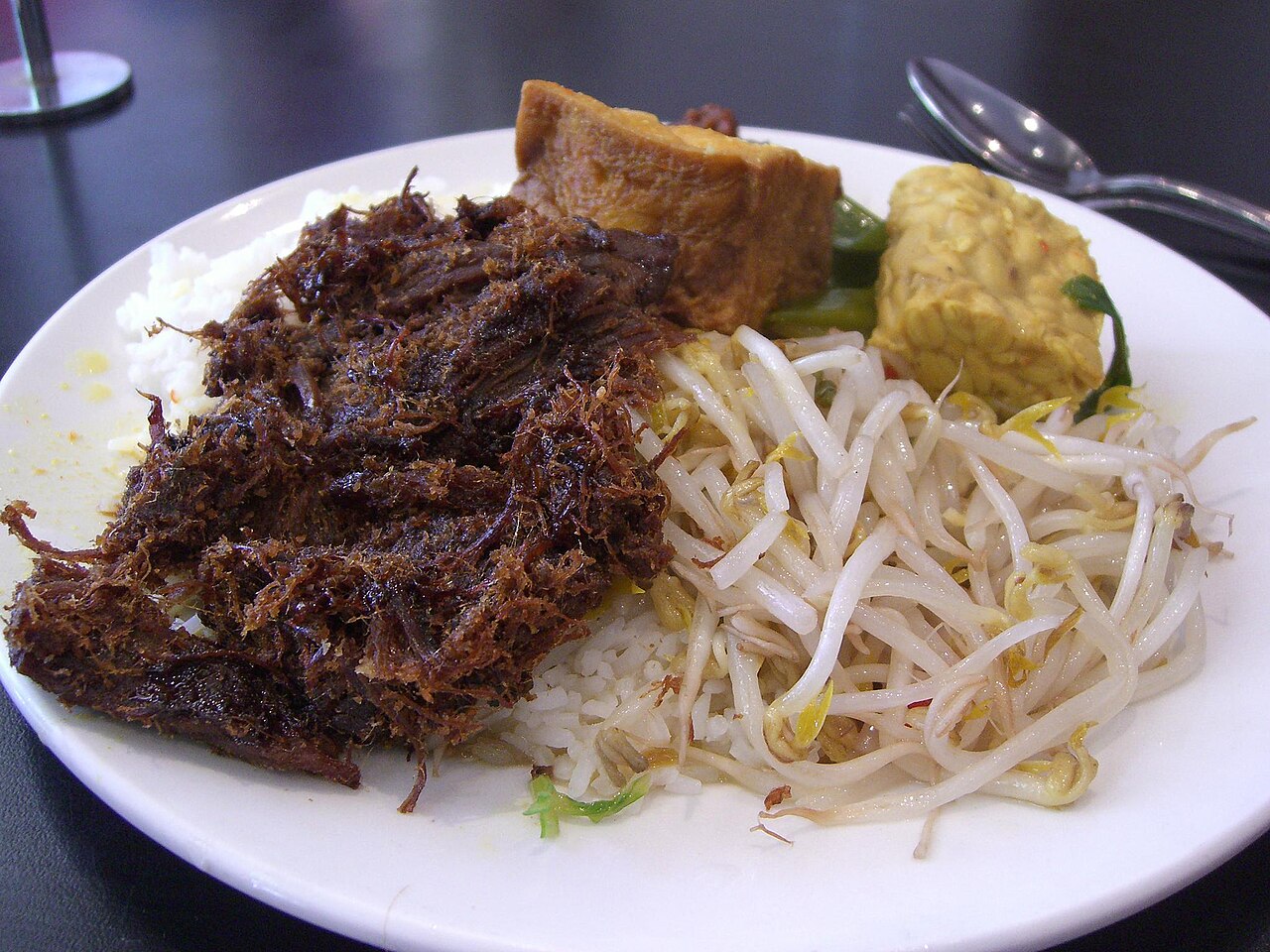
The mock meat preparations are the centrepiece. Using wheat gluten, soy protein, mushrooms, konjac, and tapioca starch as binding agents, these kitchens create plant-based versions of char siu, roast duck, sweet and sour fish, braised pork belly, and dozens of other Chinese classics. The textures are often genuinely close to the originals — impressive enough that these restaurants attract meat-eaters alongside their core Buddhist clientele.
Most operate on a mixed rice format. You walk up to a long counter with 20 to 30 dishes on display — stir-fried vegetables, curries, mock meats, tofu preparations, mushroom dishes — and point to what you want. Rice is included. A full meal with two or three dishes typically runs RM6 to RM12. The format is ideal for travelers because you can see exactly what you are getting without any language barrier or risk of misunderstanding.
More formal versions offer sit-down service and multi-course menus, popular for family celebrations and Buddhist festival days. The cooking at these establishments is more refined — mock meat preparations developed over years, creative presentations, complex sauces — and they represent vegetarian cooking taken seriously as a culinary pursuit rather than just a dietary restriction.
Chinese Buddhist vegetarian restaurants exist in every Malaysian city and most towns. In KL, Petaling Street and the Pudu area have high concentrations. In George Town, Penang, you find them throughout the Chinese quarters. They generally open from morning through early evening, with some taking a mid-afternoon break before reopening for dinner. Look for Chinese characters on the signage, Buddhist iconography, or the visible counter of prepared dishes through the front window.
The Modern Vegan Scene
The modern vegan restaurant scene in Malaysia has grown significantly in recent years, particularly in KL and Penang. These newer establishments draw on global plant-based food trends, cater to a health-conscious younger demographic, and tend toward higher price points and more designed spaces. They sit alongside the traditional options rather than replacing them, giving plant-based travelers a wider range than at any previous point.
Kuala Lumpur
KL has the deepest vegan restaurant scene in Malaysia. The best neighbourhoods for plant-based dining are Bangsar, Bukit Bintang, and Chinatown — though options are spread across the city. The kuala lumpur food guide covers the city’s overall food scene; the following are the vegetarian-specific highlights.
The Hungry Tapir in Chinatown is among the most celebrated vegan restaurants in the city. The space is styled with neon signs and retro KL decor, and the menu centres on plant-based versions of Malaysian classics. The vegan nasi lemak, laksa, and satay have earned genuine praise — not as novelties but as good food that happens to be fully plant-based. Mains run in the RM20 to RM35 range.
Simple Life Healthy Vegetarian Restaurant has multiple locations across KL, including Bangsar Lucky Garden. The approach here is wholesome rather than cutting-edge: brown rice nasi lemak, pumpkin noodles, multi-grain porridge, clean Chinese-Malaysian home cooking made with natural ingredients. It is the kind of place regulars eat at weekly, which is the best possible endorsement.
Nature’s Vegetarian in Bangsar has built a loyal following with its Asian-fusion vegetarian dishes. The mock meat rendang and plant-based fish curry are the dishes people come back for. Both carry the aromatic depth that defines Malaysian cooking, which is harder to achieve without animal products than it sounds.
Kusa operates as an all-vegan Japanese restaurant — sushi rolls, ramen, rice dishes, all plant-based. It sits at the international end of KL’s vegan scene and shows that the city’s plant-based dining extends well beyond Malaysian cuisine. The Ganga Cafe in Bangsar covers the Indian vegetarian end: thali sets, dosa variations, affordable prices, and an entirely vegetarian kitchen with no cross-contamination concerns.
For the budget end, two options stand out. The Dharma Realm Guan Yin Sagely Monastery Canteen is tucked inside a Buddhist temple compound and serves simple vegetarian Chinese fare — mock meats, tofu, stir-fries — at prices that are among the lowest in the city. Temple canteens like this exist across Malaysia and are worth seeking out when you want good, cheap food without any fuss. Blue Boy Vegetarian Food Centre near Jalan Imbi is a dedicated vegetarian hawker centre with eight stalls, all serving exclusively vegetarian food. It gives you the hawker centre experience — the variety, the noise, the low prices — without the navigation anxiety that comes with picking out vegetarian options at mixed stalls.
Penang
Penang is one of the best food destinations in Malaysia for any traveler, and vegetarians are no exception. The penang food guide gives the full picture; for vegetarians specifically, George Town is where you want to spend your time.
Pinxin Vegan Cuisine in George Town has built a reputation for Nyonya vegan adaptations — local traditional dishes reworked without animal products. This is harder than it sounds, because Nyonya cooking relies heavily on shrimp paste and dried seafood for its characteristic depth. Pinxin has found ways around this that produce food genuinely worth seeking out.
Evergreen Vegetarian House on Cantonment Road runs a daily buffet with an extensive spread of vegetarian and vegan dishes, open from morning through evening. The format suits travelers who want to sample many things rather than commit to a single dish. Wholey Wonder in George Town pairs a plant-based cafe with a yoga studio — the food is creative, the space is calm, and it represents the wellness dimension of Penang’s vegan scene.
At the other end of the spectrum: Restaurant Au Jardin on Jalan Timah holds a Michelin star and can accommodate vegans with advance notice. A tasting menu runs RM150 or more. It is not a vegetarian restaurant, but a kitchen that skilled can produce a vegan meal that is a genuine fine dining experience — the highest level that plant-based dining in Malaysia reaches.
For traditional options, Ee Beng on Lebuh Dickens is a Chinese Buddhist vegetarian restaurant in George Town that sets out 20 to 30 freshly prepared dishes daily in mixed rice format. Indian vegetarian restaurants along Chulia Street and in Penang’s Little India serve excellent thosai, banana leaf rice, and South Indian vegetarian dishes throughout the day.
Vegetarian Food by Destination
Langkawi
Langkawi’s food scene is smaller than KL or Penang, but vegetarian travelers find workable options. The island’s night markets rotate locations throughout the week — ask your accommodation for the current schedule, as it shifts — and they reliably turn up vegetarian-friendly items: apam balik pancakes, fried noodles, fruit-based snacks. Pantai Cenang, the main tourist strip, has several restaurants with vegetarian sections on their menus. Indian restaurants on the island serve roti canai with dhal and vegetable curries consistently. If you are staying self-catering, supermarkets near Kuah town carry tofu, tempeh, and fresh produce for simple cooking.
Melaka
Melaka’s vegetarian options centre on the Jonker Street area and the old city quarter. The Jonker Street night market on Friday and Saturday evenings has vegetarian-friendly food stalls among its vendors. Nyonya vegetarian adaptations have become more available in recent years, with a few establishments offering plant-based versions of Peranakan classics. Chinese Buddhist vegetarian restaurants operate in Melaka’s Chinese quarter in the standard mixed rice format. Indian restaurants throughout the city cover the South Indian vegetarian essentials reliably.
East Coast
The east coast states — Kelantan and Terengganu — present a different picture. These are predominantly Malay Muslim states where the food culture is heavily oriented toward meat and seafood. Vegetarian options exist, but you have to look for them. Indian restaurants in the main cities (Kota Bharu, Kuala Terengganu) serve vegetarian food consistently. Morning markets sell kuih, fresh fruit, and vegetable preparations that are often naturally plant-based. Malay dishes can sometimes be prepared vegetarian on request, though it is always worth confirming about shrimp paste use. This part of Malaysia rewards flexibility — treat it as an opportunity to find things you would not encounter in KL rather than expecting the same variety.
Sabah and Sarawak
Malaysian Borneo’s vegetarian scene is concentrated in its two main cities: Kota Kinabalu and Kuching. Both have Chinese Buddhist vegetarian restaurants, Indian vegetarian eateries, and a small but growing number of modern vegetarian cafes. Kuching has developed a particularly interesting scene, with restaurants working on plant-based interpretations of Sarawak’s distinctive cuisine — kolo mee adaptations, vegetarian versions of laksa Sarawak. In rural Borneo, options thin out considerably. If you are planning time in longhouse villages or national park accommodation, plan your food ahead and carry provisions.
Practical Tips for Vegetarian Travelers
The main practical challenge in Malaysia is not a shortage of vegetarian food — it is knowing how to navigate a food culture where animal products appear in unexpected places. A few specific things to know:
Hidden Non-Vegetarian Ingredients
Belacan — fermented shrimp paste — is the ingredient that catches the most vegetarians off-guard. It is a cornerstone of Malay cooking, used in sambal preparations, vegetable dishes, and as a flavouring base. You cannot taste it distinctly; it adds depth rather than announcing itself. Beyond belacan, dried shrimp and dried anchovies appear as garnishes and flavour enhancers. Oyster sauce turns up in stir-fried vegetables at Chinese stalls. Fish sauce and shrimp paste go into soups and curries even when no visible seafood is present.
The most reliable solution is to eat at dedicated vegetarian establishments — Indian vegetarian restaurants, Chinese Buddhist vegetarian restaurants, modern vegan cafes — where the entire kitchen operates on vegetarian principles and cross-contamination is not a concern. For everything else, ask directly and specifically before the dish is prepared.
Communicating Your Dietary Needs
A handful of Malay phrases carry a lot of weight. “Saya vegetarian” (I am vegetarian) is understood in most food settings. More specific: “Saya tak makan daging, ikan, dan udang” (I don’t eat meat, fish, and shrimp). For vegans, add “dan saya tak makan telur dan susu” (and I don’t eat eggs and milk).
Most people working in urban food establishments understand the English word “vegetarian,” but the definition varies. Some locals classify chicken and fish as acceptable for vegetarians. Some consider dishes containing fish sauce or shrimp paste to be vegetarian because there is no visible meat. Being specific — “no belacan, no fish sauce, no oyster sauce” — is more effective than saying vegetarian and hoping for the right interpretation. At hawker stalls and mamak restaurants, communicate this before the cook starts. Flavourings go in early and cannot easily be removed.
Useful Apps and Resources
HappyCow is the most useful tool for finding vegetarian restaurants in Malaysia. The app lists thousands of establishments across the country, categorised as fully vegan, vegetarian, or vegan-friendly, with user reviews and photos. Searching any Malaysian city on HappyCow returns results with enough detail to plan around. Google Maps is a solid complement — search “vegetarian restaurant” or “vegan food” in any Malaysian city and the results, combined with reviews that discuss dietary options, give you enough to navigate confidently.
Grocery Shopping
Tofu, tempeh, and mock meat products are staples in Malaysian supermarkets and are priced very low. Fresh tropical fruit is abundant and cheap at wet markets and roadside stalls throughout the country. International supermarket chains like Village Grocer carry imported vegan products — plant-based milks, cheese alternatives, specialty items — for travelers who want them. In Kuala Lumpur, Vegan District is a dedicated plant-based grocery store with a curated selection of premium vegan products: gourmet meat alternatives, vegan cheeses, organic pantry staples. It is the best option in the country if you are stocking a kitchen for an extended stay or looking for specific ingredients.
Vegetarian Food Prices and Budget
Vegetarian food in Malaysia is cheap. This is not a polite way of saying it is basic — it is a genuine observation about a food culture where plant-based ingredients have always been the affordable option. At the lowest end: roti canai with dhal at a mamak restaurant costs RM1.50 to RM3. Most hawker stall vegetarian dishes run RM2 to RM8. Mixed rice at a Chinese Buddhist vegetarian restaurant — rice plus two or three dishes — comes to RM6 to RM12. Banana leaf rice at an Indian restaurant, with unlimited refills on rice and most accompaniments, runs RM8 to RM15.
Sit-down vegetarian restaurants charge RM15 to RM35 per person. Modern vegan cafes and restaurants sit slightly higher, with main courses at RM20 to RM45. At the top end, a tasting menu at a place like Restaurant Au Jardin in Penang — Michelin-starred, adaptable for vegans with advance notice — runs RM150 or more.
Budget travelers can eat three solid meals a day for under RM25 by sticking to mamak restaurants, hawker centres, and Chinese Buddhist vegetarian mixed rice stalls. That RM25 buys you breakfast roti canai, a hawker lunch, and a mixed rice dinner — all of it good. Malaysia is one of the few countries where eating well as a vegetarian and eating cheaply are not in tension at all.
Where to Start
If you are arriving in KL, start with a morning at a mamak stall — roti canai with dhal, RM2, eaten at a plastic table while the city wakes up around you. Then find a Chinese Buddhist vegetarian restaurant for lunch and point at three dishes you cannot identify. That combination — the familiar and the unfamiliar, the cheap and the generous — captures something essential about eating plant-based in Malaysia.
From there, the range opens up. Banana leaf rice in Brickfields. Vegan laksa at The Hungry Tapir. Pinxin’s Nyonya adaptations in George Town. A temple canteen lunch that costs less than a bus ticket. Malaysia does not ask vegetarian travelers to compromise or seek out a separate category of food — the plant-based tradition is already built into the culture, waiting for you to find it.