Taman Negara National Park: Complete Guide

One hundred and thirty million years. That is roughly how old the forest in Taman Negara is — older than most mountain ranges, older than the continents in their current configuration. Dinosaurs once wandered through ecosystems that were ancestral to this one. The trees above you now are not the same trees, of course, but the ecological lineage runs unbroken from then to now, making this one of the most ancient continuous rainforests on the planet. For visitors to Peninsular Malaysia, there is nothing quite like it.
Taman Negara covers four thousand three hundred and forty-three square kilometres across the states of Pahang, Terengganu, and Kelantan. It was established in 1938 as King George V National Park and renamed after independence, and it has been protecting this forest for nearly a century. The park offers everything from a gentle walk to the famous canopy walkway and a lazy afternoon in a floating chalet to the genuinely demanding seven-day expedition up Gunung Tahan. You decide how deep you want to go. For the broader wildlife context across Malaysia — including what makes this park compare to Borneo’s offerings — see our guide to malaysia wildlife.
Getting to Taman Negara
The main gateway is Kuala Tahan, a small riverside settlement on the southern boundary of the park, approximately two hundred and fifty kilometres northeast of Kuala Lumpur.
By Road
Several bus operators run daily services from KL’s Terminal Bersepadu Selatan to Jerantut, the nearest town to the park, and from Jerantut shuttle buses and taxis cover the remaining thirty-five kilometres to Kuala Tahan. The whole journey takes three to four hours. Many accommodation providers arrange direct shuttle transfers from KL for approximately RM70 to RM100 per person each way, which is worth the convenience on arrival day.
By Boat
The traditional approach is by longboat from the jetty at Kuala Tembeling — about sixteen kilometres from Jerantut. The boat ride upstream takes two and a half to three hours through increasingly dense jungle, river bends revealing increasingly wild forest as you go. One-way fare is RM55 per person. This route was the only way in for decades and remains a memorable arrival experience. Take it at least in one direction if you have the time.
Entry Fees and Permits
Park entry requires a permit obtained on arrival at Park Headquarters in Kuala Tahan. The entrance fee is RM1 per person. A camera licence costs RM5 per device. A fishing licence is RM10 per rod. These are among the most affordable national park entry costs in Southeast Asia, which makes Taman Negara accessible on virtually any travel budget.
Where to Stay
Inside the Park: Mutiara Taman Negara
The Mutiara Taman Negara Resort is the only accommodation inside the park boundaries, right at the entrance and with direct trail access. Chalets and dormitory-style rooms are available. Being inside the park means hearing the dawn chorus from your bed and having the earliest possible access to the trails before day-trippers arrive — a genuine advantage if you want to be on the quieter paths at first light.
Kuala Tahan Village
The village across the Tembeling River offers a wider range of budget and mid-range options. Basic fan rooms start from as little as RM20 per night; more comfortable guesthouse rooms with air-conditioning typically cost RM60 to RM150. The boat crossing from the village to the park entrance costs RM1 per person and takes less than a minute. For most visitors on a budget, staying in the village and crossing daily is the most economical arrangement.
Floating Chalets
Several operators offer floating chalets on the river — sleeping directly over the water with the jungle on all sides. Falling asleep to the sounds of the river and waking to mist rising from the surface is an atmospheric way to spend a night. These range from basic to reasonably comfortable and are popular with visitors who want something different from a standard guesthouse room.
The Canopy Walkway
Five hundred and thirty metres of narrow suspension bridges through the treetops, at a height of approximately forty metres above the forest floor. This is Taman Negara’s most famous attraction and one of the longest canopy walkways in the world. The walkway connects large platforms built around the trunks of giant tualang and mengaris trees. Walking it puts you at eye level with the mid-canopy — the most biodiverse zone in the entire forest — where hornbills, kingfishers, sunbirds, and barbets feed and squirrels move through the branches around you.
Open daily except Fridays. Children must be at least seven years old. Entry fee is RM5. Arrive when it opens for the best wildlife sightings and the most peaceful experience — visitor numbers build through the morning and it gets noticeably busier by mid-morning. The walkway sways, which some visitors find unsettling at first; most quickly forget about it once they’re watching hornbills at eye level.
Jungle Trekking
Hundreds of kilometres of marked trails run through the park, from easy half-day walks to multi-day wilderness expeditions. Trails are numbered and marked with coloured paint on trees. Maps are available from Park Headquarters. Independent trekking is allowed on shorter trails near the entrance; multi-day treks and the Gunung Tahan ascent require a mandatory licensed guide.
Bukit Teresek
The most popular short trek leads to Bukit Teresek, a hill with panoramic views across the forest canopy — Gunung Tahan visible on the horizon on clear days. The trail passes the canopy walkway and can be combined with it for a half-day circuit. Moderately strenuous with some steep sections on tree root steps; most fit visitors manage it in about one hour each way.
Bukit Indah
A longer day trek of approximately nine kilometres through lowland dipterocarp forest, crossing streams and passing through pristine primary jungle where the canopy reaches impressive heights. Better wildlife sightings than the more heavily trafficked paths near the entrance — tapir tracks, deer, and a richer bird diversity along the way.
Gunung Tahan
Peninsular Malaysia’s highest peak at two thousand one hundred and eighty-seven metres. The full expedition takes seven days and involves serious trekking through dense jungle, river crossings, steep mountain terrain, and overnight camping at designated sites. Mandatory guide, considerable fitness required, advance preparation essential. Guide and permit fees come to approximately RM1,500 to RM2,000 per person depending on group size. Reaching the summit offers views across an unbroken expanse of primary rainforest that stretches to every horizon. One of the most demanding and rewarding outdoor achievements in Malaysia.
Lata Berkoh
A beautiful cascade on Sungai Tahan, about eight and a half kilometres from the park entrance by trail or one hour by longboat. The waterfall pool is refreshing to swim in — worth the effort on a hot day. Many visitors combine: trek in one direction, take the boat back in the other.
Night Walks and Wildlife Observation Hides
Night is when Taman Negara reveals its other half. Guided walks and overnight hides deliver wildlife that is completely invisible during daylight hours.
Guided Night Walks
Night walks typically run from 8:30pm to 10:30pm, costing approximately RM40 per person with a guide. Armed with headtorches, small groups follow trails near the park entrance. Experienced guides spot wildlife that most visitors walk straight past: the Malay civet cat, the slow loris with its enormous reflective eyes, various flying squirrels, sleeping birds, tarantulas, scorpions, and an extraordinary variety of insects and frogs. The combination of near-total darkness, the symphony of rainforest sounds, and sudden encounters with nocturnal creatures creates an experience that is both thrilling and deeply atmospheric. Highly recommended even for visitors who are already exhausted from the day’s trekking.
Wildlife Observation Hides
Taman Negara maintains several observation hides — Tahan Hide, Kumbang Hide, and Yong Hide — positioned overlooking natural salt licks where animals come to supplement their mineral intake. You spend the night in basic shelters lying in wait for whatever emerges from the darkness. Tahan Hide is the closest to the entrance and the most popular, with regular sightings of sambar deer, wild boar, monitor lizards, and porcupines. Tapirs and even elephants occasionally appear. The hides have sleeping platforms but no other facilities: bring your own sleeping bag, water, food, and insect repellent. Use a red-filter torch to observe animals without disturbing them. Spending a night alone in the rainforest, with the sounds of the forest all around you and the salt lick lit only by moonlight, is one of the most authentic wildlife experiences in Peninsular Malaysia.
River Activities
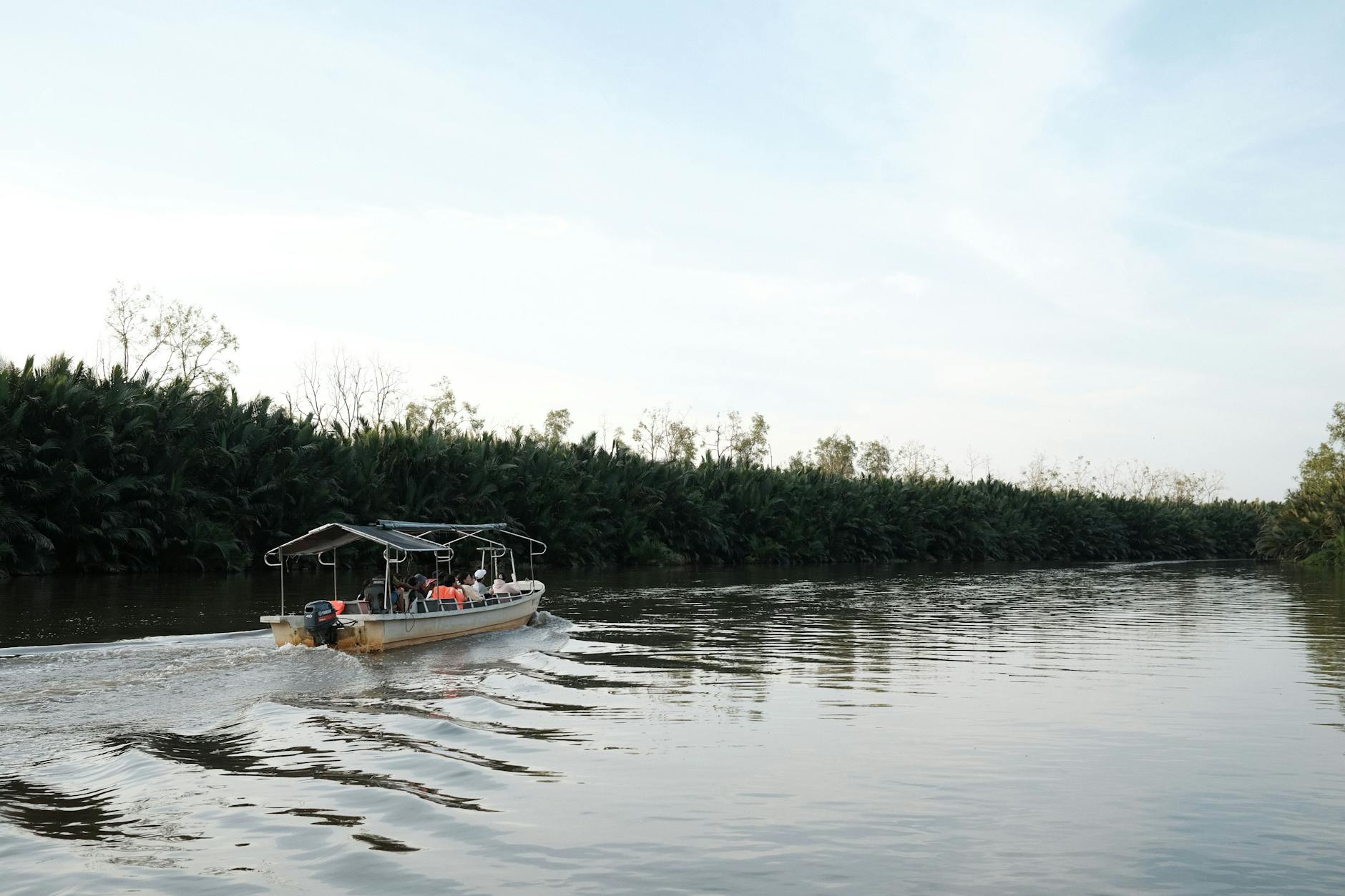
The rivers of Taman Negara are not just transport — they are an activity in themselves. The Tembeling and Tahan rivers define the park’s character as much as the forest does. They are the main access routes, the backdrop to daily life in Kuala Tahan, and the setting for some of the most memorable moments of any visit. A longboat sliding upstream in early morning light, with jungle rising steeply from both banks and kingfishers flashing blue across the bow, gives an immediate sense of how deep into the rainforest you are travelling.
Rapids Shooting
A guide navigates a small wooden longboat through seven sets of rapids on the Sungai Tembeling. You hold on as the boat bounces through the white water, expecting to get thoroughly wet and usually not disappointed. The combination of adrenaline and beautiful river scenery makes this a highlight for many visitors. Rapids shooting trips cost RM40 to RM60 per person and last about one hour.
Fishing
The kelah — Malaysian mahseer — is the prized catch in Taman Negara’s rivers. Serious anglers head to Sungai Keniam, which takes two and a half to five hours by boat from Kuala Tahan. Popular spots include Kuala Perkai, Rincing, and Lata Said. The Sungai Tembeling near Kuala Tahan offers a more casual option. Fishing licence is RM10 per rod from Park Headquarters.
Cave Exploration
Taman Negara contains several cave systems ranging from accessible walk-in sites to more adventurous passages requiring crawling, wading, and navigating in the dark. They are a different dimension of the park’s character — evidence that this ancient landscape extends below ground as well as above it.
Gua Telinga
Gua Telinga — “Ear Cave,” named for its shape — is located about two and a half kilometres from Park Headquarters. The cave houses bat species, racer snakes, and fascinating cave-dwelling insects. Note: the interior has been closed to visitors due to a rock collapse. The trail and external area remain accessible and worth the walk through primary forest regardless. Check current access conditions at Park Headquarters before visiting.
Other Caves
Kepayang Besar and Kepayang Kecil offer more adventurous caving involving crawling through dark passages, navigating underground river tunnels, and emerging through chambers with impressive formations. Helmets, headlamps, and appropriate clothing required — equipment typically provided by tour operators. Best done with an experienced guide who knows the routes.
Orang Asli Village Visit
Around ten to fifteen Batek Orang Asli families maintain a settlement near the Tembeling River at Jeram Dedari. The Batek are one of Malaysia’s indigenous peoples — traditionally nomadic hunter-gatherers whose knowledge of this forest runs thousands of years deep. Village visits include demonstrations of fire-starting using rattan and timber, blowpipe making and shooting, and traditional handicraft production. Traditional dances and music are sometimes performed. It is a genuine window into a way of life that predates the modern world by an almost incomprehensible span of time.
Village visits are usually arranged as part of tour packages combining the experience with rapids shooting and lunch — approximately RM50 per person. When visiting, ask permission before photographing people and avoid giving money or gifts directly to villagers unless directed by your guide.
Wildlife of Taman Negara

The park’s wildlife is extensive but often elusive — dense tropical forest means most species are present in significant numbers yet rarely seen. That genuine wildness is part of the appeal. There are no feeding programmes, no baited photography hides, and no guarantees. What the park offers instead is the authentic experience of wildlife in a truly wild forest, where every sighting is unscripted and every encounter has been earned by time spent in the right place with the right attitude.
Mammals
The Malayan tiger is present but sightings are extraordinarily rare — the tiger’s secretive nature and the vastness of the forest make an encounter more a matter of luck than planning. Taman Negara and the surrounding Titiwangsa Range support a significant portion of the remaining wild population, making the park one of the most important strongholds for this subspecies. Fewer than one hundred and fifty individuals are estimated to remain nationally, which makes every camera trap image captured by park researchers a meaningful data point. Asian elephants roam in small herds; tracks and dung are regularly encountered on longer trails even when the animals themselves are not seen, and the scale of fresh elephant footprints in soft mud gives an immediate impression of these animals’ presence. Malayan tapirs, sun bears, sambar and barking deer, wild boar, long-tailed macaques, dusky langurs, and white-handed gibbons are all resident. The salt lick hides give the best chances for tapir sightings, particularly after midnight when these animals tend to be most active. Spending a night at Tahan Hide — the closest to the park entrance — regularly produces sightings of sambar deer, wild boar, monitor lizards, and porcupines, with tapir appearances frequent enough to make the effort worthwhile.
For visitors interested in comparing the peninsula’s wildlife with Borneo’s — the orangutans, pygmy elephants, and proboscis monkeys of Sabah — our guide to see orangutans malaysia lays out the full ethical viewing picture, and our Danum Valley borneo guide explains what primary-forest wildlife watching looks like in never-logged Sabah.
Birds
Over three hundred species are recorded in Taman Negara, including several species of hornbill, kingfishers, broadbills, trogons, pittas, and various raptors. The rhinoceros hornbill and great hornbill are among the most impressive — audible from a considerable distance before you see them, their wingbeats carrying clearly across the canopy. Peninsula specialities include the Malayan banded pitta, the blue-winged pitta during migration periods, and the great argus pheasant — whose display calls echo through the forest at dawn and dusk. The canopy walkway and early morning riverbank walks provide the best general birding. If birdwatching malaysia is a priority, the quieter trails away from the park entrance — particularly Bukit Indah and the paths toward Lata Berkoh — produce notably more species and better sightings of forest-interior specialists that are disturbed by higher visitor traffic near the main entrance area.
Insects and Reptiles
The insect diversity is staggering. The atlas moth — wingspan up to thirty centimetres, one of the largest moth species in the world — is found here, its wings bearing distinctive patterns that make it unmistakable. The forest supports an enormous variety of stick insects and leaf insects, some of them so perfectly camouflaged that they appear to be actual leaves or twigs until they move. Beetles of extraordinary colour and form cling to bark surfaces along every trail. The canopy walkway is one of the best spots in the park for butterfly observation, with many species visible only above the ground layer. Night walks are the best context for invertebrate enthusiasts: giant millipedes navigating the trail, lantern bugs on tree bark, elaborate orb-weaver spider webs backlit by torchlight, and camouflaged insects that are completely invisible by day. The reptile community includes monitor lizards reaching considerable size along the riverbanks, flying lizards that glide between trees on extended rib membranes, various snake species including the reticulated python, and freshwater turtles in the park’s rivers.
Best Time to Visit
The dry season from March to September offers the best trekking conditions: drier trails, more reliable river levels, fewer leeches. The wet season from October to February brings heavy rainfall that makes trails muddy and slippery and can raise river levels enough to disrupt some boat services. The park is open year-round and wildlife can be observed in any season — wet season has fewer visitors and the forest looks spectacular in the rain, which has its own appeal. The wildlife doesn’t go anywhere.
How Long to Stay
Two to three days minimum for the main highlights. A reasonable three-day plan: Day 1 — canopy walkway and Bukit Teresek trek. Day 2 — rapids shooting and Orang Asli village visit. Day 3 — night walk combined with cave exploration or the Lata Berkoh trek. Four or five days adds the overnight hides experience, longer treks into the park interior, and the option of a proper fishing expedition on the Sungai Keniam. The Gunung Tahan expedition — Malaysia’s most demanding mainland trek — requires at least seven days and should be treated as its own dedicated trip rather than an add-on to a general Taman Negara visit. Plan and book it separately, with a licensed guide arranged well in advance.
Costs at a Glance
Park entry: RM1. Canopy walkway: RM5. Camera licence: RM5. Fishing licence: RM10 per rod. Night walk: approximately RM40 per person. Rapids shooting: RM40-60 per person. River crossing Kuala Tahan to park entrance: RM1 each way. Longboat from Kuala Tembeling: RM55 one way. Accommodation in Kuala Tahan village: RM20/night basic fan room, RM60-150 for air-conditioned rooms. Gunung Tahan expedition with guide: RM1,500-2,000 per person depending on group size. Budget travellers covering the main highlights across a three-day visit can manage for approximately RM200 to RM300 excluding transport from Kuala Lumpur. Tour packages bundling multiple activities over two to three days cost RM250 to RM500 per person and are good value for first-time visitors.
Practical Tips
Lightweight, long-sleeved clothing in muted colours. Sturdy waterproof footwear. High-quality insect repellent. Leech socks for any trekking — particularly during and after rain. A waterproof bag for electronics and valuables. Sufficient water and snacks for any trek, as there are no facilities on the trails. Cash is essential: card payment is limited throughout Kuala Tahan and there is a small ATM in the village but it is not always reliable. Withdraw cash in Jerantut or Kuala Lumpur before arriving.
Mobile phone coverage in Kuala Tahan has improved but remains patchy. Beyond the immediate entrance area, there is effectively no signal. This is not a problem — it is part of the experience. Taman Negara rewards visitors who put the phone away and pay attention to the forest. You do not need connectivity here. You need binoculars.
Guided Tours vs Independent Exploration
Shorter trails and activities like the canopy walkway can be enjoyed independently, and trail maps from Park Headquarters are clear enough to navigate the well-marked network near the entrance. For multi-day treks and Gunung Tahan, guides are mandatory. For everything in between, hiring a local guide is strongly recommended — licensed guides with intimate forest knowledge routinely spot wildlife and interpret animal signs that most visitors walk straight past. A guide will identify a tapir footprint in the mud, explain why a particular tree has been stripped by a sun bear, and point out a sleeping bird on a branch two metres off the trail that you would never have noticed without help. Even the canopy walkway trail becomes something else entirely with a good guide explaining what you are looking at and identifying species in the mid-canopy. Guide fees for half-day activities start from approximately RM50 to RM100 per person; full-day and multi-day rates vary with the activity and should be arranged through Park Headquarters or licensed operators in Kuala Tahan.
Taman Negara sits within reach of Kuala Lumpur, but it belongs to a different world entirely. It is not a theme park or a managed safari — it is one hundred and thirty million years of continuous ecological history, still largely intact, still wild, still capable of surprising even experienced naturalists. The fact that sea turtles nest on Malaysia’s coast while this forest has stood makes more sense when you appreciate that this country offers genuinely different wildlife experiences at very different scales. Our guide to sea turtles malaysia covers the nesting beaches that provide that coastal counterpoint, while Kinabalu national park in Sabah offers Borneo’s answer to highland biodiversity at world-class scale.
1 note