Getting Around Malaysia: Complete Transportation Guide (2026)
Complete guide to getting around Malaysia in 2026. Covers KL public transport, trains, buses, domestic flights, Grab, ferries, car rental, airport transfers, and Borneo transport with prices and tips.
Getting around Malaysia is easier than it looks on the map. The peninsula has a proper rail network, cheap long-distance buses, a strong ride-hailing ecosystem, and budget domestic flights that are affordable even booked short-notice. The complications come in Borneo, where distances are long, roads thin out beyond the main towns, and a flight is often the only sensible option. This guide covers every transport mode across both halves of the country — with 2026 prices, booking tips, and the honest trade-offs between speed, cost, and convenience.
For the broader planning picture — malaysia visa requirements, what things cost, where to go — start with the complete malaysia travel guide. Come back here once you are ready to think through moving between places.
Kuala Lumpur’s Urban Rail Network
KL’s public transit is the starting point for most visitors. It is comprehensive, air-conditioned, cheap, and expanding. Get your head around it on day one and you will barely need a Grab for anything in the city centre.
MRT (Mass Rapid Transit)
The MRT is the backbone of the network. Two lines cover greater KL as of 2026. The Kajang Line (Line 1) runs 51 kilometres from Kwasa Damansara to Kajang, passing through Bukit Bintang, Merdeka, and Muzium Negara. The Putrajaya Line (Line 2) connects Kwasa Damansara to Putrajaya. Together the two lines put most tourist areas, shopping districts, and interchange stations within walking distance of a stop. Fares run RM 1.20 to RM 6.40 depending on distance; trains run roughly 6 AM to midnight, every three to seven minutes during peak hours.
LRT (Light Rail Transit)
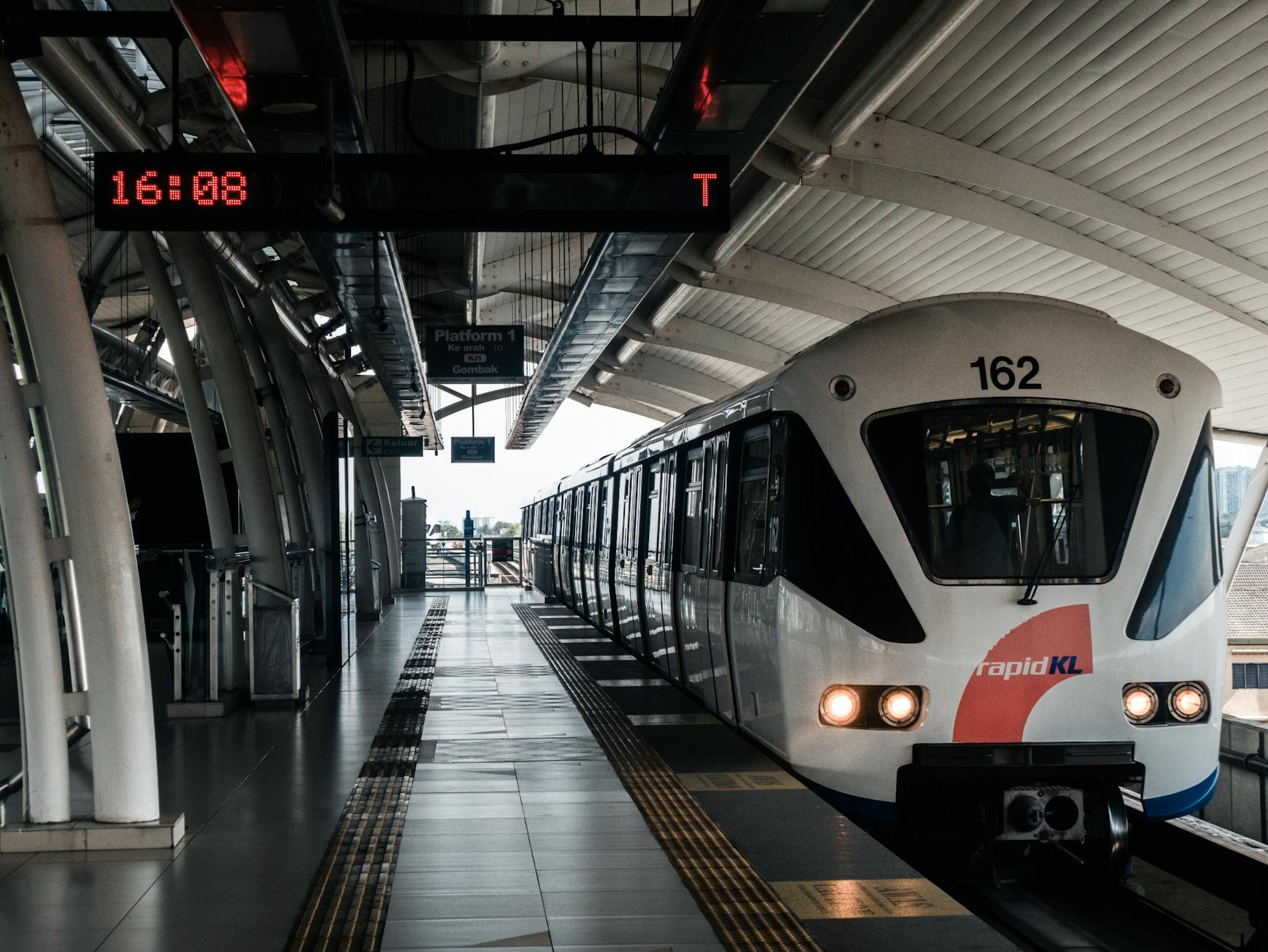
Two LRT lines complement the MRT. The Kelana Jaya Line serves 37 stations from Putra Heights to Gombak, including KLCC (Petronas Twin Towers), Pasar Seni (Chinatown), and KL Sentral. The Ampang/Sri Petaling Line covers the south and east. Fares RM 1.20 to RM 4.80.
KL Monorail
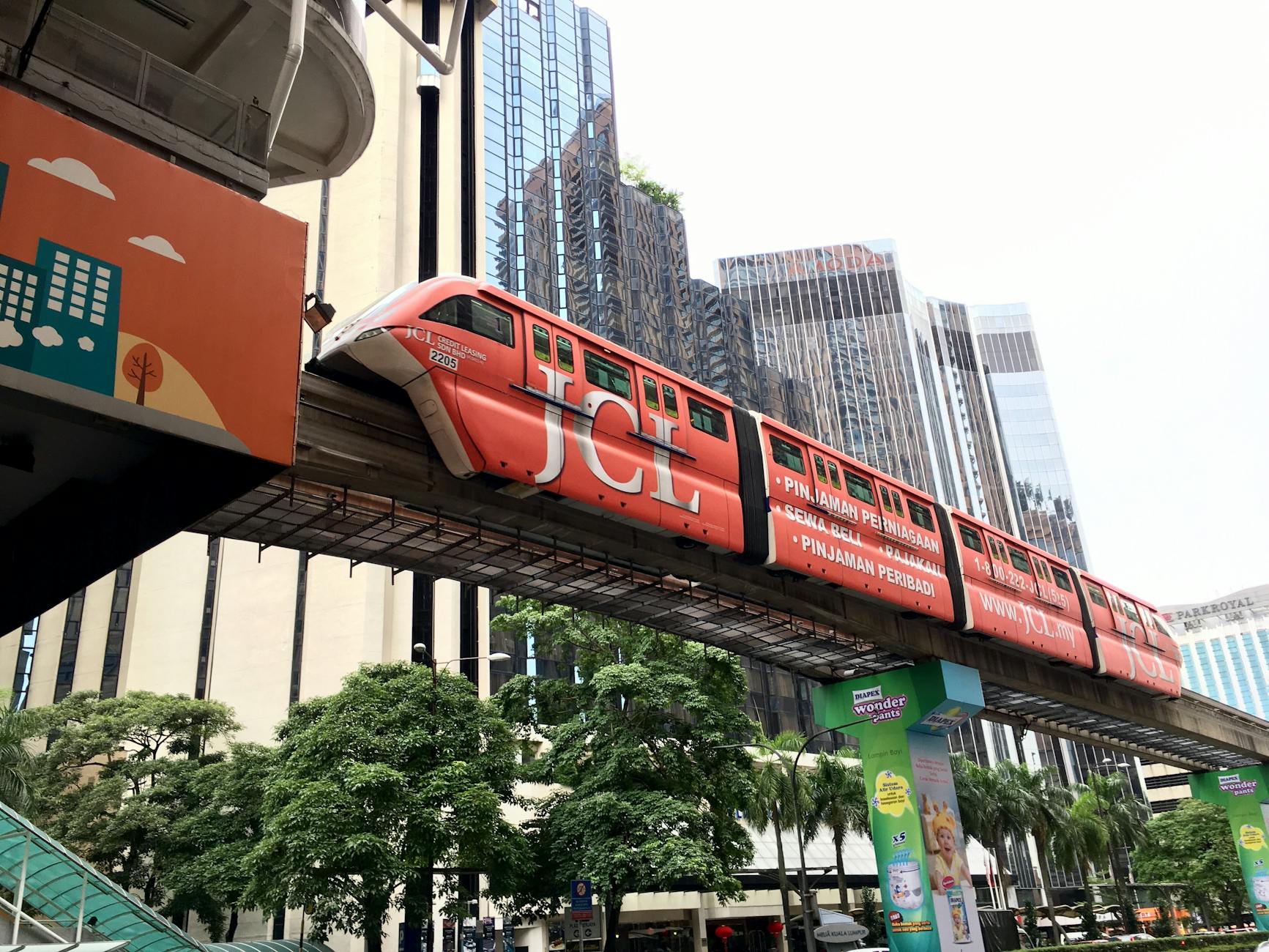
A single elevated line running 8.6 kilometres through the city core, connecting KL Sentral to Titiwangsa via Bukit Bintang and Chow Kit. Most useful for reaching Jalan Bukit Bintang and the nearby shopping strip. Fares RM 1.20 to RM 3.80.
KTM Komuter
Suburban rail extending well beyond the city centre — two main lines connect KL Sentral to Batu Caves, Rawang, Seremban, and Tanjung Malim. Batu Caves is a 30-minute ride from KL Sentral and significantly cheaper than a Grab if you are visiting the temple complex early in the day. Fares RM 1 to RM 12.
Touch ‘n Go Card: Your Essential Tool
Buy a Touch ‘n Go (TnG) card on your first day. It works across all KL rail systems, RapidKL buses, highway tolls, and many convenience stores. Cards cost around RM 20 including RM 10 of stored credit — available at any rail station, 7-Eleven, or petrol station. The Touch ‘n Go eWallet app handles digital top-ups and contactless payment via phone. For heavy transit users, the MyRapid Tourist Pass (RM 57 for a 3-day unlimited pass on all RapidKL rail and bus) is worth it if you are making six or more trips per day.
KL Sentral: The Central Hub
KL Sentral is Malaysia’s main integrated transport hub — MRT, LRT, KL Monorail, KTM Komuter, ETS intercity trains, and the KLIA Ekspres airport link all converge here. Most itineraries through Malaysia start and end here, and it is the clearest navigational anchor in the city.
Long-Distance Trains
ETS (Electric Train Service)
The ETS runs the entire west coast of the peninsula from Padang Besar on the Thai border to JB Sentral in Johor Bahru. As of January 2026 the line connects to JB Sentral, completing the corridor. ETS Platinum services (launched February 2026) offer the fastest journey times with fewer stops. Key routes:
- KL Sentral to Ipoh: 2.5 hours, from RM 50
- KL Sentral to Butterworth (Penang): 4 hours, from RM 75
- KL Sentral to Padang Besar: 5.5 hours, from RM 91
- KL Sentral to JB Sentral: approximately 4 hours, from RM 80
ETS trains have reclining seats, power outlets, onboard WiFi, and a food cart. Book through the KTMB website or app a few days ahead on busy routes — public holiday periods sell out fast.
KTM Intercity (Jungle Railway)
The KTM Intercity diesel service runs the East Coast Line — the Jungle Railway — branching at Gemas and winding through the interior to Tumpat near Kota Bharu. The full run takes around 12 hours and is not the fast option. It is, however, one of the most atmospheric rail journeys in the region, passing through dense rainforest that you cannot see from any highway. Fares start around RM 30 for the full run.
Express Buses
Buses are the workhorse of Malaysian long-distance travel. The network covers every city and major town on the peninsula and most main routes in Sabah and Sarawak. Modern coaches are air-conditioned with reclining seats; premium operators add meals, USB charging, and onboard entertainment.
Key Routes and Fares
- KL to Johor Bahru: 4 to 5 hours, RM 35 to RM 60
- KL to Penang: 4.5 to 5 hours, RM 35 to RM 55
- KL to Melaka: 2 to 2.5 hours, RM 15 to RM 25
- KL to Cameron Highlands: 4 hours, RM 35 to RM 45
- KL to Kuala Terengganu: 5 to 6 hours, RM 40 to RM 55
- KL to Kota Bharu: 7 to 8 hours, RM 45 to RM 65
Most interstate buses depart from TBS (Terminal Bersepadu Selatan), connected to Bandar Tasik Selatan rail station. Book online through BusOnlineTicket, Easybook, or 12go.asia — especially for public holiday periods when services sell out weeks ahead. Overnight buses on long routes save both travel time and a night’s accommodation; premium operators are comfortable enough to sleep on.
Ride-Hailing and Taxis
Grab: Download Before You Land
Grab is the dominant ride-hailing platform in Malaysia and the first app to install before you leave home. It covers every major city and most smaller towns, gives upfront fixed pricing, accepts international credit and debit cards, and includes driver ratings and trip tracking. Schedule pickups in advance for early airport transfers. Typical fares:
- KLIA to KL city centre: RM 100 to RM 130
- Penang airport to Georgetown: RM 25 to RM 35
- Within KL city centre: RM 8 to RM 25
- Within Georgetown, Penang: RM 6 to RM 15
Alternative Ride-Hailing Apps
- Bolt: Often cheaper than Grab with no surge pricing. Good coverage in KL and major cities.
- MyCar: Better penetration in smaller cities where Grab can be thin.
- AirAsia MOVE: Strong for airport transfers with advance booking up to a week out.
- Maxim: Budget option, particularly useful in East Malaysia.
- Riding Pink: Malaysia’s first women-only ride-hailing app — female riders matched with female drivers, useful for solo female travellers.
Traditional Taxis
Traditional metered taxis still operate but are the last resort. Many drivers in tourist areas refuse the meter and quote inflated fixed fares. If you take one, insist on the meter before getting in. At airports, use the official taxi counter — fixed fare paid upfront, receipt given, no negotiation involved.
Domestic Flights
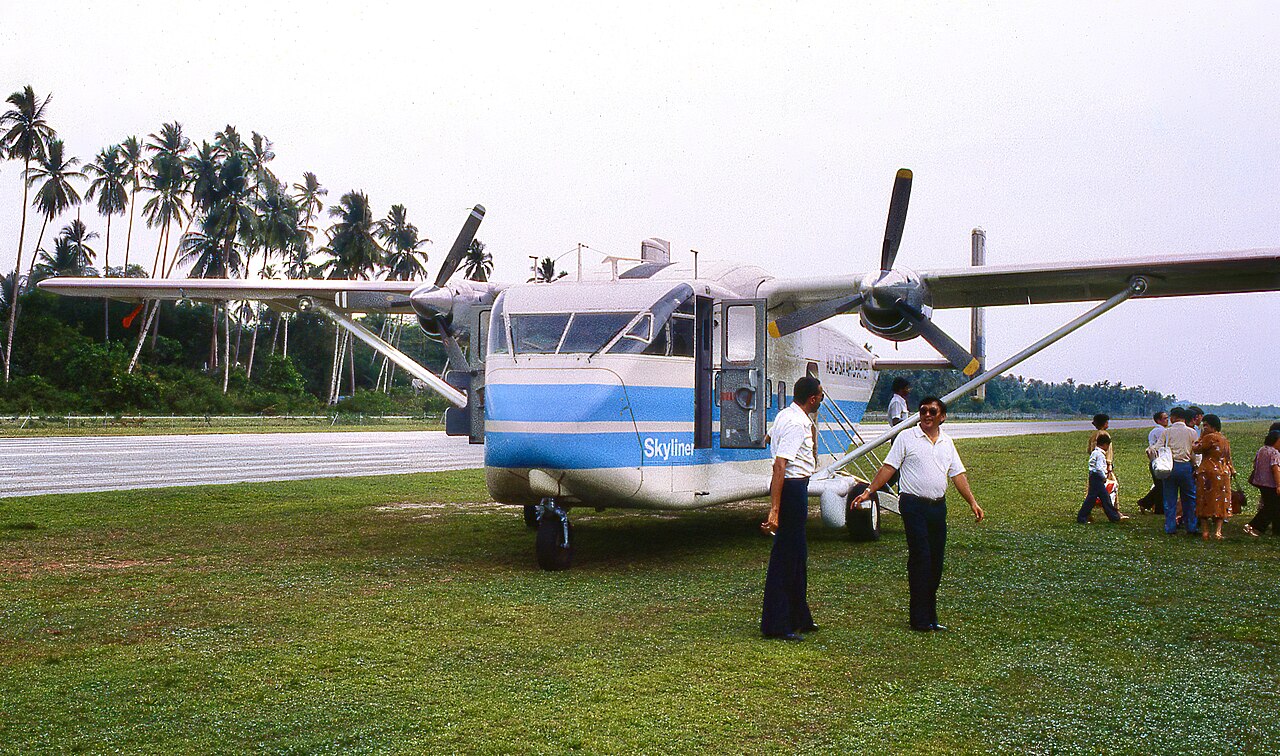
Domestic flights are non-negotiable if your itinerary covers both the peninsula and Borneo — there is no ferry connection between them. Flights are also the fastest way to cover long distances within the peninsula when bus or train would eat too much of a short trip.
Major Domestic Airlines
AirAsia is the dominant budget carrier from KLIA2, connecting KL to virtually every airport in the country. Base fares on short routes can dip below RM 50 when booked two to three months ahead — checked baggage, seat selection, and meals are all extras. Malaysia Airlines flies from KLIA’s main terminal and bundles baggage and meals into the fare, making it competitive once you price those extras into an AirAsia booking. Firefly (a Malaysia Airlines subsidiary) operates from Subang Airport, closer to the city centre than KLIA — convenient for Penang, Langkawi, and east coast routes. AirBorneo, launched January 2026 as a rebranding of MASwings, serves smaller towns and remote communities in Sabah and Sarawak where no other carrier flies.
Key Domestic Routes and Prices
- KL to Kota Kinabalu: 2.5 hours, RM 150 to RM 350
- KL to Kuching: 2 hours, RM 120 to RM 300
- KL to Penang: 1 hour, RM 70 to RM 200
- KL to Langkawi: 1 hour, RM 80 to RM 220
- KL to Kota Bharu: 1 hour, RM 80 to RM 180
- Kota Kinabalu to Sandakan: 45 minutes, RM 100 to RM 200
Book domestic flights as early as possible. AirAsia’s cheapest fares are available two to three months ahead and prices climb steeply as the departure date approaches. The gap between a fare booked ten weeks out and one booked ten days out can be RM 150 to 200 on a popular route.
Airport Transfers: Getting to and from KLIA
KLIA sits about 50 kilometres south of the city centre. Two terminals: KLIA (Malaysia Airlines and full-service carriers) and KLIA2 (AirAsia and budget airlines). A free shuttle train connects them in around three minutes.
KLIA Ekspres
Non-stop to KL Sentral in 28 minutes, trains every 15 to 20 minutes from roughly 5 AM to 1 AM. One-way fare RM 55 with a discount for advance online booking. The cleanest, fastest option with no traffic risk.
KLIA Transit
Same price as the Ekspres but makes stops at Salak Tinggi, Putrajaya and Cyberjaya, and Bandar Tasik Selatan before KL Sentral — around 35 minutes total. Useful if your accommodation sits near one of those intermediate stations.
Airport Buses and Grab
Skybus and Aerobus run from KLIA and KLIA2 to KL Sentral for RM 15 to RM 25 — about one hour in light traffic, up to two hours during peak congestion. A Grab from KLIA to central KL typically costs RM 100 to RM 130; the official airport taxi counter charges RM 75 to RM 105 fixed. Both take 45 to 60 minutes in normal traffic.
Ferries and Boats
Langkawi Ferries
Regular services from Kuala Kedah (the most popular departure point) and Kuala Perlis near the Thai border. The crossing from Kuala Kedah takes about 1 hour 15 minutes; return fare around RM 23. Departures are frequent during peak season (November to March), sometimes every 30 minutes. A vehicle ferry (RoRo) also operates for those bringing a car across.
Perhentian Islands and Tioman Ferries
Speed boats to the Perhentians depart from Kuala Besut jetty in Terengganu: 30 to 45 minutes, RM 70 to RM 80 return. Tioman ferries run from Mersing jetty in Johor: 1.5 to 2 hours, RM 70 to RM 90 return. Both are seasonal — services run March to October only. The northeast monsoon closes these islands November through February. Book ahead in July and August during school holidays when boat capacity is strained.
River Boats in Borneo
In Sarawak, river boats are often the only way to reach interior communities and longhouses. Express boats run along the Rejang River from Sibu to Kapit — a genuine Borneo experience. In Sabah, the Kinabatangan River wildlife cruises are a highlight in their own right, with orangutans, proboscis monkeys, pygmy elephants, and hornbills viewable from the water.
Driving and Car Rental
Road infrastructure on the peninsula is excellent. The North-South Expressway runs the full west coast from the Thai border to Johor Bahru; major highways are well-maintained, well-signposted, and equipped with regular rest areas. In Sabah and Sarawak, road quality outside main cities varies — some rural roads are unpaved, and interior distances are enormous.
Malaysia drives on the left. Speed limits: 110 km/h on expressways, 90 km/h on rural roads, 50 km/h in urban areas. Foreign visitors need an International Driving Permit (IDP) alongside their national licence. ASEAN nationals can drive on their home country licence. Economy car rental starts RM 100 to RM 150 per day; SUVs run RM 200 to RM 350. Foreign visitors must use RON 97 petrol at approximately RM 3.40 per litre. Download Waze for driving in Malaysia — it outperforms Google Maps on local traffic conditions and toll routing.
Getting Around Borneo (Sabah and Sarawak)
Borneo requires more planning. Distances are vast, jungle covers most of the interior, and road infrastructure beyond major towns is thin. Build more buffer time into Borneo legs than you would on the peninsula.
Air travel is the most practical option for covering large distances in Borneo. KK Airport (KKIA) is the Sabah hub; AirAsia, Malaysia Airlines, and AirBorneo fly to Sandakan, Lahad Datu, and Tawau. In Sarawak, Kuching connects to Sibu, Miri, Bintulu, and smaller towns. AirBorneo (launched January 2, 2026, replacing MASwings) serves the remote routes that no other carrier touches — essential for communities deep in the Sarawak interior.
Buses connect major towns in both states but journey times on winding mountain roads are long — a six-hour Sabah bus ride between towns is normal. For distances under three hours, buses are viable; beyond that, weigh whether a flight is worth the price. Grab operates in KK, Kuching, and the main urban centres; Maxim has better availability in some East Malaysian cities. For rural areas and national parks, arrange transport through your accommodation.
Practical Tips for Getting Around Malaysia
Book early around public holidays. Hari Raya, Chinese New Year, Deepavali, and Christmas all generate massive demand for every transport mode. Buses, trains, and flights on popular routes sell out a week or more ahead.
Carry a power bank. Ride-hailing, digital tickets, navigation, and accommodation confirmations are all phone-dependent. A dead battery in a Malaysian bus station is a genuine problem.
Have small-denomination ringgit ready. Hawker stalls, local minibuses, and small ferry operators rarely break a RM 100 note. Get ringgit from the airport ATM on arrival and keep RM 5 and RM 10 notes handy. The malaysian ringgit exchange rate guide covers where to get the best rates in KL and which money changers to use once you are settled in the city.
Get a SIM card at the airport. Mobile data is the infrastructure everything else runs on — Grab, Google Maps, Waze, booking apps. Tourist SIMs at KLIA cost RM 25 to RM 55 for 15 to 40 GB over 7 to 30 days. An eSIM activated before departure removes the need to find a kiosk on arrival.
Budget transport realistically. KL public transit rarely costs more than RM 15 a day; Grab adds RM 30 to RM 60; a car rental day including fuel and tolls runs RM 130 to RM 200. The malaysia travel budget guide covers these figures in detail alongside accommodation and food costs.
Check monsoon season before booking island ferries. East coast island services run March to October only; the northeast monsoon closes the Perhentians, Tioman, and Redang November through February. The best time to visit malaysia guide covers the east-west coast timing split clearly.
Know the regional safety picture. Malaysia is safe for independent travel generally, including public transport. The is malaysia safe guide covers the specific areas that warrant extra attention and the practical precautions worth taking before you travel.
Getting around Malaysia is one of the more straightforward parts of independent travel in Southeast Asia. Match the right mode to each leg — rail and bus for overland, flights for Borneo or long peninsula distances, ride-hailing for last-mile connections — book ahead during holidays, and the country opens up efficiently and cheaply.
The Johor Bahru–Singapore RTS Link
A new piece of infrastructure worth knowing about if your itinerary touches the south: the Johor Bahru–Singapore Rapid Transit System (RTS Link) opened in 2026 and now connects JB Sentral directly to Singapore’s Woodlands North MRT station in around five minutes. The crossing used to mean a long queue at the causeway checkpoint, whether by bus, car, or on foot. The RTS cuts that to a quick train hop. Fares sit at around RM 5.80 one way, making it the fastest and one of the cheapest ways to cross between the two countries. For travellers doing a Malaysia trip that starts or ends in Singapore, this changes the calculus on whether to transit via JB significantly.
Transport Tips by City
Penang
George Town is small enough to walk once you are in the heritage zone — most of the street art, hawker stalls, temples, and guesthouses are within a 20-minute walk of each other. For distances beyond the old town, Grab is the right tool. Rapid Penang buses cover the island but routes and schedules can be hard to parse without local knowledge. The Penang ferry from Butterworth (if you are coming from the mainland by train) costs RM 1.20 one way and takes about 15 minutes — one of the cheapest crossings in Southeast Asia. From Penang airport on the mainland, a Grab or taxi to the ferry terminal costs RM 35 to RM 50, then the ferry crosses to Georgetown.
Melaka
Melaka’s historic core is compact and best explored on foot or by trishaw — the three-wheeled bicycle rickshaws here are decorated with flowers and fairy lights and cost around RM 30 to RM 50 for a short tour. Grab operates in Melaka for getting to and from the bus station and reaching sights outside the walking zone. There is no train station in Melaka city; the closest is Pulau Sebang/Tampin station, about 38 kilometres away, making buses the obvious choice from KL.
Langkawi
Langkawi has no public bus system worth relying on. Renting a car or motorbike is the standard approach for exploring the island — economy cars run RM 80 to RM 120 per day, motorbikes RM 25 to RM 45 per day, and the island is small enough to circle in an afternoon. Grab operates but coverage is limited and waits can be long outside peak areas. Taxis from the airport to Pantai Cenang cost around RM 20 to RM 30. Island-hopping boat tours — to Pulau Dayang Bunting, Pulau Singa Besar, and the dolphin-watching zones — are booked through licensed operators at Kuah Jetty or Pantai Cenang, typically RM 35 to RM 80 per person.
Cameron Highlands
The Cameron Highlands has limited public transport. Buses from KL (Terminal Pudu Raya or TBS) serve Tanah Rata, the main town, in about four hours for RM 35 to RM 45. Within the highlands, local buses connect Tanah Rata to Brinchang but run infrequently. Most visitors rent a car for the day or join organised tours from KL or Penang to reach the tea estates, strawberry farms, and Mossy Forest without the hassle of timetables. Grab exists but supply is thin — waits of 20 to 30 minutes are common during busy periods.
Kota Kinabalu
KK is compact and most of the main attractions are within walking distance of the waterfront. The city market, Gaya Street, and the nearest restaurants are all walkable. For the Tunku Abdul Rahman Marine Park islands — Gaya, Sapi, Manukan, Mamutik, and Sulug — ferry services run from the Jesselton Point Ferry Terminal; return trips to the most popular islands cost RM 35 to RM 55. Grab operates well in central KK. For Kinabalu National Park (approximately 90 kilometres from the city), most visitors book organised transfers through their accommodation or park lodges.
How to Plan Transport Across Multiple Cities
A typical peninsula itinerary runs west coast north to south (or reverse): KL, Ipoh, Penang by ETS train; then Langkawi by air from Penang, or overland to Kuala Perlis and across by ferry — the direct Penang–Langkawi ferry was suspended in 2020 and has never resumed; then south to Melaka and back to KL by bus. This loop is easy to execute using trains and buses with minimal pre-booking stress outside of public holidays.
Adding east coast islands (Perhentians or Redang) means flying or busing to Kota Bharu or Kuala Terengganu, then a speed boat out. For Tioman, the simplest approach is a bus from KL to Mersing followed by the ferry. Adding Borneo to any of the above means a domestic flight — typically from KL to Kota Kinabalu or Kuching, with internal Borneo connections from there.
The 14-day grand itinerary — KL, Melaka, Penang, Langkawi, then fly to Kota Kinabalu and Kuching — is entirely doable with a mix of ETS trains, buses, ferries, and two or three domestic flights. The malaysia travel budget guide covers what all those legs cost in total so you can plan your spend realistically before you leave.
4 notes