Best Temples in Malaysia: A Guide to the Country’s Most Spectacular Religious Sites
Discover the best temples in Malaysia, from the iconic Batu Caves and Kek Lok Si in Penang to hidden cave temples in Ipoh and historic shrines in Melaka.
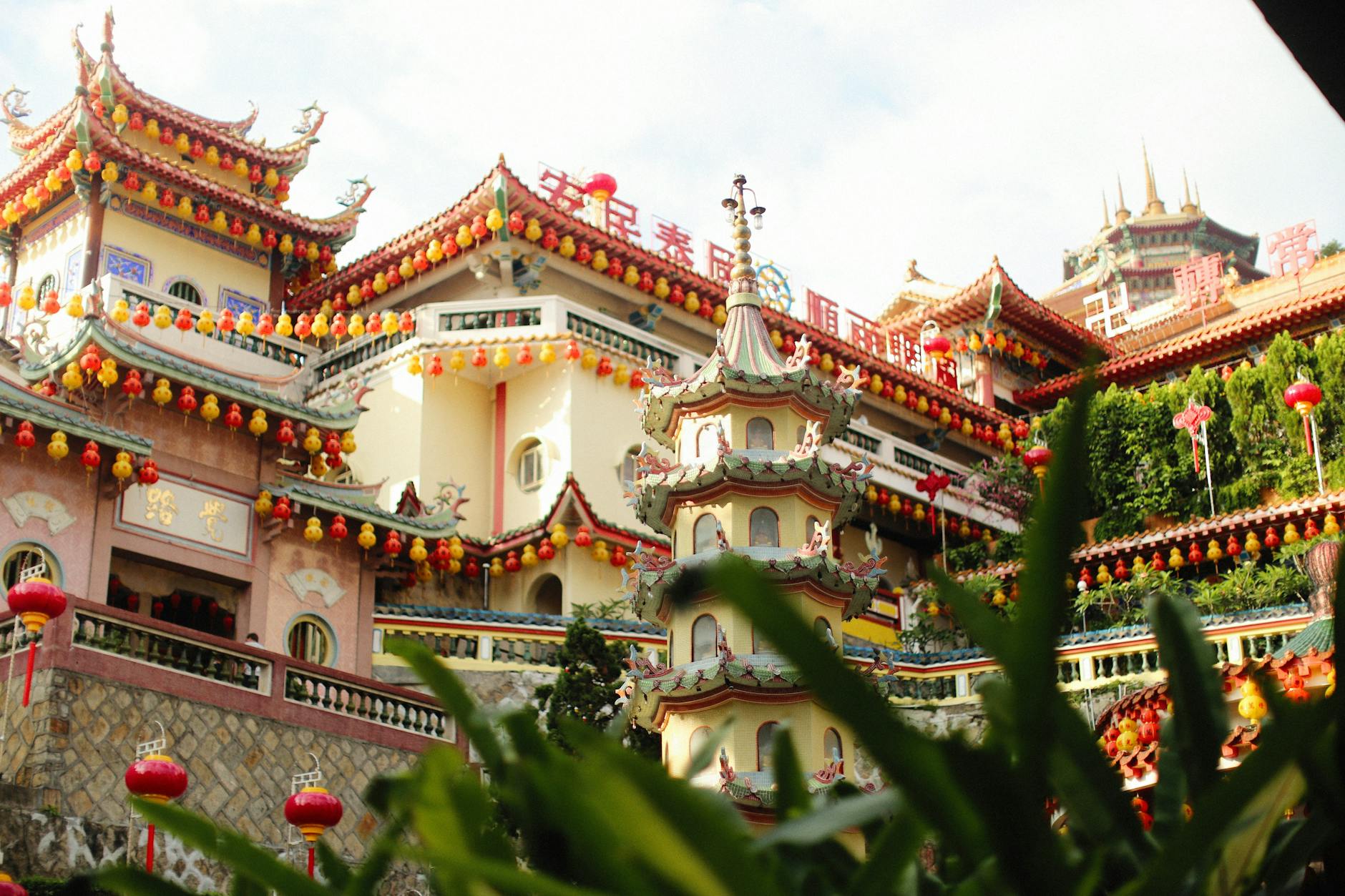
Malaysia’s temples are genuinely some of the most dramatic religious architecture in Southeast Asia. Not in a polished, museum-piece sense, but as places that are actively used, regularly repainted, and constantly expanding as communities fund new shrines and taller statues. Hinduism, Buddhism, Taoism, and Confucianism have coexisted alongside Islam here for centuries, and the sacred sites that grew from those traditions range from ancient cave sanctuaries to hilltop complexes visible from kilometres away. The best temples in Malaysia reward any kind of visitor: spiritual, architectural, or simply curious about a culture that takes its temples seriously.
This guide covers the most impressive temples across the country, from famous landmarks that draw millions annually to cave temples and hillside shrines that most visitors walk straight past. Each entry includes what makes it worth visiting, practical visiting information, and the details that separate a good visit from a great one. For a broader look at things to do in malaysia, the pillar page covers all activity categories. The guide to day trips from kuala lumpur covers Batu Caves and several other temple sites as part of KL excursion planning.

Batu Caves Sri Subramaniar Swamy Temple
No list of Malaysian temples starts anywhere else. Thirteen kilometres north of KL, Batu Caves is the country’s most visited religious site and the image most people picture when Malaysia is mentioned in the same breath as temples. The limestone cave complex is estimated to be over 400 million years old. Hindu worship here dates to 1891, when K. Thambusamy Pillai installed the consecrated statue of Sri Subramaniar Swamy in what is now the Temple Cave. Batu Caves is at its most extraordinary during Thaipusam, when well over a million devotees climb the 272 steps.
The approach is where the drama begins. The 272 rainbow-coloured steps, repainted in vivid gradients in 2018, rise steeply into the mouth of the limestone cave. At the base, the 42.7-metre gold statue of Lord Murugan, the tallest in the world, completed in 2006 using 250 tonnes of steel and 300 litres of gold paint, stands at the foot of the stairs. The Temple Cave at the top is a natural cathedral, ceiling soaring over 100 metres, natural light cutting through openings in the rock, Hindu shrines arranged through the interior. The cave itself has been a place of worship for over 130 years and feels lived-in rather than staged.
During Thaipusam in January or February, over a million people converge here for one of the most intense public religious spectacles in Asia. Devotees carry kavadi structures, elaborate steel frameworks decorated with peacock feathers and flowers, that are pierced through their skin while they are in states of deep religious devotion. The procession from Sri Mahamariamman Temple in KL Chinatown covers 15 kilometres to reach Batu Caves and takes most of the night. If your dates overlap with Thaipusam, this is a significant travel experience. Outside the festival, the site is manageable and free.
The Dark Cave running off the main complex has been developing for 400 million years. Guided 45-minute tours pass through chambers with stalactites, rare cave fauna including the Liphistius batuensis trapdoor spider believed to exist nowhere else on Earth, and near-total darkness that genuine cave ecosystems require. The Ramayana Cave at the base of the hill is painted floor to ceiling with Hindu mythological scenes, more vivid than any museum diorama.
Visiting information: Main Temple Cave free. Dark Cave tours RM35 for adults. Open daily 6 AM to 9 PM. KTM Komuter from KL Sentral, final stop, about RM2.50. Cover shoulders and knees; this is an active place of worship. Come before 9 AM to beat the midday heat on the exposed staircase. Keep food secured; the macaques are fast.
Kek Lok Si Temple, Penang
The largest Buddhist temple in Malaysia, perched on the hillside of Air Itam in Penang. Construction began in 1890 and has never entirely stopped since. The temple draws pilgrims and visitors in roughly equal measure and remains, unmistakably, an active place of worship rather than a heritage exhibit. The scale of the complex is something photographs consistently understate.
The Pagoda of Ten Thousand Buddhas, officially the Ban Po Thar, is the centrepiece: a seven-storey tower fusing a Chinese octagonal base, Thai middle section, and Burmese crown, representing the unity of Buddhist traditions across Asia. Each level holds hundreds of Buddha statues in various poses and materials. The 36.5-metre bronze Kuan Yin statue at the highest point of the complex, completed in 2002, is one of the tallest Goddess of Mercy statues in the world and visible from much of Penang on a clear day. Meticulously maintained koi ponds, tortoise pools, and ornamental gardens fill the surrounding grounds.
During Chinese New Year, Kek Lok Si runs an illumination of tens of thousands of LED lights and lanterns across every pagoda, pavilion, and pathway. The illumination typically lasts about 30 days and creates one of the most dazzling light displays in Malaysia. The difference between the temple in ordinary daylight and the temple fully lit against a dark sky is considerable; if you can time a Penang visit around Chinese New Year, this is a genuine reason to do it.
Visiting information: Main temple grounds free. Pagoda of Ten Thousand Buddhas RM2. Inclined lift to Kuan Yin level RM4. Open daily 8:30 AM to 5:30 PM. Accessible by bus or Grab from George Town, about 30 minutes. Budget two to three hours for the full complex.
Thean Hou Temple, Kuala Lumpur
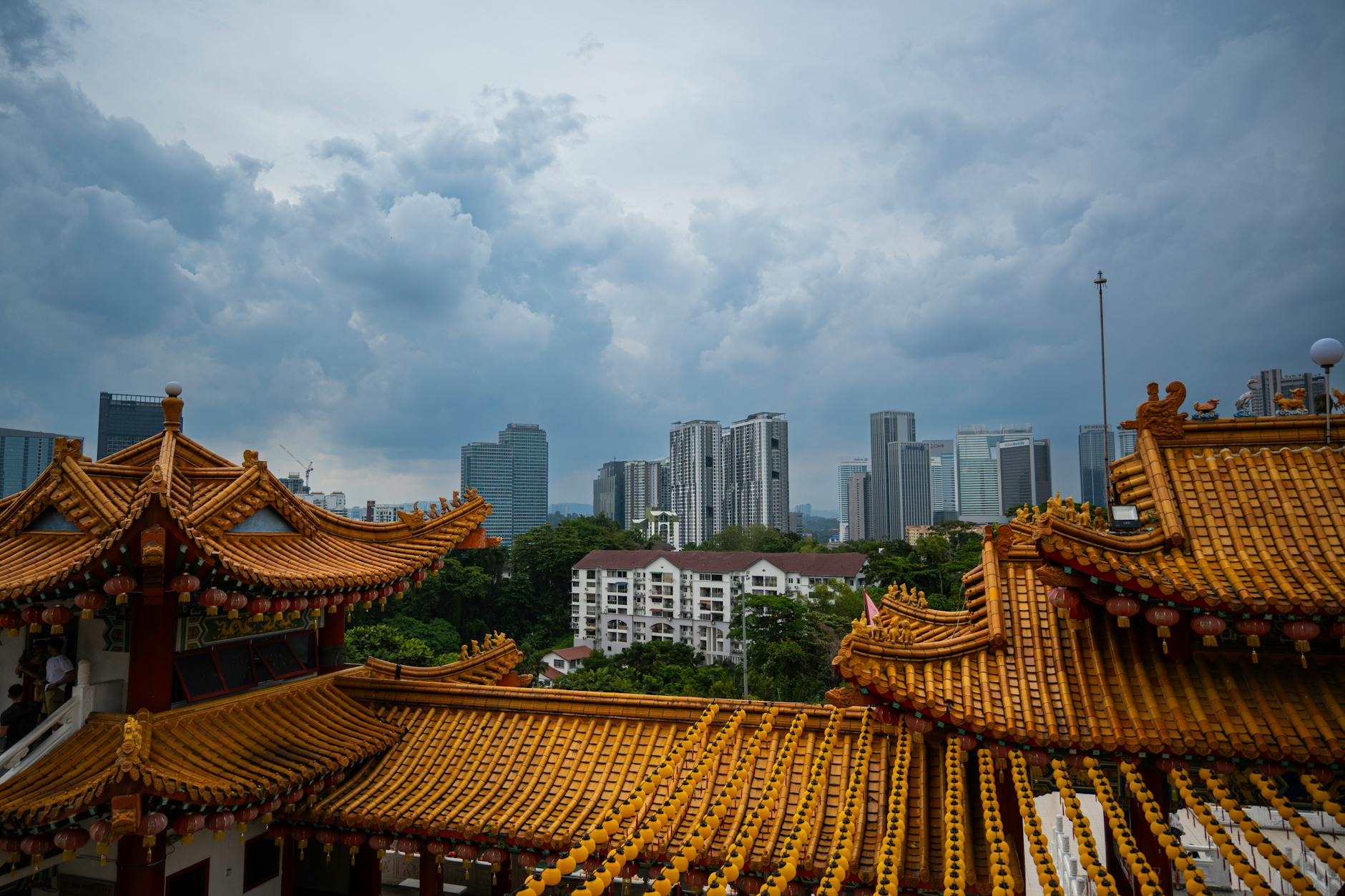
Perched atop Robson Heights in KL, Thean Hou Temple is one of the most photogenic temples in Malaysia and among the largest Chinese temples in Southeast Asia. Completed in 1989 by KL’s Hainan community, this six-tiered temple is dedicated to Tian Hou, the Goddess of Heaven and protector of seafarers, and folds Buddhist, Taoist, and Confucian traditions into a single complex. The sweeping curved roofs adorned with dragon and phoenix sculptures, intricately carved pillars, and vibrant red and gold colour schemes are traditional Chinese temple design executed on a generous scale.
The main prayer hall on the upper level houses Tian Hou flanked by Kuan Yin and Shui Wei Sheng Niang, the Goddess of the Waterfront. Lower levels run to a tortoise pond, medicinal herb garden, and wishing well. The elevated position gives panoramic views of the KL skyline, particularly useful at dusk when the city lights begin and the red lanterns across the complex are lit. The temple is significantly more atmospheric in late afternoon than in the glare of midday. During Chinese New Year and the Mid-Autumn Festival, performances and cultural activities fill the grounds.
Visiting information: Free admission. Open daily 8 AM to 10 PM. Near Mid Valley Megamall; Grab or taxi from central KL for roughly RM10-20. Best visited in late afternoon for the sunset view over the city. Photography welcome throughout the complex.
Sri Mahamariamman Temple, Kuala Lumpur
The oldest Hindu temple in KL, on Jalan Tun HS Lee at the edge of Chinatown since 1873. Founded by the Pillai family of Tamil Nadu for the growing South Indian immigrant community, the temple has been rebuilt and expanded repeatedly, with the current ornate structure dating primarily to the 1960s and 1970s. The gopuram, the elaborately sculpted tower gateway characteristic of South Indian Dravidian temple architecture, rises above the surrounding shophouses covered with 228 individually carved and painted Hindu deities across five tiers. Added in 1972, it is one of the most visually dense architectural features in the city — the kind of thing you stop and stare at before you have decided to.
Inside, the main deity Sri Mahamariamman is flanked by shrines to Lord Ganesha, Lord Murugan, and other Hindu deities. The interior is decorated with imported Spanish and Italian tiles, precious stones, and gold embellishments. During Thaipusam, the silver chariot bearing Lord Murugan’s image begins its 15-kilometre procession from this temple to Batu Caves, drawing hundreds of thousands of devotees and spectators through the night and into the early morning hours.
Visiting information: Free entry. Open daily 6 AM to 8:30 PM with a midday break on some days. On Jalan Tun HS Lee in Chinatown, short walk from Pasar Seni MRT. Remove shoes before entering. Photography generally permitted but be respectful during active prayer times.
Wat Chayamangkalaram, Penang
On Lorong Burma in George Town, this Thai Buddhist temple houses one of Malaysia’s most remarkable religious artworks: a 33-metre Reclining Buddha that ranks among the largest in the world outside Thailand. The temple was established in 1845 on land granted by Queen Victoria during the Straits Settlements era. The Reclining Buddha, named Phra Chaiya Mongkol and completed in 1958, depicts the Buddha in the moment before entering Nirvana — gold-plated, lying on his right side, with exquisitely detailed toenails and a serene expression. The sight of this enormous figure within the colourful Thai-style hall is genuinely surprising given that the temple exterior gives little hint of the scale inside.
The temple grounds feature Thai-style architecture with steep multi-tiered roofs, naga serpent balustrades, and guardian figures. A large standing Buddha statue dominates the courtyard. Directly opposite is the Dhammikarama Burmese Temple, creating a rare opportunity to walk between two distinct Buddhist national traditions within a few steps of each other. Visit both in the same hour; the architectural and atmospheric contrast between them is striking.
Visiting information: Free entry, donation box available. Open daily 6 AM to 5:30 PM. Lorong Burma, George Town, accessible by local bus or Grab. Easy walk from the Dhammikarama Burmese Temple directly opposite.
Dhammikarama Burmese Temple, Penang
The only Burmese Buddhist temple in Malaysia and one of the oldest Burmese temples outside Myanmar. Established in 1803 by Burmese immigrants in the Pulau Tikus neighbourhood of George Town, this temple has a quieter, more contemplative atmosphere than most of Penang’s more visited religious sites. Golden Burmese-style pagodas, intricate wood carvings, and murals depicting scenes from the life of the Buddha define the aesthetic. A bodhi tree said to be descended from the original tree under which the Buddha attained enlightenment stands in the grounds alongside a wishing pond and a meditation hall. The temple has undergone extensive renovation in recent years, adding ornate gateways and guardian lion statues while preserving its distinctly Burmese character.
Together with Wat Chayamangkalaram across the street, it makes a compact, rewarding circuit of Buddhist traditions in Penang that most visitors to the island skip entirely. Budget 45 minutes across both temples and you will leave having seen something genuinely unusual for Malaysia.
Visiting information: Free entry. Open daily 5 AM to 6 PM. Lorong Burma, directly opposite Wat Chayamangkalaram. Dress modestly and remove shoes before entering temple buildings.

Chin Swee Caves Temple, Genting Highlands
Set against the forested limestone cliffs of Genting Highlands at 1,400 metres above sea level, Chin Swee Caves Temple is one of the most atmospherically situated temples in Malaysia. Built into and around natural limestone caves on a steep hillside, the complex includes a nine-storey pagoda, a 15-metre-tall Buddha statue, and a sky terrace with views over forested highlands that regularly disappear into cloud. On clear days the views are exceptional; on misty days the temple takes on an ethereal quality that photographs cannot quite capture. The temple was opened in 1994, dedicated to the reverend Master Chin Swee, a Buddhist monk venerated in Fujian Province for miraculous abilities.
One of its most unusual features is the Journey to Enlightenment pathway, with ten diorama chambers depicting Buddhist concepts of punishment and the consequences of wrongdoing. These graphic and somewhat unsettling displays are a distinctly Malaysian approach to Buddhist teaching and provide sharp contrast to the serenity of the rest of the complex. Children find the dioramas memorable; adults find them interesting for different reasons. The accessible cable car connection makes this an easy addition to a Genting Highlands day trip without requiring extra driving.
Visiting information: Free entry. Open daily 8 AM to 6 PM. Accessible via the Awana Skyway cable car, which has a dedicated station at the temple, or by road from the Genting Highlands route. Bring a jacket; temperatures at this altitude drop significantly from the lowlands. Allow one to two hours.
Sam Poh Tong Temple, Ipoh
Hidden within a limestone cave on the outskirts of Ipoh, Sam Poh Tong is one of the most unusual temple settings in Malaysia. The cave was discovered by a wandering monk in 1890, who stayed in meditation there for the rest of his life. The interior blends natural geological formations with Buddhist architecture in a way that feels organic rather than imposed: stalactites and stalagmites alongside altars and shrines, a ceiling that soars in natural formations over millions of years of slow growth. At the rear of the cave, an opening leads to a lush garden courtyard enclosed by towering limestone cliffs, with a large pond inhabited by turtles and fish. The transition from cave darkness to open sky and the sound of water is one of the more unexpected moments in Malaysian temple visiting.
Sam Poh Tong is the largest and best known of several cave temples in the Ipoh area. Nearby Kek Lok Tong and Ling Sen Tong offer similar settings with their own distinct atmospheres. If you are visiting one, budget half a day to see at least two or three while you are there; they are close enough together to make the detour between them worth the time.
Visiting information: Free entry, donation box available. Open daily 8 AM to 4 PM. Located approximately five kilometres south of Ipoh city centre, best reached by Grab. Allow one hour minimum, or half a day if combining with other Ipoh cave temples.
Cheng Hoon Teng Temple, Melaka
Founded in 1645, Cheng Hoon Teng is the oldest functioning Chinese temple in Malaysia and one of the oldest in Southeast Asia. On Jalan Tokong in Melaka’s historic Chinatown, it has served the Chinese community through Portuguese, Dutch, and British colonial rule and remains actively used today. The architecture is traditional Fujianese Chinese, with ornate roof ridgework featuring ceramic figurines from mythological scenes, intricately carved timber doors, and colourful murals. The original building materials were imported from China, and the craftsmen who created the carvings and decorations were brought from the southern Chinese provinces. The courtyard within the complex is a calm oasis: wind chimes, incense, shaded seating, and the sounds of Jonker Street replaced by something quieter.
The temple combines Buddhist, Taoist, and Confucian traditions, with altars dedicated to Kuan Yin, Tian Hou, and Confucius. It sits within easy walking distance of the Sri Poyatha Moorthi Hindu Temple and Kampung Kling Mosque on what is sometimes called Harmony Street, one of the few streets in the world where you can walk between active Hindu, Buddhist, and Muslim places of worship within a few hundred metres. For the Jonker Street night market shopping experience after your temple visits, the guide to shopping in malaysia covers Melaka markets in detail.
Visiting information: Free entry. Open daily 7 AM to 5 PM. Jalan Tokong, short walk from Jonker Street. Easy to combine with Sri Poyatha Moorthi and Kampung Kling Mosque along the same street.
Sri Poyatha Moorthi Temple, Melaka
On the same historic street as Cheng Hoon Teng, Sri Poyatha Moorthi holds the distinction of being the oldest functioning Hindu temple in Malaysia. Constructed in 1781 on land granted by the Dutch colonial administration, this Chitty Hindu temple is dedicated to Lord Ganesha, the elephant-headed god of wisdom and new beginnings. This dedication is unusual among Malaysian Hindu temples, which more commonly focus on Lord Murugan or Lord Shiva. The architecture is relatively modest compared to the elaborate gopurams of newer temples, but its age and historical significance make it one of the most important sites on this list. As part of Melaka’s UNESCO World Heritage Site listing, it represents over 240 years of unbroken Hindu worship in the peninsula.
Visiting information: Free entry. Open daily with varying hours. Jalan Tukang Emas (Harmony Street) in Melaka Chinatown, walking distance of Cheng Hoon Teng Temple and Kampung Kling Mosque.
Arulmigu Balathandayuthapani Temple, Penang
Often called the Penang Waterfall Temple or Waterfall Hill Temple, this is one of the most important Hindu temples in Malaysia outside Batu Caves. Established in 1854 at the foot of Penang Hill and dedicated to Lord Murugan, it is reached by climbing 513 steps flanked by sculptures of Hindu deities. The climb itself takes 20 to 30 minutes at a moderate pace, and the views over George Town open up progressively as you ascend. The main gopuram at the entrance is covered with hundreds of coloured carved figures from Hindu mythology.
During Thaipusam, this temple rivals Batu Caves in spiritual intensity, with kavadi-bearing devotees climbing the 513 steps in acts of profound religious commitment. The atmosphere here during the festival is different from Batu Caves — smaller in scale, somewhat more intimate — and worth experiencing if your dates overlap. For understanding the broader cultural context of the festivals and the heritage institutions that document them, the guide to best museums in malaysia covers relevant institutions in Penang and KL.
Visiting information: Free entry. Open daily 6:30 AM to 12 PM and 5:30 to 9 PM. Air Itam, at the foot of Penang Hill. Dress modestly and remove shoes when entering shrine areas.
Temple Etiquette and Practical Tips
A few things worth knowing before you visit any temple in Malaysia.
Dress: Cover shoulders and knees at all Hindu and Buddhist temples. Some larger sites provide sarongs or cover-ups at the entrance, but it is simpler to carry a light scarf or wear long sleeves you can add. Remove shoes before entering any temple building or prayer hall. Wear sandals or shoes you can slip off easily rather than lace-ups that take time in the heat.
Behaviour: Speak quietly. Do not touch religious statues or artefacts unless invited. Ask before photographing worshippers during prayer or ceremony. Silence your phone inside prayer halls. If a ceremony or prayer session is under way, wait at the perimeter or come back later rather than walking through it.
Timing: Early morning visits are cooler, quieter, and better for photography. Festival periods bring spectacular visual experiences but enormous crowds — plan accordingly. The main festivals to plan around: Thaipusam in January or February at Batu Caves and Penang Waterfall Temple; Chinese New Year in January or February at Kek Lok Si in Penang; Vesak Day in May at Chinese and Thai Buddhist temples; and Deepavali in October or November at Hindu temples across the country.
Photography: Generally permitted in public areas. Check for signage indicating restricted shrine rooms. Avoid flash inside dimly lit interiors. Do not pose in ways that could be considered irreverent near religious imagery.
Combining visits: Several of these temples sit close enough to visit in a single outing. The Melaka temples — Cheng Hoon Teng, Sri Poyatha Moorthi, and Kampung Kling Mosque — are all within 200 metres of each other on Harmony Street. Penang’s Wat Chayamangkalaram and Dhammikarama are literally across the street. The Ipoh cave temples are clustered within a few kilometres of the city centre. Build your itinerary around geographic clusters to maximise what you see in a day. For nightlife after an evening at Thean Hou or Batu Caves, the guide to malaysia nightlife covers KL. For families combining temples with a theme park day, the guide to malaysia theme parks covers Genting SkyWorlds — accessible on the same road as Chin Swee Caves Temple.
Mosques Worth Visiting as a Non-Muslim
While this guide focuses on Hindu and Buddhist temples, Malaysia’s mosques are significant architectural landmarks that welcome respectful non-Muslim visitors outside prayer times, and they complete the picture of what religious architecture in the country looks like.
The National Mosque (Masjid Negara) in KL, opened in 1965, seats 15,000 worshippers under a distinctive star-shaped roof and is set in 13 acres of gardens. Robes are available at the entrance for visitors who arrive without appropriate clothing. The Sultan Salahuddin Abdul Aziz Mosque in Shah Alam has one of the largest domes in the world, its blue aluminium and steel construction visible from the main highway. In Kota Kinabalu, Masjid Bandaraya appears to float on the surface of the water at high tide and is particularly beautiful photographed at sunset from the causeway leading to it.
In Putrajaya, Putra Mosque, the Pink Mosque, is the most visited of Malaysia’s modern mosques. Built from rose-tinted granite, it fits 15,000 worshippers and sits beside the 6.5-square-kilometre artificial lake that the city was designed around. The viewing angle from the lake cruise is better than from the road. Visiting hours are Saturday to Thursday 9 AM to 12:30 PM, 2 PM to 4 PM, and 5:30 PM to 6 PM; Friday visiting is restricted to 3 to 4 PM and 5:30 to 6 PM.
All of Malaysia’s major mosques have a common set of requirements: arms and legs covered for all visitors, hair covered for women, shoes removed at the entrance. Most mosques provide robes at the entrance for visitors who arrive without appropriate clothing. Outside prayer times, the welcome for non-Muslim visitors is genuine rather than reluctant, and the architecture of the larger mosques is worth seeing on its own terms.
Planning a Temple-Focused Itinerary
Malaysia’s temples are spread across the country, but they cluster in ways that make efficient itinerary planning possible. A few frameworks worth knowing.
KL concentrates its temple highlights in a manageable circuit: Batu Caves by morning train, Thean Hou Temple in the afternoon for the city views at dusk, Sri Mahamariamman in Chinatown as an early evening stop. Three temples, one city, one day. For anyone staying in KL and wanting to pair temples with other activities, the guide to day trips from kuala lumpur integrates Batu Caves into broader day excursion planning.
Penang concentrates temple density in George Town and Air Itam. Kek Lok Si in Air Itam takes the morning, Wat Chayamangkalaram and Dhammikarama on Lorong Burma take an hour together in the early afternoon, and the Arulmigu Balathandayuthapani Temple at the foot of Penang Hill can fill late afternoon. That is four significant temple sites in one Penang day without rushing any of them. The addition of George Town street art and the UNESCO heritage district after the temples makes for a complete cultural day on the island.
Melaka’s Harmony Street circuit is the most compact anywhere in Malaysia: three faiths within 200 metres of each other. Add the Baba Nyonya Heritage Museum and the Dutch Square colonial architecture nearby, and you have a half-day of heritage that is dense with actual significance rather than tourist approximations of it.
For photographers, the best light at most temples is in the first two hours after sunrise and the last two hours before sunset. Midday light is harsh and the crowds are at their heaviest. The Chinese temples, with their red and gold colour schemes, photograph particularly well in warm late-afternoon light. Batu Caves’ rainbow steps are most dramatic in the morning when they are evenly lit without harsh shadows. Kek Lok Si during Chinese New Year illumination requires an after-dark visit and a tripod.
1 note