Eco-Tourism in Malaysia: Sustainable Travel & Green Destinations

Malaysia receives around twenty-seven million international visitors annually, and an increasing proportion come not for the beaches or the shopping but for the wildlife, the ancient forests, and the chance to see ecosystems that exist nowhere else on Earth. Eco-tourism — travel that actively supports conservation and local communities while minimising environmental impact — has become one of the most significant segments of Malaysia’s tourism economy, and the country has built some of the most credible and well-managed nature tourism experiences in Asia.
This is not a uniform or always straightforward picture. The label “eco-tourism” is applied loosely across Southeast Asia, sometimes to operations that have little to do with conservation and everything to do with marketing. Malaysia has genuine examples of responsible, high-impact eco-tourism — and it has operations that use the language without the substance. This guide distinguishes between them, covers the best certified and community-based options, and explains how to travel through Malaysia’s natural environments in ways that contribute rather than damage. For the full overview of Malaysia’s wildlife destinations, our malaysia wildlife guide is the starting point.
What Makes Eco-Tourism Genuine in Malaysia?

Three criteria distinguish genuine eco-tourism from tourism that happens near nature:
- Conservation contribution: A portion of revenue directly funds habitat protection, species monitoring, anti-poaching, or habitat restoration — not just vague “community benefit.”
- Minimal footprint: Group sizes are controlled, activities are managed to avoid disturbance, infrastructure is designed to integrate rather than dominate the environment.
- Community involvement: Indigenous and local communities are meaningful stakeholders — not just suppliers of photo opportunities — with genuine economic benefit and decision-making participation.
Malaysia’s national park system, operated by Sabah Parks, Sarawak Forestry Corporation, and Peninsular Malaysia’s PERHILITAN, provides the strongest structural support for genuine eco-tourism. Fees paid at the park gate directly fund ranger salaries, trail maintenance, and conservation programmes. Stays at certified nature lodges — particularly those within park boundaries — typically provide the highest conservation value per tourism dollar.
Malaysia’s credentials are grounded in its extraordinary natural heritage. The country is one of the seventeen megadiverse nations on Earth, supporting approximately 15,000 species of flowering plants, over 350 species of mammal, over 800 species of bird, and coral reef systems harbouring more than 600 species of hard coral. The Visit Malaysia 2026 campaign has placed significant emphasis on sustainability, with eco-certification programmes, carbon-conscious infrastructure development, digital visitor tracking to manage carrying capacity at sensitive sites, and stricter conservation standards in national parks.
Best Eco-Tourism Destinations in Malaysia
Taman Negara National Park
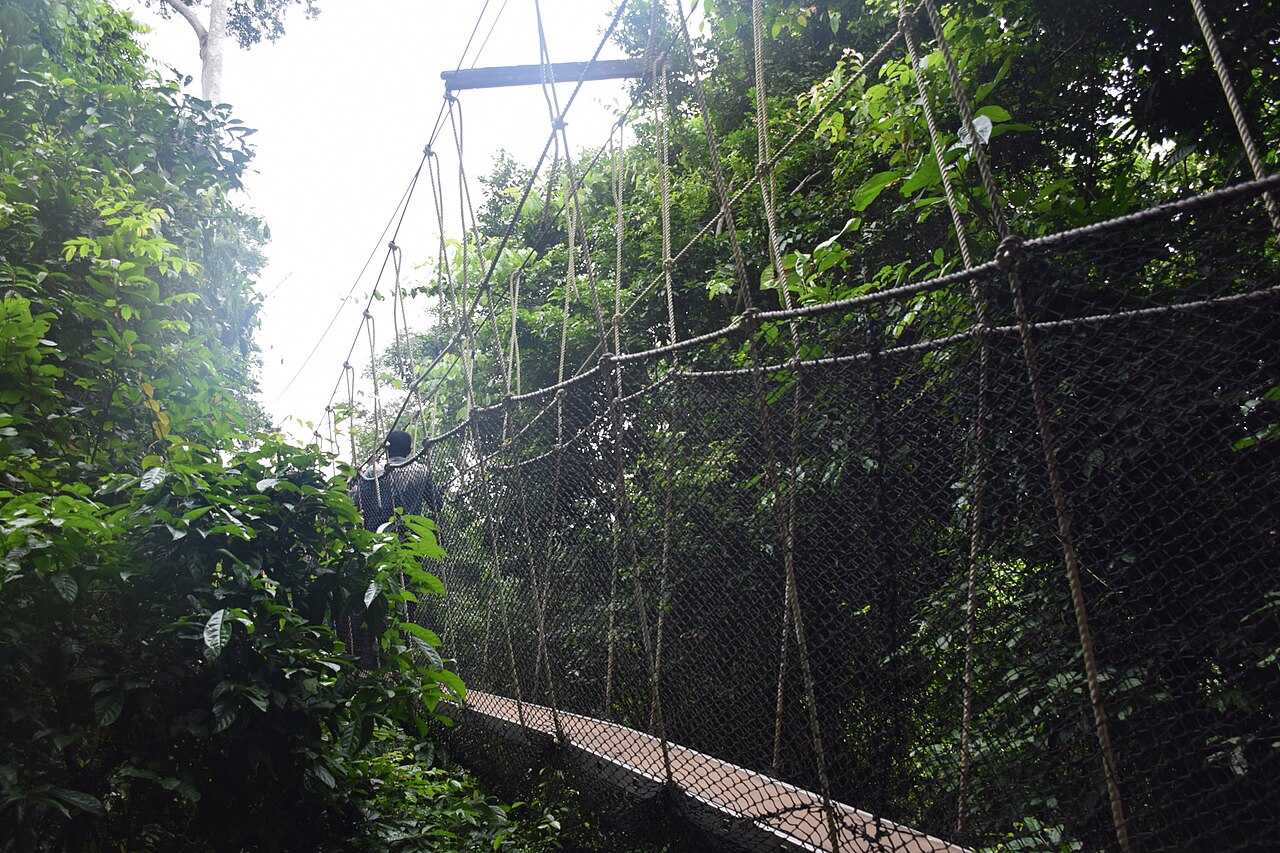
The oldest and most established eco-tourism destination in peninsular Malaysia. Covering 4,243 square kilometres of primary rainforest estimated to be 130 million years old, Taman Negara national park protects the last significant lowland dipterocarp forest on the peninsula alongside Malaysia’s largest remaining populations of Malayan tiger, Asian elephant, and Sumatran rhinoceros. The park generates substantial conservation funding through visitor fees, guided walk fees, and accommodation charges. Locally trained Orang Asli guides — from the Batek and Taman communities who have inhabited this forest for thousands of years — provide both ecological expertise and genuine community economic benefit. The canopy walkway, night hides, and river travel make this the most accessible serious wildlife destination on the peninsula.
Kinabalu National Park
A UNESCO World Heritage Site managing over 300,000 visitors per year while maintaining the ecological integrity that earned it the designation — a challenging balance that Kinabalu national park handles with a quota system for the summit climb (limited to 165 climbers per day), clear zoning of different visitor intensity areas, and revenue that funds both park management and botanical research. The park’s sustainable tourism infrastructure — paved trails, controlled access, mandatory guide requirements for the summit route — is a model for how high-visitation natural sites can be managed without destroying the resource that attracts visitors. The botanical garden and interpretation programmes educate visitors about the extraordinary biodiversity of the mountain.
Borneo Rainforest Lodge and Danum Valley
One of the most credible eco-tourism operations in Southeast Asia. The lodge’s access to the Danum Valley Conservation Area is managed by Innoprise Corporation, a Sabah state-owned entity whose mandate is sustainable forest management. Revenue from lodge stays directly funds the research station and field staff that protect 428 square kilometres of primary forest. The lodge operates strict visitor number limits, has invested in solar power and low-impact waste management, and its naturalist guide team includes some of the most skilled wildlife interpreters in Borneo. The combination of high standards, genuine conservation contribution, and extraordinary wildlife makes this one of the places where the eco-tourism label is fully justified. Our guide to see orangutans malaysia covers Danum Valley as part of the full wild orangutan circuit.
Royal Belum State Park
Royal Belum in Perak protects one of the world’s oldest rainforests and is the only location on Earth where all ten species of Malaysian hornbill can be found. Access is controlled through a permit system limiting visitor numbers and ensuring activities are conducted with minimal environmental impact. Boat-based wildlife watching on Temenggor Lake provides excellent opportunities to observe hornbills, peacock-pheasants, and forest raptors without disturbing the forest interior. Most visitors take three-day or four-day packages including boat transfers and guided birding. The permit system — arranged through the Perak State Park Corporation at least two weeks in advance — is the model of carrying-capacity management that other parks in Malaysia are beginning to adopt.
Turtle Conservation Programmes
Malaysia’s sea turtle watching programmes span from the Turtle Islands Park in Sabah to community-run hatcheries on the east coast peninsula, and the best of them represent exactly the economic incentive structure that conservation economics argues for: communities that previously collected eggs for sale now derive greater income from protecting nests and charging for the wildlife experience. The Lang Tengah Turtle Watch, the Juara Turtle Project on Tioman, and the Turtle Islands Park itself all demonstrate the model working. Our sea turtles malaysia guide covers all the options and explains how to distinguish genuine conservation visits from commercial boat trips that simply approach nesting turtles.
Birdwatching Tourism
Birdwatching is one of the highest-value forms of eco-tourism per visitor: birders typically stay longer, spend more per day, and are more likely to return than general nature tourists. Malaysia’s 750-plus bird species attract dedicated birders from across Europe, North America, and Australia, particularly to Sabah’s endemic-rich sites. The economic argument for protecting Bornean primary forest — home to irreplaceable endemic species — is partly built on this visitor spending. Our birdwatching malaysia guide covers the site-by-site logistics and which operations have the strongest conservation credentials.
Marine Eco-Tourism
Malaysia’s marine parks — Sipadan, the Perhentians, Redang, Tioman, the Tun Mustapha Park in Sabah — anchor a substantial dive and snorkelling tourism economy. The best-managed sites limit diver numbers, require briefings on reef protection protocol, and fund reef monitoring through dive permit fees. Sipadan’s daily quota of 120 divers has allowed the reef to recover significantly from higher-pressure periods in the 1990s. The Coral Triangle Initiative, of which Malaysia is a member, provides a framework for regional marine conservation that visitor fees and sustainable dive tourism help fund.
Community-Based Eco-Tourism
Some of the most compelling eco-tourism in Malaysia is community-run, often in indigenous territory adjacent to or within protected areas. These operations typically provide a different experience from lodge-based wildlife tourism — more emphasis on cultural context, traditional knowledge, and landscape than charismatic megafauna — but offer the most direct economic benefit to indigenous communities.
Miso Walai Homestay, Kinabatangan
A Kadazan-Dusun community-run ecotourism programme on the Kinabatangan River in Sabah, offering river boat trips for wildlife watching with local guides who have grown up in the river corridor. Revenue goes directly to the participating families. The Kinabatangan River system holds one of the highest wildlife densities in Borneo — proboscis monkeys, pygmy elephants, orangutans, eight hornbill species — and community guides have decades of intimate knowledge of animal movement patterns that trained naturalist guides from urban backgrounds often lack. Room rates: approximately RM80–RM200 per night including meals and guided activities.
The Malaysia Homestay Programme
One of the country’s most successful community-based tourism initiatives, allowing visitors to stay with local families in traditional kampung villages across both Peninsular Malaysia and Borneo. Guests share home-cooked meals, participate in daily activities, and experience the customs, crafts, and traditions of rural Malaysian life. The programme operates in dozens of villages; popular destinations include fishing villages along the east coast peninsula, rice-growing communities in Kedah, and indigenous Iban and Bidayuh communities in Sarawak. Cost: RM80–RM150 per person per night including meals, with income going directly to host families.
Indigenous Longhouse Stays in Sarawak
In Sarawak, visitors can experience traditional longhouse stays with indigenous communities, particularly the Iban people along the Skrang and Lemanak rivers and the Bidayuh communities in the highlands near Kuching. These experiences involve travelling by longboat to remote longhouse communities, participating in traditional activities — rice wine making, blowpipe demonstrations, traditional dance — and sleeping communally on the longhouse floor or in attached guest rooms. Cost: approximately RM200–RM500 per person for one to three nights. The Annah Rais Bidayuh longhouse, accessible as a day trip from Kuching, is a good introduction before committing to a more remote stay.
Orang Asli Forest Guides, Taman Negara
Several Orang Asli communities adjacent to Taman Negara offer guided forest walks led by community members, with traditional forest skills demonstrations — fire-making, blowpipe use, plant identification — that are embedded in genuine subsistence practice rather than performance. The Batek community in Taman Negara offers guides who have lived as forest nomads, with ecological knowledge that academic researchers have spent careers documenting. Engaging with these communities directly, rather than through tour operators who may pay little back to guides, requires advance arrangement but is usually possible and provides both more income to the guides and a more authentic experience.
Conservation Volunteer Programmes
For visitors who want to make a tangible contribution to Malaysia’s conservation, several organisations offer volunteer programmes that combine meaningful conservation work with an immersive travel experience.
Marine Conservation
The Perhentian Islands coral reef conservation programme allows volunteers to participate in building and maintaining artificial coral reefs, monitoring shark and ray populations using camera traps and diving surveys, and conducting seagrass monitoring. Programmes typically run one to four weeks and cost approximately RM2,000–RM5,000 depending on duration, including accommodation, meals, and diving certification if required. On Pom Pom Island in Sabah, the marine conservation project focuses on coral reef restoration using artificial structures and coral propagation, with scientists, divers, and volunteers working to rebuild reefs damaged by destructive fishing practices. SEAS, a grassroots charity on Mabul Island, leads hands-on conservation through turtle nest protection, coral reef restoration, and daily marine debris clean-ups.
Wildlife Conservation
Fuze Ecoteer is an accredited social enterprise operating several conservation projects across Malaysia, including wildlife monitoring in the Kinabatangan region, turtle conservation on the east coast islands, and rainforest research and protection programmes — designed to generate real conservation data while providing participants with meaningful field experience. The Lang Tengah Turtle Watch accepts volunteers who assist with nightly beach patrols, nest monitoring, and hatchling releases during the sea turtle nesting season. The Juara Turtle Project on Tioman Island offers similar opportunities on a shorter-term basis. While visitors cannot volunteer directly at Sepilok Orangutan Rehabilitation Centre, visitor fees contribute to the ongoing rehabilitation and habitat management that makes the centre one of the most important conservation facilities in Borneo.
What to Look for When Booking
Questions that distinguish responsible eco-tourism operations from greenwashing:
- What percentage of your revenue goes to conservation or community programmes? Can you show me the figures?
- Are your guides certified by Sabah Parks, Sarawak Forestry, or PERHILITAN? Are any guides from local indigenous communities?
- What is your group size limit for wildlife watching activities?
- Do you follow guidelines for minimum distance from wildlife and no-flash photography?
- Is your accommodation within a protected area boundary, and how does the accommodation fee fund park management?
The best operations answer these questions specifically and quantitatively. Operations that respond with vague assurances about “loving nature” without specifics should be treated with scepticism. Malaysia does not yet have a single national eco-tourism certification equivalent to Costa Rica’s CST programme, but the Ministry of Tourism has developed the Malaysia Ecotourism Certification Programme (MyECT), which certifies operators against defined sustainability criteria. The Travelife certification programme and the Global Sustainable Tourism Council (GSTC) framework are also used by some operators and provide independent verification.
How to Travel Responsibly in Malaysia
Reduce Your Plastic Footprint
Carry a refillable water bottle and use it at hotels and restaurants that offer filtered water refills. Apps such as RefillMyBottle can help you locate refill stations across Malaysia. Bring a reusable bag for shopping and decline plastic bags. Choose reef-safe mineral sunscreen over chemical sunscreens that damage coral reefs and marine life. Single-use plastic is one of the most visible environmental challenges facing Malaysia’s natural areas and coastline — these small choices accumulate across millions of visitors.
Support Local Communities and Respect Wildlife
Choose locally owned accommodation, restaurants, and tour operators over international chains when possible — the economic multiplier effect of spending with local businesses is significantly greater, as more of your money stays in the local economy. Purchase handicrafts directly from artisans and community cooperatives. Choose ethical wildlife experiences that prioritise animal welfare: avoid attractions involving elephant riding, posed photos with restrained animals, or wild animal feeding. Genuine conservation centres like Sepilok and the Bornean Sun Bear Conservation Centre provide responsible encounters where your visit supports legitimate work. On coral reefs, maintain buoyancy control while diving and never touch coral. When encountering wildlife in the wild, follow guides’ instructions, maintain respectful distance, and never use flash photography.
Practical Budget Guidance
Genuine eco-tourism in Malaysia is not cheap, and that is partly the point. The economics only work if visitor spending is sufficient to outcompete logging, palm oil conversion, or agricultural encroachment for the same land.
- Community homestay programmes: RM80–RM200 per night including meals and guided activities. Excellent value and direct community benefit.
- National park accommodation: RM15–RM50 per night for dormitories, RM200–RM400 for comfortable chalets — places you directly in the natural environment.
- Mid-range eco-lodges (Kinabatangan, etc.): RM300–RM800 per night. The standard for most independent eco-tourists.
- Premium wildlife lodges (Borneo Rainforest Lodge, Tabin Wildlife Resort, Sukau Rainforest Lodge): RM900–RM2,000 per night. Highest conservation contribution per visitor; justified for once-in-a-lifetime wildlife experiences.
- Marine conservation volunteer programmes: RM2,000–RM5,000 for one to four weeks including accommodation, meals, and project costs.
- Longhouse stays in Sarawak: RM200–RM500 per person for one to three nights.
The framing that matters: spending RM1,500 per night at the Borneo Rainforest Lodge for three nights represents a financial argument to the Sabah state government that this primary forest is worth more intact than logged. Spending RM100 per night at a community homestay near the Kinabatangan represents the same argument at community scale. Both are correct uses of an eco-tourism budget — the difference is in what experience you want alongside the conservation contribution.
Malaysia’s eco-tourism is, at its best, a demonstration that conservation and economic development are not opposites. The forests of Taman Negara, the sea turtle beaches of the east coast, the orangutan territories of Sabah, and the cave systems of Mulu all generate more sustained economic value as intact natural systems than as cleared land. Tourism is only one part of that argument — science, regulation, and community rights matter equally — but it is a visible and tangible part, and the visitor who chooses carefully where they stay and who they book with is casting a real vote in an ongoing argument about what Malaysia’s forests are worth.
Top Eco-Lodges and Sustainable Accommodation
Where you sleep is one of the most impactful eco-tourism choices you make. Malaysia has developed an impressive range of eco-lodges and sustainable accommodation that demonstrate environmental responsibility and comfort can coexist.
The Sukau Rainforest Lodge on the Kinabatangan River is recognised as a National Geographic Unique Lodge of the World for its commitment to conservation, community development, and sustainable tourism. The lodge practices rainwater harvesting, efficient waste management, and supports local community employment; guests experience wildlife including orangutans, proboscis monkeys, pygmy elephants, and hornbills while staying in accommodation that actively protects the surrounding forest. Room rates start from approximately RM800 per night including meals and guided river cruises.
The Datai Langkawi is a luxury resort demonstrating that high-end tourism and environmental responsibility can coexist. During construction, every tree removed was replaced or repurposed in building the resort’s suites and villas. The resort operates the Datai Pledge — a comprehensive sustainability initiative covering coral reef rehabilitation, sustainable fishing promotion, mangrove conservation, and environmental education — and employs a resident naturalist who leads guided rainforest walks and marine experiences. The Andaman Langkawi features its own marine science laboratory and coral nursery dedicated to protecting and restoring the surrounding marine environment, with 95 percent of produce sourced locally.
Budget-conscious travellers are not locked out of genuine eco-tourism. Park accommodation at Taman Negara, Bako National Park, and Kinabalu Park places you directly in the natural environment from RM15–RM50 per night. The Malaysia Homestay Programme, community-run guesthouses near protected areas, and simple eco-camps like the Plateau Sustainable Treehouse Camp in Langkawi all provide sustainable accommodation that channels money into communities rather than corporate hospitality chains.
Photography and Eco-Tourism
Eco-tourism and photography go hand in hand, and Malaysia offers extraordinary opportunities for nature photography that can serve simultaneously as conservation advocacy. Images of Malaysia’s wildlife, rainforests, and marine ecosystems shared widely raise awareness of the country’s natural heritage and the importance of protecting it.
When photographing wildlife, use long telephoto lenses to maintain respectful distance rather than approaching animals for a better shot. In marine environments, practice good buoyancy control and avoid touching coral or disturbing marine life for the sake of a photograph. Consider sharing your images with the conservation organisations you visit — they consistently need high-quality photography for fundraising and educational materials. The atmospheric quality of the rainforest interior, the vibrant colours of coral reefs, and the expressions of proboscis monkeys and orangutans provide endless photographic inspiration; a camera with strong low-light performance is particularly valuable for forest interiors and for night walks at eco-lodges, where nocturnal wildlife photography is a highlight of many programmes.
Kelabit Highlands and Mulu Guides
The Kelabit Highlands of Sarawak, accessible only by small aircraft from Miri, offer one of the most remote and authentic community-based tourism experiences in Borneo. The Kelabit people of Bario and surrounding villages welcome visitors into their homes, sharing their highland culture, traditional farming practices, and extraordinary hospitality. Many Kelabit Highlands operators have completed Sarawak Eco-Host certification, ensuring tourism development is managed sustainably and benefits local communities directly. At Mulu National Park, the majority of guides are Penan and Berawan indigenous community members whose ancestral territory includes the park’s forest. The park requires that guides be certified and provides training, creating a career pathway that keeps indigenous knowledge in its geographic context. Engaging a Mulu guide is simultaneously a cultural encounter and a wildlife encounter — the knowledge systems are not separable.
The Future of Eco-Tourism in Malaysia
Malaysia’s commitment to sustainable tourism is deepening with each passing year, driven by both government policy and growing consumer demand for responsible travel. The Visit Malaysia 2026 campaign’s emphasis on quality over quantity, sustainability over mass tourism, and community empowerment over corporate development represents a significant shift in the country’s tourism strategy. Investment in eco-certification, carbon-conscious infrastructure, and digital visitor management is laying the groundwork for a tourism model that preserves Malaysia’s natural heritage while sharing it with the world.
Malaysia’s extraordinary natural assets — from the ancient rainforests of Borneo and Taman Negara to the coral reefs of Sipadan and the Perhentian Islands — represent a global treasure. Every traveller who chooses an eco-lodge over a conventional hotel, supports a community homestay rather than a chain resort, or simply picks up litter on a beach, is contributing to a future where these remarkable environments continue to thrive.
1 note