Kuala Terengganu & East Coast: Malaysia’s Undiscovered Paradise (2026)
Your complete kuala terengganu travel guide for 2026. Discover the Crystal Mosque, Perhentian Islands diving, traditional food, and pristine east coast beaches.
Malaysia’s east coast is where the country keeps its best-kept secrets. While most international visitors flock to Kuala Lumpur, Penang, and Langkawi on the west coast, the eastern seaboard of Peninsular Malaysia offers something entirely different: pristine tropical islands with some of the clearest waters in Southeast Asia, a deeply traditional Malay culture largely untouched by mass tourism, and a food scene built around fresh seafood and centuries-old recipes that you simply cannot find anywhere else in the country.
At the heart of this undiscovered paradise is Kuala Terengganu, the royal capital of Terengganu state and the gateway to a string of legendary islands including Pulau Perhentian, Pulau Redang, Pulau Lang Tengah, Pulau Kapas, and Pulau Tenggol. This guide covers the city highlights, the food, the five island groups, getting there, and every practical detail you need to plan the trip. The east coast is the least-visited stretch in our guide to the best places to visit in Malaysia.
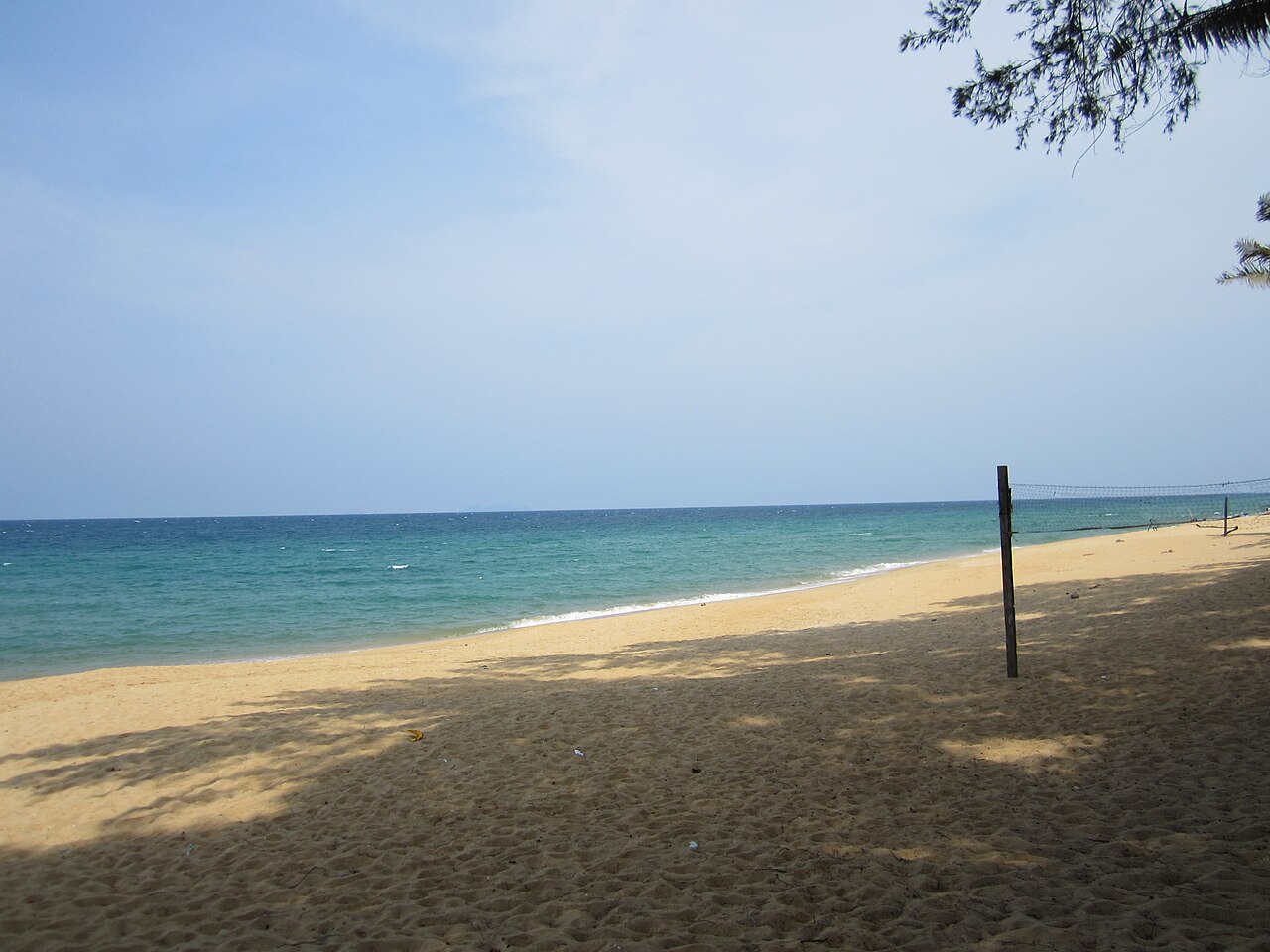
Unlike the more developed west coast — Melaka, Penang, KL, the east coast operates on a distinctly seasonal rhythm. The northeast monsoon shuts down island access from November through February, transforming the coastline with dramatic storms and powerful surf. But from March through October, the east coast comes alive with turquoise waters, powdery white beaches, and some of the best diving and snorkeling conditions in all of Southeast Asia.
Kuala Terengganu City Highlights
Kuala Terengganu itself is a compact, walkable city set where the Terengganu River meets the South China Sea. It is the administrative capital of Terengganu and one of the most culturally authentic cities on the peninsula, with a strong Islamic heritage, a vibrant Chinatown, and a riverfront that offers some of the most photogenic landmarks in Malaysia.
Crystal Mosque (Masjid Kristal)
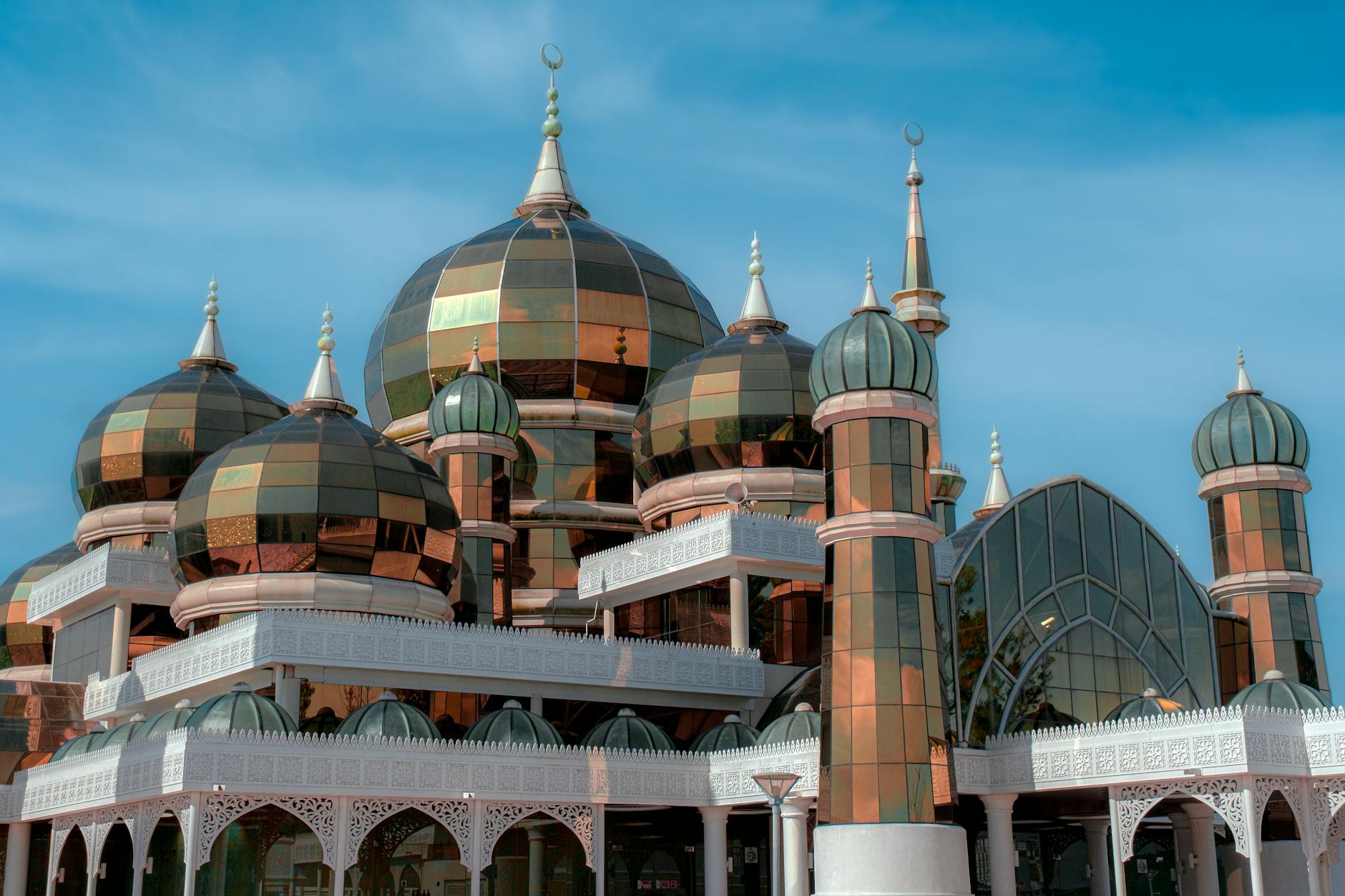
The Crystal Mosque is Kuala Terengganu’s most iconic landmark and one of the most visually striking mosques in the world. Constructed between 2006 and 2008, it is the first and only mosque built entirely from steel and glass. Sitting on the surface of the Terengganu River within the grounds of the Islamic Heritage Park, the mosque creates a mesmerizing effect as light passes through its frosted glass windows and illuminates the intricate calligraphy within. The mosque is especially stunning at dusk and after dark when it is lit up and its reflection shimmers across the river surface. Non-Muslim visitors can view the mosque from the exterior and the surrounding park grounds.
Taman Tamadun Islam (Islamic Heritage Park)
The Islamic Heritage Park is one of Kuala Terengganu’s most unique attractions. Opened in 2008 on Wan Man Island in the Terengganu River, the park features scaled-down replicas of 22 famous monuments from across the Islamic world, including the Great Mosque of Samarra from Iraq, the Great Mosque of Xian from China, and even the Taj Mahal. The park offers an educational journey through Islamic architectural heritage from across centuries and continents. Entry is approximately RM15 for adults, and the park is open daily. Combined with the Crystal Mosque, the entire complex makes for a fascinating half-day visit.
Terengganu Drawbridge
Officially opened in August 2019, the Terengganu Drawbridge is the first drawbridge in Southeast Asia, stretching 638 meters across the Terengganu River. Standing 15 storeys high with two towers linked by a sky bridge, the architectural design features intricate elements and motifs resembling the minarets of a mosque. The bridge is a functional piece of infrastructure that opens to allow large vessels to pass, but it is also a major tourist attraction, particularly after dark when it is illuminated in vibrant colors that reflect beautifully on the river below. Visitors can access the sky bridge for panoramic views of the city and river.
Terengganu State Museum
The Terengganu State Museum is the largest museum in Malaysia, covering an area of 27 hectares with four buildings housing nine separate galleries. The museum complex includes the Natural History Gallery, the Textile Gallery, the Royal Gallery, the Craft Gallery, the Maritime Gallery, and the Petroleum Gallery, among others. Traditional Malay timber houses have been relocated to the grounds, giving visitors an authentic look at the region’s architectural heritage. The museum provides an excellent introduction to Terengganu’s history, culture, and natural environment and is well worth several hours of exploration.
Kampung Cina (Chinatown)
Kuala Terengganu’s Chinatown is believed to be one of the oldest Chinese settlements in Malaysia, dating back to the 16th century. The historic quarter along Jalan Bandar brims with ancestral shophouses, clan townhouses, and temples, all decorated with vibrant street art that has been added in recent years. The Ho An Giang Buddhist Temple and the Tek Sun Heritage House are among the notable stops. Unlike the commercialized Chinatowns of Kuala Lumpur and Melaka, Kampung Cina retains an authentic, lived-in quality that makes walking its narrow lanes a genuinely atmospheric experience. The area is also an excellent spot for local food, with food courts and hawker stalls serving Terengganu specialties at very low prices.
Istana Maziah
Istana Maziah is the official ceremonial palace of the Sultan of Terengganu, located prominently on a hilltop overlooking the river. The palace features a unique blend of traditional Malay architecture infused with French design elements, creating a striking visual landmark. While the palace is not open to public tours, visitors can admire its elegant exterior and take photographs from the surrounding grounds. It is an important symbol of the Terengganu royal heritage and is situated conveniently close to Chinatown and Pasar Payang.
Pasar Payang (Central Market)
Pasar Payang is the most famous market in Terengganu and one of the most vibrant traditional markets on the east coast. Located in a modern building beside the Terengganu River, the market operates daily from 8:00 AM to 6:00 PM and sells everything from fresh produce, seafood, and local snacks to traditional handicrafts, batik, songket (hand-woven brocade), and souvenirs. The ground floor is devoted to wet market goods and keropok lekor, while the upper floors feature textiles and crafts. Pasar Payang is the best place in Kuala Terengganu to buy authentic batik and songket at competitive prices, and the atmosphere of the bustling market is an attraction in itself.
What to Eat in Kuala Terengganu
Terengganu’s food culture is one of the most distinctive in Malaysia, shaped by the state’s coastal geography, Malay culinary traditions, and the abundance of fresh seafood from the South China Sea. The dishes here are bold, flavorful, and unlike what you will find on the west coast.
Signature Dishes
Nasi Dagang is the pride of Terengganu and arguably the state’s most iconic dish. It features a fragrant combination of glutinous rice and regular rice steamed twice in thick coconut milk, served with a rich, turmeric-spiced fish curry made from tuna or mackerel, accompanied by tangy pickled cucumbers and carrots known as acar. Nasi dagang is traditionally eaten for breakfast and is available at stalls across the city from early morning. Mok Ngoh Nasi Dagang is one of the most sought-after spots for an authentic plate.
Keropok Lekor is Terengganu’s most famous snack and a must-try for every visitor. These fish crackers are made from a combination of sago flour and pounded fish, primarily mackerel and sardines, shaped into long sausage-like rolls, and either boiled for a chewy texture or deep-fried for a crispy exterior. They are served with hot chilli sauce and are utterly addictive. The best keropok lekor can be found at Kampung Losong, about 10 minutes from the city center, where numerous family-run stalls produce them fresh daily.
Laksam is a Terengganu specialty featuring thick, flat rice noodles that are rolled and sliced into bite-sized pieces, then drenched in a rich, velvety white gravy made from coconut milk and boiled fish. The result is creamy, savory, and subtly fishy in the best possible way. Kak Midah Laksa and Laksam Terengganu is a well-known spot for this dish.
Nasi Kerabu is blue-tinted rice colored with butterfly pea flowers, served with a medley of fresh herbs, salted egg, fish crackers, and various side dishes. The visual presentation is as striking as the flavor is complex. Fauzi Nasi Kerabu has been serving this dish for over 30 years and was selected as one of the top 50 stalls at the World Street Food Congress in Manila.
Ketupat Sotong is a uniquely Terengganu creation of squid stuffed with glutinous rice and steamed in coconut milk, creating a harmonious fusion of sweet, creamy, and subtly briny flavors. It is commonly found at local markets and food stalls.
Budu is a pungent, salty fermented anchovy sauce that is essential to Terengganu cuisine. It is used as a dipping sauce and condiment, often paired with fresh vegetables, rice, and grilled fish. Visitors unfamiliar with fermented condiments may find it an acquired taste, but it is deeply beloved by locals and central to the identity of east coast Malaysian cooking.
Where to Eat
Warung Belago Angin serves popular local delicacies including budu goreng, gulai kateh, sambal telur kerengga, and ayam masak merah, all laid out in a generous buffet style that lets you sample the full range of Terengganu flavors.
Mek Awang Cafe is another excellent choice for classic Terengganu dishes including Nasi Kay Hong, Laksa Terengganu Kuah Merah, Keropok Steam, Rojak Betik, and Roti Paung.
Warung Dalam Kenangan has been operating for 12 years and is famous for its freshly caught seafood, including Alaskan Crab and Spider Crab, with the added bonus of mesmerizing beach views.
The Islands of Terengganu
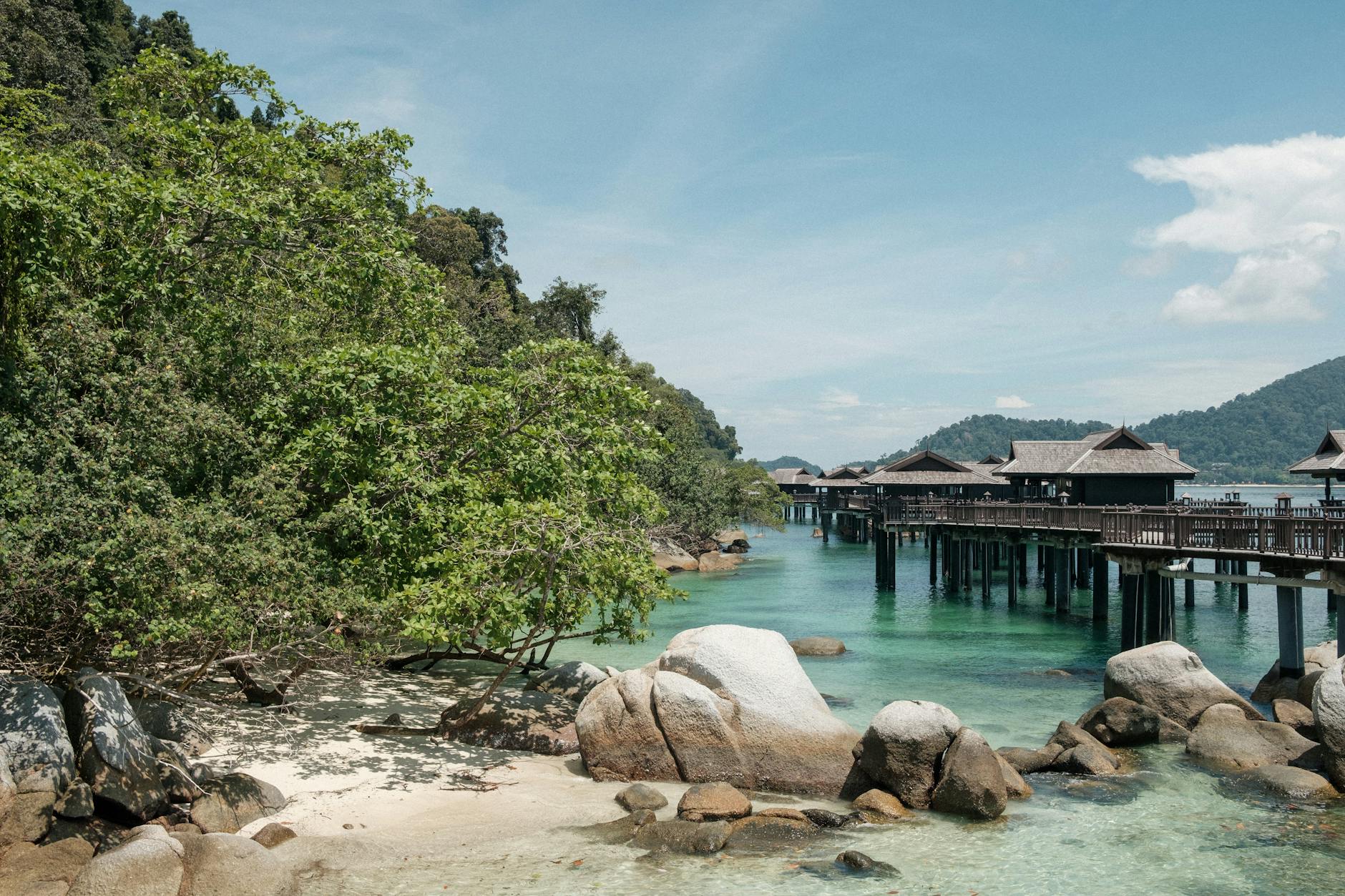
The islands off the Terengganu coast are the primary reason many travelers visit the east coast of Malaysia. These islands are protected marine parks with crystal-clear waters, vibrant coral reefs, and abundant marine life including sea turtles, reef sharks, and hundreds of tropical fish species. Each island has its own character and caters to different types of travelers.
Pulau Perhentian
The Perhentian Islands are the crown jewels of the Terengganu coast and consistently rank among the best dive destinations in Southeast Asia. The archipelago consists of two main islands, Perhentian Kecil (Small Perhentian) and Perhentian Besar (Big Perhentian), along with three uninhabited islands.
Perhentian Kecil is the more popular island among backpackers and budget travelers. Despite being the smaller island, it is the busier of the two, with a lively atmosphere, affordable guesthouses, beach bars, and a concentration of dive schools. Long Beach on the east coast is the main hub, with a stunning stretch of white sand backed by coral-filled waters that are excellent for snorkeling directly from the shore.
Perhentian Besar caters to families, couples, and travelers seeking a more relaxed atmosphere. The resorts here are generally more upscale, the beaches are quieter, and the overall vibe is serene and unhurried. Turtle Beach on Besar is famous for sea turtle nesting from June to September, when visitors can witness turtles laying eggs at night and baby turtles making their journey to the sea.
Diving and Snorkeling are the primary activities on the Perhentians. The waters offer excellent visibility averaging 15 to 25 meters, with over 20 dive sites featuring everything from shallow coral gardens to deeper pinnacles visited by barracuda, grouper, and reef tip sharks. A single dive costs approximately RM85 to RM100, and a full Open Water certification course is around RM1,100, making the Perhentians one of the cheapest places in the world to learn scuba diving. Top dive schools include Turtle Bay Divers, Bubbles Dive Centre, and Monkey Dives.
Getting There: Speedboats depart from Kuala Besut Jetty (not Kuala Terengganu) between 8:00 AM and 4:00 PM, with the journey taking 35 to 45 minutes. Return tickets cost approximately RM70 to RM80. Kuala Besut is approximately 1.5 hours by road from Kuala Terengganu, or 1 hour from Kota Bharu airport in neighboring Kelantan.
Important Note: There are no ATMs on the Perhentian Islands. Bring sufficient cash from the mainland. Some larger resorts accept credit cards but may charge a surcharge.
Pulau Redang
Pulau Redang is the largest island in the Redang Archipelago and consistently ranks among the most beautiful islands in the world. The island is famous for its crystal-clear waters, white sandy beaches, and extraordinarily rich marine life, with hundreds of coral species and thousands of marine creatures including sea turtles and reef tip sharks.
Pasir Panjang (Long Beach) is the main beach on Redang, a stunning crescent of powdery white sand that is one of the most photographed beaches in Malaysia. The snorkeling directly off the beach is excellent, with healthy coral reefs teeming with tropical fish just meters from the shore.
Most visitors to Redang book resort packages that include accommodation, meals, boat transfers, and snorkeling trips. Prices start from approximately RM200 per night for two people at mid-range resorts, with significant discounts available during the shoulder season. Top resort options include Taaras Beach and Spa Resort, The Berjaya Redang Resort, and Laguna Redang Island Resort.
Getting There: Speedboats depart from Merang Jetty, about 30 kilometers north of Kuala Terengganu. The journey takes approximately 40 minutes, with return tickets standardized at about RM80. Alternatively, ferries from Shahbandar Jetty in central Kuala Terengganu take approximately 75 minutes and cost RM100 return.
Pulau Lang Tengah
Pulau Lang Tengah, meaning “the eagle in the middle,” is nestled between Pulau Redang and Pulau Perhentian and is the most exclusive of the Terengganu islands. With only a handful of resorts and no budget accommodation, Lang Tengah offers an intimate, upscale island experience with crystal-clear waters, vibrant coral reefs at popular snorkeling spots like Batu Bulan and Blue Coral Bay, and encounters with sea turtles and baby sharks. The island’s small size and limited development make it feel genuinely remote and unspoiled, perfect for honeymooners and travelers seeking tranquility.
Pulau Kapas
Pulau Kapas, meaning “Cotton Island,” justifies its name with beautiful white sandy beaches and exceptionally clear seawater. Located just a 20-minute boat ride from Marang Jetty (south of Kuala Terengganu), Kapas is the most accessible of the Terengganu islands and offers a delightfully peaceful atmosphere. The island is relatively small, making it perfect for a day trip or a short overnight stay. Kapas is also known as a squid-breeding ground, with the squid jigging season running from March to August, and offers decent snorkeling and jungle trekking opportunities.
Pulau Tenggol
Pulau Tenggol is located at the southernmost tip of Terengganu and is a magnet for serious divers. With over 20 dive sites including Batu Chanang and Coral Garden, the island offers night diving, wreck diving, deep-sea diving, and drift diving in waters that are home to larger marine life including whale sharks, manta rays, and schools of barracuda. The island is a 45-minute boat ride from Kuala Dungun and caters primarily to experienced divers and marine life enthusiasts.
Traditional Crafts and Culture
Terengganu is one of the most culturally rich states in Malaysia, with a strong tradition of Malay arts and crafts that has been maintained for centuries.
Batik is deeply embedded in Terengganu culture, and the state is one of the primary centers of batik production in Malaysia. Hand-painted and block-printed batik is available at Pasar Payang, at workshops around the city, and at the Terengganu State Museum. Many workshops welcome visitors and offer demonstrations of the batik-making process, from wax application to dyeing and drying.
Songket is a hand-woven brocade fabric interlaced with gold or silver threads, traditionally worn during ceremonies and royal events. Terengganu songket is considered among the finest in Malaysia, and pieces can be purchased at Pasar Payang and dedicated craft shops.
Wau Bulan (Moon Kite) is a traditional Malaysian kite associated with Terengganu, known for its crescent moon shape and elaborate decorations. Kite-making is a recognized cultural heritage, and the International Kite Festival held annually in Terengganu draws participants from around the world.
Practical Information
Best Time to Visit
The east coast’s weather is governed by the northeast monsoon, which brings heavy rains and rough seas from November through February. During monsoon season, island resorts close entirely, boat services are suspended, and the coast is battered by storms.
The ideal time to visit is from March through October, with the dry season peaking from June to August. This is when the seas are calmest, visibility for diving and snorkeling is best, and island resorts are fully operational. However, June through August is also peak season with higher prices and more crowds. March to May and September to October offer a good balance of pleasant weather, fewer tourists, and lower prices.
Getting to Kuala Terengganu
By Flight: Sultan Mahmud Airport in Kuala Terengganu receives daily flights from Kuala Lumpur (approximately 1 hour) on Malaysia Airlines, AirAsia, and Firefly. Flights from KL start at around RM80 to RM150 one way. The airport is about 15 kilometers from the city center, with taxis and Grab available.
By Bus: Overnight buses from Terminal Bersepadu Selatan (TBS) in Kuala Lumpur take approximately 7 to 8 hours and cost RM40 to RM60. Popular operators include Transnasional, KKKL, and Sani Express. Buses arrive at Kuala Terengganu Bus Terminal, a short ride from the city center.
By Car: Driving from Kuala Lumpur to Kuala Terengganu takes approximately 5 to 6 hours via the East Coast Expressway (E8). The highway is well maintained and passes through scenic landscapes of palm oil plantations and tropical forest. Many travellers pair the east coast with a stop at the Cameron Highlands tea estates on the way — the highlands are a 4-hour drive west of KT via Gua Musang, making them a natural highland-to-coast combination.
Getting Around
Grab is available in Kuala Terengganu and is the easiest way to get around the city and to nearby jetties. Fares are affordable, with most city trips costing RM5 to RM15.
Local Buses connect the city center to surrounding areas including Marang (for Pulau Kapas) and other nearby towns, though services can be infrequent.
Car Rental is recommended for travelers wanting to explore beyond the city, particularly for reaching Kuala Besut Jetty (for the Perhentians) and other east coast destinations. Rental agencies operate from the city center and airport.
Where to Stay in Kuala Terengganu
Budget: The Uptown Eco Hotel offers clean, comfortable rooms near Pasar Payang with a kampung-style wooden decor that gives it genuine local character. Suite 18 Boutique Hotel is another popular budget choice with unique room designs and an on-site cafe. Budget options start from as low as RM45 per night.
Mid-Range: Arena Boutique Hotel is one of the most popular mid-range options at around RM97 per night, praised for comfortable beds, spacious rooms, and a convenient location. Felda Residence offers river-view rooms with a breakfast restaurant on the 17th floor providing sweeping views of the city.
Upscale: Primula Beach Hotel is a longstanding waterfront hotel on Batu Burok beach, offering beachfront rooms with direct sea views and easy access to the city center.
Budget
Kuala Terengganu offers excellent value for money. Budget travelers can manage on RM60 to RM120 per day for accommodation, food, and local transport. Mid-range travelers should budget RM150 to RM300 per day. Island trips add significantly to the budget, with resort packages on Redang or the Perhentians typically running RM200 to RM600 per person per night including meals and activities.
Language and Culture
Terengganu is a conservative, Malay-majority state with a strong Islamic identity. Bahasa Malaysia is the primary language, and English is less widely spoken than in cities like Kuala Lumpur or Penang, particularly in smaller towns and rural areas. Visitors should dress modestly, especially when visiting mosques and cultural sites. Alcohol is available at Chinese restaurants and some island resorts but is not widely sold. The warmth and hospitality of the local people is one of the highlights of visiting the east coast, and a few basic Malay phrases will be warmly received.
1 note