Langkawi Travel Guide: Best Beaches, Activities and Island Life (2026)
Your complete langkawi travel guide covering the best beaches, the SkyCab cable car, island hopping, mangrove tours, duty-free shopping, waterfalls, and practical tips for every budget.
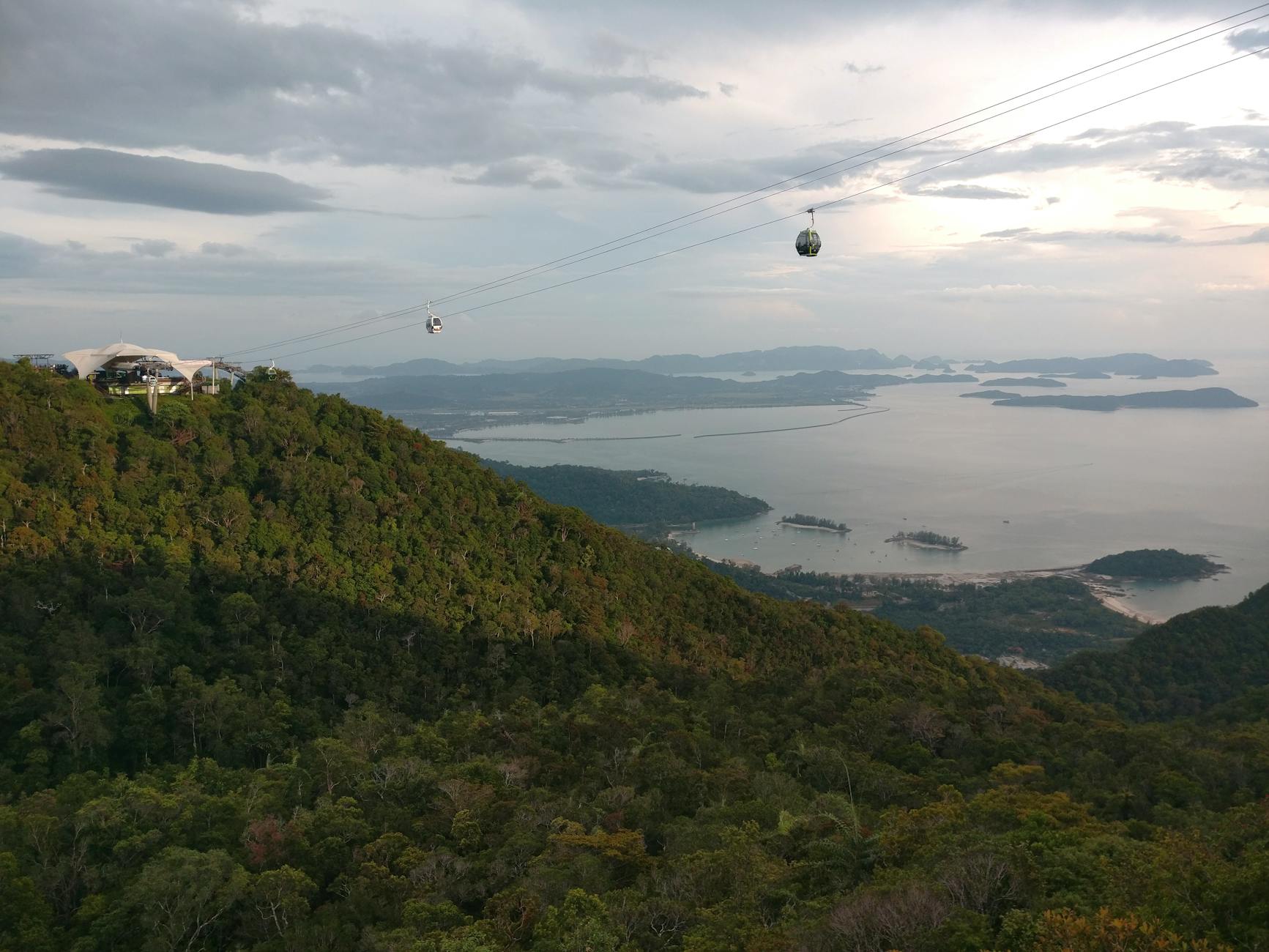
Ninety-nine islands. Duty-free alcohol at a quarter of the mainland price. Limestone karsts that are 550 million years old. White-bellied sea eagles swooping low enough to brush the water. Langkawi is where Malaysia’s western archipelago trails into the Andaman Sea, and it earns its reputation from several directions at once.
The main island, Pulau Langkawi, measures roughly 25 kilometres by 20 — large enough to fill a week, compact enough to drive end-to-end in 45 minutes. This guide covers the beaches, the cable car and SkyBridge, mangrove tours through the geopark, island hopping, waterfalls, duty-free shopping, snorkelling, wildlife, and all the practical details you need. Whether you are coming for the sand, the nature, or a trolley full of cheap chocolate, this is how to get the most out of the island. See how it compares with the rest of the country in our ranking of the best places to visit in Malaysia.
Best Beaches in Langkawi
Langkawi’s beaches range from the island’s main tourist strip to hidden coves that barely see a footprint all day. Knowing which beach suits your style saves a lot of driving around.
Pantai Cenang
The most famous beach and the island’s main hub. Two kilometres of white sand along the southwest coast, lined with restaurants, bars, duty-free shops, water sports operators, and accommodation from budget guesthouses to mid-range resorts. Parasailing, jet skiing, and banana boat rides are all on offer during the day. At sunset the bars light up and beach barbecues start. It is the most convenient base on the island and the busiest. The water can run cloudy in certain seasons and the sand does not quite match the powder you find further north, but nothing else comes close for atmosphere and choice. Most dishes at the hawker stalls behind the beach run RM5 to RM12.
Pantai Tengah
Just south of Cenang, separated by a small rocky headland. The sand is as good, the water often clearer, and the crowd noticeably smaller. Some excellent restaurants draw visitors from Cenang. Popular with couples and families who want easy access to the southern strip without the party noise after dark. Several strong mid-range and luxury resorts sit here, with beachfront rooms running RM200 to RM500 per night.
Tanjung Rhu
The northeastern tip of the island, and the beach that tends to make people go quiet. Powder-white sand, casuarina trees, and a panorama of limestone karsts rising straight from the water. It calls to mind Halong Bay at a more intimate scale. Far less developed than the southern beaches — the Four Seasons is the main resort here, but the beach has public access. Tanjung Rhu is also one of the departure points for mangrove boat tours into the nearby Kilim Geoforest Park.
Datai Bay
Northwest coast, flanked by ancient rainforest, fronted by calm and crystalline water. The Datai Langkawi and The Andaman resorts dominate the bay, and most of the beach runs through their grounds. Limited public access exists, but the drive out here is worth it even if you can only see the bay from the road above. Few beaches in Malaysia look like this one.
Pantai Pasir Tengkorak
The northern coast’s hidden option. Small, secluded, jungle-backed, rarely visited. Fine white sand, clear water, basic facilities including sheltered picnic areas and restrooms. If you want a beach with no resort infrastructure and very few people, this is the one.
Langkawi Cable Car, SkyBridge and SkyCab
The Langkawi SkyCab is one of the steepest cable car rides in the world, climbing from the Oriental Village base station at sea level to the peak of Gunung Machinchang — the island’s second-highest mountain — at gradients up to 42 degrees. The gondola ascent takes under 15 minutes. As the rainforest canopy drops away, the Andaman Sea spreads out below and on clear days the coastline of southern Thailand appears on the horizon.
At the top station, the main draw is the Langkawi Sky Bridge: a 125-metre curved pedestrian suspension bridge spanning two peaks at 660 metres above sea level. Walking across it with nothing but air below and an unbroken view of islands and ocean in every direction is one of the most memorable things you can do in Langkawi. The bridge sways gently in wind. This is by design and is perfectly safe.
The SkyCab complex also includes SkyDome (an immersive 360-degree theatre with 12 projectors), SkyRex (motion simulator), and a 3D Art gallery at the base. A standard ticket starts from around RM55 for adults and covers SkyDome, SkyRex, and the gallery. The SkyBridge requires a separate RM6 ticket. Express lane upgrades are available to skip queues, which can be significant on weekends and peak season.
Hours: daily 9:30 AM to 6:00 PM. The SkyBridge closes in strong winds or heavy rain. Morning visits get the clearest views before afternoon clouds build — arriving at opening is worth it.
Kilim Geoforest Park and Mangrove Tours
Langkawi’s UNESCO Global Geopark status rests heavily on Kilim Karst Geoforest Park in the northeast: 550-million-year-old limestone formations, dense mangrove forest, and winding river systems that look unchanged from the time the rock was first laid down. A mangrove boat tour through Kilim gives you a side of Langkawi the beaches cannot.
Tours run two to three hours in small motorboats navigating narrow waterways through the Kilim River system. The mangrove tunnels close in overhead. Limestone cliffs rise beside you covered in ferns and moss. Hidden lagoons open up with no sound but water and birds.
The eagle feeding point is usually the highlight. The boatman cuts the engine, throws chicken scraps onto the water, and within a minute or two, white-bellied sea eagles and Brahminy kites drop in — sweeping down from altitude to snatch food from the surface in a clean arc. Seeing a two-metre wingspan fold and dive at close range does not get ordinary.
Other stops typically include the Bat Cave (a limestone cavern packed with thousands of insectivorous bats and impressive formations), Crocodile Cave at low tide, a floating fish farm where you can feed fish and stingrays, and sometimes lunch at a floating restaurant inside the geopark. Tours can be booked through hotels or tour operators and cost RM100 to RM250 per person for shared or private boat. The experience suits all fitness levels and ages.
Island Hopping
The standard island hopping tour is a half-day by boat visiting three surrounding islands, departing from Teluk Baru Jetty near Pantai Cenang or the main Kuah Jetty. Morning departures run 9:00 AM to noon; afternoon tours go 2:00 to 5:00 PM. Prices start from around RM50 per person shared.
Pulau Dayang Bunting (Island of the Pregnant Maiden)
The largest of Langkawi’s surrounding islands and the first stop on most tours. The main draw is Tasik Dayang Bunting — the Lake of the Pregnant Maiden — a freshwater lake inside a collapsed limestone cave, ringed by cliffs and jungle. Local legend says any woman who drinks from or swims in it will become pregnant. The setting is extraordinary regardless: warm, calm swimming water inside a geological formation that feels completely private despite being a regular tour stop. Entry is RM20 for foreign adults, RM10 for children.
Pulau Singa Besar
The eagle-watching stop. The boat slows offshore while white-bellied sea eagles and Brahminy kites circle and dive. The backdrop of jungle-clad islands and open sea makes the sighting feel properly wild rather than staged. Your guide may also point out monitor lizards and macaques along the shoreline.
Pulau Beras Basah
The final stop, and the one most people talk about afterward. A small island with a beautiful white sand beach and clear turquoise water. You get 60 to 90 minutes to swim, snorkel, and decompress. Basic food and drinks are available on the island during tourist hours. One of the best-value activities in Langkawi.
Snorkelling and Diving
Langkawi is not the top diving destination in Malaysia — Sipadan in Sabah and the Perhentian Islands take that title — but there is decent snorkelling and diving in the surrounding waters for those who want to get below the surface. The clearest waters and best marine visibility tend to be found around the smaller islands in the southern and western parts of the archipelago rather than the main beaches.
Pulau Payar Marine Park, about 45 minutes south of Langkawi by speedboat, is the main designated snorkelling and diving destination and the only marine park in the area. The park protects a cluster of four islands — Pulau Payar, Pulau Kaca, Pulau Lembu, and Pulau Segantang — and supports coral reefs with healthy populations of reef fish, sea turtles, and reef sharks. Most tour operators run half-day trips to Payar that include snorkelling equipment, a glass-bottom boat ride, and sometimes a light buffet on a floating platform. Prices run RM100 to RM200 per person for a shared tour. Certified divers can arrange dive trips through PADI-certified operators on the main island, with two-dive packages starting around RM250 to RM350.
Closer to Langkawi itself, several snorkelling spots are accessible without a dedicated tour — particularly around the rocky headlands near Pantai Tengah and the calm waters off Tanjung Rhu. Visibility varies significantly with season and rainfall, so ask your hotel or tour operator about current conditions before committing to a trip.
Wildlife and Birdwatching
Langkawi’s UNESCO Geopark status does more than protect the geology — it covers one of the more biodiverse landscapes in the region. The island’s ancient rainforest and mangrove systems support a wide range of wildlife, and you do not need to be a dedicated naturalist to encounter it.
The white-bellied sea eagle is Langkawi’s unofficial symbol and gives its name to the island itself: “Langkawi” is believed to derive from the Malay words for “eagle” and “reddish-brown.” You will see them throughout any boat trip — circling above the mangroves, perched on limestone outcrops, or making the dramatic food-snatching dives that the mangrove tours are built around. Brahminy kites share the same airspace and are equally spectacular in flight.
Oriental pied hornbills are common on the island, often spotted in fruiting trees near forested areas. The forests of Gunung Machinchang and the Datai area host kingfishers, sunbirds, pittas, and on lucky days, the Rhinoceros hornbill. The Datai Bay resort runs guided birdwatching walks led by a resident naturalist — one of the better structured wildlife experiences on the island, open to non-staying guests for a fee.
On the ground, monitor lizards grow to impressive sizes in Langkawi and are a common sighting along roadsides, in carparks, and near waterways. Long-tailed macaque monkeys are plentiful around the cable car base, the waterfalls, and any picnic area with accessible food. Dusky leaf monkeys (spectacled langurs) are shyer and found deeper in the forest — worth looking for on any jungle walk. If the water and light are right, fireflies can be spotted along the mangrove rivers on evening tours.
Waterfalls
Telaga Tujuh (Seven Wells)
The most famous waterfall on the island, named for seven natural pools carved into rock over 91 metres of cascade. The lower pools are a climb of about 200 steps from the car park and are open for swimming — cool, clear, and set in dense rainforest. The upper viewpoint requires 638 steps and the views are worth it if you have the energy. At their best during and just after the August to October rains. Entry is RM10 for foreign adults. Come early morning before the tour groups arrive.
Temurun Waterfall
Near Datai Bay in the northwest, Temurun is Langkawi’s tallest waterfall — three tiers dropping about 30 metres in total. The viewing platform is five minutes from the car park, making this the most accessible waterfall on the island. In the wet season it is a proper curtain of white water; in the dry months it quiets to a trickle. The rocks at the base are slippery, so wear proper footwear if you go beyond the platform.
Duty-Free Shopping
Langkawi has been a duty-free zone since 1987. The practical effect: spirits that cost RM100 to RM150 on the mainland sell for RM25 to RM40 here. Cadbury, Ferrero Rocher, Toblerone, and Hershey’s run 30 to 50 percent cheaper than KL supermarket prices. Cosmetics, perfumes, and tobacco follow similar patterns.
Main shopping strips are along Pantai Cenang and in Kuah town, where Langkawi Fair Shopping Mall and Jetty Point Complex have the widest selections. Airport shops exist but tend to price higher than in-town options. Cash payments at smaller shops often unlock an additional 10 to 12 percent discount. Compare prices between a few shops — there is meaningful variation for identical products. Malaysian customs allows one litre of alcohol and 200 cigarettes per person departing to the mainland, though enforcement is inconsistent for domestic travellers.
Underwater World Langkawi
One of the largest aquariums in Southeast Asia, located along Pantai Cenang. Over 500 species across 100-plus exhibits, with a 15-metre underwater tunnel as the centrepiece — sharks, rays, and sea turtles moving overhead. Dedicated sections cover tropical rainforest wildlife, temperate water species, and a penguin enclosure popular with families. Open daily; adult tickets around RM40 to RM50. A good option on a rainy afternoon or as an alternative for non-swimmers who still want an underwater experience.
Night Markets
Langkawi’s pasar malam rotate between locations across the island on different days, and they are the best place to eat like a local at prices that make the restaurants on the tourist strip look expensive. The food reflects genuine Malay, Indian, and Thai cooking — satay, nasi lemak, roti canai, grilled seafood, fresh fruit juices, kuih, and fried snacks. Most items cost RM2 to RM10; a full meal runs under RM15.
The schedule rotates between Kuah, Padang Matsirat, Bohor Tempoyak, and Pantai Cenang among other spots. Markets set up in late afternoon and run until around 10:00 PM. The Thursday night market at Pantai Cenang is the most convenient for tourists; the Wednesday market in Kuah is one of the largest on the island.
Getting to Langkawi
By Air
Langkawi International Airport has direct flights from Kuala Lumpur (KUL and SZB), Penang, Singapore, and several other cities. AirAsia leads the KL route, with fares from around RM60 to RM200 one way depending on booking lead time. Malaysia Airlines and Firefly also fly the route. KL to Langkawi takes about one hour; from Penang, about 40 minutes. The airport sits on the western side of the island, 10 minutes from Pantai Cenang. Coming from Penang? The penang travel guide has the full picture on getting there from George Town.
By Ferry
Ferries run from two mainland ports. Kuala Perlis is the closest, with roughly hourly departures — the crossing takes about 1 hour 15 minutes and costs RM18 one way for adults. Kuala Kedah also runs regular service at about 1 hour 45 minutes. The direct Penang to Langkawi ferry has been suspended since 2020. From Penang, fly (40 minutes, from RM79 one way) or take a bus or taxi to Kuala Perlis (2.5 to 3 hours) and then ferry across. A car ferry from Kuala Perlis is available for those bringing their own vehicle; the crossing takes about 1.5 hours.
From Thailand
During high season (approximately October to June), a ferry runs from Koh Lipe to Langkawi. The crossing takes about 1 hour 30 minutes and costs around RM118 one way. A popular option for travellers doing a Southeast Asian island-hopping itinerary.
Getting Around Langkawi
There is no public bus service on the island, so transport needs planning. Renting a car is the most practical option — small cars from around RM50 per day. Agencies operate at the airport, in Kuah, and along Pantai Cenang. Roads are good and traffic light outside the main tourist areas. Drive on the left. Scooters and motorbikes are available for around RM30 per day — useful if you have the experience and a valid licence. Helmets are required by law.
Grab operates on the island. Short rides within Cenang cost RM5 to RM10; Cenang to the cable car runs RM20 to RM30. Availability can be patchy during peak hours and late at night. Traditional taxis use fixed rates posted at stands — more expensive than Grab but available when the app is not.
Where to Stay in Langkawi
The area you stay in shapes the experience significantly.
Pantai Cenang is the best base for first-timers — convenience, nightlife, dining, social energy. Budget hostels and guesthouses from RM50 per night; mid-range options run RM150 to RM400. Trade-off: it is the most commercialised stretch on the island.
Pantai Tengah suits those wanting a quieter alternative still within reach of Cenang. Good mid-range and upper-range resorts with beachfront rooms from RM200 to RM600 per night.
Tanjung Rhu for beach quality and seclusion. The Four Seasons here is one of the finest resorts in Southeast Asia, with rates from around RM2,500 per night. More affordable options exist in the area.
Datai Bay is the luxury end. The Datai Langkawi, inside a 10-million-year-old rainforest above one of the world’s most beautiful beaches, appears regularly on best-hotel lists. Rooms from approximately RM1,800 per night.
Kuah is the practical budget base for ferry arrivals — cheap accommodation, the island’s best local restaurant selection, and strong duty-free shopping. No beach, so you need transport to the coast.
Practical Tips for Visiting Langkawi
Best time to visit. Peak season is November to March — dry, sunny, busy, and more expensive. April and October offer decent weather with lower prices and thinner crowds. August through October is the wettest period; afternoon thunderstorms are common but mornings are usually clear and everything costs less.
Budget. Budget travellers can manage RM100 to RM150 per day including accommodation, food, and transport — one of the most affordable island destinations in Southeast Asia once you factor in duty-free savings. Mid-range is RM300 to RM600 per day; luxury travellers spend RM800 or more. Tours and activities add to this, but they are generally cheaper here than in Bali or the Maldives.
Sun protection. Langkawi is close to the equator — the sun is serious. Apply reef-safe sunscreen generously and reapply after swimming. A rash guard is practical for snorkelling and extended water time.
Cash. Many smaller businesses, night markets, and duty-free shops prefer cash. ATMs are available in Cenang and Kuah; sparse elsewhere. Stock up before heading to the northwest or northeast of the island.
Alcohol. As a duty-free island, Langkawi is one of the few places in Malaysia where alcohol is both widely available and cheap. Restaurants and bars along Cenang serve freely. Langkawi is still part of Kedah — a predominantly Muslim state — so be respectful in more local settings, especially during Ramadan.
Wildlife. Macaque monkeys, monitor lizards, hornbills, and eagles all share the island with you. Do not feed the monkeys — they become aggressive around food. Keep snacks secured, particularly in beachfront accommodation where macaques are regular visitors.
Mosquitoes. Present, especially near mangroves and at dusk. Bring repellent and consider long sleeves and pants for late-afternoon geopark or waterfall visits.
Environment. Langkawi’s UNESCO Geopark status comes with genuine stewardship responsibilities. Avoid touching coral when snorkelling, take your rubbish with you, and use tour operators with sustainable practices. The geological formations took 550 million years — treat them accordingly.
Langkawi connects naturally with the rest of the region. If you are flying via KL, our kuala lumpur travel guide covers the city’s main attractions and food scene. The closest major stop is Penang — the penang travel guide covers Georgetown’s heritage streets and world-class hawker food. For the historic south, our melaka travel guide covers the UNESCO port city’s layered history. If a cool-air break appeals after the heat, the cameron highlands guide covers the tea estate country a few hours inland. Borneo is a different world entirely — start with the kota kinabalu travel guide for Sabah’s mountains, marine parks, and wildlife.