Redang Island Guide: Crystal Waters, Marine Life & Resort Paradise (2026)
Your complete redang island guide for 2026. Discover crystal-clear waters, world-class snorkeling and diving, turtle conservation, and resort paradise on Malaysia's stunning east coast island.
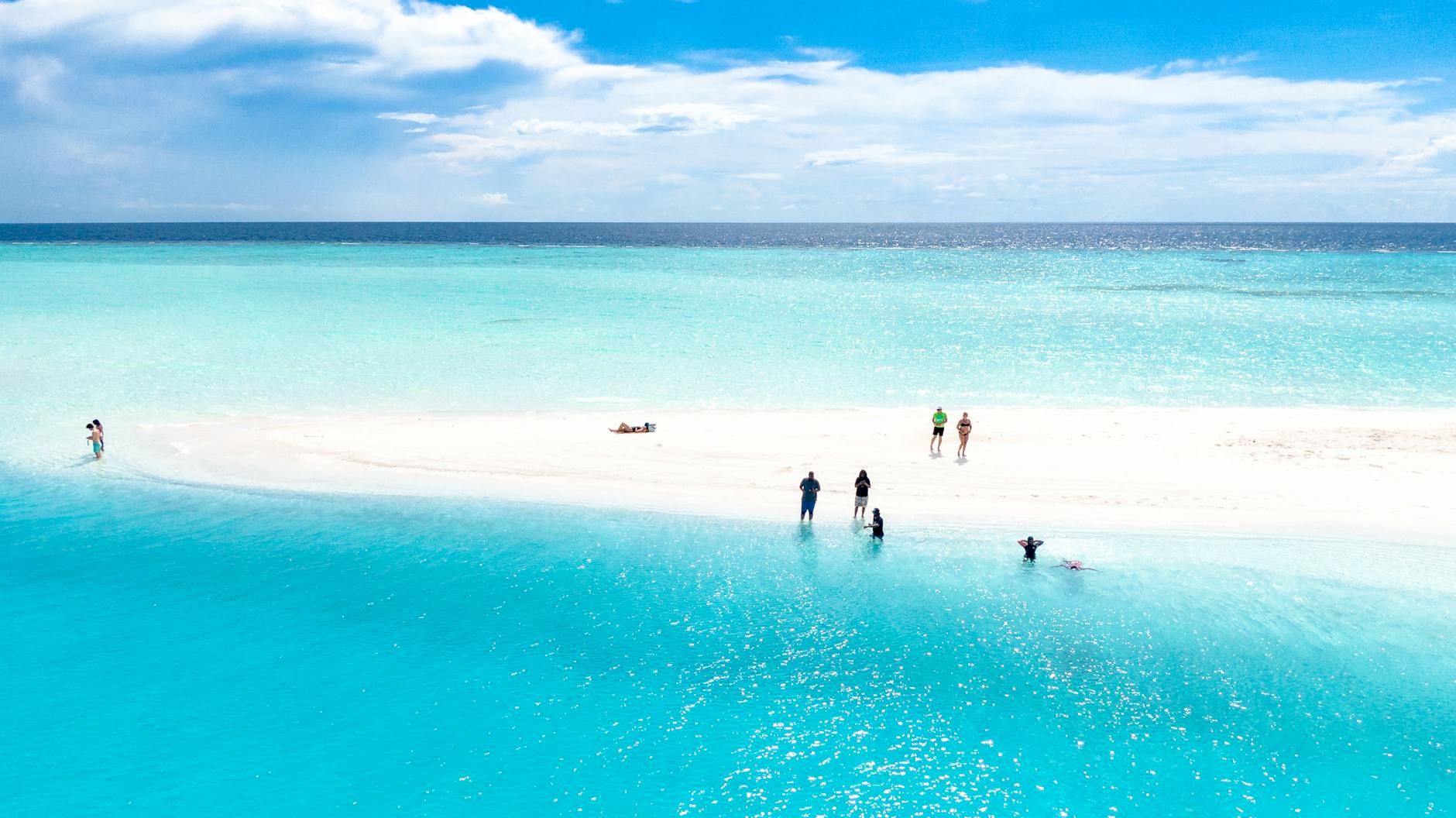
The water at Pasir Panjang turns three shades of blue before you reach chest depth. From shore: pale aqua over sand, then turquoise over reef, then deep cobalt where the ocean drops away. That colour shift is your welcome to Redang Island, Malaysia’s most visually striking east coast retreat and one of the few places in Southeast Asia where marine biologists have documented more than 3,000 fish species, 1,000 bivalve species, and 500 coral species in a single marine park. The numbers matter because you will see the evidence on your first snorkel.
This redang island guide covers every practical detail you need: which beach suits your travel style, where to dive and snorkel, how the resort-package model works, what it actually costs, and how to reach the island from anywhere in Malaysia. Redang sits 45 kilometres off the Terengganu coast, part of a nine-island archipelago protected since 1994. The annual closure from November through February — forced by the northeast monsoon — is not a nuisance; it is the reason the reefs are still alive. Our guide to the best islands in Malaysia sets Redang against the alternatives.
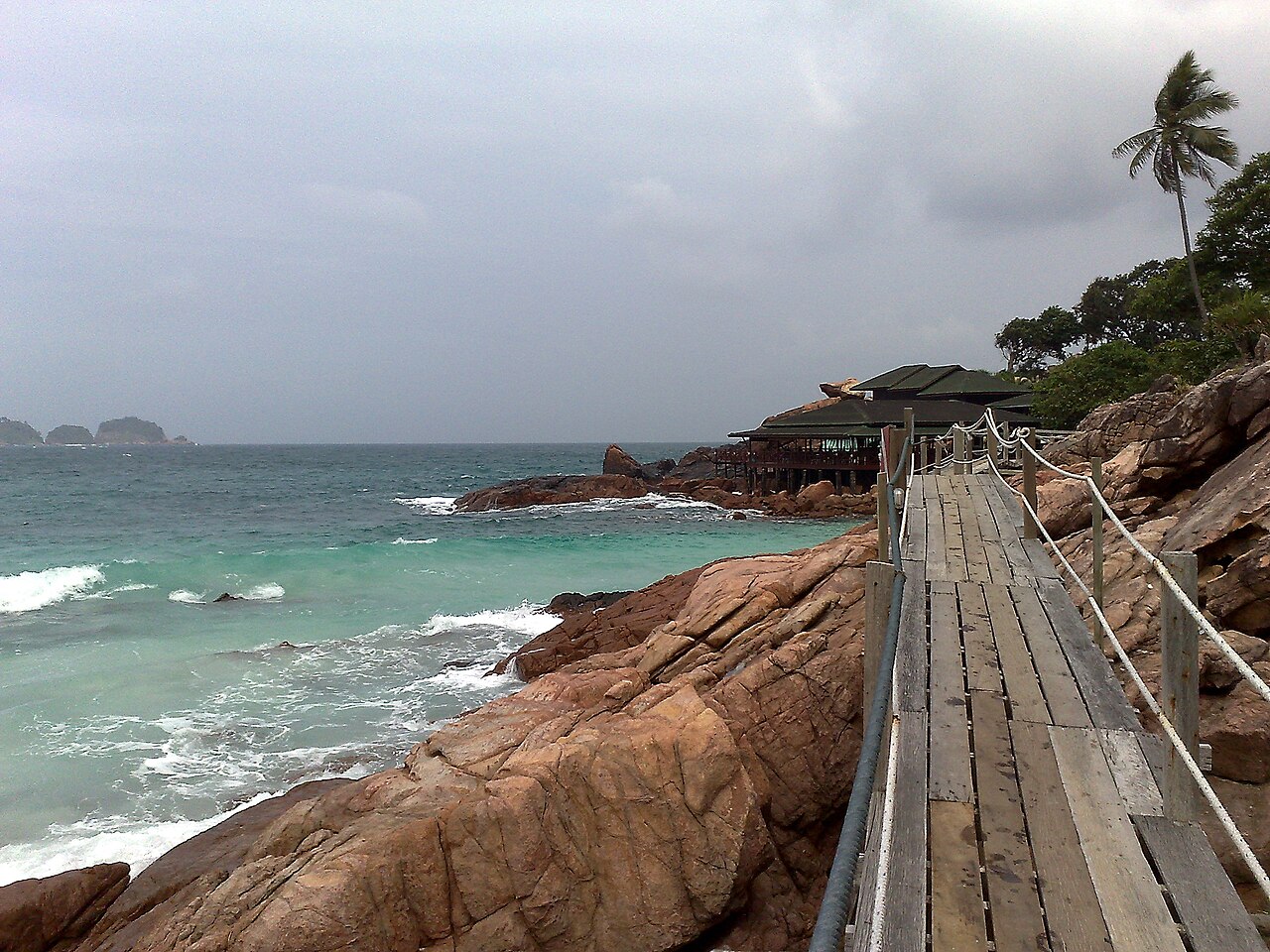
Beaches on Redang Island
Redang concentrates its beaches across three main areas. Unlike Tioman, where fishing villages give each bay its own community feel, Redang is shaped almost entirely by its resorts. The beach you pick is effectively the resort you pick, so it helps to know what each area offers before booking.
Pasir Panjang (Long Beach)
Pasir Panjang is Redang’s social centre. The beach curves in a distinctive birdwing shape along the eastern coast — a longer northern stretch and a shorter southern stretch meeting at a headland called Tanjung Tengah. The sand is powdery white, the shallows are pale turquoise, and healthy coral begins just metres from the waterline. Most ferries arrive at the main jetty here, so it also functions as the island’s entry point.
The big names sit along this beach: Laguna Redang Island Resort, Redang Beach Resort, Redang Pelangi Resort, and Redang Bay Resort. Evenings on Long Beach have a low-key social scene — beach bars, a disco at Redang Beach Resort, and an air-conditioned club at Laguna. Snorkelling directly off the beach is genuinely excellent; coral and tropical fish are visible in chest-deep water, and sea turtles patrol the reef edges.
Teluk Dalam
Teluk Dalam sits on the western side of the island, protected from the open sea by its bay geography. The result is exceptionally calm, clear water that suits families and nervous snorkellers. The bay splits into two beaches: Teluk Dalam Besar, with several mid-range resorts, and Teluk Dalam Kecil, a private beach exclusively occupied by The Taaras Beach and Spa Resort. The surrounding jungle creates a dramatic green backdrop — more serene and exclusive than the busier Pasir Panjang. Guests at The Taaras can also access the SEATRU Turtle Lab, staffed by resident marine biologists.
Teluk Kalong
Teluk Kalong on the northern shore is the quietest option. The area divides into Teluk Kalong Kecil (Redang Kalong Resort) and Teluk Kalong Besar (Redang Mutiara Beach Resort). The beaches are smaller than Long Beach but far less crowded. Snorkelling off Kalong is solid, and the relative quiet means marine life encounters tend to be unhurried. You can reach Teluk Kalong from Pasir Panjang on a 1.5-hour jungle trek that is one of the best short hikes on the island.
Pasir Chagar Hutang
This is Redang’s most ecologically important beach and one of the most significant turtle nesting sites on Peninsular Malaysia’s east coast. Located on the northern tip of the island, Pasir Chagar Hutang is a protected sanctuary managed by the Department of Fisheries and closed to casual visitors. Guided visits through the Marine Park Centre are available, and from May to September nesting season, green and hawksbill turtles come ashore at night. The protection has been decisive in keeping Redang’s sea turtle numbers from collapsing.
Diving on Redang Island
Redang has more than 30 documented dive sites around the main island and its satellite islands. Marine park protection has preserved coral formations estimated to be thousands of years old. The diversity and quality of the diving rivals destinations that cost three times as much to reach.
Dive Costs
A single fun dive costs RM80 to RM120. Discovery dives for first-timers run RM180 to RM250. A full PADI Open Water certification course takes three to four days and costs RM900 to RM1,300. Advanced Open Water and specialty courses are available at most resort dive centres. Multi-dive packages offer better value if you plan four or more dives. Basic snorkelling is included in virtually all resort packages; scuba diving is almost always charged separately.
Top Dive Sites
Tanjung Tokong is one of Redang’s signature sites, off the northeast coast. Green and hawksbill turtles are regular here, along with jacks, snappers, napoleon wrasse, fusiliers, and occasional reef sharks. Depths range from 10 to 22 metres across varied hard and soft coral formations.
Pulau Lima is considered the crown of Redang diving. A 1976 research study identified these sea mounts as perhaps the most valuable entity in the entire marine park, encompassing all marine environments found elsewhere in the archipelago. Dramatic topography, pristine coral, and encounters with barracuda, trevally, and reef sharks make this a benchmark dive.
Tunnel Point features large underwater boulders forming tunnel-like swim-throughs at 12 to 20 metres. Bumphead parrotfish, barracuda, jacks, and nudibranchs are regular sightings. The swim-throughs produce atmospheric lighting that makes it one of the more photogenic sites on the island.
Kerengga Besar tops out at around 15 metres, making it one of the better sites for less experienced divers and underwater photographers. The coral garden supports humphead parrotfish, snappers, tuna, jacks, and trevallies in good numbers.
Tanjung Gua Kawah is a more advanced site with stronger currents that pull in larger species — trevally, barracuda, and sharks appear regularly. Impressive wall sections and overhangs are covered in soft coral and sea fans.
Big Mount is an offshore seamount rising from deeper water, known for schools of barracuda and trevally and occasional leopard sharks and eagle rays. Best suited to experienced divers comfortable with deeper profiles and potential current.
For comparison, divers chasing pelagic encounters further north should read the perhentian islands guide, where open-water sites attract whale sharks during certain seasons.
Dive Schools
Most established resorts operate PADI or SSI certified dive centres. The Taaras runs a well-equipped centre with experienced instructors; Redang Pelangi’s dive operation has been running since the 1990s. When choosing a dive operator, prioritise current certification, well-maintained equipment, and small group sizes — the last point matters more than any marketing language.
Snorkelling on Redang Island
Redang’s package-based accommodation model means most visitors have multiple snorkelling trips bundled into their stay. That is not filler — the snorkelling here is genuinely excellent, with crystal-clear water, healthy reefs, and a density of marine life that surprises first-timers.
Marine Park Centre
The Marine Park Centre at the southern end of Pasir Panjang is included in virtually every resort’s snorkelling package and is the most visited site on the island. The real draw is the water: resident giant groupers exceeding a metre in length patrol the shallows alongside moray eels, dense reef fish schools, and regularly visiting sea turtles. Shallow depth and calm conditions make it accessible to all abilities. The Centre also maintains an exhibition on marine conservation — worth twenty minutes of your time.
Turtle Bay
Turtle Bay, on the eastern side of the island, does exactly what the name promises. Sea turtles graze on seagrass beds and swim alongside snorkellers with notable frequency. Healthy coral and a good mix of tropical fish fill out the site. Most boat snorkelling trips include a stop here.
Coral Island (Pulau Lima)
Outer island snorkelling trips to Pulau Lima deliver some of the most spectacular underwater experiences available from Redang. Pristine shallow reefs and visibility that often exceeds 20 metres let you see deep into the reef structure. The coral density and fish numbers here are noticeably higher than closer to shore.
Shore Snorkelling
Good shore snorkelling is available from several beaches without boat transfers. The reefs off Pasir Panjang begin just metres from the waterline and are accessible at any time. Teluk Dalam offers calm, sheltered water suited to less confident snorkellers. Bring your own mask — rental quality varies considerably, and a well-fitting mask transforms the experience.
Marine Life
The waters around Redang host over 3,000 fish species, 1,000 bivalve species, and 500 coral species. Expect green and hawksbill sea turtles, blacktip reef sharks, blue-spotted rays, moray eels, giant groupers, parrotfish, butterflyfish, angelfish, anemonefish, barracuda, and coral formations in every configuration imaginable. The marine park protection and seasonal closure have kept these reefs in considerably better condition than comparable tropical sites that stay open year-round.
Those planning to island-hop after Redang can find useful context in the tioman island guide for the southern Mersing route, or the kapas island malaysia entry for a quieter day-trip option near Marang.
Turtle Conservation
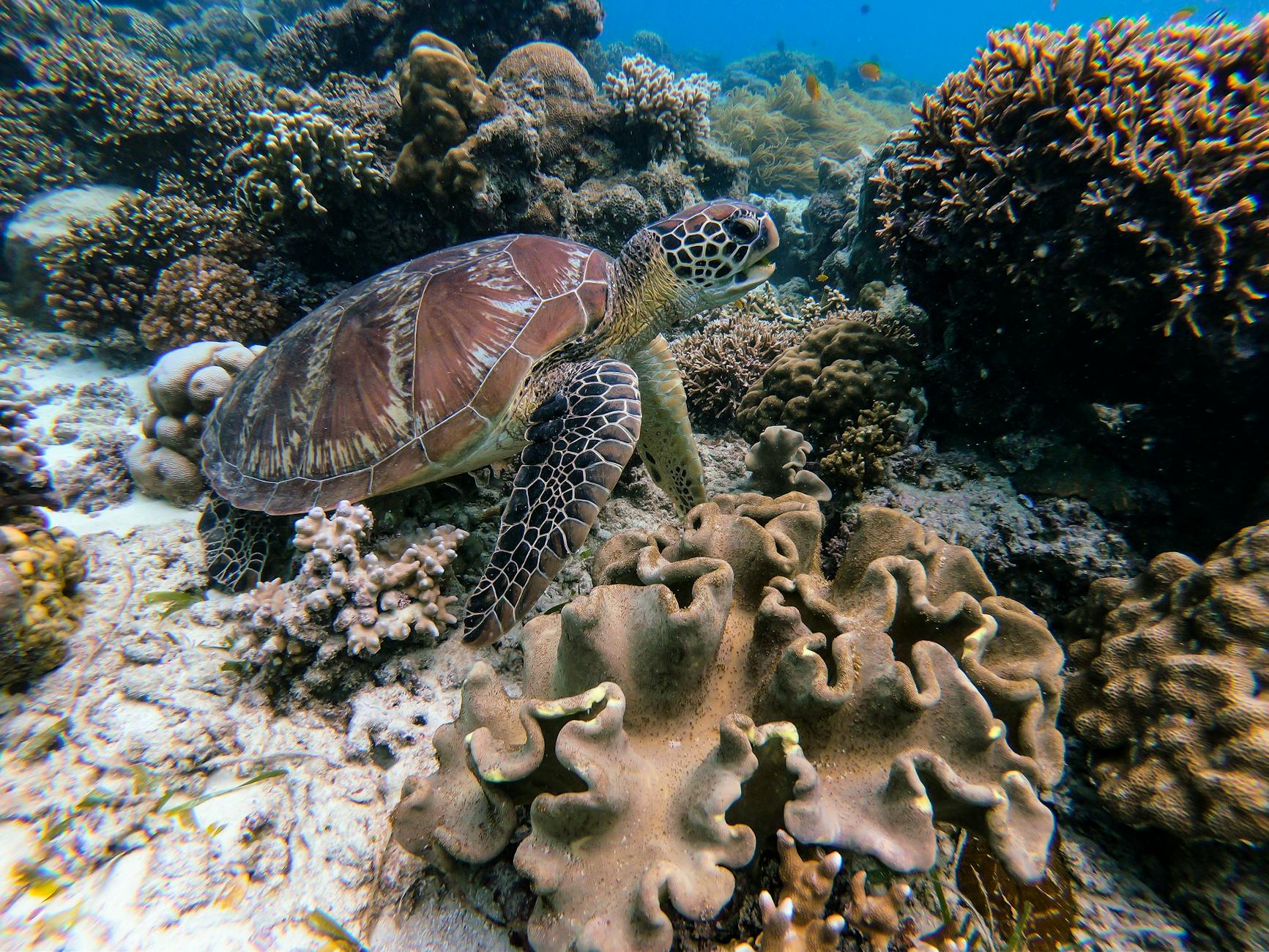
Sea turtle conservation is one of Redang’s most important ongoing ecological stories. Two species nest on the island’s beaches: the green turtle, more common, and the critically endangered hawksbill turtle. Seeing either species up close — in the water while snorkelling or on the beach during a guided night visit — tends to be the moment visitors remember most clearly.
Chagar Hutang Turtle Sanctuary
Pasir Chagar Hutang on the northern tip of the island is the primary nesting beach, managed as a protected sanctuary by the Department of Fisheries. Nesting peaks from May through September, when female turtles come ashore at night to dig nests and lay their eggs. Guided visits can be arranged through the Marine Park Centre. Witnessing the nesting process — the turtle hauling herself up the sand, digging methodically, laying, covering the nest — is one of those experiences that does not lose intensity in the retelling.
SEATRU Turtle Lab
The Sea Turtle Research Unit (SEATRU) runs a Turtle Lab at The Taaras Resort, staffed by marine biologists studying and protecting Redang’s sea turtle populations. Educational programs cover biology, life cycles, species identification, threats, and conservation strategies. During hatching season from April through October, both The Taaras and Laguna Redang organise hatchling release events — baby turtles making their first scramble toward the sea — which consistently rank among guests’ most memorable experiences on the island.
Jungle Trekking and Land Activities
Redang is a water destination first. The island’s interior is secondary — but the jungle trek options are worthwhile, and the coastal walks are genuinely pleasant in the cooler morning hours.
Trekking Routes
The main trek links Pasir Panjang on the east coast to Teluk Kalong on the north coast — approximately 3 kilometres through dense tropical jungle, taking about 1.5 hours. Macaques, monitor lizards, and various bird species appear along the trail. The reward at the end is the relative seclusion of Teluk Kalong’s beaches, which makes the effort feel properly earned.
Shorter walks run along the coastal paths connecting different sections of Pasir Panjang and down to the Marine Park Centre. An evening walk along Long Beach at sunset is a straightforward pleasure — the setting sun hits the water at an angle that makes the turquoise glow.
Marine Park Exhibition Centre
The Marine Park Exhibition Centre near the Marine Park Centre has informative displays on Redang’s marine ecosystems, conservation programs, and biodiversity. If you are curious about the ecological mechanics behind what you saw underwater, this is where you get the explanations.
Where to Stay on Redang Island
Redang’s accommodation model is distinct from almost every other Malaysian island. Nearly all visitors book resort packages that bundle return boat transfers from the mainland, accommodation, three meals daily, and one or more snorkelling trips into a single price. This approach simplifies planning considerably and typically represents strong value.
Budget Resorts
Redang Pelangi Resort has been running since the 1990s and remains one of the best value options on the island. On Pasir Panjang, with buffet meals and snorkelling included, a standard 3-day/2-night package starts from approximately RM400 to RM550 per person.
Redang De’ Rimba Resort sits among lush forest overlooking turquoise water. Clean, basic accommodation with full board and snorkelling activities at competitive prices.
Redang Bay Resort on Pasir Panjang covers a range of room types from standard to family rooms, with snorkelling packages starting from around RM350 per person for a 3-day/2-night stay.
Mid-Range Resorts
Laguna Redang Island Resort occupies a prime stretch of Pasir Panjang and is one of the largest properties on the island. Swimming pool, spa, multiple dining options including the popular Warong Makanan food court, and a well-equipped dive centre. Standard packages run RM600 to RM900 per person for 3 days/2 nights.
Sari Pacifica Resort and Spa offers more refined mid-range accommodation — in-room jacuzzis in the villa category, a comprehensive spa, and a quieter beach position. A good balance of comfort and price.
Luxury Resorts
The Taaras Beach and Spa Resort is Redang’s premier property, occupying the private beach of Teluk Dalam Kecil. Beautifully appointed rooms and suites, hilltop premier suites with spectacular sea views and in-room jacuzzis, multiple restaurants, a spa, the SEATRU Turtle Lab, and a professional dive centre. Packages start from approximately RM1,200 per person for 3 days/2 nights; premier suites command significantly higher rates.
Where to Eat on Redang Island
Dining on Redang is primarily resort-based. Most guests eat the buffet meals included in their package. Several independent options exist along Pasir Panjang for when you want a change or a late-night snack.
Resort Dining
Budget resort buffets deliver balanced meals — seafood, meat, vegetables, soup, fruit. Higher-end properties like Laguna, Sari Pacifica, and The Taaras offer more varied spreads mixing local Malay cuisine with Western and international options. Arrive early; popular dishes disappear fast.
Independent Restaurants
Laguna Warong Makanan is a food court open to guests and non-guests alike, running from 5:30 PM to midnight. Teh tarik and roti canai are the draws. Summer Point on Long Beach serves Chinese-infused Malaysian dishes with a live band and al fresco dining. Small restaurants near the Redang Jetty do affordable local fare — Ramly burgers, roti canai, nasi goreng, seafood — with main courses from RM5 to RM25, significantly cheaper than resort dining.
Practical Information
Getting to Redang Island
Boats to Redang depart primarily from Merang Jetty, about 30 kilometres north of Kuala Terengganu. The speedboat journey from Merang to Redang takes 30 to 45 minutes. Shahbandar Jetty in Kuala Terengganu is an alternative, but the journey takes 1.5 to 2 hours with less frequent services. Two main operators — Al Ameen Boat Services and Vigourmarine — serve the Merang route with approximately five daily departures. Most resort packages include return transfers, so your resort will specify which jetty and departure time to use.
From Kuala Lumpur: Fly to Sultan Mahmud Airport in Kuala Terengganu in approximately one hour on AirAsia or Malaysia Airlines. From the airport, take a taxi or resort transfer to Merang Jetty — roughly 45 minutes by road. Alternatively, take an overnight bus from TBS to Kuala Terengganu (RM40 to RM60), then a local bus or taxi to Merang Jetty.
From Other Cities: Kota Bharu airport is approximately 2.5 hours by road from Merang Jetty. Travellers arriving from the north sometimes route through Kuala Terengganu from Kota Bharu. Those coming from the south via Mersing should look at the langkawi beaches guide if they are also considering west coast alternatives, or the sipadan island diving article for Borneo’s world-class drift diving as a contrast to Redang’s more accessible reef experience.
Best Time to Visit
Redang runs from March through October. The peak season from June to August offers the best weather, calmest seas, and optimal snorkelling and diving visibility — often exceeding 20 metres — but also the highest prices and most crowded conditions. March to May and September to October are excellent shoulder months: good conditions, fewer visitors, and lower package prices. Those are the months worth targeting if you have flexibility.
Money and ATMs
There are no ATMs or banks on the island. Bring all cash from the mainland for anything not covered by your package — diving surcharges, duty-free purchases, tips, and independent restaurant meals. Some larger resorts accept credit cards, but many services are cash only. Withdraw in Kuala Terengganu before heading to the jetty.
Marine Park Conservation Fee
All visitors pay a Marine Park Conservation Fee before boarding. The fee is RM5 for Malaysian adults and RM30 for foreign visitors, with reduced rates for children and senior citizens. Keep your receipt — it may be checked on arrival. Since January 2026, a new regulation requires all visitors to take their rubbish back to the mainland as part of the “Take Your Rubbish Home” campaign.
Connectivity and Power
WiFi is available at most resorts but tends to be slow and unreliable. Mobile data from Malaysian carriers exists but is patchy. Power supply is generally reliable at established resorts. Bring a power bank and download entertainment before arriving — streaming will likely not work with the available bandwidth.
Packing Essentials
Reef-safe sunscreen is mandatory — chemical sunscreens damage coral. Bring your own snorkelling mask for a noticeably better experience than rental equipment. Add insect repellent, a waterproof phone case, sufficient cash, sturdy sandals for reef walking and trekking, and a lightweight rain jacket. Serious snorkellers and divers will benefit from bringing their own fins and wetsuit.
Health and Safety
The nearest hospital is on the mainland in Kuala Terengganu. Basic medical facilities are available at larger resorts. Travel insurance covering water sports and emergency evacuation is essential. Jellyfish appear occasionally, particularly during transitional months. Always check weather conditions before boat trips and follow resort staff guidance on sea conditions.
Conservation and Responsible Tourism
Redang’s marine park status provides legal protection, but reef health ultimately depends on how visitors behave in the water. The guidelines are short and the reasons behind each one are straightforward.
Never touch, stand on, or break coral — coral is alive, and contact causes physical damage that takes years to heal. Use reef-safe sunscreen exclusively. Do not feed fish — it disrupts natural feeding behaviour and leads to aggressive fish around snorkellers over time. Maintain a respectful distance from sea turtles and other marine life. Dispose of waste responsibly and take rubbish back to the mainland in line with the 2026 regulation. Support resorts and operators that demonstrate genuine, verifiable commitment to conservation rather than marketing language. Participating in a beach clean-up or visiting the SEATRU Turtle Lab adds real context to the conservation work the island depends on.
Final Thoughts
Redang is one of those destinations where the practical arrangement — the resort package model that bundles transfers, meals, and snorkelling into a single price — turns out to be genuinely useful rather than just convenient. You arrive, you are in the water within an hour, and the logistics disappear. What remains is the reef at the Marine Park Centre with its patrolling groupers, the turtle encounter at Turtle Bay that tends to stop people mid-kick, the hatchling release at dusk, and the long walk back along a beach where the sand stays warm well into the evening.
Redang delivers a consistent, high-quality tropical island experience for a reasonable price. The marine life abundance is real, not tourist-brochure real. And the annual monsoon closure — which other islands would market as a liability — is the single biggest reason the reefs are still worth visiting.
1 note