Tioman Island Guide: Beaches, Diving & Duty-Free Paradise (2026)
Your complete tioman island guide for 2026. Explore world-class diving, pristine beaches, jungle waterfalls, turtle conservation, and duty-free shopping on Malaysia's legendary tropical island.
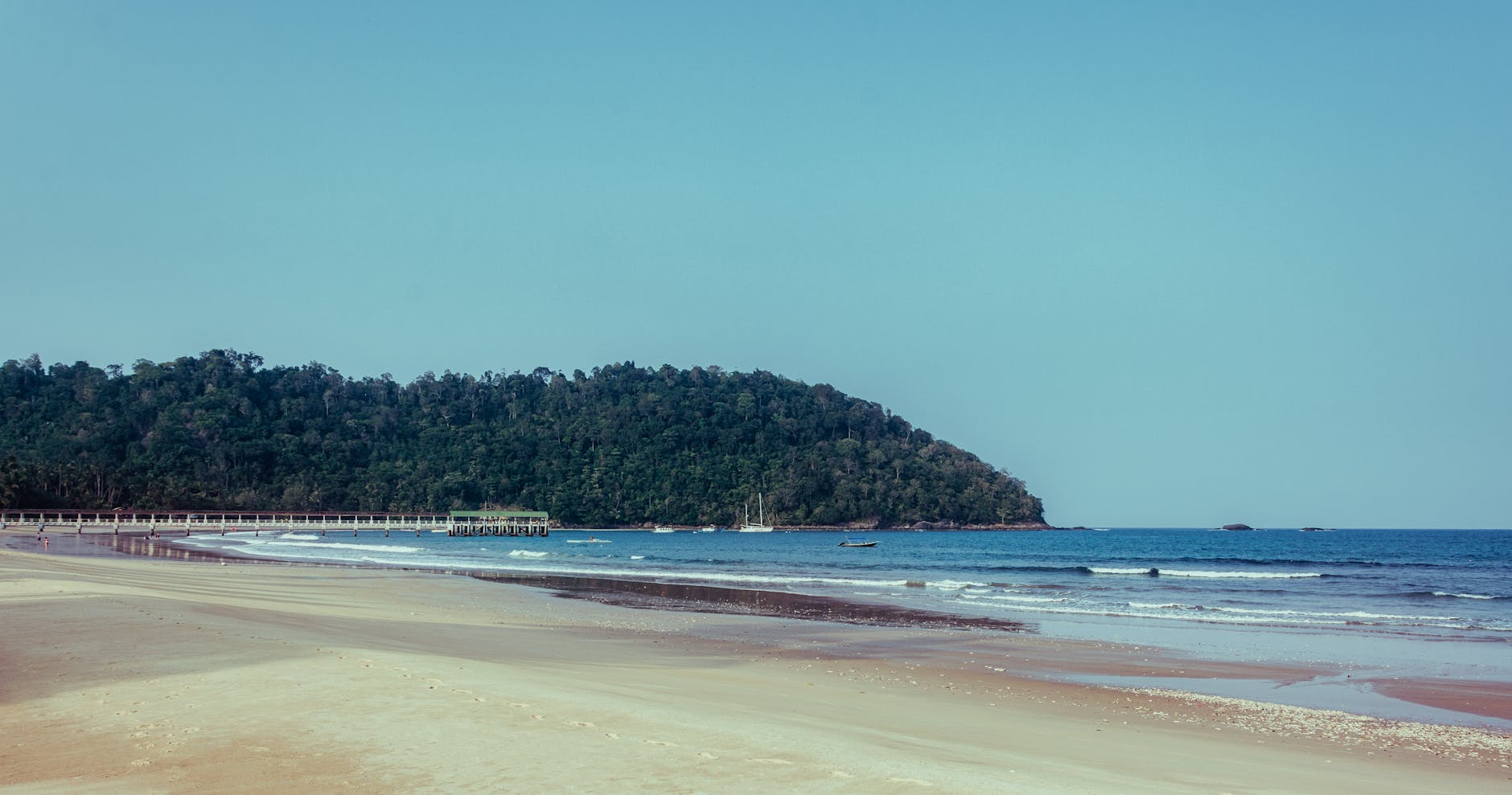
Ninety-five minutes by ferry from Mersing, Tioman Island still has blacktip reef sharks cruising its shallows and dusky leaf monkeys watching you from the treeline. Time Magazine called it one of the world’s most beautiful islands. Hollywood used it as a stand-in for a mythical Pacific paradise in the 1958 film South Pacific. Those facts are still true today, and more importantly for you, the reef is still healthy, the jungle trails are still wild, and a PADI Open Water course still costs under RM1,200 — cheaper than almost anywhere else in Southeast Asia.
This tioman island guide covers every decision you need to make: which village to base yourself in, where to dive and snorkel, how to reach the island from Kuala Lumpur or Singapore, what things cost, and when to go. Tioman sits about 32 kilometers off the east coast of Peninsular Malaysia in Pahang, fully within the Pahang Marine Park. That protection is the reason the coral stayed intact when other Malaysian reefs bleached. For how Tioman compares with every other option, see our guide to the best islands in Malaysia.

When to Visit Tioman Island
Tioman operates on a hard seasonal calendar. The island is open from March through October. The northeast monsoon from November through February closes almost every resort, suspends ferry services, and leaves the island to the storm swells. Unlike the more exposed Perhentian Islands on the northeast coast — see our full perhentian islands guide for a direct comparison — Tioman’s west coast offers some shelter, but not enough to make a monsoon-season visit practical or enjoyable.
Peak season runs June to August, when seas are calm, visibility reaches 30 meters underwater, and every resort is full. Book accommodation and ferry tickets in advance for this window. March to May and September to October are excellent shoulder months: conditions are still good, prices are lower, and you get longer stretches of beach to yourself. If your dive certification is the goal, the shoulder months give you calmer water without the July crowds.
Choosing Your Village: Where to Stay on Tioman Island
Tioman has seven distinct villages, and because almost no roads connect them, your choice locks in your entire experience. Boat taxis link the villages, but they run on no particular schedule and cost RM10 to RM30 per person per trip. Choose deliberately.
Tekek
Tekek is Tioman’s administrative center and the largest village. It holds the island’s only ATM, the bank, a small clinic, the marine park information office, and the main duty-free shops. Most ferry services arrive here. The beach is nothing special — functional rather than scenic — but Tekek is the practical hub. Stay here if you need banking access, medical proximity, or are only passing through on the way to another village.
Air Batang (ABC)
Air Batang, known universally as ABC, sits just north of Tekek and connects to it by a 30-minute coastal path. ABC is Tioman’s backpacker hub: cheap chalets, dive schools, small restaurants, and a social beach scene. Budget rooms run RM60 to RM120 per night. The beach is not Tioman’s most scenic, but ABC’s community feel and proximity to Tekek’s facilities make it one of the most popular bases on the island. Solo travelers and those doing dive courses gravitate here naturally.
Salang
Salang sits on Tioman’s northwestern tip and has arguably the best combination of beach, snorkeling, and atmosphere on the island. The coral reef starts just meters from shore — sea turtles, reef sharks, and dense schools of tropical fish are visible from the beach. Sunsets here drop behind the mainland mountains in a way that makes the west coast villages worth choosing over Juara’s wilder east coast. Accommodation ranges from basic rooms at RM50 to RM80 per night to mid-range chalets at RM150 to RM300. Dive schools, beach bars, and good restaurants make Salang feel self-contained.
Juara
Juara is the only village on Tioman’s east coast, facing the open South China Sea. Getting here requires either a ferry stop or the two-hour cross-island jungle trek from Tekek. That relative difficulty is what keeps Juara quiet. The beach — over a kilometer of wide golden sand backed by coconut palms — is Tioman’s best by most measures. Juara is also home to the Juara Turtle Project, a community conservation center running nighttime beach patrols during nesting season (May through September). Budget chalets start at RM80 to RM150 per night; mid-range options run RM200 to RM400. Juara receives surf swells during the monsoon transition months, attracting a small surfing crowd.
Paya
Paya sits just south of Tekek and houses several larger integrated resorts, including the Paya Beach Spa and Dive Resort. The water here is remarkably clear, with thriving coral reefs in knee-deep depths — some of the best shore snorkeling on the island. A jungle trail connects Paya to Juara in approximately three hours. Paya suits families and travelers who want packages that bundle accommodation, meals, and activities.
Genting
Genting sits on the southwestern coast, quieter than Salang or ABC but with a handful of resorts and dive centers. Good for travelers who want west coast diving access without the backpacker density. Less social, more restful.
Nipah and Mukut
Nipah and Mukut are Tioman’s most remote and least developed villages, on the southern end of the island with very limited accommodation. Mukut is the gateway to the Asah Waterfall, one of the island’s most spectacular natural attractions. These villages suit adventurous travelers who genuinely want isolation, not just the idea of it.
Best Beaches on Tioman Island
Juara Beach
Juara Beach is Tioman’s finest stretch of sand: over a kilometer of wide golden shoreline facing the South China Sea, backed by coconut palms and untouched jungle. Fewer visitors reach the east coast, so long sections of beach are often empty. The water is clear and shallow for a good distance, ideal for swimming. During the monsoon transition months, surf swells make Juara the island’s only viable surf spot.
Salang Beach
Salang Beach combines visual beauty with accessible marine life. White sand framed by boulders and jungle, a reef starting just offshore, and evening sunsets that drop behind the distant Pahang hills. The reef here means you can see sea turtles and reef sharks from the beach itself — no boat trip required.
Paya Beach
Paya offers some of the clearest water on the west coast. Coral is visible from knee depth, and sea turtles, schools of tropical fish, and healthy coral formations are accessible without swimming far. The adjacent resorts keep the beach well-maintained, giving Paya a more polished feel than the wilder beaches further north.
Monkey Beach
Monkey Beach is a secluded cove between ABC and Salang, reachable by water taxi or jungle walk. Named for the long-tailed macaques that inhabit the surrounding forest, the cove has excellent snorkeling over healthy coral gardens and turquoise water. It is one of Tioman’s most photographed locations for good reason.
Renggis Island
A tiny island just offshore from the Berjaya Tioman Resort near Tekek, Renggis is surrounded by some of the healthiest coral on Tioman. The small sandy beach is a regular snorkeling boat trip stop. Sea turtles, moray eels, butterfly fish, and fusilier schools are consistently present. Renggis is equally famous as a dive site.
Diving on Tioman Island
Tioman sits in the western corner of the Coral Triangle, the global epicenter of marine biodiversity. Water temperatures average 27 to 29 degrees Celsius year-round, and visibility regularly reaches 15 to 30 meters during peak season. Scientists have recorded hundreds of fish species in the surrounding waters. The marine park designation keeps the reefs in better shape than most comparable sites in the region. If you have dived sipadan island diving in Sabah and are curious how Tioman compares: Tioman has more accessible beginner-level sites, while Sipadan still leads for sheer density of large pelagics.
Dive Costs
A single fun dive costs RM80 to RM120. A full PADI Open Water certification runs RM900 to RM1,200 over three to four days. Discovery dives for complete beginners cost RM200 to RM280. Advanced Open Water, Rescue Diver, and specialty courses are widely available across the island. Multi-dive packages offer meaningful discounts — a 10-dive package typically saves 15 to 20 percent compared to individual dives.
Top Dive Sites
Tiger Reef near Salang is one of Tioman’s most celebrated sites. Hard corals, soft corals, sea fans, and sea sponges cover the topography, with walls, overhangs, and swim-throughs running from 12 to 25 meters depth. Barracuda, trevally, and reef sharks patrol the open water above.
Renggis Island is arguably Tioman’s most famous site and suitable for all levels. The submerged pinnacle attracts schools of barracuda and giant trevally, while the coral formations are exceptional for macro photography — nudibranchs, seahorses, and crustaceans at depths from 5 to 18 meters.
Chebeh Island, north of Tioman, has dramatic topography and strong currents that draw large pelagics. Blacktip reef sharks, leopard sharks, and large groupers are regularly spotted. Best for experienced divers comfortable with current diving.
Labas Island has spectacular coral gardens and strong biodiversity — shallow reef tops carpeted with hard and soft coral, deeper walls patrolled by trevally and barracuda. Suitable for all levels and popular for underwater photography.
Batu Malang (Malang Rock) near Coral Island features coral formations estimated at over 6,000 years old — mounds of potato coral, whorled lettuce corals, and thickets of branching species pressed polyp to polyp. A living natural monument.
Soyak Wreck consists of two Thai fishing boats at 22 to 30 meters, colonized by marine life and offering an atmospheric experience for Advanced Open Water divers and above.
Coral Island (Pulau Tulai) combines crystal-clear water, white sandy beaches, and reefs teeming with tropical fish, sea turtles, and colorful coral. Multiple dive sites around the island suit all experience levels.
Dive Schools
PADI and SSI schools operate in virtually every village, with the highest concentration in Salang, ABC, and Tekek. B&J Diving Centre, TDB SunBeach Dive Center, and Tioman Dive Centre are among the most established operators. Look for current PADI or SSI certification, well-maintained equipment, small group sizes, and recent guest reviews before booking.

Snorkeling on Tioman Island
You do not need a dive certification to access Tioman’s marine life. The marine park protection has kept the reefs shallow and healthy, and many of the best snorkeling spots are directly off the beach.
Shore Snorkeling
Salang Beach offers the best shore snorkeling on Tioman — a healthy reef beginning just meters from the waterline, with sea turtles commonly spotted in the late afternoon. Paya Beach is another strong option with clear, shallow water and thriving reef in knee depth. Renggis Island, reachable by a short swim or water taxi from the Berjaya resort area, has some of the most diverse marine life accessible from shore. If you are planning other island visits on this trip, compare notes with the redang island guide — Redang has more boat-organized dive infrastructure, while Tioman’s shore snorkeling is wilder and less managed.
Boat Snorkeling Trips
Half-day snorkeling boat trips leave from all villages, visiting three to four sites including Coral Island (Pulau Tulai), Renggis Island, and Monkey Bay. Cost: RM50 to RM80 per person. Full-day trips covering more distant sites run RM100 to RM150 and include lunch. Snorkeling gear rents for RM15 to RM25 per day — quality varies, and bringing your own mask makes a material difference to the experience.
Marine Life Highlights
Green sea turtles, hawksbill sea turtles, blacktip reef sharks, blue-spotted rays, moray eels, giant clams, anemonefish, parrotfish, butterflyfish, angelfish, barracuda, and an extraordinary range of coral species are all commonly encountered. Coral Island and Malang Rock produce the most reliable encounters with large marine life — many visitors rank these among their best snorkeling experiences anywhere.
Jungle Trekking and Waterfalls
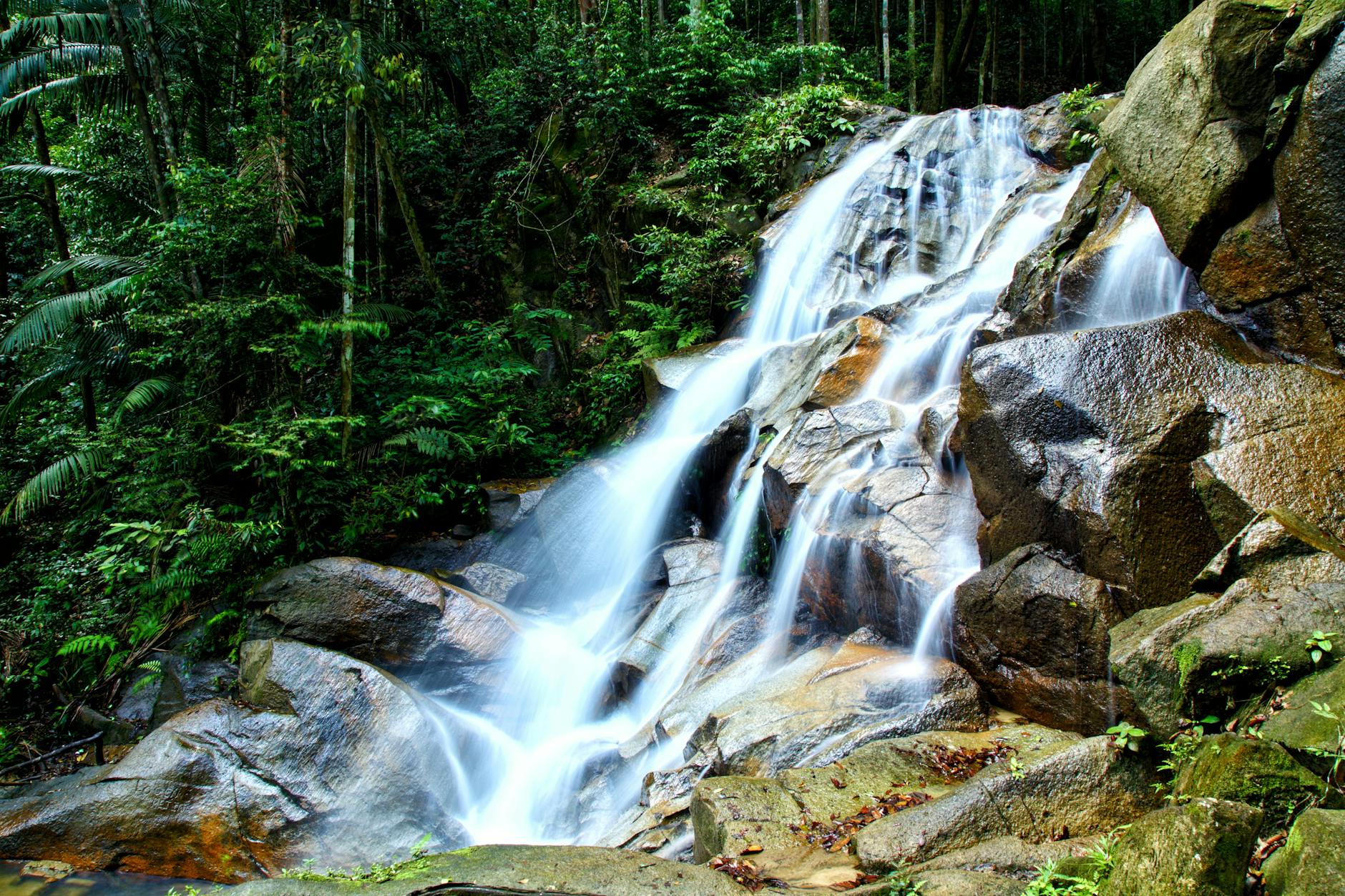
Tioman’s interior is dense primary rainforest, and the island’s trekking routes provide a striking contrast to the beach and underwater experiences. Dusky leaf monkeys, monitor lizards, flying foxes, and hornbills are regularly spotted on the trails — the jungle here is not a backdrop but an active ecosystem.
Tekek to Juara Cross-Island Trek
The cross-island trail from Tekek to Juara is Tioman’s most popular trek: approximately 7 kilometers through dense tropical jungle, taking 2 to 2.5 hours. The trail climbs steeply before descending to Juara’s beach. It is well-marked but can be slippery after rain. Bring adequate water, wear sturdy footwear, and start before 8 AM to avoid trekking in peak midday heat. The trail ends at Juara, where you can swim, eat, and take the afternoon ferry back around the island.
Asah Waterfall (Mukut Waterfall)
The Asah Waterfall near Mukut village on Tioman’s southern coast appeared in the 1958 film South Pacific — the same production that gave Tioman its Hollywood debut. The cascade, surrounded by dense jungle, is still as dramatic today as it was on screen. The hike from Mukut takes approximately two hours, though you can shorten the walk by taking a water taxi to Mukut from any west coast village first. The plunge pool at the base is perfect for a swim after the trek.
Ali’s Waterfall
Located near Juara, Ali’s Waterfall is smaller but easily accessible — a 30-minute walk from the village through jungle to a series of cascading pools where you can swim surrounded by undisturbed forest. A good half-day option if you are already basing yourself on the east coast.
Turtle Conservation
The Juara Turtle Project on Tioman’s east coast is a community-based initiative protecting sea turtle nesting habitats. The project operates a hatchery, runs nighttime beach patrols from May through September, and offers short-term volunteer opportunities for travelers. Activities include beach patrols, hatchery monitoring, data collection, and beach clean-ups. Watching a turtle nest or witnessing hatchlings reach the water is one of the most extraordinary wildlife experiences available anywhere on Malaysia’s islands — and it happens here, at community scale, without the corporate packaging you sometimes find elsewhere.
Duty-Free Shopping
Tioman has held duty-free status since 1972, making it one of Malaysia’s handful of duty-free islands alongside Langkawi. For a comparison of the duty-free scene, the langkawi beaches guide covers Langkawi’s far more extensive infrastructure. On Tioman, Vision Duty Free in Tekek is the largest outlet, with spirits, wines, beers, cigarettes, cosmetics, and electronics at significantly reduced prices. Smaller duty-free shops operate in Paya and Salang. The savings on alcohol are substantial — factor this into your budget, particularly if you are staying for more than a few days.
Where to Eat on Tioman Island
Dining on Tioman is relaxed and open-air, with most restaurants attached to resorts or operating as independent beach cafes. Expect to pay more than mainland prices — everything arrives by ferry, and that cost is reflected in the menu.
Village Dining
ABCD Restaurant in ABC is one of the island’s most popular restaurants, known for its evening seafood barbecue: freshly caught fish, prawns, squid, and crab grilled over charcoal and served with rice and local accompaniments, eaten on sandy floors with ocean views. In Salang, several beachfront restaurants serve excellent local Malay cuisine alongside Western dishes, with seafood barbecue dominating the dinner scene. Juara’s restaurants are quieter and slightly cheaper, with fresh seafood and local dishes on offer.
Food Tips
Main courses typically run RM15 to RM45 on Tioman — more expensive than the mainland but reasonable for a marine park island. Nasi goreng, mee goreng, and tom yam soup offer the best value. Western food is available at most restaurants but tends to be pricier and less consistently prepared. Many resorts offer meal packages that provide good value if you eat most meals at your accommodation. Fresh seafood barbecue after 7 PM is the signature dining experience and worth budgeting for at least once.
Getting to Tioman Island
All ferries depart from either Mersing Jetty or Tanjung Gemok Jetty in Pahang. The crossing takes approximately 1.5 to 2 hours. Two main operators serve the route: Bluewater Ferry (from both jetties to Tekek, Salang, ABC, Genting, Paya, and Nipah) and Cataferry (Tanjung Gemok to Tekek). Return tickets cost RM70 to RM120 per person depending on operator and destination village.
From Kuala Lumpur: Take a bus from Terminal Bersepadu Selatan (TBS) to Mersing — approximately 4 to 5 hours, costing RM30 to RM50. The Mersing ferry to Tioman then takes around 2 hours. Alternatively, drive to Mersing or Tanjung Gemok; parking at the jetty costs approximately RM15 per day. Some travelers fly to Senai Airport in Johor Bahru and transfer to Mersing by road, about 2 hours.
From Singapore: Mersing is 3 to 4 hours by road from Singapore — regular bus services and private transfers run between the two, making Tioman a genuine weekend destination for Singaporeans. For a smaller island that is easier to reach from the peninsula’s east coast, kapas island malaysia is worth considering as a day trip or overnight stop that requires far less travel time from Kuala Terengganu.
Practical Information
Money and ATMs
There is one ATM on Tioman, in Tekek village near the airport. If you are staying in any other village, withdraw enough cash in Tekek to cover your full stay — there is no backup option. Some larger resorts and dive schools accept credit cards, but most small restaurants, activity operators, and budget guesthouses are cash only. Budget carefully for accommodation, food, diving, snorkeling trips, marine park fees, and water taxis between villages.
Marine Park Fees
All visitors pay a Marine Park Conservation Fee at the jetty before boarding the ferry: RM5 for Malaysian adults, RM30 for foreign visitors. An additional Tourism Promotion Fee of RM5 per person applies. Keep your receipt — it may be checked on the island.
Connectivity and Power
WiFi is available at most resorts and restaurants but slow and inconsistent during peak times. Mobile data from Celcom, Maxis, and Digi works on the west coast but becomes patchy on the east coast and in remote areas. Power supply is generally reliable at established resorts but can fail during storms. Bring a power bank and consider a Malaysian SIM card for the best mobile data coverage.
Packing Essentials
Reef-safe sunscreen is non-negotiable — chemical sunscreens harm the coral that makes Tioman worth visiting. Bring sturdy footwear for jungle trekking, a waterproof phone case, insect repellent for the trails, a small dry bag for boat transfers, and sufficient cash. Bringing your own snorkel mask improves the experience dramatically over rental equipment. A lightweight rain jacket is useful even in dry season; tropical showers arrive without much warning.
Health and Safety
The nearest hospital is on the mainland. A clinic in Tekek handles minor issues, but anything serious requires ferry evacuation. Get travel insurance that explicitly covers water sports, scuba diving, and emergency evacuation — this is not optional on a remote island. Sand flies are an annoyance on some beaches at dawn and dusk. Jungle trails become slippery after rain; appropriate footwear is essential. Jellyfish appear occasionally during the transitional months at the start and end of season.
Conservation and Responsible Tourism
Tioman’s marine ecosystems are protected by the Pahang Marine Park, but coral bleaching, fishing pressure, and tourism impact are ongoing threats. As a visitor: never touch, stand on, or break coral; maintain distance from sea turtles and other marine life; use reef-safe sunscreen exclusively; do not feed fish; dispose of waste responsibly and take plastic off the island with you. Support dive operators that participate in reef clean-ups. Volunteer with the Juara Turtle Project if your schedule allows — direct conservation participation is more meaningful than a donation receipt.
Is Tioman Island Right for You?
Tioman is wild enough to feel like a genuine expedition, accessible enough for first-time island travelers. It is not Langkawi with its beach clubs and international airport, and it is not Sipadan with its permit system and wall-to-wall pelagics. What Tioman offers is a balance: world-class diving and snorkeling, pristine jungle trekking, some of Malaysia’s most beautiful beaches, duty-free savings, and accommodation that spans budget backpacker chalets to comfortable mid-range resorts.
The seasonal closure means the reef gets a real rest each year — no over-tourism, no permanent crowd. The marine park means the coral stayed intact. The result is an island that delivers on the kind of tropical experience that other destinations in the region have gradually lost. Go in the shoulder months for the best combination of good conditions and breathing room. Get your dive certification while you are there. Walk to Juara. Swim with a turtle at Salang. The island has been doing this since 1958. It is still doing it well.