Malaysia Language Guide: Essential Phrases and Communication Tips (2026)
A complete guide to languages in Malaysia, essential Malay phrases for tourists, Manglish explained, food ordering vocabulary, pronunciation tips, and communication etiquette for travelers.

Malaysia is one of the most linguistically diverse countries in Southeast Asia, with over 130 languages spoken across its peninsula and Borneo territories. The good news for English-speaking tourists is that you can get by comfortably in English throughout most of the country. The even better news is that learning a handful of Malay phrases will transform your experience, opening doors to warmer interactions, better service, and a deeper connection with the people you meet along the way.
This guide covers everything you need to know about language in Malaysia as a tourist, from the country’s fascinating linguistic landscape and how English fits into daily life, to the essential Malay phrases that will serve you at hawker stalls, in taxis, at markets, and everywhere in between. Whether you are spending a week in Kuala Lumpur or a month exploring Borneo, these communication tips will make your trip smoother and more rewarding.
What Languages Are Spoken in Malaysia?
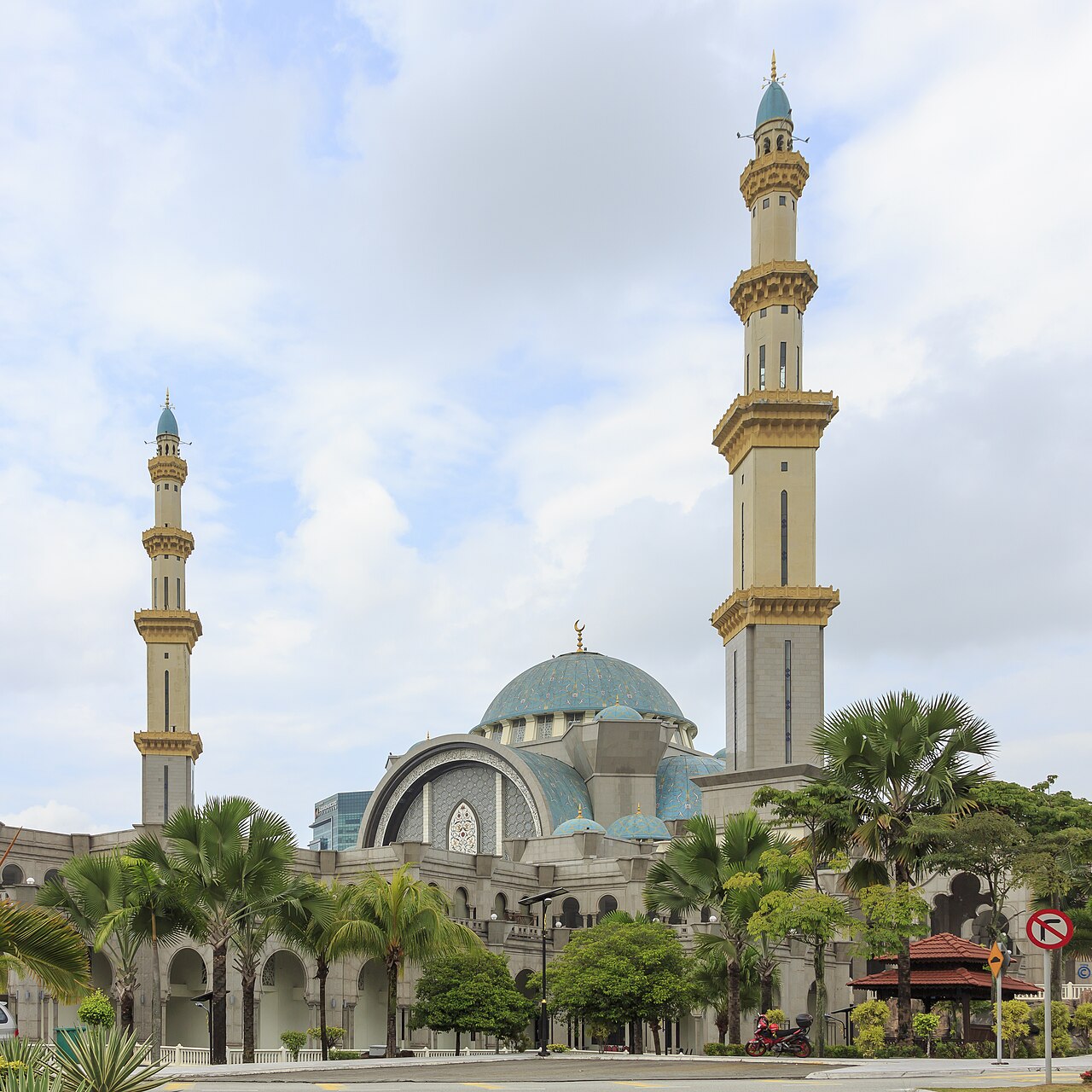
Malaysia’s linguistic diversity reflects its multicultural population of Malay, Chinese, Indian, and indigenous communities. Understanding this background helps you navigate the different languages you will encounter as you travel across the country.
Bahasa Malaysia (Malay)
Bahasa Malaysia, commonly referred to as Malay, is the national and official language of Malaysia. It is the language of government, education, and formal communication. Malay is an Austronesian language closely related to Indonesian, and speakers of one can generally understand the other with some vocabulary differences.
For tourists, Malay is the most useful local language to learn basic phrases in. It is spoken and understood everywhere in the country, from the bustling streets of Kuala Lumpur to the longhouses of Sarawak. Even in areas where Chinese or Tamil dialects dominate daily conversation, Malay serves as the common language that bridges ethnic communities.
English
English holds a special position in Malaysia as a legacy of British colonial rule. It is widely used in business, education, law, and tourism. Most Malaysians study English in school from a young age, and many are conversational or fluent, particularly in urban areas and tourist destinations.
In Kuala Lumpur, Penang, Langkawi, and other major tourist areas, you will rarely face a communication barrier using English. Hotel staff, restaurant servers, tour guides, and taxi drivers in these areas speak English comfortably. Road signs, public transport announcements, menus, and official information are commonly available in both Malay and English.
However, English proficiency varies significantly by location and age group. In rural areas, small towns, and traditional markets, you may encounter people with limited English. Older Malaysians in non-urban areas are more likely to speak only Malay or their community language. This is where knowing even basic Malay phrases becomes genuinely useful.
Chinese Languages
Approximately 23 percent of Malaysia’s population is ethnic Chinese, and several Chinese dialects are widely spoken. The most common are Mandarin, Hokkien, Cantonese, Hakka, Teochew, and Hainanese. The dominant dialect varies by region.
In Penang, Hokkien is the lingua franca of the Chinese community and is spoken even between different ethnic groups in some parts of Georgetown. In Kuala Lumpur, Cantonese and Mandarin are more common. In Sabah, Hakka predominates among the Chinese population, except in Sandakan where Cantonese is more frequently spoken.
Mandarin is increasingly used as a standard Chinese language across the country, particularly among younger Malaysians of Chinese descent, though many families still speak their regional dialect at home.
Tamil
Tamil is the primary language of the Malaysian Indian community, which makes up about 7 percent of the population. Malaysian Tamil has its own distinct dialect that has evolved separately from the Tamil spoken in India. You will hear Tamil spoken in Little India neighborhoods, Hindu temples, and Indian restaurants across the country, particularly in Peninsular Malaysia.
Indigenous Languages
East Malaysia (Sabah and Sarawak on Borneo) is home to dozens of indigenous languages, including Iban, Kadazan-Dusun, Bidayuh, and many others. Iban is the most widely spoken indigenous language in Sarawak, while Kadazan-Dusun is the major indigenous language in Sabah. If you visit longhouse communities in Borneo, you may hear these languages spoken alongside Malay.
Understanding Manglish
One of the most distinctive aspects of communication in Malaysia is Manglish, the local variety of English that blends standard English with Malay, Chinese, and Tamil influences. Understanding Manglish will help you follow conversations, avoid confusion, and even get a few laughs along the way.
What Makes Manglish Unique
Manglish is not broken English. It is a creole-influenced communication style with its own consistent grammar, vocabulary, and rhythm. Sentences tend to be shorter and more direct than standard English. Word order can differ from what you expect, and the intonation patterns are influenced by Chinese and Malay tonal structures.
The most recognizable feature of Manglish is the use of sentence-final particles that modify the tone and meaning of what is being said. These particles come from Malay, Hokkien, and Cantonese, and they are used constantly in casual conversation.
Common Manglish Particles
Lah is the most famous Malaysian particle. It is added to the end of sentences to add emphasis, soften a statement, or make something sound more casual and friendly. \”No problem lah\” means \”no problem at all\” with a warm, reassuring tone. \”Come lah\” is an invitation that sounds warmer than a plain \”come.\” There is no direct English equivalent, but think of it as adding a friendly nudge to whatever you are saying.
Mah is used to affirm something as obvious or self-evident. \”He is the boss mah\” implies \”he is the boss, obviously.\” It carries a softer emphasis than lah.
Meh expresses doubt or skepticism. \”Really meh?\” means \”are you sure about that?\” or \”is that really true?\” You will hear this frequently in casual conversation.
Leh and Loh are less common but add their own flavors of emphasis and finality to statements.
Common Manglish Expressions
\”Can\” and \”Cannot\” are used as complete sentences. If you ask a taxi driver whether he can take you somewhere, a simple \”Can\” means yes. \”Cannot\” means no. \”Can or not?\” is a common way to ask if something is possible.
\”Already\” is used to indicate completion, often placed at the end of a sentence. \”I eat already\” means \”I have already eaten.\”
\”Got\” replaces \”have\” or \”there is.\” \”Got parking here?\” means \”Is there parking here?\” \”You got try the nasi lemak?\” means \”Have you tried the nasi lemak?\”
Understanding these patterns will help you when locals use Manglish with you, and you might even find yourself adopting a few of these expressions by the end of your trip.
Essential Malay Phrases for Tourists
Malay is one of the easiest Asian languages for English speakers to pick up. It uses the Latin alphabet, has largely phonetic pronunciation, and has straightforward grammar with no verb conjugations, gendered nouns, or tonal variations. Even learning just a few phrases will earn you genuine smiles and warmer interactions.
Pronunciation Basics
Malay pronunciation is mostly phonetic. Each vowel has one consistent sound: A sounds like \”ah\” as in \”father,\” E is usually a schwa like the \”a\” in \”about\” though it can sometimes sound like \”eh\” as in \”bet,\” I sounds like \”ee\” as in \”see,\” O sounds like \”oh\” as in \”go,\” and U sounds like \”oo\” as in \”moon.\”
Most consonants sound like English, with a few exceptions. C is always pronounced \”ch\” as in \”church.\” R is lightly rolled. Ng is pronounced as a single nasal sound, like the \”ng\” in \”sing.\” Ny is pronounced like the \”ny\” in \”canyon.\” Stress typically falls on the second-to-last syllable of a word.
Greetings and Polite Expressions
Selamat pagi (seh-LAH-mat PAH-gee) means good morning and is used from dawn until about 11 AM. Selamat tengah hari (seh-LAH-mat TENG-ah HAH-ree) is the afternoon greeting used between noon and 2 PM. Selamat petang (seh-LAH-mat peh-TANG) means good afternoon and is used from late afternoon until sunset. Selamat malam (seh-LAH-mat MAH-lam) means good evening or good night.
Terima kasih (teh-REE-mah KAH-see) means thank you and is the single most important phrase to learn. Use it with taxi drivers, waiters, hotel staff, and anyone who helps you. The response is sama-sama (SAH-mah SAH-mah), which means \”you are welcome\” or literally \”same-same.\”
Tolong (TOH-long) means please or help. Use it before any request to sound polite. Maaf (MAH-ahf) means sorry or excuse me. Ya means yes, tidak (TEE-dak) means no.
Getting Around
Di mana…? (dee MAH-nah) means \”where is…?\” and is your most useful question construction. \”Di mana tandas?\” means \”Where is the bathroom?\” \”Di mana stesen bas?\” means \”Where is the bus station?\” \”Di mana hotel…?\” means \”Where is the hotel?\”
Berapa jauh? (beh-RAH-pah JOW) means \”how far?\” Useful for gauging distances before committing to a walk or ride.
Kiri (KEE-ree) means left, kanan (KAH-nan) means right, and terus (teh-ROOS) means straight ahead. Belok kiri means \”turn left\” and belok kanan means \”turn right.\” These are invaluable when giving directions to a taxi driver or following someone’s instructions.
Berhenti di sini (ber-HEN-tee dee SEE-nee) means \”stop here\” and is essential for taxis and ride-shares.
Numbers
Learning numbers one through ten covers most practical situations like ordering food, bargaining at markets, and understanding prices.
Satu (SAH-too) is one, dua (DOO-ah) is two, tiga (TEE-gah) is three, empat (EM-pat) is four, lima (LEE-mah) is five, enam (EH-nam) is six, tujuh (TOO-joo) is seven, lapan (LAH-pan) is eight, sembilan (sem-BEE-lan) is nine, and sepuluh (seh-POO-loo) is ten.
For prices, berapa harga? (beh-RAH-pah HAR-gah) means \”how much does it cost?\” This is the phrase you will use most at markets, street stalls, and shops without displayed prices.
Food and Drink Ordering
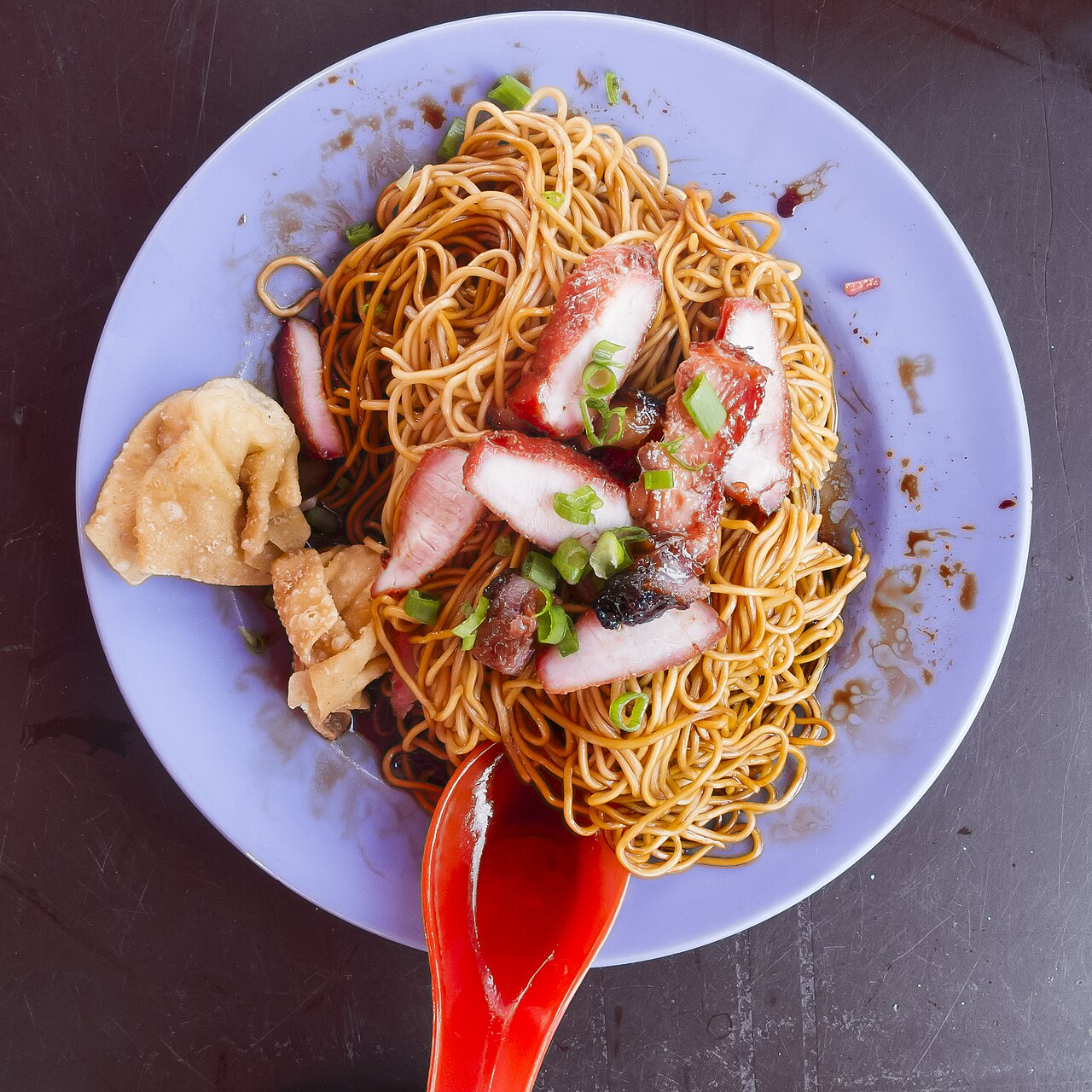
Food ordering is where basic Malay becomes incredibly practical, especially at hawker stalls and local eateries where English menus may not be available.
Saya minta… (SAH-yah MEEN-tah) means \”I would like…\” and is the polite way to order. Satu before a dish name means you want one serving.
Makan (MAH-kan) means \”to eat\” and minum (MEE-noom) means \”to drink.\” Pedas (peh-DAS) means spicy, tidak pedas means not spicy. Kurang pedas (KOO-rang peh-DAS) means less spicy, which is extremely useful at Malaysian food stalls where the default heat level can overwhelm unprepared tourists.
For drinks, Malaysia has its own ordering system. Teh is tea, kopi is coffee, and Milo is the popular chocolate malt drink. Add O for black (without milk), C for evaporated milk, peng for iced, and kosong for no sugar. So teh O peng is iced black tea, kopi C kosong is coffee with evaporated milk and no sugar, and Milo peng is iced Milo. Mastering this ordering system will impress locals and get you exactly the drink you want.
Kira (KEE-rah) means \”calculate\” or \”bill please\” and is how you ask for the check at hawker stalls and casual eateries. Locals often say this while making a small circular motion in the air.
Emergency Phrases
Tolong! (TOH-long) shouted loudly means \”Help!\” Panggil polis (PANG-geel POH-lis) means \”Call the police.\” Panggil ambulans means \”Call an ambulance.\” Saya sakit (SAH-yah SAH-kit) means \”I am sick.\” Hospital is the same word in Malay.
Saya tak faham (SAH-yah tak FAH-ham) means \”I don’t understand\” and is one of the most useful phrases when someone is speaking to you in rapid Malay or a local dialect.
Language by Region: What to Expect Where
The language landscape shifts as you travel across Malaysia. Knowing what to expect in each region helps you prepare.
Kuala Lumpur and the Klang Valley
English is widely spoken across KL, especially in the city center, shopping districts, and tourist areas like Bukit Bintang, KLCC, and Bangsar. You will hear a mix of Malay, English, Mandarin, Cantonese, and Tamil throughout the day. Signage is predominantly bilingual in Malay and English. Public transport announcements are in both languages.
Penang
Georgetown is one of the most multilingual cities in Malaysia. You will hear Hokkien, English, Malay, Mandarin, and Tamil all within a few blocks. English proficiency is generally high, particularly in the heritage zone, restaurants, and hotels. At traditional hawker stalls, the lingua franca among locals is often Penang Hokkien, but stall operators will switch to Malay or English for tourists.
Langkawi
As a major tourist island, Langkawi has high English proficiency in hotels, restaurants, and tour operations. Local Malay is the everyday language among residents, with some speaking a northern Malay dialect (Kedah dialect) that sounds different from standard Malay.
East Coast (Terengganu, Kelantan)
The east coast states have the strongest Malay-speaking identity and lower English proficiency compared to the west coast. The local Malay dialects, particularly Kelantanese Malay, sound very different from standard Malay and can be difficult even for other Malaysians to understand. Having your phrases ready and using translation apps will be more helpful here.
Sabah and Sarawak (Borneo)
English is widely spoken in cities like Kota Kinabalu and Kuching, but once you venture into rural areas, longhouse communities, and smaller towns, Malay and indigenous languages dominate. Learning basic Malay phrases is more important here than in Peninsular Malaysia’s tourist hubs.
Technology and Translation Tools
Even with basic Malay phrases in your pocket, technology can bridge any remaining communication gaps.
Google Translate
Google Translate supports Malay and offers offline translation once you download the language pack. This is essential for rural areas where internet connectivity may be limited. The camera translation feature lets you point your phone at Malay text, menus, or signs and see an instant English translation on screen. Voice translation works well for basic conversations.
Other Useful Apps
Dedicated Malay-English translation apps like those available on iOS and Android app stores can provide offline dictionaries and phrasebooks. Many of these apps include audio pronunciation, which helps you learn how words actually sound rather than guessing from written descriptions.
Google Maps is invaluable for communication in Malaysia because you can show your destination to a taxi driver on screen rather than trying to explain or pronounce an unfamiliar address. Having your hotel address saved in both English and Malay on your phone is a smart backup.
Practical Tech Tips
Download offline language packs before you arrive in Malaysia. Mobile data coverage is excellent in cities and tourist areas, but it can be spotty on remote islands, in jungle areas, and in parts of rural Borneo. Having offline translation available means you are never completely stuck.
If you have food allergies or dietary restrictions, prepare a written note in Malay explaining your needs. Show it to restaurant staff and hawker stall operators. This is far more reliable than trying to explain allergies verbally, especially in busy, noisy hawker centers.
Communication Etiquette Tips
Beyond the words themselves, how you communicate in Malaysia matters. These cultural communication tips help you navigate social interactions respectfully.
Use Titles and Honorifics
Malaysians value respect in communication. When addressing someone, use Encik (EN-chik) for men, similar to \”Mr.\” or \”Sir,\” and Cik (Chik) for women, similar to \”Ms.\” or \”Madam.\” In more formal situations, Tuan and Puan are used for \”Sir\” and \”Madam\” respectively. Using titles shows respect and will be appreciated.
Right Hand for Giving and Receiving
Always use your right hand when giving or receiving items, including money, business cards, and food. The left hand is considered unclean in Malay and Muslim culture. If you need to use both hands, that is also acceptable and shows extra respect.
Speak Clearly and Slowly
When speaking English, use clear, simple sentences and speak at a moderate pace. Avoid slang, idioms, and cultural references that may not translate well. Instead of \”Can you hook me up with a good restaurant?\” say \”Can you recommend a good restaurant nearby?\” Direct, simple English is understood far more easily than colloquial speech.
Pointing
Pointing with your index finger is considered rude in Malaysian culture. Instead, use your thumb (with fingers folded underneath) to indicate direction or point at something. You will notice Malaysians doing this naturally.
Volume and Tone
Malaysians generally communicate in a softer, less direct manner than what is common in Western countries. Speaking loudly, being overly blunt, or showing frustration publicly can cause loss of face. Keep your voice at a moderate volume and maintain a friendly, patient tone, even when you are frustrated by a communication misunderstanding.
Saying No
Malaysians often avoid saying \”no\” directly, as it can be seen as confrontational. Instead, you may hear \”maybe,\” \”we will see,\” \”it is a bit difficult,\” or simply silence. These indirect responses often mean no. Similarly, when asking questions, frame them in a way that gives the other person an easy way to provide information without feeling pressured.
Final Tips for Communicating in Malaysia
Start every interaction with a smile and a greeting. Even a simple \”hello\” or \”selamat pagi\” sets a warm tone and signals that you are friendly and approachable. Malaysians are overwhelmingly warm and helpful to tourists, and a little effort with their language multiplies that warmth tenfold.
Do not worry about getting pronunciation perfect. Malaysians appreciate the effort regardless of your accent. If someone does not understand you, try again slowly or show them the phrase written on your phone. Most people will go out of their way to help you communicate.
Learn the food-related phrases first. Malaysia is a food paradise, and ordering confidently at a hawker stall is one of the most satisfying experiences you can have as a tourist. Knowing how to order your teh tarik (pulled milk tea) or specify \”kurang pedas\” at a nasi lemak stall makes you feel like more than a tourist. It makes you feel like a temporary local.
Finally, remember that communication is about more than words. A genuine smile, a respectful attitude, and the willingness to try go much further than perfect grammar. Malaysians are proud of their multicultural heritage and genuinely enjoy sharing their languages and culture with visitors who show interest and respect.
Planning your Malaysia trip? Check out our complete travel guide for everything from visa requirements and budgeting tips to cultural etiquette and travel insurance. Time your visit with the best time to visit malaysia guide to catch major festivals when the country’s linguistic and cultural diversity is on full display. Navigate between cities with the getting around malaysia guide — knowing transport phrases makes bus stations far less daunting. And read the is malaysia safe guide before you go, which includes emergency numbers and key phrases for urgent situations.