Free Things to Do in Malaysia: The Ultimate Budget-Friendly Guide
Discover the best free things to do in Malaysia from temples and heritage walks to beaches, hiking trails, and free museums across Kuala Lumpur, Penang, Langkawi, Melaka, and Borneo.
Malaysia is one of the most budget-friendly countries in Southeast Asia for free activities, and the quality of what you can do without spending money is genuinely high. The best parks in KL are free. Most of the country’s museums have no admission charge or charge RM5 or less. The street food and night market culture means you can eat excellent food at low cost. The beaches on the islands are public. The temples, mosques, and heritage streets of George Town and Melaka are open to walk without a ticket. This guide covers the best free things to do in Malaysia by city and category, with notes on what is actually worth your time at no cost.
For the full picture of activities across all budgets, the guide to things to do in malaysia covers paid and free activities together. The guide to day trips from kuala lumpur includes Batu Caves, which has no entrance fee for the main cave, and several other free or low-cost excursions. The guide to shopping in malaysia covers the night market circuit where browsing costs nothing and eating costs very little.
Free Things to Do in Kuala Lumpur
KL has a surprisingly strong set of free activities for a capital city. The combination of well-maintained public parks, free entry to several significant cultural sites, and a street food culture that makes genuine meals accessible at low cost gives budget travellers a full itinerary without paying much beyond accommodation and transport.
KLCC Park and the Petronas Towers
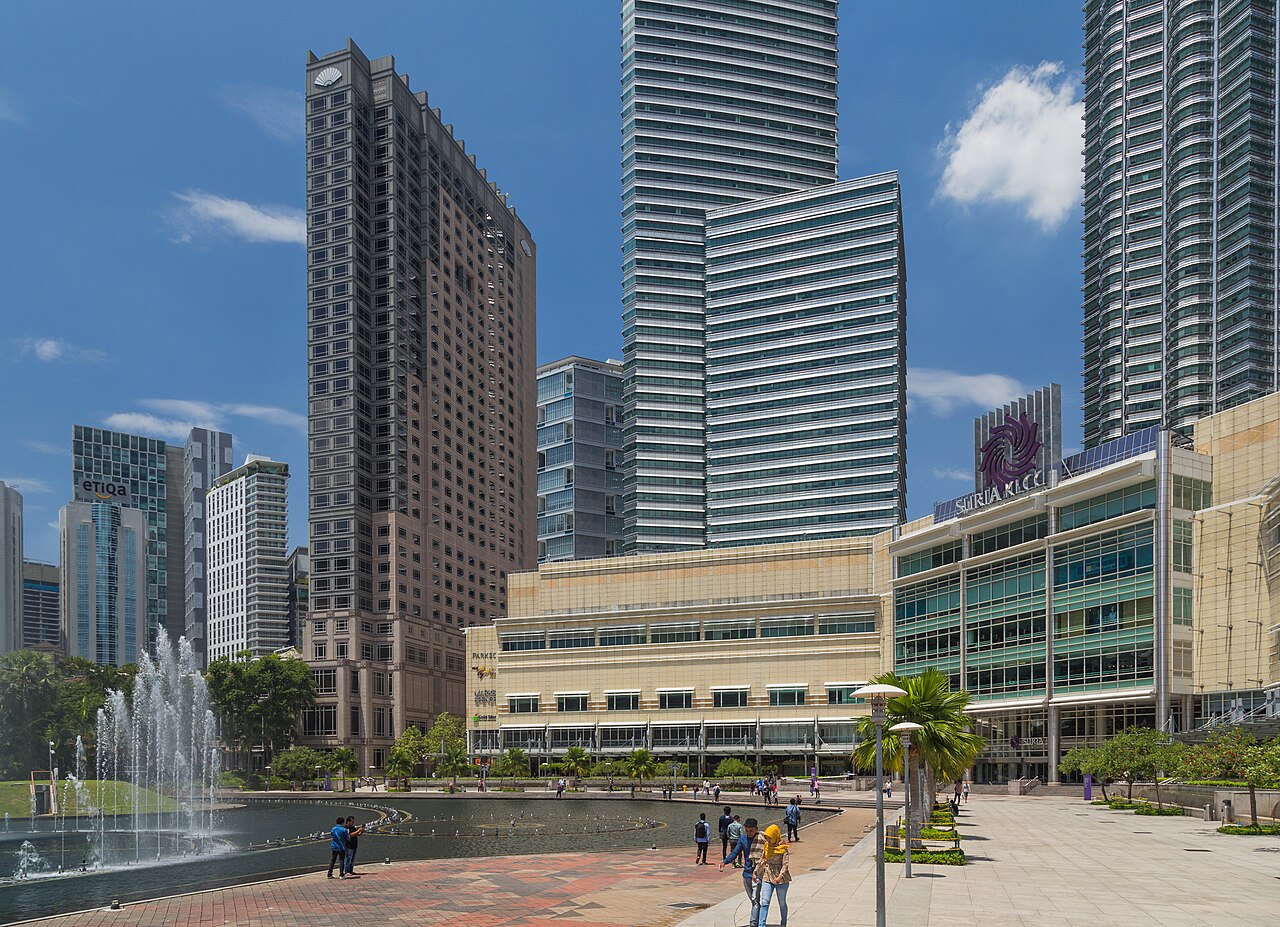
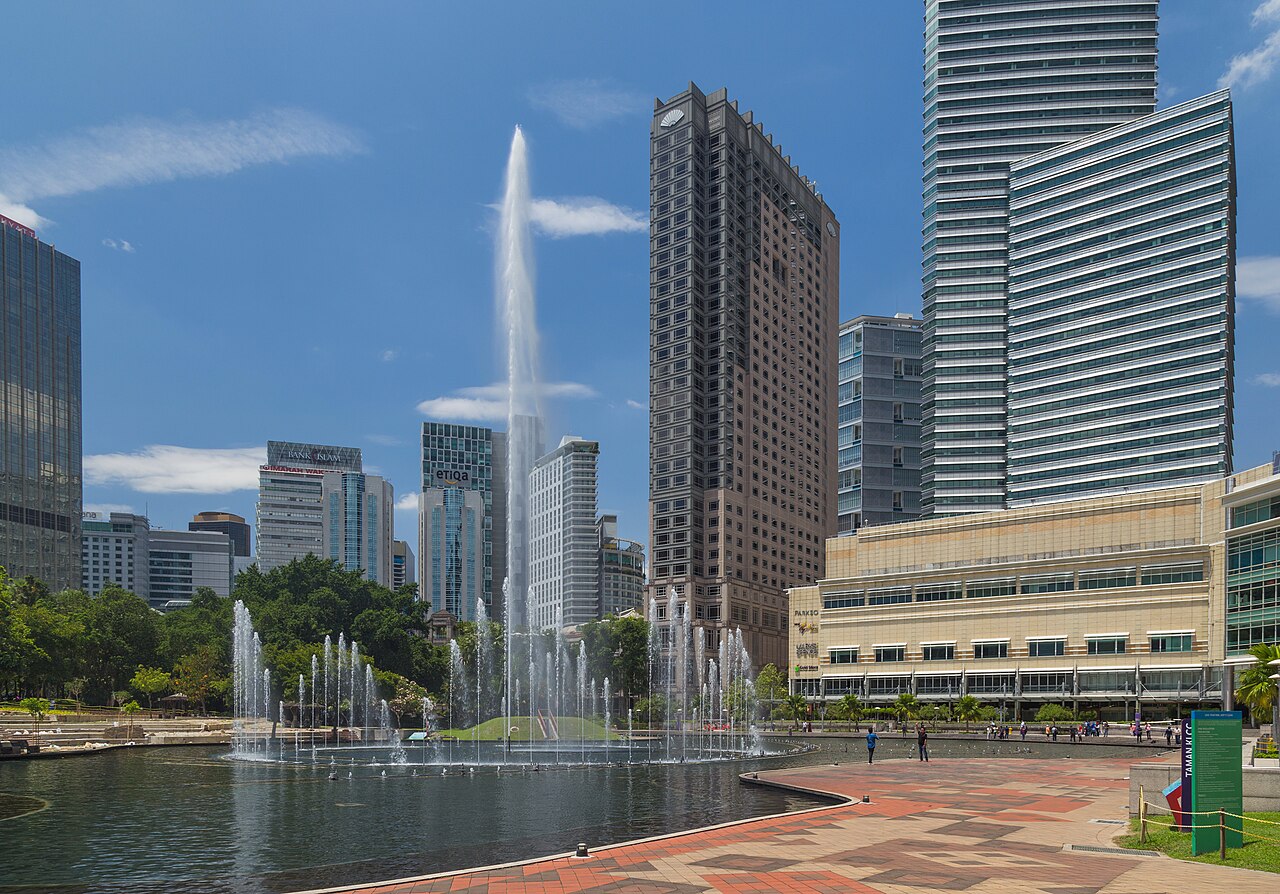
Visiting the Petronas Twin Towers from outside is entirely free, and the KLCC Park surrounding them is one of the nicest urban parks in Southeast Asia. The park covers 50 acres with a lake, jogging paths, children’s playground, wading pools, and the famous Symphony Lake fountains. The fountain show runs at 8 PM, 9 PM, and 10 PM nightly — free to watch from any position around the lake. The towers look best from the park in the blue hour after sunset, which costs nothing and produces better photographs than the paid observation deck views. The park is open 24 hours.
Batu Caves
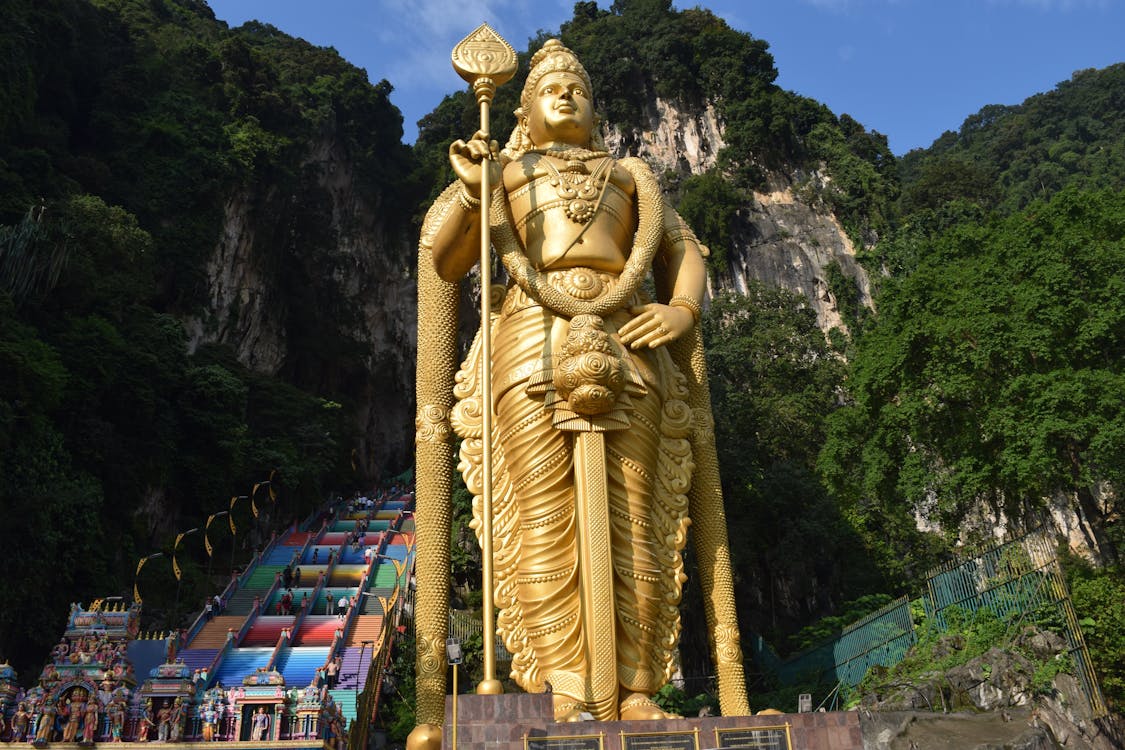
Batu Caves, the most visited tourist attraction in Malaysia, charges no entrance fee for the main cave temple. The 272 rainbow-painted steps, the 42.7-metre Lord Murugan statue, and the large cave chamber with its Hindu shrines are all free to visit. Only the Dark Cave (a separate natural cave section with a conservation programme) charges admission. Take the KTM Komuter train from KL Sentral to Batu Caves station — the journey takes about 30 minutes and costs roughly RM2.60 each way. The total cost of a Batu Caves visit from central KL: approximately RM6 return train fare plus whatever you choose to spend on food at the stalls inside the cave complex.
Perdana Botanical Garden
The Perdana Botanical Garden (Taman Botani Perdana) in the Lake Gardens area is KL’s largest park and one of the genuinely beautiful free spaces in the city. The garden covers 91.6 hectares with themed sections including a hibiscus garden (the hibiscus is Malaysia’s national flower), an orchid garden (small admission fee of RM1), a deer park, a bird park (charged separately), and extensive walking paths through mature tropical planting. The garden is best in the early morning before the heat builds — arrive at opening time at 6 AM and you will have much of it to yourself. Free entry. The surrounding Lake Gardens area also includes the Islamic Arts Museum (admission fee) and the National Museum (small admission fee), which allow you to combine free park time with paid museum visits in the same area.
National Mosque and Masjid India
The National Mosque of Malaysia (Masjid Negara) is open to non-Muslim visitors outside prayer times, free of charge. The mosque, completed in 1965, holds 15,000 people and is an important example of mid-century Malaysian modernist architecture. Robes are provided at the entrance for visitors not dressed appropriately. Opening hours for non-Muslim visitors: 9 AM-12 PM, 3-4 PM, and 5:30-6:30 PM (closed during prayer times). The Masjid India neighbourhood nearby is a free cultural experience — the streets around the mosque are packed with Indian textile shops, gold jewellers, and spice sellers that create a sensory environment worth an hour of walking regardless of whether you buy anything.
Free KL Museums
Several of KL’s museums are free or effectively free. The National Textile Museum at Merdeka Square is entirely free and covers batik, songket, pua kumbu, and court dress across well-presented galleries. The Bank Negara Museum and Art Gallery is free and covers financial history alongside a contemporary Malaysian art programme. The Royal Malaysia Police Museum is free. The Kuala Lumpur City Gallery at Dataran Merdeka is free and includes a large architectural model of KL’s central area that is worth seeing for the overview it provides of how the city fits together. The National Museum charges only RM5.
Chinatown and Heritage Walking
Walking the Chinatown area — Petaling Street, Central Market (entry free), Jalan Hang Kasturi, and the surrounding streets — costs nothing beyond transport to get there. The Sri Mahamariamman Temple in Chinatown is one of the most ornate Hindu temples in Malaysia and free to enter during non-puja hours. The old shophouses of Jalan Petaling and Jalan Tun H.S. Lee, many of them dating from the early 20th century, make the walk itself worthwhile as an architectural experience. The morning market on Jalan Tun H.S. Lee in the early hours is a working wet market where locals buy produce at prices that reflect a domestic economy, not a tourist one.
Free Things to Do in Penang
Penang is possibly the most budget-friendly major destination in Malaysia for free activities. George Town’s status as a UNESCO World Heritage Site has driven significant investment in the heritage zone’s public spaces, and the result is a walkable city where the most rewarding activities — street art, heritage architecture, clan jetties, temple visits — all cost nothing beyond getting there.
George Town Heritage Zone
Walking George Town’s heritage zone is free. The Ernest Zacharevic murals, the clan association buildings, the colonial-era shophouses with their five-foot walkways, the Chinese temples, the mosques, and the Little India neighbourhood are all accessible without tickets. The Penang State Museum charges RM1 for adults. The Kapitan Keling Mosque, the oldest mosque in Penang, is free for non-Muslim visitors outside prayer times. The Sri Mahamariamman Temple on Queen Street is free. The Goddess of Mercy Temple (Kuan Yin Teng) on Jalan Masjid Kapitan Keling is free. The Fort Cornwallis historic fortification charges RM20 but the exterior and surroundings can be seen from outside at no cost.
Clan Jetties
The clan jetties of Weld Quay — traditional stilt villages on piers over the water, each historically associated with a different Chinese clan — are free to walk. The Chew Jetty is the largest and most visited: wooden boardwalks over the water, fishing boats moored beneath the stilt houses, and an active community that continues to live here despite the daily stream of visitors. The clan jetties are best in the early morning at dawn and in the late afternoon before the sun sets — the light on the water at these times is distinctive, and the resident community is more active than at midday.
Penang Street Food
Eating in Penang is not technically free, but hawker food here is cheap enough relative to its quality that it belongs in any budget guide. Penang is consistently rated the best street food destination in Malaysia and one of the best in Southeast Asia. A bowl of asam laksa — the distinctive Penang sour and spicy fish noodle soup — costs RM5-8. Char kway teow, the flat rice noodle dish fried in lard in a screaming-hot wok, costs RM7-12 depending on size and additions. Cendol, the dessert of pandan-flavoured jelly noodles in coconut milk with palm sugar, costs RM3-5. A full afternoon of eating in George Town — multiple dishes across three or four hawker stalls — typically runs RM30-50 per person and covers a wider range of culinary ground than most restaurant meals at ten times the price.
Free Things to Do in Melaka
Melaka’s UNESCO heritage zone is walkable from one end to the other in under 30 minutes, and most of its most significant sights charge nothing. St Paul’s Hill, the Portuguese ruins of A Famosa (specifically the Porta de Santiago gate, the only surviving portion of the fort), and the surrounding Dutch Square area are all free to visit. The walk up St Paul’s Hill takes 10 minutes and the views from the ruined St Paul’s Church at the top — over the Melaka Strait and the city below — are among the best in the city without any charge. Jonker Street’s shophouses are free to walk during the day; the famous weekend night market requires no entry fee to browse, only money if you want to buy or eat.
The Baba Nyonya Heritage Museum, the Museum of History and Ethnography in the Stadthuys, and the Melaka Sultanate Palace Museum all charge small fees (RM5-16). If you are on a strict budget, the free circuit — St Paul’s Hill, Porta de Santiago, the exterior of the Stadthuys and Christ Church, Jonker Street, and the Melaka River walk — gives you the essential visual experience of Melaka without any museum admission.
Free Natural Attractions
Malaysia’s natural environment offers a substantial set of free or very-low-cost experiences. Public beaches across the country — on Langkawi, the Perhentian Islands, Cherating, and the west coast beaches of Penang — charge nothing for beach access. The entrance to the beach is free; what you spend on activities, food, and accommodation is a separate matter.
The Bukit Nanas Forest Reserve in the centre of KL, directly around the KL Tower, is a small tract of old-growth forest accessible on a free walking trail that runs around the tower perimeter. The trail takes about 30-45 minutes and passes through genuine tropical forest — canopy cover, monitor lizards, long-tailed macaques, and a remarkable diversity of forest plants — within walking distance of Bukit Bintang. Free entry. The forest is open from sunrise to sunset.
Penang National Park in the northwest of the island charges a small registration fee (RM10 for foreigners) but the interior jungle trails and beaches within the park — including Monkey Beach and the turtle sanctuary at Pantai Kerachut — are accessible on foot without further charges. The park is one of the smallest national parks in the world but contains old-growth meranti forest, two types of meromictic lake, nesting sea turtles, and a long-tail macaque population that has adapted to the coastal environment.
Free Cultural Experiences
Some of the most valuable cultural experiences in Malaysia are free specifically because they are not designed for tourists — they are part of the normal functioning of Malaysian society that happens to be visible to anyone who shows up at the right time.
The guide to best temples in malaysia covers temples across the country that are free to visit. Most Hindu, Chinese, and Buddhist temples in Malaysia welcome visitors during non-ceremony hours at no charge. The most visually spectacular are Batu Caves (free), Kek Lok Si in Penang (free to enter; the tower lift charges RM2), Sri Mahamariamman Temple in KL (free), and Cheng Hoon Teng in Melaka (free and the oldest Chinese temple in Malaysia).
Night markets — pasar malam — are free to browse and very cheap to eat at. The guide to malaysia nightlife covers the night market circuit alongside the bar and club scene, which clarifies that the most lively public spaces in Malaysia after dark are the markets, not the bars, and that the markets are both free to enter and provide better food than most restaurants at a fraction of the cost.
Malaysian festivals are free to observe and most are open to respectful visitors. Thaipusam at Batu Caves in January or February involves overnight processions and is one of the most visually intense religious events in Southeast Asia — free to attend and genuinely extraordinary. Wesak Day temple celebrations, Deepavali light festivals in Little India, and the Chinese New Year street celebrations in Chinatown and Penang are all free public events. The guide to best museums in malaysia covers free museums across the country — the National Textile Museum, Bank Negara Museum, Sarawak Museum in Kuching, and the Royal Malaysia Police Museum are all free admission and collectively cover a significant portion of Malaysian cultural history.
Budget Transport Tips
Keeping transport costs low in Malaysia is achievable. KL’s Rapid KL rail network (MRT, LRT, Monorail) is affordable — most single journeys within the city cost RM1-3. The free Go KL City Bus service operates on four colour-coded routes through central KL and connects Chinatown, Brickfields, KLCC, and Bukit Bintang without any fare. The Penang Free CAT Bus (Bas Percuma) connects the ferry terminal to Komtar and Georgetown’s main streets at no cost. In George Town, most of the heritage zone attractions are within a 20-minute walk of each other, which eliminates transport costs for most of the day’s activity.
The best overall free activity in Malaysia may be the simplest: sitting in a mamak restaurant with a teh tarik and watching the world go by. Mamaks — Indian Muslim open-air eateries — operate 24 hours in most Malaysian cities, serve food from RM3 to RM12 a dish, and function as the informal community living room of Malaysian society. The cost of two hours of people-watching in a mamak with several drinks and a meal is RM15-25. Few tourist experiences anywhere deliver more cultural insight per ringgit.
Free Things to Do in Borneo: Kuching and Kota Kinabalu
Borneo has a reputation as the expensive half of Malaysia, and for lodges and national parks that is fair. The two cities are a different story. Kuching’s waterfront promenade along the Sarawak River is the best free evening in Malaysian Borneo: a kilometre of landscaped riverside with the golden-roofed State Legislative Assembly opposite, the White Rajah’s fort on the far bank, and a sunset that turns the whole thing orange. The Sarawak Museum, one of the oldest in Southeast Asia, charges nothing. The Main Bazaar’s shophouse row costs nothing to walk, and the Chinese History Museum at the end of it is free.
In Kota Kinabalu, the Sunday market on Gaya Street is free to browse and runs the length of the road from around 6am — handicrafts, orchids, street food, and live birds, none of which you have to buy. Signal Hill Observatory Platform is a free ten-minute climb above the city for the harbour view. Tanjung Aru beach charges nothing for what is arguably the best sunset on the west coast of Sabah, and the Atkinson Clock Tower, the only structure to survive the wartime destruction of the city, is free to visit. Sabah State Museum charges a modest fee but its surrounding heritage village and ethnobotanical gardens are open ground. For the fuller picture of what costs what in Borneo, our Kota Kinabalu travel guide and Kuching travel guide break the cities down properly.
Free Things to Do in Ipoh and Johor Bahru
Two cities most budget itineraries skip, both unusually generous with free sights. Ipoh‘s old town is a compact grid of restored colonial shophouses with a mural trail by the same Lithuanian artist who painted George Town’s, all of it outdoors and free. The limestone cave temples ringing the city — Sam Poh Tong, Perak Tong, Kek Lok Tong — ask only for a donation, and Kek Lok Tong’s rear entrance opens onto a landscaped limestone valley that costs nothing to walk. The Ipoh railway station, known locally as the Taj Mahal of Ipoh, is free to admire and still a working station.
Johor Bahru rewards a free half-day more than its reputation suggests: the Sultan Abu Bakar State Mosque grounds overlooking the Strait, the Johor Bahru Chinese Heritage Museum for a nominal fee, the waterfront at Danga Bay, and Hutan Bandar city forest park for a genuine rainforest walk within the city limits. For anyone crossing to or from Singapore, it is several hours of free sightseeing on the cheap side of the causeway.
What Looks Free But Is Not
A handful of Malaysia’s best-known attractions get described as free online and are not, and budgeting around the wrong assumption is how a cheap day becomes an awkward one at a ticket counter.
| Attraction | The free part | The paid part |
|---|---|---|
| Batu Caves | The 272 steps and the main Temple Cave | Ramayana Cave, around RM 15 |
| Petronas Twin Towers | KLCC Park, the lake and the fountain show | Skybridge and observation deck, RM 98 |
| Penang Hill | The two-hour walking trail up from the Botanic Gardens | The funicular railway |
| KL Forest Eco Park | The forest trails at ground level | Nothing — the canopy walkway is free too |
| Melaka river | The riverside walkway and the street art | The 45-minute river cruise |
| Mosques and temples | Entry outside prayer times | Robe hire at some sites, usually refundable |
The general rule holds across the country: the ground-level, outdoor, walk-in version of almost every famous sight is free, and what you pay for is height, speed or air conditioning. Skipping all three is rarely a downgrade — the walk up Penang Hill through the jungle is better than the funicular, and KLCC Park at dusk beats the view from inside the towers.
Timing Your Trip Around Free Events
Malaysia’s festival calendar is the country’s biggest free attraction, and it is unusually dense because four religious calendars overlap. Thaipusam at Batu Caves in January or February draws over a million people and is free to attend. Chinese New Year fills the streets of KL’s Chinatown and George Town with lion dances and open houses, many of them literally open — the Malaysian open house tradition means strangers are invited in to eat. Hari Raya Aidilfitri brings the same custom on a national scale, and Ramadan bazaars run every afternoon for a month in every Malay neighbourhood, free to walk through and cheap to eat at. Deepavali lights up Brickfields and Penang’s Little India in October or November, and Wesak Day processions move through KL and Penang in May.
Check the dates before you book: they move each year with the lunar and Islamic calendars, and our best time to visit Malaysia guide tracks them month by month alongside the weather. Landing in the middle of one is the cheapest possible upgrade to a trip.