Johor Bahru Travel Guide: More Than Just a Singapore Day Trip (2026)
Your complete johor bahru travel guide for 2026. Discover theme parks, heritage sites, incredible food, Desaru Coast beaches, and practical border crossing tips from Singapore.
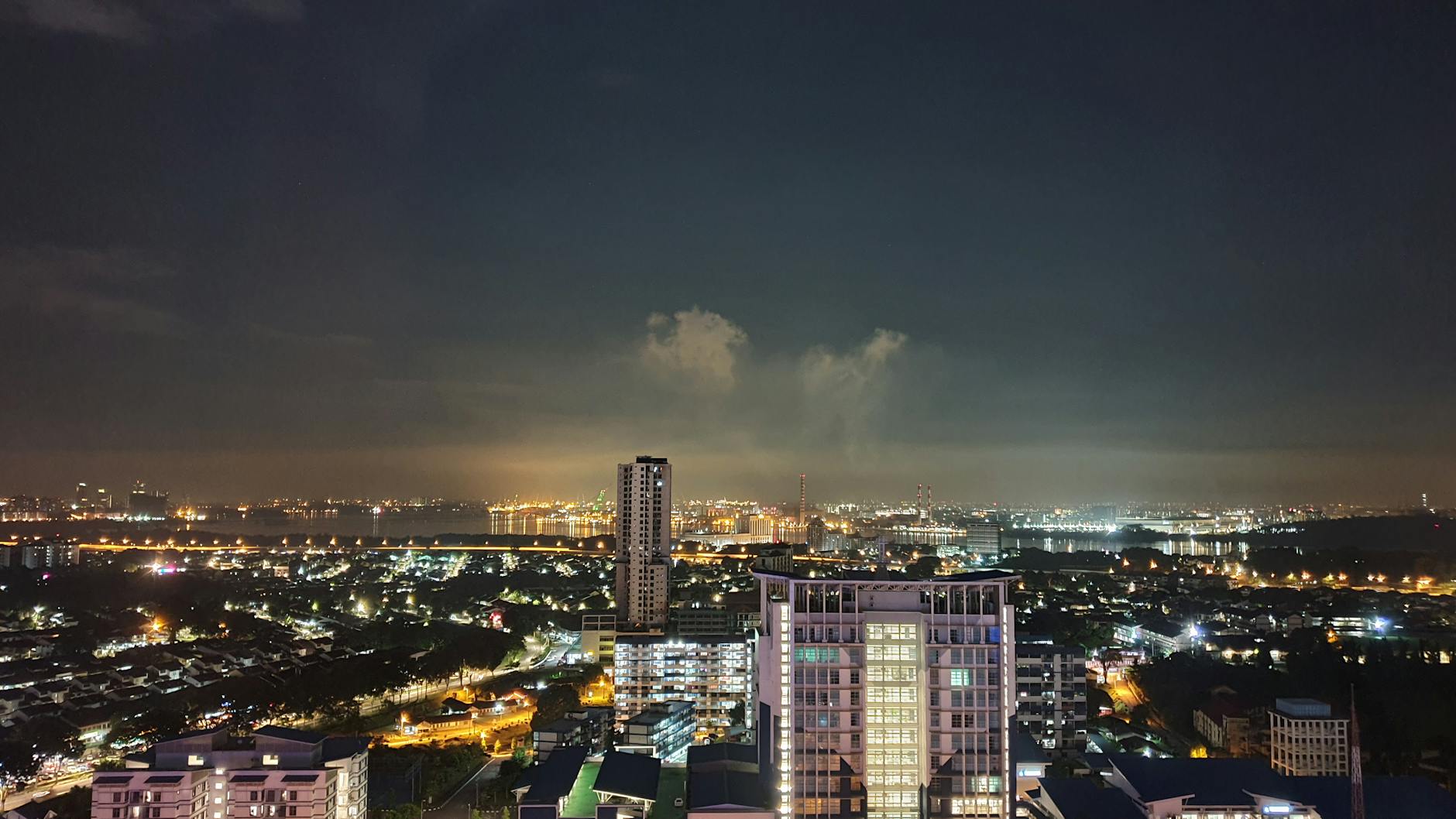
Johor Bahru sits at the southern tip of Peninsular Malaysia, separated from Singapore by a narrow strait and connected by one of the busiest land borders on Earth. For a long time, JB’s reputation was built almost entirely on being a cheaper destination for Singaporeans — haircuts, massages, seafood. That sells it short. The capital of Johor state has a sultanate history stretching back to the 15th-century Malacca Empire, a food scene that draws visitors from across the region, world-class theme parks, and the beach resort development of Desaru Coast an hour east. The border crossing is the entry point, not the destination. Coming from the peninsula? The Kuala Lumpur travel guide covers transport connections from the capital south to JB.
Crossing the Border from Singapore
Around 350,000 people cross the Johor-Singapore Causeway daily — one of the busiest land borders on the planet. Getting the timing right makes a significant difference. For how JB compares with the rest of the country, see our ranking of the best places to visit in Malaysia.
The Causeway (Woodlands Checkpoint)
The 1.056-kilometre Causeway connects Woodlands in Singapore to Bukit Chagar in JB, leading directly to the city centre. Two options: CW1 and CW2 Causeway Link buses run frequently at around SGD 1.50 to SGD 2 (cheapest option; passengers disembark at both checkpoints). The Shuttle Tebrau train takes 5 minutes across and clears both immigration checkpoints at Woodlands before boarding, avoiding Causeway traffic entirely — tickets cost about SGD 5 and book out fast at peak times via KTMB. Private hire cars and taxis from Singapore run SGD 40 to SGD 80 depending on time and provider.
The Second Link (Tuas Checkpoint)
The Tuas–Tanjung Kupang crossing in western Johor is the better choice for Legoland, Johor Premium Outlets, and Puteri Harbour. The CW6 Causeway Link bus covers this route. Generally lighter traffic than the Causeway.
Timing
Avoid weekday peak hours (6–9 AM and 5–8 PM) and Friday evenings. Worst congestion is Saturday daytime. Smoothest crossings are before 8 AM on weekends or after 9 PM. Check Google Maps or Waze for real-time traffic before departing.
Theme Parks and Family Attractions
Legoland Malaysia Resort
Asia’s first Legoland, open in Iskandar Puteri since 2012, spans 76 acres with 70+ attractions across seven themed zones. Miniland is the centrepiece — 1.38 million LEGO bricks recreating Asian landmarks including Batu Caves, George Town, and Kota Kinabalu. LEGO Technic has rides for older children and adults; LEGO City lets kids drive cars and earn LEGO driving licences; Land of Adventure houses the popular Lost Kingdom Adventure dark ride. The Water Park (separate ticket) adds 20+ slides including the Build-A-Raft lazy river. SEA LIFE Malaysia aquarium covers 120 species of marine creatures. The Legoland Hotel offers themed overnight stays in Pirate, Kingdom, Adventure, NINJAGO, and LEGO Friends rooms. Book tickets online — walk-in prices are significantly higher. Open 10 AM to 6 PM.
Other Attractions
Sanrio Hello Kitty Town at Puteri Harbour is the first Hello Kitty theme park outside Japan — interactive zones, rides, and themed souvenirs. Austin Heights Water and Adventure Park covers rope courses (seven levels, 50+ obstacles), water slides, wave pools, go-karts, and synthetic ice skating — better suited to teenagers and adults than families with young children.
Heritage and Cultural Attractions
Sultan Abu Bakar State Mosque
Built from 1892 to 1900 on a hill overlooking the Straits of Johor, the Sultan Abu Bakar State Mosque blends Victorian, Moorish, and Malay design into one of the most striking mosques in Malaysia. The views toward Singapore from the grounds are excellent. Open to visitors outside prayer times; modest dress required.
Arulmigu Sri Rajakaliamman Glass Temple
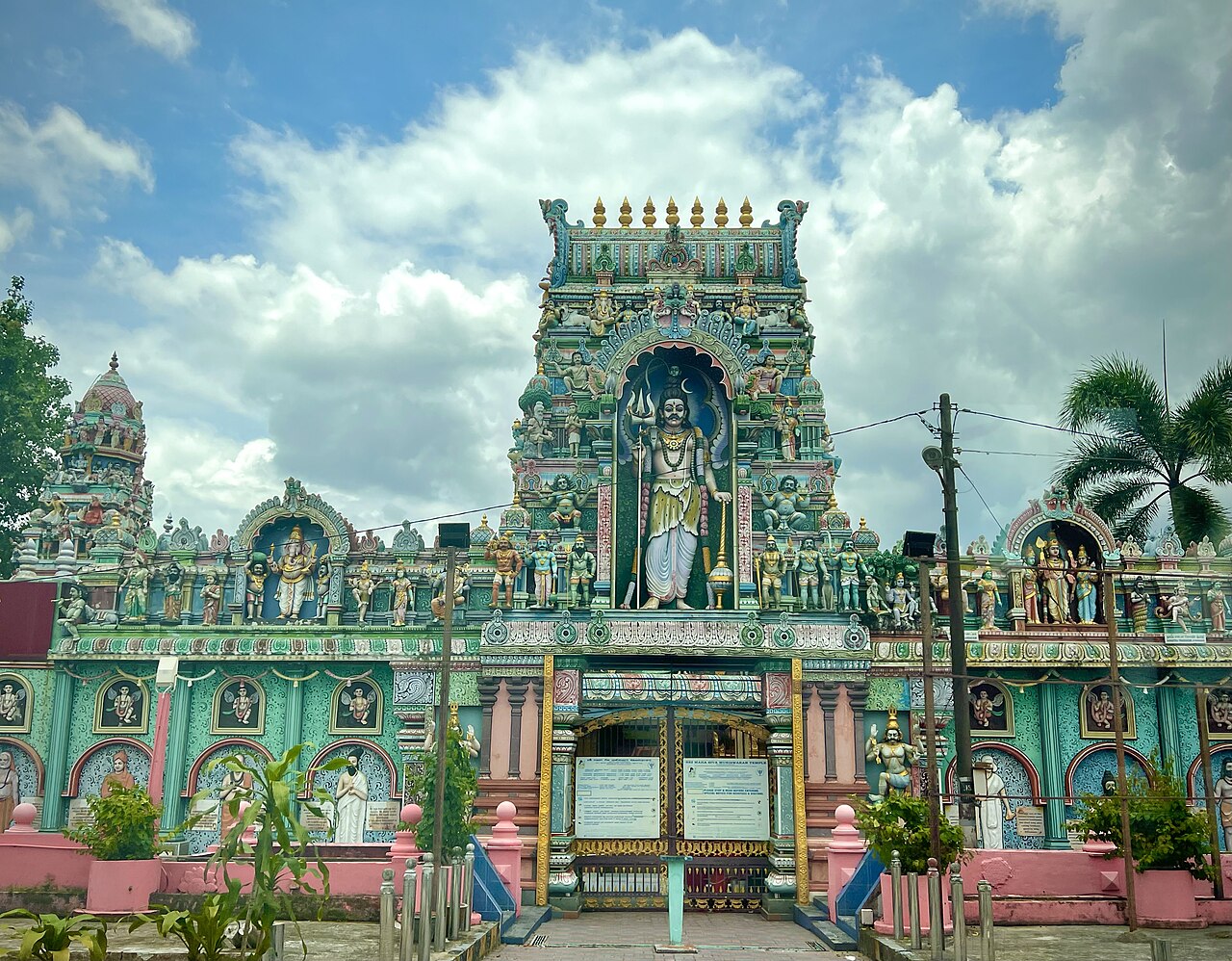
Malaysia’s first and the world’s first glass-adorned Hindu temple — 300,000 pieces of coloured glass mosaic covering walls, ceilings, pillars, and statues. Established in 1922, transformed with glass over subsequent decades. The kaleidoscopic light effects are extraordinary. Open to visitors 1 to 5 PM daily.
Jalan Tan Hiok Nee Heritage Street
The heart of JB’s heritage district — restored pre-war shophouses converted into cafes, art galleries, vintage shops, and street food stalls. Named after 19th-century community leader Tan Hiok Nee. Weekend evenings are the best time: pedestrianised, pop-up vendors, and a genuinely lively atmosphere. Hiap Joo Bakery (baking since 1919, famous banana cake, best at noon) and Sang Heng Restaurant (50+ years, Teochew mee pok, braised duck) are the anchors.
Chinese Heritage Museum and Royal Abu Bakar Museum
The Chinese Heritage Museum at 42 Jalan Ibrahim occupies a restored shophouse across four floors documenting the Chinese community’s history in Johor from the 14th century — artifacts, manuscripts, photographs, interactive exhibits. Open daily 9 AM to 5 PM (Saturday until 10 PM); closed Mondays. Entry RM20. The Royal Abu Bakar Museum in the 1866 Grand Palace showcases the Johor Sultanate’s royal heritage through regalia, ceremonial artifacts, and period furniture in a building that blends Malay and European styles.
What to Eat in Johor Bahru
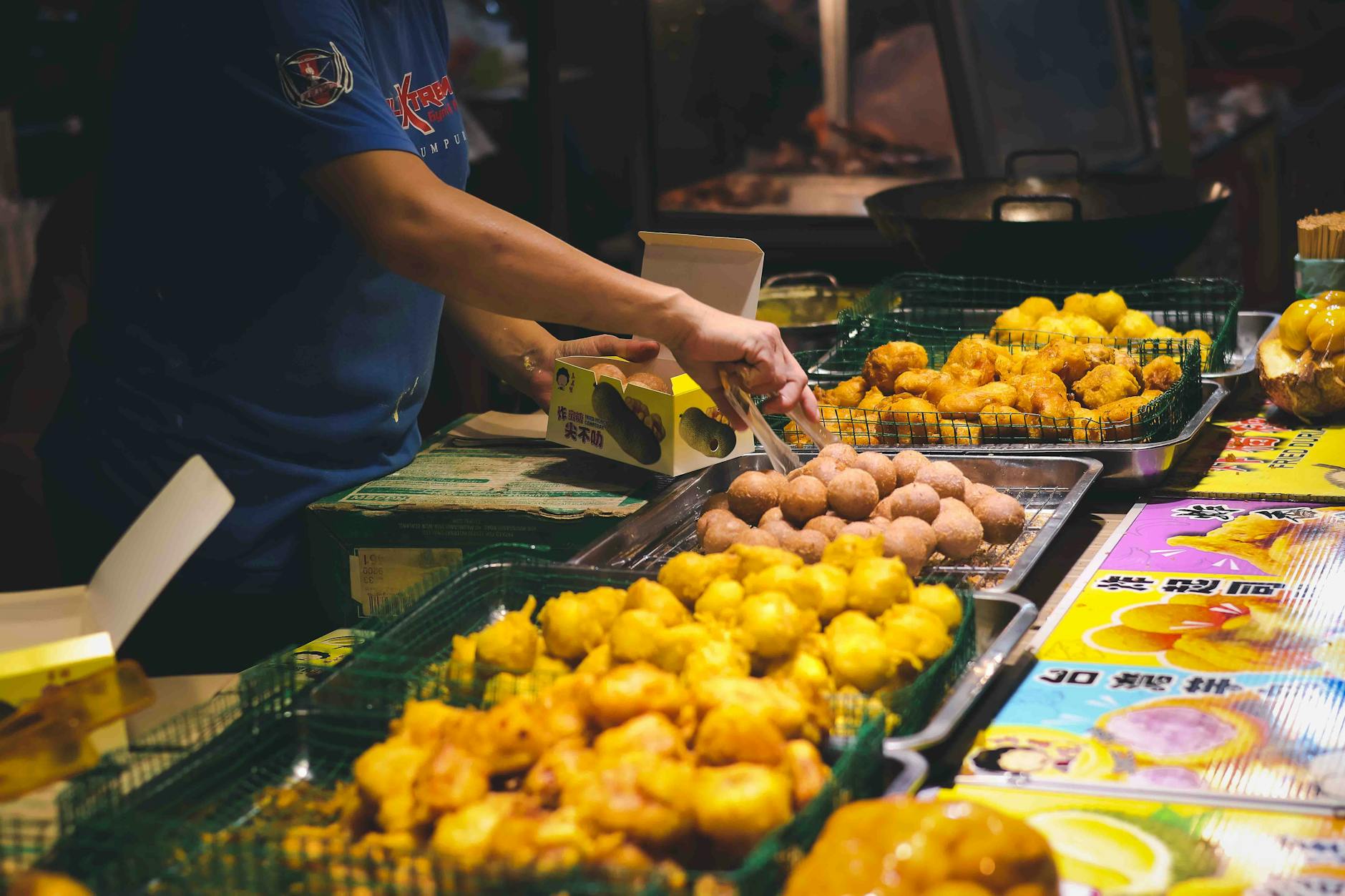
JB’s food draws Singaporeans across the border specifically for it — Malay, Chinese, Indian, and Peranakan traditions, fresh seafood, and prices that make Singapore’s hawker centres look expensive.
Johor Signature Dishes
Laksa Johor is the state’s most distinctive dish — a rich fish-based gravy served over spaghetti rather than rice noodles (the unique pasta choice reflects the cosmopolitan Johor Sultanate court). The gravy is blended fish, coconut milk, and a complex spice paste, topped with fresh herbs, cucumber, and sambal. Mee Rebus Johor features thick yellow noodles in a sweet-savoury gravy thickened with sweet potato, topped with hard-boiled egg, green chillies, fried shallots, and lime — considered the benchmark version. Nasi Briyani Gam cooks rice and meat together in a sealed pot, producing an intensely aromatic result quite different from layered biryani.
Seafood
Grand Bayview Seafood at Danga Bay displays live seafood tanks at the entrance — lobsters, crabs, fish, clams — all cooked to order with waterfront views. Ong Shun Seafood at 54 Jalan Tan Hiok Nee offers no-frills halal zi char: butter cream prawns, salted egg squid, steamed fish at honest prices. Restoran Sulam in Taman Sentosa has served its legendary curry fish head for over 35 years — a recipe that draws regulars from both sides of the Causeway.
Shopping in Johor Bahru
KSL City Mall (500+ outlets, famous night market outside on Mondays) and City Square Mall (connected directly to JB Sentral CIQ by covered walkway — walk from immigration to shopping in minutes) are the two most-visited. Paradigm Mall JB is the mega-mall option (1.3 million sq ft, 500+ tenants, Blue Ice Skating Rink). The pasar malam night markets on different evenings across the city are more interesting for food: otak-otak, Nyonya kuih, prawn fritters, and local produce at genuine local prices. Johor Premium Outlets in Kulai (40 minutes from JB) carries 130+ designer brands at outlet prices — the first premium outlet in Southeast Asia.
Day Trips from JB
Desaru Coast
A 4,000-acre integrated resort destination 90 minutes east of JB along 17 kilometres of South China Sea beach. Adventure Waterpark Desaru Coast is one of the world’s largest waterparks. The Els Club offers 45 holes of golf across two courses. JungleWalla runs guided rainforest tours, river cruises, and kayaking. The Sungai Lebam Wetlands firefly boat tour at evening is one of the best firefly experiences in Malaysia.
Kota Tinggi Waterfalls
A 36-metre waterfall with natural swimming pools one hour’s drive from JB — a popular weekend escape for families, with chalets and camping at the base of the falls.
Getting to JB from Elsewhere in Malaysia
Senai International Airport receives domestic flights from KL (1 hour), Penang, Kota Kinabalu, and Kuching; AirAsia, Firefly, and Malaysia Airlines all serve the route. Fares from KL start around RM80 to RM150 one way. By bus, JB connects to KL (4 to 5 hours, RM35 to RM50), Melaka (3 hours), and other cities via Larkin Sentral Bus Terminal. By train, KTM intercity connects JB Sentral to Gemas for ETS transfer to KL — 7 to 8 hours, scenic and comfortable if not fast. JB is the natural southern anchor of a full west-coast Malaysia itinerary that might include KL, Cameron Highlands, Penang, and Langkawi before coming back south.
Getting Around JB
Grab is the strongly preferred option — affordable (RM5 to RM20 for most city trips), reliable, and avoids metered taxi uncertainty. Public buses (Bas Muafakat Johor) cover major routes cheaply but infrequently outside peak hours. Car rental is the practical choice for Desaru Coast, Kota Tinggi, and Mersing (gateway to Tioman Island). Walking works within the heritage district around Jalan Tan Hiok Nee but the city is not generally pedestrian-friendly.
Where to Stay
City centre / CIQ area: Hotel CIQ (budget, RM100/night range, walkable to everything) covers the practical option. Capri by Fraser JB and DoubleTree by Hilton are solid mid-range choices within 5 minutes of the checkpoint. Sheraton Johor Bahru (opened 2025) and The R&F Princess Cove Hotel (waterfront, Straits of Johor views) are the luxury options.
Iskandar Puteri / western Johor (theme parks): Legoland Hotel for the full immersive experience; mid-range properties around Puteri Harbour for families.
Desaru Coast (beach): Anantara Desaru Coast Resort and Villas and Hard Rock Hotel Desaru Coast lead the luxury tier. Tunamaya Beach and Spa Resort is the mid-range option.
Practical Tips
Best time: June to August is the driest. March to May and September to November offer good weather with fewer crowds. December is the wettest month. Year-round temperature range is 23 to 33°C.
How many days: A focused day trip from Singapore covers the heritage district and food. Two to three days adds theme parks and a Desaru day trip. A full week includes proper beach time and wider Johor exploration.
Budget: RM80 to RM150/day for budget travel covering accommodation, food, and transport. RM250 to RM400/day mid-range. Theme park tickets add RM150 to RM300 per person per park.
Currency: Malaysian Ringgit throughout. Some CIQ-area establishments accept Singapore Dollars at poor rates — avoid. Money changers in City Square Mall offer competitive rates. Cash is essential for street food, pasar malam, and smaller shops.
Safety: JB has improved substantially in recent years. Standard urban precautions apply: secure valuables, use Grab after dark, stay in busy areas. The heritage district and major malls are safe at all hours.
Etiquette: Johor is a Muslim-majority state with a strong royal tradition. Dress modestly at mosques and religious sites. The Johor Sultan is deeply respected — be mindful of local sensitivities in any commentary about the royal family.
JB Food Scene in More Depth
The food in JB rewards more than one meal. The best approach is to structure eating around the different communities that make up the city. Mornings: any kopitiam in the heritage district for kopi-O (black coffee), soft-boiled eggs with dark soy sauce and white pepper, and kaya toast — the standard Hainanese coffee shop breakfast that Singaporeans cross the border specifically for. Late morning: one of the heritage street laksa stalls for Laksa Johor, best before noon when the gravy is freshest. Lunch: mee rebus or a banana leaf rice at one of the Indian restaurants around Jalan Wong Ah Fook. Late afternoon: otak-otak from a Danga Bay or Taman Pelangi vendor — fish paste spiced with galangal and chilli, wrapped in banana leaf and grilled. The JB version is notably spicier and firmer than the Penang variety.
Evening is the main event. Jalan Tan Hiok Nee fills with pedestrians and pop-up stalls after 6 PM. The seafood restaurants along Danga Bay fire up for the dinner crowd. The pasar malam operates on a rotating schedule through the week: Taman Daya on Wednesdays, Taman Pelangi on Sundays, KSL area on Mondays. Check which is closest to your accommodation. The stalls sell a good cross-section of JB food culture — kuih, grilled meats, fried noodles, fresh coconut, durian when in season.
Photography in Johor Bahru
The Glass Temple is the most photogenic single building in JB — the coloured mosaic catches direct sunlight best in the late morning between 10 AM and noon. Arrive when it opens at 1 PM if you want interior shots without crowds. The Sultan Abu Bakar Mosque photographs well in golden hour from the road below, with the Straits of Johor as a backdrop. The Jalan Tan Hiok Nee heritage street works best in the blue hour just after sunset when the shophouse lights come on but there is still colour in the sky.
For Singapore skyline shots from the Malaysian side, the R&F Princess Cove waterfront is the best vantage point — the lit-up Singapore skyline across the Straits makes for strong evening photography. The Legoland Miniland section photographs well in late afternoon when the low sun picks out the LEGO landmark details. The park restricts tripods in some areas; a small travel tripod or phone stabiliser handles most of what you need.
Combining JB with a Malaysia Itinerary
JB sits at the natural southern end of a Peninsular Malaysia loop. If you are planning a west-coast route that includes the Cameron Highlands tea estates and Penang food scene, JB and Desaru make a logical southeastern finish before flying home from Senai or returning through Singapore. For a more compact trip, KL to Melaka to JB is a straight south-coast run, each destination distinct in character — the Melaka travel guide covers the UNESCO port city two hours north of JB on the same highway.
JB also works as a standalone short break from Singapore without needing to plan a wider Malaysia itinerary. Two to three days is enough to cover the theme parks, the heritage district, a Desaru day trip, and eat well throughout. The Kuala Lumpur travel guide covers what to do when — or if — you extend north to the capital. For the north of the peninsula, the Langkawi travel guide covers the duty-free island at the far end of the west-coast route.
The Johor Sultanate and JB’s Royal History
The royal house of Johor traces its lineage to the last rulers of the 15th-century Malacca Sultanate and has maintained unbroken rule over Johor for centuries, giving the state a distinct identity and pride. The current Sultan Ibrahim became King of Malaysia in 2024 on the five-year rotational basis — his accession brought national attention to Johor and accelerated significant investment in JB’s infrastructure. The Grand Palace complex (Royal Abu Bakar Museum), the Sultan Abu Bakar Mosque, and the Istana Bukit Serene royal residence all reflect the Sultanate’s deliberate shaping of the city. The Istana Besar gardens facing the Straits of Johor provide a pleasant waterfront walk and are well-maintained year-round.
The Iskandar Malaysia Development Zone
JB’s transformation from border waypoint to destination is one of the more interesting urban development stories in Southeast Asia. The Iskandar Malaysia corridor, launched in 2006 covering 2,217 square kilometres of southern Johor, catalysed investment at a scale few Malaysian cities have seen — manufacturers, logistics, technology parks, and then consumer infrastructure: malls, theme parks, hotels, and waterfront developments along Danga Bay and Puteri Harbour. The result is a city with a dual personality: the dense, atmospheric heritage district around Jalan Tan Hiok Nee where 100-year-old shophouses abut pasar malam stalls, and the gleaming new Iskandar Puteri zone 15 kilometres west where Legoland, waterfront condominiums, and international schools serve a very different demographic. Desaru Coast to the east adds a beach dimension that neither city zone provides.
JB for Families
Johor Bahru is arguably Malaysia’s best destination for families with children of varied ages. Legoland Resort alone — theme park, water park, aquarium, themed hotel — can fill 2 to 3 days. Hello Kitty Town at Puteri Harbour handles the under-8 crowd. Austin Heights targets teenagers with its rope course and adventure park format. Desaru Coast’s Adventure Waterpark provides a beach resort day with slides and wave pools that rival any waterpark in the region.
Outside theme parks, Jalan Tan Hiok Nee’s heritage district is walkable and engaging for older children — the Glass Temple, banana cake at Hiap Joo Bakery, and the pasar malam stalls provide enough variety to hold mixed-age group interest across an afternoon and evening. JB’s affordability relative to Singapore means families can eat, shop, and enter parks at a fraction of the equivalent Singapore cost. A two-night JB trip with Legoland on day one and Desaru on day two costs substantially less than two nights in any Singapore resort and delivers comparable quality of experience for children.
Safety and Health in JB
Johor Bahru has improved significantly in safety over the past decade. The city centre, heritage district, and major malls are safe at all hours. Sensible precautions still apply: keep bags zipped in crowded night markets and bus terminals, avoid walking alone in poorly lit streets after midnight, and use Grab rather than flagging down unmarked vehicles. The main JB train station area, like most transport hubs, benefits from extra situational awareness. Chain-snatching in some suburban areas is occasionally reported — avoid wearing expensive jewellery when walking unfamiliar streets at night.
Health-wise, no special vaccinations are required for Johor beyond standard travel recommendations. Dengue fever is present in Malaysia year-round; apply insect repellent especially in the early morning and late afternoon. Tap water in JB is technically treated but most visitors and locals drink bottled water. Healthcare facilities are good in JB city: Sultanah Aminah Hospital is the main public hospital, and KPJ Johor Specialist Hospital and Johor Specialist Hospital are reputable private options if you need medical attention.
Useful Apps and Resources for JB
Grab is essential — download and set up your account before crossing the border, as some payment methods require local phone verification. MyTransportSG covers real-time Causeway and Second Link traffic from the Singapore side. Waze or Google Maps handles JB navigation well, including real-time border traffic updates. The iMMi app (Malaysian Immigration Department) provides live border queue information. For food, Malay.my and local Facebook groups covering JB food are more useful than generic food apps, as many of JB’s best stalls lack formal online presence. WhatsApp is the dominant communication tool in Malaysia — most tour operators, hotels, and even some restaurants communicate via WhatsApp rather than email.