Kuala Lumpur Travel Guide: Attractions, Food, Nightlife and Hidden Gems (2026)
Your complete guide to Kuala Lumpur covering top attractions like the Petronas Twin Towers and Batu Caves, the best food streets and hawker centers, vibrant nightlife, hidden gems most tourists miss, shopping, neighborhoods, day trips, and practical tips for getting around KL on any budget.
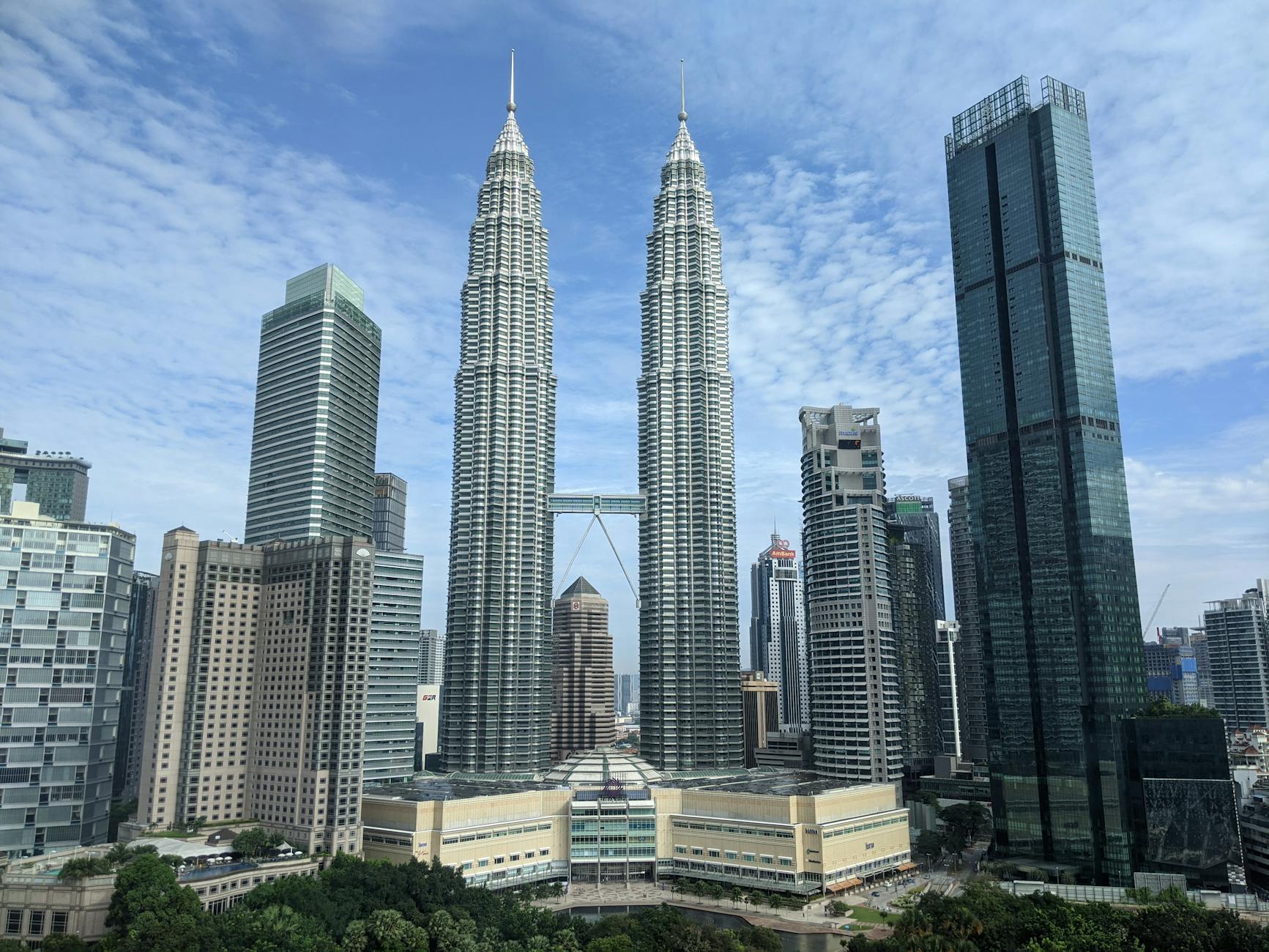
The Petronas Twin Towers rise 452 metres above a city that barely stops moving. Below them, five-ringgit noodles steam at a hawker stall. Up the hill, a 130-million-year-old rainforest survives inside the city limits. Kuala Lumpur does not announce its contrasts — you just turn a corner and find them.
This guide covers what to do, eat, and see in KL, from the iconic landmarks and best food streets to the neighbourhoods worth getting lost in, the nightlife, practical transport tips, and the places most visitors overlook. Whether you have two days or two weeks, there is enough here to keep you occupied — and well fed. It also ranks first in our guide to the best places to visit in Malaysia, and for most first-time visitors it is the obvious place to start.

Top Attractions in Kuala Lumpur
Petronas Twin Towers and KLCC Park
No image defines Kuala Lumpur more than the Petronas Twin Towers. At 452 metres, they held the title of world’s tallest buildings from 1998 to 2004 and remain the tallest twin towers on the planet. The towers are joined by a skybridge at the 41st and 42nd floors; the observation deck on the 86th floor opens up sweeping views across the entire city.
Book tickets online well in advance — they sell out fast and daily capacity is capped. The towers close to visitors on Mondays. Aim for a late afternoon slot: you get the city in daylight, then watch the sunset shift the skyline before the towers light up after dark. Below ground, KLCC Park is a landscaped 50-acre public space with a jogging track, wading pool, and a fountain show that runs every evening. It is free, rarely crowded, and gives you the best photos of the towers from below.
Batu Caves
About 13 kilometres north of central KL, Batu Caves is one of Malaysia’s most photographed landmarks. A 42.7-metre golden statue of Lord Murugan marks the entrance, and the main Cathedral Cave sits behind 272 rainbow-painted steps that have become iconic in their own right. Inside, the cave itself is vast — shafts of light drop through gaps in the limestone ceiling and land on Hindu shrines that have been here for over a century. If you are here in January or February, our Thaipusam at Batu Caves guide covers the country’s most spectacular festival.
Get there before 9 AM. The heat and the tour buses both arrive later, and early morning light inside the cave is genuinely worth the early start. Cover shoulders and knees — this is an active place of worship, and sarongs are available for rent at the base. The Dark Cave runs a separate guided tour that explores the ecosystem, including rare species found nowhere else. The KTM Komuter from KL Sentral takes about 30 minutes and costs just a few ringgit.
Merdeka 118
KL’s newest tower is also its most dramatic. Merdeka 118 stands 678.9 metres tall, making it the tallest building in Southeast Asia and the second tallest in the world. The Park Hyatt hotel opened inside in August 2025, and the observation deck and 118 Mall are expected to open in the second half of 2026. When complete, the observation deck inside the spire will sit at 678 metres — the highest vantage point in Southeast Asia. For now, the building’s triangulated facade is worth seeing from street level, particularly at night when it is illuminated against the sky.
KL Tower (Menara Kuala Lumpur)
Standing 421 metres tall on Bukit Nanas hill, KL Tower gives you something the Petronas Towers cannot: a view that includes the Petronas Towers. The observation deck at 276 metres provides a 360-degree panorama of the city, while the open-air Sky Deck at 300 metres and the glass-floored Sky Box — which extends beyond the edge of the tower — offer a sharper dose of vertigo for those who want it.
At the base of the tower, the KL Forest Eco Park is a small but genuinely lush patch of tropical rainforest with elevated canopy walkways. One of the oldest permanent forest reserves in Malaysia, it offers a green escape right in the city centre. Entry is free.
Merdeka Square (Dataran Merdeka)
On August 31, 1957, Malaysian independence was declared here. The wide green field is ringed by colonial architecture — the Sultan Abdul Samad Building’s Moorish copper domes and clock tower dominate one side. Walk it slowly. The area rewards attention, and the colonial detail is better than anything in a history book. Nearby, the River of Life project has turned the confluence of the Klang and Gombak rivers into a lit waterfront promenade. Come after dark to see the river glowing blue — one of the better after-dark scenes in the city.
Thean Hou Temple
One of Southeast Asia’s largest Chinese temples, Thean Hou sits on a hilltop in Robson Heights and looks out over the KL skyline. Dedicated to the sea goddess Thean Hou, it has six tiers of ornate architecture, traditional gardens, and a tortoise pond. Entry is free. It is quieter than most major attractions, which makes it more pleasant — and during Chinese New Year, when thousands of red lanterns cover the temple, it becomes one of the most atmospheric places in the city.
Islamic Arts Museum Malaysia
Near the Lake Gardens, this museum holds one of the finest Islamic art collections in Southeast Asia. The building itself — inverted domes, intricate tile work — is worth the visit. Inside: scale models of famous mosques, Ottoman-era weaponry, manuscripts, jewellery, textiles, and ceramics. Few tourists make it here. That is their loss.
Kuala Lumpur’s Best Food Experiences
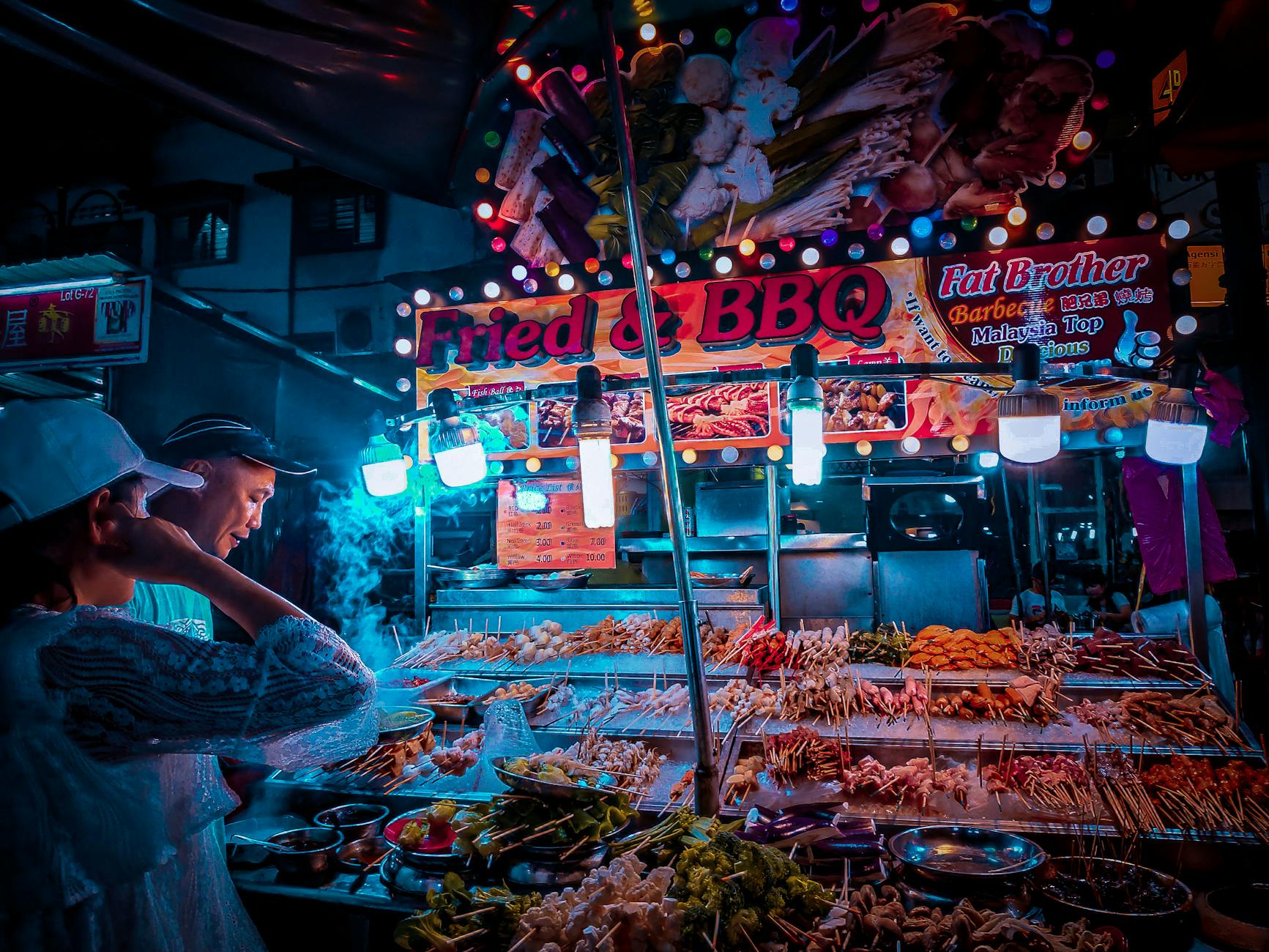

Jalan Alor Food Street
Jalan Alor is the most famous food street in KL, and yes, it earns it. This 500-metre stretch in Bukit Bintang shifts every evening from a quiet road into a wall of smoke, sizzle, and aroma. Stalls start setting up around 5 PM. Aim to arrive between 5:30 and 7 PM, before the crowds hit peak.
The food spans Malaysian, Chinese, Thai, and Indian cuisines. Work through Wong Ah Wah’s charcoal-grilled chicken wings, char kway teow with prawns and Chinese sausage, satay with peanut sauce, and fresh tropical fruit — durian included, during season. Most dishes run RM5 to RM15 (roughly $1 to $3.50 USD). Bring cash; most vendors do not take cards. Weeknights are calmer than weekends if you want a bit of breathing room. For more, our detailed Kuala Lumpur food guide covers the whole city street by street.
Petaling Street and Chinatown Food
Chinatown turns out some of the best budget food in KL. Start the morning at a kopitiam with kaya toast, soft-boiled eggs, and kopi. For lunch, look for hokkien mee in thick dark soy or bak kut teh herbal pork rib soup. Madras Lane — a narrow alley off Petaling Street — is a local staple for curry laksa and chee cheong fun (steamed rice noodle rolls). The prices here run below Jalan Alor, and the crowd skews local.
Little India (Brickfields) Dining
Brickfields is where you go for banana leaf rice: a generous mound of rice on a fresh leaf, surrounded by curries, vegetables, papadum, and pickles. Sri Nirwana Maju and Devi’s Corner are local institutions. Come early morning for roti canai with dhal or curry, and stay for the authentic South Indian thali meals at lunch.
Bangsar Food Scene
Bangsar mixes old-school hawker stalls with a more upscale dining scene. Lucky Garden is the local food enclave within the neighbourhood — good nasi lemak stalls, roast duck rice, and pan mee (handmade noodles). Telawi Street has trendy cafes, wine bars, and restaurants from Japanese ramen to Italian pasta.
Kampung Baru
Kampung Baru is a traditional Malay village holding its ground in the middle of the modern city. The nasi lemak here — particularly along Jalan Raja Muda Musa — is considered among the best in KL. The Saturday night pasar malam is a sprawling market with hundreds of stalls: ayam percik (flame-grilled chicken in coconut sauce), kuih, and everything in between.
Neighbourhoods Worth Exploring
Bukit Bintang
The commercial centre of KL and the first stop for most visitors. Pavilion KL handles luxury and international brands; Sungei Wang Plaza offers budget shopping across 500-plus outlets; Lot 10’s basement Hutong food court is a strong contender for best meal in the mall strip. The area is well connected by monorail and MRT and switches from shopping district to neon-lit food and nightlife strip as the sun goes down. Changkat Bukit Bintang, just off the main drag, is the bar street of choice.
Chinatown (Petaling Street)
Beyond the famous market stalls — clothes, electronics, souvenirs at bargaining-friendly prices — Chinatown has grown a small arts and culture scene. Kwai Chai Hong is a restored alleyway between pre-war shophouses with large murals depicting 1960s Chinatown life, a speakeasy bar, and the oldest lamp post in KL. Look for the Sri Mahamariamman Temple and the Sin Sze Si Ya Temple while you are in the area.
KLCC
The district around the Petronas Twin Towers is polished and walkable. Suria KLCC mall at the tower base covers luxury shopping and dining. KLCC Park is the green space to decompress. Aquaria KLCC, a 60,000-square-foot oceanarium under the convention centre, is a good call if you are travelling with kids. The neighbourhood tends to be quieter in the evenings than Bukit Bintang and draws a more upscale crowd.
Bangsar
South of the city centre, Bangsar is the neighbourhood for art galleries, concept stores, and nightlife. Telawi Street is the main stretch. Bangsar Village malls offer boutique shopping in a relaxed format. There is a strong expat presence here, and the atmosphere shifts noticeably from the tourist areas — quieter, more local, a different pace.
TTDI (Taman Tun Dr Ismail)
Most tourists do not make it here. TTDI is a quiet residential neighbourhood beloved by locals for its food scene. The wet market and surrounding hawker stalls serve some of the best everyday Malaysian food in the city. Tree-lined streets, independent cafes, small restaurants doing genuine home-style cooking. It is one of the better places to see how KL actually eats and lives.
Nightlife in Kuala Lumpur
Rooftop Bars
KL’s rooftop bar scene is genuinely good, and the prices are a fraction of what you would pay for similar views in Singapore or Hong Kong.
Marini’s on 57 occupies the 57th floor of Menara 3 Petronas and gives unobstructed views of the Twin Towers. Italian restaurant, cocktail lounge, and whisky bar all in one space.
Vertigo at Banyan Tree on the 59th floor leans into local ingredients for its cocktails and delivers a full-city panorama.
SkyBar at Traders Hotel (33rd floor) was renovated in 2025 with a new contemporary fit-out. Good views of the Petronas Towers, more accessible pricing than Marini’s, and livelier on most nights.
Heli Lounge Bar is the unusual one — an actual helipad that converts to an open-air bar when the aircraft stop for the day. Three hundred and sixty degrees, unobstructed.
Clubs and Live Music
Changkat Bukit Bintang is the main nightlife strip — bars, clubs, and live music venues packed into one short street. It gets going Thursday through Saturday and covers the full range from casual pub to full-capacity dance floor.
KYO remains one of KL’s most recognised clubs, pulling international DJs and a dressed-up crowd.
Over and Above is the city’s best techno club, with a dedicated following and consistently strong international lineups.
For something quieter, the city has a growing speakeasy circuit. PS150 in Chinatown, The Attic Bar, and Coley in Bangsar are the most acclaimed — craft cocktails in unmarked, atmospheric spaces that feel nothing like the street outside.
Practical Nightlife Tips
Smart casual is the standard dress code at most upscale venues. Alcohol is taxed heavily in Malaysia — expect RM20 to RM35 (about $4.50 to $8 USD) for a beer at a bar, and RM50 to RM80 ($11 to $18 USD) for cocktails at a rooftop. Trains stop around midnight, so plan on Grab for the ride home.
Hidden Gems Most Tourists Miss
Kwai Chai Hong
A restored alleyway in Chinatown that most visitors walk straight past. Between two rows of pre-war shophouses: six large murals depicting 1960s Chinatown life, a historical well, the oldest street lamp in KL, and a cocktail bar that feels like it was airlifted from a different century. Free to enter. Good for photography at any hour.
KL Forest Eco Park
Right in the city centre, at the base of KL Tower — one of the oldest protected tropical forests in Malaysia. A canopy walkway takes you through the treetops while skyscrapers glitter beyond the tree line. Free entry and consistently uncrowded. It is a strange, memorable place that earns its own half-hour.
Sekinchan Day Trip
About 90 minutes from KL, Sekinchan is a small coastal town known for its emerald rice paddy fields and fresh seafood. The fields are at their best during planting season (March to May) and harvest (June and November). A good day trip if you want a complete change of scenery and a seafood lunch from the morning’s catch.
Rumah Penghulu Abu Seman
A traditional Malay timber house built between 1910 and the 1930s, dismantled, transported, and reassembled near the Petronas Towers. Guided tours walk you through traditional Malay architecture and daily life. The contrast with the tower looming behind it is the kind of thing KL specialises in.
Thean Hou Temple at Sunset
The temple is a known attraction, but few visitors time it right. Arrive 45 minutes before sunset and you get the whole temple to explore before the sky does its work. The elevated terrace puts the KL skyline directly in front of you as the light turns warm. One of the better sunset views in the city, and almost nobody is there for it.
Day Trips from Kuala Lumpur
Putrajaya
Malaysia’s administrative capital sits 30 to 45 minutes south of KL by car or KLIA Transit train. Purpose-built and architecturally striking: the pink-domed Putra Mosque on a man-made lake, the Prime Minister’s Perdana Putra complex, and extensive botanical gardens. A lake cruise (RM30 to RM50) is a relaxed way to take in the main landmarks.
Genting Highlands
Forty-five minutes from KL and 1,800 metres up, Genting Highlands is the cool-air escape option. The cable car climbs over 130-million-year-old rainforest with a free stop at the cliff-perched Chin Swee Caves Temple. At the top, Resorts World Genting has a major indoor and outdoor theme park, Malaysia’s only legal casino, and dozens of restaurants. Regular buses run from KL Sentral.
Batu Caves and Selangor Fireflies
Combine a morning at Batu Caves with an evening at Kampung Kuantan in Selangor, where one of the world’s largest colonies of synchronous fireflies lives along the Selangor River. Small boats take you out at dusk to watch thousands of fireflies blinking in unison along the dark riverbank. It is one of those experiences that is hard to describe well and easy to remember. Firefly tours operate nightly and can be arranged through tour operators or by driving yourself — about 1.5 hours from KL.
Getting Around Kuala Lumpur
Public Transport
KL’s public transport network covers most tourist areas well. MRT, LRT, and Monorail lines run from about 6 AM to midnight at 3-to-8-minute intervals. Pick up a Touch ‘n Go card at any station for RM20 (includes RM10 stored credit) — it works across all lines and saves the hassle of buying individual tickets. KL Sentral is the main hub where the lines converge.
The Go KL free bus runs daily in the city centre, connecting all major tourist areas and malls at no cost. An easy way to move between Bukit Bintang, Chinatown, KLCC, and other central spots.
Grab (Ride-Hailing)
Grab is the dominant ride-hailing app in Malaysia. Download it before you arrive and register your payment method. More reliable and transparent than traditional taxis. Minimum fare is RM5 (about $1.10 USD); most city-centre rides cost RM8 to RM20 ($2 to $4.50 USD). Prices rise during peak demand, but it is still cheap by any reasonable standard.
Walking
KL’s city centre is more walkable than it looks. Covered elevated walkways link many malls and transit stations, giving you air-conditioned shelter from the heat and the rain. The walkway from KLCC to Bukit Bintang via the Saloma Link pedestrian bridge is a pleasant 20-minute stroll — and one of the better ways to get a feel for the city at ground level.
Where to Stay in Kuala Lumpur
Bukit Bintang
The best base for first-time visitors. Hostels from RM40 per night up to five-star hotels. Walking distance to shopping, food, and nightlife, with strong MRT and monorail connections in every direction.
KLCC
For a more upscale stay with tower views. Mid-range to luxury, with rates from around RM200 per night. Close to KLCC Park, Suria KLCC, and some of the city’s best restaurants.
Chinatown
The budget base. Hostels and guesthouses from RM25 to RM40 per night. Walking distance to Petaling Street, strong street food, and cultural sights. Well connected by LRT.
KL Sentral
The practical choice for train access — including the KLIA Ekspres to the airport. Good mid-range hotels and proximity to Brickfields (Little India). Useful if you are using KL as a base for day trips around the peninsula.
Bangsar
A neighbourhood feel over the tourist-area experience. Excellent restaurants, bars, and cafes on the doorstep. Mid-range to upscale accommodation. A bit further from the main sights, but well connected by LRT.
Shopping in Kuala Lumpur
KL has serious shopping credentials — options from luxury labels to night market bargains, all within a few kilometres of each other.
Luxury and Mid-Range Malls
Pavilion KL in Bukit Bintang is the flagship luxury mall — international fashion, a gourmet grocery hall, and seasonal art installations. The rooftop dining floor has solid Japanese, Korean, and Western restaurants.
Suria KLCC at the base of the Petronas Towers combines luxury shopping with a massive food court and the Petrosains Science Discovery Centre, an interactive museum that works well for families.
Mid Valley Megamall and the connected The Gardens Mall form one of the largest shopping complexes in Southeast Asia, about 15 minutes from the city centre. Mid Valley handles mainstream and budget shopping; The Gardens steps up to premium brands.
Markets and Budget Shopping
Petaling Street in Chinatown is the classic tourist market: a covered stretch of clothes, accessories, electronics, and souvenirs at negotiable prices. Start at half the asking price and go from there.
Central Market (Pasar Seni) has operated since 1888 and now houses over 300 shops: local handicrafts, batik textiles, pewter, and traditional artwork. The most concentrated stop for Malaysian souvenirs.
Sungei Wang Plaza in Bukit Bintang has been here for decades and remains KL’s go-to for affordable fashion. Over 500 outlets with strong streetwear, accessories, and gadget options at prices below most malls.
Practical Tips for Visiting Kuala Lumpur
How many days? Three days covers the main attractions comfortably. Add a fourth or fifth if you want to explore neighbourhoods properly, take a day trip, or simply eat your way through the city without rushing. Two days works if you stay disciplined about priorities.
Best time to visit. KL is tropical year-round — 27 to 35 degrees Celsius, rain at any point. The heaviest rainfall runs October to March, but showers are usually afternoon thunderstorms that clear quickly. Mornings are reliably dry. There is genuinely no bad month to visit.
Budget. KL is cheap relative to other Southeast Asian capitals. Budget travellers can manage RM80 to RM120 per day ($18 to $27 USD) covering a hostel, street food, and public transport. Mid-range means RM250 to RM500 per day ($55 to $110 USD) for a decent hotel, restaurant meals, and paid attractions.
Dress code. Relaxed for most of the city. Cover shoulders and knees at mosques and Hindu temples — many mosques provide robes at the entrance if needed.
Safety. Generally safe. Watch for petty theft in crowded areas like Petaling Street and on public transport. Snatch theft by motorcycles targeting bags and phones does happen, so stay aware near roads and keep valuables out of easy reach.
Water. Do not drink tap water. Bottled water costs RM1 to RM2 everywhere. The heat and humidity are real — carry a water bottle, take breaks in air-conditioned spaces, and consider coconut water from street vendors as a cheap and effective rehydration option.
SIM cards. Tourist SIMs are available at KLIA airport and any convenience store in the city. Hotlink, Digi, and CelcomDigi all offer tourist plans from RM15 to RM35 with solid data allowances. Free WiFi covers most malls, cafes, and hotels, but a local SIM makes Grab and Maps seamless everywhere.
Tipping. Not expected. Most restaurants add a 10% service charge. If there is no charge and the service was good, rounding up or leaving a few ringgit is fine — never obligatory.
Heading further afield? The penang travel guide covers the island’s street food scene and historic core in detail. The langkawi travel guide is your starting point for beaches, cable cars, and island life. For the south of the peninsula, our melaka travel guide covers the UNESCO heritage city’s layered history. The cameron highlands guide handles the cool-air hill station, tea estates, and walking trails. If Borneo is on the list, start with the kota kinabalu travel guide for the gateway city to Sabah’s mountains and marine parks. And when you are ready to eat seriously, our Kuala Lumpur food guide maps every neighbourhood worth pulling up a stool in.
3 notes