Best Places to Visit in Malaysia: Top 12 Destinations Ranked (2026)
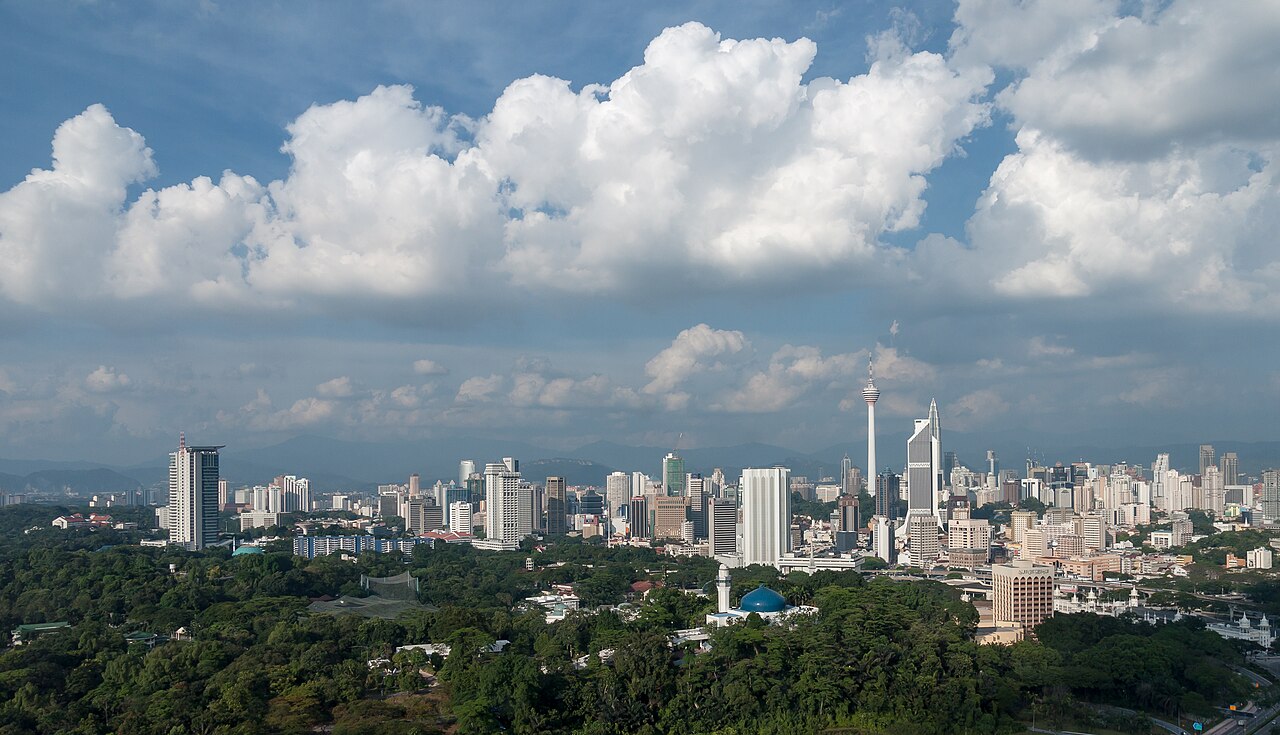
Malaysia received 42.2 million visitors in 2025 — a national record, an 11.2% jump on the year before, and enough to make it the most-visited country in Southeast Asia. Then the first quarter of 2026 broke the record again: 10.65 million arrivals between January and March, the first time Malaysia has ever crossed ten million in a first quarter. February alone brought 3.47 million people through the gates, the busiest single month in the country’s history.
You are, in other words, arriving during the busiest period Malaysia has ever known. That is partly the effect of Visit Malaysia 2026, the national tourism campaign that launched on 1 January with simultaneous ceremonies at 55 entry points across all 13 states, a RM700 million budget, and more than 300 events scheduled through the year. It is also simply that the word is out.
Which raises the practical question this guide exists to answer: with limited time, where should you actually go? Malaysia is not a single destination. It is a peninsula and a third of Borneo, separated by 1,600 kilometres of the South China Sea, running on two opposing monsoons, and containing everything from a capital city with the world’s second-tallest building to rainforest that has been growing continuously for 130 million years.
This guide ranks the destinations that are genuinely worth your time, tells you what each one costs, and — the part most guides skip — tells you honestly when not to go. For everything else you need before departure, start with our Malaysia travel guide.
How We Ranked These Destinations
Most “best places in Malaysia” lists are unordered piles. They promise a top 20 and deliver 20 things in no particular sequence, with no explanation of why one beats another. We have actually ranked these, and the criteria are these four:
- Depth of experience. Can you fill three days here without padding? Places that reward a longer stay rank higher than places you photograph and leave.
- Distinctiveness. Does this deliver something you cannot get elsewhere in Southeast Asia? George Town’s living heritage core scores; a generic beach resort does not.
- Accessibility. How hard is it to reach, and what does the journey cost you in time and money? A world-class site that eats two days of travel is ranked accordingly.
- Reliability. How much of the year does it actually work? An island that closes for four months is a narrower recommendation than a city that works in any weather.
Every destination below also carries a “best for” tag, because the honest answer to “where should I go in Malaysia” depends entirely on who is asking. A first-time visitor with ten days and a diver with three weeks should not be following the same list.
The Short Answer: Malaysia’s Top Destinations at a Glance
| Rank | Destination | Best for | Give it | Best months |
|---|---|---|---|---|
| 1 | Kuala Lumpur | First-timers, food, city energy | 3–4 days | Year-round |
| 2 | George Town, Penang | Food obsessives, heritage | 3–4 days | Year-round |
| 3 | Langkawi | Beaches without the ferry gamble | 3–5 days | Nov–Apr |
| 4 | Melaka | History, Peranakan culture | 2 days | Year-round |
| 5 | Kota Kinabalu & Sabah | Wildlife, diving, mountains | 7–10 days | Mar–Oct |
| 6 | Cameron Highlands | Cool air, tea, hiking | 2–3 days | Year-round |
| 7 | Kuching & Sarawak | Culture, caves, slow travel | 4–6 days | Mar–Oct |
| 8 | Perhentian Islands | Budget island time, snorkelling | 3–5 days | Mar–Oct only |
| 9 | Ipoh | Food, caves, doing very little | 2 days | Year-round |
| 10 | Taman Negara | Ancient rainforest, jungle trekking | 3 days | Feb–Sep |
| 11 | Johor Bahru | Theme parks, Singapore access | 2 days | Year-round |
| 12 | Kuala Terengganu & east coast | Craft culture, quiet beaches | 3 days | Mar–Oct |
Prices throughout this guide were verified in July 2026 and are given in Malaysian ringgit with US dollar equivalents at roughly RM4.10 to US$1. Attraction pricing in Malaysia is routinely tiered: Malaysian identity card holders pay substantially less than foreign visitors, sometimes a third of the price. Where that gap matters we have given you both figures.
1. Kuala Lumpur: The Obvious Start, and Rightly So
Best for: first-time visitors, food, nightlife, and anyone who wants a functioning modern city as a base.
There is a reasonable argument that Kuala Lumpur is Southeast Asia’s most underrated capital. It lacks Bangkok’s chaotic glamour and Singapore’s polish, and it has never quite worked out how to sell itself. What it has is a genuinely tri-cultural street life — Malay, Chinese and Indian neighbourhoods sitting within walking distance of each other — layered over a transport system that works and food that is arguably the best in Asia at the price.
The Petronas Twin Towers remain the signature image. Tickets to the Skybridge and the Level 86 observation deck cost RM98 (about US$24) for adult foreign visitors and RM50 for children aged 2 to 12; Malaysian identity card holders pay RM35 and RM17. The towers open Tuesday through Sunday from 9am to 9pm with last admission at 8.30pm, and on Mondays only on the second and fourth Monday of the month. Book through the official channel — third-party resellers quote RM127 to RM137 for the same ticket.
Batu Caves, 13 kilometres north and reachable on the KTM Komuter line, is free. The 272 rainbow-painted steps up to the Temple Cave are the most photographed staircase in Malaysia, and the site is an active Hindu temple rather than a monument — dress modestly with shoulders and knees covered. Sarong rental resumed in September 2025 at RM6 plus a RM4 refundable deposit, cash ringgit only. The dress code applies to the Temple Cave specifically, not the forecourt. Do not plan around the Dark Cave: it has been closed since January 2019, despite what several travel sites still say.
The thing worth watching in 2026 is Merdeka 118 — at 678.9 metres, the world’s second-tallest building after the Burj Khalifa. Its observation deck, The View at 118, sits at roughly 510 metres and will be Southeast Asia’s highest, with a glass skywalk. It is expected to open in the second half of 2026 alongside a 300-outlet mall, but had not opened at the time of writing. Check merdeka118.com before you build a day around it, and treat the ticket prices circulating online as speculation.
Where KL genuinely excels is eating. Jalan Alor after dark, the Chinatown hawker stalls around Petaling Street, the banana leaf restaurants of Brickfields, and the 24-hour mamak stalls that are the true engine of Malaysian social life. Our Kuala Lumpur travel guide covers neighbourhoods, transport and where to stay in detail, and the Kuala Lumpur food guide maps the eating specifically. When you have exhausted the city itself, the day trips from Kuala Lumpur — Batu Caves, Putrajaya, Kuala Selangor’s fireflies, the Sekinchan paddy fields — will fill several more.
Give it three to four days. Two is enough to see the landmarks and nothing else; a week is more than the city rewards unless you are using it as a base.
2. George Town, Penang: The Food Capital
Best for: anyone who travels to eat, plus heritage architecture and street art.
George Town is a UNESCO World Heritage Site, and unusually for one, it is still fully inhabited and working. The shophouses contain actual businesses. The clan jetties are lived in. The result is a heritage core that feels like a functioning neighbourhood rather than a preserved exhibit — and it is, by a significant margin, the most photogenic city in Malaysia.
But you come for the food. Penang’s hawker culture is the densest in the country and, as of 2026, formally protected: in May, Penang gazetted 50 heritage items under the state’s Heritage Enactment, including 28 heritage foods — asam laksa, char kway teow, nasi kandar, cendol, roti canai and teh tarik among them — plus kopitiam culture and nasi kandar culture as intangible heritage in their own right.
The prices are the other half of the argument. A typical Penang hawker dish costs around RM6 (US$1.45). Char kway teow runs RM7 to RM10, assam laksa RM6 to RM8, a plate of nasi kandar RM8 to RM15, and roti canai as little as RM1.50. A full hawker meal with a drink lands comfortably under RM20. Penang also holds 33 Michelin Bib Gourmand entries — more than Kuala Lumpur’s 25 — and two Michelin-starred restaurants, including Auntie Gaik Lean’s Old School Eatery, a rare star awarded to home-style Nyonya cooking.
Beyond eating: the Penang Hill funicular costs RM40 return for foreign adults on the normal lane (RM16 for Malaysians), or RM80 for the express lane, running 6.30am to 11pm. Kek Lok Si Temple, the street art trail around Armenian Street, and the Blue Mansion fill out a couple of days. Note two construction projects: the Penang Hill cable car is 28% complete and will not open until 2027, and Penang LRT works began in January 2026, bringing significant traffic disruption around Bayan Lepas and the airport road — build in extra time for departures.
Our Penang travel guide handles logistics and neighbourhoods; the Penang food guide is the one to read before you arrive hungry.
Give it three to four days. Serious eaters should give it a week and regret nothing.
3. Langkawi: Beaches That Work Year-Round
Best for: beach time with reliable access, families, and anyone who does not want to gamble on monsoon closures.
Langkawi’s advantage over Malaysia’s more celebrated islands is simple: it is on the west coast, which means it stays open all year while the east coast islands shut down from November to March. It also has an airport, so you are not dependent on a ferry crossing that the weather can cancel.
The archipelago runs to 99 islands. The headline attraction is the Langkawi SkyCab, a cable car climbing to 708 metres with a Malaysia Book of Records claim as the longest free-span mono-cable car, and views to southern Thailand on a clear day. Pricing is awkward: the official Panorama Langkawi site publishes no rates at all, and third-party figures range wildly. Budget from around RM85 for a standard non-Malaysian adult gondola package, considerably more for combination tickets adding the SkyBridge, and check booking.panoramalangkawi.com for the current rate rather than trusting a resale price.
Two 2026 changes matter here. First, ferry fares rose on 15 April 2026 for non-Malaysian passengers specifically — Kuala Perlis to Langkawi is now RM45 for foreign adults against RM21 for Malaysians, and Kuala Kedah to Langkawi RM55 against RM26.50. Second, Langkawi’s famous duty-free status was partially rolled back in Budget 2026: duties now apply to tobacco brought onto the island, and the vehicle exemption is restricted. Alcohol, chocolate and cosmetics remain duty-free, and the state has publicly lobbied for full restoration, with the federal government saying in April 2026 it would review the change. The practical effect reported locally has been quieter upscale restaurants and softer bookings.
Our Langkawi travel guide covers the island as a destination; if the beaches are the reason you are going, the Langkawi beaches guide rates every one of them individually.
Give it three to five days. Best from November to April, when the west coast is at its driest.
4. Melaka: Five Centuries in Two Days
Best for: history, Peranakan culture, and a compact break from Kuala Lumpur.
Melaka was the most important port in Southeast Asia for a century, and then it was Portuguese, then Dutch, then British. All four layers are still visible within a fifteen-minute walk — the Dutch Stadthuys, the ruins of the Portuguese A Famosa, Chinese clan houses on Jonker Street, and the Peranakan mansions that are the physical record of what happened when Chinese traders married local Malay women in the 15th century.
That Peranakan or Baba Nyonya heritage is Melaka’s genuine distinction, and it is edible: ayam pongteh, nyonya laksa, chicken rice balls, and the gula melaka palm sugar that gives Malaysian cendol its character. The Melaka style of Nyonya cooking is richer and more coconut-heavy than Penang’s sourer, more Thai-inflected version — a difference worth tasting deliberately if you visit both.
The Melaka River Cruise is the standard activity at around RM50 for foreign adults and RM35 for Malaysians, though the operator has revised prices twice since 2025 and other platforms list lower figures — check ticket.melakarivercruise.my directly. Melaka is also running Visit Melaka Year 2.0 alongside the national campaign, introducing bundled “Pay Less, See More” packages covering the river cruise, Menara Taming Sari, the Maritime Museum and the Sultanate Palace on a single ticket.
The Jonker Walk night market on Friday, Saturday and Sunday evenings is the best time to be there. See our Melaka travel guide for the full breakdown.
Give it two days, ideally including a weekend evening. It is two hours from KL by bus and works as an overnight trip.
5. Kota Kinabalu and Sabah: Malaysia’s Great Wilderness
Best for: wildlife, diving, mountains — the single richest region in the country if you have the time.
If you only have ten days in Malaysia, Sabah forces an uncomfortable choice, because doing it properly means giving it most of them. Do it anyway if wildlife is why you came.
Kota Kinabalu is the entry point — a working coastal city that Kota Kinabalu City Hall is now formally rebranding as “Seafood City,” with waterfront upgrades and new coastal cycling paths underway. It is more base camp than destination, but a good one, with sunsets over the South China Sea and the islands of Tunku Abdul Rahman Marine Park twenty minutes offshore. Note that the ferry terminal moved on 1 March 2026 from the long-established Jesselton Point to South Jetty at KK Port during upgrading works — nearly every guide still gives the old location.
From there the region opens up. Mount Kinabalu at 4,095 metres is Malaysia’s highest peak and its most famous climb; permits cost RM400 for foreigners against RM100 for Malaysians, only 163 are issued per day, and 2026 bookings opened on 1 December 2025. A registered guide is compulsory, single-day climbs are no longer permitted, and full packages run RM1,430 to RM3,240 per person. Our Mount Kinabalu trek guide covers the logistics properly, because this is not a climb you improvise.
Sabah’s wildlife is the other draw, and it is world class: orangutans at Sepilok (RM30 for foreign adults, valid for both daily feeds), proboscis monkeys and pygmy elephants along the Kinabatangan River, and turtle nesting on Selingan in the Turtle Islands Park. Our Kota Kinabalu travel guide handles the city and the day trips; for the wider picture see the Malaysia wildlife and nature guide.
Then there is Sipadan, off Semporna on the east coast — consistently rated among the best dive sites on earth, and correspondingly controlled. Permits are strictly capped and cost RM450 per diver per day for international visitors (RM100 conservation fee plus RM350 diving fee). You cannot buy one directly; permits are issued only through Sabah Parks-registered operators, allocated by rotation, and realistically require a three-to-five-night stay on nearby Mabul or Kapalai to secure. Advanced Open Water certification is mandatory. The island closes entirely for the whole of November each year. See the Sipadan Island guide before booking anything.
Give it seven to ten days. Best March to October. There is no monsoon shutdown, but visibility and trail conditions are better in that window.
6. Cameron Highlands: Where Malaysia Goes to Cool Down
Best for: escaping the heat, tea plantations, gentle hiking, and strawberries in improbable quantities.
At 1,500 metres the Cameron Highlands run ten to fifteen degrees cooler than the lowlands, which after a week of equatorial humidity feels like a genuine physical relief. The British established the hill station in the 1930s and the tea estates they planted are still working — BOH Tea’s plantations at Sungai Palas are open to visitors, the factory tours are free and self-guided, and the terraced hillsides are the image most people carry away.
The Mossy Forest is the other headline: a stunted, permanently damp cloud forest reached by a boardwalk, costing RM30 for foreign adults and RM15 for children (RM10 and RM5 for Malaysians). It can close in bad weather between November and February. Strawberry farms are everywhere and mostly free to enter with picking priced by weight, around RM8 to RM10 per 100 grams. The Brinchang night market and a strong Indian food scene — roti canai, banana leaf rice, tandoori — round out the eating.
The honest caveat: the Cameron Highlands have been developed hard, and the drive up is slow and winding. Come for the air and the tea, not for pristine wilderness. Our Cameron Highlands guide covers where to stay and which trails are worth the effort.
Give it two to three days. Works year-round; slightly wetter November to February.
7. Kuching and Sarawak: The Slow, Strange, Rewarding One
Best for: travellers who like culture over checklists, plus caves on a genuinely unreasonable scale.
Kuching is the most likeable city in Malaysia. It is small, walkable, built along a river, and carries the peculiar legacy of the Brooke dynasty — the English family who ruled Sarawak as private sovereigns for a century. The waterfront in the evening, the kopitiams on Carpenter Street and Jalan Padungan, and a food culture built on Sarawak laksa and kolo mee make it a place people extend their stay in rather than tick off.
Sarawak laksa deserves its own sentence: a prawn-based, sambal-and-tamarind broth lightly thickened with coconut milk, containing no curry whatsoever, which Anthony Bourdain memorably called the “breakfast of the gods” after filming at Choon Hui Café. Kolo mee — dry-tossed egg noodles — was declared a Malaysian national heritage dish in February 2024.
Around the city: Semenggoh Wildlife Centre, 24 kilometres out, where semi-wild orangutans come in to feed at 9am and 3pm, costs RM10 for foreign adults. Bako National Park is reached by boat through sandstone sea cliffs and packs proboscis monkeys, bearded pigs and pitcher plants into 27 square kilometres. Further afield, Mulu National Park holds some of the largest cave chambers on the planet and the razor-sharp limestone Pinnacles.
Time it right and you catch the Rainforest World Music Festival, held at the Sarawak Cultural Village — the 29th edition ran 26 to 28 June 2026, with three-day passes at RM635. Kuching is also building Southeast Asia’s first hydrogen-powered Autonomous Rapid Transit system, with a public pilot due in the final quarter of 2026.
Start with our Kuching travel guide, then the Bako National Park guide and Mulu National Park.
Give it four to six days. Best March to October.
8. The Perhentian Islands: Malaysia’s Best Cheap Beach
Best for: budget travellers, snorkellers, and new divers.
Two islands off the Terengganu coast — Besar, the larger and quieter, and Kecil, where the backpackers go. Clear water, white sand, no cars, and the cheapest diving in Malaysia at RM90 to RM120 per fun dive, with PADI Open Water certification running RM1,380 to RM1,500. Snorkelling straight off the beach is genuinely good.
The catch is the calendar, and it is absolute. The Perhentians effectively close from November to early March. The northeast monsoon makes the crossing dangerous, most resorts shut, and boats stop running. Ferries typically resume in late February, with the season running March to October. Do not plan a December beach holiday here.
Getting there costs RM40 one way or RM80 return from Kuala Besut jetty, roughly 45 minutes, plus the marine park conservation charge of RM30 for foreign adults and RM15 for children and seniors, collected in cash at a separate counter at the jetty. Since 1 January 2026 a nationwide “Take Your Rubbish Home” rule applies across Malaysia’s marine parks, rolling out first at Redang, Perhentian and Payar.
One honest note: Reef Check Malaysia’s 2025 survey found national live coral cover had fallen to 39.94% from about 50% in 2022, and the Perhentians specifically dropped from “good” to “fair” at 32.44% cover, attributed to nutrient loading — the islands have no centralised sewage treatment. It is still beautiful. It is also under real pressure.
See the Perhentian Islands guide, and if you are weighing them against the alternatives, our Malaysia islands guide compares all of them.
Give it three to five days. March to October only.
9. Ipoh: The One That Sneaks Up on You
Best for: food, cave temples, and travellers who have had enough of itineraries.
Ipoh got rich on tin, went quiet when the tin ran out, and has spent the last decade being rediscovered. The limestone karsts rising out of the Kinta Valley shaped everything about it: the Buddhist cave temples carved into the rock at Sam Poh Tong and Perak Tong, and the mineral-rich water credited locally with producing the crunchiest bean sprouts in Malaysia — which is not a joke, and which you should order with the chicken.
Ipoh Old Town is the eating district, particularly Jalan Bandar Timah and the old kopitiams around Thean Chun. This is the birthplace of Ipoh white coffee, and dim sum here starts early enough that queues form at Foh San not long after sunrise. Two hours from KL by ETS train, it makes an easy stop between the capital and Penang.
See our Ipoh travel guide. For the temples specifically, our guide to the best temples in Malaysia puts Ipoh’s in national context.
Give it two days. Year-round.
10. Taman Negara: 130 Million Years Old
Best for: jungle trekking and the specific experience of standing in very old forest.
Taman Negara is among the oldest tropical rainforests on earth — it has been continuously forested for at least 130 million years, meaning it predates the Amazon by a wide margin and survived the ice ages untouched. It shelters Malayan tigers, tapirs and Asian elephants, though you will almost certainly see none of them; what you will see is the forest itself, which is the point.
The pricing is startling: entry costs RM1 per person and the canopy walkway RM5. There is genuine 2026 news here — a new canopy walkway at Seberang Ara opened to the public on 22 June 2026, with tickets capped at 350 visitors per day and not bookable in advance. Get there early.
Access is via Kuala Tahan, usually by road from KL or by the longer river boat approach from Kuala Tembeling. Best February to September; the northeast monsoon raises river levels and degrades the trails. See our Taman Negara National Park guide, and jungle trekking in Malaysia for what the walking actually involves.
Give it three days.
11. Johor Bahru: Better Than Its Reputation
Best for: families, theme parks, and anyone crossing to or from Singapore.
JB has spent decades being the place people pass through on the way to Singapore, and it is quietly stopped being that. Legoland Malaysia and the surrounding Iskandar Puteri developments make it the strongest family destination in the country. The Glass Temple is the most photogenic single building in the city. Johor’s food is underrated — the state has its own laksa, served improbably but genuinely with spaghetti.
The transport story here is the biggest in Malaysia. The Gemas–Johor Bahru electrified double-track line opened on 12 December 2025, completing an unbroken electric rail corridor from the Thai border at Padang Besar all the way to JB Sentral — a first in Malaysian history. ETS services between KL Sentral and JB Sentral doubled from four to eight daily from 2026. And the Johor Bahru–Singapore RTS Link, a five-minute crossing designed for 40,000 passengers a day, is targeted to open by December 2026, though some reports suggest it may slip into early 2027.
One cost to note: Johor introduced a RM3 state hotel tax on 1 January 2026, applying to all accommodation types on top of the national tourism tax. See our Johor Bahru travel guide.
Give it two days, or more with children.
12. Kuala Terengganu and the East Coast: The Undiscovered Stretch
Best for: traditional Malay culture, craft, and beaches without crowds.
The east coast is the most conservative, most traditionally Malay part of the peninsula, and the least visited by foreigners. Kuala Terengganu has a strong Islamic architectural heritage, a vibrant Chinatown, boat-building yards, batik and songket workshops, and a riverfront that offers some of the most photogenic landmarks in Malaysia. The Crystal Mosque is genuinely striking.
The food shifts noticeably here — east coast Malay cooking is sweeter, heavier on coconut milk, and built around fermented fish notes from budu. Nasi dagang, nasi kerabu with its blue butterfly-pea rice, and keropok lekor are the things to eat, and you will not find them done this well elsewhere.
The region is being developed: the Kuala Terengganu City Centre project is adding a marina, cruise terminal, maritime centre and traditional boat-building yard. More significantly, the East Coast Rail Link is targeted for completion in December 2026 with passenger services from January 2027, cutting Kota Bharu to KL from around seven hours by road to roughly four. That will change this coast substantially.
Same monsoon rules as the islands: March to October. See our Kuala Terengganu and east coast guide.
Give it three days.
Genting Highlands: An Honest Assessment
Genting appears on every Malaysia list, usually enthusiastically, so here is a more measured take. It is a casino and theme park complex at 1,800 metres, an hour from KL, reached by the Awana SkyWay cable car — RM11 one way, 2.8 kilometres, about ten minutes, with a free disembarkation at Chin Swee Caves Temple that is worth taking.
Genting SkyWorlds spans 26 acres across nine themed worlds with 26 rides. Reviews through 2026 are mixed, and the consistent complaint is queuing. It works well as one component of a Genting weekend; it does not hold up as a Universal-tier destination, and it is not a reason to come to Malaysia. Check maintenance closures before travelling — the cable cars close for scheduled works several times a year.
If theme parks are the priority, our guide to Malaysia theme parks compares them properly, and Johor’s Legoland is the stronger family option.
Where to Go Based on What You Actually Want
Rankings are useful; matching is more useful. Find yourself below.
| If you are… | Go here | Skip |
|---|---|---|
| A first-timer with 10 days | KL → Penang → Langkawi, or KL → Melaka → Penang | Borneo — it deserves its own trip |
| Here for the food | Penang, then KL, then Ipoh and Melaka | Resort islands, where food is a captive market |
| A diver | Sipadan and Semporna; Perhentians if budget-conscious | Langkawi — visibility is genuinely poor |
| After wildlife | Sabah: Sepilok, Kinabatangan, Danum Valley | Peninsular parks, if Borneo is affordable |
| Travelling with children | Johor Bahru, Langkawi, Penang | Taman Negara, Mulu — hard going with young kids |
| On a tight budget | Perhentians, Ipoh, KL, Melaka | Sipadan, Mount Kinabalu, luxury island resorts |
| Short on time (under 5 days) | KL plus one of Melaka, Ipoh or Penang | Borneo, east coast islands |
| Visiting Nov–Feb | West coast: KL, Penang, Langkawi, Melaka, Ipoh | All east coast islands — they are closed |
For deeper planning by trip type, our things to do in Malaysia guide organises the country by activity rather than geography, and Malaysia adventure travel covers the trekking, diving and caving side.
The Monsoon Map: Where to Go Month by Month
This is the single most useful thing to understand about Malaysian travel, and most guides handle it badly or not at all. Malaysia has two monsoons hitting opposite coasts, which means there is no bad time to visit the country — only bad time-and-place combinations.
- Northeast monsoon, roughly November to March. Hits the east coast of the peninsula — Terengganu, Kelantan, Pahang — plus eastern Sabah and western Sarawak. This is the one that closes islands.
- Southwest monsoon, roughly late May to September. Hits the west coast. Milder, and it does not close anything, but expect afternoon downpours.
| Months | Best bets | Avoid |
|---|---|---|
| December–February | Langkawi, Penang, KL, Melaka, Ipoh, Cameron Highlands | Perhentians, Redang, Tioman, Kapas (closed); east coast generally |
| March–April | Almost everywhere. East coast islands reopening, Borneo good, west coast still dry | Very little — this is the sweet spot |
| May–July | East coast islands, Sabah, Sarawak, Taman Negara | Nothing closed; expect west coast afternoon rain |
| August–October | East coast islands, Borneo, Perhentians at their best | Nothing major |
| November | West coast only. Sipadan closed entirely for the month | Entire east coast; Sipadan |
The crowd calendar matters as much as the weather. February 2026 was the busiest month in Malaysian tourism history at 3.47 million arrivals, driven by Chinese New Year on 17–18 February. Thaipusam on 1 February brings enormous crowds to Batu Caves and Penang’s Waterfall Temple — spectacular, but plan for heat, humidity and pressure. Early March is the connoisseur’s answer: east coast islands reopening, seas calming, prices soft, crowds gone.
Our best time to visit Malaysia guide breaks this down month by month with rainfall and temperature detail.
What’s New for 2026
Malaysia is in the middle of an unusually busy period for infrastructure and policy. Here is what has changed, and what is about to.
- Visit Malaysia 2026 is running all year. Tourism Malaysia is targeting 43 million international visitors, of which 35.6 million overnight tourists, with over 300 events nationwide.
- Unbroken electric rail from Thailand to Singapore. The Gemas–JB line opened 12 December 2025; ETS services on the KL–JB route doubled to eight daily in 2026.
- The RTS Link to Singapore is targeted for December 2026 — a five-minute crossing replacing the Causeway queue, though the date may slip.
- The East Coast Rail Link completes in December 2026 with passenger service from January 2027, transforming access to Kuantan, Kuala Terengganu and Kota Bharu.
- KLIA’s Aerotrain returned to full 24-hour service on 1 June 2026 after a lengthy overhaul.
- Taman Negara’s new Seberang Ara canopy walkway opened 22 June 2026, capped at 350 visitors daily.
- Merdeka 118’s observation deck is expected to open in the second half of 2026.
- Kuching’s hydrogen ART system begins public pilot operation in Q4 2026 — a Southeast Asian first.
- Langkawi’s duty-free status was partially rolled back in Budget 2026, affecting tobacco and high-value vehicles. Under federal review.
- Johor introduced a RM3 hotel tax on 1 January 2026. Selangor introduced a sustainability fee on the same date; the amount has not been widely published.
- Marine parks nationwide adopted a “Take Your Rubbish Home” rule from 1 January 2026, and Sabah Parks banned single-use plastic bags the same day.
- Penang gazetted 50 heritage items in May 2026, including 28 heritage foods, as a step toward UNESCO recognition.
Getting In: Entry Rules You Need to Know
Three things catch visitors out, and only one of them is the visa.
The Malaysia Digital Arrival Card
The MDAC is mandatory for foreign visitors and free, submitted online within three days before arrival. Malaysia has been expanding autogate access — travellers from 60-plus countries can now reportedly use them at KLIA — but first-time visitors must still clear a manual counter for biometric enrolment, using autogates only from the second visit onward. Rules here change often; confirm on the official Immigration portal rather than relying on any travel site, including this one.
Tourism taxes
The national tourism tax is RM10 per room per night, charged to foreign passport holders only. As of 2026 it is consistently collected across all booking channels. Johor adds RM3 per night on top from January 2026. Neither is usually included in the headline rate you see when booking.
Sabah and Sarawak run their own immigration
This surprises nearly everyone. Sabah and Sarawak control their own borders, so flying from Kuala Lumpur to Kota Kinabalu or Kuching means clearing immigration on arrival and receiving a separate state entry endorsement — even though the flight departs from the domestic terminal. Coming back, you clear immigration on departure from Borneo. Keep your passport accessible on internal flights.
Full detail is in our Malaysia visa requirements guide.
How to Combine These Destinations
Malaysia’s geography rewards a bit of planning. The west coast strings together neatly by rail and road; Borneo is a separate trip that does not combine well with anything.
- One week, first visit: KL (3 nights) → Penang (3 nights), flying or taking the ETS north. Add Ipoh as a stop between them if you have a spare day.
- Ten days, classic: KL (3) → Cameron Highlands (2) → Penang (3) → Langkawi (2). All connected by road and rail except the final hop, which is a short flight or ferry.
- Two weeks, peninsula plus islands: KL (3) → Melaka (2) → Penang (3) → Langkawi (3) → back via KL. Between March and October, substitute the Perhentians for Langkawi.
- Two weeks, Borneo focus: Kota Kinabalu (2) → Mount Kinabalu (2) → Sandakan and Kinabatangan (3) → Semporna and Sipadan (4) → Kuching (3). Ambitious but doable.
- Three weeks: ten days on the peninsula, ten in Borneo, and a day of slack for the flight between them.
Distances are longer than the map suggests, and the KL–Borneo flight is two and a half hours. Our getting around Malaysia transportation guide covers trains, buses, ferries and internal flights, and the Malaysia travel budget guide will tell you what any of this costs.
Frequently Asked Questions
What is the number one place to visit in Malaysia?
Kuala Lumpur, for a first visit — it is the best-connected, most varied and easiest place to start, and the food alone justifies three days. If you have been before, or you are travelling specifically for wildlife or diving, Sabah is the stronger answer.
How many days do you need in Malaysia?
Ten days covers the west coast properly. Two weeks lets you add either the islands or Borneo. Three weeks lets you do both without rushing. Under a week, stay on the peninsula and pick two destinations.
Is Malaysia expensive to travel in?
No — it is among the best-value destinations in Southeast Asia. Hawker meals run RM6 to RM12, public transport costs pennies, and mid-range hotels are inexpensive. The costs that add up are domestic flights, Borneo activities, and anything involving a dive permit.
Which is better, Penang or Langkawi?
Different things entirely. Penang is a heritage city with the best food in Malaysia and mediocre beaches. Langkawi is a beach and nature destination with unremarkable food. Most itineraries have room for both; if forced to choose, pick Penang unless beach time is the entire point of your trip.
When should I avoid Malaysia’s east coast?
November through February. The northeast monsoon closes the islands, most resorts shut, and boats stop running. The west coast is unaffected and is exactly where you should be in those months.
Is it worth going to Malaysian Borneo?
If wildlife, diving or mountains are why you travel, yes — emphatically, and it is the best reason to come to Malaysia at all. If you have under ten days total, no; you will spend too much of it in transit. Treat Borneo as its own trip.
Start Planning
Malaysia is one of the few countries where you can eat some of the world’s best street food for under two dollars in the morning and be standing in 130-million-year-old rainforest by the afternoon. It is affordable, straightforward to travel, and — despite the record arrival numbers — still substantially less crowded than its neighbours once you leave the obvious places.
Work out your dates first, because the monsoon decides half your itinerary for you. Then pick your coast, and let the rest follow. Our complete Malaysia travel guide is the place to go next for visas, budgets, transport and everything practical.
Prices and policies verified July 2026. Attraction fees, ferry fares and transport schedules change — confirm directly with operators before travelling.
1 note
Notes are closed on this guide.