Day Trips from Kuala Lumpur: Best Destinations Within Easy Reach of the Capital
Discover the best day trips from Kuala Lumpur, from Batu Caves and Putrajaya to Melaka, Genting Highlands, Cameron Highlands, and hidden gems like Janda Baik and Sekinchan.
Kuala Lumpur has a dirty secret: the city itself is almost never the reason people fall for Malaysia. It is what you can reach from it in a few hours. Ancient rainforest that was old when dinosaurs walked through it. A hill station where the air smells of tea and the temperature drops to 20 degrees while the city below sweats through 33. A port town where you can eat five centuries of culinary history in a single afternoon. The capital is an excellent base, and the day trips are the point.
This guide covers the best day trips from Kuala Lumpur with details on what each one delivers, how to get there, what it costs, and the practical details that separate a good day from a wasted one. For a broader look at things to do in malaysia across the whole country, the pillar page has it all. The guide to best temples in malaysia goes deep on Batu Caves and the country’s other sacred sites. For families, the guide to malaysia theme parks covers Genting SkyWorlds, LEGOLAND, and Sunway Lagoon in full.
Batu Caves
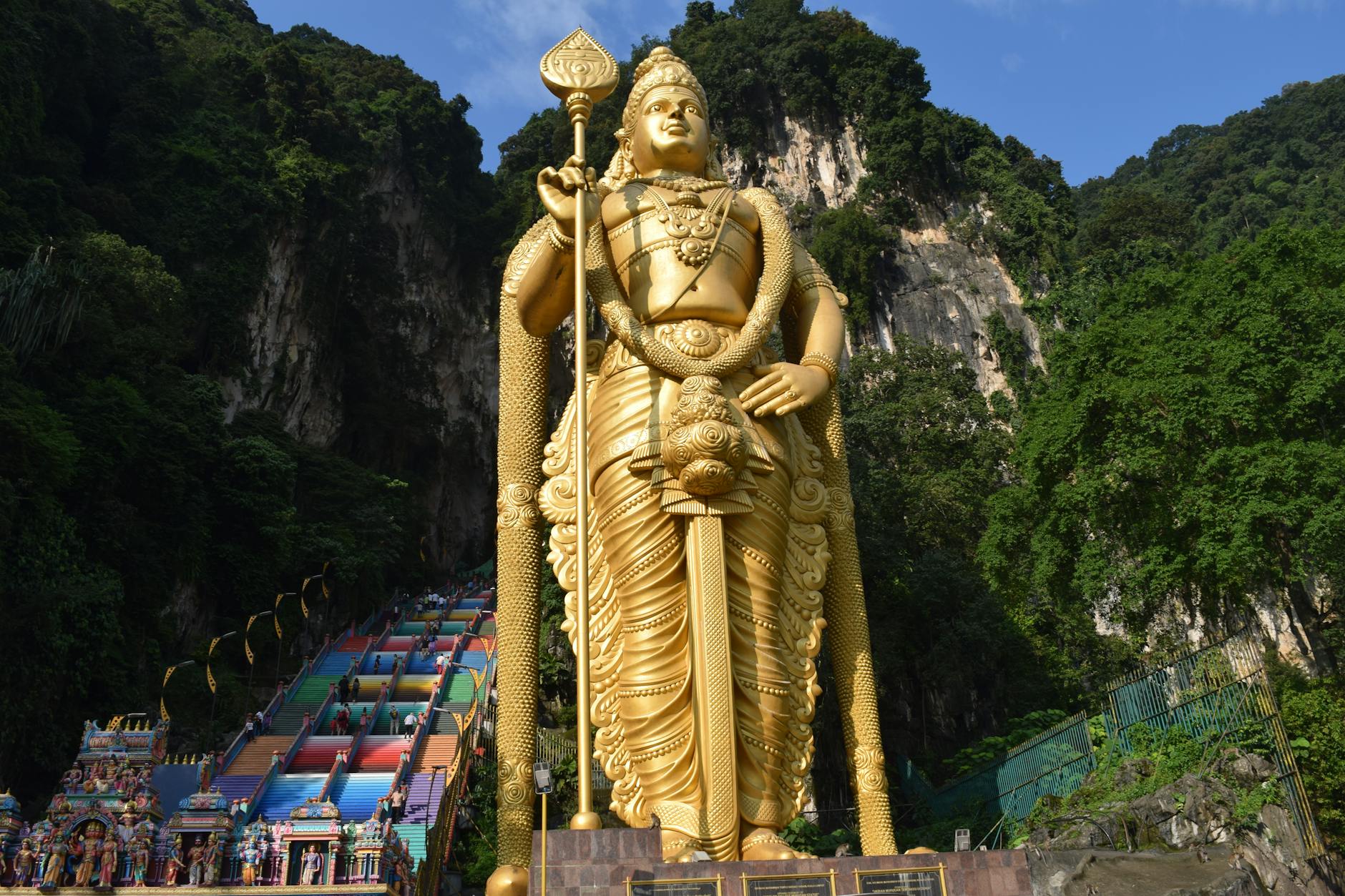
Thirteen kilometres north of KL Sentral and 30 minutes by KTM Komuter train, Batu Caves is the most accessible major attraction from the city and earns its reputation. The 272 rainbow-painted steps to the Temple Cave are one of Malaysia’s most recognisable images and they look exactly as vivid in person as in photographs. At the base, the 42.7-metre gold statue of Lord Murugan, the tallest such statue in the world, is genuinely imposing at scale. The Temple Cave at the top is a vast limestone chamber with natural skylights and active Hindu shrines. Give it 20 minutes inside without rushing.
The Dark Cave runs off the main complex, a separate ecosystem developing over 400 million years. Guided 45-minute tours pass through chambers of stalactites, rare cave fauna, and near-total darkness. Worth adding if you have the time. The Ramayana Cave at the base is painted floor to ceiling with Hindu mythological scenes, more vivid than any museum diorama. The whole complex rewards two and a half to three hours, and the train connection makes it one of the easiest half-days from the city centre.
During Thaipusam, usually in January or February, over a million devotees and spectators converge for one of the most intense religious festivals in Asia. Devotees carry elaborate kavadi structures pierced through their skin while in states of deep devotion. Extraordinary to witness, but the crowds are dense and require patience and an early arrival to navigate well.
Getting there: KTM Komuter from KL Sentral, final stop, about RM2.50 one way. Grab runs roughly RM15-25. Main Temple Cave is free. Dark Cave tours cost RM35 per adult. Wear covered shoulders and knees; this is an active place of worship. Come before 9 AM to beat the midday heat on the exposed staircase. Keep food secured; the macaques are fast and persistent.
Putrajaya
Twenty-five kilometres south of the city, 35 minutes on KLIA Transit from KL Sentral. Putrajaya was purpose-built from the 1990s as Malaysia’s federal administrative capital, and the scale of ambition is visible everywhere: wide ceremonial boulevards, a 6.5-square-kilometre artificial lake, and government buildings designed to project national confidence. It reads as ambitious planned urbanism made tangible, and the architecture warrants seeing in person rather than in photographs.
Putra Mosque, the Pink Mosque, is the centrepiece. Built from rose-tinted granite with a dome blending Malay, Middle Eastern, and European forms, it fits 15,000 worshippers and welcomes non-Muslim visitors outside prayer times, with robes provided at the entrance. The adjacent Iron Mosque, Masjid Tuanku Mizan Zainal Abidin, is all steel and glass; the contrast between the two structures built within a decade of each other is sharper than you would expect. The Putrajaya Botanical Gardens span 227 acres with free entry to most areas. The lake cruise gives you the Pink Mosque from the water, which is the better angle and particularly strong in late afternoon light.
Getting there: KLIA Transit from KL Sentral to Putrajaya Sentral, around RM16, then Grab to the mosque. Driving about one hour depending on traffic. Pink Mosque visiting hours: Saturday to Thursday 9 AM to 12:30 PM, 2 to 4 PM, 5:30 to 6 PM; Friday 3 to 4 PM and 5:30 to 6 PM. Photograph in late afternoon when the granite glows warm. Most government buildings close to visitors on Fridays during prayer time.
Melaka
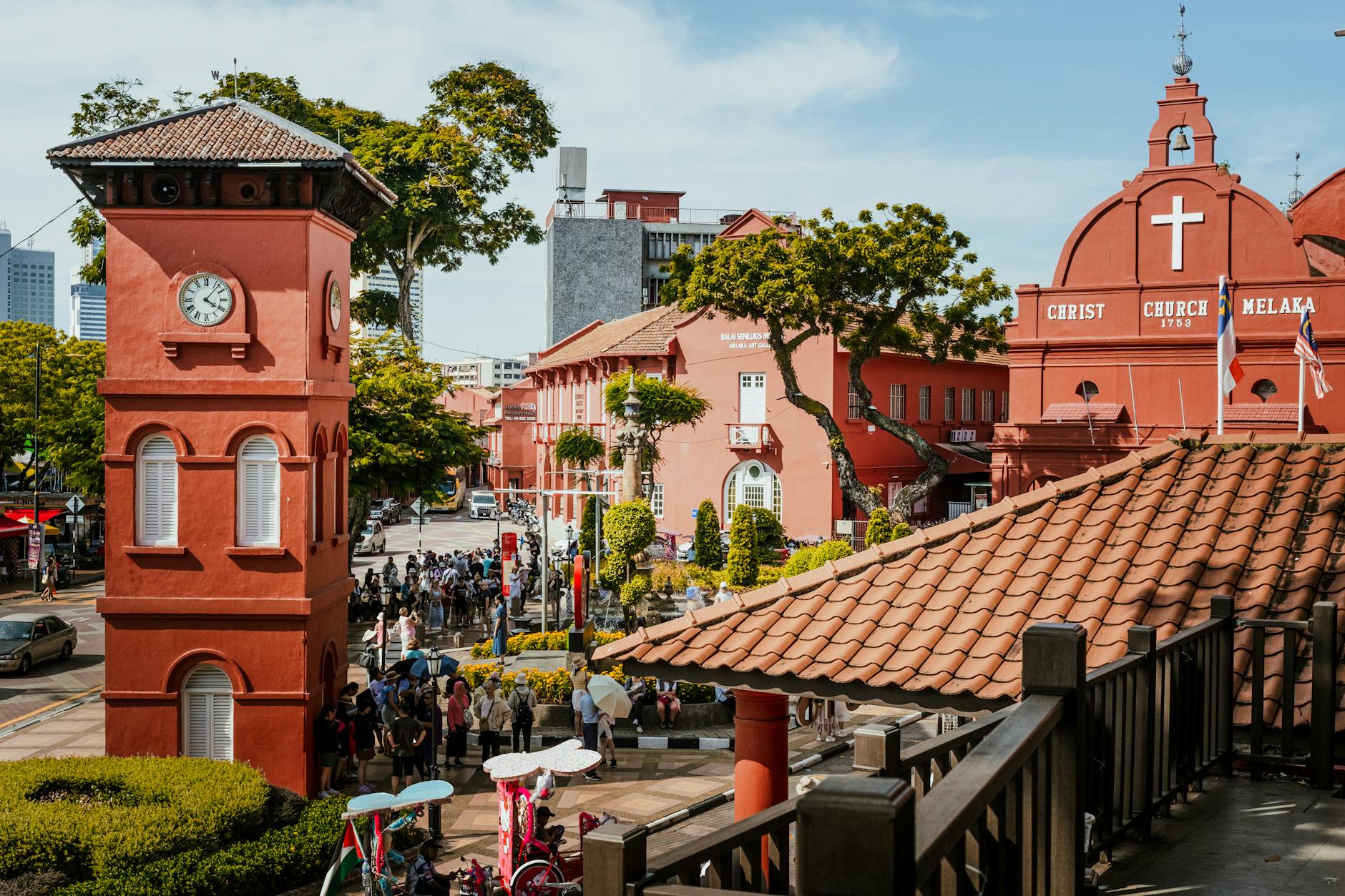
Two hours south by bus, Melaka is the most historically layered day trip from KL. A UNESCO World Heritage city where Portuguese, Dutch, British, Chinese, Indian, and Peranakan histories stack so tightly you can walk through 500 years in an afternoon. The city was Malaysia’s most important port for centuries, and every wave of foreign power left architecture and cuisine behind. Nothing quite prepares you for how much is crammed into the compact old town.
Dutch Square is the colonial anchor: the red-painted Stadthuys, built in the mid-1600s and claimed to be the oldest surviving Dutch colonial building in Asia, and the ruins of A Famosa Portuguese fortress from 1511 up the hill. St Paul’s Church stands roofless above the fort. The view from there over the city and the strait is worth the climb alone. The Baba Nyonya Heritage Museum on Heeren Street preserves a restored Peranakan shophouse with guided tours covering daily domestic life, porcelain collections, and the community’s hybrid cultural identity in real depth. Budget 45 minutes for the museum and do not rush it.
Jonker Street functions as a daytime antique and art district and, on Friday and Saturday evenings, a full-scale night market with live music, food stalls, and a festival atmosphere that pulls in locals from across the state. Cheng Hoon Teng Temple on the same street has been in continuous use since 1645, the oldest functioning Chinese temple in Malaysia. The Melaka River Cruise moves past murals and heritage buildings from the water; better at night when the riverside buildings are illuminated.
The food alone justifies the trip. Chicken rice balls are the city’s signature, Hainanese chicken rice formed into small spheres instead of scooped onto a plate. Nyonya laksa, cendol from the market stalls, satay celup where skewers get dunked into a shared pot of bubbling peanut sauce, and fresh popiah spring rolls complete the must-eat list. Most of these dishes do not exist anywhere else in Malaysia in the same form.
Getting there: Express buses from TBS (Terminal Bersepadu Selatan) run frequently, about two hours, RM10-15. Driving takes 90 minutes to two hours via the North-South Expressway. Grab from Melaka Sentral to the old town. Arrive early and stay for the evening if your schedule allows; Jonker Street night market runs 6 PM to midnight Fridays and Saturdays. Agree a price with trishaw drivers before setting off.
Genting Highlands
One hour northeast of KL. At 1,865 metres, Genting drops the temperature 10 to 15 degrees below the city, reason enough to go on a hot day. The route up is part of the appeal: the Awana Skyway cable car covers 2.8 kilometres of forested mountain in about ten minutes, with glass-bottomed gondola options. The views over the rainforest canopy and cloud-covered peaks are excellent in clear weather.
Resorts World Genting at the top is Malaysia’s only casino resort. The SkyAvenue mall, the indoor Skytropolis theme park, and Genting SkyWorlds outdoor park, which opened in 2022 across 26 acres with nine themed worlds, keep families occupied for a full day regardless of whether gambling is on the agenda. Chin Swee Caves Temple partway up the hill is a beautifully ornate Buddhist temple against limestone cliffs that warrants a stop on the way.
Getting there: Express buses from KL Sentral roughly every hour, about 75 minutes, RM11 one way. Awana Skyway cable car RM10 return. Driving about one hour. Bring a jacket; it can drop below 15 degrees Celsius at the summit in early morning. Weekdays are significantly less crowded. Buy SkyWorlds tickets online in advance for better rates.
Cameron Highlands
Three to four hours north, the furthest on this list and consistently among the most rewarding. Malaysia’s most extensive hill station holds temperatures between 15 and 25 degrees Celsius while the lowlands cook. The landscape is tea plantations, strawberry farms, mossy forest, and nurseries growing flowers that cannot survive at sea level. The cooler air alone feels like a different country.
BOH Tea Plantation, Malaysia’s largest producer, has cultivated tea here since 1929. The factory tour walks through the production process and ends at a cafe perched above rows of tea bushes with views extending to the edge of the hills. Cameron Bharat Tea Estate is a smaller version with its own character. The Mossy Forest near the Gunung Brinchang summit is an otherworldly trail through ancient cloud forest where every surface is carpeted in moss and ferns, a boardwalk protecting the fragile ecosystem underfoot. It feels genuinely remote despite being accessible from the main road.
Strawberry picking at the various farms gives children something concrete to do, and the roadside stalls sell fresh berries, jams, and strawberry-flavoured produce. The morning market in Brinchang sells highland-grown vegetables, local honey, and fresh produce at prices aimed at residents rather than visitors.
Getting there: Buses from TBS to Tanah Rata take four to five hours, around RM35. Driving takes three to four hours. Organised day tours from KL cost RM150-250 per person with transport included. Mountain roads can cause motion sickness; take precautions if susceptible. An overnight stay is genuinely recommended; the journey is long for a day out and the highlands reward a slower pace.
Kuala Selangor
An hour and a half northwest of KL, Kuala Selangor hosts one of the largest firefly colonies in the world. After dark, small boats push through the mangroves along the Selangor River while millions of synchronised fireflies flash in the berembang trees lining the banks. The trees appear to pulse with light. It is one of the stranger and more memorable experiences available from the capital, real rather than manufactured.
Before the evening tour, Bukit Melawati offers colonial-era fort ruins, old cannons, and a lighthouse with views over the Straits of Malacca. The hill is home to silver leaf langurs, their fur silver-grey, with babies born bright orange before the colour darkens over the first months. The fishing village below the hill serves excellent fresh seafood at local prices: butter prawns, steamed fish, chili crab for what you would pay for a single drink in KL. Eat there first, then do the firefly tour after dark.
Getting there: Driving takes about 90 minutes. No convenient direct public transport; Grab or an organised tour at RM120-180 per person including dinner and the boat ride is the practical option. Boat ride alone around RM15-20. Avoid full moon nights; darker skies make the fireflies far more dramatic. No flash photography on the boat. Tours typically depart KL in the late afternoon to arrive in time for dinner before the evening boat ride.

Sekinchan
A rice farming and fishing town an hour and a half northwest of KL that has become one of the most photogenic day trips from the capital. The paddy fields stretch flat and green to the horizon; during the growing seasons of March to April and September to October, the colour is extraordinary. Harvest months of January to February and July to August turn the fields gold before cutting. Viewing platforms are set up throughout the landscape to help you capture the best angles. For the full country-wide list of photography spots malaysia has to offer, including Sekinchan, the dedicated guide covers over 30 locations.
The Wanli Gallery, a decommissioned Boeing 727 parked in the middle of the paddy fields, is as strange as it sounds and photographs exceptionally well. Villa Chee has photography corners surrounded by rice fields, and the rainbow staircase at Padi Stay provides colourful compositions against the green or golden landscape. The fishing village of Bagan on the coast has colourful boats, a working jetty, and seafood restaurants serving some of the freshest fish in Selangor at prices well below KL levels. Combine Sekinchan with Kuala Selangor for a complete day: paddy fields and seafood in the afternoon, fireflies after dark. The two towns are only 30 minutes apart.
Getting there: Driving takes about 90 minutes via the LATAR Expressway. Limited public transport, so driving or an organised tour is the practical option. The town is compact enough to cover in a half-day. Weekdays are noticeably quieter. Morning light gives the best conditions for paddy field photography.
Taman Negara
Three and a half hours each way, the longest trip on this list, and worth doing even as a day trip for anyone seriously interested in rainforest. Taman Negara protects forest estimated at 130 million years old, predating the Amazon and the Congo. The canopy walkway, at 510 metres the longest in the world, hangs 40 metres above the forest floor and gives you a perspective on the rainforest canopy that ground-level trails cannot match. Guided day tours typically include this plus a trek to Bukit Teresek at 330 metres for viewpoints, a visit to an Orang Asli indigenous village, and a rapids shooting boat ride.
The biodiversity is staggering: over 250 bird species, 67 mammal species, thousands of plant species. Large mammals like the Malayan tiger and Asian elephant inhabit the park but are rarely seen on short visits. Macaques, gibbons, monitor lizards, and insects in quantity are the regular sightings. Park entrance fee RM1 for Malaysians, RM30 for foreign visitors. An overnight stay of two to three nights deepens the experience considerably; a day trip gives you a genuine taste but not the full picture.
Getting there: Organised day tours are the most practical option at RM250-350 per person, transport and guide included. Self-driving to Kuala Tahan takes about three hours. Depart KL by 6 AM for a day trip to make the timing work. An overnight stay is honestly the better option if your schedule allows.
Janda Baik
Forty-five minutes to an hour east of KL on the Karak Expressway, the fastest nature escape from the city. Janda Baik sits at the edge of the Titiwangsa mountain range in a cooler microclimate that feels genuinely removed from the capital despite the short drive. The draws are waterfalls, jungle trails, farm experiences, and a cluster of eco-stays and boutique retreats that have made the village popular with KL residents wanting a quick reset.
Lata Tampit waterfall, seven tiers in total, is reached on a 45-minute jungle trail. The lower tiers have accessible pools good for swimming; the upper ones require more of a scramble and reward the effort with greater seclusion. Chamang Waterfall near Bentong, a short drive further, is wider and more dramatic, a broad curtain of water over stepped rock and one of the largest in Pahang. A Little Farm on the Hill runs farm-to-table cooking workshops, terrarium classes, and guided nature walks. Horseback riding through the forest alongside rivers is available for all experience levels.
Getting there: Driving only, about 45 minutes to an hour from central KL. No public transport serves this area. River tubing, ATV riding, and zip-lining are available in the village. Arrive early at the waterfalls on weekends; they get busy by 10 AM. Restaurants here run more upscale than typical rural Malaysia, with good Western and fusion food alongside local dishes.
Kanching Rainforest Waterfall
Thirty-five minutes north of KL, the quickest nature fix from the city. Seven tiers, 208 metres total height. The lower four tiers are accessible for all fitness levels on concrete paths and stairs, with natural pools suitable for swimming and wading. Tiers five and six require proper trail hiking; the seventh is a steep scramble for experienced walkers only. Most families stop at tier four, which is where the swimming is best anyway. The surrounding Templer Park includes Bukit Takun, a million-year-old limestone hill popular with rock climbers, and jungle trails for bird watching in forest that is unexpectedly pristine given the proximity to the capital. Entrance fee RM3 per adult.
Getting there: Driving from central KL, 35-45 minutes. Grab costs roughly RM25-40. Weekdays are significantly less crowded than weekends. Bring water shoes; the rocks are slippery at every tier. Morning visits get better light and fewer people.
Kuala Gandah Elephant Conservation Centre
Two hours northeast via the Karak Expressway in Pahang. The Kuala Gandah centre has operated since 1989 as part of the Malaysian Elephant Translocation Program, rescuing and rehabilitating Asian elephants displaced by deforestation and human-wildlife conflict. Feeding and bathing sessions let you observe elephants of various ages up close in a conservation context that is educational rather than performative. The surrounding landscape of oil palm plantations illustrates the problem the centre exists to address more effectively than any interpretive display. Admission is free; donations are welcome and go directly to the programme.
Getting there: Driving only, about two hours from KL. Operating hours roughly 10 AM to 4:45 PM; feeding sessions at specific times, so check the schedule before going. Organised tours RM150-200 per person. Pairs well with Janda Baik for a varied day in the same direction. Bring a hat and sunscreen as parts of the grounds are exposed.
Other Destinations Worth Knowing
A few more options that do not need a full breakdown but belong on the list.
Ipoh: Two hours north by car or bus, Malaysia’s most underrated food city. White coffee, bean sprout chicken, Ipoh hor fun, salt-baked chicken, and tau fu fah soybean pudding. The colonial old town has significant architecture and the limestone hills are dramatic. Easily a full day.
Port Dickson: About 90 minutes south, the closest beach to KL. The water is not Malaysia’s clearest, but it is accessible and backed by a string of resorts. Best for a casual beach day rather than snorkelling or diving.
Broga Hill: 45 minutes south from Semenyih, a sunrise hike that rewards the 4 AM alarm with views over paddy fields and rolling hills in early morning light. Manageable even for occasional hikers with reasonable fitness. Popular with local residents and tends to fill on weekend mornings.
Bernam River: Two hours north, firefly watching on a smaller scale than Kuala Selangor but with fewer tourists. Pairs naturally with Sabak Bernam’s working fishing village for a quieter, more local coastal detour.
Practical Tips for Day Trips from KL
A few logistics worth locking in before you leave the city.
Transport: KL’s rail network covers Batu Caves and Putrajaya efficiently and cheaply. Everything else requires driving, Grab, or an organised tour. Car rental runs RM100-200 per day and the road network is well-maintained. Toll costs are modest at RM5 to RM15 each way. For longer destinations, express buses from TBS are comfortable, air-conditioned, and considerably cheaper than car hire.
Timing: Leave before 7 AM for anything over an hour from the city. KL traffic builds fast and the morning peak is significant on weekdays. Plan your return to avoid the 5 to 8 PM evening rush. Weekdays are consistently quieter than weekends at every destination on this list; the difference at popular waterfalls and viewpoints is substantial.
Weather: Afternoon thunderstorms are standard from October to March in particular. Pack a light rain jacket for outdoor destinations. The highlands above 1,000 metres, including Genting Highlands and the Cameron Highlands, need layers even in the hottest months; consistent temperature drops of 10 to 15 degrees from the valley floor apply year-round.
Combining trips: Sekinchan and Kuala Selangor are 30 minutes apart and combine perfectly for one day, paddy fields and seafood in the afternoon and fireflies after dark. Batu Caves combines easily with an afternoon in Putrajaya. Janda Baik and Kuala Gandah Elephant Centre point in the same direction from KL. Do not try to combine Melaka and Cameron Highlands in one day; both deserve full, unhurried attention.
Budget: Most of these trips run cheap. Batu Caves is free; Kanching is RM3; Kuala Gandah is free; national park entry fees are modest. Hawker food at the destination keeps lunch to RM8-15 per person. The biggest single cost is usually transport. Even organised tours for harder-to-reach destinations offer strong value by regional standards.
What to carry: Sunscreen, hat, insect repellent, refillable water bottle, comfortable walking shoes, light rain jacket, and cash in small denominations. Many smaller stalls and attraction entrances do not take cards. Modest clothing covering shoulders and knees covers all the temples, mosques, and caves on this list without needing to think about each site individually. For shopping at the night markets you will encounter in Melaka and beyond, the guide to shopping in malaysia covers the full picture. If the evenings call for more than an early night, the guide to malaysia nightlife covers KL and beyond, while the best museums in malaysia guide covers institutions worth your time in Melaka and KL.
1 note