7 Days in Malaysia: The Perfect One-Week Itinerary (2026)
A costed, connection-by-connection west coast route for one week in Malaysia, with real 2026 fares, journey times and an honest list of what a week has no room for.
Seven days in Malaysia is really about five and a half usable days. Subtract the long-haul arrival, the afternoon you lose to jet lag, and the airport run at the far end, and a one-week trip gives you roughly 130 waking hours on the ground. That is enough for three places done properly, or five places done badly.
Most 7 days in Malaysia itineraries published online ignore this arithmetic entirely. They stack Kuala Lumpur, Melaka, Cameron Highlands, Penang and Langkawi into a week and hand you a route with four internal transfers, each of which eats a half-day you were told you had. The result is a holiday spent mostly in transit, arriving at each place too late to eat properly and leaving before the morning market opens.
This guide does the arithmetic instead. It gives you one main route built around the west coast, connection by connection, with real 2026 fares and journey times, plus two alternatives for travellers who want beaches or want to slow down. It also tells you plainly what a week does not have room for, because the single most useful thing a one-week itinerary can do is say no.
The route at a glance
The classic west coast week runs north from Kuala Lumpur and finishes on an island, which means you fly home from Langkawi or backtrack cheaply by air. Here is the shape of it.
| Day | Base | Move | What the day is for |
|---|---|---|---|
| 1 | Kuala Lumpur | KLIA → city, 28 min | Arrive, eat, do nothing ambitious |
| 2 | Kuala Lumpur | — | Batu Caves early, city centre, night market |
| 3 | Cameron Highlands | Bus, 4 hr | Tea estates, cool air, mossy forest |
| 4 | Penang (George Town) | Bus/van, 4–5 hr | Arrive late afternoon, hawker dinner |
| 5 | Penang | — | Street art, Kek Lok Si, Penang Hill |
| 6 | Langkawi | Flight, 35 min | Beach, sunset, cable car |
| 7 | Langkawi | Fly home or to KL | Island hop or a slow morning |
Three bases, three moves. That is the maximum a week absorbs without the trip becoming an exercise in luggage management. If you want the full picture of how the country’s routes fit together across longer trips, our Malaysia itineraries hub compares every duration from three days to a month.
What a week actually buys you
Malaysia is two landmasses separated by 1,600 km of the South China Sea. The peninsula holds Kuala Lumpur, the historic Straits cities, the hill stations and the best-connected islands. Malaysian Borneo — Sabah and Sarawak — holds the orangutans, the caves, the diving and Mount Kinabalu. Borneo is a two-and-a-half-hour flight from KL, and every serious Borneo experience needs a minimum of three nights on the ground.
So the first decision in a one-week trip is one you make by not making it: seven days does not include Borneo. Attempting it means two internal flights, four hours of airport time, and a truncated wildlife experience that will feel like a taster you paid full price for. If Borneo is the reason you are coming, wait until you have ten days and read our 10 days in Malaysia guide, which is built around exactly that fork in the road.
What a week does buy you is a genuinely varied slice of the peninsula: a chaotic and excellent capital, a cool-climate interlude at 1,500 m, the best street food city in Southeast Asia, and a beach. Four textures in seven days is a good trip. Six textures in seven days is a slideshow.
Days 1–2: Kuala Lumpur
Day 1: arrival, and the only sensible plan is a small one
Almost every long-haul flight lands at KLIA in the morning or early afternoon. The KLIA Ekspres gets you to KL Sentral in 28 minutes for RM55 (about USD 13) one way, RM100 return, with trains every 20 minutes and 10% off if you book online rather than at the counter. Travelling as three or more? The Group Saver fare drops to RM40 per person one way, and the family package covering two adults and two children starts at RM120. Children aged 6 to 15 pay RM25; under-sixes travel free.
A Grab from the airport into the city costs roughly RM75–90 off-peak and can climb past RM130 in the evening rush, so the train wins on both price and predictability unless there are four of you with luggage. Buy a Touch ‘n Go card at the station while you are there — it works on the LRT, MRT, Monorail, most buses and every toll plaza in the country, and you will use it daily.
Then stop. The single most common first-day mistake is booking a Petronas Towers slot for the evening you land, then sleeping through it. Instead: check in, shower, and walk to a nearby kopitiam or hawker centre. Jalan Alor in Bukit Bintang starts filling around 6pm and runs to midnight. It is touristy and the touts are persistent, but the char kway teow is real. Our Kuala Lumpur food guide maps the alternatives if you want to eat where locals actually queue.
Day 2: Batu Caves at dawn, the city after
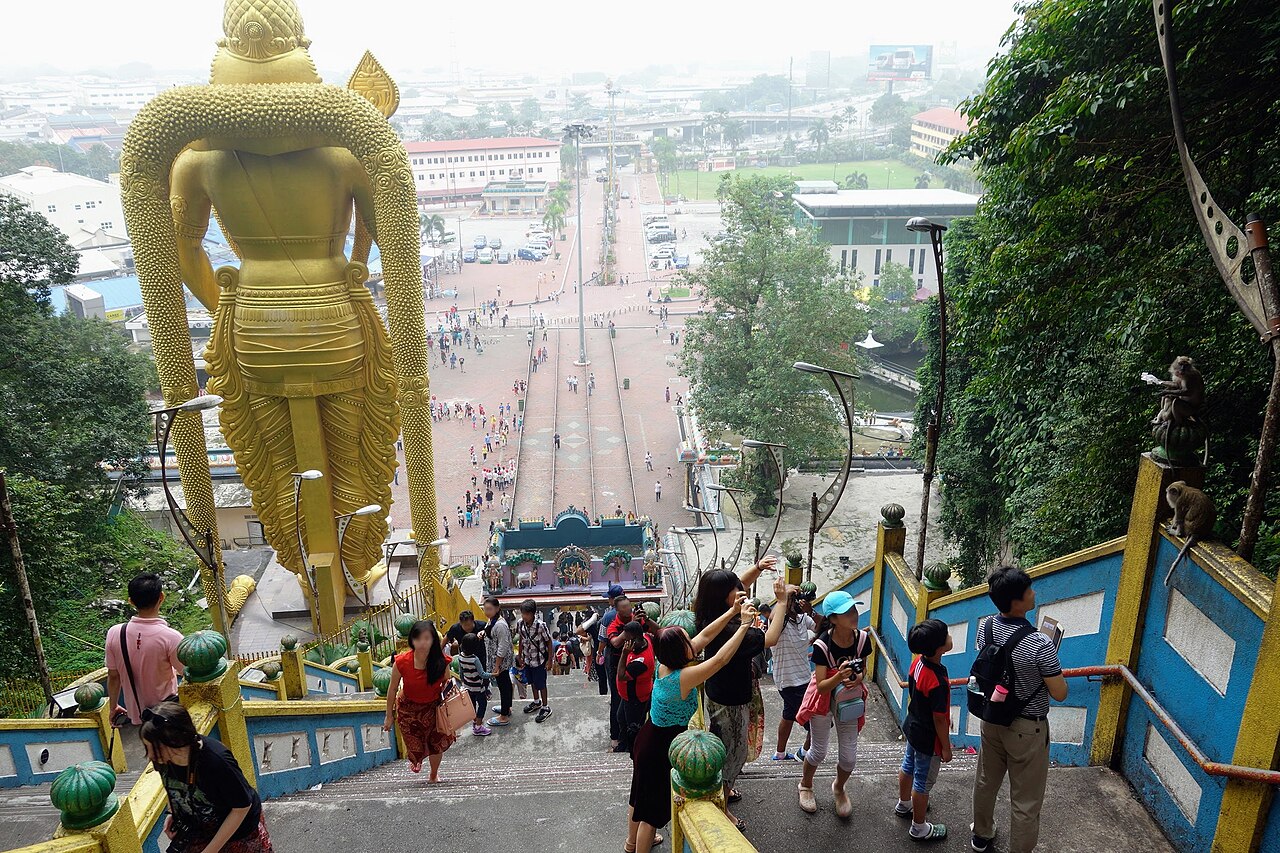
Set an alarm. Batu Caves opens at 5:30am, the 272 rainbow steps are accessible from 6:00am, and by 9am the staircase is a slow-moving queue in 33°C heat with a monkey trying to open your bag. Go at 7am and you will have the 42.7 m gold Murugan statue — the tallest in the world — more or less to yourself. Entry to the main Temple Cave is free. The Ramayana Cave costs RM15 and the Cave Villa RM10; both are optional and neither is the reason you came.
One correction worth making, because half the itineraries online still list it: the Dark Cave has been closed since January 2019 and has not reopened. If a guide offers you a Dark Cave tour, they are selling you something that does not exist.
Getting there is easy — the KTM Komuter from KL Sentral runs to Batu Caves in about 40 minutes for RM2.60 cash, RM2.30 with Touch ‘n Go, and the station is the line terminus so you cannot overshoot.
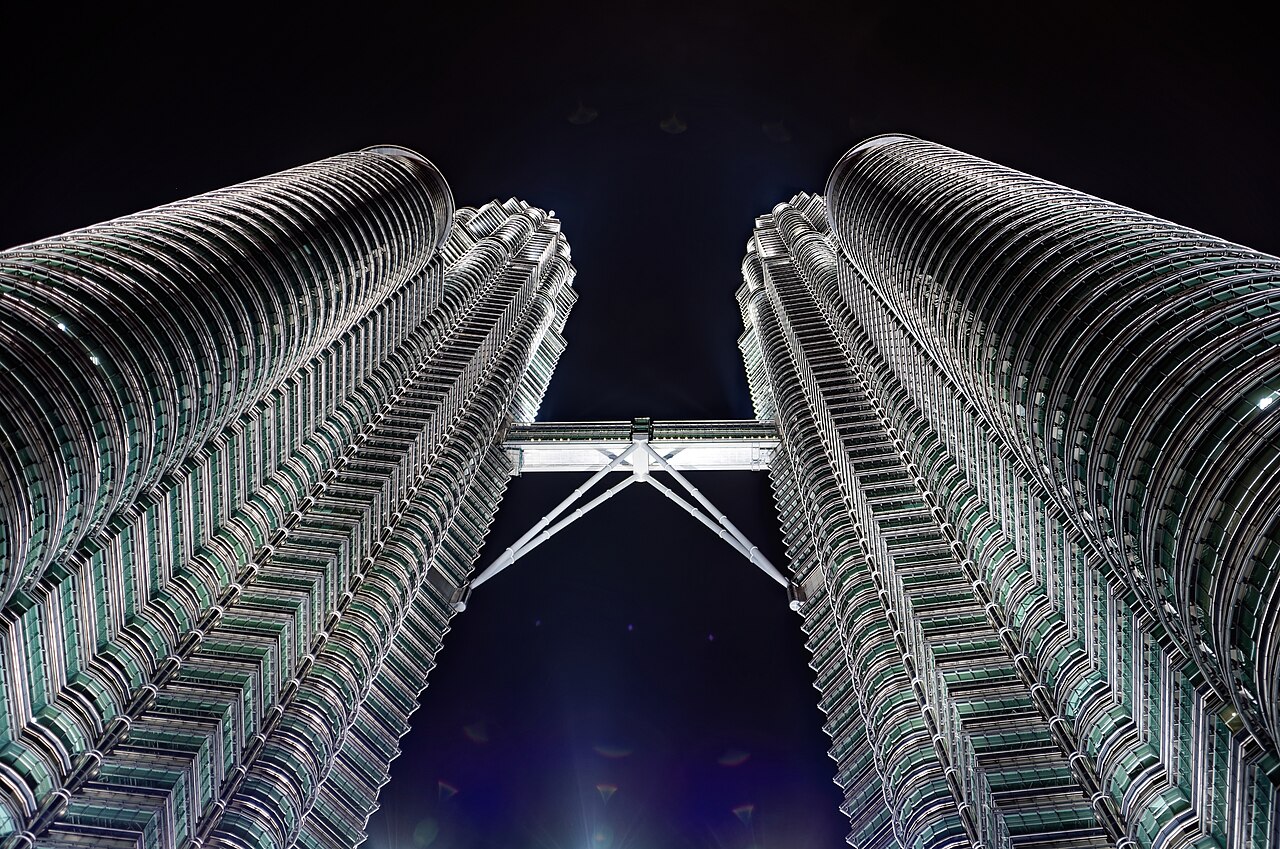
Back in the city by late morning, the afternoon holds two or three things comfortably. The Petronas Twin Towers skybridge and observation deck costs RM98 for adult foreign visitors and RM50 for children aged 2–12 — note that Malaysian MyKad holders pay RM35, and that this two-tier pricing is normal across the country rather than a scam. The towers are open Tuesday to Sunday, 09:00 to 21:00, last admission 20:30, and closed on Mondays. Slots sell out; book online several days ahead. If RM98 feels steep for a view, the free alternative is the KLCC park at dusk, where the towers photograph better from below anyway.
Fill the rest with Merdeka Square and the Sultan Abdul Samad building, the Masjid Jamek confluence where the two rivers that named the city still meet, and Central Market for air conditioning and souvenirs. Our full Kuala Lumpur travel guide breaks the city into walkable districts if you would rather build your own day.
Day 3: Cameron Highlands
The bus from KL’s TBS terminal to Tanah Rata takes about four hours and costs RM35–45, with the last 60 km a genuinely winding climb through Route 59 that people prone to motion sickness should take seriously. Leave on an 8am departure and you are at 1,500 m by lunchtime, in air that sits around 18–24°C rather than 32°C. That temperature drop is the actual point of Cameron Highlands, and it is why colonial administrators built the place.
An afternoon and the following morning covers the highlights honestly. The BOH Tea Centre at Sungei Palas is free to enter, has no permit requirement, and the terrace view over the terraced slopes is the photograph you came for. The Mossy Forest does require a permit — RM30 for adults aged 13 and over, RM15 for children — and most visitors take a guided tour at around RM50 per person on top of the permit, partly because the access road is rough and partly because a guide is the difference between a boardwalk and an explanation.
Skip the strawberry farms and the cactus gardens. They are photo-op agriculture aimed at domestic weekend visitors, they charge entry, and they will eat 90 minutes you do not have. Our Cameron Highlands guide has the longer version, including which tea estates are worth the drive.
The alternative: swap Cameron for Ipoh
If cool air is not a draw, Ipoh is the stronger swap and it costs you far less transit. The ETS train from KL Sentral reaches Ipoh in 2 hours flat on the Express service, up to 2 hours 34 minutes on the Gold, and it is the busiest long-distance rail route in Malaysia for good reason. Ipoh gives you limestone cave temples, an old town of restored shophouses, white coffee that actually originated there, and a food scene that Penang loyalists quietly respect. It also sits directly on the line north, so you lose no time. See our Ipoh travel guide for a one-day plan.
Days 4–5: Penang
Getting there without losing the day
This is the leg that breaks itineraries. There is no direct fast link from Cameron Highlands to Penang. Buses and shared vans run Tanah Rata to Butterworth or George Town in roughly 4.5 to 5.5 hours depending on the operator and whether you change at Tapah or Ipoh. Book the morning departure. A 9am start puts you in George Town by mid-afternoon with the evening intact; a lunchtime start puts you there after dark, and you will have burned a full day of a seven-day trip on a single road.
Coming from Ipoh instead, the ETS to Butterworth takes about 1 hour 40 minutes and the ferry or Rapid Penang bridge bus finishes the job. From KL directly, the ETS to Butterworth runs 3 hours 35 minutes on the Express, 4 hours 05 on the Platinum and 4 hours 20 on the Gold, at RM66–96 depending on class.
What two days in George Town covers
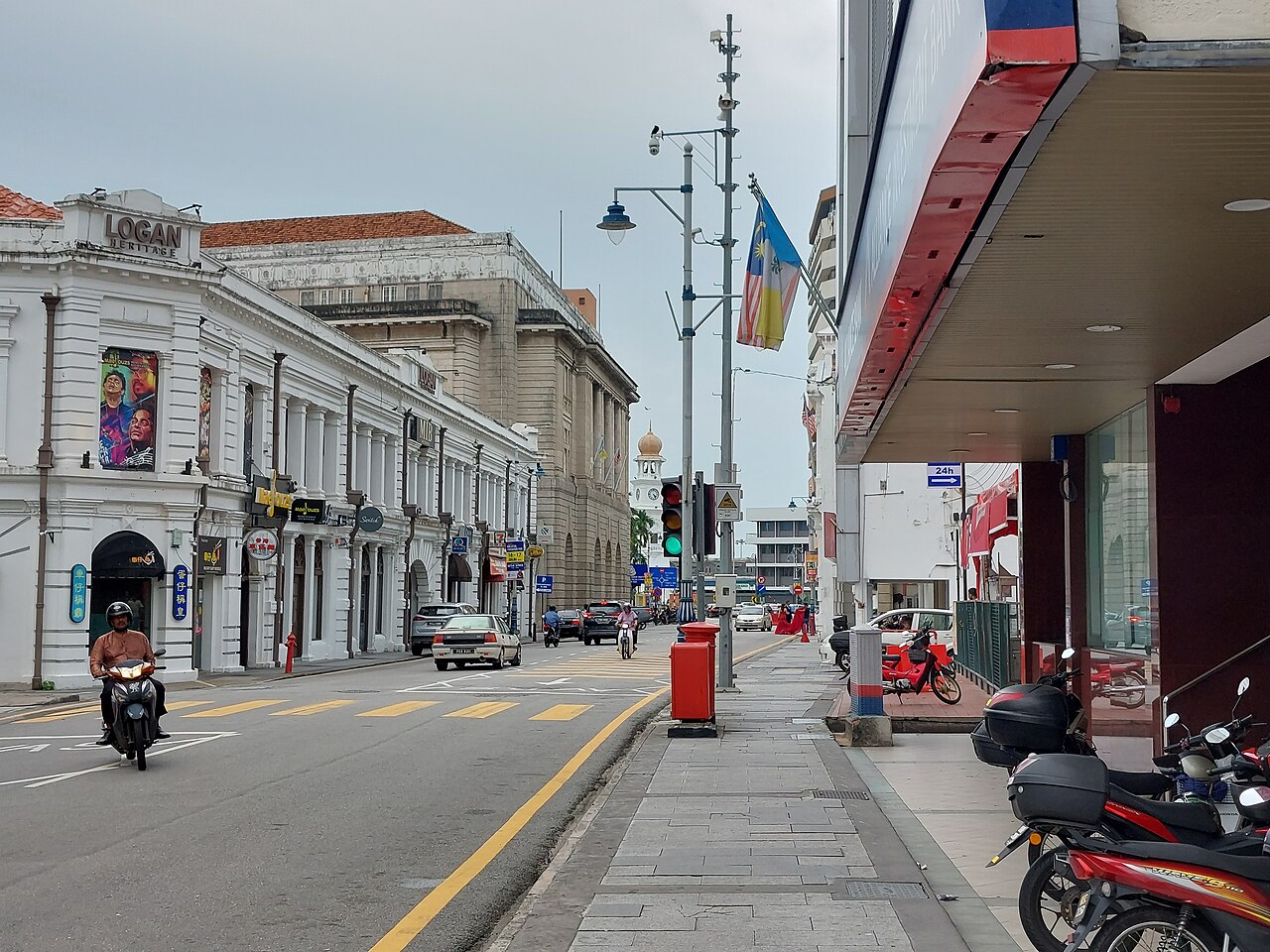
George Town has been a UNESCO World Heritage Site since 2008, and unusually for a heritage listing the thing being protected is still in daily use — the shophouses are shops, the clan jetties are homes, the temples are busy. Two days is genuinely enough to see it, because the core is walkable in about 40 minutes end to end.
Give the first evening to food and the first full day to the city. The street art trail around Armenian Street, Lebuh Ah Quee and Lebuh Chulia takes two hours at a slow pace. Kek Lok Si, the largest Buddhist temple complex in Malaysia, is free to enter; the seven-storey pagoda costs RM2 and the inclined lift up to the 30 m Kuan Yin statue is RM2 each way. Penang Hill‘s funicular railway is RM30 return for non-Malaysian adults and RM15 for children, with an RM80 Fast Lane ticket that is worth it only on weekends and public holidays when the queue passes an hour.
The food is the reason to give Penang two nights rather than one. Assam laksa, char kway teow, hokkien mee, cendol, nasi kandar — these are dishes that exist elsewhere in Malaysia in inferior form. Eat at hawker centres, not restaurants: Gurney Drive is the famous one and the most touristed, while New Lane and Chulia Street after dark are better value. Our Penang food guide names specific stalls and their opening days, which matters because many close one day a week.
Days 6–7: Langkawi
The ferry that no longer exists
Here is the correction that matters most in this entire article. The direct passenger ferry from Penang to Langkawi does not run. It was suspended during the pandemic and has never resumed. Page-one search results still publish its old three-hour schedule and RM70–90 fares, and travellers still turn up at Swettenham Pier expecting to board it.
The replacement is a flight. Penang to Langkawi takes 35 to 40 minutes with AirAsia or Firefly, and because it is a short domestic hop it is often cheaper than the ferry was. Book it in advance; same-day fares on this route are punishing.
If you are approaching Langkawi from the mainland north instead, the ferries that do run are from Kuala Perlis (about 60 minutes, RM45 for non-MyKad adults, first boat 07:00, last around 19:00) and Kuala Kedah (about 1 hour 30 minutes, RM55 non-MyKad). Both raised non-Malaysian fares by RM10 in April 2026. Flying direct from Kuala Lumpur takes just over an hour and starts around RM112 one way.
| Route | Mode | Time | Fare (adult, foreign visitor) |
|---|---|---|---|
| KLIA → KL Sentral | KLIA Ekspres | 28 min | RM55 (~USD 13) |
| KL → Tanah Rata | Bus | 4 hr | RM35–45 |
| KL → Ipoh | ETS train | 2:00–2:34 | ~RM25–45 |
| KL → Butterworth | ETS train | 3:35–4:20 | RM66–96 |
| Cameron → George Town | Bus/van | 4.5–5.5 hr | RM45–70 |
| Penang → Langkawi | Flight (no ferry) | 35–40 min | Varies; book ahead |
| Kuala Perlis → Langkawi | Ferry | ~60 min | RM45 |
| Kuala Kedah → Langkawi | Ferry | ~1:30 | RM55 |
| KL → Langkawi | Flight | ~1:05 | from ~RM112 |
Two nights on the island
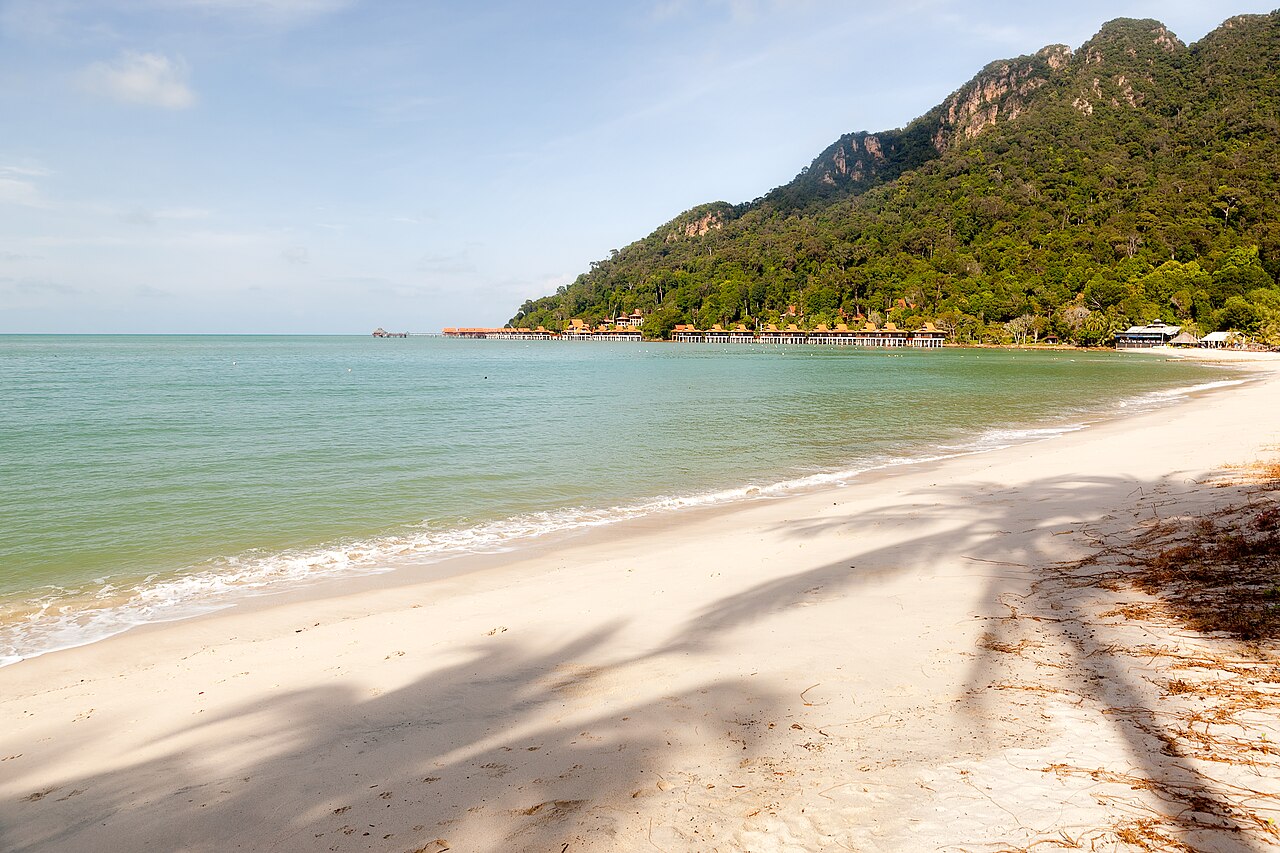
Langkawi is duty-free, which means alcohol and chocolate cost a fraction of mainland prices, and it is the reason many Malaysians visit. For a two-night visitor the useful shape is: arrive, get to Pantai Cenang or Pantai Tengah, swim, watch the sunset. Next morning, do the SkyCab cable car and Sky Bridge early before cloud closes in, then either a mangrove boat tour through the Kilim Geoforest Park or an island-hopping trip to Pulau Dayang Bunting.
Renting a scooter for around RM40–50 a day is how most visitors get around; roads are quiet by Malaysian standards. Our Langkawi travel guide covers which beach suits which kind of traveller, and the Langkawi beaches guide is worth a scan before you book a hotel, because the island’s west and north coasts are very different propositions.
Two alternative weeks
The slow week: two bases, no rush
Three nights in Kuala Lumpur, four in Penang. One transfer. You gain a day trip from KL — Melaka, Kuala Selangor for the fireflies, or Batu Caves plus the Batu Dam — and you gain enough time in Penang to cross to the mainland or ride out to Balik Pulau on a bicycle. This is the version to choose if you are travelling with children, if it is your first time in Southeast Asia, or if you simply like knowing where you are sleeping. Our day trips from Kuala Lumpur guide has the options costed.
The beach week: KL, then the east coast
Two nights in KL, five on the Perhentians or Redang. Malaysia’s best snorkelling and clearest water are on the east coast, not the west, and Langkawi’s beaches are frankly mediocre by comparison. The catch is seasonal and absolute: the east coast islands close from roughly November to February during the northeast monsoon. Resorts shut, boats stop running, and no amount of optimism will get you across. Between March and October, this is the better beach week. Read the Perhentian Islands guide and the Malaysia islands guide before committing.
What to skip in a week
This is the section other itineraries do not write, and it is the most useful one.
- Melaka as an overnight stop. It is a fine city and a UNESCO site, but it is 1 hour 45 minutes south of KL and your route goes north. Adding it costs three and a half hours of driving to gain half a day. Do it as a day trip from KL — buses from TBS run every 20 to 30 minutes from 07:00 to 22:00 for RM12–23 — or save it for a longer trip.
- Taman Negara. The world’s oldest rainforest deserves three nights minimum, and the access from Jerantut is slow. Cramming it into a week means seeing a canopy walkway and a boat jetty.
- Borneo. Covered above. Two flights and a rushed wildlife day is not a Borneo trip.
- Singapore as a bolt-on. Tempting because it is close, but crossing the causeway and back consumes the better part of two days and Singapore deserves its own trip.
- Both Penang and Langkawi if you only have five ground days. Pick one. Penang if you eat, Langkawi if you swim.
What a week costs
Excluding international flights, per person, for seven days. The ringgit sits at roughly RM4.2 to the US dollar in mid-2026, so divide by four for a rough dollar figure.
| Item | Budget | Mid-range | Comfortable |
|---|---|---|---|
| Accommodation (6 nights) | RM240–420 (dorm) | RM900–1,680 | RM2,400+ |
| Food (7 days) | RM280 | RM560 | RM1,050 |
| Ground transport | RM200 | RM300 | RM500 |
| Penang → Langkawi flight | RM90–200 | RM90–200 | RM200+ |
| Attractions | RM100 | RM250 | RM450 |
| Tourism tax (RM10/room/night) | RM60 | RM60 | RM60 |
| Total | RM970–1,260 | RM2,160–3,050 | RM4,660+ |
The tourism tax line catches people out: foreign passport holders pay RM10 per room per night at licensed accommodation, charged per room rather than per person, and Malaysians are exempt. It is small but it is not optional and it is usually collected in cash at check-in. Our Malaysia travel budget guide breaks costs down by region and travel style.
When to go, and the one month to avoid
The west coast route above works year-round. Malaysia sits two degrees north of the equator, temperatures barely move — 31 to 33°C by day, 23 to 25°C at night, everywhere, always — and rain arrives as afternoon downpours rather than all-day drizzle. The west coast’s wetter months are roughly April to May and September to November, but “wetter” means two hours of heavy rain in the afternoon, not a washout.
The one timing rule that genuinely constrains a week is the northeast monsoon from November to February, which shuts the east coast islands entirely. If you are set on the Perhentians, you cannot go in December. If you are doing the west coast week, the monsoon is irrelevant to you. See our best time to visit Malaysia guide for the month-by-month detail.
The other thing to check is the festival calendar. Chinese New Year and Hari Raya Aidilfitri trigger the balik kampung exodus, when a large share of the country travels home simultaneously. Bus fares rise 30 to 80 percent, trains sell out weeks ahead, and highways gridlock. It is a fascinating time to be in Malaysia and a difficult time to move around it.
Before you fly: the paperwork
Most Western passport holders — US, UK, EU, Australia, Canada, New Zealand — get 90 days visa-free for tourism, with the standard requirement of six months’ passport validity. That covers a week comfortably.
What catches people is the Malaysia Digital Arrival Card (MDAC). It is free, it is mandatory for almost all foreign visitors, and it must be submitted within three days before arrival. Being visa-exempt does not exempt you from it. Fill it in on the official government portal — the paid “assistance” sites that dominate search results charge you for something that costs nothing. Our Malaysia visa requirements guide has the current rules by nationality.
Pick up a local SIM or eSIM at the airport for a few ringgit a gigabyte — Grab, Google Maps and the KTM app all assume you are connected, and Malaysia’s coverage is excellent. The Malaysia SIM card guide compares the operators.
The booking order that saves you money
Malaysia is not a country where you need to lock everything down months ahead, but a few things reward planning and the order matters.
- International flights first, then check whether flying out of Langkawi or Penang is cheaper than backtracking to KL. Open-jaw tickets into Kuala Lumpur and out of Penang are often the same price and save you a full day.
- The Penang–Langkawi hop, as soon as your dates are fixed. It is a short route with limited capacity and fares climb steeply inside two weeks.
- Petronas Towers, about a week out. Morning slots go first, and remember it is closed Mondays.
- ETS train tickets, a few days ahead through the official KTMB channel. Weekend departures and the faster Express services sell out; weekday Gold services rarely do.
- Accommodation, whenever. Outside of Chinese New Year, Hari Raya and school holidays, Malaysia has more rooms than it needs. Booking a week ahead is plenty.
- Nothing else. Cameron Highlands tours, Langkawi island hopping, mangrove trips and Penang food tours can all be arranged the day before at your accommodation, usually cheaper than online.
Five mistakes that cost people a day
Booking a red-eye internal flight to save RM40. A 6am departure means a 4am wake-up and a wasted afternoon. On a seven-day trip, RM40 is not worth a quarter of your holiday.
Assuming Grab works everywhere. It is excellent in KL, Penang and Johor Bahru, patchy in Cameron Highlands and Langkawi, and effectively absent in small towns. Where Grab thins out, hotels arrange cars for a fixed price and you should ask before you need one.
Not carrying cash. Malaysia is well banked and cards work in malls and hotels, but hawker stalls, ferry counters, park permits and small guesthouses are cash-only or QR-only. Sepilok’s ticket counter, to take one example, does not accept cards and has no ATM on site. Carry RM200–300 in small notes. Our Malaysia currency guide explains where to change money at a decent rate — hint: not at the airport.
Underestimating Malaysian air conditioning. Buses, trains, malls and cinemas are cooled to a degree that visitors find genuinely uncomfortable. A long-sleeved layer is not optional, and it doubles as temple and mosque cover. See what to pack for Malaysia.
Turning up at a temple in shorts. Mosques lend robes and headscarves free of charge, so you will not be turned away, but Hindu and Chinese temples generally will not, and covered shoulders and knees are the baseline everywhere. Shoes come off at the door of every mosque, temple and private home. Our Malaysia cultural etiquette guide covers the rest, including the thumb-point and why you eat and hand things over with your right hand.
Frequently asked questions
Is 7 days enough for Malaysia?
Seven days is enough for one region done well — realistically the west coast of the peninsula, covering Kuala Lumpur plus two of Penang, Cameron Highlands, Ipoh, Melaka or Langkawi. It is not enough for the peninsula and Borneo together, and it is not enough to add the east coast islands without cutting almost everything else. Treat a week as a proper introduction rather than a survey.
Can you still take the ferry from Penang to Langkawi?
No. The direct Penang–Langkawi passenger ferry was suspended during the pandemic and has not resumed, despite many travel sites still publishing its schedule. Fly instead — the hop takes 35 to 40 minutes with AirAsia or Firefly. Ferries to Langkawi still operate from Kuala Perlis (RM45, about an hour) and Kuala Kedah (RM55, about 90 minutes) on the mainland.
Should I visit Penang or Langkawi if I can only pick one?
Penang if you care about food, history, architecture and street life. Langkawi if you want to lie on a beach, drink duty-free and ride a cable car. Penang’s beaches are poor and Langkawi’s food is unremarkable, so the choice is unusually clean. Travellers who want both a good beach and good food should look at the east coast islands between March and October instead.
How much does a week in Malaysia cost?
Excluding international flights, budget travellers spend roughly RM970–1,260 (about USD 230–300) for seven days staying in dorms and eating at hawker stalls. Mid-range travellers in private hotel rooms with the occasional taxi and paid attraction spend RM2,160–3,050 (about USD 515–725). Malaysia is meaningfully cheaper than Thailand for accommodation and roughly comparable for food.
What is the best way to travel between Kuala Lumpur and Penang?
The ETS train to Butterworth, at 3 hours 35 minutes on the Express service for RM66–96, is the most comfortable option and lands you a short ferry or bus ride from George Town. Flying takes about an hour in the air but three and a half hours door to door once you count airports, so it only wins on price. Buses are cheapest at around RM37 but take five hours and are hostage to highway traffic. Our getting around Malaysia guide compares every mode.
Do I need a visa for Malaysia?
Most Western nationalities receive 90 days visa-free on arrival for tourism, with six months of passport validity required. Separately, almost all foreign visitors must submit the free Malaysia Digital Arrival Card online within three days before arriving. Visa exemption does not remove the MDAC requirement, and it is the single most common paperwork mistake visitors make.
Is Malaysia safe for a first-time visitor?
Yes, by regional and global standards. Violent crime against tourists is rare, the roads are good, tap water is treated (though most people still drink bottled), and English is widely spoken in cities. The realistic risks are petty theft in crowded areas, motorcycle bag-snatching in parts of KL and Penang, and dengue. Our is Malaysia safe guide has the specifics.
Where to go from here
If a week feels tight after reading this, it is — and the honest answer is that Malaysia rewards ten days far more than seven, because ten is where Borneo becomes possible. If you have three or five days instead, our 3 days in Malaysia and 5 days in Malaysia itineraries are built on the same arithmetic.
And if the week you have just planned turns out to be the first of several visits, that is the usual pattern. Malaysia is a country most people underestimate on the first trip and return to on the second.