10 Days in Malaysia: Extended Itinerary — Peninsula & Islands (2026)
Ten days is the first duration where Borneo becomes possible. Two complete routes, a decision framework, 2026 flight fares and a monsoon rewrite for November to February.
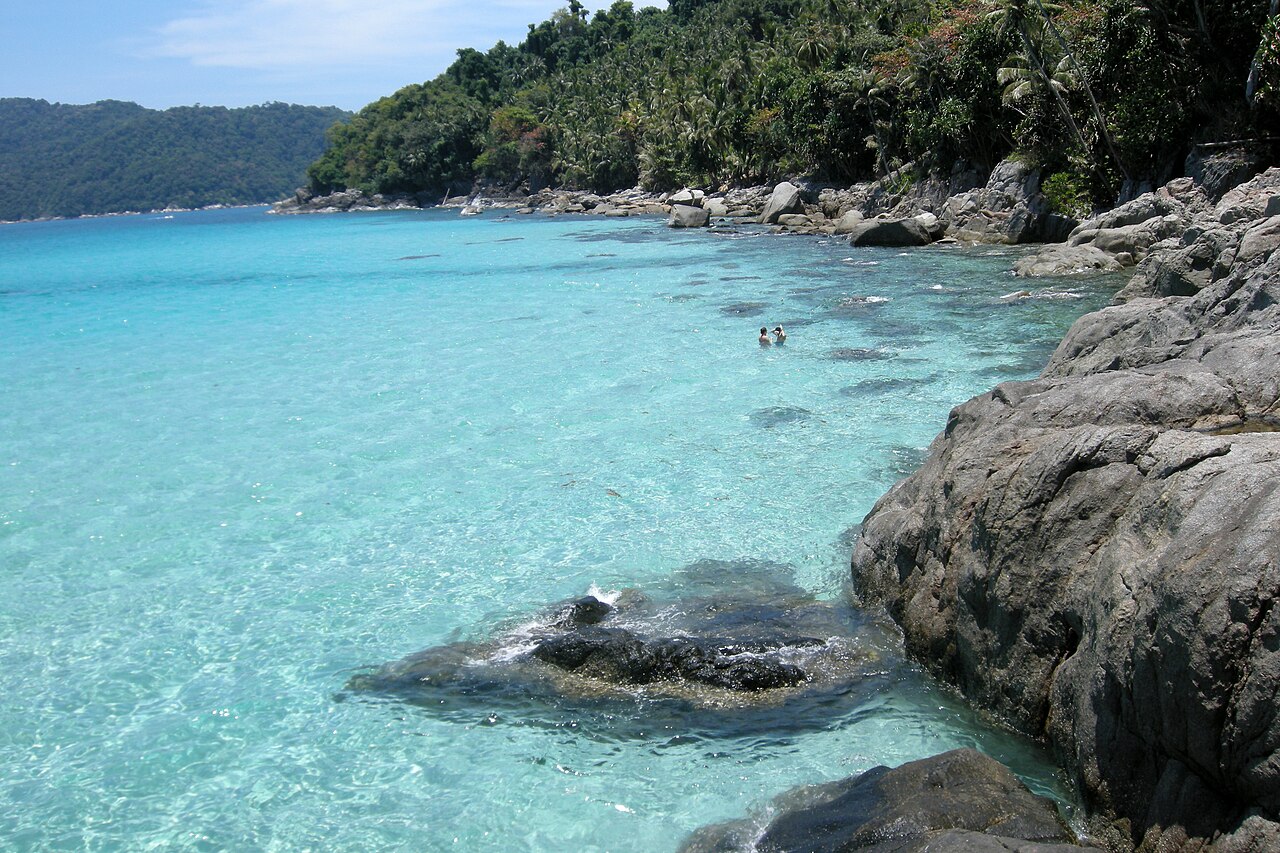
Ten days is the first duration at which Malaysia stops being a single trip and becomes a choice. Below ten days, the country decides for you: you do the west coast of the peninsula and you leave Borneo alone. At ten days, a two-and-a-half-hour flight across the South China Sea finally pays for itself, and you have to pick a side.
That is the useful thing to know about 10 days in Malaysia, and almost no itinerary online says it. The standard published route — Melaka, Kuala Lumpur, Cameron Highlands, Penang, Langkawi — is a perfectly good ten days, but it is also the seven-day route with two extra nights bolted on. It leaves Borneo in a footnote labelled “day 11 and beyond”, which is where every competing guide puts it.
This guide gives you two complete ten-day routes and the decision framework to choose between them, plus a third for anyone travelling between November and February, when a third of the standard itinerary is physically shut. Every leg is costed with 2026 fares.
The fork: islands or Borneo
Both routes start with the same three or four days in and around Kuala Lumpur and Penang. They diverge on day five.
| Route A: Peninsula & Islands | Route B: Peninsula & Borneo | |
|---|---|---|
| Shape | KL → Cameron → Penang → Langkawi | KL → Penang → fly BKI → Sepilok → Kinabatangan → KK |
| Internal flights | 1 (Penang → Langkawi, 35 min) | 3 (KL/PEN → BKI, BKI → SDK, SDK/BKI → KL) |
| Extra flight cost | ~RM150–250 | ~RM600–900 |
| Wildlife | Macaques, hornbills if lucky | Orangutans, proboscis monkeys, pygmy elephants (seasonal) |
| Beach time | 3 days | 1 day (Tunku Abdul Rahman Marine Park) |
| Pace | Relaxed | Busy — three moves in six days |
| Works Nov–Feb? | Yes (west coast unaffected) | Yes, but Sabah’s wettest months are Nov–Jan |
| Rough extra cost vs 7-day trip | +RM600–1,000 | +RM2,000–3,200 |
The honest summary: Route A is a better holiday and Route B is a better trip. If you want to swim, eat and read a book, take Route A. If you have flown eleven hours and want to see a wild orangutan, take Route B and accept that you will be tired.
Days 1–4: the shared opening
Days 1–2: Kuala Lumpur
Land, take the KLIA Ekspres into KL Sentral — 28 minutes, RM55 one way, RM100 return, 10% off booking online, trains every 20 minutes — and give the first evening to food rather than sightseeing. Day two is Batu Caves at 7am before the heat and the crowds, then the city: Merdeka Square, Masjid Jamek, the Petronas Twin Towers at RM98 for adult foreign visitors (closed Mondays, book several days ahead), and a night market.
Two nights is right for KL on a ten-day trip. It is a city that grows on people, but it is not why you flew here, and the third day is better spent north. Our Kuala Lumpur travel guide has a two-day plan; the KL food guide is the one to read first.
Days 3–4: Penang
Take the ETS train from KL Sentral to Butterworth: 3 hours 35 minutes on the Express service, 4 hours 05 on Platinum, 4 hours 20 on Gold, at RM66–96 depending on class. Book through the official KTMB channel a few days ahead — weekend departures sell out. From Butterworth, the ferry or a bridge bus puts you in George Town in twenty minutes.
Two days in George Town covers the UNESCO core, the street art, Kek Lok Si (free entry; pagoda RM2; inclined lift RM2 each way) and Penang Hill (funicular RM30 return for non-Malaysian adults, RM15 for children, RM80 for the Fast Lane that is worth it only on weekends). Mostly, though, two days in Penang is about eating four times a day, which our Penang food guide will help you do properly. The Penang travel guide covers the rest of the island, including Balik Pulau and the national park.
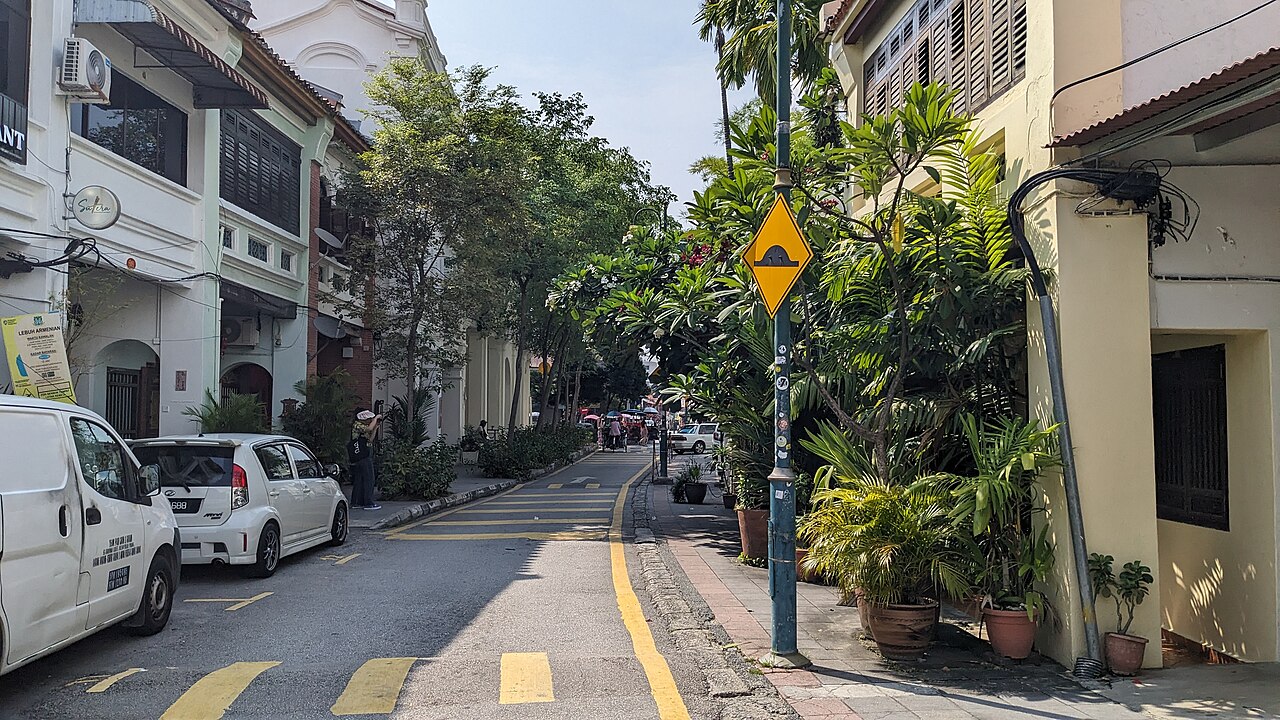
Route A, days 5–10: Cameron Highlands, Langkawi and a slow finish
This is the version that suits couples, families, first-time visitors to Asia and anyone whose idea of a good holiday involves a hammock.
| Day | Base | Move | The day |
|---|---|---|---|
| 5 | Cameron Highlands | Bus 4.5–5.5 hr from Penang | Arrive, tea at BOH, cool evening |
| 6 | Cameron Highlands | — | Mossy Forest, Gunung Brinchang, jungle walk |
| 7 | Langkawi | Bus to Penang + 35 min flight | Transit day, sunset on Cenang |
| 8 | Langkawi | — | SkyCab early, Kilim mangroves after |
| 9 | Langkawi | — | Island hopping or a beach day |
| 10 | Depart | Fly LGK → KUL, ~1:05 | Home, or a night back in KL |
Day 7 is the weak link and you should plan around it. There is no direct Cameron Highlands to Langkawi connection; you go back down to Penang or Ipoh and fly. That transit consumes most of the day, which is why Route A gives Langkawi three nights rather than two — you need the recovery.
An alternative worth knowing: skip Cameron entirely, give Penang four days and Langkawi four, and take the direct route north. The trip becomes two bases and one flight, and most people who have done both versions prefer the slow one. Our Cameron Highlands guide will tell you honestly whether the hill station is your kind of place — it is tea estates and cool air, not adventure.
The ferry that does not exist
Several itineraries still route Penang to Langkawi by boat. That ferry has not run since the pandemic. It was suspended and never reinstated, and the airlines expanded the route instead. Fly — it takes 35 to 40 minutes with AirAsia or Firefly. The ferries that do still operate to Langkawi leave from Kuala Perlis (about 60 minutes, RM45 for non-Malaysian adults) and Kuala Kedah (about 90 minutes, RM55), both on the mainland north of Penang.
Route B, days 5–10: the Borneo half
This is the route no competing ten-day guide builds, and it works. The trick is choosing Sabah over Sarawak — Sabah’s wildlife circuit is tighter, better connected and delivers more per day.
| Day | Base | Move | The day |
|---|---|---|---|
| 5 | Sandakan / Sepilok | Fly PEN or KUL → BKI (2:35), then BKI → SDK (45 min) | Long transit day; arrive afternoon |
| 6 | Sepilok | — | Orangutan centre 10:00 feeding, sun bears, Rainforest Discovery Centre |
| 7 | Kinabatangan River | Road transfer 2–2.5 hr | Afternoon river cruise |
| 8 | Kinabatangan River | — | Dawn cruise, jungle trek, night walk |
| 9 | Kota Kinabalu | Transfer to Sandakan, fly BKI | Waterfront, night market, seafood |
| 10 | Depart | Fly BKI → KUL (2:35) | Marine park islands in the morning if timings allow |
Sepilok: the numbers
The Sepilok Orangutan Rehabilitation Centre charges RM30 for foreign adults and RM15 for children, and the ticket is valid all day for both feeding sessions at 10:00 and 15:00. There is a separate RM10 camera fee, though phones are exempt. Arrive thirty minutes before feeding time; the boardwalk fills. Critically, the ticket counter is cash only and there is no ATM on site, which strands a surprising number of visitors each year.
The Bornean Sun Bear Conservation Centre is immediately next door and worth the additional ticket — sun bears are the world’s smallest bear, they are more active than the orangutans, and almost nobody has heard of them. Combine both with the Rainforest Discovery Centre canopy walkway for a full and genuinely excellent day.
One caveat sites rarely mention: orangutan sightings at Sepilok are weakest during the wild fruiting seasons, broadly March–April and September–October, when the rehabilitated animals find food in the forest and skip the platform. You may see one, you may see six. Our guide to seeing orangutans in Malaysia compares Sepilok with Semenggoh in Sarawak and the genuinely wild sightings on the Kinabatangan.
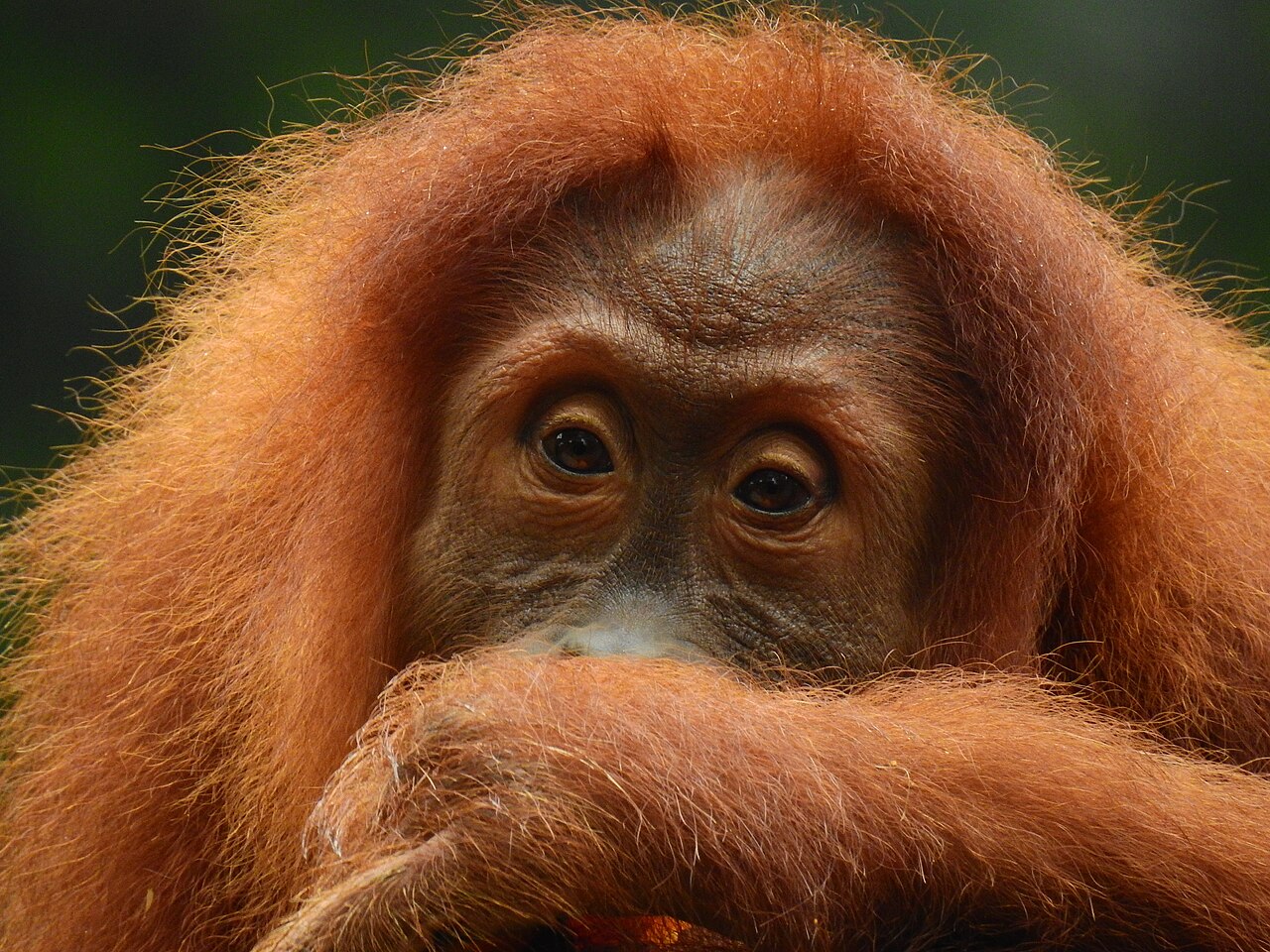
The Kinabatangan is the part people remember
The Kinabatangan is Sabah’s longest river and, because oil palm has squeezed the remaining forest into a corridor along its banks, the wildlife density on those banks is extraordinary. Proboscis monkeys are close to guaranteed. Wild orangutans, pygmy elephants, crocodiles and eight species of hornbill are all realistic. Two nights is the minimum that works, because the good sightings happen at dawn and dusk and a single night gives you one of each.
Lodges sell three-day, two-night packages that bundle return transfers from Sandakan, all meals, four river cruises and jungle walks. Budget dorm packages run around RM600–655 per person; a private bungalow for two comes in around RM1,720 for the pair. Book direct with the lodge or through a Sabah operator rather than an international OTA — the price difference is significant. Bring a dry bag, insect repellent with DEET and a torch, and expect leeches on the walks.
Kota Kinabalu on the way out
KK is not a beautiful city — it was flattened in 1945 and rebuilt in concrete — but it has the best sunsets in Malaysia, an excellent night seafood market, and the Tunku Abdul Rahman Marine Park islands are a 20-minute boat ride from the city jetty. If your outbound flight is in the evening, a half-day on Manukan or Sapi is a good use of the morning. Our Kota Kinabalu travel guide covers the practicalities.
What ten days does not allow is Mount Kinabalu. The climb needs a 2D1N package at minimum, permits are capped at 163 per day, 2026 and 2027 slots book out months ahead, and non-Malaysian packages run RM3,190–3,790. It is a wonderful thing to do and it belongs in a longer trip — see our Mount Kinabalu trek guide.
The Sarawak variant, and why most people should not take it
Route B sends you to Sabah, and that is deliberate. The alternative is Kuching in Sarawak, which is in many ways the more charming destination — a genuinely handsome river city, the best museums in Borneo, and a food culture built on Sarawak laksa and kolo mee that Sabah cannot match. Flights from KL run about 1 hour 51 minutes from around RM206, which is both quicker and cheaper than reaching Kota Kinabalu.
The problem is what fits in five days. Sarawak’s wildlife is more dispersed. Semenggoh Wildlife Centre, 24 km from Kuching, costs RM10 for foreign adults and RM5 for children, opens 08:00–10:00 and 14:00–16:00, and its semi-wild orangutans genuinely do skip feeding during fruiting season. Bako National Park charges RM20 for foreign adults and RM7 for children, plus roughly RM40 return per person for the shared boat from Kampung Bako, and it is excellent for proboscis monkeys — but it is a day trip, not a wildlife immersion. Gunung Mulu, the region’s showpiece, is reachable only by air and needs three nights of its own.
So Sarawak in five days gives you a lovely city and two good day trips. Sabah in five days gives you a rehabilitation centre, two nights on the most wildlife-dense river in Southeast Asia, and a coastal city with islands offshore. For a first Borneo visit compressed into a ten-day trip, Sabah delivers more. Save Kuching for a trip where you can give it a week — our Kuching travel guide, Bako National Park guide and Mulu National Park guide make the case for that longer visit.
The immigration checkpoint nobody warns you about
When Sabah and Sarawak joined the federation in 1963 they retained control of their own immigration, a right protected by Article 161E of the Federal Constitution. In practice this means that when you fly from Kuala Lumpur to Kota Kinabalu or Kuching — a domestic flight, on a domestic ticket, from a domestic terminal — you clear passport control on arrival and receive a state-specific visit pass.
It is quick and free and it catches out travellers who left their passport in the hotel safe. Carry it on every Borneo flight, including the return. Flying back from Borneo to the peninsula is treated as a domestic arrival with no further check, and outbound processing in Borneo often stamps the boarding pass rather than the passport.
Route C: what to do between November and February
Every ten-day itinerary online repeats a vague line about “the May to November monsoon”. That is not the useful fact. The useful fact is this: the east coast islands — Perhentians, Redang, Kapas, and largely Tioman — close from roughly November to February. Resorts shut, boats stop, and the marine park effectively goes dormant until the ferries resume in late February.
If you are travelling in that window, your ten days should look like Route A on the west coast, which the northeast monsoon barely touches, or Route B with the caveat that November to January are Sabah’s wettest months and river cruises can be cancelled. The east coast is not an option, and any itinerary that offers it to you in December has not been updated.
Between March and October, however, swapping Langkawi for the Perhentians transforms Route A. The water is dramatically clearer, the snorkelling is genuinely world-class rather than merely pleasant, and the islands are cheaper. The return speedboat from Kuala Besut costs RM80 for adults and RM50 for children and takes 40 to 45 minutes, plus a RM30 marine park conservation charge paid at the jetty before boarding. Read the Perhentian Islands guide and the Redang Island guide, and see island hopping itineraries if you want to chain several together.
Flights, fares and the baggage trap
| Route | Duration | From (one way) | Notes |
|---|---|---|---|
| KUL → Kota Kinabalu | ~2:35 | RM259 | Heavily served; roughly 730 flights a week |
| KUL → Kuching | ~1:51 | RM206 | AirAsia, Malaysia Airlines, Firefly |
| Kota Kinabalu → Sandakan | ~45–50 min | RM113 | Around 41 AirAsia flights weekly |
| KUL → Langkawi | ~1:05 | RM112 | Cheapest in February, averaging ~RM81 |
| Penang → Langkawi | 35–40 min | Varies | Replaced the discontinued ferry |
Those headline fares assume no bags. AirAsia’s Low Fare includes 7 kg of cabin baggage only. An Xtra Carry-On allowance of 10 kg costs RM50 if added at booking and RM55 afterwards. Checked baggage starts at around RM105 for the 15 kg domestic tier, and paying at the airport counter for the first 20 kg costs RM150 — roughly what a second passenger’s fare might have been. On Route B you take three flights, so a family of four buying bags at the airport can burn RM1,800 on baggage alone. Add it at booking.
What ten days still cannot do
- Sabah and Sarawak both. Kuching, Bako and Mulu are a different corner of Borneo with their own flights. Pick one state.
- Mount Kinabalu. Two days minimum on the mountain plus acclimatisation, plus permits booked months ahead. It needs a fortnight.
- Sipadan. Advanced Open Water certification is required, permits come only through licensed operators, and most resorts want a three-night minimum to guarantee you a Sipadan day. See our Sipadan Island guide.
- Route A and Route B together. The temptation to do Langkawi and Sepilok is strong. It produces four internal flights in ten days.
- Taman Negara. Three nights minimum, and it competes directly with Borneo for the same slot in your trip.
What ten days costs
Per person, excluding international flights. The ringgit is around RM4.2 to the US dollar in mid-2026.
| Item | Route A (budget) | Route A (mid) | Route B (mid) |
|---|---|---|---|
| Accommodation (9 nights) | RM400 | RM1,400 | RM1,600 |
| Food | RM400 | RM800 | RM800 |
| Internal flights | RM200 | RM250 | RM750 |
| Ground transport | RM250 | RM350 | RM300 |
| Kinabatangan/Sepilok package | — | — | RM700 |
| Attractions & tours | RM200 | RM450 | RM300 |
| Tourism tax | RM90 | RM90 | RM90 |
| Total | ~RM1,540 | ~RM3,340 | ~RM4,540 |
Borneo genuinely runs dearer than the peninsula. Accommodation and transport can be close to double, wildlife lodges have no budget tier worth the name outside dorms, and the foreigner/local price gap on activities is wider. Budget roughly a third more per day once you cross the sea. Our Malaysia travel budget guide has the full breakdown.
How to actually decide between the two routes
Comparison tables are easy to read and hard to act on. Here is the decision in plain terms, based on the questions travellers actually ask themselves at the booking stage.
How much do you mind an early alarm? Route B involves three flights, two road transfers and two dawn river cruises inside six days. You will be up before six on at least three mornings. Route A has one flight and one genuinely lazy stretch. People who travel to rest should not talk themselves into Route B on the grounds that they ought to see orangutans.
Is this your only trip to Malaysia? If you live in Europe or North America and this is a once-in-a-decade long-haul, Route B is the one you will still be describing to people in five years. Beaches are available closer to home; wild proboscis monkeys on a river at dawn are not. If you are based in Singapore, Bangkok or Sydney and can come back cheaply, do Route A now and give Borneo a dedicated fortnight later.
Who are you travelling with? Route B works well with teenagers and badly with toddlers. Kinabatangan lodges are basic, the boats are open, the heat is constant and the insects are real. Route A with a night in the Cameron Highlands and three on a Langkawi beach is a far kinder family holiday.
What month is it? Between November and January, Sabah’s east coast gets its heaviest rain. River cruises still run, but the Kinabatangan can flood and transfers occasionally cancel. Between March and October, the east coast peninsula islands are open, which makes a third variant possible — KL, Penang and then the Perhentians — with better swimming than Langkawi and no flight at all.
What is your budget ceiling? Route B costs roughly RM1,200 more per person than Route A at the same comfort level, mostly in flights and the wildlife package. If that difference means downgrading from private rooms to dorms, take Route A. Being tired and broke in a rainforest lodge is a specific kind of misery.
Booking order and lead times
Malaysia is a forgiving country to plan late, with a few sharp exceptions. Work in this order.
- International flights, checking open-jaw options. Flying into Kuala Lumpur and out of Kota Kinabalu or Langkawi frequently costs the same as a return and saves you an entire day of backtracking. Very few travellers check this and it is the single biggest time saving available.
- Internal flights, with baggage added at the point of booking. Two to three months ahead for Borneo, where fares climb steadily; two to three weeks is fine for Penang–Langkawi.
- The Kinabatangan lodge, if you are on Route B. Good lodges have limited rooms and the two-night packages that include transfers from Sandakan fill first in July and August.
- ETS train tickets, roughly a week ahead through KTMB. The Express services to Butterworth sell out on Fridays and Sundays.
- Petronas Towers, a week ahead, remembering it is closed on Mondays.
- Everything else on arrival. Cameron Highlands tours, Langkawi mangrove trips, island hopping and Penang food walks are all cheaper and easier to arrange the day before through your accommodation.
When to go
Malaysia sits close enough to the equator that the temperature is effectively constant: 31–33°C by day, 23–25°C at night, all year, everywhere below the hill stations. What changes is rainfall, and it changes by coast rather than by season in the way visitors expect.
The northeast monsoon runs November to February and hits the east coast of the peninsula plus eastern Sabah. The southwest monsoon runs roughly May to September and brings wetter afternoons to the west coast, though rarely enough to spoil a day. For a ten-day trip weighted toward the west coast, almost any month works. For a trip that wants east coast beaches, March to October is the window and it is not negotiable.
Overlay the festival calendar before you fix dates. Chinese New Year and Hari Raya Aidilfitri set off the balik kampung homecoming, when bus fares rise 30 to 80 percent, trains and domestic flights sell out weeks ahead, and highways move at walking pace. It is a spectacular time to be in the country and an awkward time to move through it. Our best time to visit Malaysia guide sets out the month-by-month picture.
Frequently asked questions
Is 10 days enough for Malaysia?
Ten days is enough for the peninsula’s west coast properly, or for a compressed but genuine introduction to both the peninsula and Sabah. It is not enough for both peninsula islands and Borneo, and it is not enough to include Mount Kinabalu or Sipadan. Think of ten days as the point where Borneo becomes possible rather than the point where the whole country does.
Can you see Borneo and Peninsular Malaysia in 10 days?
Yes, with discipline. Four days on the peninsula and six in Sabah works, using the KL–Penang–Kota Kinabalu–Sandakan–Kinabatangan chain described above. It requires three internal flights and a fast pace. What does not work is trying to fit Langkawi or the Perhentians in as well — that is a fourteen-day trip.
How much does 10 days in Malaysia cost?
Excluding international flights, roughly RM1,540 per person (about USD 365) on a budget peninsula route, RM3,340 (about USD 795) mid-range on the peninsula, and RM4,540 (about USD 1,080) mid-range with a Borneo half. Borneo adds roughly a third to the daily cost because of internal flights and wildlife lodge packages.
Do I need my passport for a domestic flight to Sabah or Sarawak?
Yes. Both states kept their own immigration control when Malaysia was formed in 1963, so foreign visitors arriving in Kota Kinabalu or Kuching clear passport control and receive a separate state visit pass, even on a domestic ticket. It is free and quick, but you must have the passport with you.
Should I visit Langkawi or the Perhentians?
The Perhentians have far clearer water and better snorkelling, and they are cheaper. Langkawi has better infrastructure, duty-free shopping, a cable car and year-round access. The deciding factor is usually the calendar: the Perhentians are closed from around November to February, Langkawi is not. Between March and October, choose the Perhentians for the sea and Langkawi for the comfort.
Is it better to fly or take buses between Malaysian cities?
On the peninsula, take the ETS train where it goes — it is fast, comfortable and lands you in city centres rather than distant airports. Buses are cheapest and reach places trains do not, such as Cameron Highlands and Kuala Besut. Fly only for Langkawi and for anything involving Borneo, where there is no alternative. Our getting around Malaysia guide compares costs and times on every major route.
Do I need a visa for Malaysia?
Most Western passport holders get 90 days visa-free with six months of passport validity. Separately, nearly all visitors must file the free Malaysia Digital Arrival Card online within three days before arrival — being visa-exempt does not exempt you from it. Check the current position for your nationality in our Malaysia visa requirements guide.
One last piece of arithmetic worth doing before you book. A ten-day trip has nine nights in it, and every base change costs you roughly half a usable day once you count packing, checking out, travelling and finding dinner in an unfamiliar place. Four bases means two of your ten days are transit. Five bases means three. Route A as written uses four, Route B uses five and feels it. If in doubt, delete a stop rather than shortening one — nobody comes home wishing they had spent less time somewhere.
Where to go from here
If Route B appealed but the pace put you off, the answer is not a shorter Borneo — it is a longer trip. Two weeks lets you split the country cleanly in half, and our 2 weeks in Malaysia itinerary is built around exactly that. If ten days is fixed and you are still torn, our 7 days in Malaysia route shows what the peninsula half looks like at its tightest, and the Malaysia itineraries hub compares every duration side by side.
Whichever you pick, book the flights before you finalise the ground plan. In Malaysia the aircraft schedule is the constraint, and everything else bends around it.