Borneo Itinerary: Best of Sabah & Sarawak in 7-14 Days (2026)
Sabah or Sarawak? Complete 7, 10 and 14-day Borneo routes with 2026 park fees, flight times, and the booking lead times for Kinabalu, Sipadan and Danum that ruin unplanned trips.
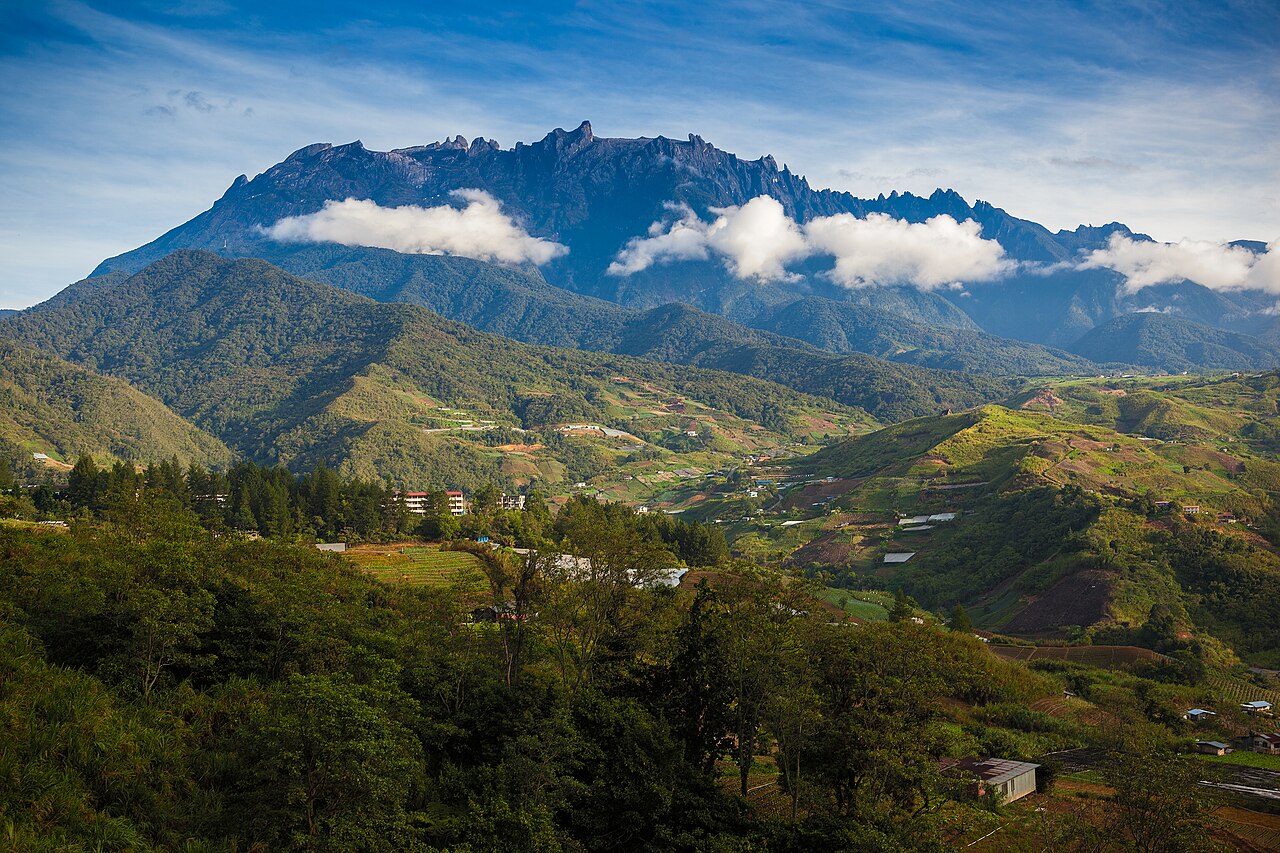
Borneo is the third-largest island in the world. Malaysian Borneo alone — the states of Sabah and Sarawak — covers 198,000 square kilometres, more than Peninsular Malaysia and Singapore combined, and the flight between their two capitals takes an hour and a half.
So the first question in any Borneo itinerary is not how many days. It is which state. Almost every guide online answers this by writing a Sabah itinerary and adding Sarawak as an appendix headed “if you have more time”, which leaves travellers who would have loved Kuching booking a flight to Kota Kinabalu instead.
This guide frames the choice properly, builds complete routes for 7, 10 and 14 days in each state, and leads with the thing that actually ruins Borneo trips: lead times. Mount Kinabalu permits, Sipadan permits and the Danum Valley shuttle all have hard limits that no amount of flexibility on arrival will get around.
Book these first, or do not plan around them
| What | The constraint | Lead time | Cost (non-Malaysian) |
|---|---|---|---|
| Mount Kinabalu climb | 163 permits per day; licensed guide and package mandatory | Months; 2026 and 2027 slots already open | RM3,190–3,790 for 2D1N |
| Sipadan diving | Permits only via licensed operator; Advanced Open Water required | Months; most resorts want 3 nights minimum | Package rates; closed all November 2026 |
| Danum Valley Field Centre | Shuttle runs Mondays, Wednesdays and Fridays only | Weeks; your dates must fit the shuttle | From ~RM1,692 (5D4N dorm) |
| Gunung Mulu | Reachable only by air; weather cancels flights | Weeks; leave a buffer day | RM30 five-day pass + 2026 conservation fees |
| Kinabatangan lodge | Limited rooms; transfers tied to flight times | Weeks; July–August fill first | From ~RM655 pp (3D2N dorm) |
Mount Kinabalu is the sharpest of these. The daily climbing permit cap was cut from 185 to 163, packages are compulsory, bookings are non-refundable and only one date change per year is permitted. If you have not booked, the mountain is not in your itinerary — plan around Kinabalu Park’s excellent day walks instead, which need no permit at all.
Sabah or Sarawak
| Sabah | Sarawak | |
|---|---|---|
| Gateway | Kota Kinabalu (BKI) — ~2h35 from KL, from RM246 | Kuching (KCH) — ~1h51 from KL, from RM206 |
| Signature wildlife | Kinabatangan River, Sepilok, Danum Valley | Bako, Semenggoh |
| Signature landscape | Mount Kinabalu, 4,095 m | Gunung Mulu caves |
| Diving | Sipadan, Mabul, Lankayan — world class | Limited |
| The city | Kota Kinabalu — functional, great sunsets, islands offshore | Kuching — the most attractive city in Malaysia |
| Food | Seafood, Filipino market, night markets | Sarawak laksa, kolo mee, Dayak cooking |
| Internal transport | Short flights and good roads | Flights, plus long river journeys |
| Best for | Animals and mountains | Caves, culture, and a city worth lingering in |
The short version: Sabah for wildlife, Sarawak for everything else. Sabah’s circuit is tighter — Sepilok, the Kinabatangan and Kinabalu Park sit within a few hours of each other and deliver more animals per day than anywhere else in Malaysia. Sarawak is more spread out, its wildlife is good rather than extraordinary, and its compensation is Mulu, a genuinely beautiful capital and the strongest food culture on the island.
Below fourteen days, pick one. Doing both means two flights, two travel days and half of each. Our Malaysia itineraries hub shows how a Borneo week fits into a longer national trip.
Seven days in Sabah
| Day | Base | Move | The day |
|---|---|---|---|
| 1 | Kota Kinabalu | Arrive BKI | Waterfront sunset, night seafood market |
| 2 | Sepilok | Fly BKI → SDK, 45 min, from RM113 | Orangutan 15:00 feeding, sun bears |
| 3 | Sepilok | — | 10:00 feeding, Rainforest Discovery Centre canopy walk |
| 4 | Kinabatangan River | Road, 2–2.5 hr | Afternoon cruise, night walk |
| 5 | Kinabatangan River | — | Dawn cruise, jungle trek, dusk cruise |
| 6 | Kinabalu Park / Kundasang | Fly to BKI, road 2 hr | Park day walks, Poring, mountain views |
| 7 | Kota Kinabalu, depart | Road 2 hr | Marine park islands if the flight is late |
Sepilok, and the fee that catches people out
The Sepilok Orangutan Rehabilitation Centre costs RM30 for foreign adults and RM15 for children, and the ticket covers both feeding sessions at 10:00 and 15:00 on the same day. The centre is open daily 09:00 to 16:00. A camera permit adds RM10, though phones are exempt. The detail that strands visitors every week: the ticket counter takes cash only and there is no ATM on site. Draw ringgit in Sandakan.
Manage your expectations on sightings. These are rehabilitated animals with access to real forest, and during the wild fruiting seasons — broadly March to April and September to October — many simply do not turn up to the platform. You may see six orangutans or you may see one. Two sessions across two days roughly doubles your odds, which is why the itinerary above gives Sepilok two nights.
Next door, the Bornean Sun Bear Conservation Centre charges its own entry of around RM50 for foreign adults and is the underrated half of the day. Sun bears are the smallest bear species in the world, they are considerably more active than the orangutans, and almost no visitor arrives having heard of them. Our guide to seeing orangutans in Malaysia compares every option including genuinely wild sightings.
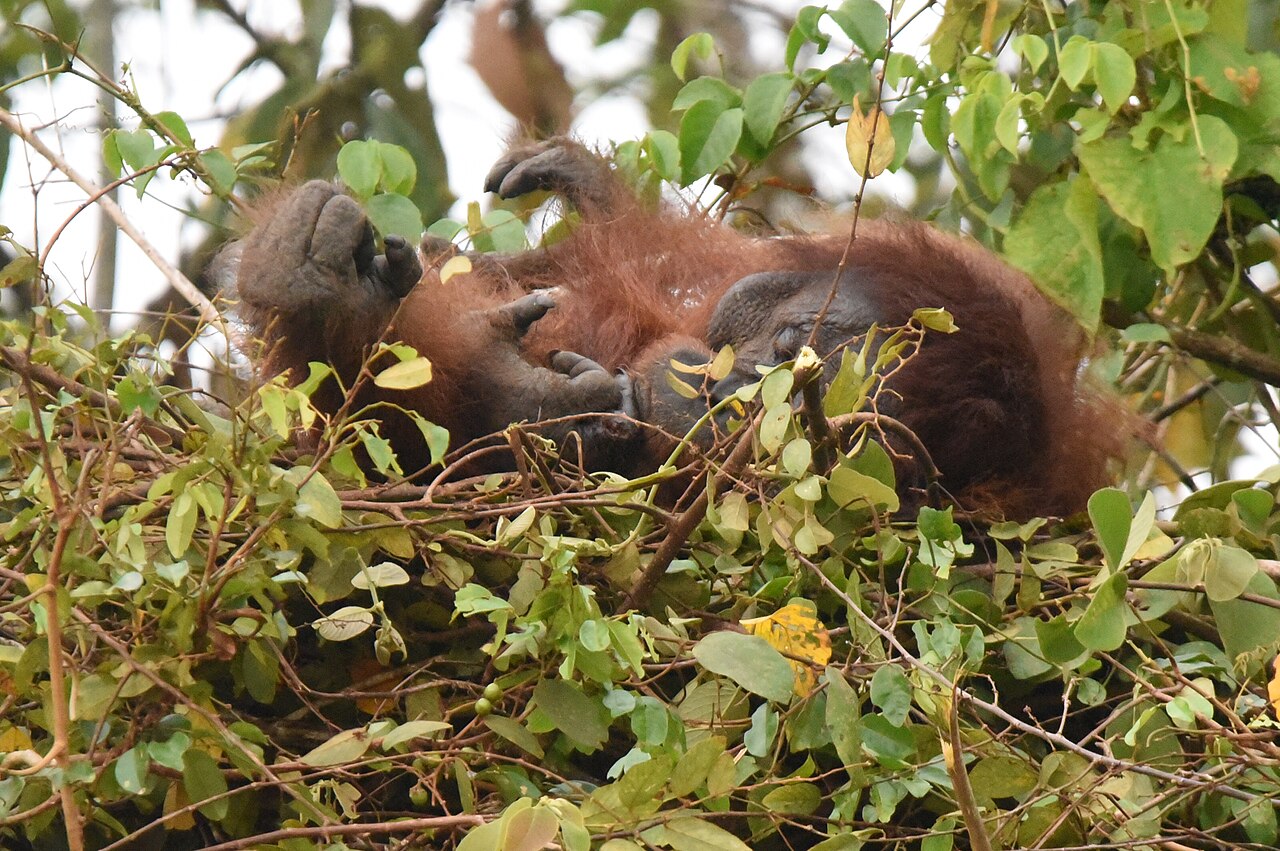
The Kinabatangan is the reason to come
Sabah’s longest river runs through a landscape that is ecologically depressing and, for a visitor, extraordinary. Oil palm has squeezed the remaining lowland forest into a corridor a few hundred metres wide along the banks, so everything that survives is concentrated within sight of a boat.
Proboscis monkeys — the ones with the pendulous nose, found nowhere outside Borneo — are close to guaranteed. Wild orangutans, Bornean pygmy elephants, saltwater crocodiles, macaques, and eight species of hornbill are all realistic on a two-night stay. Lodges sell three-day, two-night packages including return transfers from Sandakan, all meals, four river cruises and guided walks: around RM655 per person in a dormitory, or roughly RM1,720 for two in a private bungalow.
Two nights is the working minimum. Animals move at dawn and dusk, and one night gives you a single cruise at each. Book direct with the lodge or through a Sabah operator rather than an international booking site — the margin difference is significant, and the lodge will co-ordinate transfers around your flight if you give them the number.
Kinabalu Park without climbing the mountain
Kinabalu Park has been a UNESCO World Heritage Site since 2000 and is one of the most botanically diverse places on earth, with orchids, pitcher plants and rhododendrons that exist nowhere else. You do not need a permit, a guide or a package to walk the trails around park headquarters at 1,563 m, and on a clear morning the summit fills the sky above you. Poring Hot Springs and its canopy walkway are forty minutes further on. Kundasang village nearby has a war memorial, a cool-climate market and the best dairy in Malaysia. See our Kinabalu National Park guide, and the Mount Kinabalu trek guide if you did book a permit.
Seven days in Sarawak
| Day | Base | Move | The day |
|---|---|---|---|
| 1 | Kuching | Arrive KCH | Waterfront, Sarawak laksa for breakfast tomorrow |
| 2 | Kuching | Day trip | Bako National Park — proboscis monkeys, coastal trails |
| 3 | Kuching | Half-day trip | Semenggoh feeding, Borneo Cultures Museum after |
| 4 | Gunung Mulu | Fly via Miri; 30 min from Miri | Deer Cave and the evening bat exodus |
| 5 | Gunung Mulu | — | Clearwater and Wind Caves by longboat |
| 6 | Gunung Mulu | — | Pinnacles trek or canopy skywalk |
| 7 | Kuching, depart | Fly back | Buffer day — Mulu flights cancel for weather |
Bako and Semenggoh
Bako National Park is Sarawak’s oldest and the most reliable place in Malaysia to see proboscis monkeys. Entry costs RM20 for foreign adults and RM7 for children, and access is by boat from Kampung Bako — roughly RM40 return per person on a shared boat, or about RM100 each way for a whole boat carrying up to five. The trails range from a twenty-minute mangrove boardwalk to a full-day hike, and the coastal scenery is better than the wildlife brochures suggest. See our Bako National Park guide.
Semenggoh Wildlife Centre, 24 km from Kuching, costs RM10 for foreign adults and RM5 for children. It opens 08:00 to 10:00 and 14:00 to 16:00, with feedings at roughly 09:00 and 15:00. Its orangutans are semi-wild and rehabilitated, and like Sepilok’s they skip the platform when the forest is fruiting. If Kuching is your base for three nights, go twice.
Gunung Mulu, and what changed in 2026
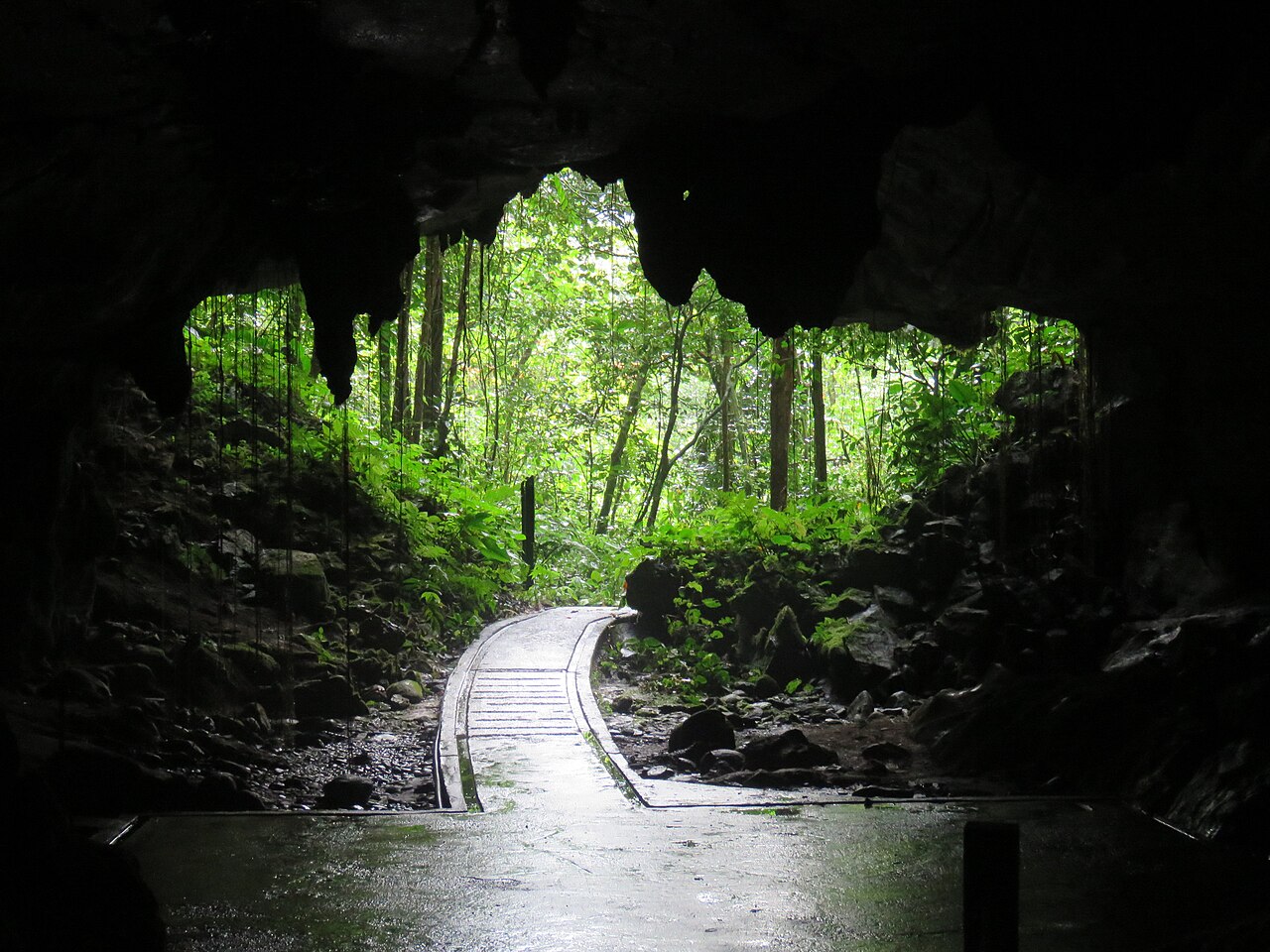
Mulu is a UNESCO World Heritage Site containing Sarawak Chamber — the largest cave chamber in the world by area — and Deer Cave, from which two to three million bats spiral out at dusk in a ribbon that takes half an hour to pass. It is one of the great sights in Southeast Asia and it is reachable only by air, on 64-seat turboprops: 30 minutes from Miri, 55 minutes from Kota Kinabalu, 1 hour 20 from Kuching. The park itself warns that weather routinely cancels these flights, so build in a buffer day and do not book a tight international connection.
The compulsory five-day park pass costs RM30 for foreign adults, RM10 for foreign children aged 6 to 18 and RM15 for Malaysians; a stay beyond five days requires a second ticket. From 1 February 2026 the park added conservation fees: RM20 per visitor using a freelance guide or tour operator, RM10 for the Camp 5 sustainability fee, and RM15 for the Summit and Headhunters Trail.
One booking detail that breaks old links: MASwings, which flew the Mulu routes for years, became AirBorneo on 2 January 2026 under Sarawak state ownership, taking over the fleet, routes and operating certificate. Kuching to Miri, the usual connection, runs about 55 minutes from RM111–114 on AirAsia or AirBorneo. Our Mulu National Park guide and caving in Malaysia guide have the detail.
Ten days: one state, done properly
Ten days does not unlock the second state. What it unlocks is depth in the first one, and specifically it unlocks the two things a seven-day trip cannot reach.
In Sabah, add Semporna and the dive islands. Four or five nights on Mabul or in Semporna itself gets you Sipadan, subject to permits — and the permits are the constraint, not the days. Sipadan permits are issued by Sabah Parks and cannot be bought by divers directly; only a licensed operator can obtain them, and most resorts require a three-night minimum stay to guarantee you a Sipadan day. Advanced Open Water certification or equivalent has been mandatory since October 2022, there is no night diving, and dives run roughly 06:00 to 16:00. From May 2026 divers may again do three dives per day inside the Sipadan boundary. The island closes for the whole of November 2026, reopening on 1 December. See our Sipadan Island guide and the broader scuba diving in Malaysia guide.
The alternative Sabah addition is Danum Valley: 438 square kilometres of never-logged lowland dipterocarp forest, the closest thing in Malaysia to primary rainforest at scale. Borneo Rainforest Lodge starts around RM5,370 per person for three days and two nights on a two-person basis; the Danum Valley Field Centre is the budget route at around RM1,692 per person for five days and four nights in a dormitory, with Infapro running four-day, three-night stays from about RM1,300. Add RM10 per room per night in tourism tax.
The logistics detail that quietly breaks independent Danum plans: the Field Centre is about 80 km from Lahad Datu on 2 to 2.5 hours of gravel road, access is restricted to permit-registered vehicles so you cannot self-drive, and the shuttle runs on Mondays, Wednesdays and Fridays only. Your dates fit the shuttle, not the reverse. Our Danum Valley guide covers the options.
In Sarawak, ten days adds a longhouse stay on the Batang Ai or Rejang rivers — a genuine one, arranged through a Kuching operator rather than a day-trip performance — plus Miri and the Niah Caves, inscribed by UNESCO in July 2024 for evidence of human occupation going back some 40,000 years.
Fourteen days: both states, honestly assessed
Two weeks is the first duration at which doing both states stops being a bad idea. Even then it is a compressed trip, and the honest recommendation for most travellers is still one state with real depth.
If you do both, the shape that works is seven nights in Sarawak first — Kuching, Bako, Semenggoh, then Mulu — followed by a flight to Kota Kinabalu and seven nights in Sabah covering Sepilok, the Kinabatangan and Kinabalu Park. Mulu connects onward to Kota Kinabalu directly in about 55 minutes, which saves you backtracking through Kuching, and it is the single detail that makes the combined fortnight viable.
What you give up is Sipadan, Danum and the Kinabalu summit — all three need days you no longer have. If any of those three is the reason you are going to Borneo, do one state and build the trip around it.
The two cities, and what to do with your urban days
Both itineraries begin and end in a city, and most travellers write those days off as transit. That is a mistake in Kuching and only half a mistake in Kota Kinabalu.
Kota Kinabalu was flattened in 1945 and rebuilt in concrete, so nobody comes for the architecture. What it has is the best sunsets in Malaysia over the South China Sea, a night seafood market where you choose your fish and have it grilled in front of you, a Filipino market for handicrafts, and — the genuine draw — the Tunku Abdul Rahman Marine Park islands twenty minutes offshore by boat. Manukan and Sapi are the developed ones; Mamutik is quieter. It is a perfectly good half-day if your flight is late, and a poor use of a full day if it is not. Our Kota Kinabalu travel guide has the detail, and Borneo islands covers what lies further out.
Kuching is a different proposition and deserves three nights on its own merits. It is the most attractive city in Malaysia: a riverfront promenade, a genuinely excellent new Borneo Cultures Museum, Chinatown and Little India within a few blocks, colonial-era buildings including the Astana and Fort Margherita, and a cat statue at every roundabout because kucing means cat. It is also the best place to eat on the island. Sarawak laksa for breakfast, kolo mee at any hour, midin fern stir-fried with belacan, and layered kek lapis cakes sold by the slab. Our Kuching travel guide maps it out, and Malaysian food by region explains why Sarawak cooking tastes unlike anything on the peninsula.
Diving beyond Sipadan
Sipadan dominates the conversation and has the permits to prove it, but Borneo’s diving does not begin and end there — which is useful, because permits are the one thing you cannot buy your way around at short notice.
Mabul and Kapalai, the islands from which Sipadan trips run, are among the best muck-diving sites in the world in their own right — frogfish, flamboyant cuttlefish, mandarinfish, blue-ringed octopus. Many divers who arrive for Sipadan leave saying Mabul was the better week. Lankayan, north of Sandakan, has whale sharks between March and May and combines neatly with a Sepilok and Kinabatangan trip. Layang-Layang, far offshore, has hammerhead schools between March and May and requires a dedicated resort stay.
None of these needs a Sabah Parks permit, and none requires Advanced Open Water. If you are Open Water certified and your dates are close, this is the version of a Borneo dive trip that will actually happen. See scuba diving in Malaysia for the full picture.
Flights and connections
| Route | Duration | From | Notes |
|---|---|---|---|
| Kuala Lumpur → Kota Kinabalu | ~2h35 | RM246 | Roughly 730 flights a week |
| Kuala Lumpur → Kuching | ~1h51 | RM206 | AirAsia, Malaysia Airlines, Firefly |
| Kota Kinabalu → Sandakan | ~45–50 min | RM113 | Around 41 flights weekly |
| Kuching → Miri | ~55 min | RM111 | AirAsia and AirBorneo |
| Miri → Mulu | ~30 min | Varies | 64-seat turboprop; weather cancellations common |
| Kota Kinabalu → Mulu | ~55 min | Varies | Useful for combining both states |
Book an open-jaw international ticket if you can — in to Kuala Lumpur, out of Kota Kinabalu or Kuching, or the reverse. It usually costs the same as a return and removes a whole travel day. Add baggage allowance at the point of booking: AirAsia’s Low Fare includes 7 kg cabin only, a 10 kg Xtra Carry-On costs RM50 at booking against RM55 later, and paying at the airport counter for the first 20 kg costs RM150.
The passport check on a domestic flight
Sabah and Sarawak retained control of their own immigration when they joined the federation in 1963, protected by Article 161E of the Federal Constitution. Flying from Kuala Lumpur to Kota Kinabalu or Kuching is a domestic flight in every other respect, but you clear passport control on arrival and receive a separate state visit pass, typically valid up to three months.
It is free and takes minutes. It also means moving between Sabah and Sarawak involves a second check. Carry your passport on every internal flight, including the return, and do not leave it in a hotel safe on the peninsula.
What Borneo costs
Per person for seven days, excluding flights from outside Malaysia. The ringgit sits around RM4.2 to the US dollar in mid-2026.
| Item | Budget | Mid-range | Comfortable |
|---|---|---|---|
| Accommodation (non-lodge nights) | RM280 | RM800 | RM2,100 |
| Wildlife lodge package | RM655 | RM900 | RM2,700 |
| Internal flights | RM400 | RM500 | RM800 |
| Food | RM350 | RM560 | RM980 |
| Park fees and guides | RM200 | RM400 | RM700 |
| Ground transport | RM200 | RM300 | RM500 |
| Tourism tax | RM60 | RM60 | RM60 |
| Total | ~RM2,145 | ~RM3,520 | ~RM7,840 |
Borneo runs materially dearer than Peninsular Malaysia. Accommodation and transport can approach double, wildlife lodges have no real budget tier outside dormitories, and the gap between foreigner and local pricing on activities is wider. Budget roughly a third more per day than you would on the peninsula. Our Malaysia travel budget guide has the comparison.
When to go
Borneo is wet all year — it is equatorial rainforest, which is the point — but the pattern differs between the coasts. Eastern Sabah, where Sepilok, the Kinabatangan and Semporna are, gets its heaviest rain from November to January, when river levels rise and transfers occasionally cancel. Sarawak’s wettest stretch is broadly November to February. The reliable windows on both sides are March to May and July to September.
Two seasonal notes that matter more than the rain. Sipadan closes for the whole of November 2026. And orangutan sightings at the rehabilitation centres dip during the wild fruiting seasons, broadly March to April and September to October — an irony, since those months are otherwise good for travel.
Practical notes nobody puts in the itinerary
- ATMs run out inland. Sepilok’s counter is cash only with no machine on site, Sukau on the Kinabatangan has none, and Mulu has none. Draw RM800–1,000 in Sandakan, Kota Kinabalu, Miri or Kuching before heading in.
- Leeches are a certainty on forest walks. Leech socks cost a few ringgit locally and are worth buying on arrival rather than at home. They are harmless, just unpleasant.
- Bring a dry bag. River cruises are open boats and afternoon downpours arrive without warning. Cameras and phones need protection, not optimism.
- Mobile coverage stops at the forest edge. Most Kinabatangan lodges and Mulu park have none. Download maps and tickets before each leg — see our Malaysia SIM card guide.
- Pack long sleeves and closed shoes. Not for modesty but for insects and footing. Our what to pack for Malaysia guide has a Borneo list.
Frequently asked questions
How many days do you need in Borneo?
Seven days covers one state properly — either the Sabah wildlife circuit of Sepilok, the Kinabatangan and Kinabalu Park, or the Sarawak circuit of Kuching, Bako, Semenggoh and Mulu. Ten days adds depth: Sipadan or Danum in Sabah, a longhouse stay or the Niah Caves in Sarawak. Fourteen is the minimum for both states, and even then it is compressed.
Sabah or Sarawak — which is better for a first trip?
Sabah if wildlife is the reason you are going. Its circuit is tighter and the Kinabatangan delivers sightings that Sarawak cannot match. Sarawak if you want caves, culture, better food and a capital city genuinely worth three nights. Sabah also has Mount Kinabalu and Sipadan, which are the two experiences people plan whole trips around.
Where is the best place to see wild orangutans in Borneo?
The Kinabatangan River in Sabah, where sightings are genuinely wild rather than at a feeding platform, though not guaranteed. Sepilok in Sabah (RM30 for foreign adults, feedings at 10:00 and 15:00) and Semenggoh in Sarawak (RM10, feedings around 09:00 and 15:00) both offer semi-wild rehabilitated animals, with attendance dropping during fruiting season. Danum Valley has the highest-quality habitat and the lowest visitor numbers, at a much higher price.
Do you need a permit to dive Sipadan?
Yes. Sabah Parks issues a limited number of daily permits and divers cannot apply directly — only licensed operators can obtain them, as part of a package. Most Semporna and Mabul resorts require a three-night minimum stay to guarantee you a Sipadan day, and Advanced Open Water certification or equivalent has been required since October 2022. The island is closed for all of November 2026.
How far in advance should you book Mount Kinabalu?
Months. Climbing permits are capped at 163 per day, a licensed guide and a packaged 2D1N or 3D2N climb are mandatory, and 2026 and 2027 slots opened well ahead. Non-Malaysian 2D1N packages run RM3,190–3,790 depending on group size, bookings are non-refundable and only one date change is allowed per year. If you have not booked, plan around the park’s day walks instead.
What is the best month to visit Borneo?
March to May or July to September. Eastern Sabah’s heaviest rain falls November to January and Sarawak’s November to February, when river transfers and Mulu flights are most likely to be disrupted. Note that Sipadan closes throughout November 2026 and that orangutan sightings at rehabilitation centres dip during the fruiting seasons of March–April and September–October.
How much does a Borneo trip cost?
Excluding international flights, roughly RM2,145 per person (about USD 510) for seven budget days including a dormitory wildlife package, RM3,520 (about USD 840) mid-range, and RM7,840 or more at a comfortable standard. Borneo runs about a third dearer per day than Peninsular Malaysia.
Where to go from here
If Borneo is one half of a longer Malaysian trip, our 2 weeks in Malaysia itinerary splits the country cleanly, and 3 weeks in Malaysia gives Borneo a full week alongside the peninsula’s interior. For the destinations themselves, start with the Kota Kinabalu and Kuching guides, and Malaysia wildlife and nature for what you can realistically expect to see.