2 Weeks in Malaysia: Complete Peninsula & Borneo Itinerary (2026)
The only 14-day Malaysia itinerary that includes Borneo. Seven nights on the peninsula, one flight, seven in Sabah, with 2026 costs and the booking lead times that break trips.
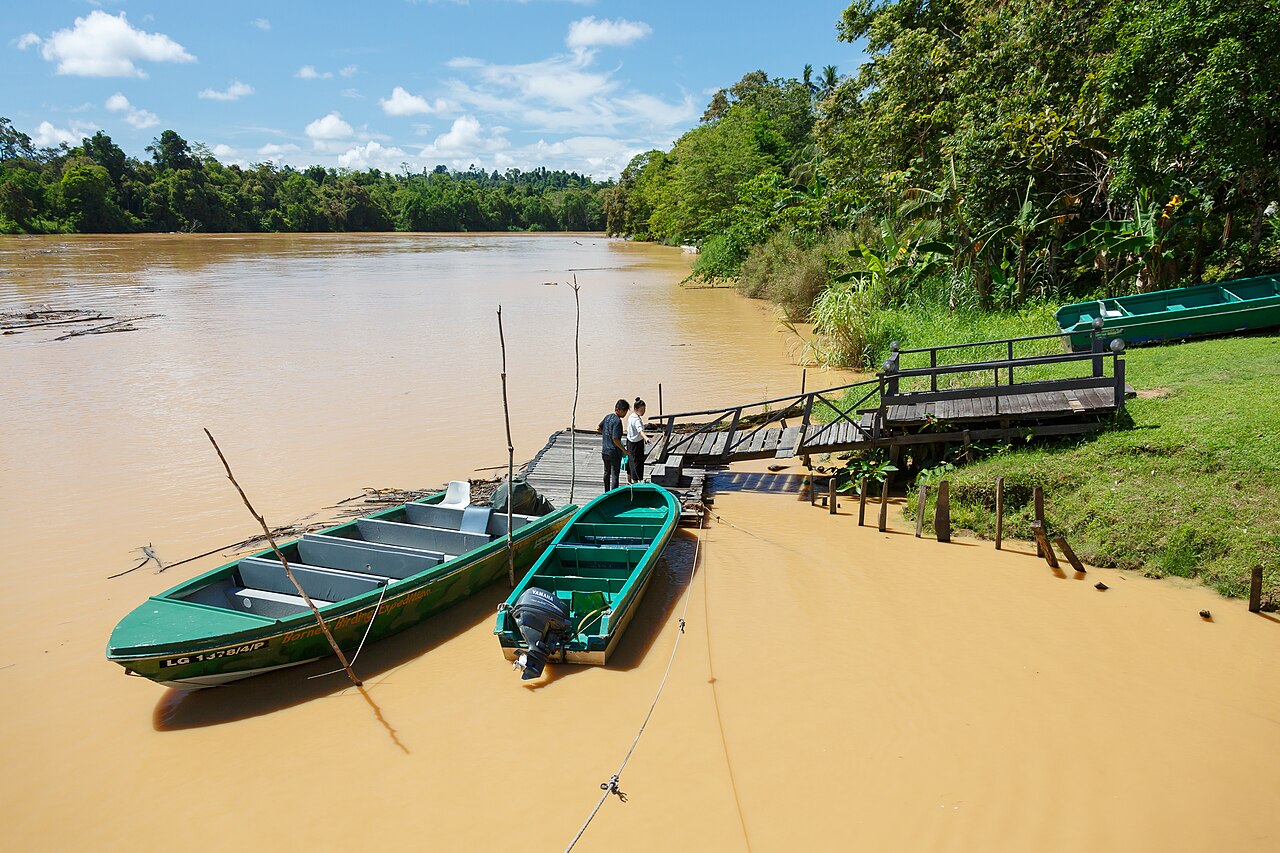
Search for a 2 weeks in Malaysia itinerary and you will find six well-written guides on page one. Not one of them includes Borneo. Every single one routes you along the peninsula’s west coast — Melaka, Kuala Lumpur, Cameron Highlands, Penang, Langkawi — and then stops, as though Sabah and Sarawak were a different country rather than 60 percent of Malaysia’s landmass.
It is an odd blind spot, because fourteen days is precisely the duration at which splitting the country in half stops being a compromise and starts being the obvious plan. Seven days on the peninsula, one two-and-a-half-hour flight, seven days in Borneo. One move, two entirely different halves.
This guide builds that split-week itinerary with 2026 prices, and it also gives you the peninsula-only fortnight for travellers who would rather go deep than wide. It covers the booking lead times that quietly break Borneo trips — Mount Kinabalu permits, Sipadan permits, the Danum Valley shuttle — and the internal immigration checkpoint that catches out visitors who left their passport in the hotel safe.
The split fortnight at a glance
| Days | Base | Getting there | The point of it |
|---|---|---|---|
| 1–2 | Kuala Lumpur | KLIA Ekspres, 28 min, RM55 | Arrive, Batu Caves, the city |
| 3 | Melaka (day trip or overnight) | Bus from TBS, 1h45, RM12–23 | Straits history, Peranakan food |
| 4–5 | Cameron Highlands or Ipoh | Bus 4 hr / ETS 2 hr | Cool air, or cave temples and white coffee |
| 6–7 | Penang | Bus/ETS, 2–5 hr | George Town, and eating four times a day |
| 8 | Kota Kinabalu | Fly PEN → BKI via KUL, or direct where available | Transit; waterfront sunset, night market |
| 9–10 | Sepilok / Sandakan | Fly BKI → SDK, 45 min, from RM113 | Orangutans, sun bears, canopy walkway |
| 11–12 | Kinabatangan River | Road, 2–2.5 hr | Dawn and dusk cruises; the trip’s high point |
| 13 | Kundasang / Kinabalu Park | Fly to BKI, road 2 hr | Mountain views, cool air, Poring |
| 14 | Kota Kinabalu, depart | Road 2 hr, fly BKI → KUL 2:35 | Islands in the morning if the flight is late |
Seven nights on the peninsula, seven in Sabah, one internal flight between them plus two short hops inside Borneo. That is the fortnight. The Malaysia itineraries hub sets it against shorter and longer trips if you are still deciding on length.
Why the split works at fourteen days and not at ten
The Borneo hop has a fixed overhead: roughly a full day going out, a full day coming back, and a minimum of three nights on the ground before the wildlife circuit makes sense. On a ten-day trip that overhead consumes a fifth of your holiday and forces you to cut the peninsula to four days. On a fourteen-day trip the same overhead is proportionally small, and both halves get enough time to breathe.
The arithmetic is worth spelling out. Kuala Lumpur to Kota Kinabalu is 2 hours 35 minutes in the air, from around RM259 one way with AirAsia, on a route so heavily served that there are roughly 730 flights a week. Add airport transfers at both ends, security and a two-hour check-in buffer and it is a seven-hour day. Kota Kinabalu to Sandakan adds 45 to 50 minutes and around RM113. Kuala Lumpur to Kuching, if you take the Sarawak variant, is about 1 hour 51 minutes from around RM206.
One structural tip that saves an entire day: book an open-jaw international ticket, into Kuala Lumpur and out of Kota Kinabalu. It frequently costs the same as a return, and it removes the final KUL leg from your itinerary altogether. Almost nobody checks this.
Days 1–7: the peninsula half
Kuala Lumpur, two nights
The KLIA Ekspres runs airport to KL Sentral in 28 minutes for RM55 one way or RM100 return, every 20 minutes, with 10% off online bookings and a Group Saver fare of RM40 per person for three or more travelling together. Buy a Touch ‘n Go card at the station; it covers the LRT, MRT, monorail, buses and every toll plaza in the country.
Give day two to Batu Caves at 7am — free entry to the Temple Cave, 272 rainbow steps, the 42.7 m gold Murugan statue, and the note that the Dark Cave has been closed since January 2019 despite what half the internet still says — then the city centre. The Petronas Twin Towers observation deck is RM98 for adult foreign visitors and RM50 for children aged 2–12, open Tuesday to Sunday with last admission at 20:30 and closed Mondays. Our Kuala Lumpur travel guide has a fuller two-day plan.
Melaka, one night or one day
Buses from KL’s TBS terminal to Melaka Sentral leave every 20 to 30 minutes from 07:00 to 22:00, take 1 hour 45 minutes to 2 hours and cost RM12–23. On a fourteen-day trip you can afford to stay a night, which is the version worth taking: Jonker Street is a tourist market by day and something much better after the day-trippers leave, and the Peranakan food — the Baba-Nyonya cuisine that emerged from centuries of Chinese-Malay intermarriage in the Straits ports — is not really available elsewhere. See our Melaka travel guide.
The middle: Cameron Highlands or Ipoh
Take Cameron Highlands if you want the temperature to drop. At 1,500 m the air sits at 18–24°C, the BOH Tea Centre at Sungei Palas is free to enter and the terrace view is the photograph, and the Mossy Forest requires a permit at RM30 for adults and RM15 for children, usually taken as part of a guided tour around RM50 per person. The bus from KL takes four hours; the last hour is a winding climb. Read the Cameron Highlands guide first — it is tea estates and mist, not adventure, and some travellers find it underwhelming.
Take Ipoh if you would rather eat. The ETS train from KL reaches Ipoh in 2 hours flat on the Express service. Ipoh gives you limestone cave temples, a restored old town of shophouses, the white coffee that originated there, and a claim to the country’s best bean sprout chicken. It also sits on the main line north, so it costs you no transit time at all. Our Ipoh travel guide has a two-day plan.
Penang, two nights
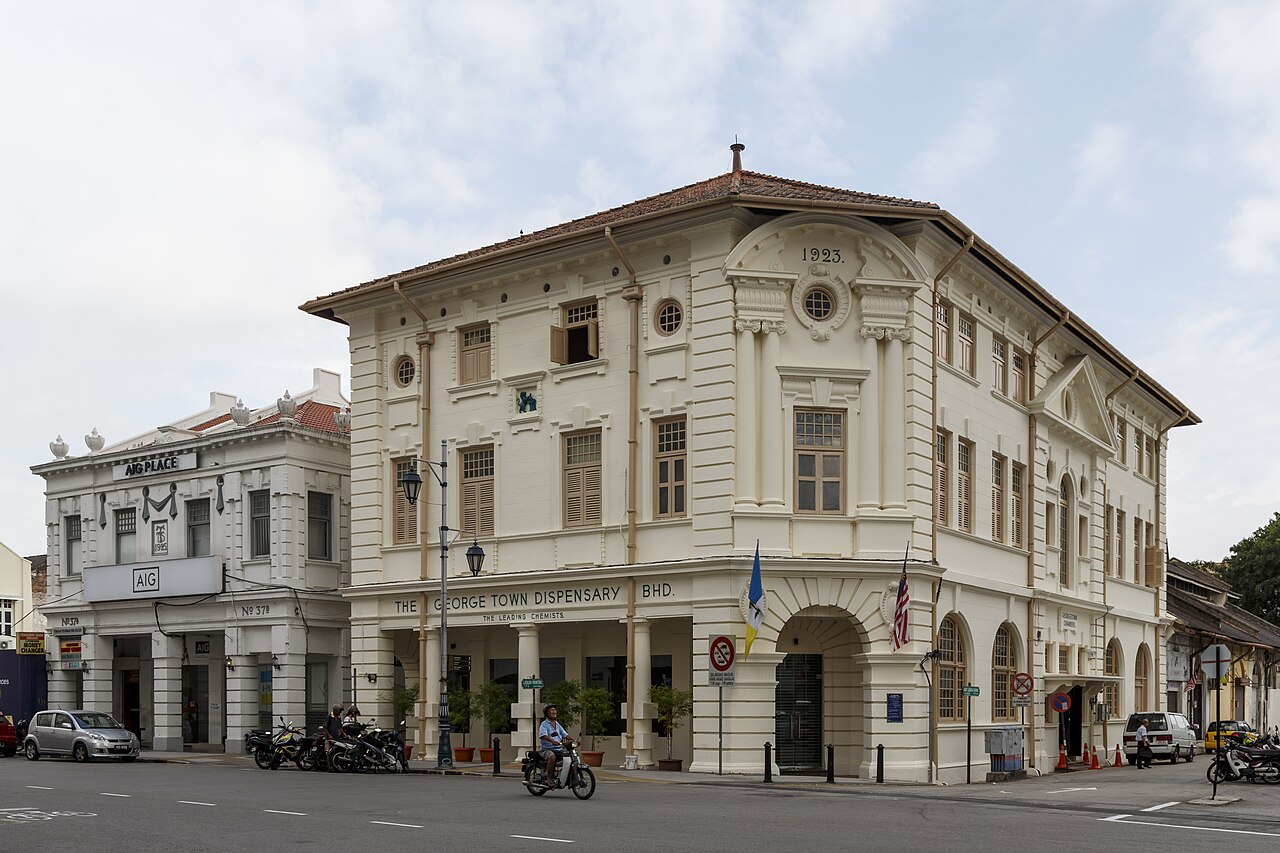
George Town has been a UNESCO World Heritage Site since 2008 and, unlike most heritage listings, it is still in daily use. The core is walkable end to end in about forty minutes. Kek Lok Si is free to enter with the pagoda at RM2 and the inclined lift RM2 each way; the Penang Hill funicular is RM30 return for non-Malaysian adults and RM15 for children, with an RM80 Fast Lane that only earns its price on weekends and public holidays.
The real reason for two nights is food. Assam laksa, char kway teow, hokkien mee, nasi kandar and cendol all exist elsewhere in Malaysia in weaker form. Eat at hawker centres rather than restaurants, and check opening days — many of the best stalls close one day a week. Our Penang food guide names names.
Days 8–14: the Borneo half
The immigration checkpoint on a domestic flight
Sabah and Sarawak retained control of their own immigration when they joined the federation in 1963, a right protected by Article 161E of the Federal Constitution. In practice this means that when you land in Kota Kinabalu or Kuching on a domestic flight, you clear passport control and receive a separate state visit pass — typically valid up to three months.
It is free, it takes minutes, and it is entirely painless as long as you have your passport with you. Flying back from Borneo to the peninsula is treated as a domestic arrival with no further check, and the outbound processing in Borneo often stamps the boarding pass rather than the passport. No competing fortnight itinerary mentions this, and it is the kind of thing that turns a straightforward morning into a missed flight.
Sepilok and Sandakan, two nights
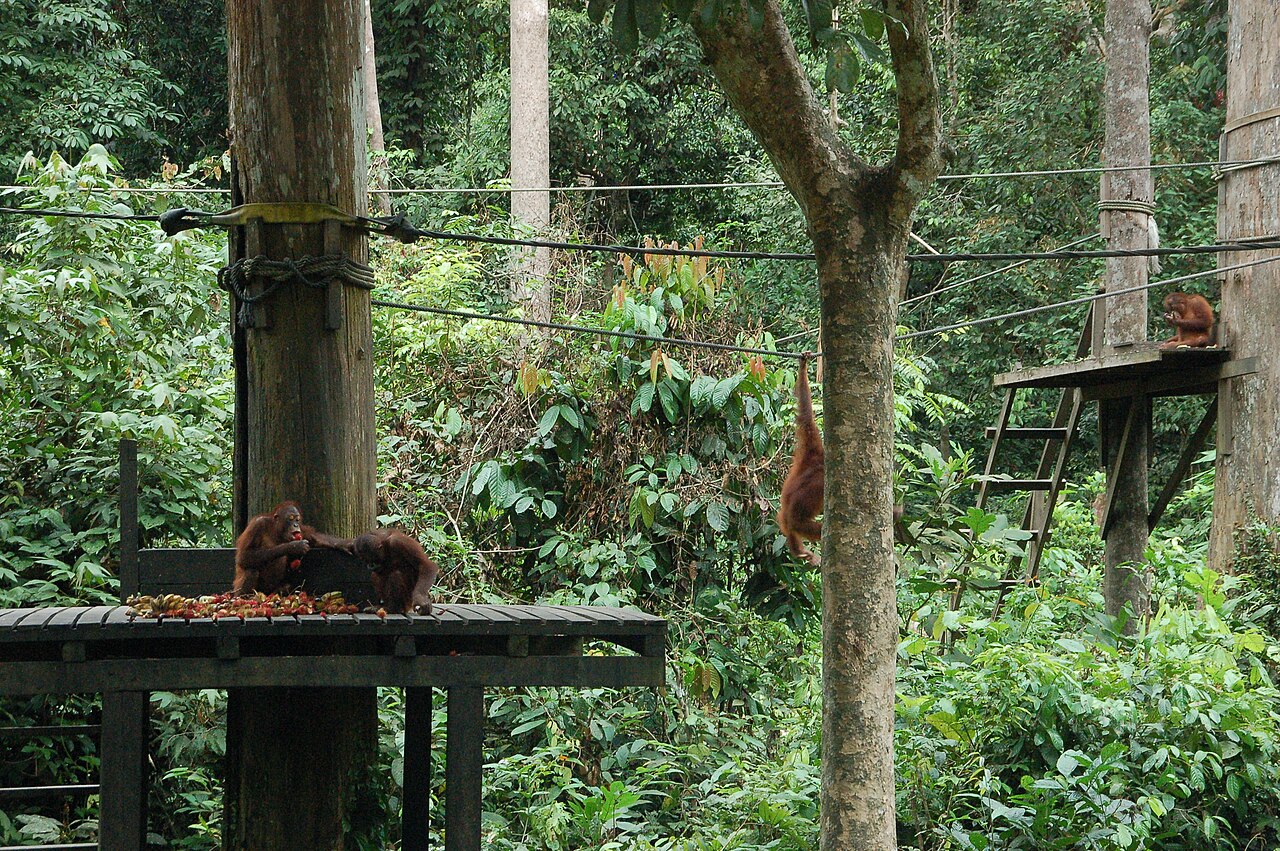
The Sepilok Orangutan Rehabilitation Centre charges RM30 for foreign adults and RM15 for children, with the ticket valid all day across both feeding sessions at 10:00 and 15:00. Add RM10 for a camera, though phones are exempt. The ticket counter is cash only and there is no ATM on site — bring ringgit. Sightings are weakest during the wild fruiting seasons, broadly March to April and September to October, when the rehabilitated animals feed in the forest instead.
Next door, the Bornean Sun Bear Conservation Centre is the underrated half of the day: sun bears are the smallest bear species in the world, they are far more active than the orangutans, and almost no visitor arrives having heard of them. The Rainforest Discovery Centre’s canopy walkway completes a full day. Our guide to seeing orangutans in Malaysia compares Sepilok, Semenggoh and genuinely wild sightings.
The Kinabatangan River, two nights
Sabah’s longest river is where the fortnight earns itself. Oil palm plantations have compressed the remaining lowland forest into a narrow corridor along the banks, which is ecologically dismal and, for a visitor, extraordinary: everything that lives there is concentrated within sight of the water. Proboscis monkeys are near-certain. Wild orangutans, pygmy elephants, saltwater crocodiles, and eight hornbill species are all realistic.
Two nights is the minimum that works, because the animals move at dawn and dusk and one night gives you a single crack at each. Lodges sell three-day, two-night packages including return transfers from Sandakan, all meals, four river cruises and guided walks. Dorm-based packages run around RM600–655 per person; a private bungalow for two is closer to RM1,720 for the pair. Book direct with the lodge or a Sabah operator rather than through an international booking site.
Pack a dry bag, DEET repellent, a head torch and leech socks. The heat is constant, the boats are open, and the night walk involves standing still in the dark while something rustles nearby. It is the best two nights in Malaysia.
Kinabalu Park and Kundasang, one night
Fly back to Kota Kinabalu and drive two hours inland to Kundasang, where the temperature drops, the market sells vegetables grown at altitude, and Mount Kinabalu at 4,095 m fills the horizon on a clear morning. Kinabalu Park has been a UNESCO World Heritage Site since 2000 and the day walks around park headquarters are excellent even if you are not climbing. Poring Hot Springs and its canopy walkway are 40 minutes further on. See our Kinabalu National Park guide.
Making day 8 a day rather than a write-off
The transfer from the peninsula to Borneo is the fortnight’s one genuinely awkward day, and how you book it decides whether you lose six hours or twelve. Penang has no direct service to Kota Kinabalu on most days, so you will route through Kuala Lumpur. Two approaches work.
The first is to take an early Penang departure and connect the same morning, landing in Kota Kinabalu in the early afternoon with a sunset and a seafood dinner still ahead of you. Book both legs on a single ticket if you can, because a self-transfer at KLIA with checked bags means clearing and re-checking, and a delayed first leg becomes entirely your problem.
The second is to end the peninsula half in Kuala Lumpur rather than Penang — swapping the order so you go KL, Ipoh, Penang, then back down by ETS for a final KL night — and fly out of KLIA fresh in the morning. It costs you one train journey and buys a much calmer travel day. Either way, avoid the last flight of the evening: Kota Kinabalu’s night market and waterfront are a decent reward for a long day, and you will not see either if you land at 23:00.
Once in Sabah, keep the two internal hops loose. Kota Kinabalu to Sandakan takes 45 to 50 minutes and runs frequently, and lodges on the Kinabatangan build their transfer times around the standard flight schedule, so tell them your flight number and let them handle it. Our Kota Kinabalu travel guide covers where to stay near the airport if you end up with an early departure.
What fourteen days still cannot include
Three things repeatedly wreck otherwise sensible Borneo plans, and all three fail on lead time rather than on days available.
| What | Days needed | Lead time | Cost (non-Malaysian) |
|---|---|---|---|
| Mount Kinabalu climb | 2D1N minimum, plus travel | Months — permits capped at 163/day | RM3,190–3,790 (2D1N package) |
| Sipadan diving | 4–5 nights in Semporna/Mabul | Months; 3-night minimum at most resorts | Package rates; permit only via licensed operator |
| Gunung Mulu | 3 nights minimum | Weeks; flights cancel for weather | RM30 5-day park pass, plus RM20 conservation fee from Feb 2026 |
Mount Kinabalu requires a licensed guide and a packaged 2D1N or 3D2N climb; independent ascents are not permitted. The daily permit cap of 163 climbers, down from 185 before the pandemic, means 2026 and 2027 dates sell out well ahead, bookings are non-refundable and only one date change per year is allowed. Our Mount Kinabalu trek guide explains the booking process.
Sipadan permits are issued by Sabah Parks and cannot be bought directly by divers — only a licensed operator can obtain them, and most Semporna and Mabul resorts require a three-night minimum stay to guarantee you a Sipadan day. Advanced Open Water certification or equivalent has been mandatory since October 2022. Note also that the island closes for the whole of November 2026, reopening on 1 December. See the Sipadan Island guide and our overview of scuba diving in Malaysia.
Gunung Mulu is reachable only by air, on 64-seat turboprops from Miri, Kuching and Kota Kinabalu, and the park itself warns that weather routinely cancels flights. The compulsory five-day park pass costs RM30 for foreign adults and RM10 for children. From 1 February 2026 the park added a RM20 conservation fee for visitors using a freelance guide or tour operator, a RM10 Camp 5 sustainability fee and RM15 for the Summit and Headhunters trails. One further detail worth knowing: MASwings, which flew these routes for years, became AirBorneo on 2 January 2026 under Sarawak state ownership, so older booking links no longer work. Our Mulu National Park guide has the current position.
The alternative: a peninsula-only fortnight
Not everyone should cross the sea. If you dislike flying, if you are travelling with small children, if your budget is tight, or if you simply want to move slowly, fourteen days on the peninsula is a genuinely rich trip rather than a consolation prize. It also lets you reach two things the split fortnight cannot: the east coast islands and Taman Negara.
| Days | Base | Nights | Note |
|---|---|---|---|
| 1–3 | Kuala Lumpur | 3 | Plus a Melaka or Kuala Selangor day trip |
| 4–6 | Taman Negara | 3 | Access via Jerantut; canopy walk, night safari, Orang Asli visit |
| 7–9 | Perhentian Islands | 3 | March–October only; boat from Kuala Besut |
| 10–12 | Penang | 3 | Long cross-country transfer; consider the Jungle Railway |
| 13–14 | Langkawi or Cameron Highlands | 2 | Beach finish or hill-station finish |
Taman Negara is the world’s oldest tropical rainforest, at roughly 130 million years, and the entry permit costs a token RM1 per person with a RM5 camera licence, both valid for 30 days. Without the camera licence, phone cameras are technically not permitted in the park. Access is via Jerantut: by road it is 68 km and about 1 hour 15 minutes to Kuala Tahan from around RM35, or you can take the classic two-and-a-half to three-hour river boat from Kuala Tembeling, sold as a bus-and-boat combination for around RM150. A new canopy walk at Seberang Ara opened in June 2026. See our Taman Negara guide.
The east coast islands are the peninsula’s best swimming, and the seasonality is absolute. Perhentian and Redang resorts typically close in early November and reopen between late February and mid-March; Tioman follows a similar pattern with a season running roughly March or April to September or October. The return boat from Kuala Besut to the Perhentians costs RM80 for adults and RM50 for children and takes 40 to 45 minutes, with a RM30 marine park conservation charge for foreigners paid at the jetty before boarding. Our Perhentian Islands guide and Tioman Island guide compare them.
If you take this route between November and February, replace the island block with the west coast: Ipoh, Penang, Langkawi and more time in Melaka. The Malaysia islands guide sets out which islands stay open year-round.
What a fortnight costs
Per person, excluding international flights. The ringgit sits at roughly RM4.2 to the US dollar in mid-2026, so divide by four for an approximate dollar figure.
| Item | Peninsula only, mid-range | Split fortnight, mid-range |
|---|---|---|
| Accommodation (13 nights) | RM1,950 | RM2,400 |
| Food | RM1,120 | RM1,260 |
| Internal flights | RM250 | RM950 |
| Ground transport & boats | RM650 | RM550 |
| Wildlife lodges & packages | RM300 | RM1,400 |
| Attractions, permits, tours | RM600 | RM550 |
| Tourism tax (RM10/room/night) | RM130 | RM130 |
| Total | ~RM5,000 | ~RM7,240 |
Mid-range travellers in Malaysia typically spend RM200–350 per day all in; solo travellers who eat at hawker stalls and use buses commonly land at RM180–300. Borneo shifts that upward materially. Accommodation and transport there can run close to double the peninsula equivalent, wildlife lodges have no real budget tier outside dorms, and the gap between foreigner and local pricing on activities is wider. Budget roughly a third more per day once you cross the sea.
Two small line items that surprise people: the tourism tax of RM10 per room per night applies to foreign passport holders at licensed accommodation nationwide and is usually collected in cash at check-in, and Semporna adds a jetty fee of roughly USD 2 per person for non-Malaysians on top. Our Malaysia travel budget guide breaks costs down by region.
When to go
Temperature in Malaysia is effectively a constant — 31 to 33°C by day and 23 to 25°C at night, everywhere below the hill stations, all year. What varies is rain, and it varies by coast.
The northeast monsoon runs November to February and closes the peninsula’s east coast islands entirely while bringing eastern Sabah its wettest months. The southwest monsoon, roughly May to September, brings wetter afternoons to the west coast without meaningfully spoiling days. For the split fortnight described here, the sweet spots are March to May and July to September: the peninsula is reliable, Sabah’s rivers are navigable, and the diving season on the east side of Borneo is at its best.
Check the festival calendar before you fix anything. Chinese New Year and Hari Raya Aidilfitri trigger the balik kampung homecoming, when domestic flights and trains sell out weeks ahead, bus fares rise 30 to 80 percent, and highways gridlock. Our best time to visit Malaysia guide has the month-by-month detail.
Five things that break fourteen-day plans
Leaving Borneo bookings until you arrive. The peninsula is forgiving; Borneo is not. Kinabatangan lodges, Kinabalu permits and Sipadan packages all have hard capacity limits, and July and August fill first.
Trying to do Sabah and Sarawak. They are separate corners of a very large island with their own flight networks. Kuching, Bako and Mulu belong to a different trip than Sepilok, the Kinabatangan and Kinabalu. Pick one state and see it properly.
Buying baggage at the airport. AirAsia’s Low Fare includes 7 kg of cabin baggage. Adding a 10 kg Xtra Carry-On costs RM50 at booking and RM55 later; checked baggage starts around RM105 for 15 kg, but the first 20 kg bought at the airport counter costs RM150. Over three internal flights for two people, that is the difference between RM300 and RM900.
Assuming the Penang–Langkawi ferry still runs. It does not. The direct service was suspended during the pandemic and never restarted, though several page-one guides still print its old timetable. Fly instead: 35 to 40 minutes. The ferries that do operate to Langkawi leave from Kuala Perlis (about 60 minutes, RM45 for non-Malaysian adults) and Kuala Kedah (about 90 minutes, RM55).
Packing for a beach holiday. A fortnight that includes rainforest needs long sleeves, closed shoes, a dry bag and serious repellent alongside the swimwear. Our what to pack for Malaysia guide has a Borneo-specific list.
Frequently asked questions
Is 2 weeks enough time for Malaysia?
Two weeks is the first duration at which Malaysia stops forcing hard trade-offs. It comfortably covers the peninsula’s west coast plus a full week in Sabah, or a slower peninsula loop that includes Taman Negara and the east coast islands. It does not stretch to Mount Kinabalu or Sipadan alongside a peninsula half, and it will not cover both Sabah and Sarawak.
Can you visit both Peninsular Malaysia and Borneo in 14 days?
Yes, and it is the best use of a fortnight. Seven nights on the peninsula, one flight of about 2 hours 35 minutes to Kota Kinabalu, seven nights in Sabah. The flight is frequent and cheap — roughly 730 services a week from KL — and an open-jaw international ticket flying out of Kota Kinabalu removes the return leg entirely.
How much does a 2-week trip to Malaysia cost?
Excluding international flights, budget on roughly RM5,000 per person (about USD 1,190) for a mid-range peninsula-only fortnight, and roughly RM7,240 (about USD 1,725) for the split peninsula-and-Borneo version. Backpackers using dorms and buses manage well under half those figures on the peninsula, though Borneo has a higher floor.
Do I need my passport for a domestic flight to Sabah or Sarawak?
Yes. Both states run their own immigration under Article 161E of the Federal Constitution, so foreign visitors clear passport control on arrival in Kota Kinabalu or Kuching and receive a separate state visit pass, typically valid up to three months. There is no fee and no advance application, but you must have the passport with you on a flight that is otherwise entirely domestic.
How far in advance do I need to book Mount Kinabalu and Sipadan?
Months, for both. Mount Kinabalu is capped at 163 climbing permits per day, packages are mandatory, bookings are non-refundable and 2026 and 2027 slots opened well in advance. Sipadan permits come only through licensed operators as part of a dive package, most resorts require a three-night minimum, and Advanced Open Water certification has been required since October 2022. Neither is something you arrange after arriving.
Do you need a visa for Malaysia, and how long can you stay?
Most Western passport holders receive 90 days visa-free for tourism, with six months of passport validity required. Almost all foreign visitors must additionally submit the free Malaysia Digital Arrival Card online within three days before arrival; visa exemption does not remove that requirement. Our Malaysia visa requirements guide covers the detail by nationality.
What is the best month to visit Malaysia for two weeks?
March to May and July to September suit the split itinerary best — the peninsula is reliable and Sabah’s rivers and dive sites are at their most cooperative. November to February works for a west-coast peninsula fortnight but closes the east coast islands and brings eastern Sabah its heaviest rain.
Where to go from here
If the Borneo half is the part that pulled at you, our dedicated Borneo itinerary builds 7, 10 and 14-day routes across Sabah and Sarawak with the lead times spelled out. If two weeks turns out to be one week too few, the 3 weeks in Malaysia itinerary adds exactly what a fortnight forces you to cut. And if you are still working out how long to come for, the 10 days in Malaysia guide shows where the compromises start to bite.