Malaysia Islands Guide: Best Islands for Beaches, Diving & Relaxation
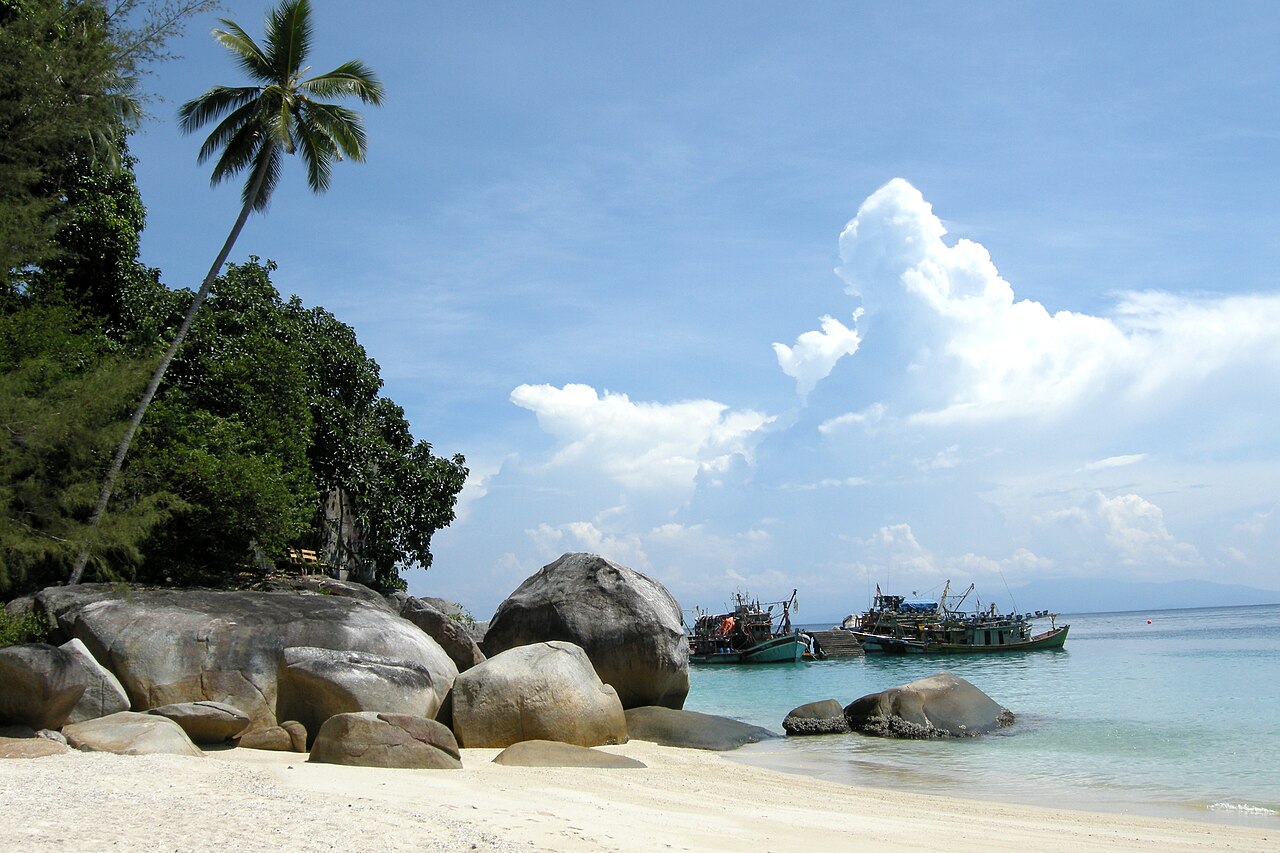
Malaysia has islands on both sides of the country and they are not interchangeable. The east coast of the peninsula has the postcard water and closes for four months of the year. The west coast stays open year-round and has visibly worse visibility. Borneo has the best diving in the country and the most complicated permits. Get this wrong and you arrive at a jetty in December to find the boats have stopped running.
This guide sorts them out. It covers which island suits which traveller, what each one costs to reach in ringgit, when each is open, and the conservation fees and dive permits that most guides leave out entirely. It also tells you honestly which reefs are in trouble — Malaysia lost roughly a fifth of its live coral cover between 2022 and 2025, and that changes what some of these islands are worth flying for.
Prices were verified in July 2026, in Malaysian ringgit with dollar equivalents at roughly RM4.10 to US$1.
The Three Island Regions, and Why the Difference Matters
Almost every mistake travellers make with Malaysian islands comes from treating the country as one destination. It has three distinct island regions running on different calendars.
- East coast peninsula — Perhentian, Redang, Tioman, Kapas, Lang Tengah, Tenggol. The clearest water and the best snorkelling in Peninsular Malaysia. Closed roughly November to February when the northeast monsoon arrives.
- West coast peninsula — Langkawi, Pangkor, Penang, Payar. Open all year, easier to reach, with airports and short ferry hops. Visibility underwater is genuinely poor by comparison. Best November to April.
- Borneo (Sabah) — Sipadan, Mabul, Kapalai, Mantanani, Tunku Abdul Rahman Marine Park, the Turtle Islands. Open year-round, no monsoon shutdown. World-class diving and the most administrative complexity.
The single most important consequence: if you are travelling between November and February and want a beach, go west. Langkawi and Pangkor will be open and pleasant while the Perhentians are shuttered and the ferries are tied up.
Malaysia’s Islands Compared
| Island | Region | Best for | Open | Getting there |
|---|---|---|---|---|
| Perhentian | East coast | Budget beach, snorkelling, learning to dive | Mar–Oct | RM40 each way, Kuala Besut, 45 min |
| Redang | East coast | Resort stays, families, clear water | Mar–Oct | RM50 each way public ferry; usually bundled |
| Tioman | East coast | Jungle plus reef, duty-free, longest season | Feb–early Nov | ~RM85, Mersing or Tanjung Gemok, 1.5–2.5 hr |
| Kapas & Gem | East coast | Doing nothing, quietly | Mar–Oct | ~RM35 return, Marang, 40 min |
| Langkawi | West coast | Beaches with reliable access, families | Year-round | Fly, or RM45–55 ferry |
| Pangkor | West coast | Cheap, easy, low-key | Year-round | RM10 return, Lumut, 10 min |
| Sipadan | Borneo | Serious diving, nothing else | Year-round exc. November | Via Semporna; permit required |
| Mabul & Kapalai | Borneo | Macro diving, Sipadan base | Year-round | ~45 min boat from Semporna |
| Tunku Abdul Rahman | Borneo | Day trips from Kota Kinabalu | Year-round | RM48+ from South Jetty, 10–20 min |
| Mantanani | Borneo | Day trips, snorkelling | Year-round | RM360 day trip from KK |
| Turtle Islands | Borneo | Turtle nesting, overnight only | Year-round | ~1 hr from Sandakan; book ahead |
Conservation Fees: The Charge Nobody Warns You About
Nearly every guide to Malaysian islands omits this, and it catches people out at the jetty with no cash. Malaysia runs two entirely separate marine park fee regimes — one for the peninsula, administered by the Department of Fisheries, and one for Sabah, administered by Sabah Parks. They are not connected and the rates differ substantially.
Peninsular Malaysia
The marine park conservation charge is RM30 for foreign adults and RM15 for foreign children aged 6 to 12 and seniors over 60. Malaysian identity card holders pay RM5 and RM2. Visitors with disabilities enter free. The rate has been unchanged since the 2017 order, and despite occasional claims of an increase, no rise has been implemented.
It applies to Tioman, Redang, Perhentian, Kapas, Tenggol, Lang Tengah, Payar and the Johor island group. It is collected in cash at a separate counter at the departure jetty and is not included in your ferry ticket. Bring ringgit.
Johor adds a second layer that almost nobody mentions: a state national park fee of RM20 for foreign adults on top of the federal charge for Rawa, Sibu, Tinggi and Besar — but only if you depart from Mersing. Leave from Tanjung Gemok and it does not apply.
Sabah
| Park | International adult | International child/senior | Malaysian adult |
|---|---|---|---|
| Tunku Abdul Rahman | RM25 | RM20 | RM8 |
| Turtle Islands (Selingan) | RM60 | RM30 | RM20 |
| Tun Sakaran (Semporna) | RM20 | RM12 | RM8 |
| Pulau Tiga | RM20 | RM12 | RM6 |
| Sipadan | RM100 + RM350 dive fee | — | RM50 + RM250 |
Two practical notes. Tunku Abdul Rahman Marine Park has been cashless since July 2023 — card, QR or e-wallet only, the reverse of the peninsula. And climbing Bohey Dulang in Tun Sakaran carries an additional RM50 permit for foreigners plus a guide fee. Mantanani is not a gazetted Sabah Parks park at all, so any charge there is an operator or village fee rather than a government one.
The Perhentian Islands: Best Value in Malaysia
Best for: budget travellers, snorkellers, and anyone learning to dive.
Two islands off the Terengganu coast, 45 minutes from Kuala Besut. Perhentian Kecil is the smaller and younger of the two, with Long Beach as the social centre and the cheapest accommodation in the group. Perhentian Besar is quieter, more family-oriented and slightly pricier. No cars on either. Water taxis handle everything.
Diving here is the cheapest in Malaysia — RM90 to RM120 per fun dive, with PADI Open Water certification at RM1,380 to RM1,500 and Advanced at around RM1,280 to RM1,400. Visibility typically runs 10 to 15 metres, reaching 20 to 30 on the best days, peaking June through August. Water sits at 27 to 30°C year-round.
Snorkelling straight off the beach is genuinely worthwhile, which is not true of most Malaysian islands. Sea turtles are common on the standard snorkel circuit. Kayaking between bays is excellent.
The honest caveat. Reef Check Malaysia’s 2025 survey put Perhentian live coral cover at 32.44%, downgrading it from “good” to “fair,” and attributed the decline to raised nutrient levels — the islands have no centralised sewage treatment. In May 2026 Terengganu authorities opened an investigation into video showing apparent sewage discharge near a resort. The snorkelling is still good. It is not what it was ten years ago, and pretending otherwise does you no favours.
Season: March to October. Ferries typically resume in late February, though the exact date varies by year and by resort. Full detail in our Perhentian Islands guide.
Tioman: The Longest Season and the Most to Do
Best for: travellers who want jungle as well as reef, and anyone visiting in February or early November.
Tioman is the largest of the east coast islands and the one with the most going on inland — a mountainous, densely forested interior with waterfalls and jungle trails linking the coastal villages. It also has the longest season of any east coast island, with established operators putting it at February to early November, several weeks ahead of the Perhentians and Redang.
Diving costs RM140 to RM150 per dive, with beach dives at RM80 to RM90. Visibility is best March to May and September to November at 15 to 30 metres, dropping to 8 to 12 metres in June through August when plankton blooms with the southwest monsoon — the reverse of the Perhentian pattern, and worth planning around.
Tioman retains duty-free status, one of only three duty-free islands in Malaysia alongside Langkawi and Labuan. Alcohol and chocolate are noticeably cheaper.
Two things to know. Tioman’s coral has taken the hardest hit of any major Malaysian destination: cover fell to 42.99% in 2025, driven by a genuine crown-of-thorns starfish outbreak running at 1.68 per 100 square metres against a healthy baseline of 0.2 to 0.3. And the airport situation is unresolved — a proposed new international airport was cancelled in August 2023 on environmental grounds, since 76% of it would have been reclaimed from inside the gazetted marine park. A separate runway extension received funding in Budget 2024 but its status was being questioned in the Pahang assembly as recently as May 2026. There is no scheduled commercial air service. The ferry is your only realistic option.
See our Tioman Island guide.
Redang: The Resort Island
Best for: families and couples who want a package rather than a project.
Redang has the clearest water of the east coast trio and the most developed resort infrastructure. Most visitors arrive on a package that bundles the boat transfer, accommodation and meals, which is why the public ferry from Kuala Terengganu’s Shahbandar jetty at RM50 each way is less commonly used than the Merang crossing.
Visibility on the outer reefs reaches 20 to 25 metres from May through August. Diving is usually sold as an add-on to resort packages at around RM110 per boat dive and RM60 for a shore dive.
Redang matters for a reason beyond tourism: Chagar Hutang beach is the best-documented turtle rookery in Peninsular Malaysia, monitored by Universiti Malaysia Terengganu’s SEATRU programme. Green turtles nest from January to October, peaking in June and July, at 1,000 to 1,500 nests a year with a record 1,731 in 2020. Hawksbills nest March to September in far smaller numbers. The beach itself has been a gazetted sanctuary closed to the public since 2005 — you cannot visit it, and any operator offering to take you there is misrepresenting the situation.
The reef news is less good: Redang recorded 25.89% live coral cover in the 2025 survey, the weakest of the three main east coast islands. Season: March to October, with resorts closing from November through end of February and a few reopening in late February. See our Redang Island guide.
Kapas and Gem: For Doing Nothing
Best for: people who find the Perhentians too busy.
Kapas sits 40 minutes off Marang, costs about RM35 return with five departures a day, and has almost nothing on it — a handful of chalets, clear water, and enough quiet that the loudest thing is usually the sea. Neighbouring Gem Island (Pulau Gemia) is a single-resort island with an on-site turtle hatchery.
There is no nightlife, limited food choice, and no dive infrastructure to speak of. That is the entire appeal. Same monsoon closure as the rest of the east coast, roughly November through March. See our Kapas Island and Gem Island guide.
Langkawi: Open All Year, and the Trade-Off That Involves
Best for: beach holidays that cannot be rescheduled, families, and anyone travelling between November and February.
Langkawi is an archipelago of 99 islands off the northwest coast, and it solves the problem the east coast creates: it has an airport, it never closes, and you are not gambling on a ferry crossing. That reliability is the reason it is Malaysia’s most-visited island by a wide margin.
The trade-off is underwater. West coast visibility is genuinely poor — nearshore Langkawi runs 2 to 4 metres, and even at Pulau Payar Marine Park, the region’s designated dive site, you are looking at 5 to 12 metres. Diving costs more here too, around RM220 per dive or RM450 for a foreigner’s two-tank day trip, because it is sold as a packaged excursion rather than a local activity. If diving is your priority, Langkawi is the wrong island. Water temperature compensates slightly at 29 to 32°C.
One thing almost every Langkawi article gets wrong: Pulau Payar Marine Park closes annually from 1 March to 31 May, and additionally every Tuesday and Wednesday, with visitor numbers strictly capped. Check before booking a Payar day trip in spring.
Above water Langkawi is strong: the SkyCab to 708 metres, the Kilim Karst Geoforest Park with its mangrove kayaking and eagle watching, waterfalls, and a genuinely good spread of beaches from the busy Pantai Cenang to near-empty stretches in the north. Ferry fares rose on 15 April 2026 for non-Malaysians specifically — RM45 adult from Kuala Perlis, RM55 from Kuala Kedah, against RM21 and RM26.50 for Malaysians.
Our Langkawi beaches guide rates every beach individually, and the Langkawi travel guide covers the island as a whole.
Pangkor: The Cheapest Crossing in Malaysia
Best for: a short, cheap, easy island stop on a peninsula itinerary.
Pangkor sits ten minutes off Lumut on the west coast, and the ferry costs RM10 return — the cheapest island crossing in the country. It is a working fishing island with a relaxed, distinctly unpolished feel, water sports operators at Pasir Bogak and Teluk Nipah, and the famous hornbills that come in to feed at dusk. Those hornbills have become an unofficial symbol of the island and are among its most beloved free attractions.
Open year-round, no monsoon closure, and reachable in three to four hours from either Penang or Kuala Lumpur. It will not compete with the east coast on water clarity, but it is easy, cheap and genuinely pleasant. See our Pangkor Island guide.
Sipadan: The One Everyone Wants, and How to Actually Get There
Best for: certified divers, and nobody else.
Sipadan is an oceanic island rising 600 metres from the seabed off Semporna in eastern Sabah, and it is consistently ranked among the best dive sites on earth. Barracuda Point’s tornado schools, resident green turtles in numbers that stop being remarkable by your third dive, and the highest live coral cover of any Malaysian site at 55.21% in the 2025 survey. It deserves the reputation.
Getting there is the hard part, and this is where most guides fail readers.
The permit system, accurately
- Cost: RM450 per diver per day for international visitors — RM100 conservation fee plus RM350 diving fee. Malaysians pay RM300. These are the statutory Sabah Parks rates under the 2023 fee regulations.
- You cannot buy a permit yourself. They are issued only through operators registered with Sabah Parks, of which there are 42, and allocated by rotation rather than first-come-first-served.
- The daily quota is strictly capped. Sabah Tourism Board puts it at 252 permits per day; Sabah Parks does not publish a figure and other sources give 240 or 254. Be sceptical of anything citing 176 — that number predates the October 2022 expansion and is still widely republished.
- Advanced Open Water certification is mandatory since October 2022. No training dives, no night diving, all dives between 6am and 4pm, 40-metre maximum depth, and Barracuda Point limited to one dive per diver per day.
- Stay three nights minimum. Many resorts guarantee a permit at three to five nights. You cannot dive on arrival or departure day.
- Operators report that from 1 May 2026 three dives per day are permitted, up from two, at the same permit price. This has not been confirmed on any government page, so treat it as operator guidance and verify when booking.
Book months ahead for July and August, Christmas and New Year, Easter week, Chinese New Year, Golden Week in early May, and the first week of October. Watch for resale: some operators quote around RM889 per person per day for permits sourced outside their own allocation — that is a market price, not the government fee.
Sipadan closes entirely from 1 to 30 November each year for conservation, reopening on 1 December. Some sources still say December; the closure moved to November and has been observed consistently. Mabul, Kapalai and Tun Sakaran stay open throughout.
Visibility is best mid-February to July and September to November at 15 to 30 metres, with March through June the standout at 20 to 40. Worst is January to February and August to early September. One correction worth making: Sipadan is not a whale shark site — the species recorded there are hammerhead, grey reef and whitetip.
Full detail in our Sipadan Island guide, and the wider picture in scuba diving in Malaysia.
Mabul and Kapalai: Where You Actually Sleep
Best for: macro photographers, and every Sipadan diver by necessity.
Sipadan has had no accommodation since 2004, when resorts were ordered off the island as part of its gazettement. Everyone diving Sipadan sleeps somewhere else — usually Mabul, Kapalai, Mataking, Pom Pom or Semporna town — and boats out, roughly 45 minutes by speedboat.
Mabul turns out to be a world-class destination in its own right, and specifically one of the best muck-diving sites anywhere: frogfish, flamboyant cuttlefish, blue-ringed octopus, mandarinfish. If you shoot macro, you may end up preferring it to Sipadan. Kapalai is a sandbar with a stilted resort and no real land at all.
Costs span a wide range. At the budget end, Semporna-based operators sell three nights and four days with 12 dives including one Sipadan day, permit, accommodation and full board from around RM2,799 (about US$685). Mid-range, Sipadan-Kapalai Dive Resort’s 2026 tariff runs from US$727 per diver for three days and two nights. At the top, Mabul Water Bungalows starts at US$1,460 for the same duration.
Two honest notes. Development pressure is now a live political issue — Sabah’s Chief Minister publicly flagged congestion and rapid development on Mabul and Kapalai in May 2026, and coral cover on both is poor at 26.56% and 14.69% respectively. And on security: US advisories place eastern Sabah’s islands at Level 2 with the mainland at Level 1, and a dusk-to-dawn sea curfew remains in force. Conditions have improved markedly over the last decade, but check current advisories.
Borneo’s Other Islands
Sabah has an entire second tier of islands that most itineraries miss, and several are strong day trips from Kota Kinabalu.
Tunku Abdul Rahman Marine Park is five islands twenty minutes offshore — Gaya, Sapi, Manukan, Mamutik and Sulug. Boats run from South Jetty at KK Port at RM48 for one island up to RM78 for four, including return transfer. Note that the ferry terminal relocated from Jesselton Point on 1 March 2026 during upgrading works, and nearly every guide still gives the old address. Manukan and Sapi are the developed ones; Sulug has no scheduled service and requires a charter. Coral cover here is the worst in Malaysia at 13.13% — go for the beaches and the easy access, not the reef.
Mantanani, off Kota Belud, is the standard full-day snorkelling trip from Kota Kinabalu at around RM360 for adults and RM260 for children. Underwater photographers target it specifically for the density of small species. There is no Sabah Parks conservation fee because it is not a gazetted park.
The Turtle Islands — Selingan, an hour by boat from Sandakan — is the only place in Malaysia where you can reliably watch turtles nest, see hatchlings released, and stay overnight to do it. Both green and hawksbill turtles nest year-round; greens peak July to October and hawksbills February to April according to Sabah Parks. Sabah’s Turtle Islands record around 6,500 nests a year against roughly 2,300 for the whole of Terengganu. Overnight numbers are capped and bookings go through Sabah Parks via a single appointed operator, so book well ahead.
Tun Sakaran Marine Park near Semporna contains Bohey Dulang, whose 600-metre summit hike delivers the most photographed view in Sabah. Day trips combining Bohey Dulang, Mantabuan and Sibuan run around RM200 per person plus the RM50 foreigner hiking permit. Slots are limited by ranger availability rather than a published quota, and waits of one to two hours are common.
Our Borneo islands guide covers all of these in detail, and sea turtle conservation in Malaysia explains the nesting sites and how to visit them responsibly.
One Island That Is Closed: Layang-Layang
Layang-Layang, an atoll 300 kilometres northwest of Kota Kinabalu, appears on many “best of Malaysia” dive lists for its March-to-May hammerhead aggregations — the IUCN Shark Specialist Group records up to 40 individuals, averaging around 20.
The resort’s operating licence was revoked by the tourism ministry on 6 January 2025, under the Tourism Industry Act, following its failure to refund more than a hundred divers — Sabah agencies alone were owed over RM272,000. It had already been closed since 2022. Its website remains live with a functioning booking widget, and several 2026-dated dive guides still list it as bookable. Do not book it.
Getting There: Jetties, Ferries and What They Cost
Ferry information is the single biggest gap in most Malaysian island coverage. Guides name the jetty and stop there. Here are the actual routes, times and fares.
| Route | Fare | Duration |
|---|---|---|
| Kuala Besut → Perhentian | RM40 one way, RM80 return; child RM25 one way | 40–45 min |
| Mersing or Tanjung Gemok → Tioman | ~RM85, varies by class and season | 1.5–2.5 hr, tide-dependent |
| Merang → Redang | ~RM140 return; usually bundled into resort packages | 30–45 min |
| Kuala Terengganu (Shahbandar) → Redang | RM50 one way, child half | ~1.5 hr |
| Kuala Perlis → Langkawi | RM45 adult / RM35 child (non-Malaysian) | ~1 hr 15 |
| Kuala Kedah → Langkawi | RM55 adult / RM42 child (non-Malaysian) | ~1 hr 45 |
| Lumut → Pangkor | RM10 return | ~10 min |
| Marang → Kapas | ~RM35 return adult / RM20 child | ~40 min |
| Mersing → Rawa | RM35–45 one way speedboat | ~30 min |
| South Jetty, KK → Tunku Abdul Rahman | RM48 (1 island) to RM78 (4 islands) | 10–20 min |
Four practical points that will save you grief:
- Bring cash ringgit for the conservation fee. Peninsular marine park charges are collected at a separate counter at the jetty, in cash, and are not part of your ferry ticket.
- Jetty parking costs extra — around RM10 to RM15 per day at Kuala Besut, and similar elsewhere. Budget for it if you are driving.
- Tioman crossings are tide-dependent, so departure times shift through the month rather than following a fixed daily timetable. Confirm the day before.
- Kota Kinabalu’s ferry terminal moved on 1 March 2026 from Jesselton Point to South Jetty at KK Port. A free shuttle tram links the two, at RM1 return since 15 April 2026.
Getting to the jetties themselves is the other half of the problem — Kuala Besut and Mersing in particular are a long way from anywhere. Our getting around Malaysia transportation guide covers the bus and rail connections.
What Island Time Actually Costs
Malaysian islands span a wider price range than most people expect — from genuine backpacker territory to some of the more expensive dive resorts in Southeast Asia.
- Budget, RM80–150 per night. Basic chalets on Perhentian Kecil, Kapas or Pangkor. Fan rooms, cold water, sand floors in places. Food from RM10 to RM20 a meal.
- Mid-range, RM250–500 per night. Air-conditioned rooms with hot water on Perhentian Besar, Tioman or Redang, usually with half-board on the smaller islands where there is nowhere else to eat.
- Resort packages, RM800–1,500 per person for three days. The standard Redang or Tioman model — transfers, accommodation, all meals and usually some snorkelling included.
- Dive packages, RM2,800 upward. Semporna operators start around RM2,799 for three nights, 12 dives and a Sipadan permit. Premium water villas on Mabul run to US$1,460 and up for the same duration.
- Langkawi spans the entire range, from RM60 hostel beds to five-star resorts at RM1,500 a night, because it is a full destination rather than a single-purpose island.
Two costs people forget: the conservation fee, which for a family of four on the peninsula adds RM90 to RM120 before you have set foot on sand, and the tourism tax of RM10 per room per night charged to foreign passport holders at registered accommodation. On the smaller east coast islands, also assume you will eat every meal wherever you are staying — there is often no alternative, and half-board is usually better value than paying per meal.
Practical Advice for Malaysian Islands
- Cash is essential. ATMs on Perhentian and Kapas are unreliable or absent, and card acceptance is patchy. Draw enough on the mainland for your entire stay plus a margin.
- Mobile coverage is variable. Malaysian networks reach most islands but speeds drop sharply, and resort wifi is generally slow. Sort a local SIM before you leave the mainland — see our Malaysia SIM cards and internet guide.
- Reef-safe sunscreen matters here, particularly given the state of the coral. Oxybenzone and octinoxate are the compounds to avoid.
- Book east coast trips around the season, not around your calendar. A March or April trip gets you reopened islands, calm seas, lower prices and far fewer people than July.
- Sipadan requires forward planning measured in months, not weeks. If a specific week matters, book six months out.
- Dress modestly in island villages. Terengganu and Kelantan are conservative states, and beachwear is for the beach rather than the village shop or the ferry.
- Travel insurance should cover diving if you plan to dive — many standard policies exclude it, or cap depth well above what a recreational dive involves. See our Malaysia travel insurance guide.
Diving Malaysia: Costs, Seasons and Where to Certify
| Location | Per fun dive | Open Water course | Best visibility |
|---|---|---|---|
| Perhentian | RM90–120 | RM1,380–1,500 | Jun–Aug, 10–30 m |
| Tioman | RM140–150 | RM1,380–1,500 | Mar–May, Sep–Nov, 15–30 m |
| Redang | RM110 boat / RM60 shore | Package add-on | May–Aug, 20–25 m |
| Semporna / Mabul | ~RM123 | RM1,600–1,630 | Mar–Jun, 20–40 m |
| Langkawi / Payar | ~RM220 | RM1,300–1,500 | Oct–Feb, 5–12 m |
A Discover Scuba session runs RM220 to RM280 on the east coast and RM390 to RM480 in Sabah or Langkawi. Advanced Open Water — required for Sipadan — costs RM1,280 to RM1,400 east coast, RM1,300 to RM1,500 in Sabah.
Malaysia is often billed as the cheapest place in the world to certify. That overstates it: at RM1,380 to RM1,500, roughly US$337 to US$367, the Perhentians are competitive with Koh Tao or Utila rather than dramatically below them, and Semporna is mid-priced. Malaysia is among Asia’s more affordable places to learn, with the Perhentians the cheapest option in the country.
Marine life, honestly
Turtles are the reliable one. Green and hawksbill turtles are common across the east coast and Sabah, and Sipadan’s resident population makes sightings essentially guaranteed.
Whale sharks are not reliable anywhere in Malaysia, and you should be suspicious of any operator implying otherwise. Sightings are genuinely sporadic. Sabah splits into rough sub-seasons — Semporna late March to early June and September to October, Tunku Abdul Rahman November to February, Lankayan March to May — but one Sabah operator writes plainly against its own commercial interest that travellers wanting guaranteed sightings should go to Ningaloo Reef in Australia instead. That is the most honest assessment available.
Hammerheads aggregate at Layang-Layang from March to May — but see the closure above.
For snorkellers rather than divers, our guide to snorkeling in Malaysia ranks the sites by skill level, and Malaysia water sports covers kayaking, parasailing and the rest.
The State of Malaysia’s Reefs
This section exists because no competing guide includes it, and you should know before you spend money on a diving trip.
Reef Check Malaysia’s 2025 annual survey, covering 297 sites and published in January 2026, found national live coral cover at 39.94%, down from 44.65% in 2024 and roughly 50% in 2022 — a loss of about a fifth in three years. Tioman, Perhentian and Redang have all been downgraded from “good” to “fair.”
| Destination | Live coral cover, 2025 |
|---|---|
| Sipadan | 55.21% |
| Tenggol | 54.17% |
| Tun Sakaran | 51.77% |
| Tioman | 42.99% |
| Perhentian | 32.44% |
| Mabul | 26.56% |
| Redang | 25.89% |
| Kapalai | 14.69% |
| Tunku Abdul Rahman | 13.13% |
The causes differ by site: a crown-of-thorns outbreak at Tioman, nutrient loading from untreated sewage at the Perhentians, and the 2024 mass bleaching event that affected 50.7% of Malaysian corals with 34.1% average mortality, hitting the northeast peninsula hardest at 44.2%. A fresh bleaching watch was issued for Terengganu in April 2026.
One myth to kill: there were no dive site closures in 2024. The Department of Fisheries issued a conditional warning that access restrictions might follow if bleaching exceeded 80%. Several high-ranking travel pages describe the 2010 closures as though they are current. They are not.
Two rules changed on 1 January 2026 and both apply to you: a nationwide “Take Your Rubbish Home” requirement across all marine parks, rolling out first at Redang, Perhentian, Payar, Tinggi and Rusukan Kecil, and a ban on single-use plastic bags across all Sabah Parks. Our eco-tourism in Malaysia guide covers responsible operators and what low-impact travel actually looks like here.
Which Island Should You Choose?
- First island trip, flexible dates: Perhentian Besar between April and September. Cheap, beautiful, easy.
- Travelling November to February: Langkawi or Pangkor. Everything on the east coast is closed.
- Serious diving: Sipadan, based on Mabul. Book six months out and bring your Advanced card.
- Diving on a budget: Perhentian, where fun dives start at RM90 and certification is the cheapest in Malaysia.
- Families: Redang or Langkawi — resort infrastructure, shallow swimming, short transfers.
- Jungle as well as beach: Tioman, which has the longest season and a mountainous interior.
- Genuine quiet: Kapas, Gem, or Perhentian Besar out of peak season.
- Only a day to spare from a city: Tunku Abdul Rahman from Kota Kinabalu, or Pangkor from Ipoh.
- Turtles: Selingan in the Turtle Islands, overnight, booked well ahead.
If you are planning to combine several, our Malaysia island hopping guide maps the practical multi-island routes and how long each leg actually takes.
Frequently Asked Questions
Which is the best island in Malaysia?
For most travellers, the Perhentians — the best combination of water quality, price and accessibility, provided you visit between March and October. For divers, Sipadan, without serious competition. For anyone travelling in the monsoon months, Langkawi, because it is open.
When do Malaysia’s islands close?
East coast islands close roughly November to February for the northeast monsoon — Perhentian, Redang, Kapas and Lang Tengah. Tioman has the longest season, running February to early November. West coast islands and all Sabah islands stay open year-round. Sipadan is the one exception in Sabah, closing for the whole of November.
How much does it cost to dive Sipadan?
The permit is RM450 per diver per day for international visitors. On top of that you need accommodation on Mabul or Kapalai and a dive package — budget operators start around RM2,799 for three nights with 12 dives including a Sipadan day, and premium resorts run to several thousand US dollars.
Do I have to pay a conservation fee?
Yes, at almost every island. Peninsular marine parks charge RM30 for foreign adults, collected in cash at the departure jetty and not included in your ferry ticket. Sabah has separate rates ranging from RM20 to RM100 depending on the park. Bring cash for the peninsula; Tunku Abdul Rahman Marine Park is cashless.
Can you stay overnight on Sipadan?
No. All accommodation was removed in 2004 when the island was gazetted. Divers stay on Mabul, Kapalai, Mataking, Pom Pom or in Semporna town and travel out by speedboat, around 45 minutes.
Which Malaysian island is best for non-divers?
Langkawi, comfortably — cable car, mangrove kayaking, waterfalls, geoparks and a proper spread of restaurants and hotels. Tioman is the alternative if you want jungle trekking alongside the beach. Both work without ever putting your head underwater.
Planning Your Island Trip
Start with your dates, because in Malaysia the calendar decides the coast. Travelling between March and October opens up the whole country and the east coast islands are at their best. Between November and February, go west or go to Borneo, and do not let anyone sell you a Perhentian package for December.
Then budget properly: ferry, conservation fee, and — if Sipadan is the goal — a permit booked months in advance through a registered operator. Our Malaysia travel budget guide covers the wider costs, best time to visit Malaysia handles seasonality in full, and the complete Malaysia travel guide ties the whole trip together.
Fees, ferry fares, permit rules and closure dates verified July 2026. All are subject to change — confirm with Sabah Parks, the Department of Fisheries or your operator before booking.