Malaysian Food by Region: A State-by-State Culinary Map (2026)
Explore Malaysian food by region with this complete state-by-state culinary map covering Penang hawker culture, Kelantan's distinctive cuisine, Melaka's Nyonya dishes, Borneo's indigenous cooking, and every state's signature dishes and where to find them.
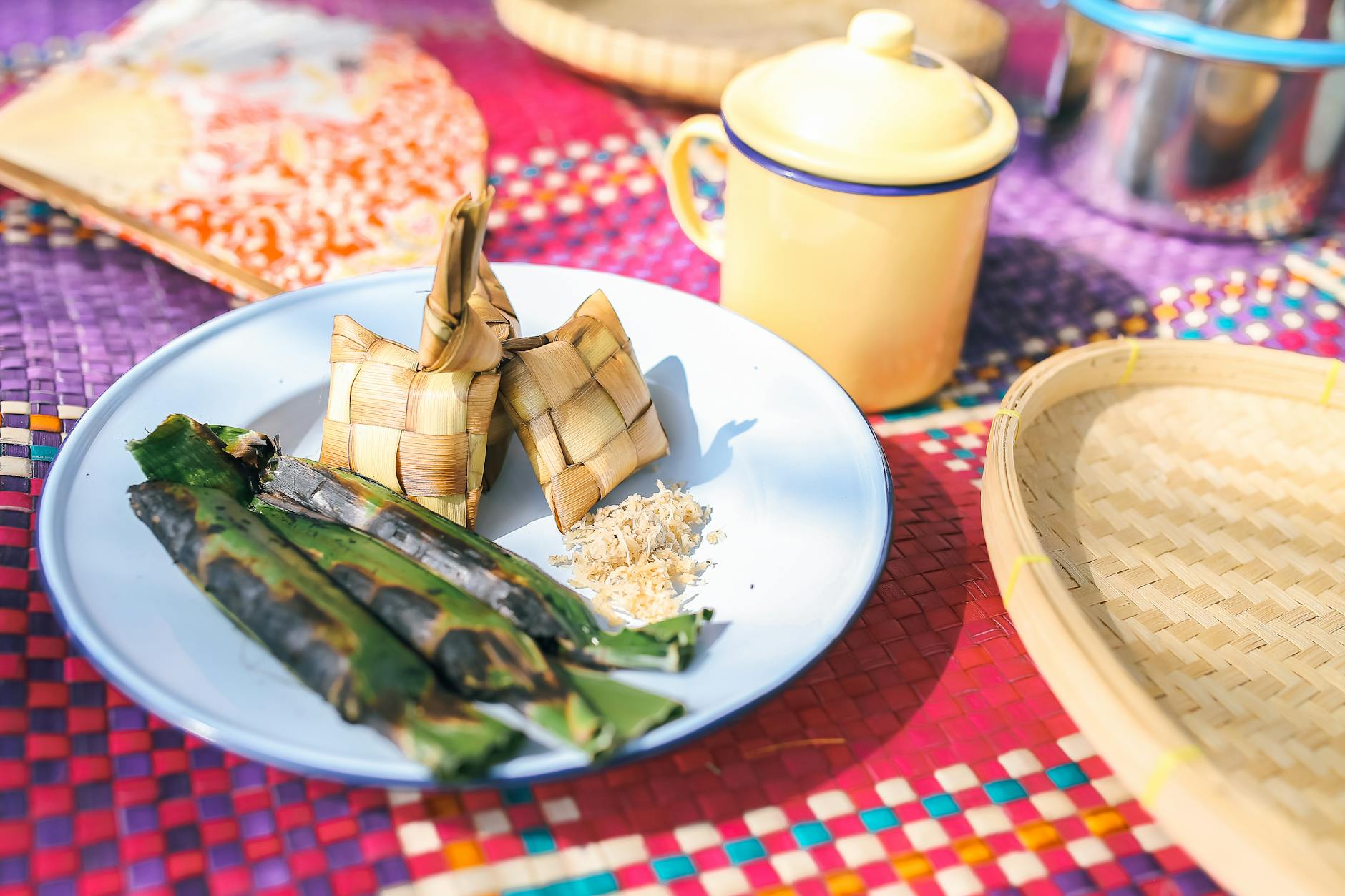
Thirteen states. Three federal territories. A peninsula that ends at the equator, two more territories across the South China Sea on the island of Borneo. Malaysia’s geography alone is enough to ensure that no two regions cook alike. Add centuries of migration — Hokkien traders, Hakka tin miners, Javanese settlers, Tamil rubber tappers, Peranakan merchants who married local women and never left — and what you get is one of the most layered food cultures on earth.
This isn’t a list of dishes to photograph. It’s a map of a country told through what people eat, cooked the way it’s always been cooked, in the places where it actually tastes right. The must try malaysian food changes depending on which state you’re standing in. That’s the point.
The North: Penang, Kedah, and Perlis
Penang: The Island That Set the Standard
Every serious conversation about Malaysian food starts in Penang, and for good reason. The island sits at the northern end of the Strait of Malacca, where spice trade routes once converged. The Chinese who settled here — mostly Hokkien speakers — didn’t abandon their food traditions. They layered them onto what was already here: tamarind from the south, dried shrimp paste from the coast, lemongrass from the jungle edge. What emerged was a cuisine so distinctive that people fly specifically to eat it.
The hawker scene runs day and night. Georgetown’s historic streets hold food courts that have operated in the same location for generations — Gurney Drive along the seafront, New World Park in a colonial compound, Red Garden drawing the late-night crowd. The dishes you need to know:
Char kway teow. Flat rice noodles, wok-fried over charcoal or gas at maximum heat with cockles, egg, bean sprouts, and lap cheong — Chinese sausage. The wok hei, that smoky breath of a properly seasoned wok at full flame, is everything. A good plate costs RM7–12. A great plate costs the same but takes twenty minutes to arrive because the hawker does one wok at a time and doesn’t rush.
Asam laksa. CNN ranked it 7th on their list of the world’s 50 best foods, and they weren’t wrong. This is sour, funky, herbaceous fish broth — poached mackerel flaked back in, thick rice noodles, raw onion rings, pineapple chunks, torch ginger flower, shrimp paste dissolved at the table. Nothing about it is delicate. Everything about it is correct.
Hokkien mee. Not the KL version — this is prawn bisque taken to its logical extreme. The broth is deep orange, built from roasted prawn shells and pork ribs, sometimes dark from pork lard-fried prawn paste. Yellow noodles and rice vermicelli go in together with prawns, pork slices, and hard-boiled egg. The stock is what you’re paying for.
Nasi kandar. The original Malaysian mamak food — rice piled with curries, proteins, and vegetables that have been cooking since morning. Three names matter in Penang: Line Clear on Penang Road (queue down the alley, eat standing at 2am), Nasi Kandar Beratur near Masjid Kapitan Keling (beratur means “queue”), and Hameediyah on Campbell Street, the oldest nasi kandar shop in Malaysia, open since 1907. Expect RM15–25 depending on what you pile on.
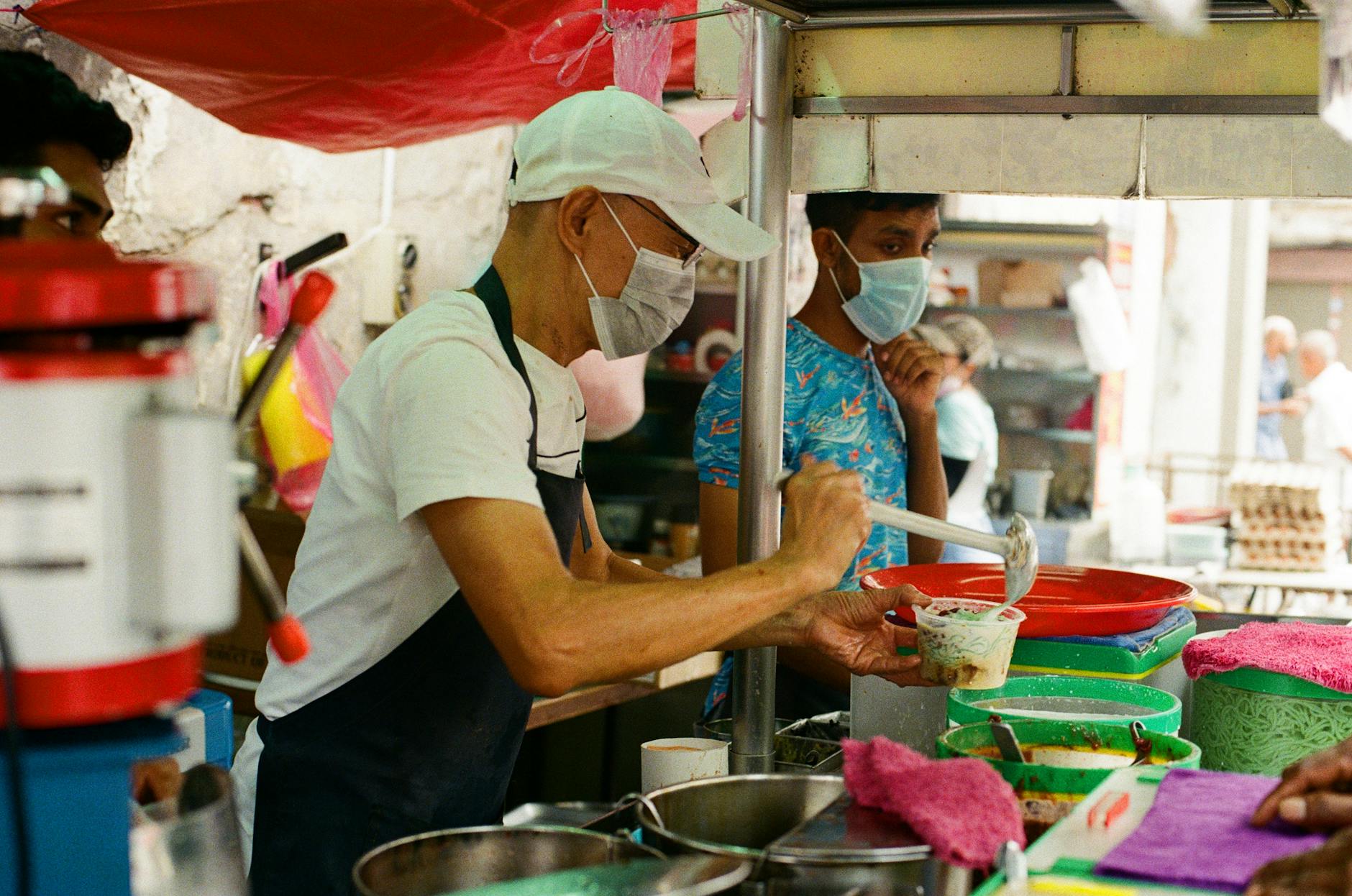
Beyond those flagship dishes: oh chien (oyster omelette with starchy potato flour batter, fried until the edges crisp), rojak (fruit and vegetable salad in black shrimp paste dressing), curry mee (coconut milk and dried shrimp broth, neither fully curry nor laksa, entirely its own thing). For dessert, the cendol stall on Penang Road has been scooping shaved ice over palm sugar syrup and green rice flour jelly for decades. Get in line.
The full penang food guide covers stall addresses and opening hours in detail — worth reading before you land.
Kedah: Where Rice Grows and Coconut Runs the Kitchen
Cross the bridge north of Penang into Kedah and the food shifts. This is the rice bowl of Malaysia — flat paddy fields rolling toward the Thai border, a Malay-majority state where the flavours turn creamier and the coconut milk goes in heavier than in Penang.
Laksa Kedah is the local answer to Penang’s asam laksa. Where Penang goes sour and tamarind-sharp, Kedah adds coconut milk to the fish broth, pulling it toward something gentler and rounder. The fish is still the base — usually a white-fleshed river or sea fish, poached and flaked — but the result is a laksa you can drink without bracing yourself. It comes with the standard garnishes: raw vegetables, torch ginger flower, fried shallots.
Gulai nangka uses young jackfruit, which is a vegetable in this context — chunks of the pale, fibrous fruit stewed in spiced coconut gravy until they absorb the turmeric and the galangal. The texture lands somewhere between braised meat and artichoke heart. It’s eaten as a side dish with rice, often alongside fried fish or sambal.
Nasi lemak kuning is the Kedah variation on Malaysia’s national breakfast. Instead of white coconut rice, the rice is cooked with turmeric, turning it a warm gold. The accompaniments are similar to standard nasi lemak — fried anchovies, roasted peanuts, hard-boiled egg, sambal — but the turmeric-stained rice adds a faint earthiness that the white version doesn’t have.
Perlis: Small State, Strong Mango
Perlis is Malaysia’s smallest state — a thin strip of land tucked against the Thai border north of Kedah. Its food culture overlaps with Kedah, but Perlis has one seasonal obsession that draws visitors from across the country.
Harum manis mango. Between March and June, roadside stalls pile up with these mangoes — yellow-green skinned, intensely sweet, with almost no fibrous texture. The name means “fragrant sweet,” which undersells it. Locals eat them sliced and plain, with no chilli or salt required. If you’re in northern Malaysia during mango season, buy at least three.
Ikan bakar — grilled fish — is also a Perlis staple, cooked over charcoal with spice pastes rubbed into the flesh before it goes over the flame. Simple preparation, good local fish, proper char on the outside. The best versions come from small operations near the coast where the fish was swimming that morning.
The East Coast: Kelantan and Terengganu
Kelantan: Blue Rice and a Different Kind of Malay Food
Cross the mountain range that divides the peninsula and you’re in a different world. Kelantan, on the northeast coast, has been relatively isolated from the west coast for most of its history. The food here reflects that: it’s distinctly Malay, less influenced by Chinese or Indian cooking than the west coast states, and more connected to the culinary traditions of southern Thailand just across the border.
Nasi kerabu is Kelantan’s most recognisable dish and one of the most visually arresting things you’ll eat in Malaysia. The rice is blue — dyed with butterfly pea flower extract, which turns the water a deep indigo. It’s served with raw and lightly blanched herbs, fish crackers, salted egg, and a coconut-based sauce. The blue fades a little as it sits but the flavour doesn’t depend on the colour. It’s aromatic, herbaceous, and unlike any nasi you’ll find on the west coast.
Ayam percik is grilled chicken in the fullest sense — the bird is marinated in coconut milk and spices, then cooked slowly over charcoal while being basted repeatedly with that same marinade until the outside lacquers into something caramelised and fragrant. It’s sold from roadside stalls and night markets throughout Kelantan and Terengganu. The spice paste varies by cook but usually involves galangal, lemongrass, coriander, and fresh turmeric.
Nasi dagang is breakfast food in Kelantan — glutinous and regular rice cooked together with fenugreek seeds and coconut milk, served with tuna curry. The curry is thick and dark, the fish braised until it’s almost falling apart. You eat it on a banana leaf, sometimes with pickled vegetables on the side. It’s heavy for a morning meal, which is exactly right if you’re heading out to fish or farm.
Laksam is harder to find outside Kelantan but worth seeking out: thick rolled rice noodles served in a fish and coconut milk gravy. The noodles are soft and wide, almost like pasta sheets rolled into cylinders. The gravy is white, mild, and intensely savoury. You tear the noodles apart in the bowl and eat them with raw cucumber, bean sprouts, and sambal on the side.
One condiment defines east coast Malay cooking: budu. It’s fermented anchovy sauce — dark, pungent, and salty in a way that’s more complex than fish sauce. Kelantanese add it to rice, dip vegetables in it, use it as a seasoning throughout a meal. It’s an acquired taste that takes about one meal to acquire.
Terengganu: Coastal Cooking and Grilled Fish
Terengganu sits between Kelantan and Pahang on the east coast, facing the South China Sea. The fishing industry shapes the food: fresh seafood is ubiquitous, preserved fish features in many dishes, and the cooking shows a lightness that makes sense when you consider how much time Terengganu people historically spent near the water.
Keropok lekor is the snack that defines Terengganu. It’s a fish sausage — minced fish mixed with sago flour, formed into thick cylinders, boiled first, then fried to order. The outside crisps up while the inside stays soft and chewy. It’s eaten with chilli sauce from a bottle, standing at a roadside stall, which is exactly how it’s meant to be eaten. A portion runs RM2–4.
Terengganu’s version of nasi dagang differs from Kelantan’s — here it uses a red rice variety, which gives it a nuttier flavour and chewier texture. The tuna curry accompaniment is similar but often spicier.
Sata is minced fish mixed with spices and coconut, packed into banana leaf parcels, and grilled over charcoal until the outside leaf chars and the fish steams inside. It’s eaten by peeling back the leaf and eating the cooked fish directly, sometimes alongside rice. Every stall has its own spice ratio.
Otak-otak in Terengganu takes a similar form to sata — spiced fish paste in banana leaf, grilled — but the paste is finer and creamier, closer to the Johor and Melaka versions you’ll encounter further south.
The South: Johor and Melaka
Johor: The State That Uses Spaghetti
Johor’s laksa is famous enough that it generates genuine arguments. Laksa Johor uses spaghetti instead of rice noodles — a deliberate choice, not a substitution — and serves it in a thick, rich fish-based gravy that has more in common with a Malay gulai than with the broths of Penang or Kelantan. The story is that Johor’s royal cooks adapted the dish to use pasta brought by European traders. Whether or not that’s true, the result works.
You eat laksa Johor with raw herbs piled on top: torch ginger flower, daun kesum, bean sprouts. The spaghetti absorbs the gravy differently than rice noodles would — holding more sauce, getting heavier in the bowl. It’s a Saturday lunch dish more than a quick snack, eaten slowly.
Muar, a town in northern Johor, has its own culinary identity. Mee bandung Muar is yellow noodles in an orange-red prawn broth thickened with egg — sweeter and richer than most Malaysian noodle soups, with a depth that comes from dried prawns and shrimp paste. Otak-otak Muar is considered the best version in Malaysia — the fish paste is finer, the coconut milk richer, the chilli more fragrant than most others you’ll try.
Johor’s nasi lemak halba adds fenugreek seeds to the coconut rice, giving it a slightly bitter, herby note. It’s not for everyone on first encounter, but it’s more interesting than plain nasi lemak once you’re used to it.
Melaka: Where History Cooked Something New
Melaka was the most important port in Southeast Asia in the 15th century. Chinese merchants came, settled, married local Malay women, and their descendants — the Peranakan, also called Baba-Nyonya — developed a cuisine that drew from both traditions. Five centuries later, that food is still being cooked in the same city, and it’s extraordinary by any measure.
Chicken rice balls are Melaka’s most photographed dish: Hainanese-style poached chicken, served not with loose rice but with compact spheres of rice cooked in chicken broth, rolled by hand. The eating is the same — tear a rice ball apart, eat it with chicken and chilli ginger sauce — but the visual is distinctive and the texture is different from regular chicken rice. Jonker Street is lined with competing restaurants all claiming the original.
Satay celup is Melaka’s communal dining ritual. You sit around a pot of simmering peanut sauce and cook your own skewers — prawns, fish balls, tofu, beef, offal, quail eggs. The sauce is thick and sweet, and it gets more concentrated as the evening goes on. Pick your skewers from the fridge, cook them until done, eat while hot. Bills are counted by the number of sticks at the end.
For Nyonya food specifically, two restaurants have held the standard for years: Amy Heritage Nyonya Cuisine on Jalan Taman Melaka Raya and Nancy’s Kitchen on Jalan KL 3/8. Both do proper ayam buah keluak (chicken in black nut gravy — the nut itself is toxic when raw, rendered safe only through prolonged fermentation and cooking), babi pongteh (pork braised in fermented soy bean paste), and Nyonya laksa in coconut milk broth. Prices run RM15–40 per dish.
Melaka’s cendol is another version worth comparing against Penang’s. The local variation uses gula Melaka — palm sugar from Melaka — which has a more complex, almost smoky sweetness than regular palm sugar. It dissolves into the shaved ice differently.
Negeri Sembilan: The Minangkabau Kitchen
Negeri Sembilan means “nine states” — a confederation of territories settled by Minangkabau people from Sumatra, whose culture is matrilineal and whose food uses coconut milk and bird’s eye chilli with a generosity that makes most other Malaysian state cuisines look restrained.
Masak lemak cili padi is the dish that defines this state. The base is coconut milk — full-fat, uncut — with turmeric and bird’s eye chillies, sometimes dozens of them. Whatever goes into the pot — chicken, salted fish, bamboo shoots, tofu — cooks in this yellow, fiery gravy until the oil separates and floats on top, which is the sign the dish is done. It burns, and it’s delicious, and locals eat it for breakfast.
Rendang Negeri Sembilan is the driest rendang in Malaysia. Where Johor and Pahang rendang might leave a little sauce, Negeri Sembilan’s version is cooked until every drop of coconut milk has reduced and the meat has absorbed all the spices. The outside of each piece becomes almost caramelised. You pick at it rather than scoop it.
Lemang is glutinous rice cooked inside bamboo tubes lined with banana leaf, over a wood fire. The process takes hours. The result is rice that has absorbed the faint smoke and the bamboo’s green flavour, with a slightly firmer texture than regular sticky rice. It’s traditional festival food — especially during Hari Raya — but available from roadside stalls year-round in Negeri Sembilan.
Kuala Lumpur and Selangor: Where Everything Converges
KL: The City That Invented Its Own Versions
Kuala Lumpur started as a tin mining settlement at the junction of two rivers, built largely by Hakka Chinese labour in the 1850s. The city grew fast, absorbed migrants from every state and every ethnic community, and developed its own versions of dishes that exist elsewhere — often darker, richer, and more aggressive than the originals.
The kuala lumpur food guide covers the city’s food landscape in depth — neighbourhood by neighbourhood — but a few dishes are specific to KL and worth knowing before you arrive.
KL Hokkien mee is entirely different from Penang’s version. Where Penang makes a prawn bisque, KL takes thick yellow noodles and stir-fries them in dark soy sauce with pork lard, garlic, egg, and whatever protein the hawker has going. The result is black, slightly sticky, with a caramelised soy depth. It’s a late-night dish in KL, eaten after midnight at coffee shops where the wok has been going for hours.
Pan mee (also called chee mee or ban mian depending on who’s making it) is hand-torn or machine-cut wheat noodles in anchovy broth, topped with minced meat, a poached egg, and crispy ikan bilis. It’s comfort food. The soup version is cleaner; the dry version, tossed in dark sauce, is more satisfying. You find it everywhere in KL from morning to midnight.
Kajang satay comes from the town of Kajang, 20 kilometres south of KL. The satay here uses fatter, shorter skewers and a charcoal grill that runs hotter than average. What makes Kajang satay specific is the range: beyond the standard chicken and beef, some stalls do clam satay, venison, and rabbit. The peanut sauce is thicker and less sweet than the Malay-style versions common further north.
Klang: The Capital of Bak Kut Teh
Klang, in Selangor, is the home of bak kut teh — pork rib soup that exists in two competing styles. The white, peppery Hokkien version dominant in Singapore, and the dark, herbal Teochew version that Klang does best. Klang’s bak kut teh is a black broth, heavy with Chinese medicinal herbs — dong quai, Solomon’s seal root, wolfberries, cinnamon, star anise — with pork ribs that have been simmering since early morning until they’re falling off the bone. It comes with white rice and youtiao (fried dough sticks) for dipping. Breakfast, most commonly, starting at 7am. Expect RM18–30 per person.
Perak and Ipoh: The City That Got Mineral Water Right
Ipoh is the kind of city that people who know Malaysia love quietly — unhurried, walkable old town, colonial architecture, and a food culture that punches far above its size. The city sits in the Kinta Valley, surrounded by limestone hills. The groundwater running through those hills is what Ipoh people credit for why their noodles and tofu taste different from the same dishes cooked with regular water.
Ipoh hor fun is flat rice noodles — silky, almost transparent — served in a clear chicken or prawn broth or in a gravy with seafood. The noodles themselves, made with local water, have a slippery softness that people drive from KL to eat. Ipoh hor fun with poached prawns and bean sprouts in clear broth is the dish most visitors order first.
Bean sprout chicken is Ipoh’s other signature. Poached white-cut chicken, tender and pale, with a side plate of plump, crunchy bean sprouts — also grown with Ipoh water, also noticeably better than versions from elsewhere. Two restaurants have competed for dominance for decades: Lou Wong on Jalan Yau Tet Shin and Restoran Tauge Ayam Ong Kee across the street. Both are worth trying; order chicken, bean sprouts, and a bowl of broth, and decide for yourself.
Ipoh white coffee is not actually white — it’s a slightly lighter shade of brown than regular kopi, made from beans roasted with palm oil margarine instead of sugar, and pulled into evaporated milk. The flavour is less bitter and more aromatic than standard Malaysian kopi. Sin Yoon Loong on Jalan Bandar Timah has been serving it since 1937. The queue starts forming before 8am.
Ipoh’s dim sum culture is seriously underrated. The morning dim sum scene here is extensive, old-school, and unhurried in a way that KL’s busier restaurants aren’t. Cart service still operates at several establishments. Eat a full morning meal.
Tau fu fah — silken tofu pudding — from Funny Mountain in Ipoh has been in business for over 60 years. The tofu is set so softly it trembles when the bowl moves. It’s served warm with palm sugar syrup or ginger syrup, and costs almost nothing. A RM2–3 bowl stops most people in their tracks.
Inland Perak also produces rendang tok — a dry rendang associated with the area around Parit, cooked for much longer than most rendang, until the meat is dark and the exterior almost crunchy. It’s the dry end of the rendang spectrum.

Pahang: Durian Country and Fermented Durian Fish
Pahang is Malaysia’s largest state — most of the interior is the Taman Negara rainforest, one of the oldest in the world. The food is inland Malay cooking: river fish, jungle vegetables, and one intensely regional combination that either wins you over or sends you running.
Gulai tempoyak ikan patin is the dish. Ikan patin is silver catfish, a freshwater fish from Pahang’s rivers with rich, fatty flesh. Tempoyak is fermented durian — durian pulp salted and left to ferment until it becomes pungent, sour, and almost liquid. These two ingredients go into a coconut milk curry together. The result smells alarming to people unaccustomed to durian in its fermented state, and tastes extraordinary once you get past the first spoonful. It’s a dish you have to commit to.
Pahang is also Malaysia’s durian heartland. The district of Raub produces some of the country’s most celebrated varieties, and the June-to-August season draws buyers from across the country. Musang King, with its pale yellow, creamy flesh and bittersweet flavour, gets the most international attention. Black Thorn, with a yellow exterior blush and more complex taste profile, is the obsession of serious durian eaters. Both sell from roadside stalls and dedicated orchards outside Raub. Prices fluctuate dramatically by season and variety — RM30–150 per fruit is a reasonable range for premium grades during peak season.
Sarawak: Across the Sea, Into the Jungle
Kuching and the Coast
Sarawak sits on the northwest coast of Borneo — a flight from KL, a different timezone, and a food culture that has almost nothing in common with peninsular Malaysian cooking. This is the land of wild jungle ferns, bamboo-cooked chicken, and a laksa that the late Anthony Bourdain called “breakfast of the gods.”
Sarawak laksa is the Bourdain dish. The broth is built from sambal belacan, tamarind, coconut milk, and a spice paste that each family and each restaurant guards carefully. It’s richer than asam laksa, more complex than curry laksa, its own category entirely. The bowl comes with fine rice vermicelli, shredded chicken, prawns, omelette strips, fresh lime, and sambal. It’s a morning dish in Kuching, served from around 6am until sold out, which is often before 10am.
Manok pansoh is chicken cooked inside bamboo tubes with lemongrass, ginger flower, and tapioca leaves sealed in — the tube goes over a fire and the chicken steams in its own juices with the aromatic additions. It’s indigenous Dayak cooking, traditionally prepared for festivals, now available at several Kuching restaurants that specialise in Sarawakian food. The flavour is clean, slightly smoky, deeply herbal.
Midin is a wild jungle fern, stir-fried with garlic and belacan. Simple on the surface, but midin has a texture — firm stalk, tender frond, a slight crunch — that cultivated vegetables can’t replicate. You find it at hawker centres and proper restaurants alike. Order it whenever it’s on the menu.
Umai is a Melanau dish — raw fish marinated in lime juice with shallots, ginger, and bird’s eye chilli. It’s essentially Sarawakian ceviche, and the Melanau community around Mukah and Matu has been making it for centuries. The fish used is typically tenggiri (Spanish mackerel) or ikan parang. If you’re on the coast or find it at a restaurant offering Melanau cuisine, don’t skip it.
Kolo mee is Kuching’s daily noodle: egg noodles tossed with lard and a touch of vinegar, topped with minced meat sauce and sliced char siu (Chinese barbecue pork). There’s no broth — this is a dry noodle dish, served with a side of clear soup. The lard gives the noodles a glossiness and a flavour that no vegetable oil substitution replicates. A bowl runs RM5–8.
Sabah: The Northeast Coast of Borneo
Indigenous Flavours and Coastal Bounty
Sabah is ethnically the most diverse state in Malaysia, home to over 30 indigenous groups — the Kadazan-Dusun, Bajau, Murut, and many others — as well as significant Chinese and Malay communities. The food reflects all of this at once: indigenous preservation techniques, coastal seafood, Chinese noodle traditions, and ingredients that don’t appear anywhere else in the country.
Hinava is the Kadazan-Dusun version of ceviche — raw fish, typically tenggiri, marinated in lime juice with grated ginger, bird’s eye chilli, and bambangan seed. Bambangan is a wild fruit related to mango that grows in Borneo’s forests; the seeds are grated into the fish to add a sharp, fermented tang. You won’t find bambangan outside Sabah.
Linopot is a Sabah staple for outdoor eating — rice cooked with various fillings and wrapped in large leaves (usually daun isip or similar broad leaves), tied shut, and eaten unwrapped. It’s portable, stays warm, and the leaves impart a faint vegetal flavour to the rice. Think of it as the Sabah version of nasi lemak bungkus, using local forest leaves.
Pinasakan is braised fish cooked with turmeric, a mild souring agent, and water until the liquid reduces to a glaze. The fish takes on an orange tint from the turmeric and a slightly preserved quality from the souring agent. It’s everyday home cooking in Sabah — simple, practical, deeply flavoured.
Beaufort mee comes from the inland town of Beaufort, where Kadazan-Dusun and Murut communities live. The noodles are stir-fried with pork, cabbage, and a dark soy sauce glaze in a style that shares DNA with KL Hokkien mee but is distinctly its own — drier, with a more pronounced char from the wok.
Ngiu chap is Sabah’s Chinese-influenced beef noodle soup — a full-bull broth operation with multiple cuts of beef and offal served over noodles. The broth is clear and beefy, not spiced like the Vietnamese or Malaysian-Chinese alternatives. You pick your cuts: tendon, tripe, balls, brisket, cheek. It’s a meal that takes some time to eat properly.
Two ingredients specific to Sabah deserve mention. Tuhau is wild ginger that has been pickled — the stalks turn pink, the flavour sharpens to something intensely aromatic and sour. It’s eaten as a condiment or side with rice. Sinalau bakas is smoked wild boar — the meat is seasoned simply and hung over slow wood smoke for hours. Both are indigenous preparations that you won’t find reproduced faithfully outside Sabah.
Nyonya Cuisine: A Thread That Runs Through Multiple States
Nyonya food deserves its own section because it doesn’t belong to a single state. The Peranakan community settled in Penang, Melaka, and Singapore, and each city developed a regional variation. Penang Nyonya food tends toward the sour and spicy — more tamarind, more heat. Melaka Nyonya food is sweeter and richer — more coconut milk, more dark soy.
The core dishes of the Nyonya kitchen:
Ayam buah keluak. The buah keluak nut is the centrepiece of Nyonya cooking — a black nut from the kepayang tree, fermented over months until the flesh inside turns from toxic to edible, dark and intensely flavoured. Chicken is braised with this nut and a complex rempah (spice paste) of galangal, shallots, dried chilli, and candlenut. The nut is cracked at the table; you scoop the black interior onto your rice. It tastes like nothing else — earthy, bitter, complex, utterly addictive.
Cincalok is fermented small shrimp — tiny pink organisms packed into jars with salt and left for weeks. The result is pungent and intensely savoury. Nyonya cooks use it sparingly as a condiment or seasoning, and it shows up in several classic preparations. A little goes a long way.
Pie tee (top hat) are thin crispy pastry shells filled with a mixture of cooked turnip, carrot, and shrimp — Nyonya finger food at its most refined. The shells are deep-fried individually; the filling is warm and savoury; you eat them in one bite. They appear at Nyonya restaurants as a starter and at festivals as party food.
Nyonya sweets are their own world: ondeh-ondeh are glutinous rice balls stuffed with palm sugar and rolled in fresh coconut — they burst in your mouth when you bite through. Ang ku kueh are red tortoise-shaped cakes filled with green bean or peanut paste, wrapped in glutinous rice dough. Kuih lapis is a steamed layer cake, each coloured layer revealing the one below when you peel them apart. These are made with care and eaten with ceremony, and the best versions come from elderly Nyonya home bakers rather than commercial operations.
Planning a Food Trip: How to Move Through the Country
Two weeks is enough time to cover the major food regions of Malaysia without feeling like you’re eating at highway speed. The most efficient route for food travel runs Penang to Ipoh to Melaka to KL, with a side trip to the east coast and a separate journey to Kuching. Here’s how that might look:
Days 1–3: Penang. Arrive, eat hawker food morning to night. Focus your first day on Georgetown’s historic core — Chulia Street, Campbell Street, Penang Road. Day two, move to the outer areas and hit nasi kandar for lunch. Day three, Gurney Drive night market. Don’t try to be systematic; just walk until you smell something good.
Days 4–5: Ipoh. Train or bus south, two hours. Spend your first morning doing dim sum and white coffee. Afternoon, bean sprout chicken lunch, tau fu fah mid-afternoon, hor fun dinner. Second day, explore the old town and eat whatever’s local at the morning market.
Day 6: Melaka. Stop en route from Ipoh or KL. Chicken rice balls for lunch, satay celup for dinner, cendol in between. Book a table at Amy Heritage or Nancy’s Kitchen if you want the full Nyonya experience.
Days 7–9: Kuala Lumpur. Three days in KL is barely enough. Brickfields for Indian food (KL has some of the best banana leaf rice outside India), Chinatown for KL Hokkien mee and dim sum, Klang day trip for bak kut teh, any good kopitiam for pan mee and kopi. The broader malaysian street food scene across KL’s night markets and hawker centres deserves at least one full dedicated evening.
Days 10–11: East Coast. Fly or bus to Kota Bharu (Kelantan) or Kuala Terengganu. One day in each is enough for a first visit — nasi kerabu and ayam percik in Kelantan, keropok lekor and sata in Terengganu. Stay near the night markets.
Days 12–14: Kuching, Sarawak. Fly from KL (about 90 minutes). Sarawak laksa the morning you arrive, then kolo mee, then find a restaurant doing manok pansoh and midin for dinner. Day two, day trip toward the coast for umai. Use your last day to eat through Kuching’s central market area and pick up pansoh ingredients to understand what goes into the dishes you’ve been eating.
This itinerary skips Sabah, Pahang, Negeri Sembilan, Kedah, and Perlis — each of which deserves its own trip. Malaysia is not a country you finish eating in two weeks. Most people who come for the food end up returning.
Practical Notes for Eating Well in Malaysia
When to Eat What
Most hawker food has peak hours. Breakfast and morning dishes — dim sum, nasi lemak, Sarawak laksa, bak kut teh — are typically done by 10 or 11am. Lunch hawkers often run from 11am to 2pm and close when the food runs out. Night market food starts at dusk, around 6pm, and the best options are gone by 9pm. Supper culture exists in Chinese-majority areas: KL Hokkien mee, char kway teow, and late-night mamak nasi kandar run until 2am or beyond.
Halal and Non-Halal
Malaysia’s food scene divides along halal lines that are worth understanding. Malay and mamak (Indian Muslim) food is halal by default. Chinese food often uses pork and is not halal. Nyonya food traditionally uses pork and lard. Most hawker centres and food courts have a mix — halal stalls next to non-halal stalls, each clearly identifiable. If you eat pork, you’ll have access to a different range of dishes than someone who doesn’t. Plan accordingly.
What to Budget
Hawker and kopitiam food is extremely affordable. A full plate at a hawker centre — noodle dish or rice with sides — runs RM6–15, sometimes less in smaller towns. Sit-down restaurant meals in Penang, Ipoh, or Kuching might run RM20–50 per person without drinks. Nyonya restaurants and fine dining push toward RM80–150. You can eat incredibly well in Malaysia on RM50–80 per day per person if you’re sticking mostly to hawker food. The food doesn’t get significantly better when you spend more — it just gets more formal.
Finding the Best Stalls
Queue length is a reliable signal. A hawker stall with 15 people waiting at 8am is almost certainly worth the wait. Stalls that have been in the same location for 20 or 40 years are usually there because the food is good, not because of marketing. Ask locals at your hotel or guesthouse where they eat — not where they send tourists, but where they go on a Tuesday morning when they’re not thinking about it. That’s usually where you want to be.
The food varies by region in ways no single article can fully cover. What you’ll discover when you move between states is that the differences aren’t subtle — a bowl of laksa in Penang and a bowl in Sarawak and a bowl in Johor are three entirely different meals that happen to share a name. That variation is the point. Malaysia’s regional food culture isn’t a unified cuisine with local variations. It’s a collection of distinct culinary traditions that happen to coexist in one country, and eating your way through them, state by state, is one of the more rewarding things you can do with two weeks and a serious appetite.
Start wherever you land. Eat everything. Come back.