50 Must-Try Malaysian Dishes: The Complete Food Bucket List (2026)
Discover 50 must-try Malaysian dishes from nasi lemak and rendang to laksa and cendol. The complete food bucket list for visitors to Malaysia.
Fifty dishes. That sounds like a lot until you land in Kuala Lumpur and realize you could eat a different breakfast every day for two weeks without repeating yourself. Malaysia sits at the intersection of Chinese, Malay, Indian, and Peranakan cooking traditions, and those four streams don’t just coexist — they borrow from each other, argue with each other, and occasionally produce something that belongs to none of them. The result is one of the world’s most compelling food cultures, and it happens to be cheap. Most of what’s on this list will cost you between RM5 and RM15 at a hawker stall.
This is the bucket list: fifty dishes organised by category, with enough detail to help you order confidently and know what you’re tasting. For the full hawker-stall experience — where to sit, how the ordering works, which cities to base yourself in — read our guide to malaysian street food. For a city-by-city breakdown, the kuala lumpur food guide and the penang food guide cover the two main eating destinations in detail.
Rice Dishes
1. Nasi Lemak
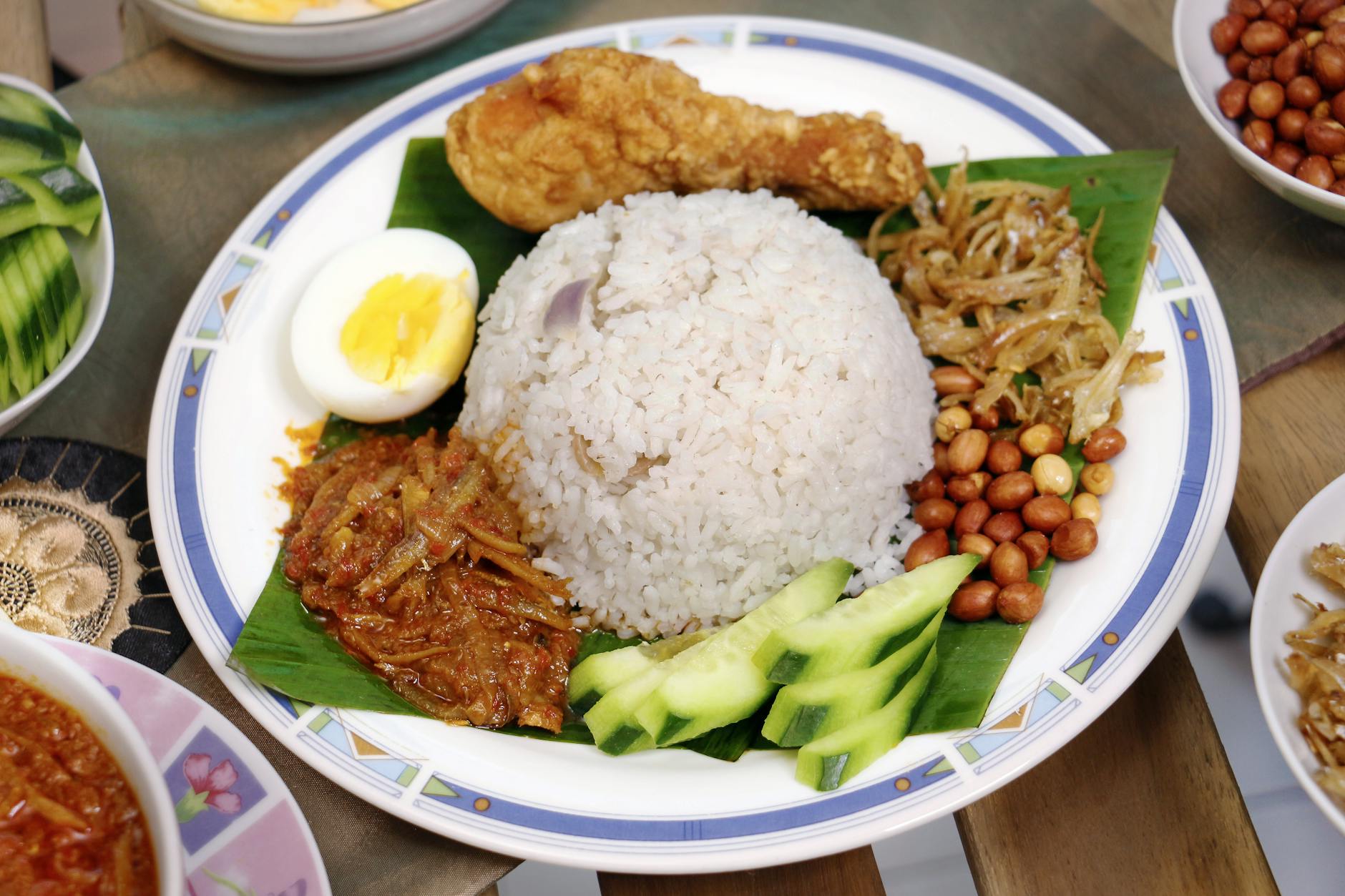
Start here. Nasi lemak is Malaysia’s national dish — rice cooked in coconut milk and pandan leaf, served with spicy sambal, crispy ikan bilis anchovies, roasted peanuts, a hard-boiled or fried egg, and sliced cucumber. The combination sounds modest. It isn’t. The creamy rice picks up spice from the sambal, salt from the anchovies, and crunch from the peanuts, and the whole thing is in balance in a way that took generations to arrive at. You’ll find it at roadside stalls wrapped in banana leaf for RM2–4 at breakfast, and at restaurants built around it for dinner with rendang and fried chicken. Our dedicated nasi lemak guide covers every variation.
2. Nasi Goreng
Malaysian fried rice is wok-fried at high heat with sweet soy sauce, chili paste, garlic, shallots, and shrimp paste until the rice turns deep, caramelized, and smoky — the quality called wok hei. Served with a fried egg, sliced cucumber, and prawn crackers, it’s a complete meal in one plate. Nasi goreng kampung adds anchovies and kangkung water spinach for a more intense, grassier flavour. Budget RM6–10 at hawker stalls.
3. Nasi Kandar
Nasi kandar started in Penang’s Tamil Muslim community — steamed rice loaded with multiple curries ladled over it. The magic is in the mixing: fried chicken, fish curry, squid, and vegetable dishes create new flavour combinations with every forkful. The name comes from the kandar pole that early vendors used to carry pots through George Town’s streets. Today the best versions are at round-the-clock restaurants where the curry pots never cool.
4. Nasi Kerabu
The blue rice of Kelantan and Terengganu. The colour comes from butterfly pea flowers soaked in the cooking water — vivid blue that mutes to pale violet on the plate. It arrives with fresh herbs, raw vegetables, keropok, salted egg, and either ayam percik grilled chicken or fried fish. This is east coast Malay cooking at its most distinctive, and if you’re travelling up that way, don’t skip it.
5. Chicken Rice
Hainanese chicken rice — nasi ayam — is poached chicken alongside fragrant rice cooked in chicken stock and garlic, served with three dipping sauces: fresh chili, thick soy, and ginger paste. The chicken should be silky enough to pull apart with chopsticks. Roasted versions exist too, with a golden, slightly lacquered skin. This is daily comfort food for a huge portion of the country.
6. Nasi Briyani
Malaysian briyani reflects the country’s Indian Muslim heritage: long-grain basmati cooked with saffron, cardamom, cinnamon, cloves, and star anise, layered with tender lamb, chicken, or fish. Every grain separate, every mouthful aromatic. Served with raita, achar, and papadum. It’s a celebratory dish traditionally, though you’ll find it daily at Indian Muslim restaurants throughout the country.
Noodle Dishes
7. Char Kway Teow
Flat rice noodles, high heat, dark soy, prawns, cockles, Chinese sausage, bean sprouts, chives — that’s char kway teow on paper. In practice, it’s one of Malaysia’s most technically demanding hawker dishes because the difference between good and transcendent is entirely in the wok hei: that scorching, slightly smoky breath that only happens when a skilled cook works over an intense charcoal flame. Penang’s charcoal-fired versions are the benchmark. Expect to pay RM8–12 and potentially queue.
8. Laksa
Malaysia has several laksa styles and they’re genuinely different dishes. Curry laksa is a coconut-rich soup with thick rice noodles, tofu puffs, shrimp, chicken, and bean sprouts, served with a sambal drizzle. Penang asam laksa is the sharp, fish-based one — tamarind, lemongrass, torch ginger flower, shredded mackerel over thin vermicelli. Sarawak laksa blends coconut milk with sambal belacan and tamarind in a broth that Anthony Bourdain once called the breakfast of the gods. Order one style per city and notice how different they actually are.
9. Hokkien Mee
Two cities, two entirely different dishes under the same name. KL Hokkien mee is thick yellow noodles braised in a dark soy sauce with prawns, pork, squid, and cabbage — heavy, rich, and deeply savoury. Penang Hokkien mee is a prawn noodle soup, the broth built from hours of simmering prawn shells and pork bones, served with yellow noodles and rice vermicelli. Malaysians have strong opinions about which is superior. Try both and form your own.
10. Wonton Mee
Thin, springy egg noodles tossed in dark soy and oyster sauce, topped with char siu pork slices and served with wontons — either in a clear broth on the side or deep-fried on top. The noodles should have bite. The char siu should be tender enough to cut with chopsticks. At a great wonton mee stall, the sauce-to-noodle ratio is a point of precision. Budget RM7–11.
11. Pan Mee
A Hakka dish featuring hand-torn or knife-cut flour noodles in an anchovy broth, topped with minced pork, ikan bilis, leafy greens, and a poached egg. The torn noodles are slightly irregular and chewy — a texture that no machine-cut noodle quite replicates. Available in soup and dry versions; the dry version, tossed in sauce and topped with crispy anchovies, is excellent. A KL staple, RM8–12.
12. Mee Goreng Mamak
Indian Muslim hawker culture at its best. Yellow noodles fried with tomato sauce, chili paste, soy, egg, tofu, potato, and vegetables, coming out slightly reddish and sweet-spicy in a way that’s unlike any Chinese-style fried noodle. It’s a 24-hour mamak staple and one of the great late-night options in KL and beyond. Order it with a teh tarik and you’re set.
13. Curry Mee
A coconut curry noodle soup popular across Penang and KL. Spicy coconut curry broth with yellow noodles and vermicelli, topped with tofu puffs, cockles, shrimp, cuttlefish, bean sprouts, and mint. The sambal served alongside adds more heat if you want it. Rich and complex — not a light lunch.
Flatbreads and Snacks
14. Roti Canai
The flaky, buttery flatbread that anchors breakfast at every mamak stall in Malaysia. Indian Muslim immigrants brought it; Malaysian cooks perfected it. The dough is stretched near-translucent thin, folded repeatedly to build layers, then fried on a griddle until the outside crisps and the inside stays soft and yielding. Served with dhal curry, fish curry, or chicken curry for dipping. Roti telur adds egg; roti pisang adds banana; roti tissue is an absurdly crispy cone drizzled with condensed milk. At RM1.50–3 a piece, it’s the best value meal in the country.
15. Murtabak
A stuffed pan-fried flatbread: dough stretched thin on a hot griddle, filled with minced chicken or beef, onions, and eggs, folded and fried until golden and crispy outside, soft and savoury inside. Served with pickled onions and curry sauce. Mamak stalls and night markets. A bigger, more substantial cousin of roti canai.
16. Satay
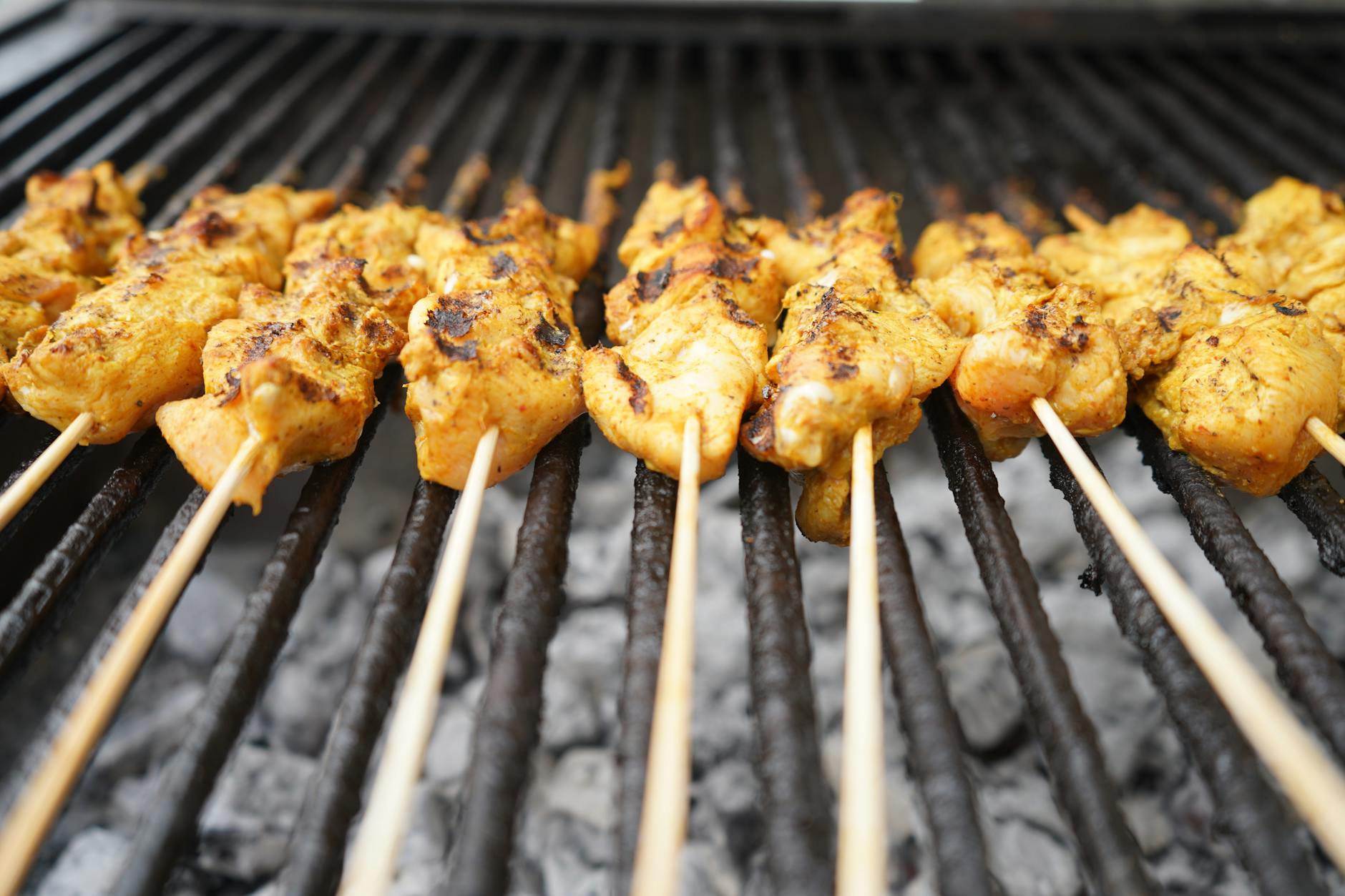
Skewered chicken or beef, marinated in turmeric, lemongrass, galangal, and spices, grilled over charcoal, served with a thick peanut sauce made from ground peanuts, coconut milk, lemongrass, and chili. The sauce is what elevates it — slightly sweet, creamy, with heat underneath. Served with ketupat rice cakes, cucumber, and raw onion. Kajang, about 30 minutes from KL, is considered the satay capital. Ten sticks for RM10–15 at a dedicated satay stall.
17. Popiah
Fresh spring rolls: cooked jicama, carrots, tofu, bean sprouts, and egg wrapped in a thin crepe-like skin, dressed with sweet sauce and chili paste. Not fried — soft and delicate. The crunch comes from the peanuts and bean sprouts. A Penang and KL classic that rewards the stalls with the longest queues for assembly.
18. Apam Balik
A crispy turnover pancake filled with crushed peanuts, sugar, and creamy corn. The thin version shatters when you break it; the thick version is pillowy and soft. Both are right. You’ll find vendors at almost every pasar malam and most morning markets. A perfect RM2–4 afternoon snack.
Curries and Stews
19. Beef Rendang
Beef simmered for hours in a paste of lemongrass, galangal, turmeric, ginger, chilies, and coconut milk until virtually all the liquid is gone and the meat is tender, dark, and concentrated with spice. A dry curry, not a soupy one. The caramelized crust on each piece is where most of the flavour lives. Rendang originated with the Minangkabau people of Negeri Sembilan and is the traditional dish for Hari Raya Aidilfitri. At a proper nasi lemak stall or warung, a portion of beef rendang over rice runs RM12–18.
20. Ayam Percik
East coast grilled chicken from Kelantan and Terengganu. The bird is marinated in a paste of turmeric, chili, and coconut milk, then grilled over charcoal while being repeatedly basted with more coconut sauce. What you get is chicken with a smoky, charred exterior and moist, spice-saturated flesh — the coconut basting adding richness and subtle sweetness. Order it with nasi kerabu for the full east coast meal.
21. Gulai
The everyday Malay curry. Thinner and more soupy than rendang, built on a coconut milk base enriched with a rempah paste of chili, turmeric, lemongrass, and galangal. Fish gulai, chicken gulai, and prawn gulai are the most common. The curry is ladled over steamed rice and eaten at lunch in homes and warungs across the country.
22. Kambing Curry
Malaysian lamb curry from Indian Muslim tradition: tender lamb slow-cooked in onions, tomatoes, yogurt, and a layered spice blend of cumin, coriander, fennel, and cinnamon. The long cooking time and multiple spice layers create depth that a quick curry can’t replicate. A fixture at mamak restaurants and nasi kandar stalls.
23. Fish Head Curry
A uniquely Malaysian creation: Indian curry technique applied to the Chinese preference for fish head. A large red snapper head simmered in a tangy, spicy curry sauce with okra, eggplant, tomatoes, and tamarind. The cheeks are the most prized part — tender and flavourful from absorbing the complex sauce. Most famously associated with KL and Penang’s Indian restaurants.
Soups and Broths
24. Bak Kut Teh
Pork ribs simmered with garlic, star anise, cinnamon, cloves, and white pepper until the meat falls from the bone. The Klang Valley version is a rich, dark herbal broth; the Penang variant is lighter and more pepper-forward. Traditionally a breakfast dish, served with rice, dough fritters, and Chinese tea. The broth is believed to have restorative properties, and many regulars eat it before a long day’s work.
25. Sup Kambing
Lamb soup at roadside stalls and mamak restaurants: tender pieces of lamb in an aromatic broth of star anise, cinnamon, cardamom, and black pepper. Served with bread or rice, it’s a warming dish particularly popular on cooler evenings and during Ramadan, when it appears at the break-of-fast spread.
26. Tom Yam Malaysia
Malaysia’s version of tom yam diverges from the Thai original by adding evaporated milk, creating a creamy, orangey-red soup that’s simultaneously spicy, sour, and rich. With seafood, mushrooms, and vegetables over rice or noodles. You’ll find it at virtually every mamak restaurant in the country, and it’s a reliable order wherever you are.
Seafood
27. Ikan Bakar
Grilled fish. A whole fish — stingray, mackerel, or pomfret — marinated in a chili and turmeric paste, wrapped in banana leaf, and grilled over charcoal. The leaf keeps the fish moist and adds a green, slightly grassy fragrance. Served with sambal and steamed rice. At coastal hawker centres and seafood restaurants, a full stingray runs RM25–50 depending on size and location.
28. Sambal Udang
Prawns cooked in a fiery sambal paste of chilies, shrimp paste, onions, and tamarind. The sauce is thick, glossy, and intensely flavoured, coating each prawn completely. A staple side dish at nasi lemak stalls and a centrepiece of Malay home cooking. The heat level varies by cook; ask first if you’re chili-sensitive.
29. Butter Prawns
Deep-fried prawns tossed in a buttery sauce with curry leaves, egg floss, and bird’s eye chilies. The egg floss — silken threads of egg fried until crispy — clings to each prawn and adds a savoury, slightly eggy crunch. A Malaysian Chinese restaurant dish, not typically found at hawker stalls. Worth ordering at a seafood dinner.
30. Otak-Otak
A grilled fish cake made from fish paste mixed with coconut milk, chili, turmeric, and herbs, wrapped in banana or palm leaves and grilled over charcoal. The result is a soft, custard-like cake with a smoky exterior and spicy core. The Muar and Johor versions are particularly well regarded. At RM1–2 per piece at night markets, it’s one of the great cheap snacks.
Dim Sum and Chinese Specialties

31. Dim Sum
A breakfast and brunch tradition at Malaysian Chinese restaurants. Steamer baskets arrive at the table — har gow shrimp dumplings, siu mai pork dumplings, char siu bao barbecued pork buns, cheong fun rice noodle rolls, and egg tarts. At good dim sum restaurants in KL and Ipoh, the kitchen starts at 6 AM and the crowd follows. Arrive early for the freshest batches and the widest selection.
32. Yong Tau Foo
A Hakka dish where you select from a display of vegetables, tofu, and bean curd skins stuffed with fish or meat paste, then have them boiled, fried, or served in soup. It’s customisable, relatively light, and interactive in a way that most hawker food isn’t. An excellent option when you want something less heavy.
33. Chili Pan Mee
Hand-torn noodles topped with minced pork, a poached egg, dried anchovies, and a pile of dried chili flakes. You break the egg, mix everything together, and eat. The dried chili flakes bloom into the noodle oil and create a deep, smoky heat. A modern Malaysian Chinese invention that became genuinely cult-level popular in KL. RM10–14 at specialist stalls.
34. Bak Chang
Chinese-style glutinous rice dumplings wrapped in bamboo leaves, filled with pork, mushrooms, chestnuts, and salted egg yolk. Traditionally associated with the Dragon Boat Festival but available year-round at hawker stalls. The Nyonya version is sweet-savoury with candied winter melon and spiced pork — try both to see how the same concept diverges across cultures.
Indian Malaysian Specialties
35. Banana Leaf Rice
Steamed rice on a fresh banana leaf, surrounded by an array of vegetable curries, rasam, pickles, papadum, and your choice of meat or fish. The banana leaf adds a subtle flavour to the rice. It’s traditionally eaten by hand. Restaurants replenish your rice and curries until you fold the leaf toward you to signal you’re done. A communal, generous experience that stands out among Malaysian dining traditions.
36. Thosai
A thin, crispy crepe from fermented rice and lentil batter, served with coconut chutney, sambar, and dhal curry. Masala thosai — filled with spiced potato — is particularly popular. Morning staple at Indian restaurants and mamak stalls. The batter takes overnight fermentation to develop its tang, and at the best stalls you can taste it.
37. Rojak
Indian rojak (also called pasembur) is a street-food salad of deep-fried fritters, tofu, hard-boiled eggs, shrimp fritters, cucumber, and turnip, all drenched in a sweet-spicy peanut sauce. Fruit rojak uses tropical fruits with a shrimp paste dressing. Either version rewards the texture play: crispy fritters and soft egg against a sticky, pungent sauce.
38. Tosai with Curry
The crispy fermented crepes from Indian Muslim restaurants served alongside deeply spiced fish or chicken curry. The paper-thin tosai against the rich curry creates a contrast that’s uniquely Malaysian Indian. Order it for breakfast or supper — mamak restaurants are open when nothing else is.
Nyonya and Peranakan
39. Nyonya Laksa
The Peranakan version of curry laksa: a richer, more complex spice paste that includes candlenuts, galangal, and dried shrimp alongside coconut milk. The Peranakan community of Malacca and Penang developed their cuisine by fusing Chinese and Malay traditions, and this dish shows exactly how successful that fusion was.
40. Pie Tee
Tiny crispy top hat-shaped pastry shells filled with julienned jicama, carrots, shrimp, and egg, topped with sweet sauce and fresh chili. A staple of Nyonya cuisine and a fixture at Peranakan celebrations. The shell-to-filling ratio matters: the shell should crack when you bite through it.
41. Ayam Pongteh
A Nyonya braised chicken dish cooked with fermented soybean paste, potato, and a subtle spice blend. The sauce is dark, slightly sweet, and deeply savoury — the fermented bean paste providing an umami richness that sets it apart from standard Malay curries. Classic Peranakan home cooking, and one of the dishes you’ll remember well after the trip.
Snacks and Street Food
42. Keropok Lekor
Terengganu’s fish cracker: a dough of fish paste and sago flour rolled into long sausage shapes, boiled, sliced, and deep-fried until the outside is golden and crunchy and the inside stays chewy and bouncy. Served with sweet chili sauce. The quintessential east coast snack — RM1–2 per serve at any roadside stall in Terengganu or Kelantan.
43. Pisang Goreng
Fried bananas: ripe bananas in a light rice flour and turmeric batter, deep-fried until golden and crispy. The outside shatters; the inside is hot, sweet, and creamy. Street vendors fry them fresh in large woks and the smell carries. Tea-time standard, RM1–2 for three pieces.
44. Curry Puff
Flaky pastry crimped by hand and deep-fried to golden perfection, filled with curried potato, chicken, and hard-boiled egg. The filling is warm and spiced, the pastry genuinely flaky. Found at every coffee shop and bakery in the country — a standard morning snack alongside white coffee.
45. Epok-Epok
Crescent-shaped deep-fried pastries filled with sardines, onions, and potatoes (or coconut and sugar for sweet versions). The crimped edges seal the filling inside a thin pastry shell. A pasar malam staple and a very good RM1 snack when you’ve just arrived at the market and need to decide where to start.
Desserts and Drinks
46. Cendol
Shaved ice, coconut milk, gula melaka palm sugar syrup, and green pandan-flavoured rice flour jelly strips. Cold, creamy, earthy, and slightly sweet. Penang cendol is particularly famous — stalls draw long queues on hot afternoons, which is to say every afternoon. At RM3–5 a bowl, it’s one of the most satisfying cheap desserts in the world.
47. Ais Kacang
A mountain of shaved ice topped with red beans, sweet corn, grass jelly, attap chee palm seeds, cendol, and often ice cream, drizzled with condensed milk, rose syrup, and palm sugar. Each stall stacks it differently. Eat it fast — it melts quickly and the ice absorbs the syrup as it goes, changing the flavour with every layer.
48. Kuih
Traditional bite-sized cakes and pastries in a spectrum of colours and flavours. Must-try varieties: kuih lapis (layered steamed cake), kuih seri muka (pandan custard over glutinous rice), onde-onde (pandan balls filled with liquid gula melaka), kuih bahulu (golden egg sponge cakes), and kuih talam (two-layered coconut and pandan). Sold at morning markets and traditionally served with afternoon tea. Buy a mixed portion for RM3–5 and work through as many as you can.
49. Teh Tarik
Strong black tea mixed with condensed milk, poured back and forth between two vessels from a height until it froths. The pull aerates the tea and cools it to drinking temperature. At a busy mamak stall the performance is worth watching. Sweet, creamy, and strong — the standard accompaniment to roti canai, and one of those drinks that tastes better in a plastic cup at a pavement table than anywhere else.
50. Durian
The king of fruits and the most divisive food in Malaysia. The pungent aroma is the thing everyone warns you about; the custard-like flesh is the thing nobody prepares you for. Sweet, bitter, and savoury in the same mouthful. Musang King and D24 are the most prized Malaysian varieties. Durian season runs June through August, when roadside stalls and all-you-can-eat durian buffets appear across the country. Try it once. The reaction is always strong either way.
Where to Find the Best Malaysian Food
The short answer: hawker centres, night markets, and mamak stalls. That’s where the specialist vendors operate, many running the same stall for two or three generations. Penang is where most Malaysians point when asked where the food is best. KL’s Jalan Alor concentrates a huge range on one street. Ipoh does white coffee, bean sprout chicken, and silky hor fun better than anywhere else. Malacca is the place for Nyonya cooking. The east coast states — Kelantan, Terengganu — serve distinctive Malay dishes that rarely travel west.
Night markets rotate through neighbourhoods on a weekly schedule; check locally for which pasar malam is on which night. Arrive by 6 PM for the widest selection. Most hawker stalls take only cash. If you have dietary requirements, the phrases halal, vegetarian, and no pork no lard are widely understood. For the full picture of malaysian food by region — how the flavours shift from Peninsular states to Sabah and Sarawak in Borneo — that guide maps it state by state.
Tips for Eating in Malaysia
Eat with your right hand at Malay and Indian restaurants; utensils are always available if you prefer. At Chinese restaurants, chopsticks and a soup spoon are standard. Most hawker food costs RM5–15 per dish, water and drinks ordered separately. The vast majority of stalls are cash only. Arrive at any famous stall slightly before the peak hour — for breakfast stalls, that means before 9 AM; for dinner spots, before 7 PM.
One practical note: Malaysians eat multiple times a day and think nothing of a second breakfast or a late supper at midnight. The best way to get through this list is to eat small, eat often, and share everything with whoever you’re travelling with. A table of four at a hawker centre can work through ten dishes between them without anyone feeling stuffed.