Malaysian Food Guide: The Ultimate Culinary Journey
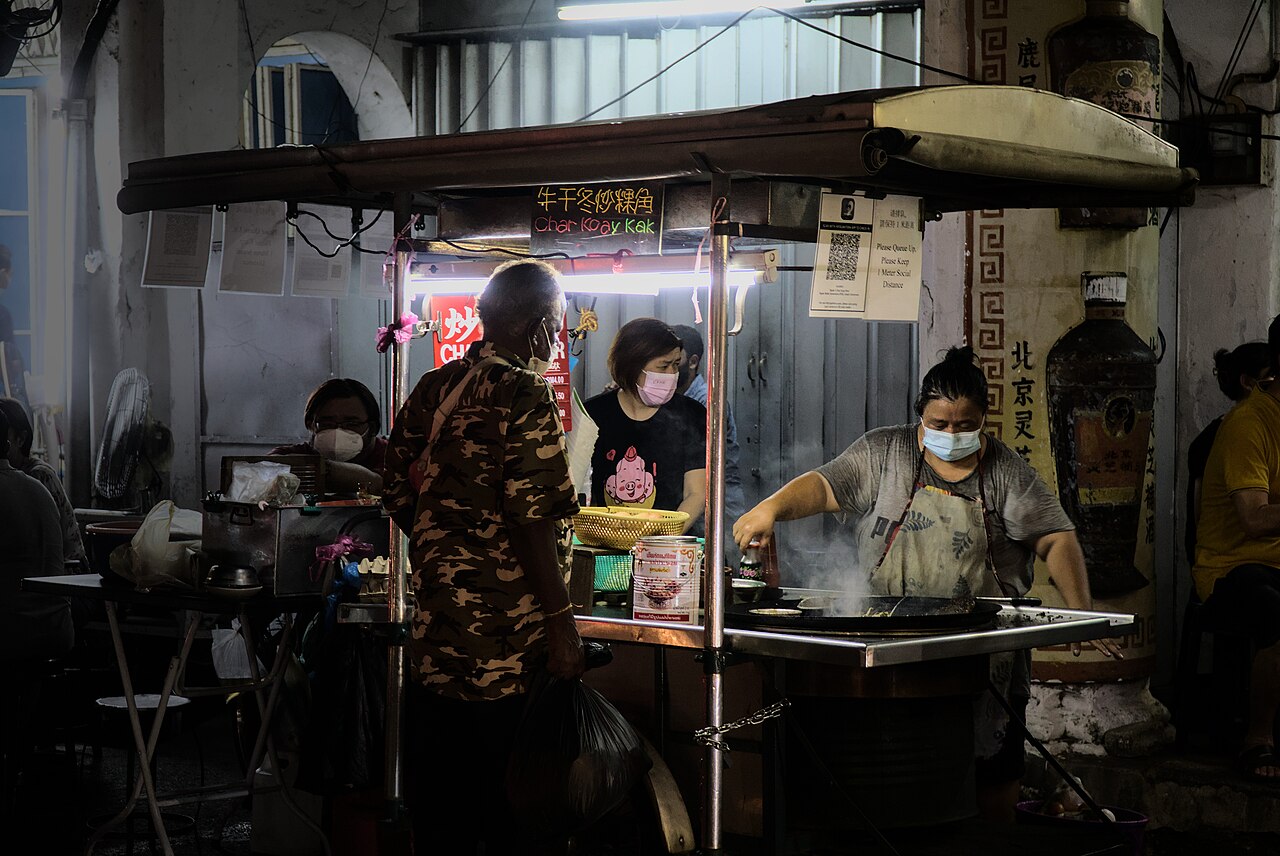
In December 2024, UNESCO added “Breakfast Culture in Malaysia” to its Representative List of the Intangible Cultural Heritage of Humanity. Not a dish. Not a restaurant. The act of eating breakfast — nasi lemak, roti canai, thosai, kaya toast, teh tarik — in a society where three culinary traditions have been sharing tables for six centuries.
That tells you what makes Malaysian food distinctive. It is not one cuisine. It is Malay, Chinese and Indian cooking that spent three hundred years in the same kitchens, plus Peranakan food that emerged from intermarriage between them, plus indigenous Bornean traditions that owe nothing to any of the above. A single hawker centre will serve you Cantonese wok noodles, a Tamil-Muslim flatbread and a Malay coconut rice dish, and all three will be excellent, and the whole meal will cost you less than a sandwich in London.
This guide covers what to eat, where the regional differences lie, what everything costs, how to order without embarrassing yourself, and how to navigate halal, vegetarian and allergy requirements in a country where shrimp paste hides in almost everything.
Prices were verified in July 2026, in ringgit with dollar equivalents at roughly RM4.10 to US$1.
The Four Traditions Behind Malaysian Food
Understanding Malaysian food means understanding which kitchen a dish came out of. Most guides list dishes; the more useful move is to learn the four streams they flow from.
Malay
The foundation is the rempah — a spice paste of shallots, garlic, chilli, lemongrass, galangal, turmeric and candlenut, hand-ground in a granite mortar and then fried at length in oil until the water cooks out and the aroma changes completely. That frying stage, tumis, is the defining act of Malay cooking, and it is why a good rendang tastes nothing like a curry made by stirring powder into liquid.
Coconut milk, tamarind for sourness, and belacan — fermented shrimp paste — for depth. Belacan is the umami engine of Malay food and the reason so many apparently vegetable dishes are not vegetarian.
Chinese
Predominantly Hokkien, Cantonese, Teochew, Hakka and Hainanese, arriving in numbers through the 19th and early 20th centuries. They brought the wok and with it wok hei — the seared, faintly smoky character that a screaming-hot wok imparts and that no home stove can replicate. Char kway teow lives or dies on it.
Chinese Malaysian food adapted locally: more chilli, more belacan, and dishes like bak kut teh that exist nowhere in China in that form.
Indian and mamak
Two distinct streams. South Indian, largely Tamil, gave Malaysia banana leaf rice, thosai and rasam, concentrated in neighbourhoods like Brickfields in Kuala Lumpur. Separately, Tamil Muslims — the mamak community — produced what may be the most distinctively Malaysian food of all: roti canai, teh tarik, mee goreng mamak and nasi kandar, served from stalls that stay open all night and function as the country’s default social space.
Mee goreng mamak is the single best illustration of what Malaysia does: Indian technique, Chinese noodles, Malay chilli, on one plate, invented locally by people who belonged to all three worlds and none of them.
Peranakan or Nyonya
When Chinese traders settled in the Melaka Sultanate in the 15th and 16th centuries and married local Malay and Javanese women, the resulting community — baba for men, nyonya for women — developed a cuisine that is genuinely its own thing rather than a blend. The proof is buah keluak, a mangrove nut that is toxic raw and must be fermented for weeks before use. It appears in neither Chinese nor Malay cooking. Ayam buah keluak is the signature dish.
The two schools differ: Melaka Nyonya cooking is richer and more coconut-heavy, closer to Malay food, while Penang’s is sourer and Thai-inflected, leaning on tamarind, torch ginger and kaffir lime. Eat both and the difference is unmistakable. Penang’s Auntie Gaik Lean’s Old School Eatery holds a Michelin star for Nyonya cooking — a rare star for genuinely home-style food.
The Dishes You Should Actually Eat
Nasi lemak
Rice cooked in coconut milk with pandan leaf, served with sambal, fried anchovies, roasted peanuts, cucumber and egg, traditionally wrapped in banana leaf — which is not decoration, since the leaf holds heat and releases oils that perfume the rice. Malaysia’s national dish in everything but formal decree; there is no statutory designation, but nobody disputes it. The first Western written record appears in Richard Winstedt’s The Circumstances of Malay Life in 1909.
Eat it for breakfast, from a stall, from a banana leaf packet, for around RM3 to RM6. Our nasi lemak guide goes deep on the variations and where to find the best.
Char kway teow
Flat rice noodles fried over ferocious heat with prawns, cockles, Chinese sausage, bean sprouts, chives and egg. Roots in Chaozhou, Guangdong, brought by Teochew and Hokkien immigrants to Penang around the turn of the 20th century, where it began as cheap high-calorie fuel for dockworkers and cockle-gatherers.
The test of a good one is wok hei. RM7 to RM10 in Penang, where it is best. Siam Road Char Koay Teow holds a Michelin Bib Gourmand.
Laksa — which is five different dishes
Ordering “laksa” in Malaysia is like ordering “pasta.” Here is what you will actually get, by region.
| Variant | Broth | Character |
|---|---|---|
| Assam laksa (Penang) | Tamarind and mackerel stock, no coconut milk | Sour, pungent, mint and torch ginger |
| Curry laksa (KL, central) | Curry paste and coconut milk | Rich, creamy, tofu puffs and cockles |
| Sarawak laksa | Sambal belacan, tamarind, galangal, lightly thickened with coconut — no curry | Prawn-forward, herbaceous |
| Johor laksa | Tamarind, dried prawn and curry with coconut | Thick gravy — and served with spaghetti |
| Nyonya laksa | Coconut and Peranakan rempah | Between curry and assam |
Sarawak laksa is worth a detour. Anthony Bourdain called it the “breakfast of the gods” after filming at Choon Hui Café in Kuching, and said the Kuching version was his favourite laksa anywhere.
Hokkien mee — and the trap
This one catches out more visitors than any other dish, and no guide seems to warn about it.
- In Kuala Lumpur, Hokkien mee is dry — thick yellow noodles braised in dark soy with pork, prawns, cabbage and crisp pork lard. No soup.
- In Penang, Hokkien mee is a soup — a spicy prawn-and-pork broth built from prawn heads and shells, with yellow noodles, vermicelli, egg and fried shallots. Locals usually just call it prawn mee.
The Penang dish closest to KL’s version is called Hokkien char, and it is not spicy. Order accordingly.
Roti canai
Flaky layered flatbread, stretched, slapped and griddled, served with dhal and curry. Brought by Tamil Muslim immigrants from Tamil Nadu in the colonial era and popularised first in Penang and Melaka. The etymology is genuinely disputed — either from Chennai, or from the Malay verb meaning to knead or roll out. Both explanations have serious defenders.
RM1.50 to RM2.50, from a mamak, at any hour of the day or night.
Nasi kandar
Steamed rice with an array of curries, the gravies deliberately mixed together — ask for it banjir, “flooded.” Introduced to Penang by Tamil Muslim traders and named for the kandar pole hawkers carried across their shoulders with rice and curry pots at either end, feeding dockworkers at Weld Quay. Hameediyah, established in 1907, is recognised as Penang’s oldest nasi kandar house.
RM8 to RM15 depending entirely on what you point at.
Bak kut teh
Pork ribs simmered for hours with star anise, cloves, garlic, cinnamon and Chinese angelica. Klang is the Malaysian point of origin, introduced by Hokkien dock labourers at Port Swettenham in the early 20th century as a restorative after heavy work. It was declared a Malaysian national heritage food in February 2024. Singapore has its own version — peppery and clear rather than herbal and dark — and both traditions are real.
Not halal, and therefore found in Chinese restaurants and kopitiams rather than food courts.
Satay, rendang and cendol — a note on origins
Three of Malaysia’s most famous dishes have origins outside its borders, and the honest version of the story is more interesting than the territorial one.
Satay is most widely attributed to Java, probably evolving from the Indian seekh kebab, with the peanut sauce owing to peanuts the Dutch introduced to Indonesia. Malaysia’s contribution is regional refinement, and Kajang is the country’s satay capital.
Rendang is Minangkabau, from West Sumatra — this is well established in the peer-reviewed literature. Malaysia’s claim is legitimate and specific: Minangkabau migrants settled Negeri Sembilan and brought rendang with them, where over centuries it became genuinely Malaysian.
Cendol most likely has pre-colonial Javanese roots, with similar dawet preparations described in a 12th-century text. Javanese labourers carried it to British Malaya between the 1880s and 1930s, where it acquired shaved ice and Melaka’s gula melaka palm sugar. Penang Road Teochew Chendul is the famous stop.
Shared regional heritage with distinct Malaysian evolution is both the accurate description and, frankly, the better story.
Everything else worth ordering
- Hainanese chicken rice — poached chicken with rice cooked in chicken fat and stock. Adapted by Hainanese migrants from Wenchang chicken. Malaysia’s distinctive twist is the chicken rice ball of Melaka and Ipoh, rice hand-rolled into spheres.
- Banana leaf rice — rice on a leaf with vegetables, rasam, pickle and papadum, unlimited free refills of rice, veg and curry, pay for meat extras. Brickfields is the heartland.
- Mee goreng mamak — yellow noodles fried with tofu, potato, egg and a sweet-spicy tomato-chilli sauce.
- Nasi kerabu — Kelantan’s blue rice, coloured with butterfly pea flowers, served with herbs, salted egg and fish crackers.
- Nasi dagang — east coast breakfast rice with tuna curry. The Terengganu version is simpler; Kelantan’s is richer.
- Kolo mee — Kuching’s dry-tossed egg noodles, a national heritage dish since 2024.
- Kuih — the vast family of bite-sized cakes: kuih lapis, kuih talam, onde-onde with molten palm sugar, and the elaborately patterned kek lapis Sarawak.
- Ambuyat — sago starch paste eaten with bamboo candas chopsticks. Common in Sarawak and Sabah, though it is properly Brunei’s national dish.
- Hinava — Sabah’s Kadazandusun raw fish cured in lime, ginger and chilli. Umai is Sarawak’s Melanau equivalent.
Our 50 must-try Malaysian dishes covers the full list properly.
Eating by Region: Where the Food Actually Changes
Malaysia is small enough that visitors assume the food is uniform. It is not. Cross from Penang to Kelantan and the palate shifts from sour to sweet; cross to Sarawak and half the dishes have no peninsular equivalent at all.
| Region | Character | Order this |
|---|---|---|
| Penang | Chinese wok tradition, Nyonya spice, mamak. Sour and spicy | Assam laksa, char kway teow, Hokkien mee (soup), nasi kandar |
| Kuala Lumpur | The national aggregator. Richer, darker local dishes | KL Hokkien mee (dry), curry laksa, bak kut teh, banana leaf rice |
| Melaka | Peranakan heartland plus Portuguese-Eurasian. Sweeter, creamier | Nyonya laksa, ayam pongteh, chicken rice balls, cendol |
| Kelantan & Terengganu | Distinctly sweet. Coconut-heavy, fermented fish notes from budu | Nasi kerabu, nasi dagang, ayam percik, keropok lekor |
| Sarawak | Melanau, Iban, Bidayuh and Foochow influences. Fresh and sour | Sarawak laksa, kolo mee, umai, manok pansoh, midin fern |
| Sabah | Kadazandusun and Bajau. Seafood-forward, raw and cured preparations | Hinava, tuaran mee, ngiu chap, sang nyuk mien |
The east coast sweetness surprises people most. Kelantanese ayam percik is noticeably sweeter than the version you get around Kuala Terengganu, and budu — fermented anchovy sauce — underpins a lot of the region’s cooking in a way that has no equivalent on the west coast. Our Malaysian food by region guide maps this state by state.
For the two cities that matter most to eaters, we have dedicated guides: the Penang food guide and the Kuala Lumpur food guide.
What It Costs
Malaysian food is among the best value on earth, and the numbers are worth seeing plainly. The figures below come from a June 2026 sampling of Penang hawker stalls.
| Dish | Typical price | ≈ USD |
|---|---|---|
| Roti canai, plain | RM1.50–2.50 | $0.37–0.61 |
| Teh tarik | RM1.80–3.00 | $0.44–0.73 |
| Kopi with milk | RM2.00–3.50 | $0.49–0.85 |
| Cendol | RM3.50–5.00 | $0.85–1.22 |
| Nasi lemak, basic | RM3.00–6.00 | $0.73–1.46 |
| Assam laksa | RM6.00–8.00 | $1.46–1.95 |
| Curry mee | RM6.00–9.00 | $1.46–2.20 |
| Char kway teow | RM7.00–10.00 | $1.71–2.44 |
| Hokkien mee (prawn noodle) | RM7.00–10.00 | $1.71–2.44 |
| Economy rice (chap fan) | RM6.00–12.00 | $1.46–2.93 |
| Nasi kandar | RM8.00–15.00 | $1.95–3.66 |
The typical hawker dish costs about RM6. Nine in ten come in under RM10, and four in ten under RM5. A full hawker meal with a drink lands under RM20 — about US$4.90.
Moving up the scale in Kuala Lumpur: an inexpensive restaurant meal runs around RM20, a three-course dinner for two at a mid-range place around RM120, and a cappuccino RM13. At the top, Dewakan — Malaysia’s only two-Michelin-star restaurant — charges around RM870 per person for its tasting menu, roughly US$212.
Budget RM50 to RM100 per person per day to eat well: breakfast RM7 to RM15, lunch RM15 to RM20, dinner RM15 to RM30, with room for coffee and snacks. Our Malaysia travel budget guide sets this in the context of a full trip.
Tax and service charge — the correction most guides need
Travel sites routinely state that Malaysian restaurant bills carry 10% service charge plus 8% SST. The service tax on food and beverage is 6%, not 8%. F&B was explicitly excluded when the general rate rose to 8% in March 2024.
So a sit-down restaurant showing “++” on its menu means 10% service charge plus 6% service tax: a RM100 menu total becomes about RM116.60. Hawker stalls, kopitiams and mamaks charge exactly what is on the sign.
Reassuringly, food inflation is currently mild. Malaysia’s food CPI ran at 1.1% year-on-year in March 2026 — the gentlest reading since February 2020, against a long-run average above 3%. Eating out is inflating faster than cooking at home, at roughly 2.3% to 2.5%, but by regional standards prices are stable.
The Michelin Guide in Malaysia
Malaysia has a Michelin Guide, which most travel coverage of Malaysian food somehow fails to mention. The current edition, MICHELIN Guide Kuala Lumpur & Penang 2026, was announced on 11 November 2025 — the fourth edition, covering 151 establishments.
- Two stars: Dewakan in Kuala Lumpur, chef Darren Teoh — Malaysia’s only two-star restaurant, which also holds a Michelin Green Star for sustainability.
- One star (8): Akar, Beta, Chim by Chef Noom, DC. by Darren Chin, Molina and Terra Dining in KL; Au Jardin and Auntie Gaik Lean’s Old School Eatery in Penang.
- Bib Gourmand: 58 — 25 in KL, 33 in Penang. This is the category that matters most to travellers.
- Michelin Selected: 84, including genuine hawker stalls.
The Bib Gourmand list is essentially a curated hawker itinerary. In Penang: Siam Road Char Koay Teow, Penang Road Famous Laksa, Teksen, Ivy’s Nyonya Cuisine, Bibik’s Kitchen, Moh Teng Pheow Nyonya Koay, Hot Bowl White Curry Mee and Bridge Street Prawn Noodle. In Kuala Lumpur: Ah Hei Bak Kut Teh, Sek Yuen, Heun Kee Claypot Chicken Rice, Nam Heong Chicken Rice, Sin Kiew Yee Shin Kee Beef Noodles and Anak Baba in Brickfields.
Note the coverage limit: the guide covers only Kuala Lumpur and Penang. Melaka, Ipoh, Kuching and Kota Kinabalu are not assessed, which says nothing about their food and everything about where Michelin has chosen to send inspectors.
How to Order Without Getting It Wrong
Hawker centres
A hawker centre is not a restaurant with a menu. Each stall is an independent business, and the system works like this:
- Find a table first, then note its number.
- Order from each stall separately, telling them your table number. Food is brought to you.
- Order drinks from the drinks stall, not the food stall — and at kopitiams you are generally expected to order a drink, because that is how the venue makes its rent.
- Pay on delivery, usually cash, though DuitNow QR is now near-universal.
- Say tapau if you want it to take away.
Kopitiam coffee, decoded
Ordering coffee in Malaysia is a small language of its own, and getting it right is one of the more satisfying things you can do as a visitor.
| Say this | Get this |
|---|---|
| Kopi | Coffee with condensed milk — sweet, the default |
| Kopi C | Coffee with evaporated milk and sugar, less sweet. The C is from Carnation |
| Kopi O | Black coffee with sugar |
| Kosong | No sugar — works with kopi O and kopi C only |
| Peng | Iced |
| Gao / siew dai | Extra strong / less sweet |
Stack them in order — coffee, milk, sugar, strength, temperature. “Kopi C kosong peng” gets you iced coffee with evaporated milk and no sugar. Substitute teh for tea and the whole system carries over. Our Malaysian drinks guide covers teh tarik, the kopitiam repertoire and the tropical juices worth trying.
Banana leaf rice
Eat with your right hand, fingertips only — nothing past the first knuckle, never the palm. Refills of rice, curry and vegetables are unlimited and free; you pay for meat and fish extras. When you finish, fold the leaf towards yourself to signal you enjoyed it. Folding it away means the opposite, so get this the right way round.
Tipping
Not expected anywhere, and nobody thinks less of you. At hawker stalls and mamaks it is counter service — offering a tip causes mild confusion. At restaurants with “++” the service charge is already on the bill. Where there is no service charge, rounding up is the local habit.
Tropical Fruit, and the One That Divides Everybody
Malaysia sits on the equator, which means fruit that arrives in European supermarkets pale, hard and expensive is here ripe, cheap and everywhere. Wet markets and roadside stalls sell it by the kilo, and it is one of the genuine pleasures of the country.
Durian first, since you will have to form a view. It is a large spiky fruit with an aroma strong enough that it is banned on public transport and in most hotels, and a custard-like flesh that Malaysians regard with something close to devotion. The variety that matters is Musang King, which commands prices several times the standard rate and has become a serious export crop. Durian season runs roughly June to August on the peninsula, with a smaller second season around November to January.
The advice for first-timers: buy a single small portion from a stall that will open it in front of you rather than committing to a whole fruit, and try it fresh rather than in a pastry or ice cream, which softens the experience into something else entirely. If you dislike it, you will know within one mouthful and nobody will be surprised.
- Mangosteen — durian’s traditional counterpart, in season at the same time. Thick purple rind, segments of white flesh, sweet and slightly acidic. Almost universally liked.
- Rambutan — hairy red shells around translucent lychee-like fruit. June to August.
- Jackfruit (nangka) — enormous, sold in segments, dense and sweet.
- Dragon fruit, papaya, guava, starfruit and pomelo — available essentially year-round and very cheap.
- Cempedak — jackfruit’s smaller, stronger relative, best eaten battered and deep-fried as a street snack.
Fruit also turns up as a savoury dish. Rojak is a salad of unripe fruit and vegetables in a thick, funky dressing of shrimp paste, tamarind, sugar and crushed peanuts — sweet, sour, salty and pungent at once, and much better than that description suggests. It costs RM5 to RM8 and is a good test of whether you have adjusted to Malaysian flavour.
Desserts and the Sweet End
Malaysian desserts run cold, wet and heavily reliant on gula melaka — the smoky, caramel-toned palm sugar that Melaka gives its name to and which is the single most characteristic sweet flavour in the country.
- Cendol — shaved ice, coconut milk, gula melaka and green pandan jelly noodles. RM3.50 to RM5.
- Ais kacang, also called ABC — a mountain of shaved ice over red beans, sweetcorn, jelly and syrup, sometimes with ice cream. RM4 to RM7. Chaotic and excellent.
- Onde-onde — pandan glutinous rice balls rolled in coconut, filled with molten palm sugar that bursts when you bite. Eat them in one go or wear them.
- Kuih lapis — steamed layer cake, peeled apart layer by layer, which is apparently compulsory.
- Kek lapis Sarawak — the elaborate patterned layer cakes of Kuching, assembled layer by layer and cut to reveal geometric designs. A serious undertaking to bake and a common gift.
- Apam balik — a thick folded pancake with peanuts, sugar and sweetcorn, griddled at night markets.
The kuih family deserves a browse rather than a single order. These are the bite-sized steamed and baked cakes — coconut, pandan, glutinous rice, palm sugar, often jewel-coloured — sold by the tray at markets in the morning. Buy an assortment for a few ringgit and work out which ones you like. Penang’s Moh Teng Pheow Nyonya Koay holds a Michelin Bib Gourmand for exactly this.
A Few Cultural Notes That Will Serve You Well
- Use your right hand for eating and passing food. The left is traditionally considered unclean across Malay, Indian and Muslim custom. Cutlery is available almost everywhere, but for banana leaf rice and many Malay dishes, hands are the norm.
- Do not be surprised by shared tables. At a busy hawker centre or kopitiam, sitting down with strangers is completely standard. Ask before taking a seat and it will be fine.
- Eating during Ramadan. Non-Muslims are not expected to fast, and restaurants stay open, but eating conspicuously in the street near a mosque during daylight is best avoided out of courtesy. The compensation is the Ramadan bazaars, which are the best food markets of the year.
- Alcohol is available but not universal. Chinese restaurants, bars and hotels serve it; halal establishments do not. It is also heavily taxed, so a beer costs far more relative to your meal than you might expect — around RM18 for a draft pint in Kuala Lumpur, against RM8 for the plate of noodles in front of you.
- “Can” and “lah” are load-bearing. Malaysian English is efficient, and “can” answers most questions. You will pick it up faster than you expect.
For the broader picture of customs beyond the table, our Malaysia cultural etiquette guide covers greetings, dress, religious sites and the things worth getting right.
Halal, Pork-Free and Non-Halal: What the Signs Mean
This is fundamental to navigating a Malaysian food court and almost no travel guide explains it.
JAKIM — the Department of Islamic Development Malaysia — issues halal certification, marked by a green circle containing the word HALAL and a checkmark. Certification covers the whole supply chain, not just the ingredient list: sourcing, slaughter, processing, storage and handling. It remains voluntary; proposals to make it mandatory for premises not serving pork or alcohol were floated in 2024 but the government confirmed it will not be compulsory.
There are three categories, not two, and the middle one is where visitors get caught:
- Halal certified — JAKIM logo displayed. Safe for Muslim travellers.
- “Pork-free” — no pork, but may still serve alcohol or cook with it. This is not the same as halal, and the distinction matters if you observe halal strictly.
- Non-halal — typically Chinese restaurants and kopitiams, where pork, lard and alcohol are likely. Common around Petaling Street in KL and parts of George Town, frequently right next to halal stalls.
One caveat: a sticker alone is not proof. JAKIM permits a temporary “Memohon” (applying) status while certification is processed, so at smaller or newer premises look for a certificate number and expiry date. Our halal food in Malaysia guide covers this properly for Muslim travellers.
Vegetarian, Vegan and Allergies: The Belacan Problem
Malaysia is easier than most of Southeast Asia for vegetarians, thanks to a large Indian population and a Chinese Buddhist vegetarian tradition. It also contains one enormous trap.
Belacan — fermented shrimp paste — is the umami base of most sambal and of a great many dishes that look entirely vegetable. Kangkung belacan is stir-fried water spinach with shrimp paste. Most laksa broths contain shellfish derivatives. Nasi lemak’s sambal usually contains both belacan and dried anchovies. If you are vegetarian, vegan or allergic to shellfish, assume sambal contains shrimp until told otherwise.
The other allergen that matters is peanut, which appears in satay sauce, pasembur and gado-gado dressings, rojak, kuih toppings and as a nasi lemak garnish. It is genuinely ubiquitous.
Useful Malay for dietary needs
| English | Malay |
|---|---|
| I am allergic to nuts/peanuts | Saya alah kepada kacang |
| I have a serious food allergy | Saya mempunyai alahan makanan yang serius |
| I don’t eat meat | Saya tak makan daging |
| Do you have vegetarian food? | Ada makanan vegetarian? |
| Not spicy | Tak nak pedas |
| Less sugar / ice / spice | Kurang gula / ais / pedas |
| I’d like to order | Saya nak pesan |
Worth learning as vocabulary so you can read a stall board: kacang (nut), belacan (shrimp paste), udang (prawn), ikan bilis (anchovies), sotong (squid), daging (meat), babi (pork), ayam (chicken), telur (egg).
If your allergy is serious, carry a written card in Malay rather than relying on spoken phrases. English at hawker stalls is variable, and shellfish derivatives are frequently not recognised as “shellfish” by staff who think of belacan as a seasoning rather than an ingredient. Our vegetarian and vegan food in Malaysia guide lists reliable restaurants city by city, and the Malaysia language guide covers wider communication.
Is It Safe to Eat? Water, Ice and Street Food
Tap water: water leaving Malaysian treatment plants meets Ministry of Health standards and WHO guidelines. The risk is the last mile — ageing pipes and building storage tanks. Malaysia’s own Deputy Health Minister has advised boiling tap water before drinking it. In practice: brushing your teeth and washing produce is fine in urban areas, but drink bottled, boiled or filtered water. Bottled water costs RM1 to RM2.50 for 500ml.
Ice: almost always commercially produced from filtered water. The tell is the shape — cylindrical ice with a hole through the middle is factory-made. You do not need to refuse ice in Malaysia.
Street food: food handlers are legally required to complete hygiene training under the Food Hygiene Regulations 2009, and many local councils operate a premises grading system from A to D based on scored inspections, with the grade required to be displayed visibly. Look for the letter near the entrance — Grade A indicates excellent compliance. Beyond that, the usual rules apply and work well: choose busy stalls with high turnover, prefer food cooked to order in front of you, and watch how it is handled.
Malaysian street food is, on the whole, safe — but food poisoning incidents have risen over the past decade and are widely thought to be under-reported. Choose well rather than avoiding stalls altogether; the stalls are where the food is.
Markets, Festivals and When to Come
The pasar malam — night market — is the most reliable food experience in Malaysia and rotates between neighbourhoods on different days of the week. Every town has one. Alongside them, morning wet markets sell the produce, and the hawker centres run all day. Our Malaysian food markets and night markets guide maps the ones worth planning around, and Malaysian street food covers the stall culture in depth.
2026 is a strong year to come for food specifically. It is Visit Malaysia Year, with gastronomy positioned as a core pillar and campaigns including “Truly Malaysian, Truly Sedap” running nationally. In May 2026 Penang gazetted 50 heritage items, 28 of them foods — asam laksa, char kway teow, nasi kandar, cendol, roti canai and teh tarik among them — plus kopitiam culture and nasi kandar culture as intangible heritage, explicitly as groundwork for a future UNESCO bid.
Festivals worth timing a trip around include the Melaka Heritage Food Festival, held in early July, and the Penang International Food Festival, typically running for about sixteen days in June — confirm current dates on malaysia.travel, as they shift year to year.
Religious festivals are also food festivals. Ramadan brings Ramadan bazaars, the best street food markets of the year, in the late afternoon through the fasting month. Chinese New Year, Deepavali and Hari Raya each open up dishes you will not otherwise encounter.
A Three-Day Eating Itinerary
If you have limited time and want to eat properly rather than randomly, this is the efficient version — set in Penang, because that is where the density is.
- Day 1 morning: kopitiam breakfast — kaya toast, soft-boiled eggs, kopi C. Then a mid-morning roti canai from a mamak.
- Day 1 lunch: nasi kandar, ordered banjir. Hameediyah if you want the historic one.
- Day 1 evening: char kway teow from a Bib Gourmand stall, then cendol at Penang Road.
- Day 2 morning: assam laksa — sour, pungent, and the dish Penang is proudest of.
- Day 2 lunch: Nyonya, at Auntie Gaik Lean’s or Ivy’s. Order ayam buah keluak if it is on.
- Day 2 evening: Penang Hokkien mee — the prawn soup, not the KL dry version — then the night market.
- Day 3: banana leaf rice for lunch, eaten with your right hand, and a proper dinner of grilled seafood. Finish with teh tarik at a mamak at midnight, because that is what the country actually does.
Frequently Asked Questions
What is Malaysia’s national dish?
Nasi lemak, by universal agreement rather than formal decree — there is no statutory designation. Coconut rice with sambal, anchovies, peanuts, cucumber and egg, eaten most often at breakfast.
Is Malaysian food spicy?
Some of it, and the heat is usually adjustable. Sambal is where most of it lives, and it is generally served on the side. Say tak nak pedas for not spicy or kurang pedas for less. Plenty of the canon — Hainanese chicken rice, kolo mee, bak kut teh, most kuih — is not spicy at all.
Where is the best food in Malaysia?
Penang, and it is not especially close. The hawker density is the highest in the country, it holds 33 Michelin Bib Gourmand entries against Kuala Lumpur’s 25, and in 2026 the state formally gazetted 28 of its dishes as heritage. Kuala Lumpur is the better city for range and fine dining; Ipoh, Melaka and Kuching all punch above their size.
How much should I budget for food per day?
RM50 to RM100 per person per day covers three good meals plus drinks and snacks. Eating exclusively at hawker stalls you could do it for RM30. A single meal at a Michelin-starred restaurant will cost more than a week of hawker food.
Can vegetarians eat well in Malaysia?
Yes, with vigilance. Indian restaurants and Chinese Buddhist vegetarian restaurants are reliable and widespread. The complication is belacan, which appears in most sambal and in many dishes that read as vegetable — always ask.
Is street food safe in Malaysia?
Generally yes. Food handlers must complete hygiene training, and many councils display an A-to-D premises grade at the entrance. Pick busy stalls with fast turnover and food cooked in front of you. Ice is commercially produced and fine; tap water should be boiled, filtered or bottled.
Where to Start
Start at a hawker centre, order from three different stalls, and eat standing up if you have to. That single meal — a Cantonese noodle, a Tamil-Muslim flatbread and a Malay rice dish, on one table, for under RM20 — explains Malaysian food better than any amount of reading.
Then work outward. Penang for depth, Kuala Lumpur for range, the east coast for the sweet end of the Malay repertoire, and Borneo for dishes that exist nowhere else. Our complete Malaysia travel guide covers the practical side of getting to all of it, and best places to visit in Malaysia will help you decide where to base yourself.
Prices verified July 2026 and subject to change. Michelin listings reflect the 2026 edition announced in November 2025.
1 note
Notes are closed on this guide.