Nasi Lemak: The Complete Guide to Malaysia’s National Dish (2026)
Everything you need to know about nasi lemak, Malaysia's national dish. Covers history, ingredients, regional variations, best stalls, prices, and tips for eating nasi lemak like a local.
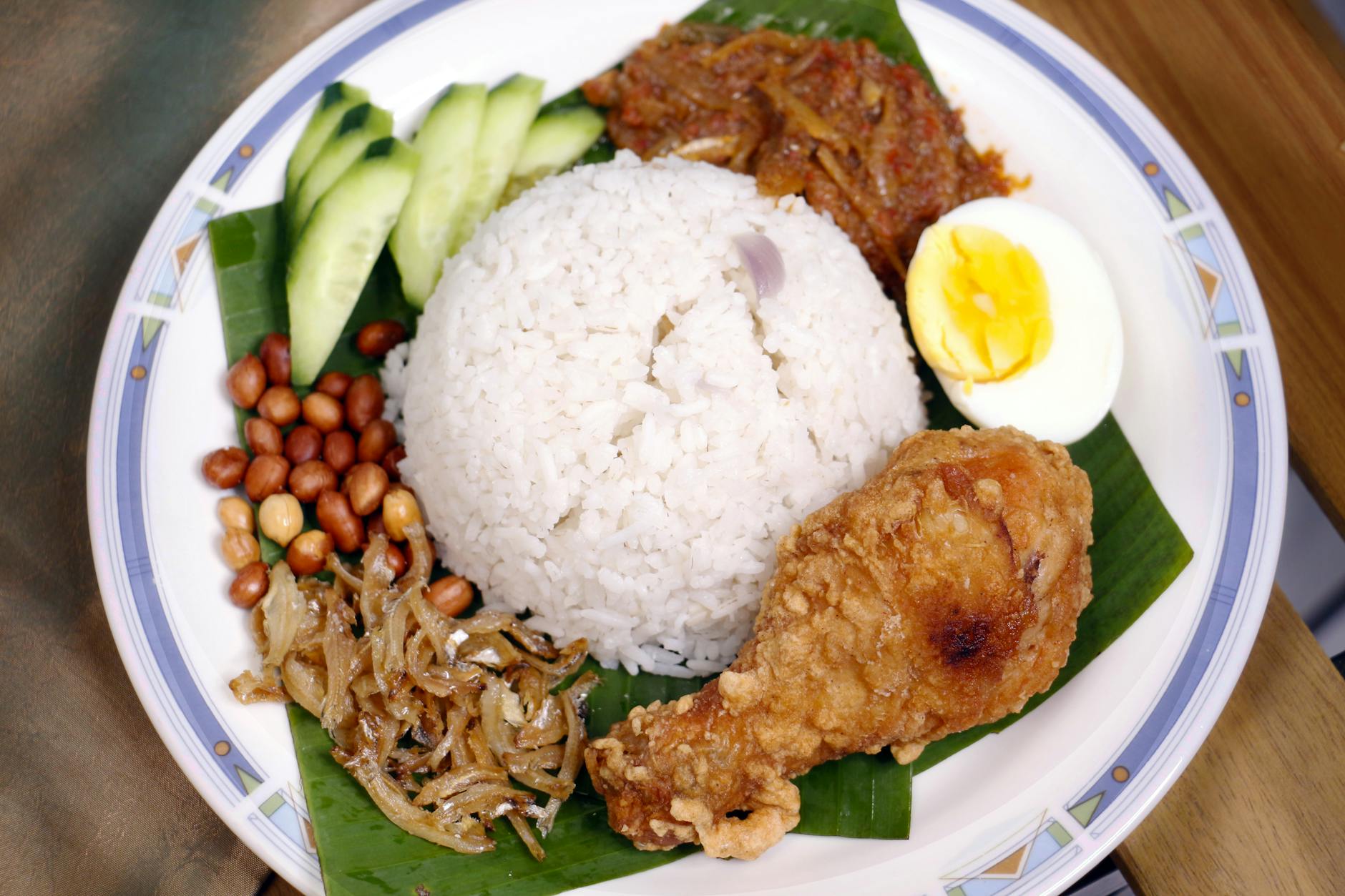
Two ringgit. That is what nasi lemak costs at a roadside stall before 8 AM, wrapped in a banana leaf, and it is one of the best breakfasts you can eat in this country. Fragrant coconut rice, a smear of sambal, crispy anchovies, roasted peanuts, a hard-boiled egg, sliced cucumber. The logic of those elements together took generations to arrive at, and once you understand the dish, you start understanding Malaysia.
This guide covers what makes a great nasi lemak, how it varies by region, where to find the best versions, what it costs, and how to order it. For context on where it fits within must try malaysian food dishes across the country, that guide covers all fifty. For city-by-city eating, see the kuala lumpur food guide and the penang food guide.
Origins of Nasi Lemak
The earliest written reference appears in 1909, when Sir Richard Olof Winstedt documented it in The Circumstances of Malay Life as a dish already well established in Malay culinary tradition. The name comes from nasi (rice) and lemak (rich, creamy) — a description of what coconut milk does to the cooking rice. What began as a farmer’s breakfast, portable enough to carry to the fields in a banana leaf wrap, became something the whole country adopted.
A folk story attributes the dish to a woman named Mak Kuntum whose daughter accidentally spilled coconut milk into the cooking pot. They served it anyway and discovered something better than what they started with. True or not, the story fits — nasi lemak has the quality of a happy accident that turned out to be irreplaceable.
What Makes a Great Nasi Lemak
The Coconut Rice
Long-grain rice cooked in fresh coconut milk with pandan leaves. The pandan scents the rice with a distinctive sweet, grassy fragrance and signals to anyone nearby that nasi lemak is being made. Fresh coconut milk produces a richer, more aromatic result than canned; at busy stalls volume makes canned necessary, but the best stalls still use fresh. The cooked rice should be fluffy and separate, each grain coated in a fine film of coconut fat. Not sticky, not clumped — individual grains that carry the flavour without being overwhelmed by it.
The Sambal
The sambal determines whether a nasi lemak is good or exceptional. The standard is sambal tumis: dried red chilies, shallots, garlic, and belacan (fermented shrimp paste) pounded together and fried slowly in oil for thirty minutes or more. That slow frying caramelises the shallots and chilies, building layers of flavour that no quick chili paste replicates. It should be dark, slightly glossy, carrying both heat and sweetness.
Many stalls cook ikan bilis anchovies directly into the sambal, creating sambal ikan bilis — the anchovies add crunch and an extra dimension of umami. A sambal that is too sweet sits flat; too oily and it overwhelms the rice. The best versions have been made by the same hands for twenty or thirty years, and you can taste the accumulated experience.
The Accompaniments
Five constants: coconut rice, sambal, ikan bilis, roasted peanuts, egg (hard-boiled or fried), and sliced cucumber. Each earns its place. Anchovies add salt and crunch. Peanuts add texture and earthiness. Egg adds richness and protein. Cucumber provides cool contrast that resets the palate between bites. Remove any one element and the balance tips.
Beyond the basics, additional accompaniments turn a snack into a full meal: fried chicken, beef rendang, sambal prawns, sambal squid, curry, fried fish. Each addition costs RM1–5 extra at hawker stalls.
Regional Variations Across Malaysia
Kedah and Perlis: Nasi Lemak Kuning
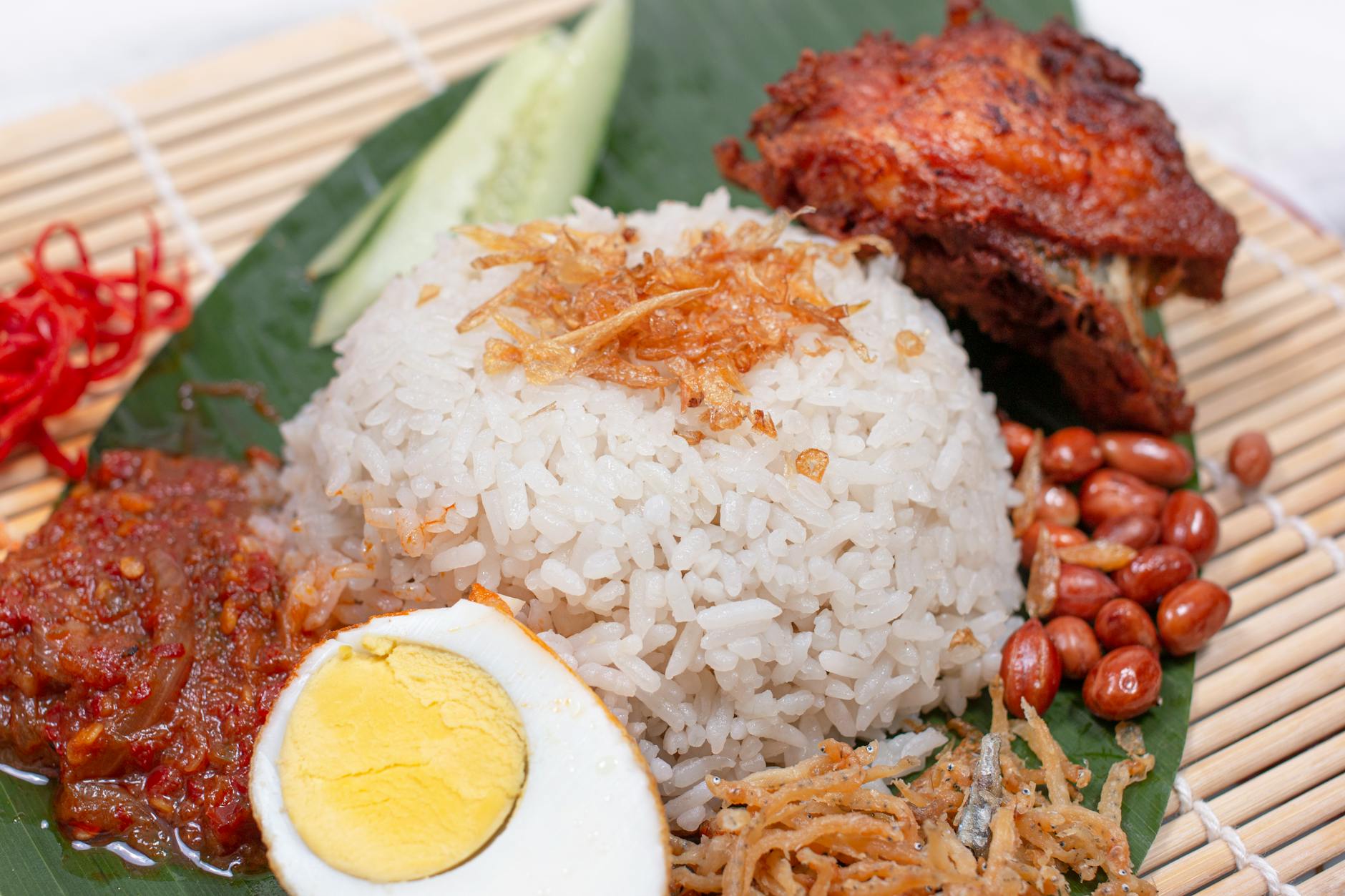
The northern states add turmeric alongside the coconut milk and pandan, producing nasi lemak kuning — yellow nasi lemak. The turmeric gives the rice a golden colour and a slightly earthy, peppery flavour distinct from the standard white version. Usually served with ayam goreng berempah, fried chicken in a complex spice coating.
Johor: Nasi Lemak Halba
Johor adds fenugreek seeds to the coconut rice. The fenugreek brings a subtle nutty aroma with a slightly bitter edge — a more complex flavour profile than pandan and coconut alone. Popular in southern Johor and in Johor Bahru, where the dish also attracts Singaporeans crossing the border specifically to eat it.
Terengganu and Kelantan: East Coast Styles
On the east coast, the sambal often features ikan tongkol (mackerel tuna) rather than anchovies, sweetened with gula nisan palm sugar. The result is richer and sweeter than west coast versions. Terengganu’s style reflects the coast’s dependence on South China Sea fishing. Kelantan shades into the related nasi dagang — a separate dish built on similar coconut-and-fish logic.
Mamak-Style
At Indian Muslim mamak restaurants — open 24 hours, on almost every KL street — nasi lemak arrives with heartier accompaniments: ayam goreng berempah, curries, rendang, sometimes chickpea curry alongside the sambal. The sambal tends to be spicier. This is the nasi lemak you eat at midnight or before a long shift.
Chinese-Style
Chinese hawker stalls serve their own variations: char siu pork, fried chicken cutlets, curry chicken, or otah grilled fish paste as accompaniments. Not traditional but genuinely good — they show how flexible nasi lemak is as a framework. The coconut rice pairs with almost anything, which is why every community in Malaysia has adopted and adapted it.
Nasi Lemak Bungkus: The Banana Leaf Package
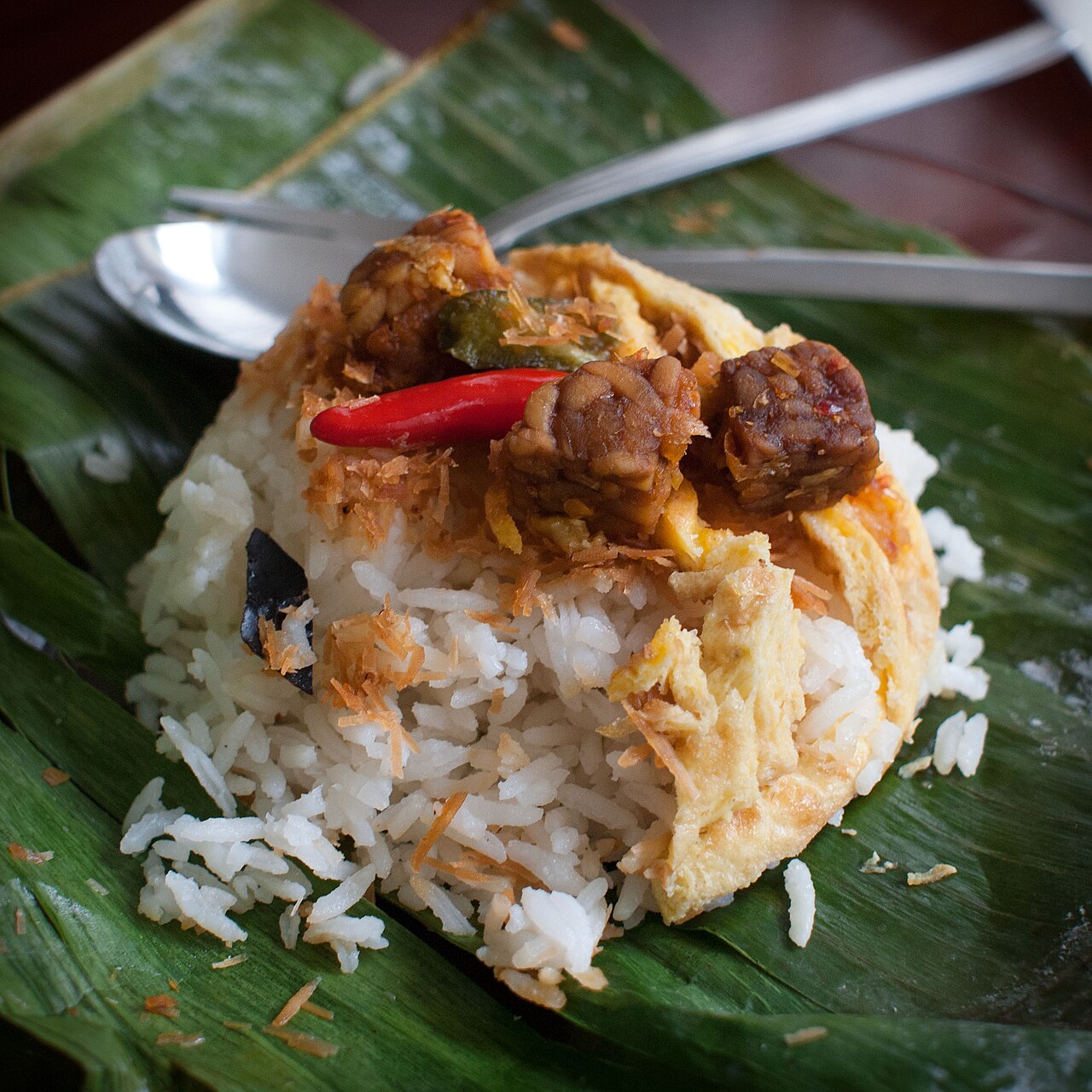
The most traditional format is bungkus — wrapped in banana leaf into a compact package. The packaging is not just practical. The heat of the freshly cooked rice releases natural oils from the leaf that infuse the rice with a subtle, earthy fragrance that no paper or polystyrene container replicates. A proper banana leaf bungkus is still the best way to eat nasi lemak.
Roadside stalls and morning markets sell nasi lemak bungkus from as early as 5 AM, stacked in neat rows for workers and students grabbing breakfast before the day starts. The affordability is remarkable, with basic bungkus packets starting at around RM2 to RM3, making nasi lemak one of the most accessible meals in the country.
Opening a nasi lemak bungkus is a small ritual in itself. The banana leaf unfolds to reveal the fragrant mound of coconut rice, the vivid red sambal, the glistening anchovies, the peanuts, and the egg, all arranged with a care that belies the humble price. The combination of aroma, visual appeal, and the anticipation of that first bite is one of the great sensory experiences in Malaysian food culture — one that a polystyrene box from a convenience store simply cannot replicate.
Where to Find the Best Nasi Lemak
Kuala Lumpur
Nasi Lemak Tanglin, established in 1948, is one of KL’s most respected institutions. The sambal tumis is the benchmark — rich, aromatic, with decades of refinement. Long queues on weekends. Nasi Lemak Wanjo in Kampung Baru has been running since 1963: generous portions, excellent sambal, the kind of food that tastes like it was cooked by someone who has made this dish every day of their working life. Village Park Restaurant in Damansara Uptown is the destination for nasi lemak fried chicken — worth the trip from the city centre.
Nasi Lemak Famous in Bangsar — known to regulars as nasi lemak ganja for its addictive quality — draws crowds from across the city for its consistently well-balanced flavours. Village Park Restaurant in Damansara Uptown is the destination for nasi lemak fried chicken, worth the trip from the city centre. Gerai Pak Hassan in Kampung Baru has been going for over seventy years; queues form before 8 AM. Botak Nasi Lemak opens at 6:30 AM and regularly sells out by late morning — arrive in the first hour. For late-night, any good mamak in KL will serve a solid plate at 2 AM.
Penang
Penang’s nasi lemak holds its own against the KL versions. Look for nasi lemak kukus on the island — rice steamed rather than boiled in coconut milk, producing a lighter result with the same fragrance. Ali Nasi Lemak is the island’s most-cited value option, plates from RM2 with a sambal that has a distinctly Penang spice profile. The penang food guide covers where to eat nasi lemak alongside all the island’s other specialities.
Johor Bahru
JB’s proximity to Singapore sharpens competition — stalls know they are feeding both locals and Singaporeans crossing the border specifically for good Malaysian food. Portions are generous, the fenugreek-infused Johor style is worth trying alongside the standard version. The JB eating scene is covered in the malaysian food by region guide.
Prices and Budget
Average nasi lemak price in 2024: RM3.68 — up over 80% in thirteen years, significantly outpacing general inflation. Despite this, it remains one of the most affordable meals in Malaysia.
Basic nasi lemak bungkus: RM2–3. Hawker centre sit-down with standard accompaniments: RM5–8. With added fried chicken or rendang: RM8–15. Restaurant versions with premium ingredients: RM15–25. Fine dining interpretations: RM50 and above. A bungkus breakfast with teh tarik totals around RM5 — less than USD 1.20 for a complete, genuinely satisfying Malaysian meal.
When to Eat It
Nasi lemak began as a breakfast dish and morning is still the best time. Dedicated stalls often sell out before 11 AM and the rice is freshest earliest. Many bungkus stalls start from 5–6 AM; hawker centre versions are fully set by 7:30 AM. If you want the rice at its most fragrant — freshly cooked, still warm in the leaf — arrive early.
That said, nasi lemak is now effectively a 24-hour food. Mamak restaurants serve it at any hour. Hawker centres have it at lunch. Night market stalls sell it in the evening. The early morning version at a dedicated stall is the purist’s choice; the midnight mamak version has its own appeal — heavy, rich, exactly right after a long day.
How to Eat It
Traditionally eaten with the right hand — a small mound of rice, a touch of sambal, an anchovy or two, a bit of peanut, formed into a single balanced bite. Spoon and fork are always available and nobody will look twice if you prefer them. If you choose to eat with your hands, use only your right hand — the left hand is considered unclean in Malay culture. Many hawker centres and restaurants provide a small bowl of water or a hand-washing station for diners who eat this way. Do not feel any pressure as a visitor; cutlery is perfectly acceptable everywhere.
The key is combining elements in each bite rather than eating them separately. Rice alone is just rice; sambal alone is just heat. Together with the crunch of anchovies and the earthiness of peanuts, each mouthful becomes a complete version of the dish. At a hawker centre, sambal is usually served on the side so you can control the heat level. In a bungkus pack it comes mixed in — if you are sensitive to spice, ask for it mild (tak pedas sangat) or order from a sit-down stall where you have more control.
Modern Variations
Nasi lemak has attracted creative reinvention. Nasi lemak burgers use coconut rice shaped into patties as buns with sambal-glazed chicken inside. McDonald’s Malaysia runs a Nasi Lemak McD burger during promotional periods. Gourmet versions at fine dining restaurants feature wagyu beef rendang or lobster sambal. Nasi lemak ice cream appeared at food festivals and got talked about for months.
The nasi lemak business has also gone digital, with dedicated delivery services and online ordering platforms making it possible to get high-quality versions delivered to your doorstep in any major Malaysian city. Several popular nasi lemak brands have built substantial followings on social media, with some stalls going viral and creating overnight queues that stretch down entire streets.
The purist view is that these innovations are unnecessary when the original is already complete. The more useful view is that they reflect how central nasi lemak is to Malaysian food culture — a dish important enough to inspire both reverence and experimentation at the same time. Try the traditional first. The variations make more sense once you understand what they are riffing on.
For the full picture of nasi lemak within malaysian street food culture — how it fits into hawker centre eating, the mamak tradition, and the broader street food scene — that guide covers the national picture across all major cities.
Bungkus vs Sit-Down: Which to Choose
The bungkus — the wrapped package — is the original format and still the most atmospheric way to eat nasi lemak. You buy it from a roadside stall or morning market, carry it to a bench or a low wall, unwrap the leaf, and eat while the rice is still warm. No table service, no overhead, and the banana leaf does something to the fragrance that no plate can replicate. This is the version that costs RM2–3.
Sit-down nasi lemak at a hawker centre gives you more control. The sambal comes on the side so you can dial the heat. You can add accompaniments one by one and build the plate you want. For a first encounter with the dish, sit-down gives you a better chance to appreciate each element separately before mixing them. For a quick morning meal that captures what nasi lemak is essentially about, bungkus is hard to beat. Both formats are right — the choice is about what you want from the meal, not about which is more authentic.
What to Drink with Nasi Lemak
Teh tarik is the standard pairing — the strong, frothy pulled tea with condensed milk cuts through the richness of the coconut rice and the heat of the sambal. At RM2–3 a glass it completes breakfast for under RM6 total. Kopi, the traditional kopitiam coffee made from beans roasted with butter and sugar, works just as well for coffee drinkers. Both are available at every hawker centre and mamak stall in the country.
For something cold: air batu iced water, fresh lime juice, or Milo ais — iced Milo with condensed milk — all pair well alongside the spice. The general principle is something cold or something strong. Nasi lemak is a rich dish and the drink should either cut through or complement that richness.
Nasi Lemak Beyond Breakfast
It started as a morning dish and the early morning version is still the purist preference: rice freshly cooked, sambal made that morning, eaten before 9 AM at a roadside stall that will sell out by noon. But nasi lemak has expanded into every meal slot over the decades.
Lunch nasi lemak at hawker centres tends to come with a broader selection of accompaniments — the full range of curries, rendang, and fried proteins that morning bungkus stalls do not always carry. Evening and late-night nasi lemak is the mamak version: heavier, spicier, served to a crowd that has been working or out for hours and wants something substantial. Each time slot has its own character, and eating nasi lemak at different times of day across a few days in Malaysia shows you genuinely different versions of the same dish.
Ordering Tips for First-Timers
At a bungkus stall, the package is pre-assembled. Ask tak pedas sangat (not too spicy) if you want less heat. Many vendors offer a milder default for unfamiliar customers. At a sit-down hawker stall, say nasi lemak satu (one nasi lemak) and point at the accompaniments you want from the display. The cook adds them and prices accordingly. Pay when you finish, not when you order.
Sambal heat varies enormously between stalls and regions. A mild morning-stall sambal is a completely different thing from the mamak version made for customers who eat chili three meals a day. If you are new to Malaysian spice levels, start with a hawker centre version where sambal comes on the side, taste it, and add gradually. You can always add more; once it is mixed in you cannot take it out.
Nasi lemak is genuinely one of the easiest dishes to order in Malaysia. Point, pay, eat. The vendors have been serving tourists and locals side by side for decades. The only mistake you can make is not trying it. Start with a basic plate, understand the components, then build up to a full meal with additional sides on your second or third order.
Nasi Lemak as a Cultural Touchstone
TIME magazine named nasi lemak one of the world’s ten healthiest breakfasts, noting its balanced combination of carbohydrates, protein, and fat. Malaysia’s Michelin Guide has recognised several nasi lemak specialists in its Bib Gourmand category, bringing international attention to stalls that have been feeding Malaysians for generations. Singapore has its own nasi lemak tradition; the dish also appears in Indonesia, Brunei, and southern Thailand. But most food writers and most Malaysian cooks will tell you the Malaysian version — with its emphasis on sambal quality and the richness of the coconut rice — is where the dish is at its best.
For a visitor, nasi lemak is the right dish to start with in Malaysia. It is available everywhere, it is cheap, it introduces you to the core flavour principles of Malay cooking — coconut, chili, dried seafood, pandan — and it rewards repeat encounters. Eating it at a roadside stall at 7 AM, at a hawker centre at noon, and at a mamak at midnight are three genuinely different experiences. The dish is the same; the context makes it new each time.
Nasi Lemak Beyond Malaysia
Nasi lemak has crossed borders: Singapore, Indonesia, Brunei, and southern Thailand all have their own versions, and you can eat well in each of them. Most food writers, though, agree that the Malaysian original — where sambal quality is treated as a serious craft and the coconut rice is properly rich — is the dish at its finest. The international recognition backs that up: TIME magazine named nasi lemak one of the world’s ten healthiest breakfasts, and Malaysia’s Michelin Guide has awarded Bib Gourmand status to nasi lemak specialists, putting humble stalls alongside the kind of restaurants that usually dominate those lists. Wherever else you eat it, Malaysia is the place to understand what the dish is really about.
Nasi Lemak as a Daily Ritual
For Malaysians, nasi lemak is not an occasion — it is Tuesday. It is the smell from the stall next to the bus stop at 7 AM, the wrapped package pulled from a bag during a morning break, the late-night plate ordered after the cinema with friends. What makes it worth understanding as a visitor is precisely that everydayness. It connects you to a food culture where the best meal of the day often costs less than a cup of coffee would in London or Sydney, and where generations of cooks have refined a dish to the point where the gap between a cheap version and an excellent version is narrower than almost anywhere else in the world.
From the predawn preparation of sambal in countless home kitchens and stall pots, to the morning queues at beloved institutions like Nasi Lemak Tanglin and Nasi Lemak Wanjo, to the late-night mamak plate eaten after a long shift, nasi lemak in all its forms represents the best of what Malaysian food culture offers. For the visitor, understanding and appreciating it is not just about the food. Eat it at a roadside stall at 7 AM, at a hawker centre at noon, and at a mamak at midnight, and you will have had three genuinely different experiences of the same dish. The context makes it new each time. For everything else Malaysia’s food scene has to offer, the must try malaysian food guide covers all fifty dishes worth knowing.