Bako National Park: Proboscis Monkeys & Borneo’s Oldest Park
Forty-five minutes from Kuching by road and a short boat ride, Bako National Park packs more wildlife encounters per hour into its modest footprint than almost anywhere else in Malaysia. Twenty-seven square kilometres of protected Sarawak coastline — the oldest national park in the state, established in 1957 — hold a concentration of habitats that would take a week of travel to assemble elsewhere: mangrove forest, beach, kerangas (heath forest), dipterocarp forest, and dramatic sandstone sea cliffs sculpted into arches, sea stacks, and sea caves. Most importantly for visitors, Bako holds the highest density of proboscis monkeys of any accessible site in the world.
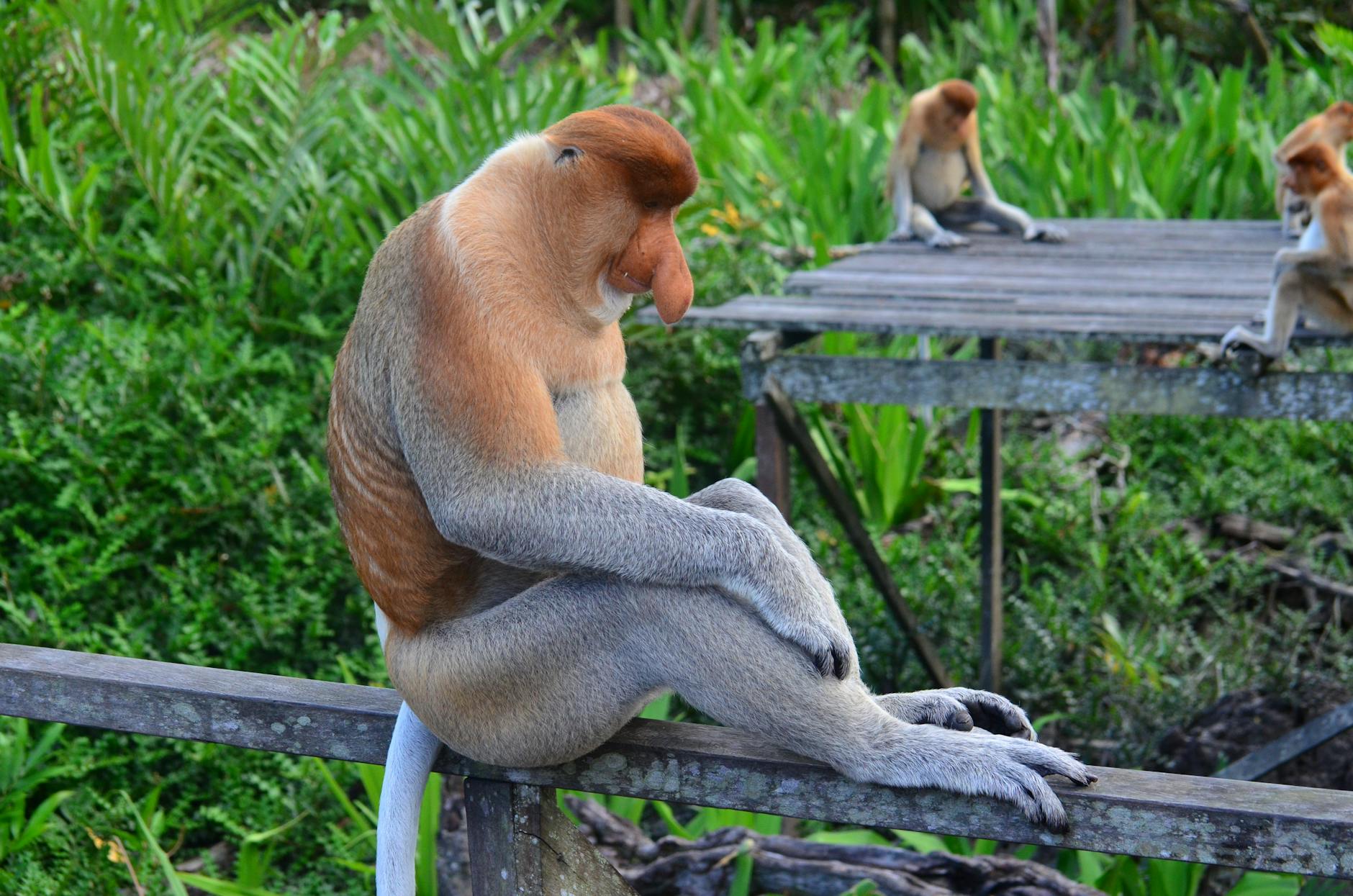
Proboscis monkeys — with their extraordinary pendulous noses, pot bellies, and bright orange-red fur — are one of the most visually distinctive primates on Earth. They are endemic to Borneo and rarely seen in primary forest interior, preferring mangrove edges and riverine forest where they can be watched from a comfortable distance. Bako delivers reliable proboscis monkey sightings on almost every visit, often within an hour of arriving at the park. For the broader Malaysia wildlife context, our malaysia wildlife guide covers the full range of Malaysian wildlife destinations.
Beyond the proboscis monkeys, Bako is home to silver-leaf monkeys, long-tailed macaques, bearded pigs, Sunda flying lemurs, monitor lizards, and over one hundred and ninety bird species. Add to that a network of well-marked hiking trails reaching secluded beaches, panoramic clifftop viewpoints, and pitcher plant meadows, and you have one of the most complete and accessible nature experiences available anywhere in Sarawak — all within easy reach of a city airport.
Getting to Bako National Park
Reaching Bako from Kuching is straightforward and affordable. The journey has two stages: a road transfer from Kuching to the village of Kampung Bako, followed by a short boat ride along the coast to the park headquarters at Teluk Assam.
From central Kuching, the red public bus number 1 departs regularly, with the first service leaving around 7am. The fare is approximately RM3.50 per person and the journey takes around forty-five minutes. A Grab taxi covers the same route in twenty to thirty minutes for roughly RM30–RM40 for the car — most early-morning visitors choose the taxi for convenience, especially if they want to catch the first boat and make the most of the morning wildlife window.
At the Kampung Bako jetty, motorised boats carry visitors along the coast to the park. Boats are priced per vessel at approximately RM100 each way for up to five passengers, so sharing with fellow travellers makes good sense. The crossing takes twenty to thirty minutes and gives you your first look at Bako’s dramatic coastline: towering sandstone cliffs, sea stacks, and forested headlands lining the shore. The boat lands on a small beach at the park headquarters, and the sense of arriving somewhere genuinely wild is immediate — even though you are less than an hour from Kuching’s city centre.
Park entry fees are RM20 for international adults and RM7 for children aged seven to eighteen, payable at the park headquarters upon arrival. Booking accommodation through the Sarawak Forestry online system well in advance is essential — the park’s limited beds fill quickly on weekends and during Malaysian school holidays.
Wildlife of Bako National Park

Proboscis Monkeys
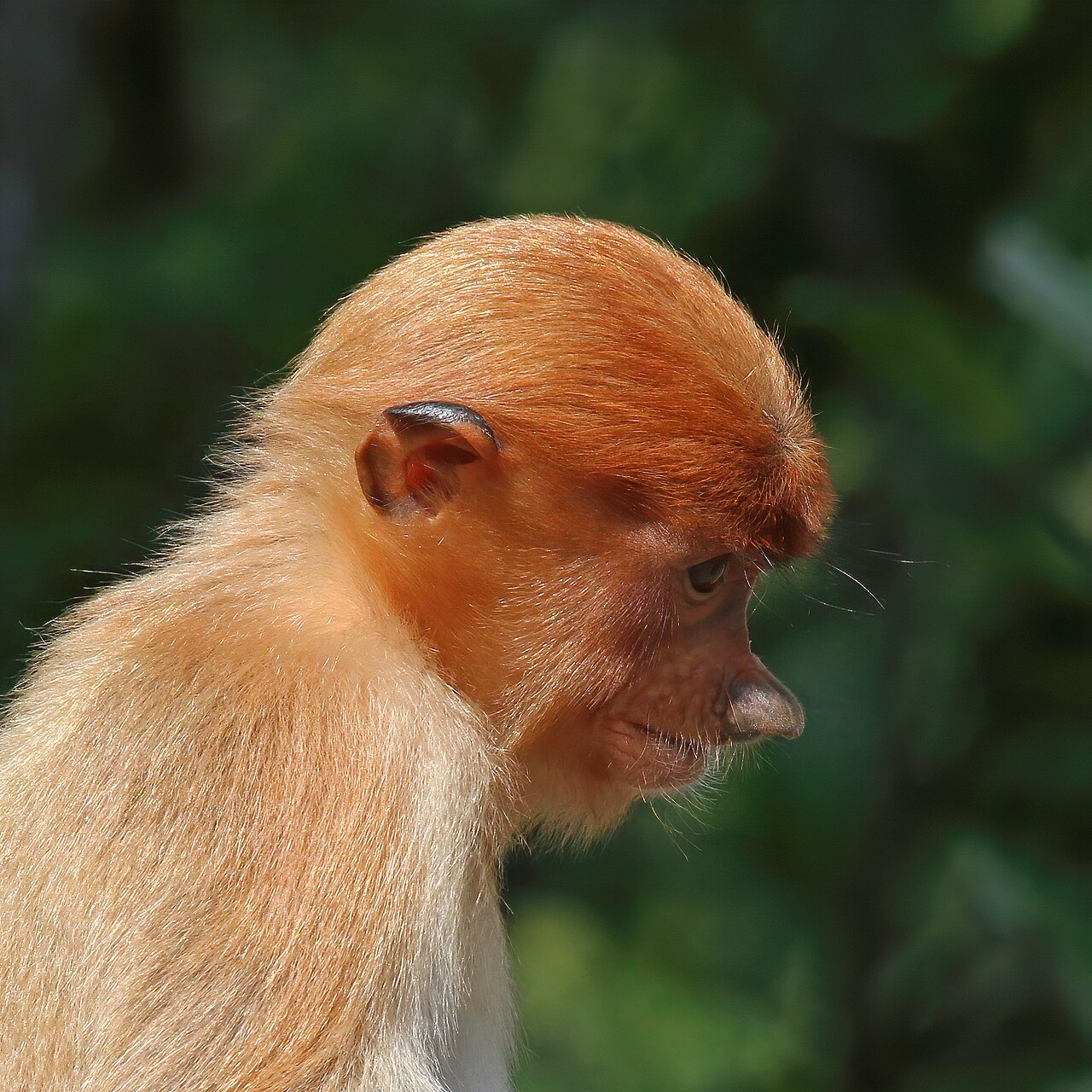
The park’s most famous residents and its most reliable sighting. Bako supports a population of approximately 275 proboscis monkeys, and you have an excellent chance of seeing them on any visit of a day or more. They live in groups of ten to thirty individuals, typically with one dominant male — recognisable by his enormous nose, which can extend well below his chin, and a large pot belly that gives the species its comically rotund silhouette. Males can weigh over twenty kilograms and are considerably larger than the females, who have smaller, upturned noses. They feed primarily on leaves, unripe fruits, and seeds; their unusual multi-chambered stomach lets them process plant toxins that other primates cannot tolerate.
Late afternoon is the most reliable viewing window, as groups move to riverside trees to settle for the night. The Teluk Paku and Teluk Delima trails are the most productive locations — standing quietly at the mangrove edge around 4pm, you will often watch a dozen or more monkeys crashing through the canopy overhead, the males’ noses wobbling with each leap. The mangrove walk near park headquarters is another productive spot, particularly in the golden light before sunset.
Silver-Leaf Monkeys and Other Primates
Silver-leaf monkeys (also called silvered langurs) are a common sight around the park headquarters and along the coastal trails. These elegant grey monkeys are worth seeking out for one specific reason: babies are born with striking bright orange fur, creating a vivid contrast to the grey adults that makes mixed-age groups some of the most photogenic wildlife you will see in Borneo.
Long-tailed macaques are the most commonly seen primates at Bako and are found throughout the park, including around the headquarters buildings and canteen. They are entertaining to watch, but treat them with the same wariness you would give a clever thief. They have learned to identify food in plastic bags and will steal from unguarded daypacks in seconds. Keep food secured, never feed them, and do not make eye contact when a large male is nearby. The diversity of four confirmed primate species in a park this small is exceptional. The rare Bornean gibbon is also present but rarely encountered by casual visitors.
Bearded Pigs
The Bornean bearded pig is common around Bako and a regular sight near the park headquarters and along most trails. These are large animals — males can exceed one hundred kilograms — with a distinctive beard of white bristles around the face. They root through the forest floor for tubers, fungi, and fallen fruit, and have become accustomed to scavenging near the canteen. Despite their familiarity, they are wild animals and should be watched from a respectful distance. Ecologically, bearded pigs are one of the key seed dispersers in Bornean forests; their seasonal mass migrations following fruiting events are a defining process of Borneo’s landscape.
Flying Lemurs and Nocturnal Wildlife
The Sunda flying lemur, or colugo, is one of Bako’s most sought-after nocturnal mammals. Despite the name, colugos are not true lemurs and do not fly — they glide between trees on a membrane of skin (the patagium) that stretches from neck to fingertips to tail. Colugos are most easily spotted during guided night walks, when their reflective eyes appear in torchlight as they cling motionless to tree trunks.
The guided night walks at Bako are a highlight of any overnight stay. They depart from the park headquarters just after dusk and cost approximately RM15 per person, led by park guides using spotlights. In addition to colugos, these walks regularly turn up slow lorises, mouse deer, palm civets, large flying foxes, and a spectacular diversity of insects, spiders, and frogs that only emerge after dark. This is one of the strongest arguments for staying overnight rather than visiting on a day trip.
Monitor Lizards and Reptiles
The wildlife diversity at Bako contrasts with Taman Negara national park on the peninsula. Malayan water monitors — large lizards reaching up to two metres — are extremely common around the park headquarters, beach areas, and mangrove edges. They look prehistoric and move with deceptive speed when alarmed. Flying lizards (Draco species) perform their remarkable gliding displays from tree to tree along most forest trails. Green pit vipers, paradise tree snakes, and various sea snakes inhabit the park; the sea snakes frequent intertidal and shallow water zones and are generally docile but should not be handled.
Birds
Over one hundred and ninety bird species have been recorded at Bako — a remarkable concentration for such a small park. Rhinoceros hornbills are commonly seen and heard; their prehistoric-sounding wingbeats and raucous calls become background texture after a day in the park. Mangrove blue flycatcher, rufous-tailed shama, chestnut-bellied malkoha, and pied fantail are among the forest birds regularly encountered. Notable species include the white-bellied woodpecker, the black-and-red broadbill, the rufous-backed kingfisher, and various raptors that patrol the coastline. The beach and coastal areas hold common kingfisher, reef heron, and various waders. Early morning — roughly 6am to 9am — is when bird activity peaks; the forest is loudest and most productive before the heat sets in. For serious birders planning a full Sarawak circuit, our birdwatching malaysia guide positions Bako within a broader Sarawak itinerary alongside Mulu.
The Rafflesia Connection
While Bako itself does not host Rafflesia (which requires very specific host vine conditions), the nearby Kubah National Park has reliable sightings within an hour’s drive of Kuching. If you’re staying in Kuching for Bako, it’s worth checking whether a Rafflesia is currently blooming at Kubah — park rangers monitor active sites and local tour operators run targeted visits when a flower is open.
Seven Ecosystems in 27 Square Kilometres
One of Bako’s most remarkable features is its concentration of distinct vegetation types. The park contains seven complete ecosystems — a diversity that would normally require travelling across vast distances to experience. Understanding these habitats enriches every walk, since transitions between vegetation types are often dramatic and visible within a single trail.
Mixed Dipterocarp Forest
Lowland dipterocarp forest occupies the interior valleys and sheltered slopes, with tall trees forming a closed canopy that keeps the forest floor shaded and cool. This is the dominant forest type of lowland Borneo, and at Bako it supports the richest concentration of wildlife in the park — primates, birds, and insects all dense in the complex layered structure of the forest.
Mangrove Forest
Mangrove forest lines the sheltered river mouths and tidal creeks around the coastline. Prop-rooted trees stand in the brackish water; mudflats at low tide attract wading birds and fiddler crabs; mudskippers — fish that breathe air and move on land — patrol the margins. Proboscis monkeys are frequently seen in the mangrove zones, particularly in the late afternoon when they move to sleeping trees near the water.
Kerangas Heath Forest
The kerangas or heath forest covers much of the plateau area and is visually distinct from the lowland forest — stunted, gnarled trees growing on nutrient-poor white sand soils, with an open canopy that lets more light reach the ground. This is where Bako’s carnivorous pitcher plants thrive, supplementing their nutrient intake by trapping insects. Four species have been recorded in the park: Nepenthes rafflesiana, Nepenthes gracilis, Nepenthes albomarginata, and others. The Lintang loop trail passes through the best examples of kerangas and gives access to carnivorous plant diversity that is unusual for an easily accessible park.
Beach, Cliff, Peat Swamp, and Padang Vegetation
The coastline supports specialised plant communities adapted to salt spray, wind exposure, and sandy soils. Casuarina trees line some beaches, while the sandstone cliffs support gnarled trees that frame views of sea stacks below. Peat swamp areas hold vegetation adapted to waterlogged, acidic conditions, while the padang grasslands — open areas of grasses and sedges — provide yet another visual contrast to the surrounding forest. Walking a single trail through Bako, you can move through four or five of these ecosystems in an hour, each one noticeably different in feel, sound, and species.
Habitats and Trails
Sixteen colour-coded hiking trails cover the park’s diverse terrain, ranging from a twenty-minute walk to the beach at Teluk Paku to the full-day circuit traversing the plateau. All trails are well-signposted with painted blazes on trees and rocks, and maps are available from the park headquarters. No guide is required for the marked trails, though hiring one — approximately RM150–RM250 for the day — significantly increases your chances of spotting wildlife. A detailed trail guide is available at the Bako National Park information centre.
Telok Pandan Kecil — Best Scenic Trail
Widely regarded as the most scenic hike in the park and the single best trail for a day visitor. The 2.5km route takes approximately 1.5 to 2 hours each way, passing through mangrove forest, dipterocarp forest, and kerangas heath forest before arriving at a dramatic clifftop viewpoint overlooking a small, secluded beach framed by sandstone cliffs. The trail includes steep sections and wooden boardwalks, and the variety of vegetation types makes it an excellent introduction to Bako’s ecological diversity. The view from the clifftop is one of the most photographed scenes in Sarawak.
Lintang Loop — Best Full Circuit
The Lintang loop is the park’s signature trail, a 5.25km circuit taking approximately three to four hours that passes through nearly all seven vegetation types. The trail climbs from the coastal lowlands through dipterocarp forest, crosses areas of kerangas heath forest where pitcher plants line the sandy path, traverses padang grassland, and descends through mangrove forest with views across the bay. For visitors with a full day at Bako, this trail provides the most comprehensive experience of the park’s habitats in a single walk.
Mangrove Trail — Best for Proboscis Monkeys
A boardwalk through the mangrove forest near park headquarters. Short and easy — about forty minutes return — but disproportionately productive for wildlife. Proboscis monkeys use the mangroves as both feeding ground and evening roost; late afternoon on this trail is often the single best proboscis monkey sighting opportunity in the park. Mudskippers, fiddler crabs with their asymmetric claws, and the aerial root architecture of the mangroves add ecological interest even when the primates are elsewhere.
Teluk Paku — Quick Coastal Walk
A short, easy walk of approximately one kilometre following the coastline from headquarters through beach and cliff vegetation. This trail is popular for proboscis monkey sightings in the late afternoon before the monkeys settle for the night, and its proximity to headquarters makes it ideal for a quick wildlife walk before the last boat or in the early morning before setting out on a longer trek. Good snorkelling in the bay — reef fish and occasional sea turtles in the water.
Teluk Delima — Best Forest Birding
Approximately 3.5km one way, passing through dipterocarp forest and finishing at an area of mangroves. Good birding throughout, with black-and-red broadbills, rufous-backed kingfishers, and various barbets and woodpeckers in the forest interior. Another reliable proboscis monkey trail — the mangrove terminus is productive in the late afternoon.
Tajor Waterfall and Longer Routes
The Tajor waterfall trail is one of the shorter routes, leading to a small cascade where you can cool off during the heat of the day — approximately one hour each way through forest. For more adventurous hikers, the Teluk Limau trail extends approximately 5.5km to a remote beach on the far side of the peninsula, passing through dense forest with excellent wildlife potential. This beach is pristine and the snorkelling is excellent; it can also be reached by boat from headquarters if you would rather save your legs for the return walk. These longer routes can be combined to create full-day itineraries exploring the more remote corners of the park.
The Coastline
Bako’s coastline is one of its most dramatic features, with millions of years of erosion sculpting the sandstone into a spectacular gallery of natural formations. Steep cliffs, rocky headlands, wave-carved arches, and towering sea stacks line the shore, with iron deposition adding bands of red, orange, and gold to the grey sandstone. Several secluded beaches are accessible from the trail network, giving opportunities for swimming and snorkelling in stunning natural settings.
The park’s most famous sea stack — shaped like a cobra’s head and featured in countless photographs — unfortunately collapsed in 2024 due to natural erosion. Many other impressive formations remain, and the coastline is still one of the most photogenic in Sarawak. The boat ride to and from the park gives excellent views of the coastal formations, and some operators will slow down or detour to let passengers photograph the most striking features.
Day Trip or Overnight Stay?
A day trip is possible but comes with real limitations. The last boat back to Kampung Bako departs in the early to mid-afternoon, which cuts short your time on the longer trails. More significantly, you miss the two best wildlife viewing windows: the late afternoon when proboscis monkeys move to their sleeping trees, and the after-dark period when the guided night walk reveals the park’s extraordinary nocturnal wildlife.
An overnight stay lets you arrive early, explore longer trails during the cooler morning hours, rest during the hot midday period, watch proboscis monkeys in golden afternoon light, and then join the night walk. For a genuinely complete Bako experience, two nights is ideal — a full day of hiking with unhurried wildlife encounters, without the constant awareness of a boat to catch.
Accommodation
Staying overnight at Bako is strongly recommended — the wildlife is most active at dawn and dusk, and a same-day trip from Kuching means missing both. Accommodation at Bako is managed by Sarawak Forestry Corporation and must be booked through their online system in advance. Options include hostel dormitory beds from approximately RM15 per person per night, forest lodges with basic rooms for roughly RM75 to RM150, and more comfortable rooms with en-suite bathrooms for approximately RM150 to RM225. All accommodation is at the park headquarters near the beach, within easy walking distance of the trails and the canteen.
Rooms are simple — no air conditioning, just fans and the natural ventilation of the coastal location. Bring your own towel, as these are no longer provided; bedding is supplied. The canteen at the park headquarters serves breakfast, lunch, and dinner at reasonable prices, offering local dishes. The food is adequate, and experienced visitors recommend bringing supplementary snacks, fruit, and plenty of water from Kuching. Keep all food securely stored in your room — the macaques and bearded pigs around headquarters are resourceful foragers.
Best Time to Visit
Bako can be visited year-round. The drier months from March to October generally offer the most comfortable hiking conditions. The northeast monsoon from November to February brings heavier rainfall that can make some trails muddy and slippery, and rough seas occasionally cancel boat services for a day or two during this period — check conditions before travelling. Wildlife sightings do not vary significantly by season; proboscis monkey groups are resident year-round.
For wildlife viewing, early morning (roughly 6am to 9am) and late afternoon (3:30pm to 6pm) are by far the most productive periods. The midday heat sees most wildlife resting in the shade. Plan your trails around these windows — a longer hike in the morning, rest during midday, and the mangrove or Teluk Paku trail in the late afternoon before the sunset colours arrive.
Costs at a Glance
Park entry: RM20 for international adults, RM7 for children. Boat transfers from Kampung Bako: approximately RM100 per boat each way for up to five passengers (share with other visitors to reduce the cost). Public bus from Kuching: RM3.50 per person. Grab taxi from Kuching: RM30–RM40. Accommodation: RM15 per person in a dormitory to RM225 for a room with en-suite bathroom. Night walk: approximately RM15 per person. Day guide hire: RM150–RM250. A two-day, one-night trip to Bako from Kuching can be done for approximately RM200–RM350 per person on a budget, making it one of the most affordable wildlife experiences in Borneo.
Practical Tips
Bring plenty of water — the tropical heat and humidity mean you will sweat heavily on even moderate trails. Lightweight, long-sleeved clothing in muted colours is recommended for hiking, along with sturdy walking shoes that can handle muddy and occasionally slippery conditions. Insect repellent is essential, particularly for the night walk and around the mangrove areas.
Protect food from macaques by keeping it in a sealed, hard-sided daypack rather than a plastic bag — they have learned to recognise plastic as food-containing. Do not feed any wildlife under any circumstances, as habituation creates problems for future visitors and for the animals themselves.
For photography, a telephoto lens of at least 200mm is useful for proboscis monkeys and forest birds. The late afternoon light along the Teluk Paku trail, when proboscis monkeys are silhouetted against the sky in the mangrove trees, provides some of the most atmospheric wildlife photography opportunities in Borneo. A camera with strong high-ISO performance will serve you well on the night walk. A waterproof camera cover or dry bag is advisable — rain can arrive suddenly at any time of year. If visiting on a day trip, take the earliest possible boat. Arriving by 8am gives you the best morning wildlife window and enough time to complete a longer trail before the return boat.
Combining Bako with Other Sarawak Destinations
Bako is the natural starting point for a Sarawak wildlife itinerary. From Kuching, it pairs readily with Kubah National Park (Rafflesia, frogs), Semenggoh Wildlife Centre (semi-wild orangutans — very different from the wild Bornean orangutans you can see further north, which our see orangutans malaysia guide covers in full), and the Annah Rais Bidayuh longhouse for cultural context.
The other great Sarawak natural destination — in a completely different register — is Mulu national park, reached by a short flight from Kuching or Miri. A two-centre Sarawak trip combining Kuching with Bako and then flying to Mulu covers both the accessible coastal wildlife of the south and the extraordinary cave systems of the interior north.
Highland visitors can add Kinabalu national park to a Sabah extension. For visitors who want to extend beyond Sarawak into Sabah, the wildlife circuits described in our guides to Danum Valley borneo and sea turtles malaysia are accessible by flying from Kuching or Miri to Kota Kinabalu or Sandakan. Borneo’s two Malaysian states together offer a wildlife experience that has no parallel anywhere in Southeast Asia.