3 Days in Malaysia: The Perfect Quick Highlights Itinerary (2026)
A realistic 3-day Malaysia itinerary: one base, one day trip and no internal flights, with hour-by-hour plans for Kuala Lumpur, Batu Caves and Melaka, plus 2026 costs in MYR and USD.
Seventy-two hours in Malaysia sounds like nothing, and for most of the country it is. Borneo needs a week. The east coast islands need boats that run on their own schedule. Even the classic west coast run wants five days minimum. But three days in Kuala Lumpur — with one excursion, a temple at dawn and about nine meals — is a genuinely good trip, and it is the single most common shape a first visit to Malaysia takes, because half the long-haul flights between Europe and Australia stop here anyway.
This is the honest version of a 3 days in Malaysia plan: one base, one day trip, no internal flights, and no pretending you can fit an island in. It sits inside our wider collection of Malaysia itineraries, so if you end up with more days than you thought, the longer routes pick up where this one stops.
What Three Days Actually Gets You
Three days on the ground is really about 60 usable hours once you subtract sleep and an airport run at each end. That is enough for one city plus one thing outside it. It is not enough for two cities plus a beach, and every itinerary that promises otherwise is quietly counting your travel time as sightseeing.
What fits comfortably: Kuala Lumpur’s core sights, Batu Caves, one full day trip to Melaka or Putrajaya, two night markets, and enough hawker meals to understand why people talk about Malaysian food the way they do. What does not fit: Penang and KL together (you will spend a day moving between them), any east coast island, Cameron Highlands as anything but a rushed blur, and Borneo in any form whatsoever.
The trade is worth making. Kuala Lumpur is one of the most underrated capitals in Asia — cheap, green, easy to move around, and stacked with food — and three days is exactly the length at which it stops feeling like a stopover and starts feeling like a city you know a little.
Where to Base Yourself
Kuala Lumpur is the default and the right answer for around 80 percent of three-day visitors. It has the international airport, the best transport network in the country, and the widest range of things to do within 30 minutes of wherever you sleep.
Two alternatives are worth considering. If you are flying into Penang anyway, three days in George Town is a better food trip than three days in KL and a more walkable heritage city — but you lose the day trips. If you are burnt out from travelling elsewhere in Asia and want to do nothing at all, three days in Langkawi is a legitimate use of the time, though it is a beach holiday rather than a Malaysia trip. Both are covered at the end of this guide.
Which KL neighbourhood
Bukit Bintang is the practical choice: monorail and MRT access, Jalan Alor’s food street on your doorstep, and hotels from RM 120 to RM 600 a night. KLCC is quieter and greener with the Petronas Towers as your landmark, though it is pricier and the food scene is mall-based. Chinatown and Merdeka put you in the oldest, most atmospheric part of the city, with the best budget guesthouses and the shortest walk to the heritage core. Anywhere on a rail line works; anywhere that requires a Grab for every trip does not.
The 30 Minutes of Admin to Do Before You Fly
Short trips are the ones most damaged by small logistical failures, so sort these four things before you land.
- The MDAC. Malaysia’s digital arrival card is free, takes five minutes, and must be submitted within three days of arrival. Almost every foreign visitor needs one. Our Malaysia visa requirements guide covers who is exempt.
- An eSIM or SIM. Grab is how you will move around the city and it needs data from the moment you land. See the Malaysia SIM card guide for the current plans.
- Petronas Towers tickets. If the Skybridge matters to you, book online — slots sell out days ahead, tickets are RM 98 for adults and RM 50 for children, and the towers are closed most Mondays.
- Grab and Google Maps. Install both, and download the KL map for offline use.
One more decision on arrival: the KLIA Ekspres train runs airport to KL Sentral in 28 minutes for RM 55 one way, about ten percent cheaper booked through the app. A Grab is RM 75–90 off-peak but can double in traffic, and the journey takes an hour or more. Solo or as a pair, take the train. Three or more with luggage, take the Grab.
The Three Days at a Glance
| Day | Morning | Afternoon | Evening |
|---|---|---|---|
| 1 | Batu Caves at 7am, then Merdeka Square and Masjid Jamek | Chinatown lunch, Islamic Arts Museum | Petronas Towers at dusk, dinner on Jalan Alor |
| 2 | Early bus to Melaka | Dutch Square, St Paul’s Hill, river cruise, Nyonya lunch | Jonker Street night market (Fri–Sun), late bus back |
| 3 | Nasi lemak breakfast, Kampung Baru or a morning market | Central Market, final hawker lunch | KLIA Ekspres to the airport |
Day 1: Kuala Lumpur’s Greatest Hits
The rule that shapes every day in this itinerary: do the outdoor things before 11am. It is 32°C and humid by mid-morning, and an ambitious afternoon in that heat is how people end up napping through their only evening.
7:00am — Batu Caves before the buses
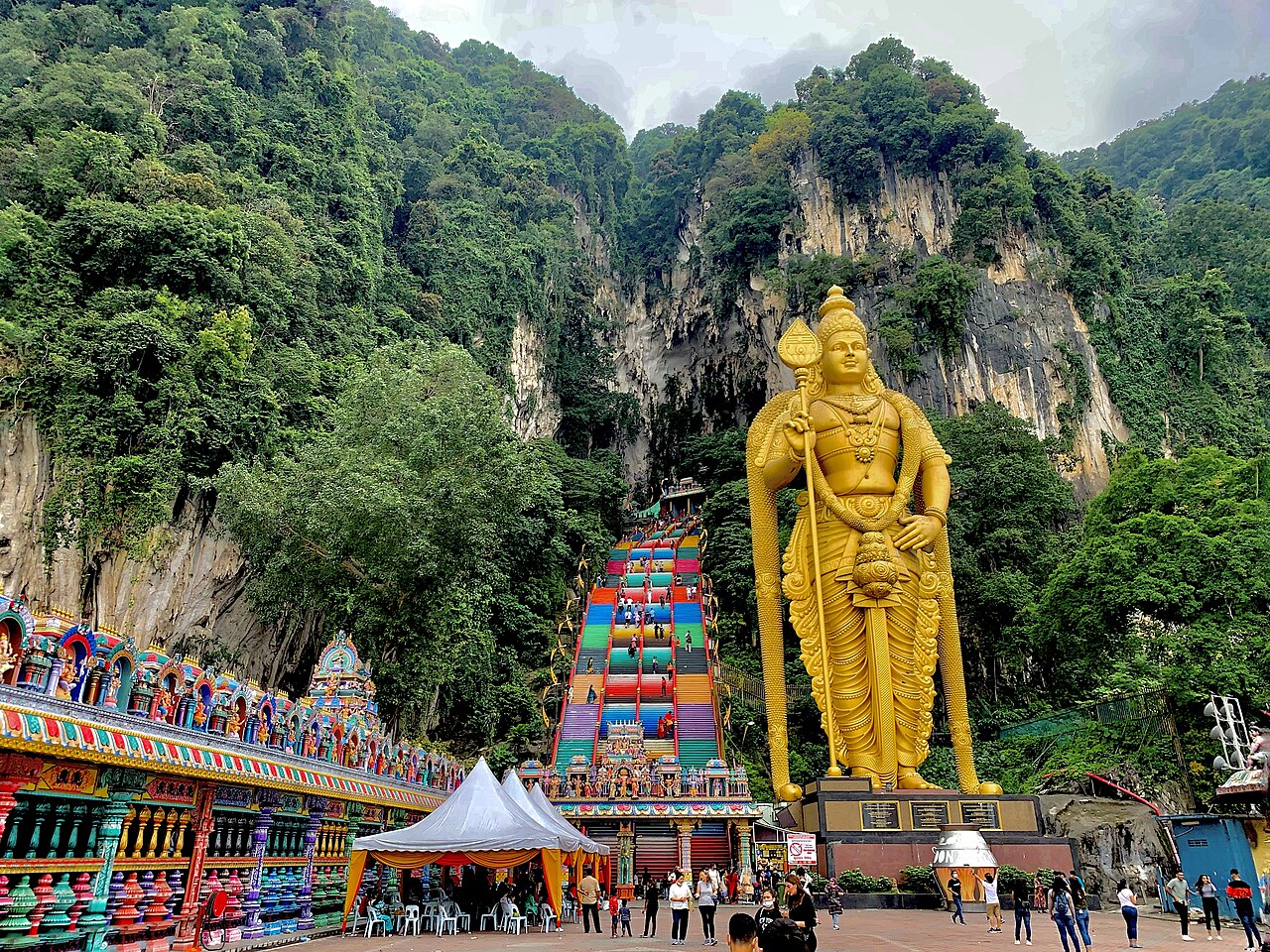
Take the KTM Komuter from KL Sentral to Batu Caves station — about 30 minutes and under RM 3. The 272 rainbow-painted steps rise under a 42.7-metre gold statue of Lord Murugan, the tallest of its kind anywhere, and at 7am you get them in soft light with a fraction of the crowd. Entry to the main Temple Cave is free; the Ramayana Cave next door charges about RM 15. Shoulders and knees must be covered — sarongs are rented at the entrance — and the macaques will take anything shiny or edible you leave within reach. Our guide to the best temples in Malaysia explains what you are looking at.
10:30am — Merdeka Square and the old city
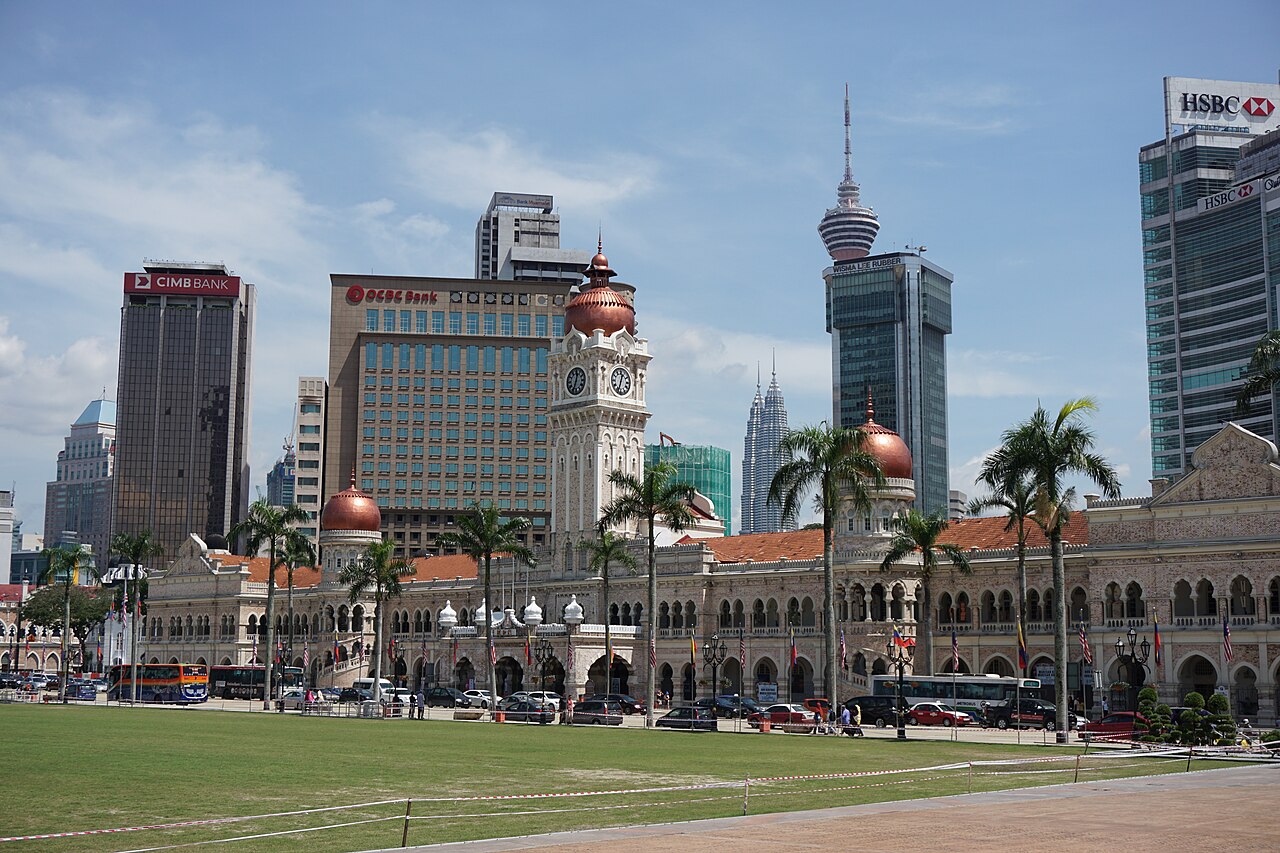
Back on the train to the colonial core. Merdeka Square is where the Malayan flag first went up in 1957, ringed by the Moorish-revival Sultan Abdul Samad Building and the mock-Tudor Royal Selangor Club. Walk ten minutes to Masjid Jamek, at the muddy confluence of two rivers that gave Kuala Lumpur its name — it literally means “muddy estuary” — then across to the Central Market for air conditioning and gifts.
12:30pm — Lunch in Chinatown
Petaling Street is five minutes away. Ignore the counterfeit handbags and find the food: Hokkien mee blackened in a wok, chee cheong fun, or a bowl of curry laksa in one of the shophouse coffee shops on Jalan Sultan. Expect RM 8–15 a plate. The Kuala Lumpur food guide names specific stalls if you want to target one.
2:00pm — The Islamic Arts Museum
This is the afternoon indoors that makes the day survivable, and it happens to be one of the finest museums in Southeast Asia: architectural scale models, Qurans, textiles, Ottoman weaponry and a domed ceiling worth the RM 14 admission on its own. Two hours passes quickly. It sits beside the Perdana Botanical Gardens, so if the sun has softened by 4pm you can walk it off there, or pay RM 63 for the KL Bird Park’s walk-through aviary next door.
6:30pm — Towers, then Jalan Alor
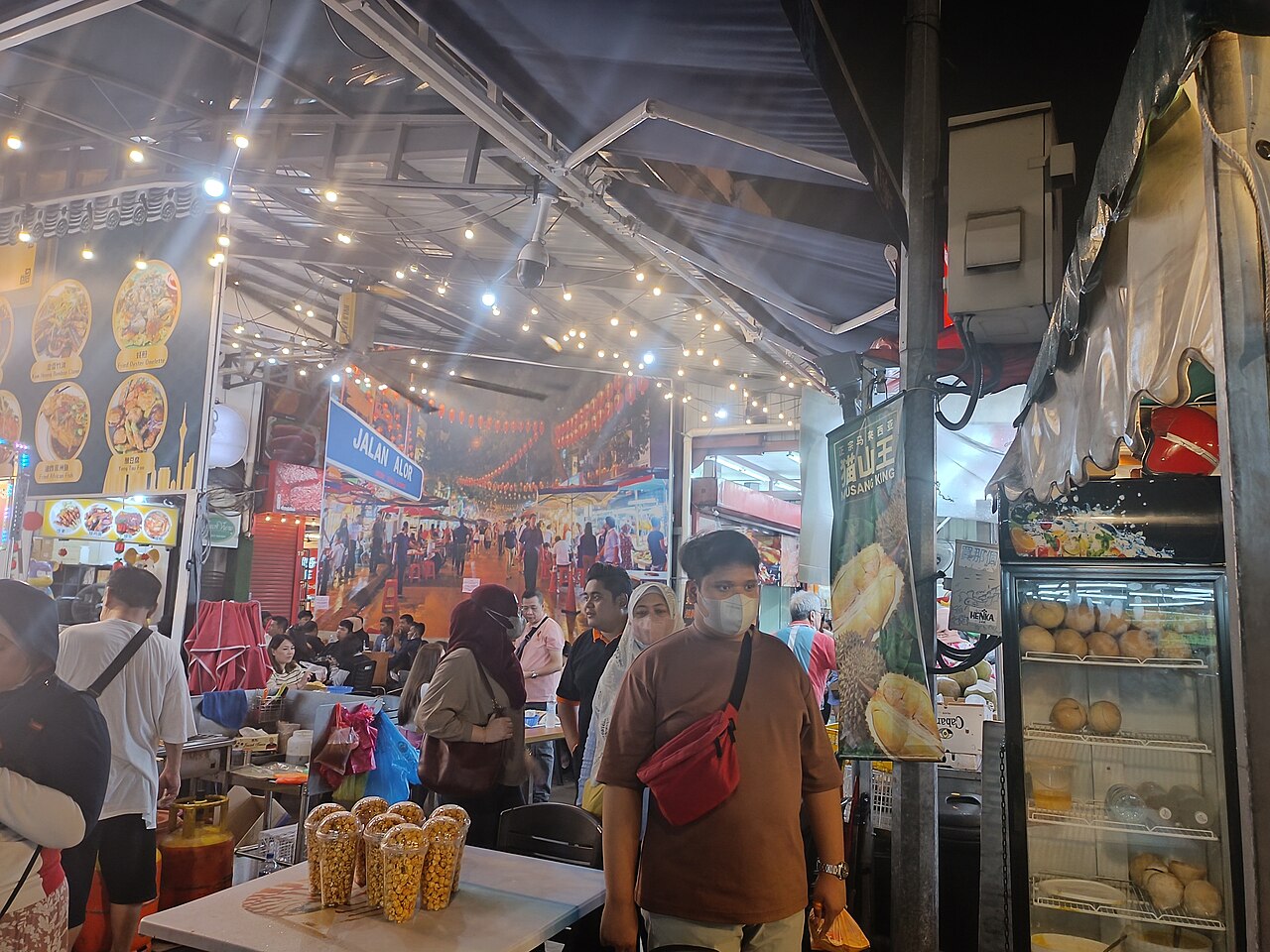
The Petronas Twin Towers are best at dusk when the steel lights up. You have two choices: pay RM 98 to go up the Skybridge and the 86th floor, or spend nothing and look at them from KLCC Park’s lake, where the view actually includes the towers rather than being inside them. Purists take the park. Then walk 15 minutes to Jalan Alor, where the street closes to traffic and fills with plastic stools, satay smoke, grilled stingray, and durian for anyone brave enough. Dinner for two with drinks runs RM 60–90.
Day 2: Choose Your Excursion
Day two is the one that turns a city break into a trip. Three options, in order of how many people should pick them.
Option A: Melaka (best for most people)
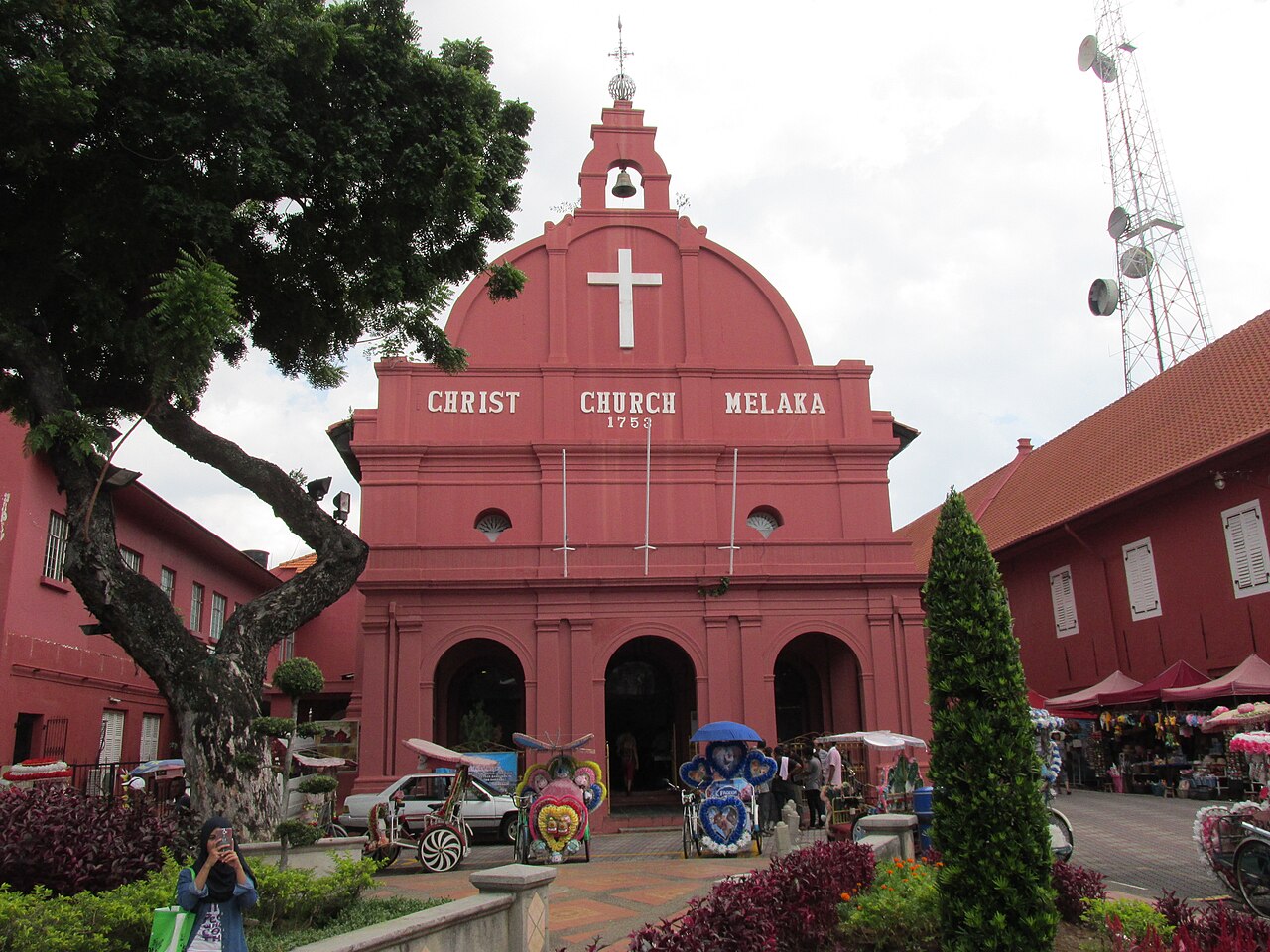
Two and a half hours each way by express bus from TBS terminal, at RM 12–20 a ticket — cheap enough that the only real cost is the early start. Leave KL by 8am and you have six hours in a UNESCO World Heritage city built by the Portuguese, taken by the Dutch, then the British, and fed for five centuries by the Peranakan community that grew out of Chinese-Malay intermarriage.
Walk the red Dutch Square and the ruins of St Paul’s Church on the hill, take the 45-minute river cruise for the street art along the banks, and eat Nyonya food — chicken pongteh, ayam buah keluak, cendol drowned in palm sugar — that exists in this form almost nowhere else. Time it for a Friday, Saturday or Sunday and Jonker Street’s night market runs in the evening, though you will be catching a late bus back. The Melaka travel guide has a walking route.
Option B: Putrajaya and Kuala Selangor (best for a lighter day)
Putrajaya, Malaysia’s purpose-built administrative capital, is 30 minutes from KL by KLIA Transit and looks like a rendering that escaped: the rose-tinted Putra Mosque on the lakefront, the vast Iron Mosque, and boulevards on a scale nobody walks. Half a day covers it. Pair it with a late afternoon run out to Kuala Selangor for the firefly boats — thousands of synchronously flashing beetles in the mangroves after dark, which is one of the more genuinely strange things you can do near a capital city.
Option C: Stay in KL and go deeper
Skipping the bus is a defensible choice on a 72-hour trip. Spend the morning in Kampung Baru, the Malay village that survived in the middle of the city, for nasi lemak eaten off banana leaf within sight of the skyscrapers. Then the Thean Hou Temple, a six-tiered Chinese temple on a hill with the best free view in KL, and an afternoon in Brickfields — Little India — for banana leaf rice and a sensory overload of flower garlands and Tamil music. Finish at the KL Forest Eco Park canopy walkway, nine hectares of primary rainforest that the city grew around. Other options are in our day trips from Kuala Lumpur guide.
Day 3: Eat, Buy, Fly
Work backwards from your flight. For an international departure, be at KLIA three hours before, and allow an hour to get there — so a 6pm flight means leaving the city by 2pm and your last real activity ends at midday.
Use the morning on whatever you have been thinking about since day one. The strongest options: a proper nasi lemak breakfast at a roadside stall (RM 3–6, wrapped in banana leaf and eaten standing up), an hour at the Petaling Street or Central Market for pewter, batik and Sarawak pepper, and one final hawker lunch. If it is a weekend, a pasar pagi morning market is a better hour than any shop — the night markets and food markets guide lists which neighbourhoods run which days.
With a late-evening flight, add the Perdana Botanical Gardens or a mall for the air conditioning — Suria KLCC and Pavilion both hold luggage — rather than starting anything that needs a Grab across town in afternoon traffic.
Getting Around Kuala Lumpur
KL’s rail network is cheap, air-conditioned and covers almost everything in this itinerary, but it is stitched together from five separate systems that do not always share stations. Knowing which is which saves you an hour a day.
- MRT — the newest and most useful lines, connecting Merdeka, Bukit Bintang, Chinatown (Pasar Seni) and the museum district.
- LRT — older, covers KLCC and the Petronas Towers, Masjid Jamek and Chinatown.
- Monorail — a single elevated line through Bukit Bintang and Chinatown; slow, scenic, useful for Jalan Alor.
- KTM Komuter — the commuter rail that gets you to Batu Caves for under RM 3.
- KLIA Ekspres and KLIA Transit — airport lines from KL Sentral, with the Transit stopping at Putrajaya.
Buy a Touch ‘n Go card at any station for RM 10 and top it up as you go — it works across every line and on buses, and saves queuing for single tickets. Individual fares run RM 1.50 to RM 5. The free GOKL city bus loops through the centre and costs nothing at all, though it is at the mercy of traffic.
Grab fills the gaps. A cross-city ride is RM 10–25, drivers are metered through the app so there is no negotiation, and it is the right call after 10pm or with luggage. Street taxis without a meter running are best declined. Walking between adjacent sights is often slower than it looks on a map — KL was built for cars, pavements disappear without warning, and covered walkways only connect parts of the centre.
If it rains
Afternoon thunderstorms are normal year-round and usually last under an hour. Do not rearrange the whole day around one — shelter, eat something, wait it out. The reliable wet-weather swaps are the Islamic Arts Museum, the National Museum, Aquaria KLCC, the Petronas Towers gallery, and Central Market, all of which are indoors and all of which are 20 minutes from anywhere central.
What Three Days Costs
Per person, excluding international flights, at 2026 prices. The mid-range column is what most visitors actually spend.
| Item | Budget | Mid-range | Comfortable |
|---|---|---|---|
| Accommodation (2 nights) | RM 60–100 | RM 240–400 | RM 800–1,400 |
| Food (3 days) | RM 90 | RM 180 | RM 400 |
| Local transport | RM 30 | RM 60 | RM 150 |
| Airport transfers (return) | RM 40 (bus) | RM 110 (train) | RM 180 (Grab) |
| Attractions and day trip | RM 50 | RM 180 | RM 350 |
| Total | RM 270–310 / $64–74 | RM 770–930 / $183–221 | RM 1,880–2,480 / $448–590 |
Malaysia is cheap in a way that surprises people arriving from Singapore or Australia — a full hawker meal costs less than a coffee in most Western capitals. Our Malaysia travel budget breakdown has the per-item detail, and there are enough free things to do in Malaysia to run this itinerary at the bottom of that range without it feeling like a sacrifice.
Four Alternative 3-Day Itineraries
The Penang food weekend
Fly straight into Penang International and give George Town all three days. Day one: the UNESCO core on foot — clan jetties, Cheah Kongsi, the wrought-iron street art, Khoo Kongsi’s clan house — and a night at the Gurney Drive hawker centre. Day two: Kek Lok Si temple in the morning, Penang Hill’s funicular for the cool air and the view, then assam laksa at Air Itam market. Day three: Batu Ferringhi beach or Penang Peranakan Mansion, and one last plate of char kway teow. It is the strongest three-day food trip in the country and it needs no buses at all.
The Langkawi reset
A one-hour flight from KL, or a 35-minute hop from Penang — the old direct Penang–Langkawi ferry has not run since the pandemic, so flying is now the standard route. Three days covers the Sky Cab cable car and curved Sky Bridge, a mangrove boat safari through the Kilim geoforest park, an island-hopping trip, and two days doing nothing on Cenang or Tengah beach. Langkawi is duty-free, which makes it the cheapest place in Malaysia to drink, and it works year-round unlike the east coast islands.
The KL and Singapore split
If you are already in Singapore, three days buys you two nights in KL and the journey each way. The overnight bus takes five to six hours for RM 60–100; flights take an hour but eat the savings in airport time. Do day one of this itinerary, then day two in Kampung Baru and Brickfields, and take the early bus back. Crossing at the Johor causeway on a Friday evening or Sunday night is a mistake you make once.
The family version
Swap the museum and the temples for Aquaria KLCC’s walk-through tunnel, the KL Bird Park’s free-flight aviary, and a half day at Sunway Lagoon. Keep Batu Caves — children like the monkeys and the steps more than adults do — and replace the Melaka bus with Putrajaya, which is closer and has boat rides on the lake. Malaysia is one of the easiest countries in Asia to travel with young children: baby-changing facilities are standard, hawker food is mild by default, and nobody minds a toddler in a restaurant.
Five Mistakes People Make in 72 Hours
Adding a second city. KL and Penang in three days means four hours on a train and two half-days lost to hotel logistics. Pick one.
Arriving on a Monday for the Towers. The Petronas Twin Towers close most Mondays, opening only on the second and fourth Monday of the month. Check before you build a day around them.
Sightseeing between noon and 3pm. The heat is not a detail, it is the constraint the whole day is built around. Museums, malls and long lunches exist for those hours.
Booking restaurants. The best food in Malaysia is at stalls with plastic chairs and no phone number. Reserve nothing; walk somewhere busy. Start with our Malaysian street food guide.
Underestimating the airport run. KLIA is 45 kilometres from the city. Traffic on the Federal Highway can turn a 40-minute Grab into 90. The train is immune to this and it is the reason to take it.
3 Days in Malaysia FAQs
Is 3 days enough for Malaysia?
It is enough for one city and one day trip, which makes a satisfying short trip but not a comprehensive one. Kuala Lumpur alone justifies three days on food, temples and architecture. For islands, Borneo or a multi-city route, you need seven days or more.
Can I visit Penang and Kuala Lumpur in 3 days?
Technically yes, practically no. The ETS train takes three and a half hours each way, so you would lose most of two days to travel and hotel changes for about 24 usable hours in the second city. Save Penang for a five-day trip, when it earns its place.
What is the best time of year for a short Malaysia trip?
Kuala Lumpur works year-round — it rains in short afternoon bursts rather than all day, and the city is built for it. If your three days fall between November and February, you are in the right place anyway, because the east coast islands are closed for the monsoon and KL is unaffected. Our best time to visit Malaysia guide breaks it down by month.
Do I need to book a tour?
No. Everything in this itinerary is reachable by train, Grab or a walk. English is widely spoken, signage is bilingual, and the rail network covers most of what you want. The one exception worth paying for is a Melaka day tour if you would rather not manage the bus terminal — though the bus is genuinely easy. See our Malaysia transportation guide for how the networks connect.
How much cash do I need?
More than you would expect. Hawker stalls, temples and small shops are cash-only, and ringgit notes in small denominations are what you want. Cards work in malls, hotels and chain restaurants; Grab takes cards in-app. Withdraw RM 300–500 on arrival and you will not think about it again.
Plan the Rest of Your Trip
Three days is the version of Malaysia that fits around a flight connection, and it does the job — one city understood properly is worth more than four cities glimpsed. If your dates turn out to be more flexible, adding just two more days opens up Melaka overnight and George Town — see our 5 days in Malaysia itinerary — and a full week gets you to Langkawi or the highlands.
The full set of routes by trip length is in our Malaysia itineraries guide, and the Kuala Lumpur travel guide goes neighbourhood by neighbourhood if you want to build these three days differently.
2 notes