Where to Stay in Kuala Lumpur: Best Areas, Honestly Compared (2026)
Two KL hotels can be 800 metres and 40 minutes apart. Eleven areas with rate bands, named rail stations and the catch, plus the 1,173 m walkway that joins KLCC to Bukit Bintang.
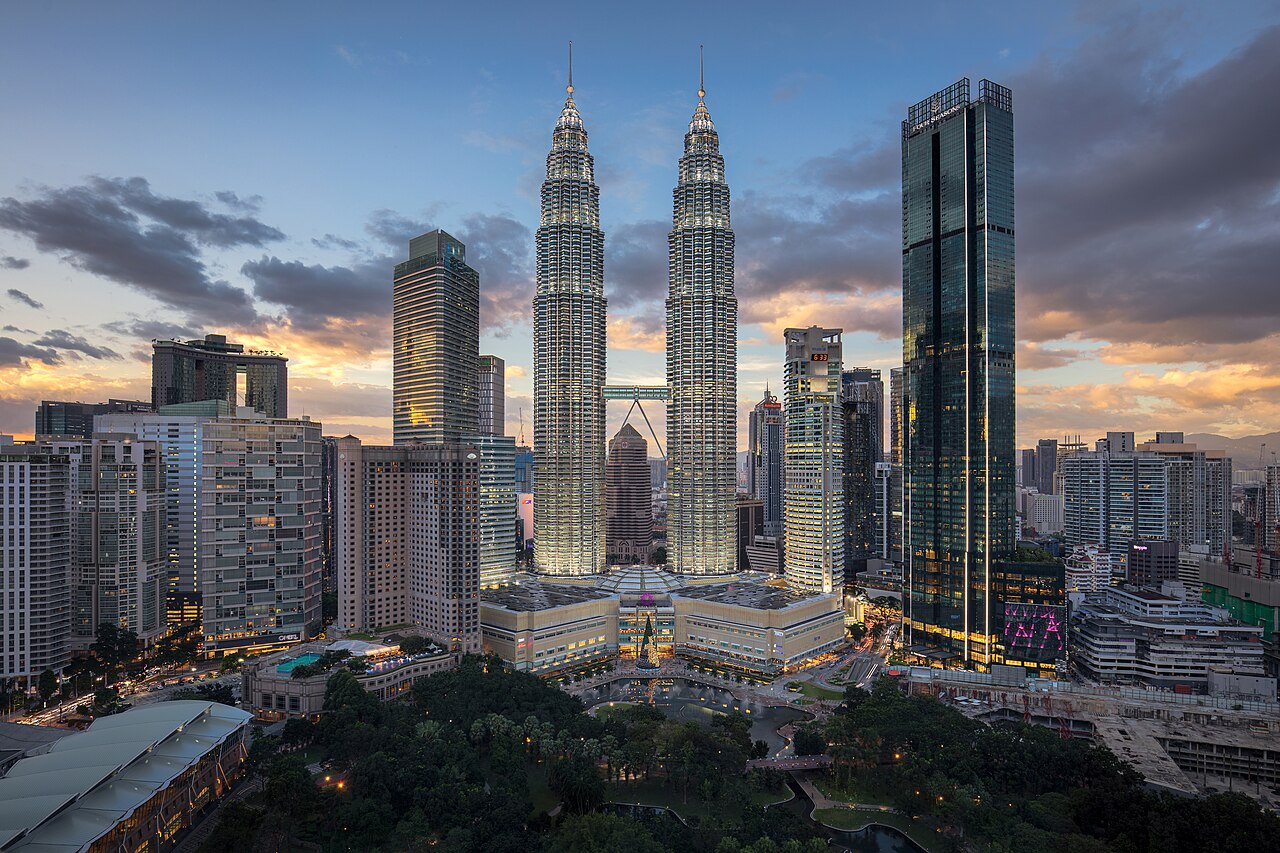
Two hotels in Kuala Lumpur can be 800 metres apart and 40 minutes apart at the same time: no pavement for part of it, no crossing where you need one, no shade, and a six-lane road between you and the building you can clearly see. That is what should drive your decision about where to stay in Kuala Lumpur. Not which neighbourhood photographs best, but which rail line your bed sits on, and whether you can reach a train and a bowl of noodles without getting into a car.
KL is a city built for cars that later bolted on one of Southeast Asia’s better rail networks. The rail works. The last 400 metres between station and door frequently does not. Get that gap right and KL is cheap and easy. Get it wrong and you spend RM 20 (about US$5) a time on Grab to cover distances you can see from your balcony, four times a day.
What follows is what the other pages on this search do not carry: a per-area, per-tier rate band, the station and line by name for every neighbourhood, an honest catch for each, and the arithmetic on what a night really costs. For property types, booking windows and the national tax rules, see our Malaysia accommodation guide. This page is only about the capital, and only about the decision.
Kuala Lumpur areas at a glance: rate bands and the catch
These are typical nightly rates for a standard room, framed from verified anchors rather than scraped from one date, and they move between a Tuesday in May and a school-holiday Saturday. Every figure is pre-tax: it excludes the 10% service charge, the 8% service tax and the RM 10 tourism tax. Assume 20% on top, plus RM 10 flat.
| Area | Hostel bed | Midrange double | Upper / five-star | Nearest rail | Best for | The catch |
|---|---|---|---|---|---|---|
| KLCC | RM 45-70 (US$11-17) | RM 250-420 (US$60-100) | RM 700-1,400+ (US$167-333+) | KLCC (LRT Kelana Jaya) | First-timers, business, views | “Near the towers” can mean unreachable on foot |
| Bukit Bintang | RM 35-60 (US$8-14) | RM 200-380 (US$48-90) | RM 550-1,100 (US$131-262) | Bukit Bintang (MRT Kajang + Monorail) | First-timers, food, shopping | Changkat noise until 03:00 on the wrong street |
| Chinatown / Pasar Seni | RM 30-55 (US$7-13) | RM 150-280 (US$36-67) | RM 350-600 (US$83-143) | Pasar Seni (MRT + LRT interchange) | Budget, backpackers, walkers | Thin walls, early market noise, no real luxury |
| Merdeka Square / Old City | RM 35-60 (US$8-14) | RM 160-300 (US$38-71) | RM 400-700 (US$95-167) | Masjid Jamek (LRT interchange) | Heritage, photography, quiet nights | Dead after dark; limited dinner options nearby |
| KL Sentral / Brickfields | RM 35-65 (US$8-15) | RM 220-400 (US$52-95) | RM 500-900 (US$119-214) | KL Sentral (every line + KLIA Ekspres) | Airport runs, one-night stays, day trips | You sleep in an interchange, not a neighbourhood |
| Bangsar | RM 40-70 (US$10-17) | RM 230-420 (US$55-100) | RM 550-950 (US$131-226) | Bangsar (LRT Kelana Jaya) | Long stays, repeat visitors, eating out | One stop from KL Sentral but 15-20 min from KLCC sights |
| Mont Kiara | Effectively none | RM 200-400 (US$48-95) | RM 450-800 (US$107-190) | None. Semantan ~10 min by car | Month-long stays with a car | No MRT or LRT at all. Grab RM 15-30 each way, every time |
| Chow Kit | RM 25-45 (US$6-11) | RM 130-250 (US$31-60) | Rare above RM 400 (US$95) | Chow Kit (Monorail) | Rock-bottom budgets, market mornings | Rough after dark; vet the street, not the area |
| Kampung Baru | Limited | RM 120-240 (US$29-57) | Effectively none | Kampung Baru (LRT Kelana Jaya) | Food, atmosphere, budget with character | Guesthouse standard; conservative area, dress accordingly |
| TRX / Merdeka 118 | None | RM 300-500 (US$71-119) | RM 800-1,500+ (US$190-357+) | TRX (MRT); Merdeka (MRT Putrajaya) | New-build luxury, shopping, business | Thin street life; construction hoardings in places |
| Near KLIA | RM 40-70 (US$10-17) | RM 180-350 (US$43-83) | RM 500-800 (US$119-190) | KLIA T1/T2 (Ekspres, 28 min) | Flights before 07:00 only | 60 km out. You have left KL, not stayed in it |
Pick the line before you pick the neighbourhood
The most useful reframe for KL: you are not choosing an area, you are choosing a rail line. Five minutes from a station on a line that touches what you came for, and the neighbourhood barely matters. Fifteen minutes from a station on a line that goes nowhere useful, and no amount of charm rescues it.
| Line | Stations that matter for hotels | What it actually reaches |
|---|---|---|
| LRT Kelana Jaya Line | KLCC, Kampung Baru, Dang Wangi, Masjid Jamek, Pasar Seni, KL Sentral, Bangsar | The spine most visitors need: Twin Towers, Chinatown, the old city, KL Sentral, Bangsar. 46.4 km, 37 stations, open since 1 September 1998 |
| MRT Kajang Line | Bukit Bintang, TRX, Pasar Seni, Semantan, Muzium Negara | Bukit Bintang shopping, TRX, Chinatown, day trips via interchange |
| MRT Putrajaya Line | Merdeka, Chan Sow Lin, Titiwangsa | The Merdeka 118 district and the newer eastern corridor |
| KL Monorail | Bukit Bintang, Imbi, Raja Chulan, Bukit Nanas, Medan Tuanku, Chow Kit | The Bukit Bintang-Chow Kit strip; slow, but it threads streets nothing else reaches |
| KLIA Ekspres | KL Sentral, KLIA T1, KLIA T2 | The airport in 28 minutes at up to 160 km/h, every 15-20 minutes |
| LRT Ampang / Sri Petaling | Masjid Jamek, Hang Tuah | Interchanges more than destinations |
Two interchanges do most of the work: KL Sentral, which connects everything including the airport train, and Masjid Jamek, which joins the two LRT systems. Within one change of either, you are fine. For the country beyond the capital, our Malaysia transport guide covers what happens once you leave the capital.
The walkability question, with an actual number
Every other guide says KL is not a walking city and leaves it there. That is half true and unhelpfully vague, so here is the number that settles it. The KLCC-Bukit Bintang Pedestrian Walkway is 1,173 metres long, fully air-conditioned and open since 2012. It links Pavilion Kuala Lumpur at the Bukit Bintang end to Suria KLCC at the tower end. Walking it takes about 15 minutes, entirely indoors, without crossing a single road.
That one piece of infrastructure is why KLCC and Bukit Bintang function as a single accommodation zone rather than two competing choices. Book either and you have the other: eat in Bukit Bintang, be under the Twin Towers a quarter of an hour later in a shirt that is still dry. Nothing else in KL works this way.
Outside that corridor, three constraints govern walking in KL:
- Heat. Roughly 30-33C with high humidity year-round. A 1 km walk at 14:00 is not the same activity as at 09:00.
- Missing crossings. Major roads often have no signalised crossing for several hundred metres, so a 200 m straight line becomes an 800 m detour to a footbridge.
- Discontinuous pavement. Footpaths stop, restart, or get blocked by parked motorcycles — worst in the areas that look most convenient on a map.
The rule: draw a 500 m circle around the hotel on a map. If a rail station and three places to eat fall inside it, the location works. If not, you are booking a Grab habit rather than a hotel. Chinatown, Bukit Bintang, Kampung Baru and Bangsar village pass. Parts of KLCC, and all of Mont Kiara, do not.
The areas, one by one, with the catch
KLCC: the postcard, at a price and with a road problem
Rate band: hostel beds RM 45-70, midrange doubles RM 250-420, upper and five-star RM 700-1,400+ (about US$167-333+). Station: KLCC on the LRT Kelana Jaya Line, with the Ampang Park and Dang Wangi stations on the same line at either edge.
The district around the Petronas Twin Towers: 451 m, 88 storeys, Skybridge and observation deck at Level 86. KLCC Park behind them has a 1.3 km jogging path, the only pleasant outdoor walk in the centre and best used before 09:00. Malaysia’s densest cluster of international five-stars sits within a kilometre.
The catch: “near KLCC” is a marketing radius, not a walking radius. Jalan Ampang, Jalan Tun Razak and Jalan P. Ramlee are wide, fast and short of crossings, so plenty of hotels sit 800 m from the towers and 25 minutes away on foot. Check the hotel connects to a walkway, faces the park, or sits within 400 m of KLCC or Ampang Park station.
Verdict: right for a first trip on a midrange-and-up budget, and for anyone who wants the view from the room rather than from a queue. Skip it if you are counting money; the same line puts you in Chinatown for half the price.
Bukit Bintang and Changkat: the default answer, with one trap
Rate band: hostel beds RM 35-60, midrange doubles RM 200-380, upper tier RM 550-1,100 (about US$131-262). Station: Bukit Bintang on the MRT Kajang Line, physically integrated with the KL Monorail station of the same name. Imbi and Raja Chulan on the Monorail cover the fringes.
Ask ten frequent visitors where a first-timer should sleep and most say here, for practical reasons: two rail systems in one building, the Bukit Bintang end of the walkway, Jalan Alor’s hawker street minutes from Pavilion. The density of places to eat between RM 8 and RM 80 is unmatched — our Kuala Lumpur food guide works out of this area by default. Four major malls are within walking distance for anyone doing serious shopping in Malaysia.
The catch: Changkat Bukit Bintang, the city’s densest bar strip, runs uphill off Jalan Bukit Bintang. Venues broadly operate 14:00 to 03:00, most closing between 02:00 and 03:00; on busy nights the street is partly closed to traffic and music from adjacent venues overlaps at the intersections. Few people book Changkat expecting quiet, but plenty book “Bukit Bintang”, get a room facing it or Tengkat Tong Shin, and find out at 01:30. Want quiet? Book the Pavilion or Imbi side, high floor, facing away from the hill. Want the noise? Our Malaysia nightlife guide maps what is on it.
Verdict: the correct default for first-timers and short trips. Choose your street within it deliberately.
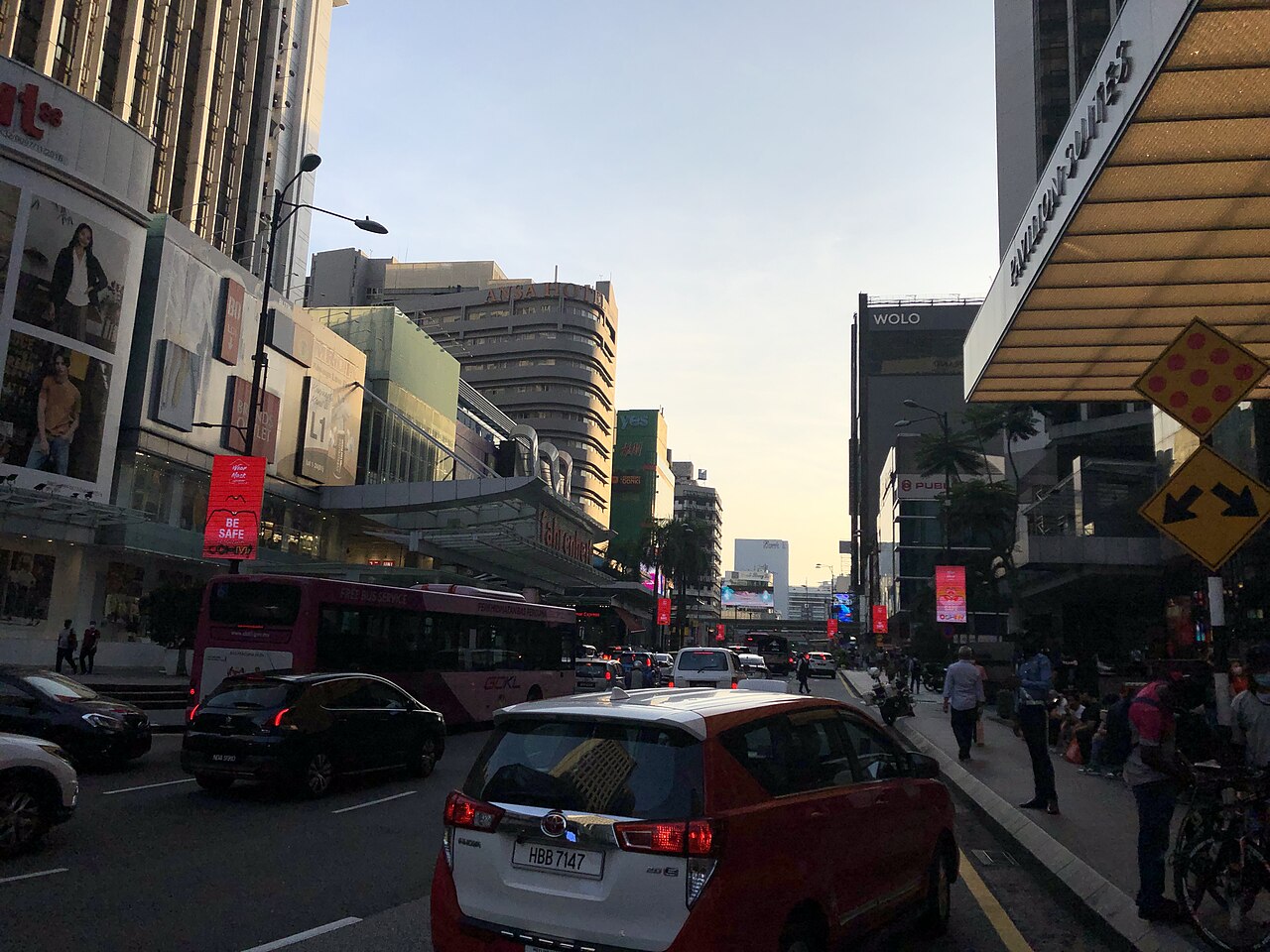
Chinatown, Petaling Street and Pasar Seni: the best value in the city
Rate band: hostel beds RM 30-55, midrange doubles RM 150-280, the top of the market around RM 350-600 (about US$83-143). Station: Pasar Seni, which interchanges between the MRT Kajang Line and the LRT Kelana Jaya Line — one of only a handful of points in KL where you can reach almost anything with a single change.
KL hostels average roughly US$4 a dorm bed and about US$19 for a private room, and Chinatown is where those averages live. It has also become the city’s design-hotel district, restored shophouses converted into 15-room boutiques that undercut a KLCC four-star by half. It is the most walkable square kilometre in KL: Central Market, Petaling Street, Sri Mahamariamman temple and a hundred coffee shops on a grid where the roads are narrow enough to cross. If you are here for hawker food at street level, this is the address.
The catch: shophouse conversions have shophouse acoustics. Walls are thin, vendors set up early, and the RM 40-45 (about US$10-11) guesthouse rooms on Jalan Pudu opposite the old bus terminal are as grim as the price suggests. There is also very little true luxury here.
Verdict: the best value in KL and the best choice for anyone who wants to walk. Book a courtyard-facing room and bring earplugs. On safety it is a normal busy urban area with normal urban pickpocketing — our guide to safety in Malaysia covers the specifics without the scaremongering.
Merdeka Square and the Old City: heritage, and nothing open at 21:00
Rate band: hostel beds RM 35-60, midrange doubles RM 160-300, upper tier RM 400-700 (about US$95-167). Station: Masjid Jamek, the interchange between the LRT Kelana Jaya and LRT Ampang/Sri Petaling lines.
The colonial core: the Sultan Abdul Samad Building, the padang, the river confluence at Masjid Jamek that gave the city its name. It is the most photogenic part of KL at dawn and the emptiest at night, because it is an administrative district that empties when offices close. Rates run below Bukit Bintang for equivalent quality because of it.
The catch: dinner. After about 20:00 you are walking ten minutes to Chinatown or ordering in, and weekend events around the padang can make vehicle access awkward.
Verdict: good for photographers and light sleepers who want a central address without a bar under the window. Poor if your evenings start after nine.
KL Sentral and Brickfields: sleep in an interchange, on purpose
Rate band: hostel beds RM 35-65, midrange doubles RM 220-400, upper tier RM 500-900 (about US$119-214). Station: KL Sentral, where the LRT Kelana Jaya Line, the MRT, the Monorail (via a covered link to Nu Sentral), the KTM Komuter network and the KLIA Ekspres all converge.
Nobody loves KL Sentral; people book it because it solves problems. The KLIA Ekspres runs the 60 km to the airport in 28 minutes, every 15-20 minutes, at RM 55 (about US$13) one way with 10% off through the app. Day trips start here too, which suits anyone working through a list of day trips from Kuala Lumpur. Immediately south, Brickfields is KL’s Little India: temple bells, banana-leaf rice at RM 12-18 (about US$3-4), garland stalls and a genuine street life the interchange itself lacks.
The catch: the station’s surroundings are offices, malls and podium decks, the walk into Brickfields is longer than the map claims, and you are 15-20 minutes from KLCC, so every sightseeing evening starts with a train ride.
Verdict: right for one-night stays, early flights, families with heavy luggage and anyone using KL as a hub. Wrong for a four-night city break.
Bangsar: where people who live here would put you
Rate band: hostel beds RM 40-70, midrange doubles RM 230-420, upper tier RM 550-950 (about US$131-226). Station: Bangsar on the LRT Kelana Jaya Line — one stop from KL Sentral.
That single stop is the whole argument. Bangsar is leafy and low-rise, with independent restaurants, a wet market and a bar scene aimed at residents rather than tourists, one LRT stop from the main interchange. Alila Bangsar connects to the station by pedestrian bridge, which in KL terms is a luxury feature.
The catch: Telawi, where the good eating is, sits about a kilometre uphill from Bangsar station, so most people Grab it for RM 6-10 (about US$1.50-2.50) each way. You are 15-20 minutes from the KLCC sights, and Bangsar South is a different place entirely: an office park further out with none of the advantages.
Verdict: excellent for a second visit, a week or more, or anyone travelling to eat. Wrong base for three days of monuments.
Mont Kiara: a great place to live and a poor place to be a tourist
Rate band: serviced apartments and midrange doubles RM 200-400, upper tier RM 450-800 (about US$107-190). Hostels essentially do not exist here. Station: none. There is no MRT and no LRT in Mont Kiara. The nearest is Semantan on the Kajang Line, roughly ten minutes away by car.
No competing guide covers Mont Kiara at all, so here is the verdict they are not giving you. It is 7-8 km northwest of KLCC, and the commute in runs 15 minutes off-peak to 45 at peak. It is a high-rise expatriate district with international schools, supermarkets, gyms and large apartments at prices that look outstanding next to a KLCC hotel. Every one of those is a virtue for a resident.
The catch: as a visitor you make four to six trips a day and every one is a car trip. Grab to KL Sentral or Bukit Bintang runs RM 15-30 (about US$4-7) each way, so two returns a day is RM 60-120 (US$14-29) before you buy anything, plus peak-hour time you cannot recover. The apartment that was RM 120 a night cheaper is not cheaper by the third day.
Verdict: stay here for a month with a car or a work base. Do not stay here on a five-night holiday, however good the apartment looks. Same logic for Damansara, Desa ParkCity and Bangsar South: excellent addresses, wrong purpose.
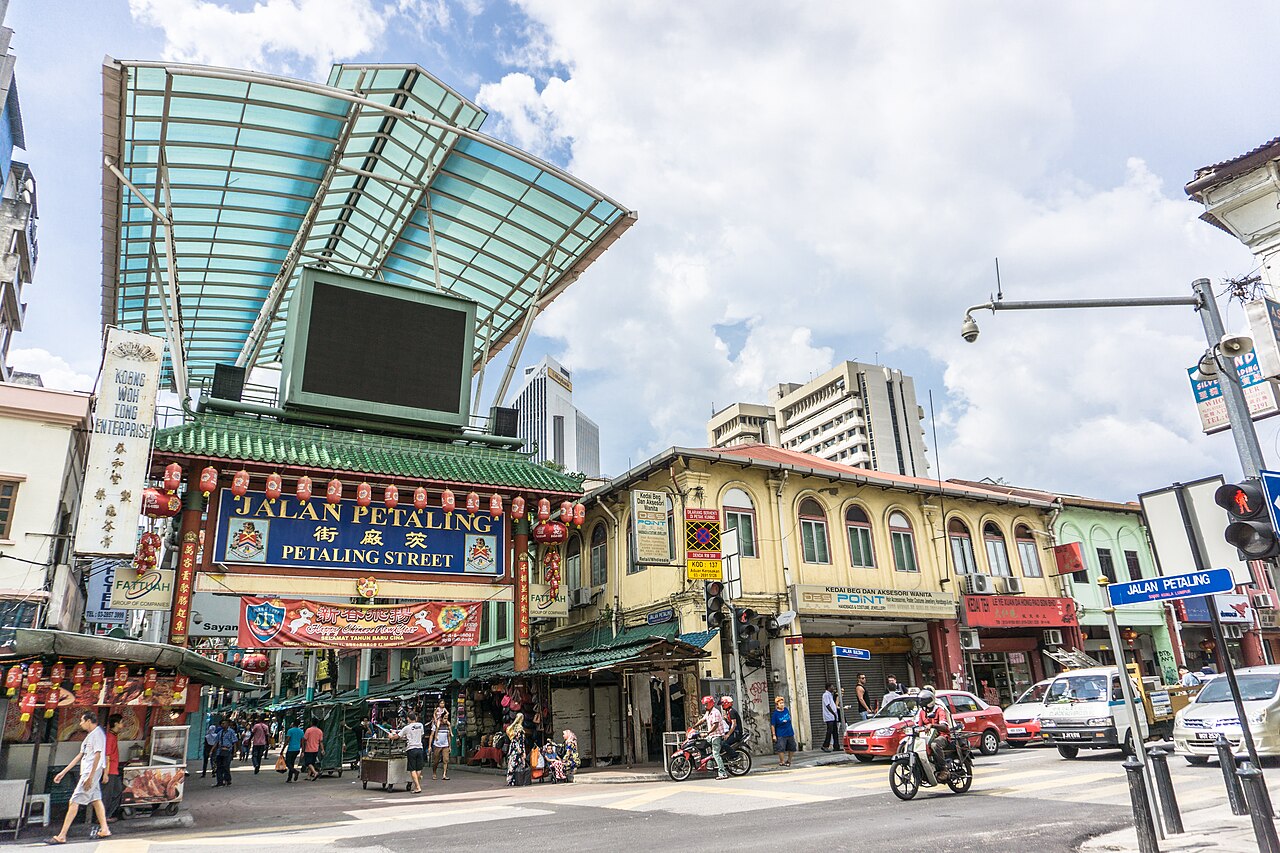
Chow Kit: cheapest beds in the city, and you should look at the street
Rate band: hostel beds RM 25-45, midrange doubles RM 130-250 (about US$31-60); very little exists above RM 400. Station: Chow Kit on the KL Monorail, with Medan Tuanku one stop south.
Chow Kit’s wet market is one of the best food-shopping sights in KL and it starts before dawn. The area is genuinely cheap and has more character per ringgit than anywhere else here. It also has central KL’s roughest after-dark reputation, and that reputation is street-specific rather than area-wide.
The catch: the Monorail is the only rail, it is slow, and it does not reach KLCC directly. Vet the exact street, not the neighbourhood label, and prefer the Jalan Raja Laut or Medan Tuanku side.
Verdict: for experienced budget travellers who have compared streets. Everyone else does better in Chinatown for RM 10-20 more.
Kampung Baru: a Malay village 1.5 km from the Twin Towers
Rate band: guesthouse and midrange rooms RM 120-240 (about US$29-57). Almost nothing at the top end. Station: Kampung Baru on the LRT Kelana Jaya Line, two stops from KLCC.
Wooden stilt houses, satay grills on the pavement, nasi lemak stalls open at 07:00, and the best photograph in Kuala Lumpur: traditional rooflines with the 451 m Petronas towers directly behind. A working Malay urban village that resisted redevelopment while the skyline grew around it, on the same rail line as KLCC.
The catch: the stock is guesthouses and homestays, not hotels, so expect simple rooms and inconsistent air conditioning. It is a conservative Muslim neighbourhood: dress modestly, expect very limited alcohol. During Ramadan the evening market makes the streets nearly impassable, which is either the reason to come or not — check dates in our month-by-month guide to visiting Malaysia.
Verdict: the most interesting budget base in KL if you want atmosphere over amenities. Not for families or anyone expecting hotel service.
TRX and the Merdeka 118 district: the new money
Rate band: midrange doubles RM 300-500, upper and five-star RM 800-1,500+ (about US$190-357+). Stations: TRX on the MRT Kajang Line, one stop from Bukit Bintang; Merdeka on the MRT Putrajaya Line, serving the Merdeka 118 tower directly.
Both districts barely register on page one of this search, and both are where KL’s new hotel supply is landing. Tun Razak Exchange is the financial district, with a large new mall, a rooftop park and MRT access one stop from Bukit Bintang. Merdeka 118 is the 678.9 m tower, the second-tallest building in the world, with its own MRT station and a retail district still filling in at its base.
The catch: both are podium-and-tower environments with thin street life. You walk through a mall to get anywhere, and Merdeka 118 still has construction hoardings and stretches with no reason to be on foot.
Verdict: strong for business travellers and anyone valuing a brand-new room and a gym over a neighbourhood. One MRT stop from Bukit Bintang means you get the food anyway.
Near KLIA: almost never worth it
Rate band: hostel and capsule beds RM 40-70, midrange doubles RM 180-350, upper tier RM 500-800 (about US$119-190). Station: KLIA T1 and T2 on the KLIA Ekspres.
Do the arithmetic first. KLIA is about 60 km out. The Ekspres covers it in 28 minutes at up to 160 km/h, plus three more to Terminal 2, every 15-20 minutes, at RM 55 (about US$13) with 10% off via the app. Buses take over an hour for a fraction of the fare.
So: is your flight early enough that the first train cannot get you there? A 06:00 departure means being airside by 04:30, which no train serves. That is the case for an airport hotel. A 09:00 flight is not: leave KL Sentral at 06:30, be at the terminal by 07:00, having slept in the city.
The catch: staying at KLIA means you have left Kuala Lumpur, and a night there costs you an evening you paid airfare to have.
Verdict: only for departures before roughly 07:00, or arrivals after midnight with onward travel the next morning. Otherwise stay at KL Sentral and take the train.
The best area for you, in one line
If you want the answer without the reasoning, take your row.
| If you are… | Stay here | Second choice | Why |
|---|---|---|---|
| A first-timer, 3-4 nights | Bukit Bintang | KLCC | Two rail lines plus the walkway; eat without planning |
| Travelling with kids | KLCC | KL Sentral | Park, aquarium, mall and pool in one block |
| On a tight budget | Chinatown | Chow Kit | Dorms from RM 30 on a walkable MRT-LRT interchange |
| Here for the nightlife | Bukit Bintang (Changkat) | TREC / Jalan Sultan Ismail | Walk home instead of paying surge fares |
| In town on business | TRX or KLCC | Merdeka 118 | New towers, direct MRT, meetings in the same building |
| Staying a month or more | Bangsar | Mont Kiara (with a car) | Residential prices, one LRT stop from KL Sentral |
| One night before a flight | KL Sentral | KLIA (only if pre-07:00) | 28 minutes to the terminal, every 15-20 minutes |
What a night actually costs
Every rate quoted for KL is misleadingly low, because three charges land on top. Foreign passport holders pay a RM 10 tourism tax per room per night, collected at booking through MyTTx since the OTA grace period expired on 31 December 2025. Hotels then add 8% service tax and a 10% service charge — the “++” in the fine print. Here is what that does to one booking.
| Line item | Midrange, Bukit Bintang | Five-star, KLCC |
|---|---|---|
| Headline rate | RM 280 | RM 800 |
| Service charge 10% | RM 28 | RM 80 |
| Service tax 8% | RM 24.64 | RM 70.40 |
| Tourism tax (foreign passport) | RM 10 | RM 10 |
| Total per night | RM 342.64 (about US$82) | RM 960.40 (about US$229) |
| Effective uplift | +22.4% | +20.1% |
Rule of thumb: add a fifth, then add RM 10. Over five nights that is the gap between a midrange room and an upper-tier one, so build it in before you book. For how beds compare with food, transport and entry fees, our Malaysia travel budget breakdown does the daily arithmetic.
Is Airbnb legal in Kuala Lumpur? Read this before you book one
Three competing pages recommend Airbnbs without mentioning the position. The Federal Court has ruled that condominium management corporations can ban short-term rentals in their buildings. DBKL’s position is that short-term rental in residential zones is not permitted unless licensed, and that council permission does not override a building by-law. As of 20 April 2026 DBKL has a standard operating procedure for short-term accommodation aimed at developers and management bodies, but no enabling legislation — it enforces through building and business licensing.
In practice: a live listing does not mean the building allows guests. The failure mode is not a fine, it is a guard at 11pm who will not let you past the lobby turnstile with your luggage while the host does not answer the phone. It happens most in the tourist-heavy condo towers around KLCC, Bukit Bintang and Bangsar South.
- Ask the host directly, before booking, whether the management corporation permits short-term stays and issues guest access cards.
- A residential-tower listing with no recent reviews is a risk, not a bargain.
- Serviced residences in commercial zones are the safe version of the same idea, and are what legitimate operators use.
The market in 2026: still cheap, quietly getting less so
Context nobody else on this search gives you. KL’s luxury segment ran RevPAR up 5.7% year to March 2026 with occupancy up 3.4 points, after a slower 2025 (RevPAR up 1.1%, ADR up 1.7%) that still sits 22.7% above 2019. The luxury ADR benchmark is around RM 642 (about US$153), which makes Kuala Lumpur one of the cheapest major Asian capitals for a five-star room. Sampled rates bear that out, and their spread is the point: Mandarin Oriental lists from roughly RM 1,100 but a January 2026 date was seen near US$174 (about RM 730), and Four Seasons lists from roughly RM 1,300 with early-January dates sampled near US$320. Published “from” rates and what a given Tuesday actually costs are different numbers in this city. Treat both as volatile snapshots, not fixed rates. The direction is up, slowly.
Five ways people get this wrong
- Booking Bukit Bintang for a quiet trip and getting a room over Changkat, where venues run to 03:00. Right area, wrong street.
- Booking “near the Twin Towers” and landing across eight lanes with no crossing, 25 minutes on foot from a building you can see.
- Choosing a suburb on nightly price. RM 15-30 each way from Mont Kiara or Bangsar South, four trips a day, hands the saving back to a driver.
- Believing the rooftop pool photo. A pool is not a location. Check the 500 m circle first.
- Arriving without mobile data, which Grab and the rail apps need — sort a Malaysian SIM or eSIM on landing.
Frequently asked questions
Which area is best for first-timers?
Bukit Bintang, for the rail and the food. The MRT Kajang Line and the Monorail meet in one station, and the walkway puts KLCC 15 minutes away indoors.
Bukit Bintang or KLCC?
Bukit Bintang to eat and walk; KLCC for the view and a quieter, more corporate street. The walkway makes it a smaller decision than it looks.
Can you walk between KLCC and Bukit Bintang?
Yes. The pedestrian walkway is 1,173 m, air-conditioned, open since 2012, and takes about 15 minutes from Pavilion to Suria KLCC without crossing a road.
Is Chinatown safe to stay in?
Yes, with normal city sense. It is busy and well lit at night; the usual issue is pickpocketing in market crowds.
How many days do you need in KL?
Three nights covers the city and one day trip; four if you want to slow down. Our three-day Malaysia itinerary shows how that fits into a shorter trip.
Is it worth staying near KLIA?
Only for departures before about 07:00. Otherwise KL Sentral plus the 28-minute Ekspres wins on cost and food.
Booking order
Pick the line, then the station, then the street, then the hotel. Once the bed is settled, build the days with our Kuala Lumpur travel guide and the wider list of things to do across Malaysia. If Penang is next, the same station-first logic applies in where to stay in Penang.