Malaysia Accommodation Guide: What Your Money Actually Buys (2026)
The room you booked at RM300 is not a RM300 room. Tourism tax, 8% SST, service charge and state levies, plus every property type in Malaysia with what it really costs.
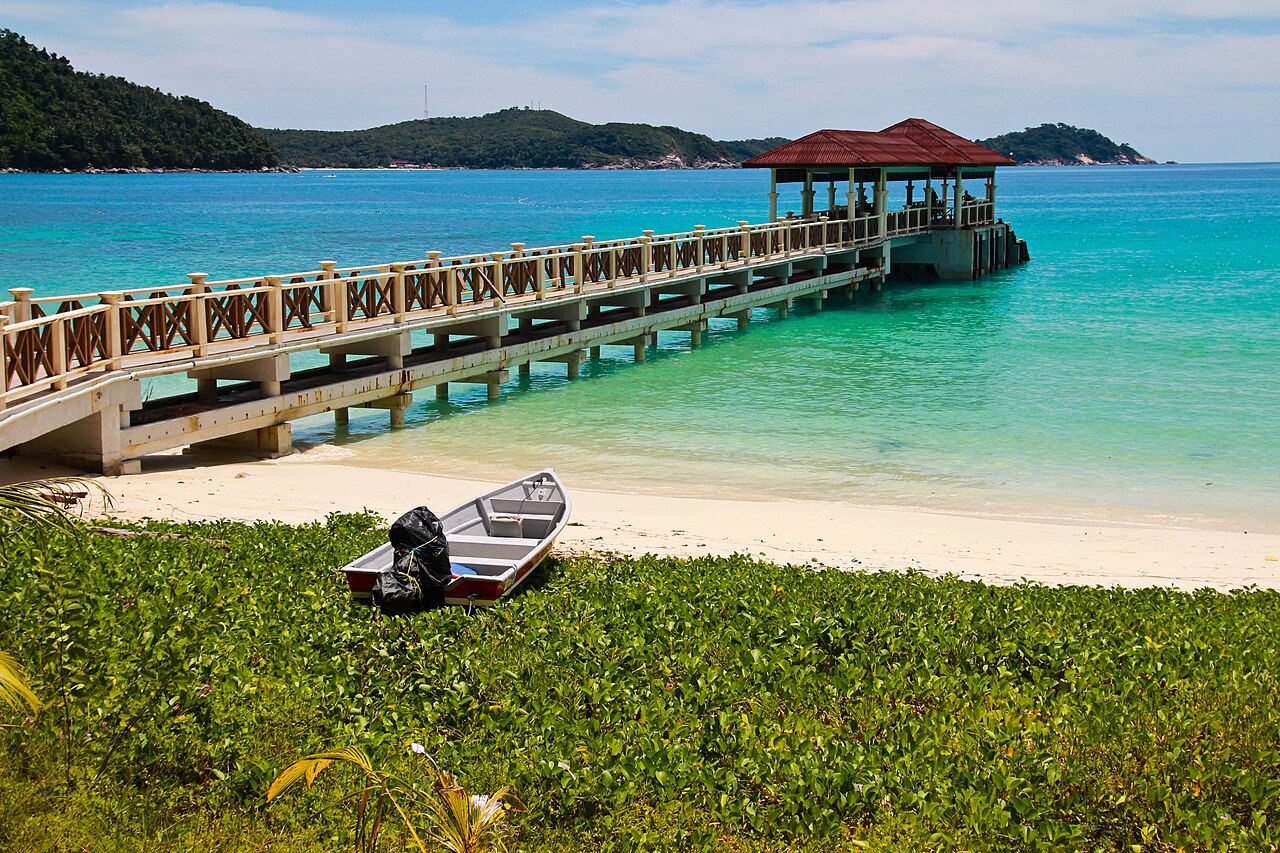
The room you booked at RM300 a night is not a RM300 room. By the time you check out it has cost you about RM366 a night, and if there are two foreign passports on the registration card it is closer to RM376. Nothing has gone wrong and nobody has cheated you. That is simply what the number means in Malaysia, and the arithmetic is not hard once somebody shows it to you once.
This is the part of deciding where to stay in Malaysia that almost nobody writes down. Search the question and you will get lists of pretty properties with a headline rate attached, priced in dollars or euros, with no mention of the RM10 per room per night tourism tax that foreign guests pay, no mention that service tax on accommodation went from 6% to 8% on 1 March 2024, and no mention of the state levies stacked on top in Penang, Melaka and Langkawi. The one page that does mention tax says “10% service plus 6% government tax”, which has been wrong for two years. Every rate you have been quoted on page one of Google is therefore misleadingly low by roughly a fifth.
So this guide runs the other way round. It starts with the final bill, works through what a given number of ringgit actually buys across every kind of place you can sleep in this country, and finishes with the mechanics that catch people out: the deposit at the desk, the passport they photocopy, the condo booking that becomes an argument with a security guard at eleven at night, and the four months when half the country’s best islands are physically shut.
What Your Money Actually Buys: The Price Tiers
These are the bands you will actually meet, in ringgit first, converted at roughly RM 4.2 = US$1. Assume the low end outside the big cities and the high end in KL’s Golden Triangle or on Langkawi in December. None of these figures include tax or service charge.
| Property type | Typical rate (MYR/night) | What you actually get |
|---|---|---|
| Hostel dorm bed | RM 40-70 (US$10-17), around RM 45 typical | 4-12 bunks, air-con often on a timer, lockers, kitchen, common room. Genuinely good in George Town and KL; barely exists in small towns. |
| Guesthouse private room | RM 80-150 (US$19-36) | Double bed, fan or split air-con, private or shared bathroom, usually thin shophouse walls. Owner-run, often no reception after 10pm, frequently no SST. |
| Budget hotel / chain | RM 100-180 (US$24-43) | Small en-suite room, often windowless, air-con, kettle, keycard, 24-hour desk. Consistent and forgettable, which is the product. |
| Midrange hotel | RM 180-380 (US$43-90) | Real window, proper bathroom, pool and gym, breakfast buffet usually included. Malaysia’s clearest value tier. |
| Four and five star | RM 400-900+ (US$95-215+) | Club lounges, several restaurants, spa, KLCC views. KL luxury benchmark ADR runs around MYR 642; luxury RevPAR up 5.7% year to March 2026. |
| Island resort | RM 250-1,200 (US$60-285) | Beachfront chalet to full resort, usually packaged with boat transfer and meals because nobody else supplies that beach. Hard Rock Hotel Penang lists from RM333++ through end-2026. |
| Jungle lodge | RM 400/night to RM 9,060 per package | Fan chalet by a river up to Borneo Rainforest Lodge, Danum Valley: 5D4N from RM9,060 (about US$2,157), full board, guided walks included. |
Two things fall out of that table. The jump from a RM120 budget room to a RM250 midrange room buys more comfort per ringgit than any other step on the ladder — a window, a pool, a working lift and breakfast. And the top of the market is priced internationally while the bottom is priced locally, which is why a backpacker’s costs here look nothing like a business traveller’s. For the same arithmetic across food, transport and activities, the full daily cost breakdown for travelling Malaysia does the sums for a whole trip rather than just the room.
The Final Bill: Tax, Service Charge and the “++” Nobody Explains
Malaysian hotels quote rates three ways and only one is the price you pay. A “nett” rate is all-in. A “++” rate means tax and service charge go on top. An unmarked rate is usually nett on a booking platform and usually ++ on the hotel’s own site, which is backwards from what most people assume. Four charges can land on one folio, levied by three different authorities — which is why nobody at the desk can waive any of them.
| Charge | Rate | Who pays | When it is collected |
|---|---|---|---|
| Tourism tax (TTx) | RM 10 per room per night (about US$2.40) | Foreign passport holders only; Malaysians and PRs are exempt. Charged per ROOM, so four people in one room pay RM10, not RM40. | From 1 January 2026 platforms collect it at booking. Direct bookings and walk-ins pay at the desk. |
| Service tax (SST) on the room | 8%, raised from 6% on 1 March 2024 | Everyone. Only levied above RM500,000 annual turnover, so many small guesthouses do not charge it. | At check-out, on room rate plus service charge. |
| Service tax on food and beverage | 6% | Everyone. F&B did not rise with accommodation, so one bill can show 8% on the room and 6% on breakfast. | Per transaction. |
| Service charge | 10% | Everyone, where levied. The hotel’s own charge, not a government tax. | Applied before SST, which is why the two compound. |
| Penang heritage fee | RM 3 per room per night | Guests at Penang hotels. | At the property. |
| Melaka assessment levy | RM 2 per room per night | Guests at Melaka hotels. | At the property. |
| Langkawi tourism promotion fee | Scales by star rating: RM1 (1-2 star), RM3 (3-4 star), RM5 (5 star), with higher RM7 and RM9 bands | Guests on Langkawi. | At the property. |
| Perak local service charge | Varies by council | Visitors in Perak; introduced 1 January 2025. | At the property. |
The worked example: RM300++ becomes RM1,099.20
Take the commonest scenario on the whole Malaysian market: a decent four-star city hotel advertising RM300++ per night, two guests on foreign passports, three nights. Here is every line, in the order the accounting system applies them.
| Line | Calculation | Amount (MYR) |
|---|---|---|
| Room, 3 nights | RM 300 x 3 | 900.00 |
| Service charge 10% | 10% of RM 900 | 90.00 |
| Service tax 8% | 8% of (RM 900 + RM 90) = 8% of RM 990 | 79.20 |
| Tourism tax | RM 10 x 1 room x 3 nights | 30.00 |
| Total payable | Headline was RM 900 | 1,099.20 |
RM1,099.20 against a headline of RM900 is an uplift of 22.1%. Note what does the damage: it is not the tourism tax, which is a trivial RM30 across the stay, and it is not really the SST either. It is the compounding — service charge goes on first, and then service tax is charged on the room and on the service charge. Ten plus eight is not eighteen, it is 18.8%, and then the RM10 nightly tourism tax tips it over twenty-two.
The practical rule to carry in your head: multiply any “++” rate by 1.188, then add RM10 per room per night. If you are budgeting in whole numbers, adding a fifth to every quoted room rate will keep you honest for the entire trip. If the same hotel had been in Penang the heritage fee would add RM9 across three nights; on Langkawi at five-star level, RM15. Small in isolation, but they are the reason your folio never quite matches the arithmetic you did in your head.
What changed on 1 January 2026, and how to avoid paying twice
Until the end of 2025, digital booking platforms operated under a grace period and generally did not collect tourism tax; you settled it in cash at the desk. That grace period expired on 31 December 2025. From 1 January 2026 the platforms are the ones collecting TTx, at the moment you book, which means a 2026 reservation may already have it baked into the total you paid online.
The transition is messy at property level, and the failure mode is being asked for it twice. Before you travel, open the confirmation and look for a line reading “tourism tax”, “TTx” or “local tax” in the fee breakdown. Screenshot it. If the desk asks for RM10 a night on arrival, show the screenshot and the charge should come off. If there is no such line, the property is entitled to collect and you should pay — RM10 is not worth a dispute, and the receipt is your proof at the next desk.
Two exemptions exist and they are the only legal ways round the tax. Premises with four rooms or fewer are exempt, as are homestays and kampungstays registered under the Ministry of Tourism’s programme. The catch swallows much of the benefit: the exemption falls away if the booking came through a digital platform. Message the owner directly, or walk in, and it holds.
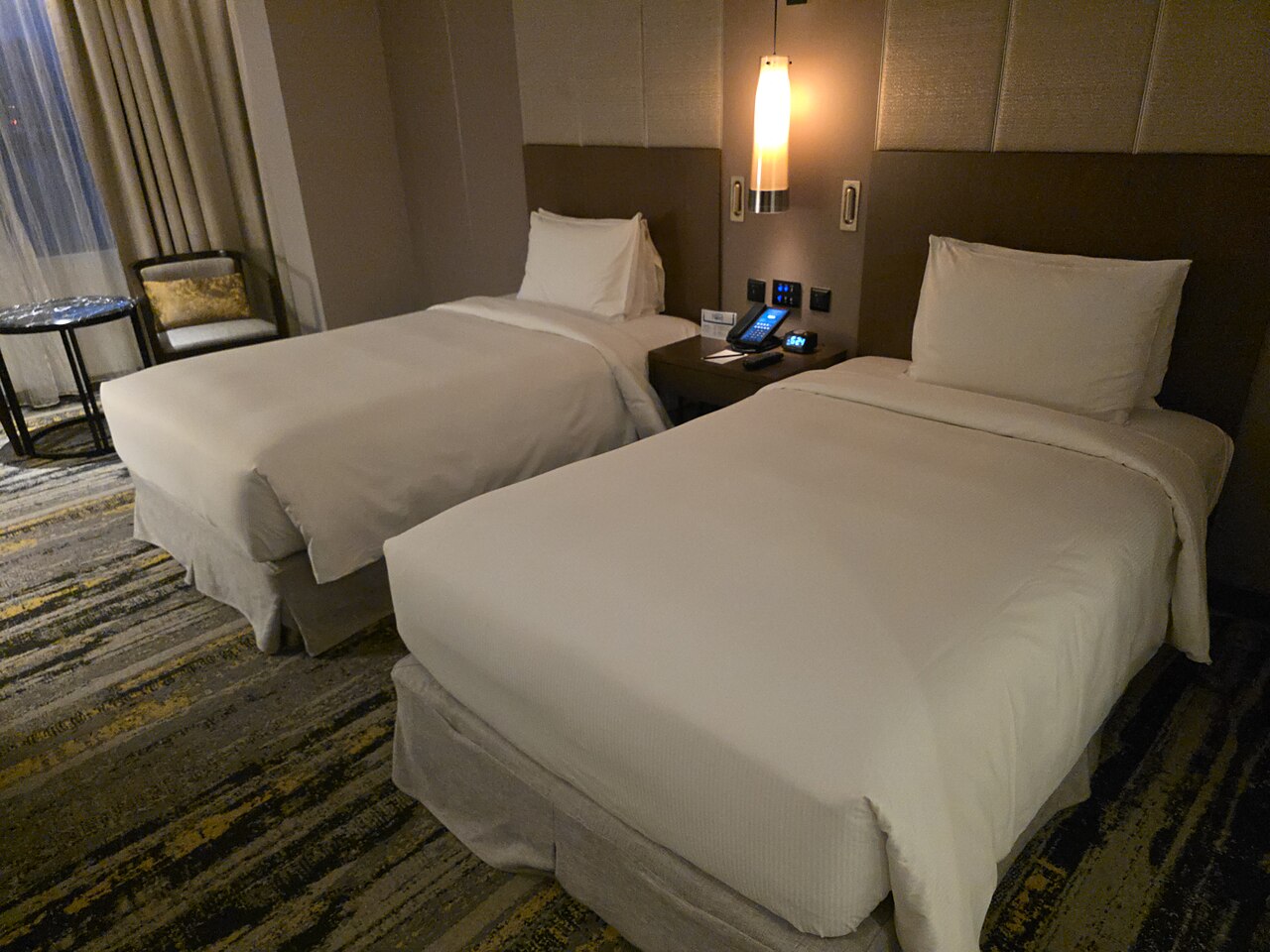
Every Type of Place You Can Sleep in Malaysia
Hostels and dorm beds — RM 40-70
A dorm bed averages around RM45 (about US$11): RM40 at the plain end, RM70 for a pod-style bunk with its own light, socket and curtain in a good George Town or Bukit Bintang hostel. Air-con is standard but often on a timer that kills it at 8am. Expect lockers sized for a 40-litre pack, a shared kitchen, and a common area that decides whether the place is worth staying in — the social layer is the product, not the mattress.
The catch is geography. The hostel scene concentrates in Kuala Lumpur, George Town, Melaka, Kota Kinabalu, Kuching and the backpacker islands. In Ipoh, Kuala Terengganu or Kuantan the tier thins fast, and a RM90 private room often beats the one tired dorm in town. Plan for that unevenness rather than assuming a hostel exists everywhere, much as you would with the long-distance network in the guide to moving between Malaysian cities by bus, train and ferry. Named picks in each of those hostel cities, with current dorm and private-room rates, are ranked in the guide to Malaysia’s best hostels.
Guesthouses and homestay-style privates — RM 80-150
The most underrated tier in the country. RM80-150 (US$19-36) buys a private double in an owner-run house or shophouse, sometimes with a shared bathroom at the bottom of the range and always with far more local knowledge on tap than a chain hotel provides. Many of these operate below the RM500,000 turnover threshold, so they do not charge SST at all, and those with four rooms or fewer are exempt from tourism tax when you book direct. A RM120 guesthouse room booked by WhatsApp can genuinely cost RM120.
Capsule hotels — from RM 80 for six hours
Nobody writing about Malaysian accommodation covers this category, and it solves a problem almost every visitor has. The capsule hotel inside KLIA2 charges from RM80 (about US$19) for a six-hour slot: a private pod with a bed, power, wi-fi and shared bathrooms, airside convenience without leaving the terminal. For a 06:00 departure after a late arrival, or a nine-hour layover between an AirAsia hop and a long-haul, it is a fraction of what an airport hotel room costs for a night you will barely use.
Budget and midrange chains — RM 100-380
Malaysia has a dense domestic and regional chain market and it is the most reliable way to buy a predictable night’s sleep. At RM100-180: a compact en-suite room, working air-con, a keycard, a 24-hour desk and often no window. At RM180-380 you reach proper midrange — a real window, a pool, a gym, a breakfast buffet with roti canai on it, and staff who can fix problems. This is where Malaysia beats its neighbours hardest on value.
International four and five star — RM 400-900+
Every global brand you can name operates in Kuala Lumpur, and the luxury segment’s average daily rate benchmark has been running around MYR 642 (roughly US$153). The market is strengthening rather than softening: KL luxury revenue per available room for the year to March 2026 was up 5.7% against the same period two years earlier, with occupancy up 3.4 percentage points. Translation — the era of picking up a KLCC five-star for RM350 on a whim is closing. Named five-star picks across the country, including several outside the Golden Triangle, are ranked in the guide to Malaysia’s luxury resorts.
Heritage shophouse boutiques — RM 200-600
George Town, Melaka and Ipoh are full of converted Chinese and Peranakan shophouses: narrow, deep buildings with air wells, terrazzo floors, carved timber screens and eight to twenty rooms. Rates run from around RM200 for a simple conversion to RM600 for the properly restored ones with courtyard pools and heritage-listed façades. In Penang, remember the RM3 per room per night heritage fee lands on top; in Melaka, RM2.
These are the most characterful rooms in Malaysia, with quirks to price in. Thin party walls and hard surfaces carry sound; the deep floor plan leaves interior rooms with no external window, only the air well; older buildings have steep stairs and no lift. Ask which floor and whether there is a window before you commit. The wider Penang guide to George Town and its beaches gives a sense of what is within walking distance of the heritage core.
Island resorts — RM 250-1,200
Island accommodation behaves differently because the resort is usually the only supplier on its beach. That produces package pricing — nights, return boat transfer and often meals sold as one number — and captive-market food prices. Hard Rock Hotel Penang lists from RM333++ through 31 December 2026; on the east coast a fan chalet on Perhentian Kecil runs RM250 and a Redang suite reaches four figures.
Read the package carefully. A bundled boat transfer is genuine value; you would buy it anyway and the schedule is tied to the resort. Bundled meals are value only where there is no village — true on much of Redang, false on Perhentian Kecil’s Long Beach and in most of Tioman’s villages, where a beach warung feeds you for RM15. Check which island you are on before buying half board, using the Redang resort and reef guide and the Tioman village-by-village guide.
Jungle lodges — RM 400 a night to RM 9,060 a package
At the accessible end, a riverside chalet near a national park entrance runs RM150-400 and you can walk to a floating restaurant for dinner. At the far end sits Borneo Rainforest Lodge in Danum Valley, whose 5D4N package starts at RM9,060 per person (about US$2,157), full board, in a property of 31 chalets capped at 60 guests. That is the top of the category anywhere in Malaysia, and the price includes guided day and night walks, canopy walkway access and all meals.
Full board at that kind of lodge is not an upsell. Danum Valley is a conservation area reached by a long drive on logging roads; there is no village, no shop, no second kitchen. The alternative to the lodge dining room is not eating. Comparing a jungle-lodge nightly rate with a city hotel rate is a category error — you are buying guiding, transfers, permits and every meal in one number. The Danum Valley and Borneo rainforest guide breaks down what those days actually contain. For something further from a standard lodge room — treehouses, overwater bungalows and eco-camps — see the guide to Malaysia’s unique stays.
National park chalets and camping — from about US$2
Malaysia’s park authorities run their own accommodation and it is startlingly cheap. Camping pitches start from roughly US$2 a night and basic park chalets from around US$18, which puts a night inside a protected rainforest below the price of a city dorm bed. Standards are functional: fan rooms, cold water, shared blocks, and a canteen with limited hours. Book through the park’s own system rather than an OTA, because inventory is small and often not distributed.
Two notes. Mulu’s published 2026 rates already include 8% SST, with RM10 per room per night tourism tax added for foreign guests; the Mulu Marriott separately levies a RM120 per room per night high-season surcharge from 1 July to 30 September 2026, so a July booking is not the price you saw in January. Detail sits in the Mulu caves and Pinnacles guide. On the peninsula, park-run chalets and the floating and riverside options at the main entrance are covered in the Taman Negara planning guide.
MOTAC homestays — from RM 80 a day including meals
A regulated government programme, not Airbnb. Under the Ministry of Tourism’s Homestay Experience Programme a village registers as a unit — ten participating households minimum — and you stay in a family home, eat with the family and join whatever the village is doing: rubber tapping, rice planting, cooking, a wedding if the timing lands. Rates start from around RM80 (about US$19) a day including meals, one of the best-value beds in Southeast Asia. Registered homestays are also exempt from tourism tax unless you book through a platform.
Serviced apartments — RM 200-600
Malaysia builds serviced residences at scale in KL, Johor Bahru and Kota Kinabalu, and beyond about four nights they beat hotels: a kitchen, a washing machine, two bedrooms for the price of one hotel room, and weekly or monthly rates that fall steeply. Families and remote workers should default here. Ask whether housekeeping is daily or weekly, and whether monthly rates include utilities. Note the legal distinction between a licensed operator running a whole block and a private unit in a residential tower — identical on a booking site, very different at the security desk.
Longhouse stays — Sarawak only
An Iban, Bidayuh or Orang Ulu longhouse is a single raised structure of many family apartments opening onto a shared covered verandah, and visitors sleep in a guest room or on the verandah itself. Visits are arranged through an operator or community contact and sold as a one- or two-night package with river transport, meals and a guide, because turning up unannounced is not how the etiquette works. Bring a gift for the household and expect an evening of tuak and conversation.
Facilities are shared, bedding is thin and the generator goes off at a fixed hour. Most trips leave from the Sarawak capital or Sibu; getting upriver is covered in the Kuching and Sarawak gateway guide.
Which property type fits which traveller
| Traveller | Default choice | Budget per night | Why |
|---|---|---|---|
| Couple, mid-budget | Midrange hotel in cities, heritage shophouse in George Town and Melaka, beach chalet on islands | RM 200-400 | The best comfort-per-ringgit step on the ladder. |
| Family with children | Serviced apartment or two-bedroom residence; family rooms at midrange resorts | RM 300-600 | Kitchen, laundry, separate sleeping space. Tourism tax is per room, so RM10 a night, not RM10 a head. |
| Backpacker | Hostel dorms in the six hostel cities, guesthouse privates elsewhere, MOTAC homestay for a village week | RM 45-120 | Cheapest reliable beds; the social layer is where route information comes from. |
| Diver | Dive-resort packages on the east coast islands and Sabah; check whether the dive centre is on site | RM 250-700 | Boats, tanks and nitrox are tied to the resort. Splitting bed and operator adds friction for no saving. |
| Business traveller | Four or five star inside the Golden Triangle, or the same brand two LRT stops out | RM 400-900 | Ask for a nett corporate rate; it removes the ++ surprise entirely. |
| Long-stay / remote worker | Serviced apartment on a monthly rate, licensed operator only | RM 3,000-7,000 per month | Monthly rates fall steeply. Licensing matters more the longer you stay. |
Airbnb and Short-Term Rentals: Legal to List, Not Always Legal to Enter
One sentence should govern every condo booking you make in Malaysia: a live listing does not mean the building allows it. Most travellers discover this standing in a marble lobby at eleven at night while a security guard, entirely within his rights, refuses to let them past the turnstile.
As of 2026 there is no national short-term rental law in Malaysia. There is no federal register, no licence number you can check, and no single authority that either blesses or bans the practice. What exists instead is a patchwork: a Federal Court judgment, a set of state guidelines in Penang, a standard operating procedure in Kuala Lumpur with nothing underneath it, and thousands of individual buildings making their own rules. The platforms do not police any of it. Guest-facing pricing by neighbourhood, plus a booking safety checklist, is in the dedicated guide to Airbnb and vacation rentals in Malaysia.
What the courts decided
The controlling authority is the Federal Court’s decision in Innab Salil v Verve Suites Mont’ Kiara, which held that management corporations and joint management bodies may lawfully ban short-term rentals in strata buildings. Such a by-law passes on a 75% majority at an annual general meeting. Once it passes, it binds every owner in the block, including the one who listed their unit to you last week. The Court of Appeal’s 2025 decision in the Wawasan Raya case is now the leading judgment applied to strata short-term letting disputes.
Penang: the strictest rules in the country
Penang state’s 2023 guidelines are the most restrictive in Malaysia, and the geography matters. On Penang island, item 4.12 permits short-term rental only in commercially-titled properties; residential short-term rental is prohibited outright. On the mainland side, Seberang Perai, apartments and condominiums are permitted. Where short-term letting is allowed in strata, stays are capped at three consecutive days, the JMB or management corporation must have approved it at an AGM, the unit must be registered with the city council MBPP, and the operator must be registered with the companies commission.
Practically: if you want a whole apartment in George Town for a week, book a licensed serviced-apartment operator or a hotel, not a residential condo unit. The three-day cap alone makes a week-long residential booking non-compliant even where the building has approved short-term letting. Neighbourhood-level options, including which streets put you within walking distance of the hawker centres, are handled in the dedicated guide to choosing an area in Penang.
Kuala Lumpur: an SOP with nothing behind it
As of April 2026 Kuala Lumpur City Hall has a standard operating procedure for short-term accommodation but no specific enabling legislation under it, so enforcement runs through building control and business licensing powers. In practice that means unpredictable enforcement and a lot of buildings acting for themselves: lobby signage, turnstile cards keyed to registered residents, and guards instructed to turn away wheeled suitcases after hours.
How to book a condo without getting burned
- Ask the host one direct question before booking: has the management corporation passed a by-law restricting short-term rental, and will I get an access card? A host who deflects has answered you.
- Read recent reviews for the words “security”, “guard”, “lobby” or “access card”. That is where the failure shows up first.
- Prefer commercially operated blocks. A branded serviced residence with its own reception is a different legal animal from a private unit in a residential tower.
- Avoid residential condos on Penang island entirely. The prohibition there is explicit, not a grey area.
- Arrive before 6pm. Problems a duty manager can solve at 5pm cannot be solved by a night guard at 11pm.
- Keep a hotel number saved as a first-night fallback. In KL and George Town a walk-in room at RM120 is almost always available.
Region by Region: Where to Stay Across Malaysia
What follows is deliberately high-altitude. Each of these places deserves neighbourhood-level treatment and most have it elsewhere on this site, so the job here is to tell you what kind of market you are walking into and where to read next.
Kuala Lumpur
The deepest market in the country, and the one where the district changes the price more than the hotel does. The Golden Triangle around Bukit Bintang and KLCC carries the premium; Chinatown carries the hostels; two or three rail stops out carries the same international brands for meaningfully less. Luxury rates are firming — revenue per available room up 5.7% for the year to March 2026 — so the accidental bargains are thinner than they were. Because rail access matters more than map distance here, the district decision is genuinely technical and gets a full article of its own: read the breakdown of KL neighbourhoods and the hotels in each before booking anything in the capital.
Penang
Three distinct markets: the George Town heritage core of shophouse conversions and boutiques, the Batu Ferringhi resort strip where Hard Rock Hotel Penang lists from RM333++ through the end of 2026, and the cheaper, business-oriented mainland at Seberang Perai. Add RM3 per room per night for the heritage fee wherever you land. Supply is the real story: roughly 22,500 registered hotel rooms in mid-2025 heading towards about 26,500 by the end of 2026, an increase of nearly a fifth. That is genuine downward pressure on rates from 2027, and it makes Penang one of the few places in Malaysia where waiting to book is more likely to help than hurt.
Langkawi
A resort island with real range: guesthouses behind Pantai Cenang at RM90, midrange beach hotels around RM250, and internationally famous luxury well into four figures. The state tourism promotion fee scales with star rating — RM1 at one and two star, RM3 at three and four, RM5 at five, with RM7 and RM9 bands above — so the levy quietly tracks your spending. Langkawi’s structural advantage is that it sits on the west coast and therefore does not shut down in the northeast monsoon; December is high season here while the Perhentians are boarded up. Beach-by-beach detail on where to base yourself is in the Langkawi island guide; named resorts across every tier, from Pantai Cenang guesthouses to the Datai Bay five-star enclaves, are ranked in the Langkawi resorts guide.
Melaka
A weekend market, which is the single most important fact about sleeping here. Melaka fills with domestic visitors from Friday afternoon to Sunday and empties midweek, and rates follow that curve rather than any international season. Heritage shophouse boutiques cluster around Jonker Street and the river; chain hotels sit further out near the malls and cost less. The state levy adds RM2 per room per night. If your itinerary has any give in it, move your Melaka nights to Monday-Thursday and you will pay materially less for a better room in the same building.
Cameron Highlands
The one part of the peninsula where you want a blanket rather than air-conditioning, and where prices track Malaysian school holidays rather than foreign seasons. Expect mock-Tudor guesthouses, tea-estate lodges and a lot of functional concrete in Tanah Rata and Brinchang. Rooms without heating are normal and fine; rooms without hot water are neither, so ask. Weekends fill the plateau and jam the single access roads; midweek is calm and cheaper. What is worth doing once you are up there is covered in the Cameron Highlands tea country guide.
The east coast islands
Perhentian, Redang, Tioman, Kapas and Lang Tengah share one logic: tiny inventory, package pricing, boat-dependent access and a hard seasonal shutdown. A twenty-room resort on a beach with three properties sells out on a scale a 300-room KL hotel never will, so book earlier here than anywhere else on your route — that is a judgement about supply, not a rule about weeks. Standards vary wildly inside one bay, with a RM250 fan chalet and a RM900 sea-view room fifty metres apart on the same sand. Decide first whether you want a dive base, a party beach or silence; the comparison of Perhentian Besar and Kecil is the right place to start.
Sabah and Sarawak
Sabah has the widest spread of any state: city hotels and serviced apartments in the capital, mid-market island resorts offshore, park accommodation at Kinabalu, river lodges on the Kinabatangan and Danum Valley at the top. Most trips hub out of the capital with two or three interior nights, which means buying two very different products on one trip and accepting that the jungle nights cost several times the city ones. Start with the Kota Kinabalu gateway guide for the hub end.
Sarawak is cheaper than Sabah at every tier and adds a category nowhere else has: the longhouse stay. Waterfront heritage hotels and old-town boutiques in the capital, park accommodation plus a surcharge calendar at Mulu, and upriver communities reached by boat. Budget carefully for internal flights, because Sarawak’s distances are aviation distances and the cost of reaching a bed can exceed the bed. Both states stay open all year. A fuller area-by-area breakdown across Sabah and Sarawak, including where the dive resorts and rainforest lodges cluster, is in the guide to where to stay in Borneo.
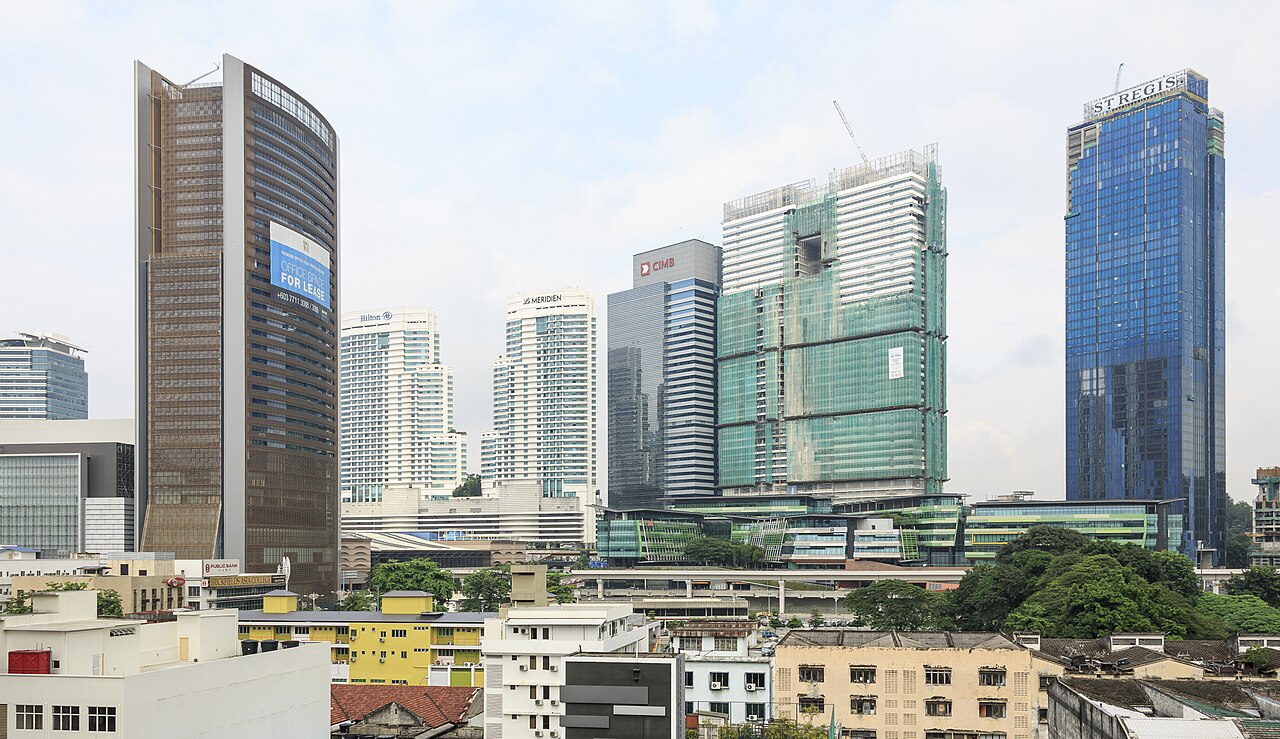
The Monsoon: When Half the Country’s Beds Physically Close
Most guides mention the northeast monsoon and leave you to work out what it means. It means that from November to February the east coast islands shut. Not “get quieter” — shut. Ferries stop, most resorts close, staff go home to the mainland, and reopening runs from late February into March.
| Region | Nov-Feb status | Practical effect |
|---|---|---|
| Perhentian, Redang, Lang Tengah | Closed | Ferries suspended, most resorts shut. Reopening late February into March. |
| Tioman | Largely closed | Most village accommodation and dive centres shut; boat services minimal. |
| Kapas | Closed | Same northeast monsoon pattern as its Terengganu neighbours. |
| Langkawi, Pangkor and the west coast | Open all year | December is peak season. Book early rather than assume availability. |
| Sabah and Sarawak | Open all year | Rougher seas can cancel individual outer-island boat trips day to day; land-based lodges are unaffected. |
The fix is one sentence and almost nobody says it plainly: if you are travelling Malaysia between November and February, put your beach nights on the west coast or in Borneo. Langkawi, Pangkor, Sabah’s offshore islands and the Sarawak coast are all open, and December is their strongest season. Flip it in reverse for June to September, when the east coast is at its best. The month-by-month picture across the whole country is set out in the guide to choosing when to visit Malaysia.
Check-In: Passport, Deposit, Age
Three things catch foreign guests out at the desk and none appear on the confirmation. Minimum check-in age is typically 18, but some properties set 21 and a few 25. Foreigners must present a passport, which will be photocopied or scanned; a driving licence or a phone photo will not do.
And expect an incidental deposit of around RM100 per room, refunded at check-out. Upmarket hotels pre-authorise a card, which can sit on your statement for days after you leave. Budget hotels and guesthouses often want cash and will not take a card, so carry RM100-200 in notes on arrival days.
What Not to Pay For
- Half board where a village has restaurants. On Perhentian Kecil, in Tioman’s villages and along most of Langkawi’s beaches a warung meal is cheaper than the resort buffet and better. Buy full board only where there is genuinely nowhere else, Danum Valley being the clearest case.
- Airport hotels for a 10am flight. Sleep in the city and leave early. If the departure really is at dawn, take the KLIA2 capsule at RM80 for six hours rather than a full room rate for a night you will not use.
- “Sea view” premiums. On a small island every room is ninety seconds from the water and you will spend your waking hours on the beach, not looking at it. The upgrade routinely costs RM80-150 a night for a view you see at breakfast.
- Golden Triangle rates when the same brand is cheaper two stops out. The identical chain often costs around a third less a few rail stops from Bukit Bintang, for a room differing mainly in what is outside the window.
- An unlicensed condo unit. The saving over a licensed serviced apartment is rarely more than RM50 a night, and the downside is being refused entry by a security guard with the law on his side.
- Prepaid non-refundable island rooms in late February. Reopening dates move. Pay the small premium for a flexible rate.
Frequently Asked Questions
How much does accommodation cost per night in Malaysia?
A dorm bed averages around RM45 (about US$11), a guesthouse private RM80-150, a budget hotel RM100-180, a midrange hotel RM180-380 and a four or five star RM400-900 and up. Add roughly a fifth on top of any rate marked “++” for service charge and tax.
Do foreigners pay a tourism tax in Malaysia?
Yes. RM10 per room per night, foreign passport holders only; Malaysians and permanent residents are exempt. Since 1 January 2026 booking platforms collect it when you book, so check your confirmation before paying it again at the desk. Registered homestays and properties with four rooms or fewer are exempt unless booked through a platform.
What does “++” mean on a Malaysian hotel bill?
It means 10% service charge and 8% service tax go on top of the quoted rate, with the tax calculated on the rate plus the service charge. The combined effect is 18.8%, plus RM10 a night tourism tax and any state levy. Multiply by 1.188 and add RM10 per room per night.
Is Airbnb legal in Malaysia?
There is no national short-term rental law, so it depends on the building and the state. The Federal Court has confirmed that strata management corporations may ban short-term letting by a 75% AGM vote, and on Penang island residential short-term rental is prohibited outright. A live listing does not mean the building permits guests.
Is Malaysia cheap for hotels compared with its neighbours?
At midrange level it is one of the better-value markets in Southeast Asia, with newer buildings and more widely spoken English than most of the region. The caveat is the final bill: Malaysian headline rates sit around a fifth below the real total.
Do hotels require a passport and a deposit at check-in?
Yes to the passport, and usually a deposit of around RM100 per room. Upmarket hotels pre-authorise a card; budget properties often want cash. Minimum check-in age is typically 18, occasionally 21 or 25.
Where is the best area to stay in Kuala Lumpur?
It depends on whether you are optimising for rail access, food or price — Bukit Bintang for walkability, KLCC for the view, Chinatown for budget and character, outer rail stops for the same brands at lower rates. The dedicated KL accommodation article linked above works through each district.
Book in This Order
Lock the constrained nights first — island resorts and jungle lodges, where inventory is measured in dozens of rooms rather than hundreds. Then the cities, where supply is deep and you can move late. Then decide your board basis, which is a food decision rather than an accommodation one. Then add a fifth to every number and see whether the trip still works, because that is what you are going to pay.
2 notes