Malaysia Festivals Calendar: Complete Guide to Celebrations (2026-2027)
Every Malaysian festival date for the rest of 2026 and all of 2027, with the state-by-state variation, which Islamic dates are moon-sighting estimates, and how balik kampung wrecks travel plans.
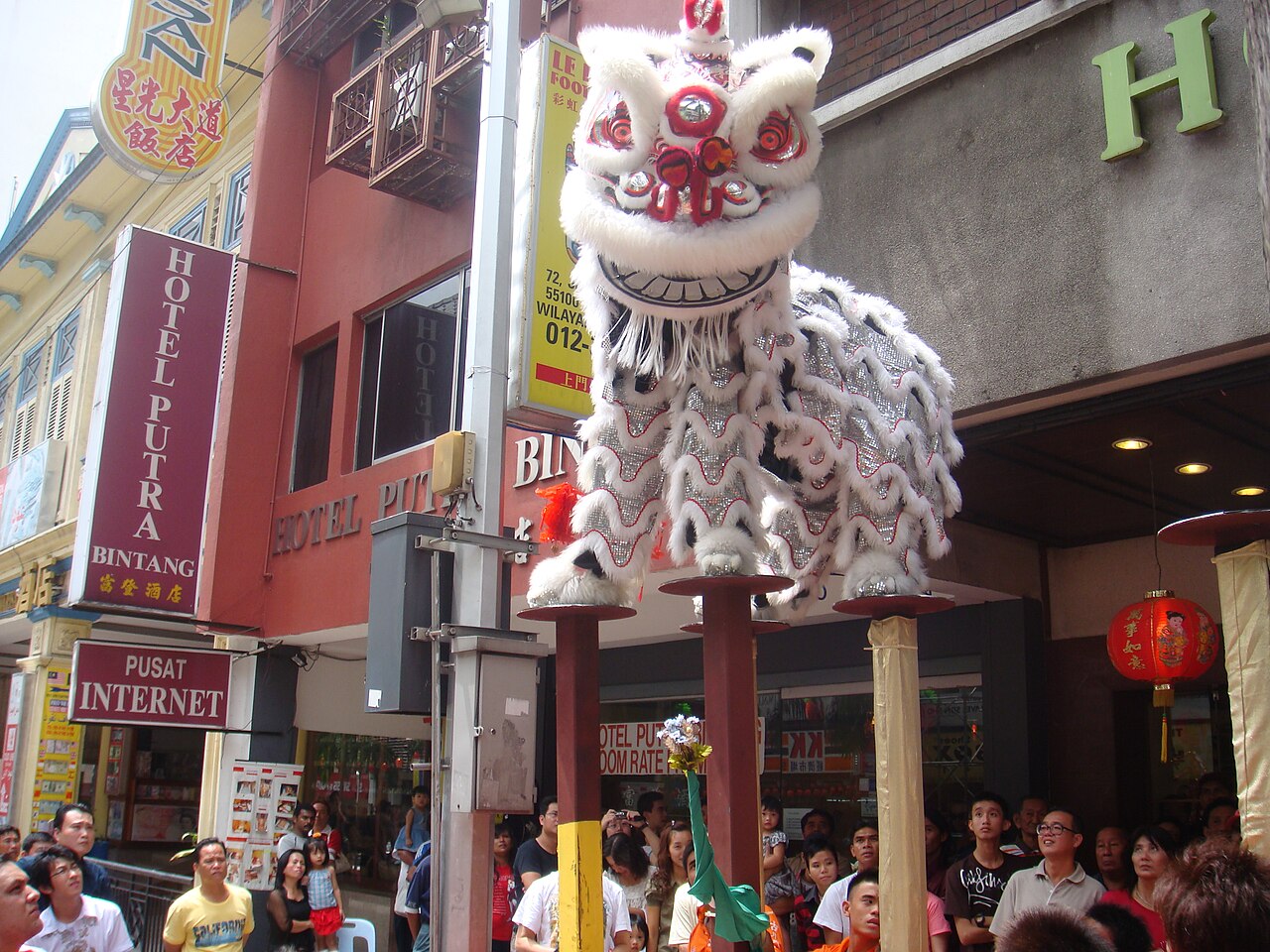
Malaysia runs on four calendars at once — Gregorian, Islamic lunar, Chinese lunisolar and Hindu Tamil — which is why almost every date on the national holiday list moves each year, and why a country of 34 million people manages 50 gazetted public holidays in 2027: six federal, nineteen religious, nineteen state and six cultural.
Most guides to Malaysia festivals list the celebrations without the dates, or list dates from a year that has already passed. This one is forward-looking: the rest of 2026 and the whole of 2027, with the state-by-state variation that determines whether shops are actually shut, and a clear flag on which Islamic dates are estimates subject to moon sighting rather than fixed.
It also covers the thing that matters most practically. Two of these festivals trigger the balik kampung homecoming, when a large share of the country travels at once, fares rise by up to 80 percent and highways stop moving. Knowing which two, and planning around them, is worth more than any amount of festival description.
The 2027 collision worth knowing about
Before the tables, one scheduling quirk. Chinese New Year 2027 falls on Saturday 6 February, with holidays running to Monday 8 February. Ramadan 2027 is expected to begin on or around Monday 8 February. The two largest cultural moments in the Malaysian year will start in the same week.
For a visitor this means the first ten days of February 2027 will be busy, expensive and fascinating. Chinese-majority towns — Penang, Ipoh, Melaka — will be at their most vivid, while Malay-majority areas move into fasting. Book transport and rooms six weeks out if you are travelling then. It also means Hari Raya Aidilfitri arrives unusually early, around 10 March.
The rest of 2026
| Date | Festival | Where it applies | Note |
|---|---|---|---|
| 13 Aug – 10 Sep | Ghost Month | Chinese communities nationwide | Not a holiday; opera and offerings in the street |
| 27 Aug | Hungry Ghost Festival | Penang, Ipoh, KL strongest | Some Malaysian calendars mark 26 Aug |
| 31 Aug | Merdeka Day | Federal | Independence, 1957. Parades in Putrajaya and KL |
| 16 Sep | Malaysia Day | Federal | Formation of the federation, 1963. Felt strongly in Sabah and Sarawak |
| 25 Sep | Mid-Autumn (Mooncake) Festival | Chinese communities | Not a public holiday; lanterns and mooncakes |
| 9–18 Oct | Nine Emperor Gods Festival | Penang above all | Welcoming eve 9 Oct, send-off 18 Oct; nine days vegetarian |
| 8 Nov | Deepavali | All states except Sarawak | Falls on a Sunday, so expect a replacement day |
| 25 Dec | Christmas Day | Federal | Christmas Eve is an extra holiday in Sabah; 26 Dec in Kelantan and Terengganu |
The full 2027 calendar
| Date | Day | Festival | Applies in |
|---|---|---|---|
| 1 Jan | Fri | New Year’s Day | Most states (not Johor, Kedah, Kelantan, Perlis, Terengganu) |
| 6 Jan | Wed | Israk & Mikraj* | Kedah, Negeri Sembilan, Perlis, Terengganu |
| 14–15 Jan | Thu–Fri | Thai Pongal | Tamil communities; not a public holiday |
| 22 Jan | Fri | Thaipusam | Johor, Kedah, KL, N. Sembilan, Penang, Perak, Putrajaya, Selangor |
| 1 Feb | Mon | Federal Territory Day | KL, Labuan, Putrajaya |
| 6–8 Feb | Sat–Mon | Chinese New Year (Fire Goat) | Nationwide; day 3 excludes Kedah and Kelantan |
| 8 Feb | Mon | Awal Ramadan* | Johor and Kedah only |
| 24 Feb | Wed | Nuzul Al-Quran* | State holiday, not federal |
| 10–11 Mar | Wed–Thu | Hari Raya Aidilfitri* | All states |
| 26 Mar | Fri | Good Friday | Sabah and Sarawak only |
| 1 May | Sat | Labour Day | Federal |
| 17 May | Mon | Hari Raya Haji* | All states; 18 May extra in Kedah, Kelantan, Perlis, Terengganu |
| 20 May | Thu | Wesak Day | All states |
| 30–31 May | Sun–Mon | Kaamatan (harvest) | Sabah and Labuan only |
| 1–2 Jun | Tue–Wed | Gawai Dayak (harvest) | Sarawak only |
| 6 Jun | Sun | Awal Muharram* | All states; observed rest day may shift |
| 7 Jun | Mon | Agong’s Birthday | Federal |
| 25–27 Jun | Fri–Sun | Rainforest World Music Festival | Kuching, Sarawak — 30th edition |
| 7 Jul | Wed | George Town World Heritage City Day | Penang only |
| 15–16 Aug | Sun–Mon | Maulidur Rasul* | All states |
| 31 Aug | Tue | Merdeka Day | Federal |
| 15 Sep | Wed | Mid-Autumn Festival | Chinese communities; not a holiday |
| 16 Sep | Thu | Malaysia Day | Federal |
| 28 Oct | Thu | Deepavali | All states except Sarawak |
| 25 Dec | Sat | Christmas Day | Federal; Christmas Eve extra in Sabah |
| 26 Dec | Sun | Israk & Mikraj* (second occurrence) | Kedah, N. Sembilan, Perlis, Terengganu |
* Dates marked with an asterisk are estimates. All Islamic holidays in Malaysia are confirmed by moon sighting through the religious authorities, and the gazetted dates published a year in advance are provisional. They can shift by a day in either direction, and the official announcement typically comes only days beforehand. If a flight or a hotel depends on the exact date, build in a day of slack. Note also that sources disagree on whether Awal Muharram’s observed rest day in 2027 falls on 6 or 7 June, since 7 June is the Agong’s Birthday.
Why the dates move
Four systems, four behaviours.
- Islamic (Hijri) calendar. Purely lunar, so it runs about eleven days shorter than the solar year and Islamic festivals drift backwards through the seasons. Ramadan, Aidilfitri, Aidiladha, Awal Muharram and Maulidur Rasul all move. Malaysia confirms them by moon sighting, so published dates are provisional.
- Chinese lunisolar calendar. Adjusted with leap months to stay roughly aligned with the seasons, so Chinese New Year always falls between late January and late February. 2027 is the Year of the Fire Goat.
- Hindu Tamil calendar. Thaipusam falls on the day the Poosam nakshatra — a lunar mansion — prevails during the full moon of the Tamil month of Thai, which puts it in mid-January to mid-February. Deepavali falls in the month of Aippasi or Kartika, in October or November.
- Gregorian. Fixes only Merdeka Day (31 August), Malaysia Day (16 September), Labour Day (1 May), Christmas and New Year.
The state variation nobody publishes
This is where generic festival lists fail travellers. A holiday that is gazetted in Kuala Lumpur may be an ordinary working day 300 km away.
| Festival | Where it is a holiday | Where it is not |
|---|---|---|
| Thaipusam | Johor, Kedah, KL, Negeri Sembilan, Penang, Perak, Putrajaya, Selangor | Kelantan, Melaka, Pahang, Perlis, Sabah, Sarawak, Terengganu, Labuan |
| Deepavali | All states | Sarawak |
| Chinese New Year day 3 | Most states | Kedah, Kelantan |
| Kaamatan | Sabah, Labuan | Everywhere else |
| Gawai Dayak | Sarawak | Everywhere else |
| Good Friday | Sabah, Sarawak | Everywhere else |
| New Year’s Day | Most states | Johor, Kedah, Kelantan, Perlis, Terengganu |
One further rhythm to plan around, unrelated to festivals: Kedah, Kelantan and Terengganu take Friday and Saturday as the weekend (Johor did too, but reverted to a Saturday–Sunday weekend in January 2025) rather than Saturday and Sunday. Banks, government offices and many businesses close on Friday in those states and open on Sunday. Visitors to Kota Bharu and Kuala Terengganu routinely arrive on a Friday to find the town shut.
The major festivals, and what they are actually like
Hari Raya Aidilfitri — 10–11 March 2027
The end of Ramadan and the biggest event in the Malaysian year. Aidilfitri is a homecoming festival above all: cities empty, villages fill, and the first two days are spent visiting family and asking forgiveness of elders. Houses are opened, tables are laid with rendang, ketupat, lemang and an alarming quantity of biscuits, and the visiting extends outward to neighbours, colleagues and — genuinely — strangers.
For a visitor this is the best and the worst time to be in Malaysia simultaneously. Best, because the rumah terbuka open house tradition means you can be invited into a family home on a few hours’ acquaintance, and because the atmosphere is genuinely warm. Worst, because Kuala Lumpur becomes eerily quiet, many small businesses close for a week rather than two days, and moving between cities is difficult and expensive.
If you are here, stay put in one place and accept invitations. Do not plan a multi-city itinerary across Raya week.
Chinese New Year — 6–8 February 2027
Fifteen days in principle, three days of public holiday in practice, with the reunion dinner on the eve as the emotional centre. Lion dances tour shopping malls and business premises for weeks; temples burn through vast quantities of incense; and the yee sang prosperity toss, in which a table of diners lifts a raw fish salad with chopsticks while shouting auspicious phrases, is a Malaysian-Singaporean invention you will not find in China.
The best places to be are Penang, Ipoh, Melaka and Kuala Lumpur’s Chinatown. Penang’s Chap Goh Meh on the fifteenth night — when unmarried women traditionally threw oranges into the sea in hope of a good husband — closes the season and is still observed at the Esplanade.
Practical warning: Chinese-owned businesses, which is a great many restaurants and hawker stalls, close for three to five days. In Penang and Ipoh, the food scene you came for may simply not be operating. Check before you book. Our Penang food guide notes the stalls that stay open.
Thaipusam — 22 January 2027
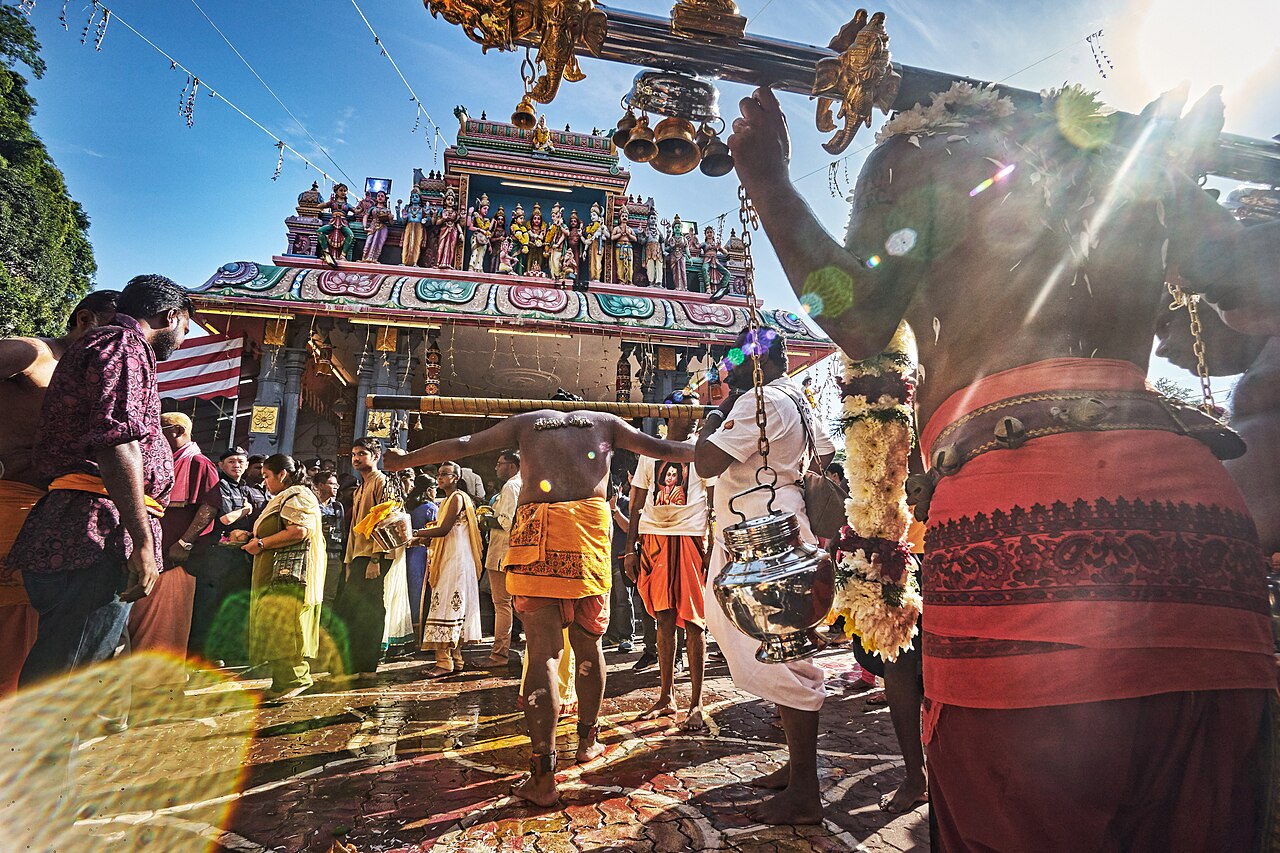
The most visually extraordinary event in Malaysia, and the one most worth building a trip around. Hindu devotees carry kavadi — ornate frames borne on the shoulders, often attached by hooks and skewers through the skin — up the 272 steps at Batu Caves, accompanied by drumming, chanting and a silver chariot procession that leaves central Kuala Lumpur the night before.
Recent years have drawn 1.8 to 2.5 million people to Batu Caves across the festival period. Penang’s celebration at the Waterfall Hilltop Temple and the Nattukkottai Chettiar Temple draws over a million and is, in the view of many who have seen both, more intense. It falls on a Friday in 2027, which will extend the crowds across a full weekend.
Note that Thaipusam is not a federal holiday — it is gazetted in eight states and territories, which is why Batu Caves is heaving while Kuantan carries on as normal. Our full Thaipusam at Batu Caves guide covers timings, transport, etiquette and what to expect.
Deepavali — 8 November 2026 and 28 October 2027
The festival of lights, marking the triumph of light over darkness. Homes are decorated with kolam — rice-flour floor patterns — and oil lamps, new clothes are worn, and the open house tradition applies as fully here as at Raya and Chinese New Year. Little India in Brickfields, Kuala Lumpur, and Penang’s Little India are transformed for a fortnight beforehand, with night markets, lights strung across the streets and a level of noise that is entirely intentional.
It is a public holiday in every state except Sarawak. Unlike Raya and Chinese New Year, it does not shut the country down — one day, and business resumes.
Kaamatan and Gawai Dayak — late May and early June
The two harvest festivals of Malaysian Borneo, and the most under-visited major celebrations in the country. Kaamatan, on 30–31 May, is the Kadazan-Dusun rice harvest festival in Sabah and Labuan, with the Unduk Ngadau beauty pageant, bamboo-stamping dances and a great deal of tapai rice wine. Gawai Dayak, on 1–2 June, is the Iban, Bidayuh and Orang Ulu equivalent in Sarawak, celebrated in longhouses along the rivers where open-door hospitality is genuinely unrestricted.
Because the two fall consecutively, a traveller can attend Kaamatan in Sabah and fly to Sarawak for Gawai. Neither is a holiday on the peninsula. Our Kuching travel guide and Kota Kinabalu travel guide cover the bases.
Wesak Day — 20 May 2027
Marks the birth, enlightenment and death of the Buddha. Temples open before dawn, devotees release caged birds, offer flowers and bathe Buddha images, and evening float processions move through Kuala Lumpur, Penang and Melaka. The Maha Vihara temple in Brickfields runs the largest procession in the country. It is a quieter festival than the others and one of the more moving to witness. See our best temples in Malaysia guide.
The festivals that are not public holidays
Some of the best events in Malaysia do not appear on any holiday calendar.
Nine Emperor Gods Festival, 9–18 October 2026. A nine-day Taoist festival strongest in Penang and Ampang, during which devotees observe a strict vegetarian diet, temples run continuous opera performances, and the closing send-off sees processions carry the deities back to the sea. Every vegetarian stall in Penang is at full stretch for those nine days — it is the best week of the year to eat meat-free in Malaysia.
Hungry Ghost Festival, 27 August 2026, within a Ghost Month running 13 August to 10 September. Offerings of food and paper goods are burned by the roadside, and open-air Chinese opera and getai concert stages appear in car parks, with the front row of seats left empty for the spirits. Do not sit in the front row. It is not a superstition anyone will explain to you twice.
Rainforest World Music Festival, 25–27 June 2027 — the 30th edition, held at the Sarawak Cultural Village outside Kuching against the backdrop of Mount Santubong. It is the best-established music festival in Malaysia and combines daytime workshops with evening main-stage performances. Accommodation in Kuching sells out; book early.
George Town Festival, which ran 1–9 August in 2026 for its 17th edition with around 80 percent of events free. The 2027 dates have not been announced, but it has historically fallen in late July or August. George Town World Heritage City Day on 7 July is a Penang state holiday marking the 2008 UNESCO inscription.
Thai Pongal, 14–15 January 2027, the Tamil harvest festival, celebrated in Tamil communities and temples but not gazetted as a holiday.
Ramadan is a food festival
Visitors often try to avoid Ramadan, which is a mistake. Non-Muslims are under no obligation to fast, restaurants stay open, and the only real expectation is discretion — most people avoid eating conspicuously in front of someone who is fasting, in much the same spirit as not smoking in a queue.
What you get in exchange is the bazar Ramadan. From roughly 4pm until sunset, every town in the country sets up a market of stalls selling food to break the fast: ayam percik, murtabak, popia, kuih of every colour, and drinks in plastic bags. They are open to everyone, they are cheap, and they represent the widest range of Malay cooking you will encounter anywhere. Then they vanish the day Ramadan ends.
Ramadan 2027 is expected to run from around 8 February to around 9 March, subject to moon sighting. Our night markets and food markets guide covers the format, and Malaysian street food covers what to order.
Balik kampung: the travel problem
Two festivals empty Malaysia’s cities: Hari Raya Aidilfitri and Chinese New Year. Millions of people travel home over roughly the same 48 hours, and the effect on transport is severe.
| What happens | Detail |
|---|---|
| Bus fares | Rise roughly 30–80%; executive class up to +70%; some routes double |
| Sold-out routes | Coaches to Kelantan and Terengganu go first, often 4–6 weeks ahead |
| Trains and flights | ETS and domestic flights sell out weeks in advance |
| Driving | The KL–Ipoh stretch of the E1 can add 1–2 hours; expect RM90–200 in tolls and fuel |
| Cities | Kuala Lumpur becomes quiet and many small businesses close for several days |
| Villages and small towns | Full; accommodation scarce and priced accordingly |
The rule of thumb: book intercity transport four to six weeks before Raya or Chinese New Year, or do not move at all during the peak days. If your dates are fixed and you can choose a base, pick one city and stay in it — the atmosphere is the reward, and the logistics are the price. Our getting around Malaysia guide covers booking channels.
A festival year, month by month
If you are choosing when to come rather than working around fixed dates, here is the shape of the year.
January and February are the densest stretch. Thai Pongal, Thaipusam, Federal Territory Day and Chinese New Year fall within four weeks, and in 2027 Ramadan begins in the same window. The west coast weather is good and the east coast islands are shut, so this is a west coast trip by default — Kuala Lumpur, Penang, Ipoh and Melaka all at their most animated.
March and April in 2027 bring Hari Raya Aidilfitri and, in Sabah and Sarawak, Good Friday. The east coast islands reopen from late February to mid-March, so this is when a beach trip becomes possible again. Avoid moving during Raya week itself.
May and June are the Borneo months. Wesak Day, Hari Raya Haji, Kaamatan in Sabah on 30–31 May, Gawai Dayak in Sarawak on 1–2 June, and the Rainforest World Music Festival outside Kuching in late June. A traveller who lands in Kota Kinabalu on 29 May can attend two harvest festivals and a music festival in four weeks.
July and August bring George Town’s heritage day on 7 July, the George Town Festival in late July or August, Maulidur Rasul, Ghost Month, and Merdeka Day on 31 August. This is also peak school-holiday season in Malaysia and in much of Europe, so accommodation is at its most expensive.
September and October are quietly the best months for a festival-minded visitor. Malaysia Day on 16 September, the Mid-Autumn Festival, the Nine Emperor Gods Festival in Penang in October, and Deepavali at the end of the month in 2027 — plenty of spectacle, almost no disruption, and far fewer foreign visitors than in January.
November and December are the northeast monsoon on the east coast, which closes the islands and brings heavy rain to Kelantan, Terengganu and Pahang. Deepavali falls in November in 2026, and Christmas is a genuine event in Sabah and Sarawak with their large Christian populations. On the west coast, this is a perfectly good time to travel. Our best places to visit in Malaysia guide covers where to go when the east coast is out.
Which festival should you plan around?
| Festival | Spectacle | Disruption | Verdict |
|---|---|---|---|
| Thaipusam | Very high | Low — one day, localised | The best one to plan around |
| Nine Emperor Gods | High | None | Excellent, and almost no foreign visitors |
| Gawai / Kaamatan | High | Low outside Borneo | Superb if you are already in Borneo |
| Chinese New Year | High | High — businesses close 3–5 days | Go for the atmosphere, not the food |
| Deepavali | Moderate | Low — one day | Worth catching, not worth rearranging for |
| Hari Raya Aidilfitri | Moderate (mostly private) | Very high | Only if you have a local invitation |
| Wesak | Moderate | Low | Quietly beautiful; go to a temple at dawn |
| Ramadan (the month) | Food, not spectacle | Minimal for visitors | Underrated — go for the bazaars |
The short answer for most travellers is Thaipusam: it is the most visually remarkable, it is over in a day, it does not close anything, and it happens in January when the west coast weather is good. The Nine Emperor Gods Festival in Penang runs it close and has the advantage of being almost entirely unknown to foreign visitors.
Etiquette at Malaysian festivals
- Dress modestly at any religious event: covered shoulders and knees, shoes removed at temples and mosques. Mosques lend robes free of charge.
- Ask before photographing people, especially devotees in a trance state at Thaipusam. Wide shots of a crowd are fine; a close-up of someone’s pierced cheek without consent is not.
- Accept food when offered at an open house, take it with your right hand, and do not feel obliged to bring a gift — you are not expected to.
- Do not sit in the front row at a Hungry Ghost opera or getai performance. Those seats are for the spirits.
- Give way to processions. Chariots, lion dances and float parades have right of way over everyone, including traffic.
Our Malaysian cultural etiquette guide covers the general rules, and Malaysian culture and heritage explains the communities behind each celebration.
Frequently asked questions
What is the biggest festival in Malaysia?
Hari Raya Aidilfitri, by participation and by disruption — it empties the cities and shuts businesses for several days. By sheer visual spectacle, Thaipusam at Batu Caves is the largest single gathering, drawing between 1.8 and 2.5 million people in recent years, with Penang’s celebration attracting over a million more.
How many public holidays does Malaysia have in 2027?
Fifty are gazetted across the country in 2027 — six federal, nineteen religious, nineteen state and six cultural — but no single state observes all of them. In practice a resident of any given state gets somewhere between 13 and 17 days off, depending on which state holidays apply there.
When is Chinese New Year 2027 in Malaysia?
Saturday 6 February 2027, with public holidays running through Sunday 7 and Monday 8 February — the third day is not observed in Kedah or Kelantan. It is the Year of the Fire Goat. Expect Chinese-owned restaurants and hawker stalls to close for three to five days.
When is Hari Raya 2027?
Hari Raya Aidilfitri is expected on Wednesday 10 and Thursday 11 March 2027, and Hari Raya Haji on Monday 17 May 2027, with an extra day on 18 May in Kedah, Kelantan, Perlis and Terengganu. Both are estimates: Malaysia confirms Islamic dates by moon sighting, usually only days beforehand.
Can tourists attend Malaysian festivals and open houses?
Yes, and you are genuinely welcome. Temples and mosques admit visitors at festival times subject to dress standards, and the rumah terbuka open house tradition explicitly extends to guests the host has never met. Government departments, companies and the Prime Minister host large public open houses that anyone may attend, announced in advance in the press.
What is the best month to visit Malaysia for festivals?
January and February give you Thaipusam, Thai Pongal and Chinese New Year in quick succession, with good west coast weather. Late May and early June deliver Wesak, Kaamatan and Gawai Dayak if you are heading to Borneo. October is quietly excellent: the Nine Emperor Gods Festival in Penang and Deepavali, both with minimal disruption.
Why are Malaysian festival dates different every year?
Because four calendars are in use. The Islamic calendar is purely lunar and drifts about eleven days earlier each Gregorian year; the Chinese lunisolar calendar uses leap months to stay seasonally anchored; the Hindu Tamil calendar sets Thaipusam by a lunar mansion during a full moon. Only Merdeka Day, Malaysia Day, Labour Day, Christmas and New Year are fixed.
Is it a bad idea to travel in Malaysia during Hari Raya?
It is a bad time to move and a wonderful time to stay put. Intercity buses, trains and domestic flights sell out weeks ahead, fares rise 30 to 80 percent, and highways are congested for days. If your dates are fixed, choose one city, book accommodation early, and use the time for open houses rather than transfers.
Planning around the calendar
Once you have a festival date, the rest of the trip builds around it. Our best time to visit Malaysia guide covers the weather side of the same question — particularly the northeast monsoon that closes the east coast islands from November to February — and the Malaysia itineraries hub has routes for every trip length. For the single event most worth crossing the world for, go straight to our Thaipusam at Batu Caves guide.
One final note on the asterisks. Every Islamic date on this page will be confirmed only when the moon is sighted and the announcement made, typically within a few days of the event. If your plans hinge on one, watch the local press in the fortnight beforehand rather than trusting any calendar published a year ahead, including this one.