Chinese New Year in Malaysia: Where to Be, Day by Day (2027 Dates)
The festival runs fifteen days and most visitors book the wrong three. A day-by-day plan from reunion dinner to the orange-throwing at Chap Goh Meh, with what is actually open.
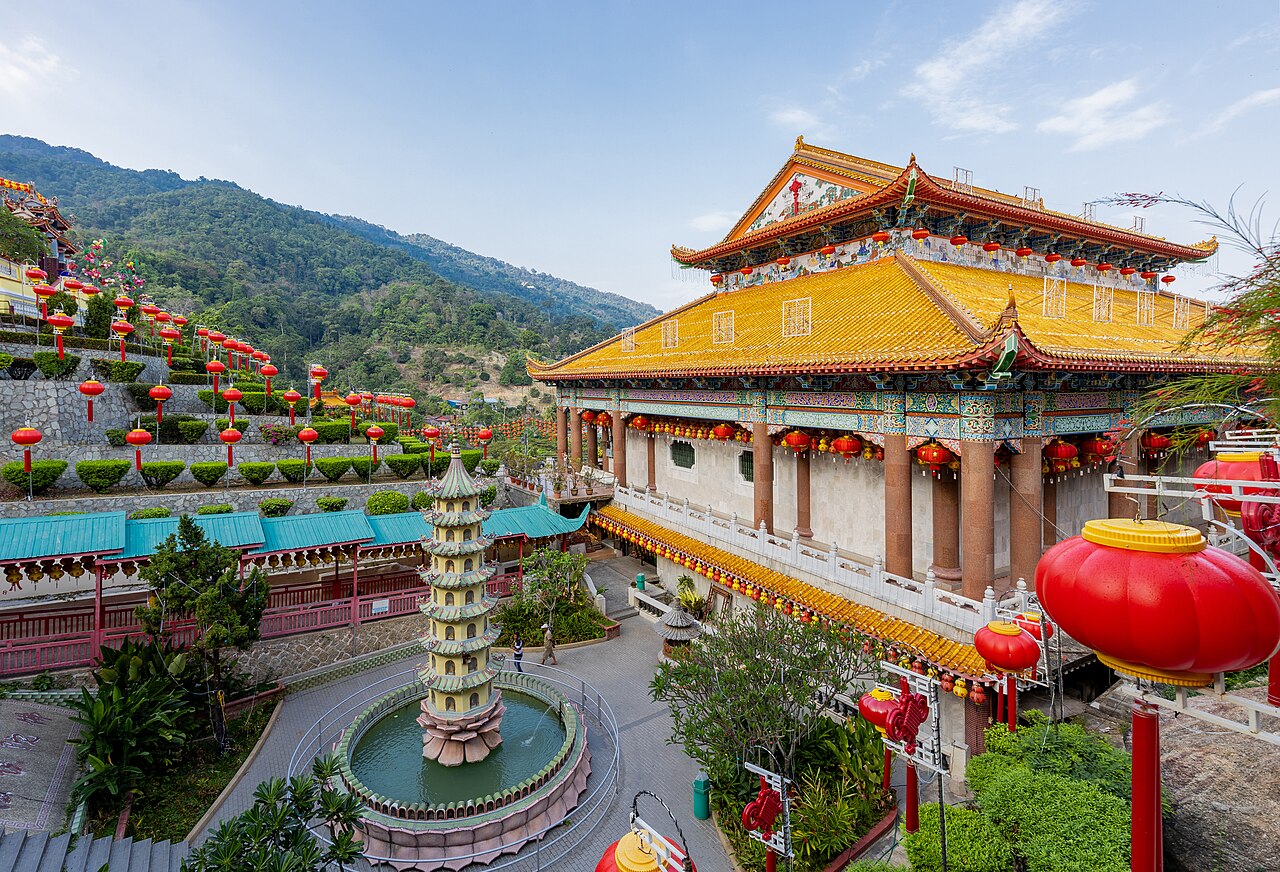
Chinese New Year in Malaysia runs for fifteen days, and almost every visitor books the wrong three of them. The classic mistake looks like this: you fly into Penang or Ipoh on the first morning of the new year, because that is the headline date, and because you came for the food. You drop your bag, walk out to the hawker centre you have been reading about for six months, and find the shutters down. Not one stall. Not one. They will be shut for another four days.
This is not bad luck. It is the structure of the festival, and it is entirely predictable if you know what the fifteen days actually contain. The first two days are private and domestic — families in living rooms, streets emptier than at any other point in the year. The middle of the run is when public life restarts. Day 9 is when the fireworks peak. Day 15 is when the whole thing spills back outdoors and ends in a crowd throwing oranges into the sea.
So the useful question is not “should I visit during Chinese New Year”. It is “which day am I arriving, and which city should I be in on that day”. The gap between a wasted trip and an extraordinary one is about seventy-two hours of scheduling. If you want the wider context on how Malaysia’s communities keep their calendars in parallel, the guide to Malaysian culture and heritage sets the frame.
The 2027 dates you need on a calendar
The new year begins on Saturday 6 February 2027 — the Year of the Fire Goat, also called the Ram or Sheep depending on who is translating. Because Day 1 lands on a Saturday and Day 2 on a Sunday, most states take a replacement public holiday on Monday 8 February, which effectively hands the country a four-day weekend and makes the roads worse, not better.
| What | 2027 date | Why it matters to you |
|---|---|---|
| Thaipusam | Friday 22 January | 15 days before CNY — two major festivals in one trip |
| Chinese New Year’s Eve | Friday 5 February | Reunion dinner; restaurants full or closed by 18:00 |
| Day 1 (Chuyi) | Saturday 6 February | Public holiday; quietest streets of the year |
| Day 2 | Sunday 7 February | Second public holiday day (1 day only in Kelantan and Terengganu) |
| Replacement holiday | Monday 8 February | Observed in most states; heavy return traffic |
| Day 7 (Renri) | Friday 12 February | “Everyone’s birthday”; yee sang tossing peaks |
| Day 9 (Pai Ti Kong) | Sunday 14 February | Hokkien peak; heaviest fireworks of the whole period |
| Day 15 (Chap Goh Meh) | Saturday 20 February | Orange-throwing at the Esplanade, George Town |
One correction to a claim you will see repeated everywhere: the country does not shut down. Ethnic Chinese Malaysians are 23.2% of citizens, roughly seven million people, and while their businesses close, the other three-quarters of the country goes to work, opens its restaurants, and drives its buses. What closes is a specific and very visible slice of commercial life — and unfortunately for food travellers, it is the slice that produces char kway teow.
The fifteen days, one by one
Here is the table no competitor publishes. Read it as a scheduling document rather than a cultural explainer: the “where to be” column is the actionable part.
| Lunar day | 2027 date | What happens | Where to be | What is open |
|---|---|---|---|---|
| Eve | Fri 5 Feb | Reunion dinner — the one meal nobody misses. Roads jam from mid-afternoon. | KL or Penang, in a hotel with a set CNY menu booked weeks ahead | Everything until roughly 17:00, then Chinese restaurants go private or shut |
| Day 1 | Sat 6 Feb | Visits to the paternal side of the family. Temples fill at dawn. | KL — malls, chains and hotels carry you through | Malls, hotels, Malay and Indian eateries, mamak, temples. Hawkers shut. |
| Day 2 | Sun 7 Feb | Maternal side; married daughters return to their parents’ homes. | KL or Melaka; still domestic, still quiet outdoors | Same as Day 1. Some restaurants tentatively reopen. |
| Days 3-4 | Mon 8 – Tue 9 Feb | Return traffic peaks Monday. Independent shops still largely closed. | Anywhere off the North-South Expressway | Chains, malls, hotels; scattered hawker returns |
| Days 5-6 | Wed 10 – Thu 11 Feb | Business reopening; God of Wealth welcomed on Day 5. | Ipoh or Penang — the food comes back on | Most hawker stalls back; night markets restart |
| Day 7 | Fri 12 Feb | Renri, “everyone’s birthday”. Yee sang tossed communally. | KL for hotel yee sang, or any Chinese restaurant anywhere | Effectively everything |
| Day 8 | Sat 13 Feb | Hokkien families prepare offerings through the night. | George Town, Penang — get in position | Everything |
| Day 9 | Sun 14 Feb | Pai Ti Kong, the Jade Emperor’s birthday. Sugarcane in pairs, altars in the street, the heaviest fireworks of the entire period. | Penang, unambiguously. Nowhere else compares. | Everything, plus street altars from late evening |
| Days 10-14 | Mon 15 – Fri 19 Feb | Open houses, lion dance circuits, temple light-ups continue. | Anywhere. Prices and crowds have dropped. | Everything |
| Day 15 | Sat 20 Feb | Chap Goh Meh. Unmarried women throw mandarin oranges into the sea; boat crews scoop them back out. | The Esplanade (Padang Kota Lama), George Town | Everything |
The eve: the one meal nobody misses
Everything else in the fifteen days is optional. The reunion dinner on the eve is not. Adult children fly home from Singapore, Australia and the UK for it; the table is set for people who have not all sat down together since the previous year. As a visitor you will not be inside one of those rooms unless you are invited, and the practical consequence is that from about 17:00 on Friday 5 February the good Chinese restaurants are either fully booked with family parties or closed because the staff have gone home to their own.
Book a hotel restaurant with a fixed CNY menu four to six weeks out, or eat Malay, Indian or mamak and lose nothing. The eve is also the worst traffic night of the year: do not plan to move between cities that afternoon.
Day 1: the quietest streets of the year
Day 1 belongs to the paternal side of the family. Younger generations visit elders, ang pow changes hands, and the streets of George Town, Ipoh and KL’s Chinatown are as empty as you will ever see them. A photographer’s morning — but not an eating morning.
Temples are the exception and the highlight, filling from before dawn with the first joss sticks of the year. Thean Hou Temple in Kuala Lumpur is free, normally open 08:00 to 20:00, and hangs thousands of red lanterns with free lion and dragon dances; some sources say hours are extended over the festival, but that is unconfirmed — treat a late visit as a bonus, not a plan. For the wider picture of what else is worth a visit, the roundup of the most spectacular temples in Malaysia covers the ones that reward a detour.
Day 2: the maternal side, and the first cracks of reopening
Day 2 mirrors Day 1 in the other direction: married daughters return to their own parents’ homes, bringing gifts. Streets are marginally less quiet and a few restaurants reopen for lunch. In 2027 this is a Sunday with the replacement holiday on Monday, so the return migration bunches into 8 February — avoid the North-South Expressway entirely.
Day 7: everyone’s birthday, and the yee sang toss
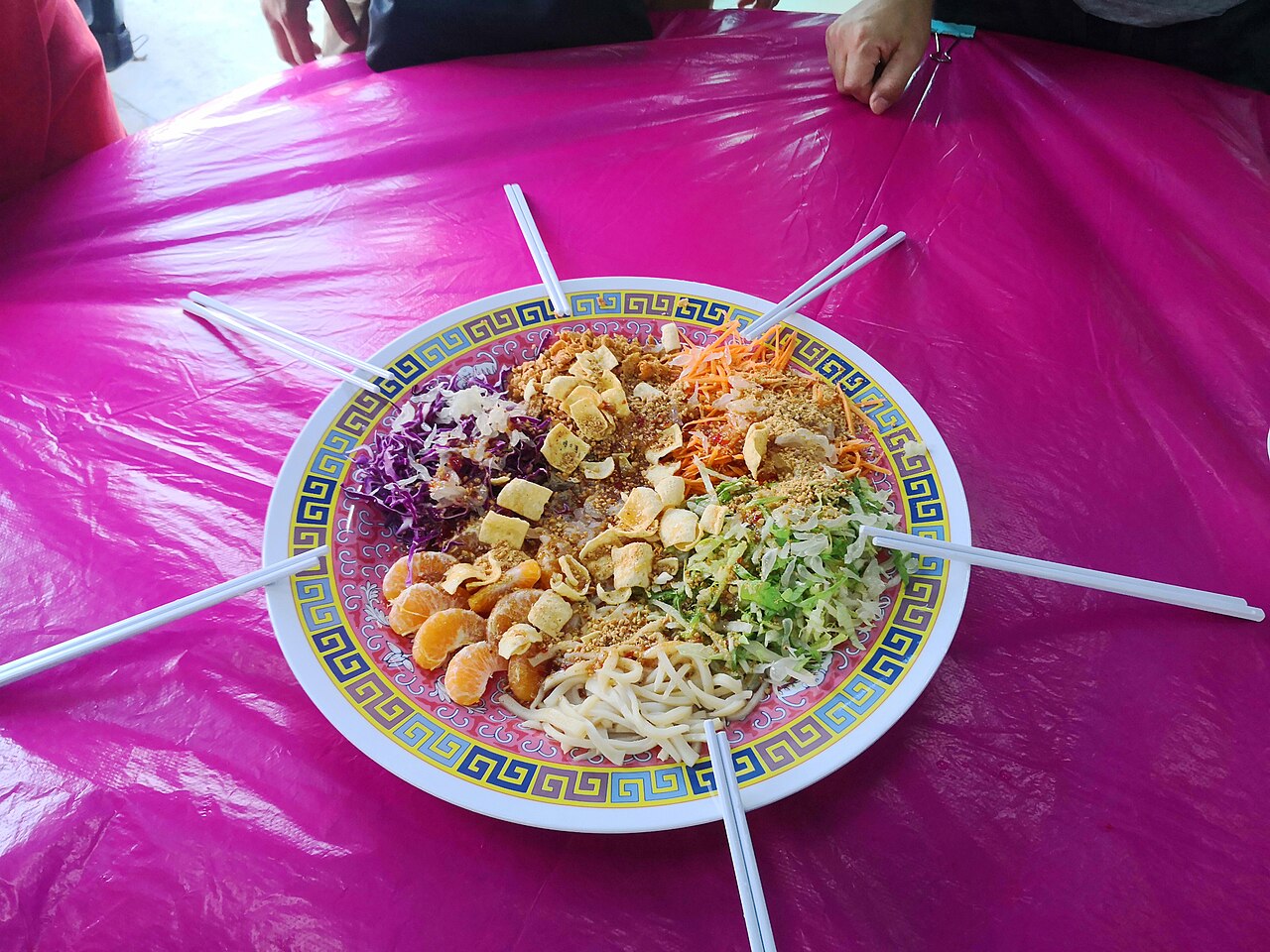
Renri, the seventh day, is treated as the shared birthday of all humanity — everyone turns a year older together. It is the traditional day for yee sang, the raw fish salad that gets tossed into the air with chopsticks while everyone shouts auspicious phrases, the higher the toss the better the fortune. In practice hotels and restaurants sell yee sang for the entire fifteen days, but Day 7 is when it is meant to happen.
Prices, using 2026 KL figures as the anchor: casual restaurants ran RM 58 to RM 88 (about US$14 to US$21) a platter, Chynna at the Hilton from RM 158, Yen at the W from RM 198, and the InterContinental RM 148 nett for a half portion or RM 460 for a full one (about US$35 and US$110). Expect 2027 slightly above those. A full platter feeds six to ten, so the casual end is the sane choice for two. Kuala Lumpur has the deepest bench of hotel restaurants running set menus, which is exactly why it is the easiest city to be in during the closed days.
Day 9: Pai Ti Kong, and the loudest night in Malaysia
If you only schedule one date from this article, make it this one. The ninth day is the Jade Emperor’s birthday, and for Hokkien Chinese it outranks Day 1 itself. Families set up altars facing the street from late evening on Day 8, with whole sugarcane stalks lashed in pairs to either side of the table — the cane is the heart of the ritual, tied to a folk story about ancestors hiding in a sugarcane field and surviving a massacre. Offerings go up around midnight, and then the fireworks start.
They do not stop for hours. This is comfortably the heaviest fireworks night of the whole period, heavier than the eve, and it is loudest in Penang because the Hokkien community there is the largest in the country. In 2027 it falls on Sunday 14 February. Walk the lanes off Chulia Street and Armenian Street in George Town after 22:00 and you will pass altar after altar. Book a room away from the noise if you want to sleep — or accept that you won’t. George Town on Day 9 is the single strongest argument for timing a Malaysia trip around this festival at all.
Day 15: Chap Goh Meh and the oranges
The fifteenth day, Saturday 20 February 2027, closes the festival. Chap Goh Meh is Penang’s Valentine’s Day, and the ritual is specific: unmarried women throw mandarin oranges into the sea at the Esplanade — Padang Kota Lama — in hope of a good husband, while boat crews scoop the fruit back out. The modern version has phone numbers on the peel. It is a genuine local event, not a staged one, and it draws a big, cheerful, mostly Malaysian crowd.
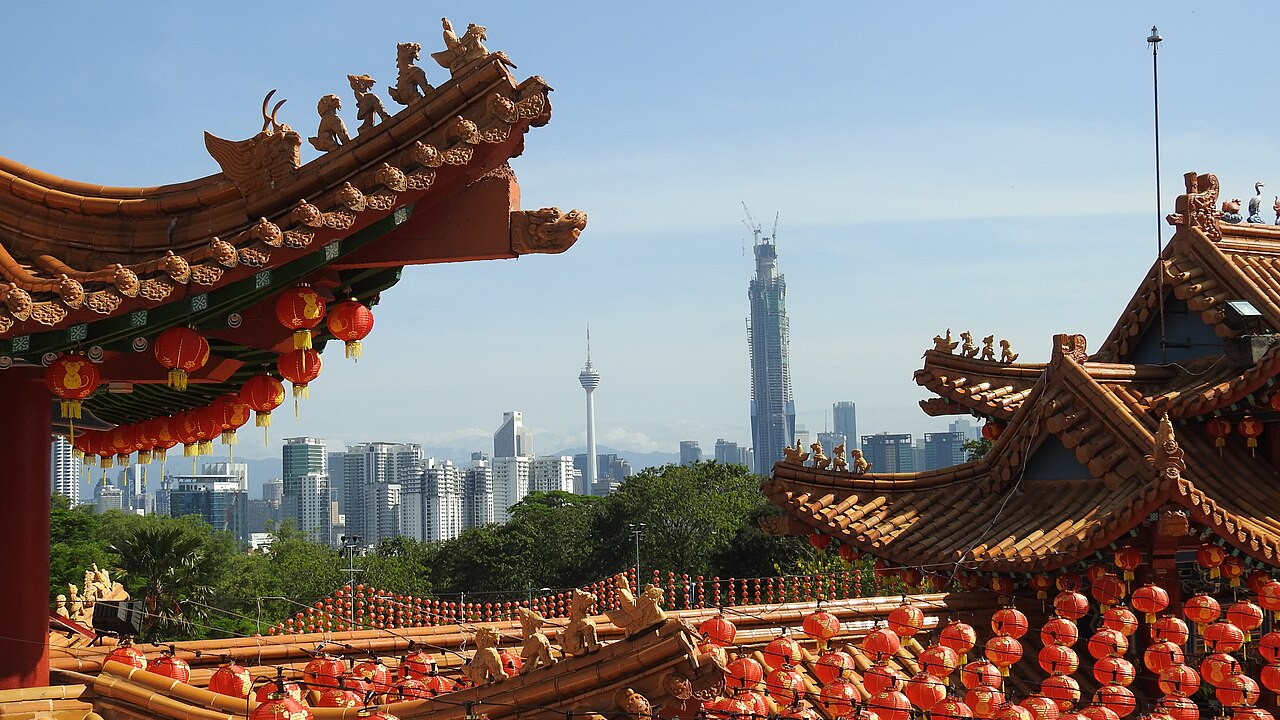
Which city, and on which day
The five cities that matter for Chinese New Year are not interchangeable. They peak on different days and they fail on different days.
| City | Best for | Peak day to be there | Weak point |
|---|---|---|---|
| Kuala Lumpur | Riding out the closed days; temple lanterns; hotel yee sang | Days 1-2 and Day 7 | Street atmosphere is thinner than Penang’s; mall shows dominate |
| Penang (George Town) | Pai Ti Kong fireworks, Chap Goh Meh, Kek Lok Si light-up | Day 9, then Day 15 | Hawker food gone for the first 3-5 days; airfares spike hardest |
| Ipoh | Old-town temples, cave temples, quieter crowds | Days 5-8, once the kopitiams reopen | Almost entirely shut Days 1-3; smallest events calendar |
| Melaka | Peranakan houses, Jonker Walk, lantern-lit riverfront | Days 2-3 and the weekend nights after | Jonker Walk night market may pause over the first days |
| Kuching | Carpenter Street processions, low crowds, easy costs | Days 1-3 | Smallest scale of the five; fewest CNY-specific events |
The clean two-city plan for 2027: sit out Days 1 and 2 in the capital, move north on Day 5 or 6 when the kitchens reopen, and be in Penang for Day 9 and Day 15. Twelve to fifteen days, every peak, no wasted mornings.
With less time, pick one end: Days 8 to 10 for the fireworks and functioning restaurants, or Days 13 to 15 for Chap Goh Meh, the tail of the light-ups and ordinary room rates. What does not work is landing on Day 1.
Penang: the strongest case, with the worst timing risk
Penang has the largest Hokkien community in Malaysia and the two best set-piece days on the calendar. It also has the most to lose from arriving early, because the reason people go is the food, and independent stalls are first to close and last to reopen. Everything in the Penang food guide that runs off a single-owner stall is a coin flip before Day 5. Plan the first days around hotel kitchens, kopitiams run by non-Chinese owners, and the Indian Muslim food of Little India, which is unaffected.
Ipoh: beautiful and completely shut
Ipoh is the sharpest version of the trap: a small old town whose appeal is almost entirely Chinese-owned kopitiams. Come for Days 5 to 8 instead, when the white coffee and bean sprout chicken are back on. The Ipoh travel guide covers the cave temples that stay open through the holiday when the shophouses do not.
Melaka and Kuching: the underrated pair
Melaka gives you the festival through a Baba Nyonya lens: ancestral altars, Nyonya new year dishes, shophouse facades built for lantern-hanging. Read the Peranakan heritage guide alongside the Melaka travel guide before you go, because the interest is in the houses rather than the street events.
Kuching is the quiet win. Sarawak’s Chinese community runs its own processions around Carpenter Street, crowds are a fraction of the Peninsula’s, and flights and rooms do not spike. If you want the festival without queueing for it, Kuching is the answer nobody gives you.
What is actually open on Day 1 — and how to eat
Here is the split, stated plainly, because no other guide bothers.
| Category | Days 1-3 | Days 4-5 | Day 6 onward |
|---|---|---|---|
| Independent Chinese hawker stalls and kopitiams | Closed | Patchy | Mostly reopened |
| Chinese-owned shops and family businesses | Closed | Patchy | Open |
| Shopping malls and chain restaurants | Open, with CNY hours | Open | Open |
| Hotel restaurants | Open, set CNY menus | Open | Open |
| Malay and Indian eateries, mamak stalls | Open, unaffected | Open | Open |
| Temples, mosques, museums | Open, busiest of the year | Open | Open |
| Grab, buses, trains, airports | Running; surge pricing and full seats | Running | Normal |
Now the concrete plan. Breakfast: roti canai and teh tarik at a mamak, which are open on Day 1 and on every other day of the year, including 04:00. Lunch: nasi kandar, nasi campur or banana leaf rice — all Malay or Indian, all completely unaffected by the Chinese calendar. Dinner: either a hotel’s set CNY menu, booked in advance, or Little India in George Town or Brickfields in KL, both of which carry on as normal. That is three good meals a day with zero dependence on anything that is closed.
Mamak stalls genuinely never close, which is why nobody in Malaysia goes hungry on a public holiday. And the street food scene you came for is not gone, it is paused, and the pause is short. Reset your expectations by three days and the trip works. Similarly, most of the big night markets take the first few evenings off and then restart at full strength, often busier than usual because everyone is on holiday.
Kek Lok Si: the best sight of the season, weeks after the crowds leave
Kek Lok Si in Air Itam, Penang, switches on more than 200,000 lights and around 20,000 lanterns, and it is the most visually extraordinary thing that happens anywhere in Malaysia during the festival. In 2026 the light-up ran 13 February to 16 March, switch-on ceremony 19:00 to 20:00, lights nightly 19:00 to midnight. The inclined lift to the Kuan Yin statue is RM 3 (about US$0.70) each way, RM 6 return. A separate hill funicular is quoted around RM 16 return, but that is unconfirmed — check at the booth.
Now the part nobody tells you. That is a four-to-five-week window. The lights run for weeks after Chinese New Year itself finishes. Exact 2027 dates have not been published, but expect a similar span opening on or just before the eve and running well into March. Which means you can see the single best sight of the season in the first week of March, with a fraction of the crowd, at ordinary hotel rates, with every hawker stall in Penang fully open. If your only interest in the festival is the spectacle, going three weeks late is not a compromise — it is the better trip.
The Thaipusam adjacency: two great festivals, one flight
This is the scheduling coincidence that no one has written up. Thaipusam 2027 falls on Friday 22 January — fifteen days before Chinese New Year itself, and a fortnight before the reunion dinner. Batu Caves hosts the largest Thaipusam celebration anywhere outside India: hundreds of thousands of devotees, kavadi carriers climbing 272 steps through the night, a procession that leaves KL the previous evening. It is Malaysia’s most visually intense festival, and in 2027 it sits directly upstream of its second most important one.
So the trip sketches itself. Land in Kuala Lumpur around 20 January, take two days to adjust, and do Thaipusam at Batu Caves on 22 January starting before dawn. Then you have two clear weeks — Borneo, the islands, or down the peninsula through Melaka and Johor. Return to the west coast by 4 February, sit out Days 1 and 2 in KL, and be in Penang from Day 8. Stay a few days more and you reach Chap Goh Meh on 20 February. One return ticket, both of Malaysia’s biggest non-Muslim festivals.
A two-week version also works: 20 January to 3 February gets you Thaipusam and an exit before the airfare spike. The full picture is in the Thaipusam at Batu Caves guide, and it is worth reading before you commit, because the crowds are on a different scale to anything in this article.
Johor Bahru’s Chingay: the biggest procession in the country
Almost no travel guide mentions this, which is remarkable given it is the largest Chinese street procession in Malaysia. The Johor Bahru Chingay centres on the Johor Ancient Temple, runs five days, and parades the five deities of the temple’s clan groups through the city in a tradition roughly 150 years old. In 2026 it ran 6 to 10 March.
Note the date: March, not February. Chingay is tied to the twentieth to twenty-second day of the first lunar month, so it lands after the festival proper has ended, and it moves each year. The 2027 dates are not yet published — check with the temple rather than assuming a repeat of 2026. If they line up with a March visit, Johor Bahru becomes a genuine destination rather than a border crossing, and it pairs neatly with a late Kek Lok Si visit at the other end of the peninsula.
Ang pow etiquette, in sixty seconds
The red packet rules are simple and the mistakes are avoidable.
- Only married people give. If you are an unmarried visitor you are not expected to give at all, and nobody will think less of you. You may well be given one.
- RM 5 to RM 10 (about US$1.20 to US$2.40) is normal for children and acquaintances. You are not buying goodwill with volume.
- Even numbers only. Odd amounts are associated with funerals.
- Never anything with a 4 in it — the word sounds like “death” in Chinese. RM 40 is a genuine insult, not a quirk.
- Amounts ending in 8 are lucky: RM 8, RM 18, RM 28.
- Give and receive with both hands, and do not open the packet in front of the giver.
- Use new notes in an unused packet. Banks run out of crisp notes in the fortnight before.
What to skip, and what people get wrong
- Flying into Penang or Ipoh on Day 1 for the food. The single most common mistake. Shift the arrival by four days and the same trip works perfectly.
- Paying the airfare spike. Singapore-Malaysia fares rose up to sixfold in 2026: Ipoh from S$124-191 the week before to S$822-1,222, Penang from about S$144 to S$700-plus. Malaysia Aviation Group added 198 extra flights between 11 and 23 February, so capacity exists — it is the eve-and-Day-1 window that is priced insanely.
- Assuming the country closes. It does not. Roughly 23% of citizens are ethnic Chinese; Malay and Indian Malaysia works, cooks and drives as normal.
- Mall lion dance shows. Choreographed, twenty minutes, sold as culture. The real thing happens outside shophouses and temples, unannounced and free.
- Giving ang pow when nobody expects it. Unmarried visitors do not give. Handing packets around marks you out rather than fitting in.
- Treating it like the Muslim holidays. The rhythm is different — Hari Raya Aidilfitri empties the cities on one axis, this empties them on another.
Frequently asked questions
When is Chinese New Year 2027 in Malaysia?
Saturday 6 February 2027, the Year of the Fire Goat. The eve is Friday 5 February and the festival ends with Chap Goh Meh on Saturday 20 February.
Is it a public holiday, and for how long?
Two federal days — Days 1 and 2 — except in Kelantan and Terengganu, which observe one. Both fall on a weekend in 2027, so most states add a replacement holiday on Monday 8 February.
Where is the best place to celebrate?
Penang, for Pai Ti Kong on Day 9 and Chap Goh Meh on Day 15. Kuala Lumpur is the more comfortable base for the closed first days.
Is everything closed?
No. Independent Chinese-owned shops and hawker stalls shut for the first three to five days. Malls, chains, hotels, temples, transport and all Malay and Indian food carry on as normal.
What is Chap Goh Meh?
The fifteenth and final night. Unmarried women throw mandarin oranges into the sea at the Esplanade in George Town, Penang, hoping for a good husband; boats collect them again afterwards.
Can tourists join an open house?
Yes, when invited — and invitations come easily. Bring mandarin oranges in a pair, wear red or bright colours, and avoid black and white.
Your next step
Fix two dates before booking anything else: the day you land, and the day you are in Penang. Everything follows from those. Then check the rest of your window against the Malaysia festivals calendar lays out the whole year, and 2027 stacks unusually well.
1 note