Indigenous Peoples of Malaysia: Orang Asli, Dayak & Borneo Tribal Heritage (2026)
Three different peoples, three legal categories, three trips. Population figures, longhouse stays with real prices, and an honest look at the ethics of tribal tourism.
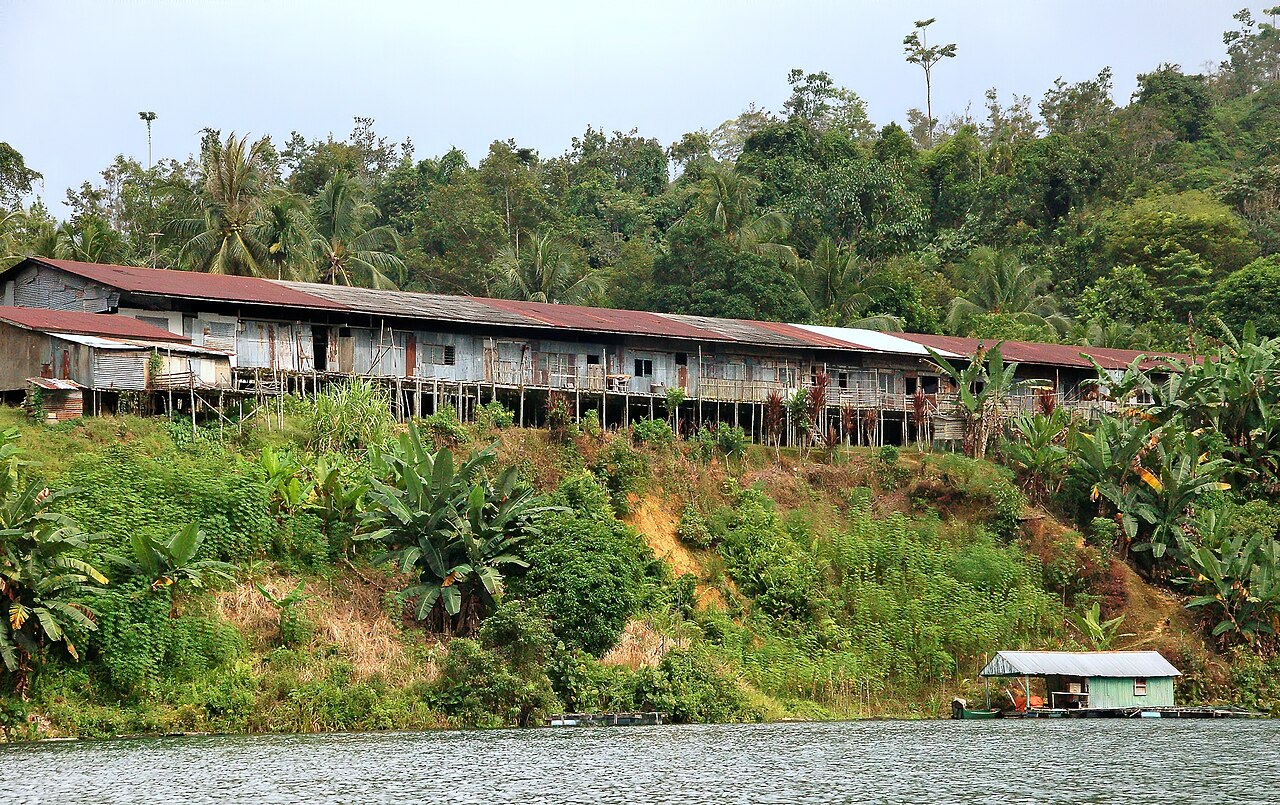
Book a “tribal village visit” in Kuala Lumpur and a “tribal village visit” in Kota Kinabalu and you have bought two experiences with almost nothing in common — different peoples, different languages, different legal status, different islands. The indigenous peoples of Malaysia are not one culture with regional variations. They are three distinct constitutional categories spread across two landmasses separated by 1,600 km of South China Sea, and the tour industry flattens all of it into a single line item called “cultural.”
That flattening is not a pedantic complaint. It is the mechanism by which a traveller ends up paying for a two-hour photo stop and filing it mentally as a cultural experience. If you cannot say whether the people you are about to visit are Orang Asli, Dayak or Anak Negeri, you also cannot evaluate what the operator is selling you, whether the community sees any of your money, or whether the thing you are watching is a living practice or a scheduled performance of one.
This guide does the sorting. It defines the three groups properly, gives you the population figures nobody else publishes, prices four real ways to visit from RM 8 to RM 1,225, and spends a full section on the ethics — including the specific academic critique of indigenous tourism in Malaysia and a seven-point checklist you can run against any operator before you pay. It sits inside our wider guide to Malaysian culture and heritage, which covers the Malay, Chinese, Indian and Peranakan threads this article deliberately leaves alone.
| Group | Region | Main sub-groups | Population (2020 census) | Where you can visit |
|---|---|---|---|---|
| Orang Asli | Peninsular Malaysia only | Senoi (113,910), Proto-Malay (86,784), Negrito (6,083) — 18 recognised sub-groups | 206,777 at 31 Dec 2020; about 0.8% of the peninsula | Taman Negara (Batek), Cameron Highlands fringe villages, JAKOA-linked settlements in Pahang and Perak |
| Dayak | Sarawak | Iban (753,500), Bidayuh (215,700), Orang Ulu groups; Melanau (142,400) counted separately | Roughly 40% of Sarawak’s 2.6 million people | Annah Rais (Bidayuh, day trip), Batang Ai and Lemanak (Iban, overnight), Skrang, Rejang, Baram, Sarawak Cultural Village |
| Anak Negeri | Sabah | Kadazan-Dusun (698,300), Bajau (592,400), Murut (112,900), Rungus and others | About 2.1 million, roughly 62% of Sabah; 39 recognised groups | Mari Mari Cultural Village near Kota Kinabalu, Rungus longhouses in Kudat, Murut areas inland |
Orang Asli, Dayak, Anak Negeri: the distinction that changes your trip
Start with the term you will see most often in travel copy, because it is the one most often misapplied. Orang Asli — literally “original people” in Malay — refers to the indigenous peoples of Peninsular Malaysia and nobody else. It is not a generic word for indigenous Malaysians. Using it for an Iban family in Sarawak is roughly as accurate as calling a Scot a Basque because both are European.
The Malaysian government recognises 18 Orang Asli sub-groups, organised into three broad divisions. The Senoi are the largest at 113,910 people, or 55.09% of the total, and include the Semai and Temiar, concentrated in the mountainous interior of Perak, Pahang and Kelantan. The Proto-Malay division counts 86,784 people (41.97%) and includes the Temuan, Jakun and Orang Seletar, spread across the southern peninsula and coastal Johor. The Negrito division is the smallest and the most frequently sensationalised in travel writing, at 6,083 people or 2.94%; it includes the Batek, Jahai and Lanoh in the northern interior. Total Orang Asli population was 206,777 as of 31 December 2020, and the Department of Statistics estimated around 227,900 by 2025. That is roughly 0.8% of Peninsular Malaysia. Administration sits with JAKOA, the government department for Orang Asli development.
Dayak is the collective term for the non-Muslim indigenous peoples of Sarawak. The Iban are by far the largest at 753,500 people, around 30.7% of the state on their own. The Bidayuh number 215,700, about 8.8%. The Orang Ulu label covers a further cluster of upriver peoples including the Kayan, Kenyah, Kelabit and Penan. The Melanau, at 142,400, are indigenous to Sarawak but are usually counted as their own category rather than as Dayak. Taken together, Dayaks make up roughly 40% of Sarawak’s 2.6 million residents, in a state that recognises around 26 ethnic groups. If you are flying into Kuching, this is the population you will be meeting.
Anak Negeri — “children of the land” — is Sabah’s equivalent category, and it is proportionally the largest of the three. Sabah recognises 39 indigenous groups totalling about 2.1 million people, roughly 62% of the state’s population. The Kadazan-Dusun are the largest at 698,300, followed by the Bajau at 592,400 and the Murut at 112,900. In Sabah, indigenous people are not a minority you visit; they are the majority you are already among the moment you land in Kota Kinabalu.
Where Malays fit, and why the confusion persists
Malays are legally indigenous to Malaysia under the constitutional category of bumiputera, which grants a set of economic and educational preferences. Orang Asli, Dayak and Anak Negeri are also bumiputera. But bumiputera is a wider political category, not an ethnic one, and Malays are emphatically not Orang Asli. Conflating the two is a common error in English-language travel content and it obscures a real and sometimes contentious politics around land rights, native customary land and forest access.
The practical consequence for you as a visitor is simple. There is no single “indigenous Malaysia” itinerary. A peninsula trip built around Taman Negara and the Cameron Highlands will put you in Orang Asli territory. A Sarawak trip puts you among Dayak communities. A Sabah trip puts you among Anak Negeri. Doing all three properly is a three-week job, not a three-day one, and any tour promising “Malaysia’s tribal cultures” in a long weekend is selling you a sampler platter of performances.
Four ways to visit, priced honestly
Every indigenous cultural experience sold in Malaysia sits somewhere between purpose-built theatre and a working community that has agreed to host you. Neither end is illegitimate. But the price gap runs a factor of nine, and so does the gap in what you take home.
| Option | Where | Duration | Price (MYR) | What you actually get | Verdict |
|---|---|---|---|---|---|
| Sarawak Cultural Village | Damai, 35 min from Kuching | 3-4 hours, open daily 09:00-17:00 | RM 135 non-Malaysian adult (about US$32); RM 85 child 2-12; RM 90 Malaysian adult; under-6 free; +RM 33 lunch | Seven reconstructed ethnic houses on a landscaped site, guided walk, staged performance at 11:30 or 16:00, craft demonstrations | Best value orientation in Malaysia. Buy it as a museum, not as a village |
| Mari Mari Cultural Village | Inland from Kota Kinabalu | Half day | RM 190 adult (about US$45), including guide, meal and return transfer | House-to-house tour of five tribal dwellings, fire-making and blowpipe demonstrations, performance, full meal | Slicker and more physical than Sarawak’s version; the transfer inclusion makes the price fair |
| Annah Rais Bidayuh longhouse | 60 km / 1h15 from Kuching | Half day, or overnight homestay | Around RM 8 adult, RM 5 child entry — small-operator figure, confirm on arrival | A genuinely inhabited Bidayuh longhouse, bamboo walkways, a welcome cup of tuak, people going about a normal day | The cheapest real thing on this list. Go independently, tip properly, do not treat homes as exhibits |
| 2D1N Batang Ai Iban longhouse | Sri Aman, 4h drive plus longboat from Kuching | 2 days, 1 night | RM 858-1,225 per person (about US$204-292) | Overnight in a working longhouse, communal evening on the ruai, meals with the household, river transport, guide-interpreter | The only option on this list that is a relationship rather than a visit. Also the only one that will be uncomfortable |
Sarawak Cultural Village — RM 135, and worth it if you understand what it is
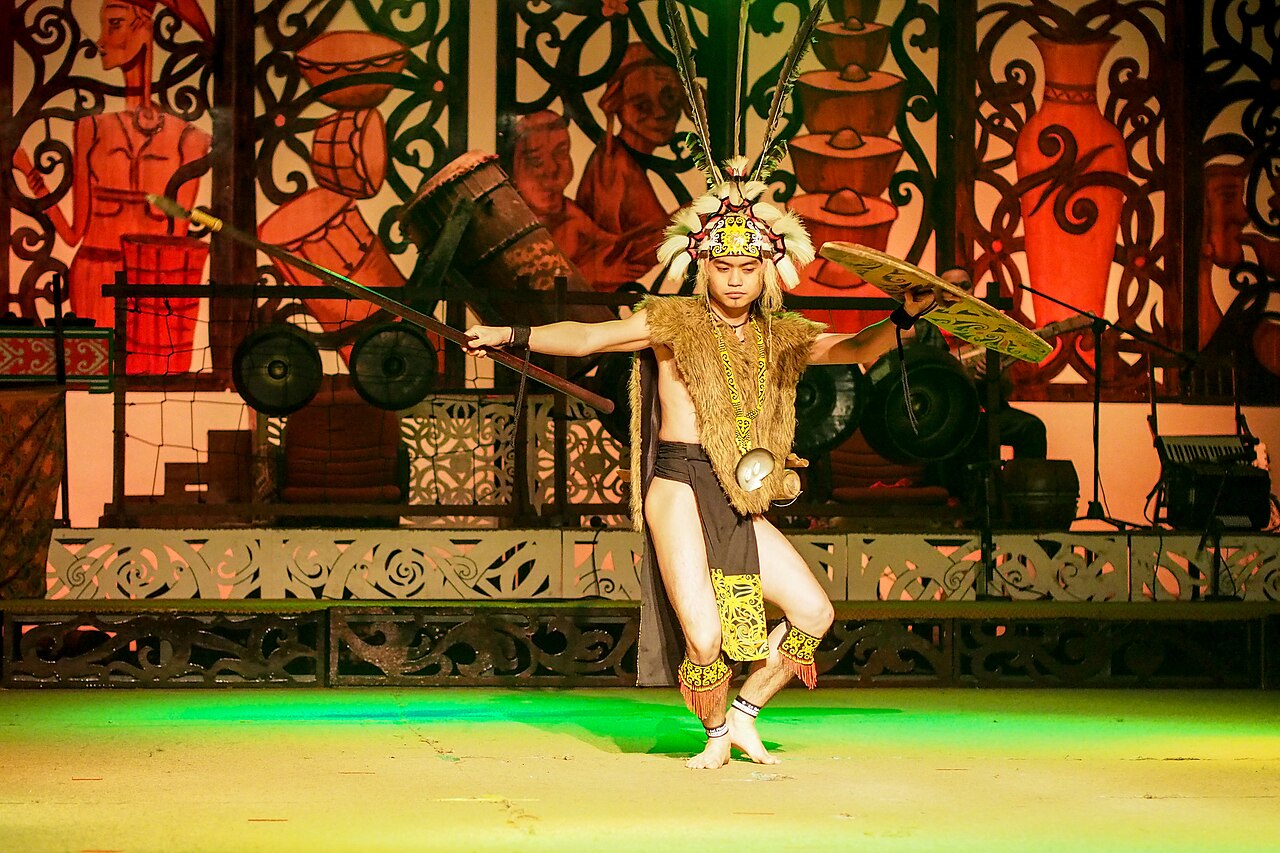
Thirty-five minutes from Kuching at Damai, the Sarawak Cultural Village is a purpose-built site with full-scale replica dwellings for the state’s main ethnic groups — Iban, Bidayuh, Orang Ulu, Melanau, Malay and Chinese — each staffed by people from that community who demonstrate crafts, instruments and food preparation. Admission is RM 135 for a non-Malaysian adult (about US$32), RM 85 for children aged 2-12, RM 90 for Malaysian adults and RM 57 for Malaysian children, with under-sixes free. Lunch adds RM 33. Doors open 09:00 and close 17:00, and the cultural performance runs twice daily at 11:30 and 16:00.
Critics call it a theme park. That is not quite fair and not quite wrong. What it genuinely does well is comparative: within ninety minutes you can stand inside a Melanau tall house, an Orang Ulu longhouse and a Bidayuh headhouse and understand, physically, why upriver architecture differs from coastal architecture. No museum in the country teaches that as fast. Treat it as the reference chapter you read before you go upriver, in the same spirit you would visit one of the country’s better museums — and you will get RM 135 of value. Treat it as a substitute for meeting people and you will not.
Mari Mari Cultural Village — RM 190 and Sabah’s main option
Sabah’s equivalent sits in secondary forest inland from Kota Kinabalu and runs a different format: rather than letting you wander, a guide walks a group house-to-house through five dwellings representing Kadazan-Dusun, Rungus, Lundayeh, Bajau and Murut building traditions, with demonstrations at each — fire-starting, tattooing, rice wine, blowpipes, the Murut trampoline. RM 190 per adult (about US$45) covers the guide, all performances, a meal and return transfer from Kota Kinabalu, which is the detail that makes the number defensible; without transport included it would look expensive.
Mari Mari is more scripted than Sarawak’s site and moves at the pace of the guide rather than yours. If you are travelling with children, that structure is an advantage. If you want to linger, it is not. Coverage of it in English-language travel writing is unusually thin given it is the default indigenous-culture booking for the tens of thousands of visitors who use Kota Kinabalu as a base before heading to Danum Valley or the east coast.
Annah Rais — around RM 8, and the best-value cultural stop in Malaysia
Roughly 60 km and an hour and fifteen minutes south of Kuching, Annah Rais is a Bidayuh longhouse settlement that people actually live in. Entry is around RM 8 per adult and RM 5 per child — a small-operator figure that varies, so confirm it when you arrive rather than treating it as fixed. The fee usually includes a welcome cup of tuak, the fermented rice wine offered to arriving guests across Borneo.
What you get for RM 8 is not a performance. It is bamboo walkways underfoot, laundry drying, motorbikes parked beneath the stilts, a skull rack that the household will explain if asked, and residents who are used to visitors and mostly ignoring them. That last part is the point. Annah Rais is close enough to Kuching to combine with Bako National Park over a two-day loop, and homestays are available if you want to sleep there rather than day-trip. Behave as you would in any village where people live: ask before photographing interiors, buy something, do not wander into a bilik uninvited.
Batang Ai 2D1N — RM 858-1,225, and the only one that is not a visit
Four hours by road from Kuching and then a longboat ride, Batang Ai and the neighbouring Lemanak river system hold Iban longhouses that take overnight guests. A two-day, one-night trip runs RM 858 to RM 1,225 per person (about US$204-292), covering transport, the longboat, meals, a guide who can interpret both language and etiquette, and the community’s fee.
That is a serious price for a country where you can eat well for RM 12, and the honest justification is that four of the eleven or twelve hours you spend awake on this trip are simply travel. You are paying for remoteness. Skrang, closer to Kuching, is cheaper and correspondingly more used to tour groups; the Rejang around Sibu and the Baram out of Miri are further again and mostly reached through specialist operators. Per-night rates for Lemanak and Skrang stays circulate widely online, but we could not verify them and are leaving them out rather than guessing. If Batang Ai is on your list, it slots naturally into a longer Borneo itinerary rather than a Kuching city break.
Inside a longhouse: the vocabulary and the reality
A longhouse is not a building type so much as a village arranged along one axis. Picture a single elevated structure on stilts, sometimes 100 metres or more end to end, containing anywhere from a dozen to sixty households under one continuous roof. Learn four words before you go and the whole layout becomes readable.
- Ruai — the long communal gallery running the full length of the house. This is the street, the living room and the meeting hall at once. Everything social happens here, and it is where you will sleep as a guest.
- Bilik — the private family rooms opening off the ruai, one per household. These are homes. You do not enter one unless invited, and you do not photograph into one.
- Tanju — the open, uncovered verandah beyond the ruai, used for drying rice and pepper, and for sitting out in the evening once the heat drops.
- Tuai rumah — the house headman, who holds authority over the community and is the person your guide will formally greet on arrival. Gifts are handed to the tuai rumah for the house as a whole, never to individuals, because a gift to one family in a communal structure is a small social problem you have created and then left behind.
Add tuak, the rice wine poured for arriving guests. Refusing outright reads as a rebuff. Taking a sip and setting the glass down is entirely acceptable, and nobody minds if you do not drink alcohol — say so plainly and it will be handled.
What a night there is actually like
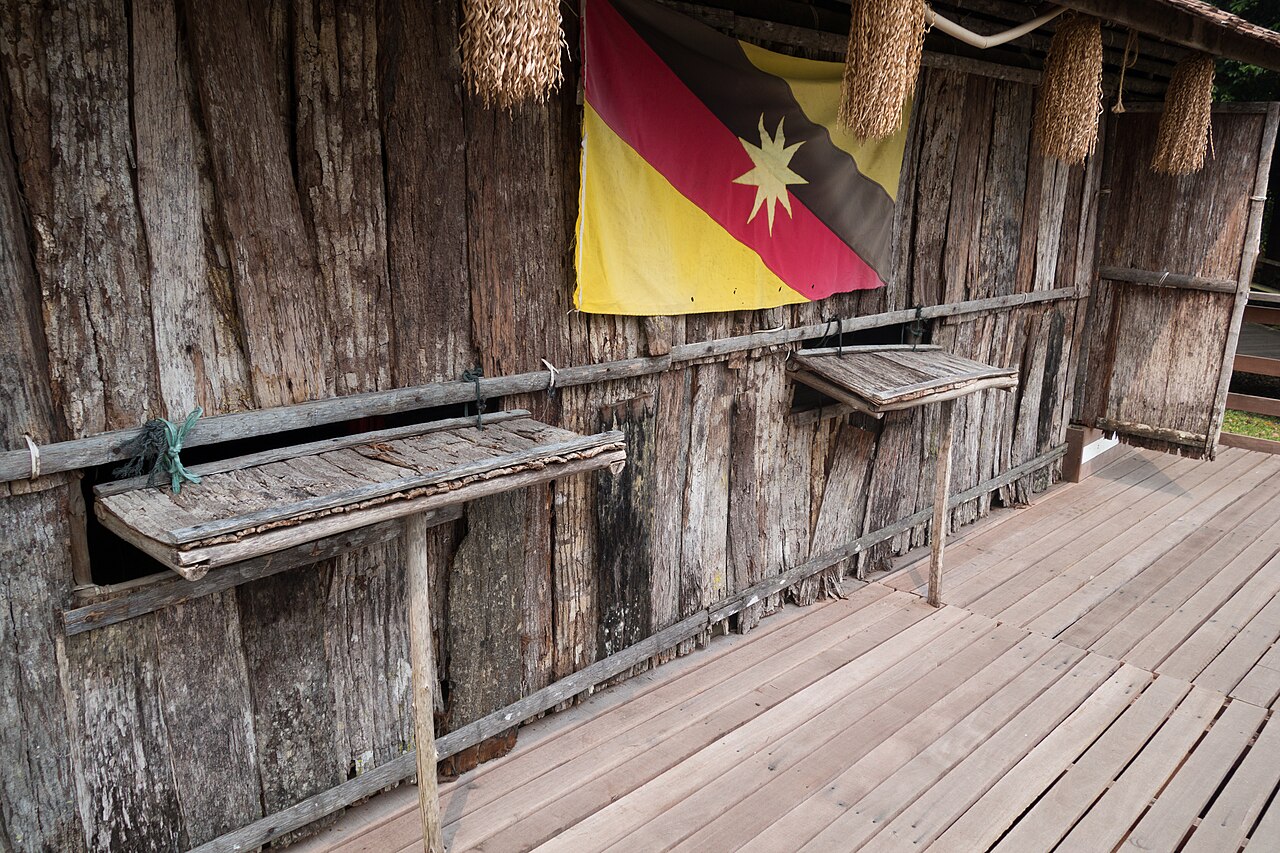
Here is the part the brochures skip. You sleep on the ruai, on a mat on a hardwood floor, in a row with the other guests, under a mosquito net if one is provided. There is no privacy in any sense a Western traveller would recognise. Someone will walk past you at 03:00 on the way to the toilet. Dogs and roosters operate on their own schedule. Bathing is usually a shared washroom at the end of the house or the river, and the toilet may be a squat.
The evening tends to follow a shape: arrival and tuak, a communal meal eaten sitting on the floor, conversation through your guide, sometimes music and dancing that may be genuinely spontaneous or may be laid on for you — you will usually be able to tell by whether the children are watching or bored. Then people drift to their bilik and the house goes quiet earlier than you expect. Rise is early, often before 06:00, because the household has work.
Bring a headtorch, earplugs, a sarong for bathing, repellent, and a gift for the house — coffee, sugar, rice or school supplies all work. Skip alcohol unless your guide confirms it is welcome. Cash goes through the tuai rumah, not to whoever posed for a photograph.
The other thing to accept in advance: a longhouse in 2026 has satellite dishes, a generator, smartphones and a WhatsApp group. Anyone who tells you a community is “untouched” is either lying or has not been. Reading up on Malaysian etiquette more broadly before you go will save you the worst of the gaffes, but the specific rules of a longhouse are a guide’s job to relay, and a guide who does not brief you before you step inside is a guide who is not doing that job.
The ethics, taken seriously
Most travel articles handle this with a short list of soft tips — be respectful, ask before photos, buy local. Those are fine as far as they go, which is not far. The substantive critique of indigenous tourism in Malaysia is academic, specific and worth knowing before you spend money.
“Batek playing Batek”
Research into Batek tourism around Taman Negara documented a specific pattern: before tourist groups arrive, modern possessions — mobile phones above all — are put out of sight, and the encounter is compressed into a short blowpipe demonstration and a fire-starting demonstration. Researchers described the result as “Batek playing Batek,” people performing a curated version of themselves for an audience that has been primed to expect it. Communities in the same region have separately raised concern about the volume of tourist traffic routed through caves that hold spiritual significance for them.
The standard critical term for the extreme end of this is “human zoo”: a set-up where people are effectively required to wear traditional dress and pose for photographs during business hours. It is a harsh phrase and it does not describe every operation in Malaysia. But it names a real failure mode, and the failure mode is not always visible from inside the experience — a well-run photo stop and an exploitative one look almost identical for the ninety minutes you are standing there.
Cultural villages are theatre, and theatre is fine
Here is the position this guide takes. The Sarawak Cultural Village and Mari Mari are not frauds. They are theatre — staged, scheduled, built for an audience — and they employ people from the communities they represent, on wages, with contracts, in a state where the alternative employment might be a plantation or an oil rig. Several performers are teaching crafts and instruments they would otherwise have little economic reason to maintain. That is a legitimate cultural function.
The problem is not the theatre. The problem is buying theatre while believing you bought anthropology, then going home and telling people you visited a tribal village. Know which one you are buying. If you want the performance, buy the performance and enjoy it without guilt. If you want to meet people, budget the RM 858 and the two days, or the RM 8 and the willingness to sit in Annah Rais without a schedule. The dishonest middle — a two-hour stop sold as immersion — is where the harm concentrates.
A seven-point screening checklist for any operator
Run these seven questions past an operator before you pay. Ask them in one email; the reply tells you most of what you need. An operator who answers plainly is usually fine. One who answers in adjectives is not.
| # | Ask | A good answer looks like | Walk away if |
|---|---|---|---|
| 1 | Who owns and runs the operation? | Named community members, a village cooperative, or a company that names its indigenous partners | Nobody will say, or the answer is “we work with local communities” |
| 2 | Who sets the schedule — you or the community? | Visits fit around the household’s day and can be cancelled for a funeral, harvest or ceremony | Fixed daily slots regardless of what is happening in the village |
| 3 | Is photography permission asked, individually? | A briefing before arrival, and a stated rule of asking each person | Photography is presented as included in the ticket |
| 4 | Is there a fixed community fee, and how much? | A stated per-visitor amount paid to the house or cooperative | Vague reference to “supporting the village” with no figure |
| 5 | Working longhouse or purpose-built set? | A clear, unembarrassed answer either way | The operator blurs the distinction in the marketing copy |
| 6 | Is the visit built around a real event? | A harvest, a festival, a normal working day you observe rather than trigger | The “ceremony” happens because you booked it |
| 7 | What is the group size, and how many groups per day? | Small numbers, capped, with gaps between them | Coaches, back-to-back slots, a turnstile |
Two additions that are not questions. First, pay for things: crafts, meals, homestay nights, guiding. Direct commerce transfers more money into a community than any amount of sensitive behaviour does, and buying a genuine piece of Malaysian craftwork from the person who made it is the single most useful thing most visitors do. Second, accept refusal. If a household does not want you in the ruai today, that is a complete answer, and an operator who overrides it has told you what kind of operator they are. The same logic runs through responsible eco-tourism in Malaysia generally: consent and revenue-sharing are the two levers that matter, and everything else is decoration.
Festivals: the three dates worth planning around
Most guides say these festivals happen “in June” and stop there. Here are the 2027 dates, because these are trips you build a flight around.
| Festival | 2027 dates | Where | Who | Planning note |
|---|---|---|---|---|
| Kaamatan (Harvest Festival) | 30-31 May | Sabah and Labuan (public holiday) | Kadazan-Dusun and other Anak Negeri groups | Month-long build-up across Sabah; the two holiday days are the peak |
| Gawai Dayak | Tuesday 1 June; public holiday 1-2 June | Sarawak | Iban, Bidayuh, Orang Ulu | Longhouses fill with returning family; book accommodation and flights months out |
| Rainforest World Music Festival | 25-27 June, 30th edition | Sarawak Cultural Village, Damai | Sarawak indigenous musicians plus international acts | 2027 tickets not yet released; 2026 pricing ran RM 235 early-bird 1-day, RM 635 for 3 days |
The interesting quirk is that Kaamatan on 30-31 May and Gawai on 1-2 June are consecutive. A traveller who lands in Kota Kinabalu on 29 May and flies to Kuching on 31 May can catch both harvest festivals in a single week, which is the strongest four days in the Malaysian cultural calendar and something almost nobody plans deliberately. Flights on that Sabah-Sarawak leg sell out; book by March. Our Malaysia festivals calendar sets these against the Muslim, Chinese and Hindu dates so you can see what else is running.
A caution about Gawai. It is a homecoming, closer to Christmas than to a public spectacle, and visiting a longhouse works only if you are invited or brought by a guide with a real relationship to the house. Without an invitation, the Kuching city celebrations are the appropriate way in.
What to skip
- The two-hour “tribal village” bolted onto a city tour. Whatever it costs, it is a photo stop. Two hours minus transfer is forty minutes on site, which is not enough time to learn a name.
- Blowpipes and “antique” beads of unclear provenance. Old Borneo beads and ceremonial items carry real value and sometimes real restrictions. Buy new work from the maker instead — it is honest, it pays the right person, and it will clear customs.
- Paying individuals to be photographed. It converts a person into a service and it distorts what the next visitor is offered. Contribute through the house fee.
- Expecting a remote longhouse to be authentic and comfortable at once. The remoteness is the reason there is no ensuite. Pick one.
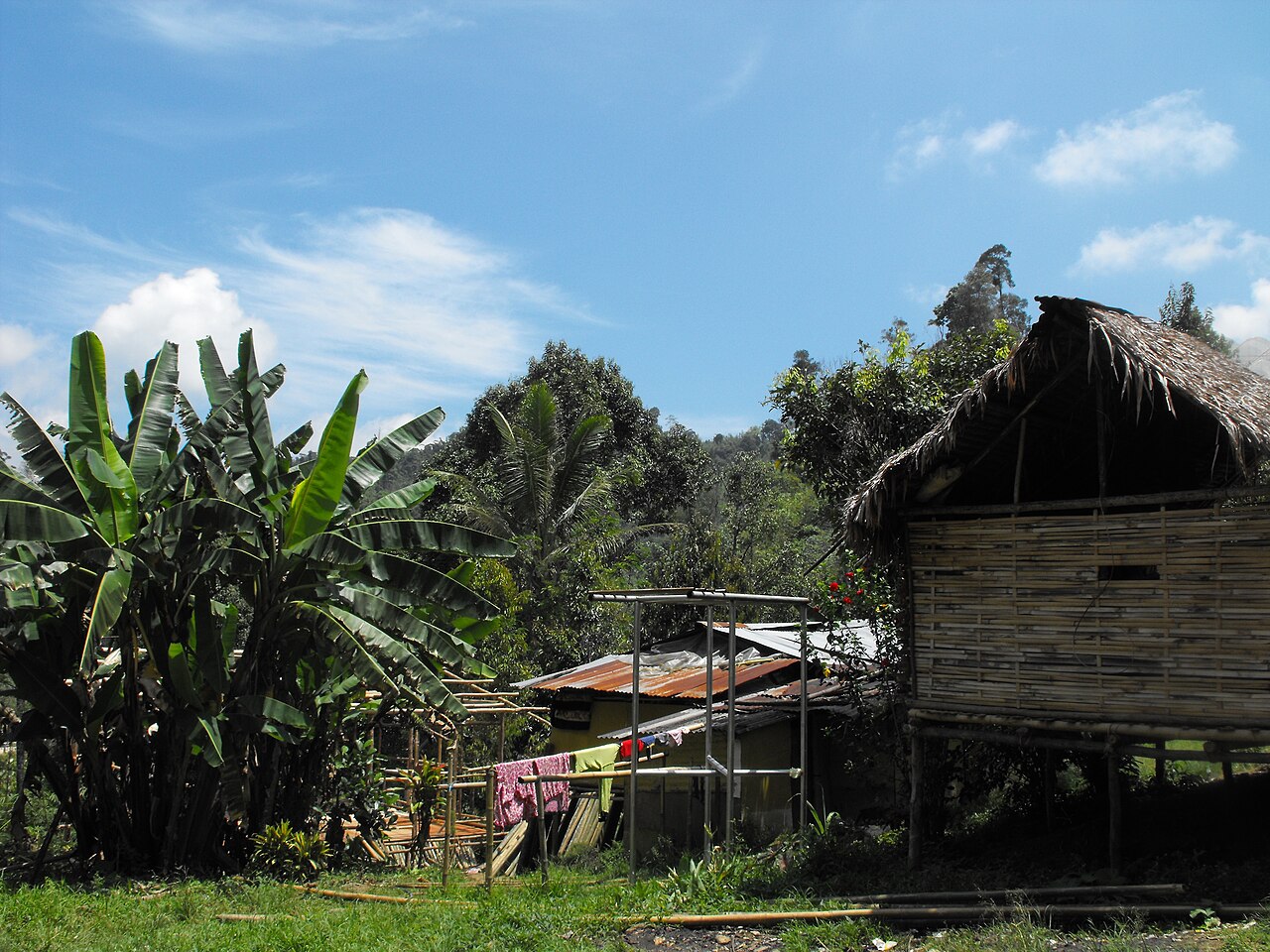
- Peninsula “Orang Asli tours” that will not name the community. Fringe villages near Cameron Highlands get heavy unmanaged traffic, and pricing there is inconsistent enough that we are not publishing figures. Go through a named guide or not at all.
On the peninsula generally, the better encounters are incidental rather than booked: an Orang Asli guide leading a trek in Taman Negara, where the forest knowledge is the product and the culture is not on sale. That model — expertise you hire rather than identity you watch — is the one worth seeking out anywhere, including on jungle treks elsewhere in Malaysia and on the guided cave routes at Mulu, where Berawan and Penan guides work the park.
Frequently asked questions
What is the difference between Orang Asli and Dayak?
Geography and legal category. Orang Asli are the indigenous peoples of Peninsular Malaysia — 206,777 people across 18 recognised sub-groups. Dayak refers to the non-Muslim indigenous peoples of Sarawak, principally Iban, Bidayuh and Orang Ulu, numbering roughly 40% of that state. They are unrelated administrative categories and largely unrelated cultures.
How many Orang Asli are there?
206,777 as of 31 December 2020, split into Senoi 113,910, Proto-Malay 86,784 and Negrito 6,083. The Department of Statistics estimated about 227,900 by 2025. That is roughly 0.8% of the peninsula’s population.
Can tourists stay overnight in an Iban longhouse?
Yes, through operators working with specific houses on the Batang Ai, Lemanak, Skrang, Rejang and Baram rivers. You sleep communally on the ruai rather than in a private room, and the visit is arranged with the tuai rumah in advance. Independent turning-up is not the norm and is not welcome.
How much does a longhouse tour cost?
A 2-day, 1-night Batang Ai trip from Kuching runs RM 858-1,225 per person (about US$204-292). A day visit to Annah Rais costs around RM 8 entry plus your own transport. Sarawak Cultural Village is RM 135 for a non-Malaysian adult; Mari Mari in Sabah is RM 190 including transfer and a meal.
Is visiting an indigenous village ethical?
It depends on the arrangement, not on the fact of visiting. Community-run stays where residents set the terms and take a fixed fee are often actively wanted. Scheduled performances are theatre, and only become a problem when sold as something else. Run the checklist above.
When is Gawai Dayak in 2027?
Tuesday 1 June 2027, with a public holiday in Sarawak on 1-2 June. Kaamatan in Sabah and Labuan falls immediately before it, on 30-31 May.
Which is the best cultural village in Borneo?
Sarawak Cultural Village if you want breadth and the freedom to move at your own pace; Mari Mari if you want a guided, demonstration-heavy half day with transport and food handled. Neither replaces a night upriver, and both are best used as preparation for one.
Where to go next
Decide the region before the experience. Sarawak gives you Dayak cultures and the cheapest route to a real longhouse; Sabah gives you Anak Negeri majority culture and easier logistics; the peninsula gives you Orang Asli encounters that work best as guided forest expertise rather than village visits. Once the region is settled, pair it with the wildlife and rainforest side of the same trip through our Malaysia wildlife and nature guide — in Borneo the two are the same journey, and the people who will show you the forest are the people this article is about.