Things to Do in Malaysia: Activities and Experiences for Every Traveler
The complete guide to things to do in Malaysia, from iconic landmarks and outdoor adventures to cultural experiences, shopping, nightlife, and family attractions across KL, Penang, Langkawi, and Borneo.
Malaysia packs an almost unfair amount of variety into one country. You can stand on an observation deck above the clouds in Kuala Lumpur at noon, be elbow-deep in char kway teow at a hawker centre by evening, and wake up two days later watching orangutans in Sabah rainforest. The range is real — not tourist-brochure real, but genuinely disorienting in the best possible way. This guide cuts through the volume and tells you what’s actually worth your time, from the iconic landmarks you’ll kick yourself for skipping to the neighbourhood detours that most visitors miss entirely.
The cluster of articles around this pillar digs into specifics: day trips from kuala lumpur covers the 15 best escapes within easy driving range, while guides to best temples in malaysia, shopping in malaysia, malaysia nightlife, best museums in malaysia, malaysia theme parks, photography spots malaysia, and free things to do in malaysia each go deep on a single category. Use this page as your overview, then follow the links that match your trip.
Iconic Landmarks and Must-See Attractions
Some places are famous because they’re heavily marketed. Others are famous because they genuinely deliver. Malaysia has a handful of the second kind that belong on any first visit, regardless of how long you’re staying.
Petronas Twin Towers
The Petronas Twin Towers still stop people mid-stride. At 452 metres, they were the world’s tallest buildings when they were completed in 1998, and they remain the tallest twin towers on earth. The Skybridge connecting floors 41 and 42 is the highest two-storey bridge in the world — that factoid sounds like tourism-board copy until you’re standing on it looking down at the city grid far below. The observation deck on the 86th floor goes further and gives you a proper panoramic read of how KL sits among its hills. Buy tickets online in advance; the daily allocation sells out, especially during holidays. Come back after dark too. The towers lit against the night sky, with the fountain show running in KLCC Park below, is the postcard view — but it feels earned rather than manufactured when you’re actually there.
Batu Caves
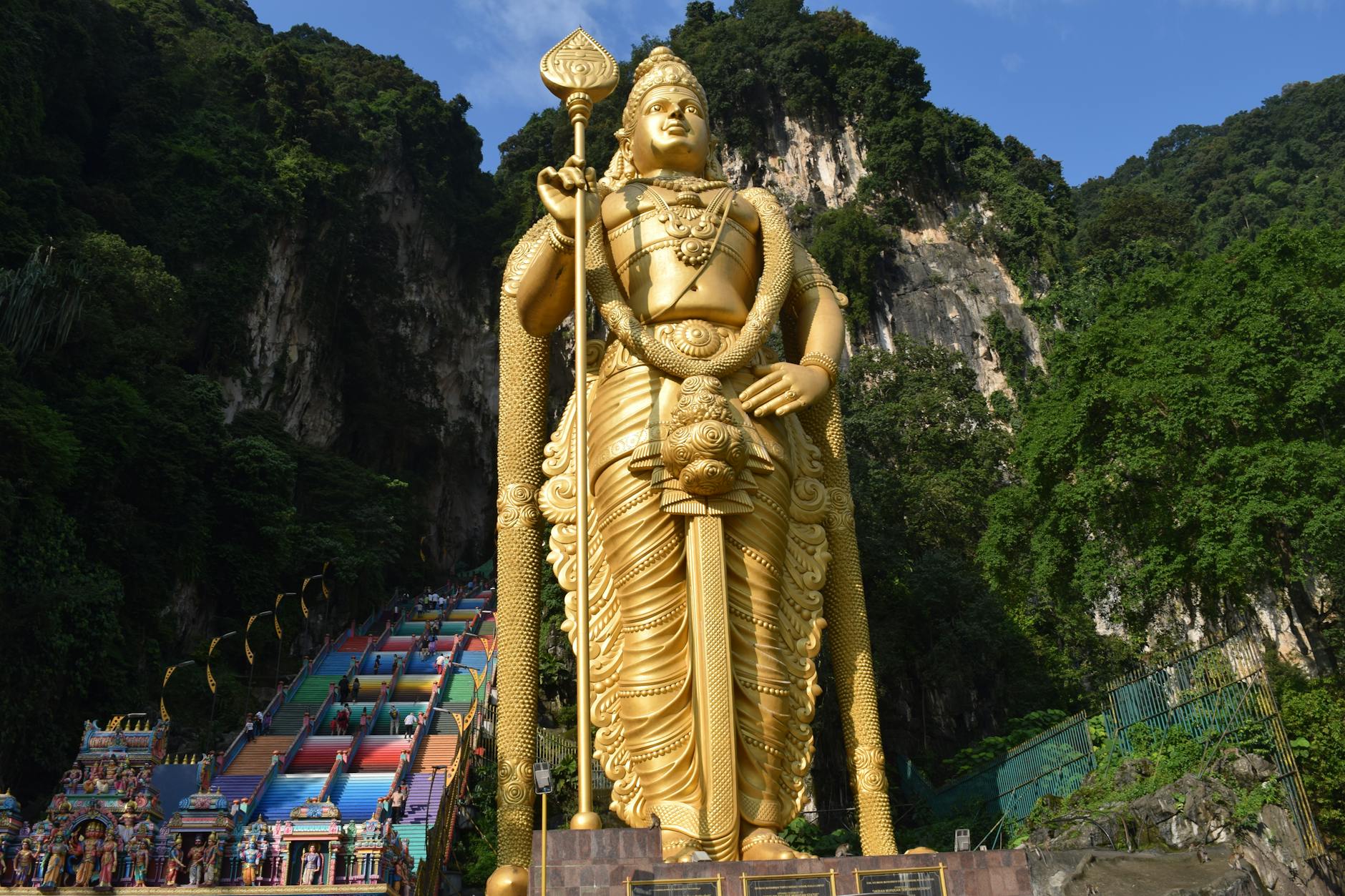
Thirteen kilometres north of the city centre, Batu Caves ask you to climb 272 steps before they let you in. The steps were repainted in 2018 in rainbow gradients that photograph beautifully but are genuinely steep — pace yourself in the heat. At the base stands the 42.7-metre gold statue of Lord Murugan, the tallest of its kind in the world. The Temple Cave at the top is cavernous and atmospheric, natural light filtering through holes in the limestone roof. Entry is free, which makes it one of the best-value major attractions in the country. Time your visit outside Thaipusam (January or February) unless you specifically want to witness the festival — when over a million devotees converge for one of Asia’s most intense religious events, the site is breathtaking but deeply crowded.
Merdeka 118
Malaysia’s newest landmark changed the KL skyline the moment it was finished. Merdeka 118 rises 678.9 metres — second tallest building in the world, tallest in Southeast Asia. The observation deck gives views that surpass even the Petronas towers, and the design, a triangular form inspired by a raised fist, is more interesting up close than photographs suggest. The tower also houses a luxury hotel and premium offices, which means the lobby-level architecture alone rewards a walk through.
UNESCO World Heritage Sites
Malaysia holds four UNESCO listings, and all four justify the designation. George Town in Penang and historic Melaka are both inscribed for their multicultural built heritage — centuries of Portuguese, Dutch, British, Chinese, Indian, and Malay architecture layered so densely you can walk through five eras in an afternoon. Over in Borneo, Gunung Mulu National Park in Sarawak protects limestone karst formations on a jaw-dropping scale, including the largest cave chamber on earth, while Kinabalu Park in Sabah wraps the slopes of Mount Kinabalu — Southeast Asia’s highest peak at 4,095 metres — in protected rainforest and cloud forest.
Day Trips and Excursions
One of the quiet advantages of Malaysia is how much you can reach in a day without flying. KL sits within three hours of rainforest highlands, colonial hill stations, mangrove firefly rivers, and a UNESCO city. Penang and Langkawi have their own circuits. For a full breakdown of the best escapes, the guide to day trips from kuala lumpur covers 15 options in detail — but here’s the shape of it.
Day Trips from Kuala Lumpur
Cameron Highlands sits about 200 kilometres north of KL, roughly three to four hours by road. The elevation brings the temperature down to a ceiling of around 25°C — noticeable relief from the lowland heat — and the landscape opens up into rolling tea plantations, strawberry farms, and mossy trails. It’s a place where the pace slows considerably, which is the point.
Genting Highlands is the quick version: one hour from KL by bus, up through a cable car system (the Awana SkyWay) that’s one of the longest in Southeast Asia. At the top, Resorts World Genting offers the country’s only casino resort alongside the Genting SkyWorlds outdoor theme park, Skytropolis indoor park, and extensive dining and shopping. The cool highland air is a bonus regardless of what you go for.
Putrajaya, Malaysia’s planned federal capital, is just 20 minutes from KL Sentral by train and costs almost nothing to visit. The city is built around a 6.5-square-kilometre artificial lake with wide boulevards, the pink-domed Putra Mosque, and the imposing Prime Minister’s complex. It reads as ambitious urban planning made tangible, and the scale is worth seeing in person.
Melaka, two hours south, is the most historically dense day trip from KL. The UNESCO-listed old town compresses Portuguese, Dutch, and British colonial history into a walkable grid of red-painted buildings, Peranakan shophouses, and an ancient fort ruin. Chicken rice balls, Jonker Street, the Baba Nyonya Heritage Museum — plan a full day and arrive early enough to beat the afternoon crowds. Overnight stays are better if you can manage it, but a day does the main sights justice.
Kuala Selangor, an hour northwest of KL, earns a visit for one specific reason: the firefly colony along the Selangor River is one of the largest in the world. After dark, boat tours push through the mangroves while millions of synchronized fireflies flash from the riverbank trees. It’s genuinely strange and beautiful. The silvered leaf monkeys at Bukit Melawati hill are a bonus if you go in the afternoon first.
Excursions from Penang
Penang Hill is worth the funicular ride for the views alone — the island stretches out in every direction and the climb takes less than ten minutes. Taiping on the mainland is less visited than it should be: Lake Gardens, Maxwell Hill, and one of Malaysia’s oldest museums form a coherent half-day without the tourist crowds that Penang itself attracts. The Entopia butterfly farm and Tropical Spice Garden fill out a gentle afternoon on the island.
Excursions from Langkawi
Langkawi’s island-hopping circuit visits Pulau Dayang Bunting (Pregnant Maiden Island) with its freshwater lake ringed by limestone cliffs, Pulau Beras Basah beach, and Pulau Singa Besar wildlife sanctuary. The Langkawi Cable Car up Gunung Mat Cincang is genuinely dramatic — the gradient near the top is among the steepest of any gondola system in the world — and the Sky Bridge walkway at the peak is a worthwhile detour. Mangrove kayaking through Kilim Geoforest Park adds eagles, monkeys, and karst formations to the picture.
Cultural Experiences and Heritage Sites
Malaysia’s three major communities — Malay, Chinese, and Indian — have been sharing geography for centuries without flattening into a single homogeneous culture. The result is that within a single city block you might pass a mosque, a Hindu temple, a Chinese ancestral hall, and a Peranakan shophouse. That density is the experience. You don’t need a museum to understand Malaysian cultural life; you encounter it walking around.
Temples and Religious Sites
Batu Caves is the headline, but Malaysia’s temple landscape runs much deeper. A full look at the country’s sacred sites is in the guide to best temples in malaysia — here’s where to start in the main cities.
In KL, Sri Mahamariamman Temple on Jalan Tun H.S. Lee dates to 1873 and features a tower covered in hundreds of hand-carved Hindu deities — vivid and intricate in a way that photographs can’t quite capture. Thean Hou Temple climbs a hillside in six tiers of ornate Chinese architecture and gives you a clear city view on the way up. The National Mosque (Masjid Negara) fits 15,000 worshippers under a distinctive star-shaped roof, and visitors of any faith are welcome outside prayer times.
In Penang, Kek Lok Si Temple in Air Itam is the largest Buddhist temple in Malaysia — a complex that climbs the hillside with a seven-storey pagoda blending Chinese, Thai, and Burmese architectural elements, and a large bronze statue of the Goddess of Mercy. During Chinese New Year, when thousands of LED lights illuminate the whole complex, it becomes one of the most spectacular sights in Malaysia. Budget two to three hours if you want to explore the full complex without rushing.
The Sultan Salahuddin Abdul Aziz Mosque in Shah Alam has one of the largest domes in the world and is visible from kilometres away. The floating mosque in Kota Kinabalu — Masjid Bandaraya — appears to rest on the surface of the water at high tide, and the sunset view from the causeway leading to it is genuinely worth timing your schedule around.
Museums and Galleries
The full picture of Malaysia’s museum offerings is in the guide to best museums in malaysia, but a few institutions stand clear of the crowd. The Islamic Arts Museum Malaysia in KL is the largest museum of Islamic arts in Southeast Asia — over ten thousand artefacts across twelve galleries, from rare Quran manuscripts and architectural models to ceramics, textiles, and armour. The building itself is an attraction; the dome is clad in Persian haft-rang seven-colour tilework with hibiscus and arabesque patterns.
Muzium Negara takes you through the country’s history from prehistoric times to independence with well-curated galleries and decent interactive displays. The National Art Gallery next door shows Malaysian painting, sculpture, and textiles at no charge — a combination of reasonable collection and zero entry cost makes it easy to justify an hour. Petrosains Discovery Centre inside the Petronas Twin Towers is the pick for families with children: hands-on science exhibits built around the oil and gas industry that run surprisingly deep.
In Penang, the Penang Museum traces the island’s multicultural history in a compact building worth two hours. In Melaka, the Baba Nyonya Heritage Museum preserves a beautifully restored Peranakan shophouse with guided tours that cover daily domestic life, porcelain collections, and the community’s hybrid cultural identity in real depth. The Maritime Museum nearby, housed in a replica Portuguese galleon, is less rigorous but visually memorable.
Street Art and Urban Culture
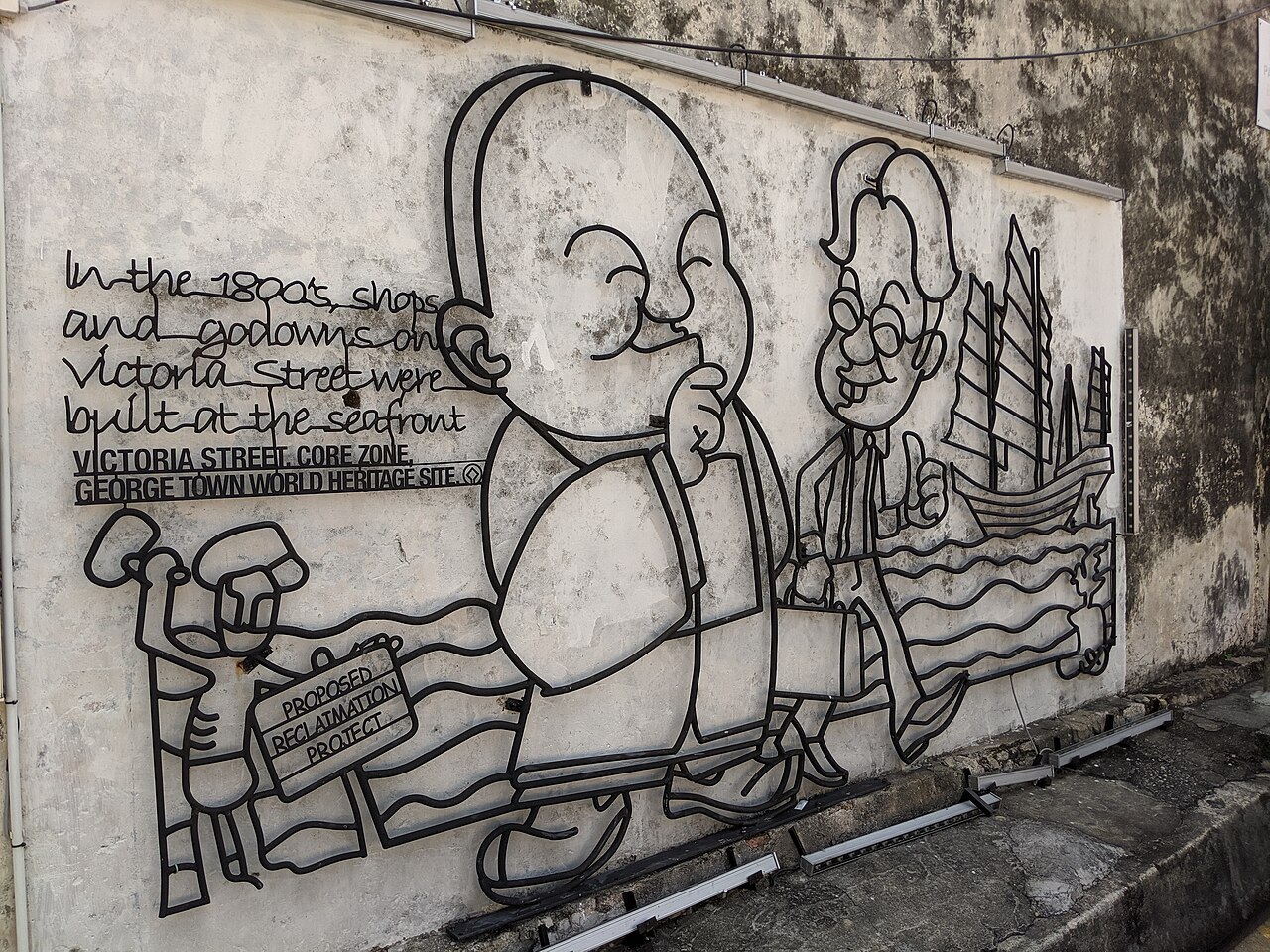
George Town became a street art destination in 2012 when Lithuanian artist Ernest Zacharevic painted a series of murals that used the physical features of the buildings as props. The murals — Children on a Bicycle, Boy on a Motorcycle — have been replicated a thousand times in travel photography, but they still land in person. The trail has grown significantly since then, with wire sculptures, tiled illustrations, and commissioned work from other artists woven through the UNESCO district. Walk it in the early morning before the heat and the tour groups both arrive.
KL has its own developing street art scene in Chinatown, Changkat Bukit Bintang, and around the Klang River banks. It doesn’t have Penang’s density, but the pieces are improving in ambition and scale. Regular art markets run in Bangsar and TTDI for those who want to see what the local contemporary art scene is producing.
Shopping
Malaysia takes shopping seriously enough that it has made mall architecture a competitive sport. The full breakdown — malls, night markets, Petaling Street, Langkawi duty-free, and the best bargain strategy per city — is in the guide to shopping in malaysia. The short version follows.
Shopping Malls
KL’s mall infrastructure is genuinely impressive. Suria KLCC at the base of the Petronas towers runs six floors of luxury flagships and international brands through a well-designed atrium. Pavilion Kuala Lumpur in Bukit Bintang mixes Gucci and Prada with accessible mid-range retailers and a large food court. Mid Valley Megamall and the adjacent Gardens Mall together form one of the largest retail complexes in Southeast Asia — seven-plus hundred stores between them. If you want affordable rather than luxury, Berjaya Times Square and Sungei Wang Plaza in Bukit Bintang have been the budget-hunter’s territory for decades, stacked with clothing, electronics, and accessories at competitive prices.
In Penang, Gurney Plaza is the main mall with over 380 stores; Queensbay Mall in Bayan Lepas is the island’s largest, with factory outlet sections where branded goods run at 30 to 70 percent off regular retail. Langkawi’s duty-free status makes it attractive for chocolate, alcohol, tobacco, and perfume at prices well below the mainland — the main shopping is in Kuah town and along Pantai Cenang.
Markets and Bargain Shopping
Petaling Street in KL’s Chinatown is the most famous market strip in the country, a pedestrianized stretch of clothing, accessories, watches, bags, and souvenirs where negotiating on price is expected and sometimes the price starts very high. Central Market in its art deco building — dating to 1888 — offers a more curated version of the same impulse, with handmade crafts, batik clothing, and traditional art in slightly more organised stalls. Neither is a secret, but both deliver what they promise.
In Penang, Chowrasta Market has been open since before Malaysia existed as a country. It starts at dawn and sells fresh produce, traditional snacks, and local delicacies at prices aimed at residents rather than visitors. Night markets across Malaysia add shopping to their food offering — the Jonker Street market in Melaka on Friday and Saturday evenings, Kampung Baru’s Saturday market in KL, and the Batu Ferringhi night market in Penang are the most accessible.
Nightlife and Entertainment
Malaysia’s nightlife varies sharply by city and by who lives there. For the full picture — every rooftop bar, club, and live music venue worth knowing — see the guide to malaysia nightlife. Here’s the city-by-city shape of it.
Kuala Lumpur
KL is the undisputed nightlife capital of Malaysia. Changkat Bukit Bintang is the most concentrated strip — dozens of bars, pubs, and restaurants competing for the same pavement over a few hundred metres. It gets loud on weekends, which is the appeal. SkyBar at Traders Hotel on the 33rd floor positions itself directly across from the Twin Towers and is the city’s most reliable rooftop view. Marini’s on 57 goes higher and serves Italian food alongside its cocktails. Heli Lounge Bar on the 34th-floor helipad of Menara KH is one of the few places in the world you drink on an actual helipad — open-air, slightly vertiginous, worth doing once. For clubbing, Zouk KL has international DJ bookings and themed nights; the TREC entertainment district in Bukit Bintang clusters multiple clubs and bars into a dedicated precinct. Bangsar is quieter and attracts an older crowd — wine bars, craft cocktail spots, and casual pubs with room to actually have a conversation.
Penang
George Town’s bar scene has grown significantly, with heritage shophouses converted into atmospheric drinking spots along Upper Penang Road and Chulia Street. Three Sixty, Malaysia’s only revolving rooftop bar and restaurant, completes a full 360-degree rotation over the course of a meal — the novelty holds up, and the views over the city and harbour are genuinely good. Batu Ferringhi’s beach bar strip is more casual and more tourist-facing.
Langkawi
Pantai Cenang is Langkawi’s nightlife centre — beach bars strung along the main tourist strip with sunset cocktails, live music, and the kind of relaxed island atmosphere that requires no particular effort. SAIL Rooftop Bar on Pantai Tengah is the quality option, with Andaman Sea views and a more considered drinks list than the beach shacks. The pace is firmly slow here, which is the island’s whole point.
Theme Parks and Family Attractions
Malaysia has put serious investment into family entertainment over the past two decades. For a complete guide to tickets, rides, and planning by park, the page on malaysia theme parks has everything you need.
Sunway Lagoon
Sunway Lagoon near KL covers 88 acres with over 80 individual attractions across six themed zones: Water Park, Amusement Park, Wildlife Park, Extreme Park, Scream Park, and the Nickelodeon Lost Lagoon section. The Wildlife Park houses over 150 animal species, which gives it an edge over single-focus water parks. The Vuvuzela water ride and Pirates Revenge are the adrenaline benchmarks; the gentler zones keep younger children occupied for a full day.
Genting SkyWorlds
Genting SkyWorlds at Resorts World Genting spreads 26 acres across nine themed worlds drawn from blockbuster films — Ice Age and Night at the Museum among them. High-speed roller coasters anchor the thrill end; family-oriented attractions fill the rest. The cool highland climate at this altitude makes a day here more comfortable than any lowland park.
LEGOLAND Malaysia
LEGOLAND Malaysia in Johor Bahru was the first LEGOLAND in Asia and remains the go-to for families with children under twelve. Seventy-plus rides, shows, and attractions across themed areas, with Miniland — Asian landmarks recreated from millions of LEGO bricks — as the standout. The adjacent LEGOLAND Water Park and SEA LIFE aquarium extend the day well past what the main park alone covers.
Other Family Attractions
KidZania in KL lets children role-play adult professions — firefighter, surgeon, news anchor — in a miniature city that keeps kids genuinely engaged for hours. Aquaria KLCC beneath the Petronas Twin Towers holds over 5,000 aquatic and land creatures with a 90-metre underwater tunnel you walk through while sharks and rays pass overhead. Zoo Negara houses over 5,000 animals from over 400 species, with a giant panda conservation centre as the signature attraction.
Outdoor Activities and Adventure
Malaysia’s tropical geography creates unusual outdoor opportunities — ancient rainforest accessible from city centres, islands surrounded by some of the world’s finest reef systems, rivers deep enough into the jungle to put serious distance between you and anywhere familiar.
Hiking and Trekking
Mount Kinabalu in Sabah is the mountain people mean when they talk about hiking in Malaysia. The two-day climb to 4,095 metres ends with a pre-dawn summit push to catch sunrise above the cloud layer. Permits are limited and should be booked weeks ahead — the mountain is not spontaneous. A mandatory guide goes with you, and the overnight stay at mountain lodges at altitude is cold enough to require a layer even in the Malaysian tropics.
Taman Negara, at an estimated 130 million years old, is among the oldest tropical rainforests on earth. The canopy walkway runs 510 metres at 40 metres above the forest floor — longer than any comparable walkway in the world — and gives you a perspective on the rainforest that ground-level trails can’t match. Multi-day jungle treks push deeper into the park for those who want real wilderness distance.
Penang National Park on the island’s northwestern tip links coastal and jungle trails to secluded beaches, a meromictic lake, and a lighthouse. The Cameron Highlands offer cooler-weather hiking through mossy forest and tea estates, from short nature walks to challenging summit routes. These are accessible enough for people who don’t typically hike but want something beyond city streets.
Water Sports and Diving
Sipadan Island in Sabah is the reason serious divers come to Malaysia. Underwater walls drop into the deep, and the fish life — barracuda, jacks, sea turtles, reef sharks, manta rays — is dense enough to feel overwhelming on your first dive there. Daily dive permits are strictly limited and should be arranged through a resort months in advance. This is genuinely one of the best dive sites in the world, not just in Asia.
The Perhentian Islands on the east coast offer excellent, affordable diving and snorkeling directly from the beach. Tioman and Redang have healthy reef systems and clear water. Langkawi gives you kayaking through mangrove channels in Kilim Geoforest Park, jet skiing, parasailing, and island-hopping circuits. None of it matches Sipadan’s dive quality, but the east coast islands deliver strong value for the price.
Wildlife Experiences
Malaysian Borneo concentrates the wildlife. Sepilok Orangutan Rehabilitation Centre in Sabah runs feeding sessions morning and afternoon — semi-wild orangutans come to the feeding platform while you watch from a boardwalk twenty metres back. The Bornean Sun Bear Conservation Centre next door does the same for the world’s smallest bear. Together they make Sepilok a half-day that’s hard to replicate anywhere else.
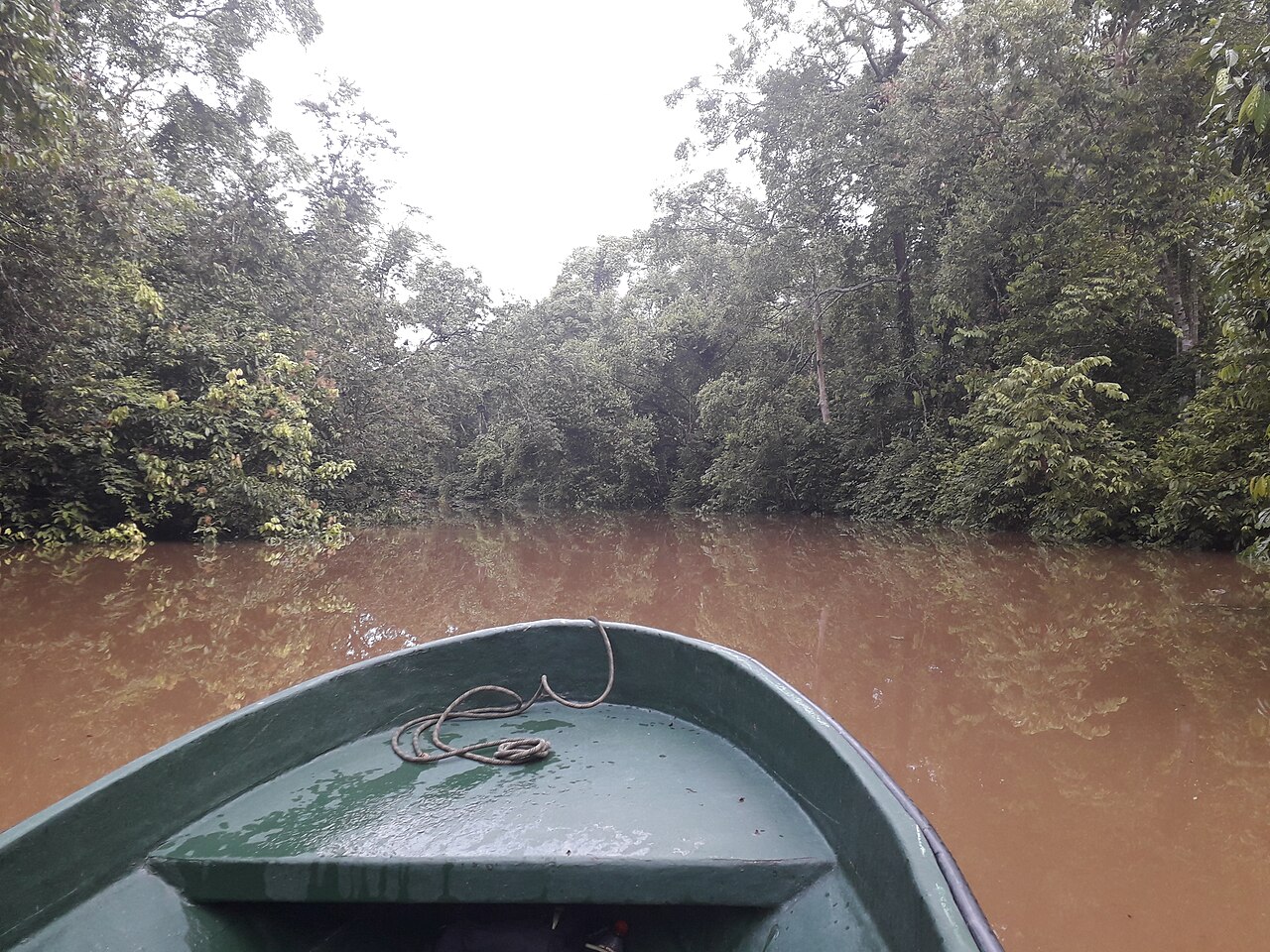
Kinabatangan River cruises run dawn and dusk excursions when wildlife is most active. Proboscis monkeys, pygmy elephants, crocodiles, hornbills, and occasionally orangutans use the riverside trees and banks. Multi-day lodge stays are the format — two to three days is the minimum to see the river at different times and conditions.
The Royal Belum State Park in Perak covers 130-million-year-old rainforest that shelters the Malayan tiger, Asian elephant, and tapir. Sightings require patience and multi-day expeditions, but Belum is one of the last places in Peninsular Malaysia where large mammals still move through intact forest in any number.
Photography and Instagrammable Spots
Malaysia photographs well across every category — modern architecture, ancient temples, colonial streets, rainforest, coastline, wildlife. The guide to photography spots malaysia covers over 30 locations in detail. Here are the ones that consistently produce the strongest images.
The Petronas Twin Towers at night from KLCC Park or from SkyBar are the KL shot. Arrive about 30 minutes before the 8 PM fountain show and get a position with the towers reflected in the park lake. Batu Caves’ rainbow steps are most dramatic in the morning before the crowd fills the frame — come before 9 AM if you can. Thean Hou Temple gives you warm red and gold tones against the city skyline from a hillside vantage point that most visitors don’t bother with.
George Town is the most photogenic city in Malaysia by a significant margin. The street art murals, wire sculptures, Peranakan shophouse facades in pastel colours, and the compression of three architectural eras into narrow lanes makes it almost impossible to take a bad photograph. Kek Lok Si during Chinese New Year illumination adds a fourth dimension — the whole complex in LED light against a dark sky — that’s worth timing a visit around if you can manage it.
Melaka’s Dutch Square with its red colonial buildings, the flower-covered trishaws with their LED garlands, and the riverside walk all produce strong images of a different register — historical rather than spiritual or modern. The east coast islands — Perhentian, Redang, Tioman — give you turquoise water, white sand, and underwater photography if you dive or snorkel.
For landscape photography: the Cameron Highlands tea plantations at dawn before the mist burns off, sunrise from Kinabalu’s summit above the clouds, and the limestone karst formations at Gunung Mulu in Sarawak. All three require planning around weather, which is variable, but the results when conditions cooperate justify the effort.
Free and Budget-Friendly Activities
Malaysia is affordable in absolute terms, and a fair number of its best experiences cost nothing. The full guide to free things to do in malaysia covers this in depth — here’s the structure of where you save money without sacrificing quality.
Free Attractions in KL
KLCC Park is the best free space in the city: a proper jogging track, a children’s playground, and the Lake Symphony fountain shows running at 8, 9, and 10 PM nightly. Admission zero. The KL Forest Eco Park — formerly Bukit Nanas Forest Reserve — is a patch of primary rainforest in the middle of the city with free hiking trails and a canopy walkway above the treetops. The juxtaposition of city towers visible through the jungle canopy is one of the stranger and more memorable things KL offers.
The National Mosque and most temples welcome visitors free of charge outside prayer times. The National Art Gallery has no entry fee. Perdana Botanical Gardens and the Lake Gardens district are open public space. Merdeka Square, where independence was declared in 1957, is free to walk through at any hour and has the cleanest collection of colonial Moorish architecture in the city. Central Market hosts free cultural performances — traditional dance, music, art demonstrations — on a rotating schedule that varies by week.
Budget-Friendly Experiences Nationwide
Street food across Malaysia runs RM5 to RM12 for a full plate at hawker centres. That’s roughly USD 1.10 to 2.70 — prices that haven’t climbed significantly and remain genuinely low relative to almost any other country. Public transportation in KL is extensive and cheap: the rail network covers most tourist areas, and a Grab ride fills the gaps. Night markets are free to walk through and the food is correspondingly priced from RM1 for single snacks upward.
National park entrance fees are modest — RM5 to RM30 for most parks — and Batu Caves is free. Many museums charge minimal fees or nothing. The street art trails in both KL and George Town require only your legs. Beaches are public and free everywhere. Even for travelers on a strict daily budget, Malaysia allows full participation in the country’s most interesting experiences without requiring constant budget compromise.
Cooking Classes and Food Experiences
Learning to cook Malaysian food is one of those activities that sounds optional until you’re actually in the class watching someone show you how to handle a wok over a gas flame at serious heat, and you realise you’re absorbing something about the cuisine that no amount of eating it conveys. Classes here go beyond recipes.
In KL, the format varies from market-to-table sessions — where you start with a guided wet market tour to understand the ingredients before cooking — to focused classes on specific dishes: rendang, laksa, roti canai. Many are taught in home kitchens by locals, which changes the atmosphere considerably from commercial cooking school settings. Plan two to three hours minimum, more if the market component is included.
Penang cooking classes lean into Peranakan and Nyonya traditions — assam laksa, char kway teow, Nyonya kuih. The food culture is specific enough to the island that what you learn here isn’t just Malaysian cooking in general; it’s a distinct regional tradition you’d struggle to replicate from a book. The combination of hands-on technique and the history of the cuisine makes these classes among the more worthwhile two to three hours you can spend in George Town.
For those who want to eat rather than cook, organised food tours in KL, Penang, and Melaka take small groups to hawker stalls and local restaurants that most visitors don’t locate independently. The better operators provide context — why this stall, what the dish is called in each language, when it’s eaten, where the technique came from. It turns eating into something closer to a cultural briefing, which is a fair trade for RM60 to RM150 per person depending on the operator and city.
Wellness and Relaxation
Malaysia’s spa and wellness sector has grown substantially, combining traditional healing practices with modern resort infrastructure in settings that use the natural landscape as part of the treatment.
Traditional Malay massage — urut Melayu — uses long flowing strokes, pressure-point work, and herbal compresses to address muscle tension. It’s available at every level from luxury resort spa to neighbourhood massage shop, with prices ranging from RM60 to RM300 or more depending on the setting. The technique has been practiced for centuries and holds up against comparison with any modern physiotherapy approach for general muscle recovery.
Hot springs are scattered across the country. Tambun Hot Springs in Perak and Poring Hot Springs near Mount Kinabalu in Sabah are both well-developed. Bentong in Pahang has natural mineral pools with a more local-market feel. The Banjaran Hotsprings Retreat in Ipoh is the premium option: geothermal hot springs, an ice bath, and crystal caves set in a dramatic limestone valley. It operates as a full wellness resort and warrants an overnight stay to do it properly. Prices reflect the luxury positioning.
Langkawi, Penang, and the east coast islands all offer beachside spa treatments where the setting does half the work. Many resort wellness packages bundle yoga, meditation, traditional treatments, and meals into two or three-day programmes for visitors specifically seeking a recovery-focused rather than activity-focused trip.
Festivals and Events
Malaysia’s calendar of festivals is genuinely multi-faith and runs year-round. The timing of your visit can either be incidental to or defined by what’s happening. The major festivals are public events that welcome observers.
Thaipusam at Batu Caves falls in January or February. Over a million people gather, and devotees carry kavadi — elaborate steel frameworks decorated with peacock feathers and flowers — pierced through their skin in states of deep religious devotion. It’s one of the most intense public religious spectacles in Asia, completely outside most Western visitors’ frame of reference, and it deserves at least a half-day even if the crowds are heavy.
Chinese New Year celebrations in Penang and Melaka run for fifteen days, with lion dances, lanterns, open houses, and the Kek Lok Si illumination making both cities worth visiting in January or February. Hari Raya Aidilfitri at the end of Ramadan sees open houses across the country — families invite guests of all faiths to share food and festivity, and the hospitality is real and widespread.
Deepavali, the Hindu festival of lights, fills temples with kolam floor art, oil lamps, and prayer on a scale that transforms the visual texture of any city with a significant Indian community. The George Town Festival in Penang runs annually with performing arts, visual art, film, and music that draws international participants. The Rainforest World Music Festival in Sarawak brings indigenous musicians from across the globe for three days in the Sarawak Cultural Village beneath Mount Santubong — one of the world’s more unusual and worthwhile music festivals by any measure.
River Activities and Boat Experiences
Malaysia’s rivers and coastal waters offer boat-based experiences that let you see parts of the country otherwise unreachable — mangrove channels, wildlife corridors, jungle gorges, and open-water passages between islands.
Kinabatangan River cruises in Sabah are the most rewarding. Dawn and dusk excursions out from riverside lodges are the format, pushing slowly along the banks where proboscis monkeys, pygmy elephants, hornbills, and crocodiles show up consistently enough that most two-day stays include multiple solid sightings. The river itself, winding through dipterocarp forest with vines overhead, has an atmosphere that builds over the course of a morning.
White water rafting runs on the Padas River in Sabah for grade three and four rapids through dramatic jungle gorges — the most technically demanding option in Malaysia. The Kampar River in Perak is more accessible, with gentler rapids through limestone cliff scenery suitable for beginners and families who want the river experience without the white-water commitment.
The firefly boat tours near Kuala Selangor on the Selangor River and near the Rembau River in Negeri Sembilan take groups into the mangroves after dark to watch millions of synchronised fireflies flash in the riverside trees. The Selangor colony is among the largest in the world, and the effect — trees that appear to be strung with twinkling lights in complete darkness — is more striking than any description of it. Tours depart after 8 PM and last about 45 minutes on the river.
Langkawi’s mangrove boat tours through Kilim Geoforest Park navigate narrow channels between limestone formations, passing bat caves, eagle feeding areas, and floating fish farms. The geology here is distinctive — this is the southern extension of the same limestone karst that runs through southern Thailand — and the boat tour covers it in about two hours from any jetty on the northern coast.
Practical Tips for Activities in Malaysia
A few logistics that save frustration and wasted days.
Weather defines your options more than anything else. The east coast of Peninsular Malaysia and much of Borneo get heavy monsoon rains from November through March. During that window, many island resorts close and diving is cancelled. The west coast — KL, Penang, Langkawi — is accessible year-round, though brief afternoon thunderstorms are standard. Build flexibility into an east-coast itinerary and have an indoor backup plan ready.
Book ahead for high-demand activities. Mount Kinabalu climbing permits are allocated well in advance, especially during school holiday periods. Sipadan diving permits are strictly limited. Theme park tickets during school holidays should be purchased online. For most cultural sites and day trips, advance booking is useful but not required.
Dress codes at religious sites are consistent across faiths. Mosques require covered arms and legs; women need to cover their hair. Most major mosques have robes available for visitors who arrive underprepared. Hindu and Buddhist temples expect covered shoulders and knees, and shoes come off before any prayer hall. Keep a light scarf or long sleeves in your bag and you won’t need to plan around it.
Grab is the default transport for anything not served by rail. It’s reliable, metered, and avoids the taxi negotiation that used to be a feature of Malaysian tourism in the wrong way. For intercity travel, the bus network is comfortable, air-conditioned, and covers most destinations for RM10 to RM50. Domestic flights on AirAsia and Firefly fill in the distances that buses don’t cover efficiently.
Plan to see both sides of Malaysia if time allows. Peninsular Malaysia has the urban infrastructure, the heritage cities, and the most accessible beaches. Borneo has the wildlife, the indigenous cultures, and the rainforest in a form that the peninsula can’t match. The contrast between KL and Sabah is sharper than most people expect, and that contrast is a large part of why Malaysia keeps bringing people back.
1 note