Islam in Malaysia: What Travellers Actually Need to Know (2026)
Mosque visiting hours, robe counters, the Friday shutdown and the Friday-Saturday weekend states. What applies to you, what does not, and why Ramadan is the easiest time to eat in Malaysia.
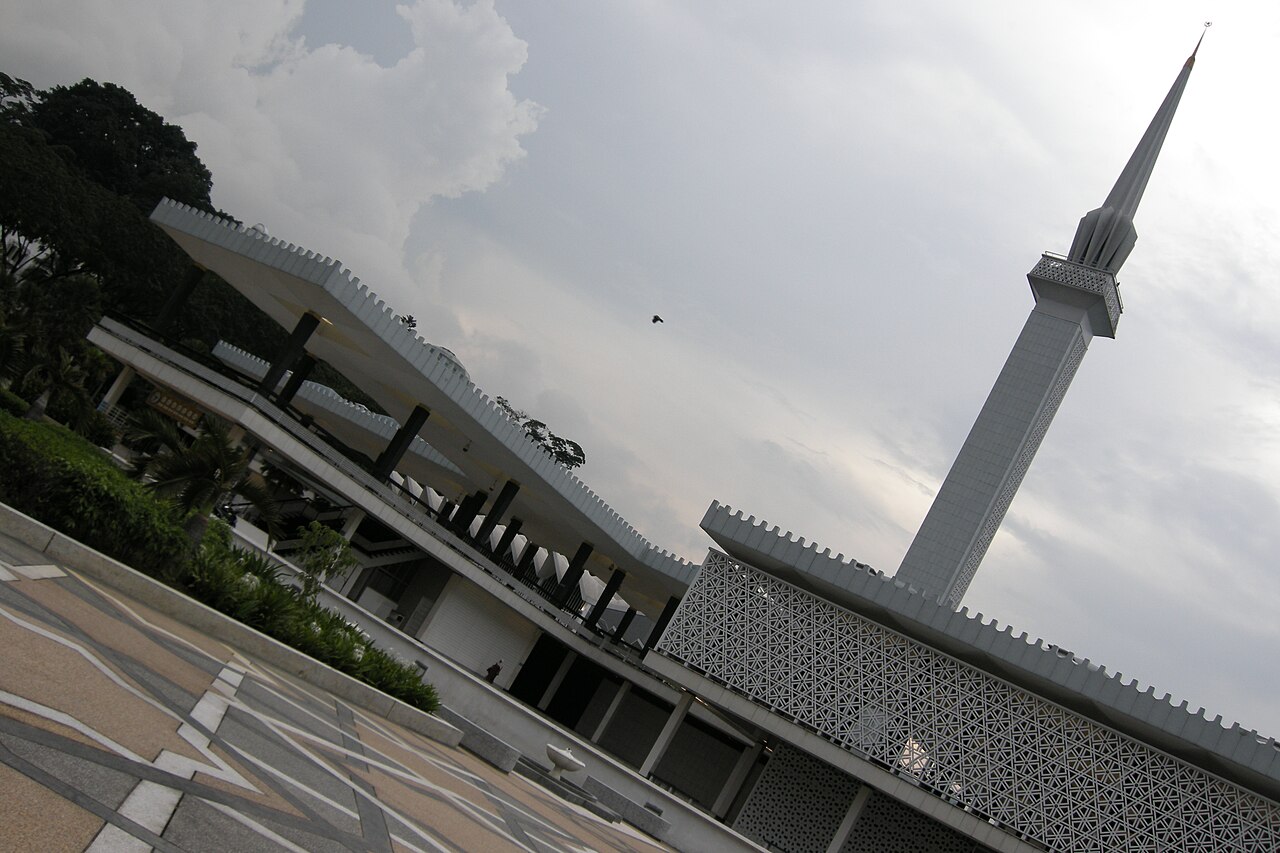
You can order a cold beer in a Kuala Lumpur rooftop bar at 10pm on a Thursday. Drive four hours north the next morning and you will find Kuala Terengganu running on a different week entirely — Friday and Saturday are the weekend there, not Saturday and Sunday, and around midday on a Friday the car parks empty and a good deal of retail pauses for prayers. Both of those things are true at the same time, in the same country, and neither is a contradiction once you understand how Islam in Malaysia actually operates: as a body of law and custom that applies almost entirely to Muslims, alongside a civil system that applies to everyone else.
That distinction is the single most useful thing a non-Muslim visitor can carry. Malaysia is 63.5% Muslim according to the 2020 census, and Islam is named in Article 3 of the Federal Constitution as the religion of the Federation. But the syariah court system that flows from that sits parallel to the civil courts and has jurisdiction over Muslims only, in matters of personal and family law. It does not reach you. What does reach you is a handful of practical things: mosque opening windows, a legal drinking age of 21, a Friday afternoon when half the country pauses, and three states where the weekend falls on the wrong days for anyone planning a bank visit or a ferry.
This guide sorts the rules into two piles — the ones that bind Muslims and the ones that affect your trip — with the opening hours, robe-counter mechanics and 2027 Ramadan dates that most articles on the subject leave out.
The numbers, at a glance
Malaysia’s religious make-up is not a rounding exercise. It shapes which shops close when, which neighbourhood has a pork butcher and which has none, and why a single street in George Town can hold a mosque, a Chinese temple and a Hindu shrine within 200 metres of each other. Here is the baseline before anything else.
| Fact | Detail | Why it matters to you |
|---|---|---|
| Muslim share of population | 63.5% (2020 census), up from 61.3% in 2010 | Majority, but far from uniform — cities are more mixed than the map suggests |
| Other faiths | Buddhism 18.7%, Christianity 9.1%, Hinduism 6.1% | Temples, churches and mosques all operate openly and most welcome visitors |
| Total population | 32,447,385 (2020 census) | Roughly 20.6 million Muslims |
| Constitutional position | Article 3: Islam is the religion of the Federation | Ceremonial and legal weight, not a ban on other faiths |
| School of law | Sunni, Shafi’i school | Mainstream and, in practice, moderate in tourist-facing settings |
| Syariah court jurisdiction | Muslims only, personal and family matters | You are governed by civil law throughout, in every state |
| Legal drinking age | 21, since 1 December 2021 | The single most common factual error on this topic online |
| Friday prayer | Begins around 13:15, sermon 30-60 minutes | Plan mosque visits and errands around it |
One piece of legal furniture explains a lot of what you will hear: Article 160 of the Constitution defines a Malay as, among other things, a person who professes Islam. Ethnicity and faith are legally braided together for the Malay majority in a way they are not for Malaysian Chinese, Malaysian Indian or the Indigenous communities of Borneo. That is why “Malay” and “Malaysian” are not interchangeable, and why getting them right is a courtesy that lands well. How these communities fit together is the subject of our guide to Malaysian culture and heritage, the parent piece to this one.
Which rules apply to you, and which do not
Almost every anxious question travellers ask about this topic dissolves once you separate the two systems. Malaysia runs civil law for everyone and syariah law for Muslims, in parallel, with the syariah side limited to personal and family matters — marriage, divorce, inheritance, religious observance and a set of moral offences. As a non-Muslim visitor you are outside that jurisdiction entirely. You cannot be charged in a syariah court. You are not subject to Muslim dress requirements, fasting requirements or alcohol prohibitions.
- Applies to Muslims only: syariah penalties for drinking alcohol, requirements around fasting in Ramadan, khalwat (close proximity) rules, Muslim dress codes, and religious conversion procedure.
- Applies to everyone: the civil criminal code, drug laws (which are severe and worth taking seriously), the drinking age of 21, and ordinary decency in religious buildings.
- Affects your logistics without binding you: Friday prayer timings, the Friday-Saturday weekend in three states, mosque visiting windows, Ramadan trading hours, and the fact that alcohol is harder and dearer to buy in Kelantan and Terengganu.
In practice the day-to-day texture of a trip here is closer to Thailand than to the Gulf. Nobody will stop you in the street. Nobody checks what you are wearing. The country is used to visitors, and the general read on safety and hassle is covered separately in our honest assessment of whether Malaysia is safe for tourists. The etiquette that genuinely matters — shoes, right hand, heads, photographs — is a short list, and we go through it properly in the guide to Malaysian cultural etiquette.
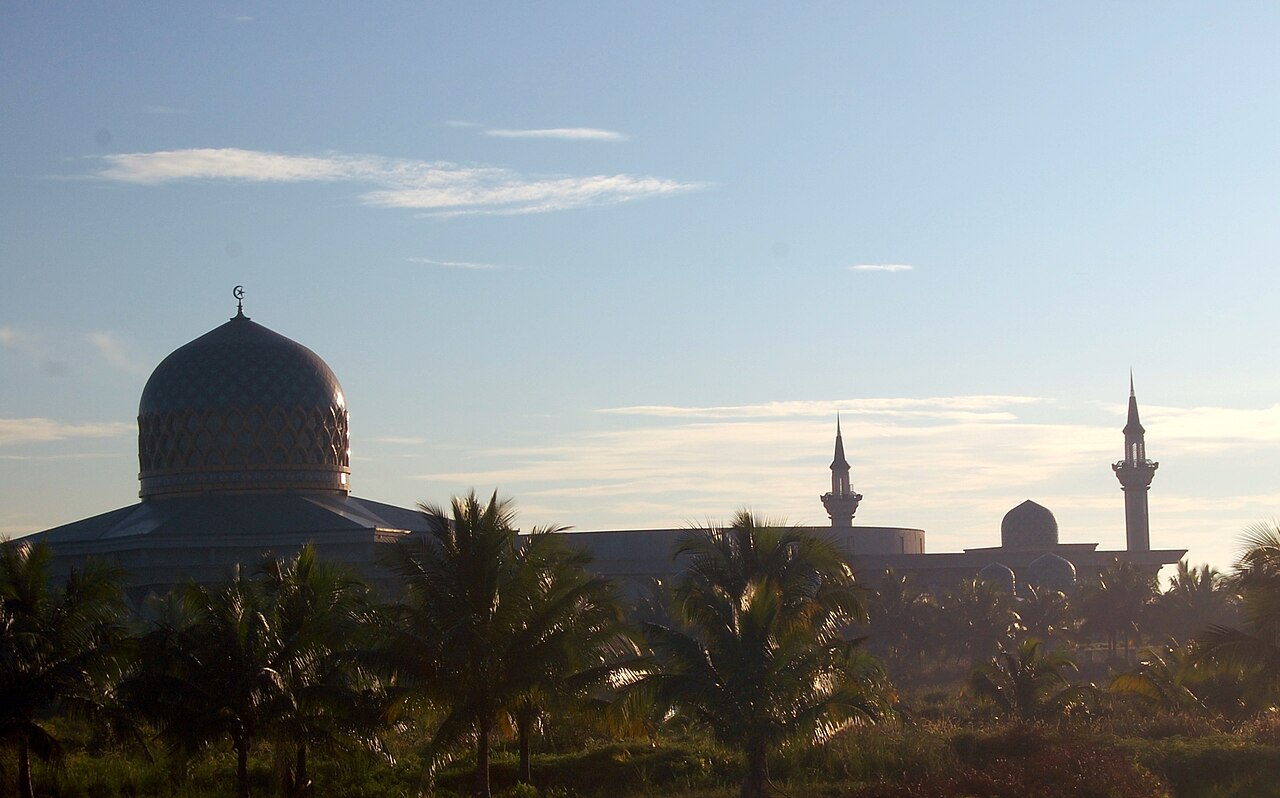
Visiting mosques: the hours nobody publishes properly
Yes, non-Muslims can visit mosques in Malaysia, and the major ones actively want you there — several run free guided tours in English as outreach. What almost no travel article tells you is when. Every mosque closes to visitors for each of the five daily prayers, and again, more substantially, for the Friday congregation. Turn up at the wrong hour and you see the courtyard and nothing else.
Below are the five mosques most likely to be on your route, with their published non-Muslim visiting windows. Treat these as the shape of the day rather than a guarantee: hours shift with the prayer calendar, with Ramadan, and with whatever the mosque has on. Masjid Negara in particular is listed differently by different sources — some publish a tighter 09:00-12:00 and 15:00-16:00 pattern. Arrive in the middle of a window, not at the edge of one.
| Mosque | City | Non-Muslim visiting hours | Friday | Robes provided | Cost |
|---|---|---|---|---|---|
| Masjid Negara (National Mosque) | Kuala Lumpur | Sat-Thu 09:30-12:30 and 15:00-18:00 | 15:00-18:00 only | Yes — robes and headscarves at the entrance | Free |
| Sultan Salahuddin Abdul Aziz Mosque (Blue Mosque) | Shah Alam | Mon-Thu 09:00-12:30 and 14:00-18:30; Sat-Sun 09:00-12:30 and 14:30-18:30 | 09:00-11:30 only | Yes — blue robes and headscarves, free | Free, including guided tours |
| Putra Mosque (Pink Mosque) | Putrajaya | Sat-Thu 09:00-12:30, 14:00-16:00 and 17:30-18:00 | 15:00-16:00 and 17:30-18:00 | Yes — hooded pink/red robes at the robe counter | Free, no booking |
| Crystal Mosque | Kuala Terengganu | Mon and Wed-Thu 10:00-19:00 (closed Tuesdays); Sat-Sun 09:00-19:00 | Fri 09:00-19:00 | Yes | Mosque free; Taman Tamadun Islam park RM25 adult / RM15 child for foreigners (RM15 / RM8 with MyKad) |
| Kapitan Keling Mosque | George Town, Penang | Sat-Thu 13:00-17:00 | 15:00-17:00 | Yes | Grounds free; free guided tours from the office at the minaret |
How the robe counter actually works
At every major mosque on that table there is a counter just inside the visitor entrance, staffed by a volunteer or two and stacked with hooded robes in a house colour. Putra Mosque lends pink and red ones, which is why every photograph of the building features a row of pink figures on the plaza. Shah Alam’s are blue. Masjid Negara hands out robes and separate headscarves.
- They are free. No rental fee, no ticket, no upsell.
- No deposit and no passport. You are not handing over ID. You take a robe, you wear it, you return it on the way out.
- They are hooded at most sites, so a separate headscarf is not required for women — pull the hood up and you are compliant.
- Men get them too. If you turn up in shorts you will be given a robe or turned away; Masjid Negara does not admit men in shorts. Long trousers save you the layer in 33C heat.
- Shoes come off at the racks before you step onto carpet, always, everywhere.
Pack lightweight long trousers and a scarf that lives in your daybag — it doubles for temples, churches and over-air-conditioned buses. Our Malaysia packing list goes into fabric weights, because cotton in this humidity behaves differently.
Can you go inside the prayer hall?
You will find flat contradictory answers to this online, and both are wrong because the answer is not national. It is mosque by mosque. At Kapitan Keling in George Town the prayer hall itself is closed to non-Muslims, though you are welcome in the grounds and on the free tour. At Masjid Negara and the Blue Mosque, visitors are routinely walked to the threshold of the main hall and sometimes into it, depending on the day, the guide and whether prayer is imminent. Ask at the robe counter. The volunteers there answer this question fifty times a day and will tell you exactly where the line is, usually while offering to show you around.
Two things matter more than clothing once inside: do not walk in front of someone praying, and do not photograph people mid-prayer without asking. Architecture and empty halls are fair game. The same instincts transfer to the sites in our roundup of Malaysia’s most spectacular temples.
Friday is the thing nobody warns you about
If you take one logistical lesson from this page, take this one. Friday is not a day off in most of Malaysia, but it is a day with a hole in the middle of it, and in three states it is not a working day at all.
The 13:15 pause
Friday congregational prayer (solat Jumaat) is obligatory for adult Muslim men and starts at roughly 13:15, with a sermon running 30 to 60 minutes. Around it, government offices take an extended break of about 12:15 to 14:45. Banks thin out. Immigration counters, licensing offices, state tourism desks and anything with a civil servant behind it will be quiet or shut for that window. Private businesses vary — a Chinese-owned coffee shop will not blink, a Malay-owned hardware store will lock up.
The consequences are small but sharp. Do not schedule a visa extension, a bank appointment or a car-hire pickup between 12:00 and 15:00 on a Friday, and do not plan your one mosque visit for Friday lunchtime — the table above shows how much shorter the windows are. Expect difficult traffic around any large mosque from 12:30, because the overflow congregation parks on the verge. Our Kuala Lumpur travel guide covers moving around the city centre when it clogs.
The Friday-Saturday weekend
Malaysia does not have one weekend. Kedah, Kelantan and Terengganu run a working week of Sunday to Thursday, with the weekend on Friday and Saturday. Johor was in this group and reverted to Saturday-Sunday in January 2025, so a good deal of older travel advice is now wrong about it.
This matters more than it sounds. If you are heading for Langkawi (Kedah), the Perhentians and Redang (Terengganu), or overland through Kota Bharu (Kelantan), then state government offices, some banks and a number of local businesses are shut on Friday and Saturday and fully open on Sunday. A Sunday arrival in Kota Bharu is a normal working Sunday. A Friday arrival is a weekend.
| State | Weekend days | Working week | What this catches travellers out on |
|---|---|---|---|
| Kedah (incl. Langkawi) | Friday and Saturday | Sunday to Thursday | State offices and some banks shut Fri-Sat; Sunday is a normal working day |
| Kelantan (incl. Kota Bharu) | Friday and Saturday | Sunday to Thursday | Same, plus the tightest alcohol retail in the country |
| Terengganu (incl. Kuala Terengganu, Redang, Perhentian jetty at Kuala Besut) | Friday and Saturday | Sunday to Thursday | Same, plus a reported Friday midday mall closure — see below |
| Johor | Saturday and Sunday | Monday to Friday | Reverted from Fri-Sat in January 2025; older guides still say otherwise |
| All other states and federal territories | Saturday and Sunday | Monday to Friday | Friday 12:15-14:45 government break only |
Tourist-facing operations mostly ignore all of this — resorts, dive shops and the boats out of Kuala Besut run on the monsoon calendar, not the civil one. It is the official errands that trip people up. Our Kuala Terengganu and east coast guide covers the region’s rhythm, including the months the boats do not sail at all.
The Terengganu Friday closure
Terengganu has ordered malls and supermarkets in the state to close from 12:30 to 14:30 on Fridays so Muslim staff and customers can attend prayers. That was reported around 2014-15 and current enforcement is not something we can verify — treat it as a live possibility, not a certainty. The safe move costs nothing: shop on Thursday evening or after 15:00 on Friday, and do not count on a mall lunch. Many small independent shops stay open throughout.
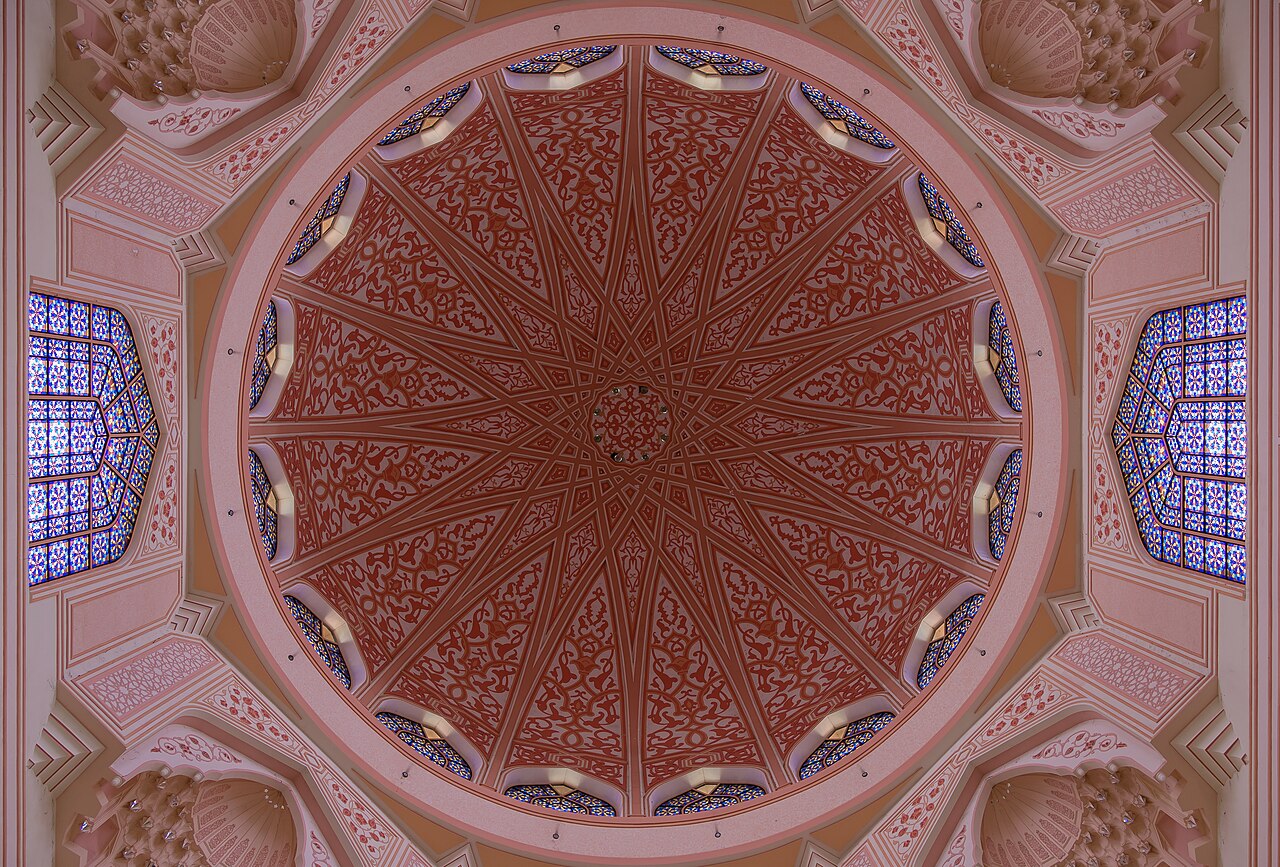
What people get wrong about Islam in Malaysia
This is where most published advice falls apart, usually because it was written by someone extrapolating from a different country. Four corrections, in order of how often they cause real problems.
The drinking age is 21, not 18
Malaysia raised the legal age for buying and consuming alcohol from 18 to 21, effective 1 December 2021. A remarkable number of guides still print 18. If you are 19 or 20 and travelling on a gap year, you cannot legally buy a drink here, and licensed venues in Kuala Lumpur do check ID. Carry a photo ID if you are anywhere near the line; a photograph of your passport page on your phone is usually accepted at bar doors but not at supermarket tills.
Beyond the age, alcohol is legal, heavily taxed and widely available to non-Muslims. Kelantan and Terengganu restrict sales, but non-Muslim outlets such as Chinese restaurants and grocery shops are generally exempt — the result is fewer sellers and higher prices, not prohibition. Muslims face syariah penalties for drinking anywhere in the country, which is why you will never see a Malay colleague order a beer even in a KL hotel bar.
Syariah courts do not apply to you
The syariah system covers Muslims in personal and family matters. Non-Muslims — including non-Muslim Malaysian citizens — are outside it. You will not be caned for holding hands, you will not be fined for eating in daylight during Ramadan, and the moral offences you may have read about are not offences for you. What is genuinely serious in Malaysia is the civil drug law, which applies to everyone and carries penalties far heavier than most visitors expect. That is the law worth respecting, not the one people worry about.
Terengganu’s dress code does not bind tourists
In 2023 Terengganu put up signage at state entry points and on the resort islands of Redang and Perhentian promoting a syariah-compliant dress code. Headlines travelled further than the detail, and the detail is that the state explicitly confirmed non-Muslim tourists are not bound by it. You can wear a swimsuit on the beach at Redang. What is expected — and this is courtesy rather than law — is that you cover up when you leave the sand for a village, a jetty, a restaurant or a shop. A sarong or a shirt over the shoulders does the whole job.
Ramadan is the best time to eat here, not the worst
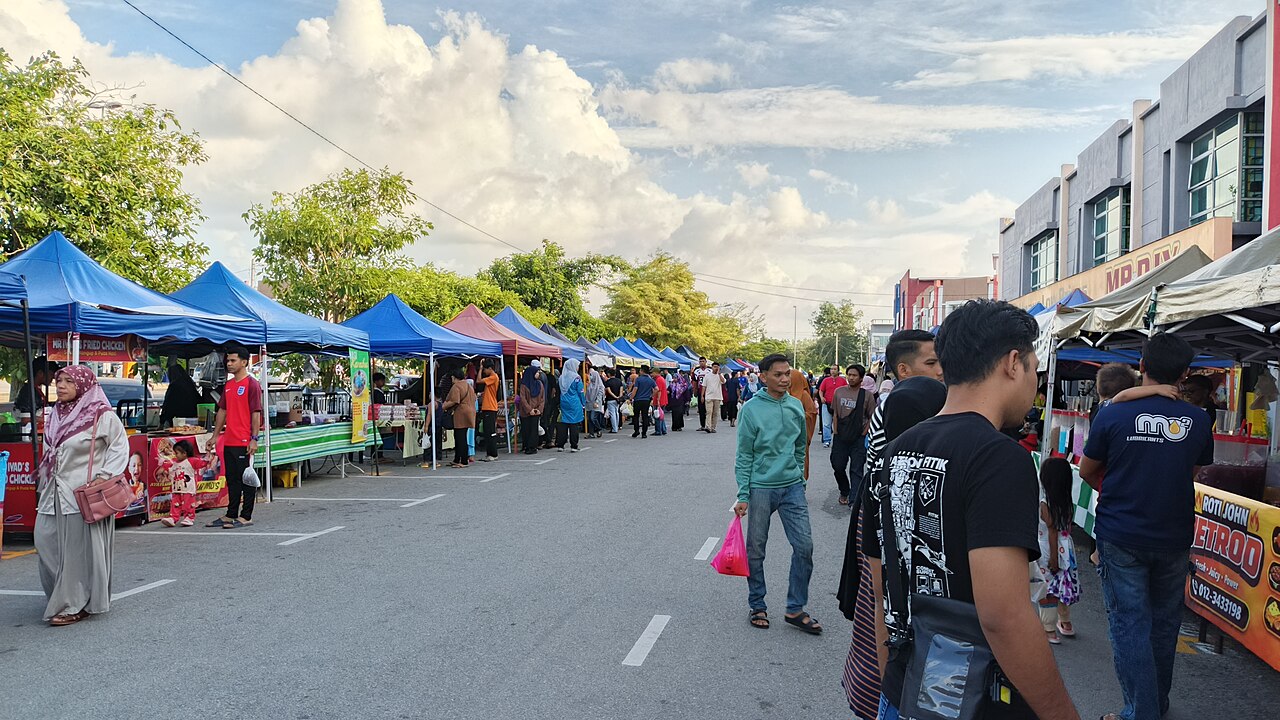
The received wisdom is to avoid Muslim-majority countries during Ramadan because everything closes. In Malaysia the opposite is nearer the truth. Restaurants stay open, Chinese and Indian ones entirely as normal, and nobody expects you to fast. The month also brings the Ramadan bazaars, the best street-food event of the Malaysian year: hundreds of stalls set up daily from around 15:00 to about 19:30, just before the fast breaks at Maghrib, selling ayam percik, murtabak, satay and kuih to a crowd that has been thinking about food since dawn. They are open to everyone. Buy at 18:00 for peak selection, or at 19:15 for discounts as stallholders clear stock.
Planning around Ramadan and Hari Raya in 2027
Islamic dates move roughly 11 days earlier each year against the Gregorian calendar, and the start is confirmed by moon sighting (rukyah) through JAKIM rather than announced months ahead. The dates below are expected ones and could shift by a day, so build slack into anything that depends on them.
| Event | Expected 2027 dates | What happens | Travel verdict |
|---|---|---|---|
| Ramadan | 8 February to 9 March 2027 | Daylight fasting for Muslims; Ramadan bazaars daily from about 15:00 to 19:30 | Good time to visit — food is exceptional, crowds are normal |
| Last week of Ramadan | Approx. 3-9 March 2027 | Balik kampung begins; buses, trains and domestic flights fill | Book long-distance transport now, not on the day |
| Hari Raya Aidilfitri | Wednesday 10 March 2027 | National public holiday; open-house visiting, cities empty out | Avoid intercity travel; stay put in one place |
| Second day of Raya | Thursday 11 March 2027 | Also a national public holiday | Many businesses shut; hotels in KL are quiet and cheap |
| Raya week | Approx. 10-16 March 2027 | Extended family visiting; many small businesses stay closed | Beaches and highlands busy; capital city subdued |
Kuala Lumpur during Hari Raya is one of the easiest weeks of the year to be a tourist in it. Several million people leave for their home towns in the balik kampung exodus, traffic evaporates and hotel rates soften. The trade-off is that many independent restaurants and hawker stalls close for a week or more. The reverse applies in the small towns and on the east coast, where everything is full.
What Raya itself looks like — the open houses, the ketupat and rendang, the green and gold everywhere, and the etiquette of accepting an invitation from someone you have just met — is worth reading about before you land, and we cover it properly in our guide to Hari Raya Aidilfitri. It is one of five or six festivals worth structuring a trip around; the others, including Thaipusam, Deepavali, Chinese New Year and Wesak, sit on our Malaysia festivals calendar with dates for 2026 and 2027.
Malaysia’s public holiday calendar is genuinely multi-faith — Chinese New Year, Deepavali, Wesak and Christmas are all official — which is the clearest demonstration of how the country works. The Thaipusam pilgrimage at Batu Caves draws over a million people to a Hindu festival in a Muslim-majority country, with Malay-run stalls selling drinks along the route.
Fasting etiquette, for people who are not fasting
Nobody expects you to fast, and there is no law requiring you to hide the fact that you are not. But a small amount of tact goes a long way in the last hour before Maghrib, when the person next to you has not eaten or drunk since about 05:45.
- Eat and drink normally in restaurants, hotels and food courts — they are open and busy.
- Avoid conspicuous eating and drinking on public transport, in a taxi, or in an office setting during daylight.
- If you are invited to an iftar (the breaking of the fast), say yes. It is the warmest meal you will eat in Malaysia and the invitation is sincere.
- Expect service to slow slightly in the 30 minutes before sunset. Staff are watching the clock too.
Halal, non-halal and eating your way around both
The most visible everyday effect of Islam on your trip is not law but lunch. Most food outlets in Malaysia are halal-certified or halal by practice, which shapes menus, kitchens and where you will and will not find pork.
- Halal certification is issued by JAKIM and displayed as a logo at the door. Most fast-food chains, most hotel restaurants and virtually all Malay outlets carry it.
- Non-halal outlets are overwhelmingly Chinese-run — pork noodles, char siu, bak kut teh — legal, everywhere, and often the best food in town.
- “Pork-free” is not “halal.” A restaurant that serves no pork but does serve alcohol is not certified, and observant Muslim friends will not eat there. If you are hosting, this distinction matters.
- Supermarkets segregate: the pork section is a separately staffed, separately tilled room. Not a hassle, just a layout to learn.
None of this constrains you in any meaningful way; it just explains why the hotel breakfast has beef bacon. The full picture of certification and where the good non-halal food hides is in our guide to halal food in Malaysia. In Penang the two food cultures sit closest together — see the Penang travel guide for how to walk between them.
Frequently asked questions
Can non-Muslims enter mosques in Malaysia?
Yes, at all the major ones, during published non-Muslim visiting windows and outside prayer times. Masjid Negara, the Blue Mosque in Shah Alam, Putra Mosque and Kapitan Keling all admit visitors free of charge and lend robes. Access to the main prayer hall itself varies by mosque — ask at the robe counter.
Do I need to cover my hair as a tourist?
Only inside a mosque, and the mosque will lend you what you need at no cost. In the street, in malls, on beaches and in restaurants there is no requirement for non-Muslim women to cover their hair anywhere in Malaysia, including Kelantan and Terengganu.
Is Malaysia a strict Muslim country?
It is a Muslim-majority country with a two-track legal system, and how it feels depends heavily on where you are. Kuala Lumpur, Penang, Melaka and the Borneo states are visibly plural and relaxed. Kelantan and Terengganu are noticeably more conservative in public life. Neither setting imposes religious obligations on non-Muslim visitors.
Can you drink alcohol in Malaysia?
Non-Muslims can, from age 21 — the age rose from 18 on 1 December 2021. Bars, hotels, Chinese restaurants and licensed supermarket aisles all sell it, though duties make it expensive by regional standards. Kelantan and Terengganu restrict retail sale, but non-Muslim outlets there are generally exempt.
Is it OK to visit during Ramadan?
More than OK — it is arguably the best month for food. Restaurants stay open, nobody expects you to fast, and the daily Ramadan bazaars from about 15:00 to 19:30 are the country’s finest street-food event. Ramadan 2027 is expected to run 8 February to 9 March, subject to moon sighting.
Which states have restrictions that affect tourists?
Kelantan and Terengganu, and only in practical ways: fewer and pricier alcohol outlets, a Friday-Saturday weekend, more conservative public dress among locals, and in Terengganu a reported Friday midday mall closure. Kedah also runs the Friday-Saturday weekend. No syariah provision in any state applies to non-Muslim visitors.
Where to take this next
The short version: dress for the building you are entering, keep Friday lunchtime free, remember that three states take their weekend on different days, and stop worrying about the rest, because the rest is not aimed at you.
If the festival calendar is going to drive your dates, check it against the weather first — the monsoon closes the east coast islands for months and no amount of good timing on Raya fixes that. Our month-by-month guide to the best time to visit Malaysia lays the two calendars side by side. Then start assembling the trip itself with the complete Malaysia travel guide.
1 note