Hari Raya Aidilfitri in Malaysia: Should You Travel Then? (2027 Dates)
Up to 2.3 million vehicles a day leave the cities. That is a problem if you follow them and an opportunity if you do not. 2027 dates, fare caps and open-house etiquette.
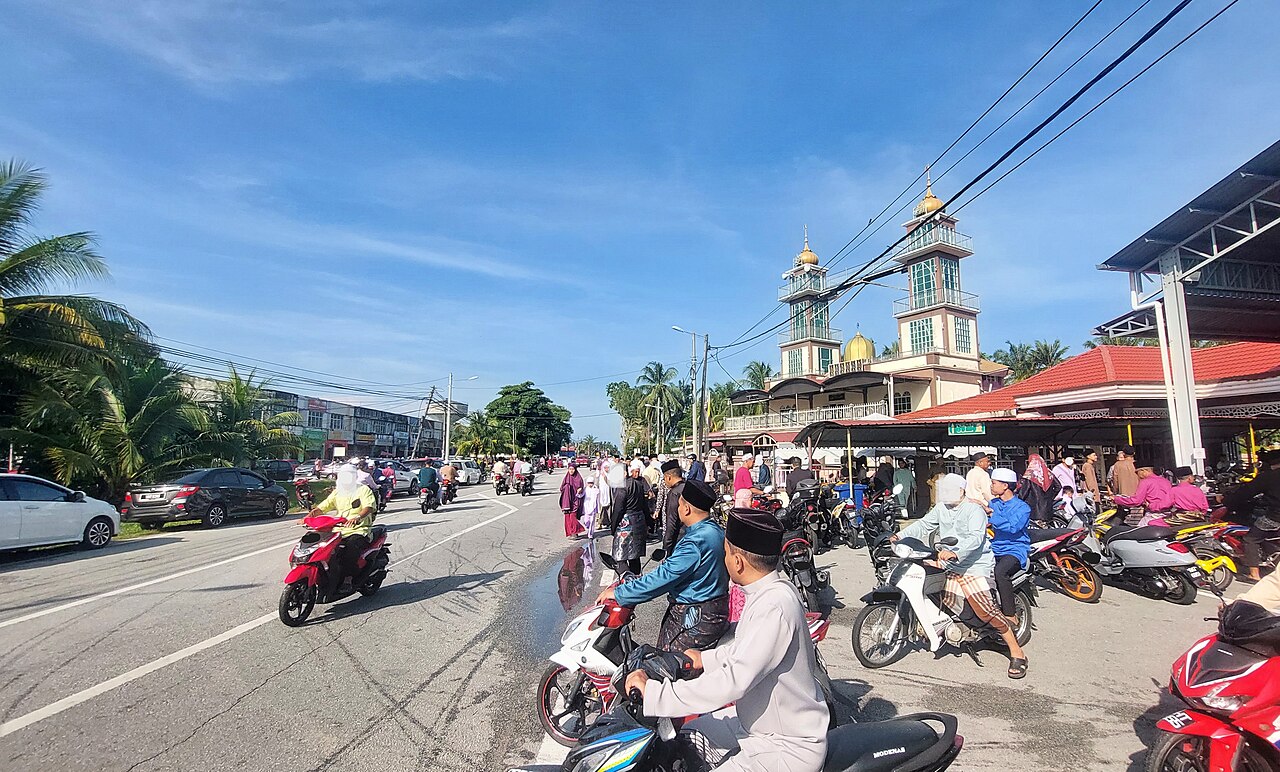
At the peak of the 2026 exodus, PLUS Malaysia forecast up to 2.3 million vehicles a day on its highways — more than 20% above a normal day — and roughly 3.5 million vehicles across the network over the whole festive period. That is the single number that should decide whether you visit Malaysia during Hari Raya. For about ten days the country picks itself up and moves: city workers drive home to the kampung, the North-South Expressway becomes a 750 km car park, and the places everyone left behind go strangely, wonderfully quiet.
Every other guide to Hari Raya in Malaysia will explain what Aidilfitri is, list the foods, and tell you it is a beautiful time to visit. That is all true and it is all useless if you are trying to decide whether to book flights for the second week of March 2027. The honest answer is that Raya is simultaneously the worst week of the year to move around Malaysia and the best week of the year to be standing still in Kuala Lumpur. Which of those you get depends entirely on whether you travel with the exodus or against it.
This guide gives you the 2027 dates, the traffic and ticketing numbers, the fare caps the airlines impose, the two-day window that causes the country’s worst gridlock, and a straight verdict on who should come and who should shift their dates. It also corrects an error that ranking guides still repeat about reaching Langkawi. For wider context on why this festival matters here, see the guide to Malaysian culture and heritage; this page is logistics.
Hari Raya Aidilfitri 2027: The Dates
Malaysia does not fix Raya dates far in advance, because the date is confirmed by physical moon sighting. Observers at 29 locations watch for the crescent that ends Ramadan, and the announcement is made under the authority of the Keeper of the Rulers’ Seal, usually the evening before. The calculation is reliable, but a one-day shift is possible — build a day of slack into anything you book around it.
| Event | Expected 2027 date | Holiday status |
|---|---|---|
| Ramadan begins (Awal Ramadan) | Approx. Mon 8 February 2027 | Public holiday only in Johor, Melaka and Kedah |
| Last week of Ramadan (bazaars at peak, exodus begins) | Approx. Wed 3 – Tue 9 March 2027 | Working days, but roads fill from mid-week |
| Hari Raya Aidilfitri, day one (1 Syawal) | Wed 10 March 2027 | Nationwide public holiday |
| Hari Raya Aidilfitri, day two | Thu 11 March 2027 | Nationwide public holiday |
| Extra state or declared holidays | Possible Fri 12 March 2027 | Not guaranteed — see note below |
| Return exodus peak | Approx. Sat 13 – Sun 14 March 2027 | Heaviest inbound traffic to KL and Johor |
| Hari Raya Haji (Aidiladha) | Mon 17 May 2027 | Nationwide; second day 18 May in Kedah, Kelantan, Perlis, Terengganu |
The “extra day” line matters. In 2026 Raya fell on Saturday 21 and Sunday 22 March, and the government declared Friday 20 March an additional holiday so the two public holidays were not swallowed by the weekend — creating a four-day break and an enormous road surge. In 2027 the festival lands mid-week, which makes a declared Friday holiday plausible and a Wednesday-to-Sunday break likely in practice. Assume the country is effectively shut from Tuesday evening 9 March to Sunday 14 March 2027.
Aidilfitri closes Ramadan, which in 2027 runs from roughly 8 February to 9 March. Ramadan is a genuinely good time to visit — evening bazaars, normal roads — so late February 2027 is the sweet spot for atmosphere without chaos. For background, see the overview of Islam as Malaysia’s official religion. Muslims are 63.5% of the population, which is why this festival moves the whole country rather than one community within it.
What Actually Happens: The Balik Kampung Exodus
Balik kampung means going back to the village, and it is close to a national obligation. Two generations of migration pulled millions into the Klang Valley, Johor Bahru and Penang; at Raya they all go home at once, to Kelantan, Terengganu, Kedah, Perak, Pahang and rural Johor. The 2.3 million vehicles a day is not spread evenly — it concentrates into an outbound surge (18–20 March in 2026) and a return (27–29 March).
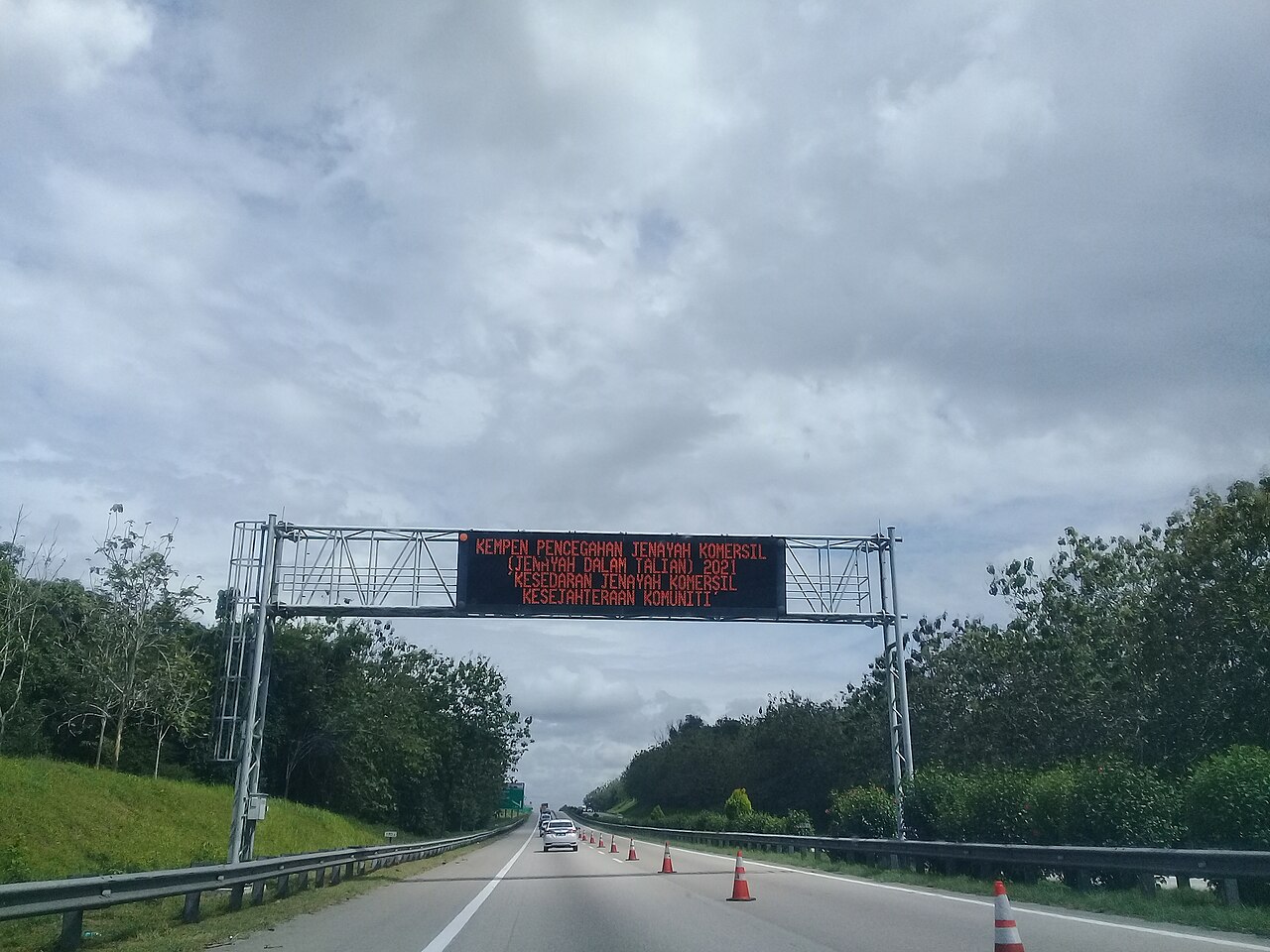
This is not “heavy traffic” as you might picture it. It is a normally four-hour drive from Kuala Lumpur to Penang taking nine or ten, rest-stop queues running out into the car park, and fuel stations on the northbound stretch running dry. PLUS activated 34 Smart Lane locations in 2026, banned maintenance lane closures for the period and pushed its MyPLUS-TTA travel-time app. Those help at the margin. They do not change the arithmetic of 3.5 million vehicles on one road.
If you were planning to hire a car and do the classic west coast drive from KL up to Penang in that window, move it. The same route in the last week of February or the week after Raya is a genuinely pleasant four hours. During the surge it is an endurance event with no reward at the end, because Penang is also full.
The Toll Discount Trap
Here is a mechanic that no travel guide explains and that every Malaysian driver understands in their bones. Each Raya the government announces a toll discount to encourage people to travel outside the peak. In 2026 it was 50% off, Class 1 private vehicles only, valid from 00:01 on 18 March to 23:59 on 19 March — a 48-hour window, with border tolls excluded.
The intention is to spread the load. The effect is the opposite. Because the discount ends at a hard deadline, drivers who could have left on the 20th or 21st leave on the 19th to catch it — and the worst gridlock of the 2026 season landed on 19 March, the final discount day. The discount window is the jam. Half-price tolls on a journey that takes three extra hours is not a saving.
Expect the same structure in 2027: a roughly 48-hour Class 1 discount somewhere in the 7–9 March range, announced only weeks ahead. If you are driving, the counterintuitive move is to pay full toll on a non-discount day, or to leave Kuala Lumpur before 05:00 and buy two or three hours of clear road. Our Malaysia travel budget breakdown puts the saving in context: RM 40–60 (about US$10–14) on a full peninsular run, which is not worth reshaping a trip around.
The Counter-Flow Trick: Kuala Lumpur Is Empty
This is the part nobody on the first page of Google has worked out, and it is the most valuable thing here. If several million people leave the cities, the cities are empty. Kuala Lumpur during the first three days of Raya is the quietest and most walkable it will be all year, and almost every visitor avoids it because they have read that Raya means crowds. The crowds are on the highway heading north-east, not in the capital.
What that buys you is concrete. Traffic on Jalan Sultan Ismail and Jalan Ampang drops to something like a Sunday dawn, all day, and the Federal Highway runs free. Grab fares fall because surge pricing has nothing to surge against, and the KLIA Ekspres runs its normal RM 55 (about US$13), 28-minute service throughout. Queues at the Petronas Twin Towers skybridge, KL Tower and Batu Caves shrink from an hour to a few minutes. City-centre hotel rates soften, because the corporate demand that fills them on weekdays has gone home.
What it costs you is food, and you should take the trade seriously. A large share of Kuala Lumpur’s hawker stalls are run by people who have gone back to the kampung, so on days one and two your favourite stall is shuttered with a handwritten reopening date. Whole streets described in our hawker stall guide do not operate for 48 to 72 hours. Hotel restaurants, mall food courts, Chinese and Indian coffee shops and 24-hour mamak outlets stay open. You will eat well — just not the thing you flew here for, on those two days.
Museums are the other gap. Expect national museums and many state-run galleries to close on day one and often day two, reopening on day three. Malls, theme parks and privately run attractions stay open and get busier on days two and three, as the families who stayed behind go out. Plan around that in your first 48 hours, and use the Kuala Lumpur city guide to pick alternatives that are not state-operated.
The same logic applies to Johor Bahru, which empties. What fills up is the rural north and the east coast — Kelantan, Terengganu, Kedah, Perlis — which is exactly where you should not be hunting for a hotel room that week. If Kuala Terengganu and the east coast is on your list, put it either side of the festival.
Your 2027 Travel Window: What to Avoid, What Is Fine
| Window (2027) | Verdict | What to book, and when |
|---|---|---|
| 8 Feb – 28 Feb (Ramadan, early) | Excellent. Roads normal, Ramadan bazaars every evening, hotels cheap | Book 6–8 weeks ahead. No special measures needed |
| 1 – 6 March (final Ramadan week) | Good, with a rising edge. Bazaars at their best; shopping malls very full | Book domestic flights 8–10 weeks out; avoid Friday evening intercity travel |
| 7 – 9 March (outbound exodus + likely toll discount) | Avoid all intercity travel. Expect the worst gridlock on the final discount day | Nothing. Be already where you want to be by 6 March |
| 10 – 11 March (Raya days one and two) | Stay put. Superb in Kuala Lumpur, difficult everywhere rural | City hotel booked 3+ months ahead; do not plan to move between cities |
| 12 March (likely declared holiday) | Good in cities. Attractions reopening, malls busy, roads still light | Attraction tickets fine same-day; restaurants reopening |
| 13 – 14 March (return exodus peak) | Avoid highways and trains into KL and Johor Bahru. Flights full | If you must move, fly, and book that flight 4–6 months ahead |
| 15 – 31 March | Excellent. Country back to normal, open houses still running | Normal lead times. Best value fortnight of the quarter |
| 17 – 18 May (Hari Raya Haji) | Mild. Much smaller exodus than Aidilfitri, but Sabah and Sarawak add Kaamatan and Gawai | Book Borneo flights 3 months ahead; peninsular travel largely unaffected |
The pattern is simple: pick a base city, be in it by 6 March, stay until 12 March, and never plan to move on the 9th, 10th or 13th. If you are working from a multi-stop plan in the Malaysia itineraries collection, push the movement days into the fortnight after the festival.
Booking: Trains, Flights and the Fare Caps
KTMB trains: the six-month rolling window
KTMB sells ETS and Intercity tickets in a rolling one-month block, released roughly six months ahead. For the January–April 2026 travel period, booking opened at 10:00 on 17 November 2025. Apply the same rhythm to 2027 and you should be watching for the January–April 2027 block to open around the middle of November 2026. Set a calendar alert; this is not a case where a week’s delay costs you a slightly worse seat.
The reason it matters: in 2026 KTMB laid on 26 extra trips and 8,118 additional seats a day across 17–29 March, and it still was not enough. By 19 March, 217,000 of 257,000 ETS tickets had sold — around 84% of everything on offer — and the northern sector was fully sold out. An ETS run from KL Sentral to Butterworth takes 3h 35m to 4h 20m and costs RM 59–98 (about US$14–23), which is why it goes first.
Flights and the fare caps
Malaysia’s flag carriers cap domestic fares over Raya, under government pressure, and the numbers are specific. For travel on 17–20 March 2026, Malaysia Airlines capped one-way domestic fares at about RM 569 (roughly US$135) and Firefly at about RM 548 (roughly US$130), mounting more than 2,700 combined flights across the period. For the May 2026 Aidiladha, Kaamatan and Gawai rush, Malaysia Aviation Group added 62 flights with base fares capped at about RM 499 (roughly US$119) one way, on routes where economy fares had historically pushed towards RM 1,000.
Use those numbers as a ceiling test. If a domestic one-way is quoted well above the RM 550–570 band on a capped date, you are looking at a premium fare bucket or a reseller’s margin — check direct with the airline. Similar caps should appear for 2027, announced only weeks ahead, so book early and re-check rather than gambling on waiting.
| Mode | 2026 reference figures | 2027 action |
|---|---|---|
| KTMB ETS / Intercity | Booking opened 17 Nov 2025, 10:00, rolling one-month block ~6 months out | Watch for Jan–Apr 2027 release around mid-Nov 2026 |
| KTMB extra capacity | 26 extra trips, 8,118 seats a day, 17–29 March | Still sells out — book on release day |
| ETS sell-through | 217,000 of 257,000 tickets (~84%) sold by 19 March; north fully sold out | Northern routes go first; buy those first |
| Malaysia Airlines domestic cap | About RM 569 (US$135) one way, 17–20 March travel | Treat as your price ceiling; anything higher, check direct |
| Firefly domestic cap | About RM 548 (US$130) one way | Often the cheaper of the two on the same route |
| Aidiladha / Gawai period cap | About RM 499 (US$119) one way, 62 extra flights | Applies mainly to Borneo routes in May |
| Express bus | No cap; fares rise and journeys double in length | The worst option during the surge — avoid |
| Long-distance taxi / e-hailing | Surge pricing plus driver scarcity | Not a realistic intercity plan on 9–13 March |
What Closes, and Where
Closures are shorter than most visitors fear and more local than most guides admit. Banks shut for two days at each Raya, and in 2026 Bursa Malaysia’s subsidiaries closed for Aidilfitri too — settle currency and banking business beforehand. Government offices and state museums follow the public holidays.
- Kelantan is the outlier. The state ordered all malls, supermarkets, convenience stores and fast-food outlets to close on the first day of Syawal. If you are in Kota Bharu on day one, buy food the day before.
- Hawker stalls and family restaurants: widely shut for two to three days, sometimes a full week in smaller towns.
- Malls, cinemas and theme parks: open, and busiest on days two and three.
- Sabah and Sarawak: Aidilfitri is observed, but the big regional festivals there are Kaamatan and Gawai in late May, so the March disruption in Borneo is much milder.
Rumah Terbuka: The Open House, and How to Behave in One
The festival does not end after two days. Through most of the month of Syawal, families hold rumah terbuka — open houses — where the door stands open, food is laid out, and anyone who arrives is fed. That is not a figure of speech. They are genuinely open, and being a foreigner is not a barrier; colleagues, neighbours and complete strangers all turn up.
With no personal invitation you still have an easy route in: federal and state governments, royal households and large companies host public open houses, advertised in the press and on social media with a time and venue. Anyone may walk in. They are large, catered events, and the best way to eat the full Raya spread without knowing a soul.
- Take your shoes off at the door. There will be a pile of them. Add yours to it.
- Greet the eldest person present first. A light handshake or a hand to your own chest; follow what your host does, and do not initiate contact with someone of the opposite sex unless they offer first.
- Eat, pass and receive with your right hand. The left hand is considered unclean.
- Dress modestly. Shoulders and knees covered, for men and women alike. A collared shirt or a long-sleeved top is plenty.
- Bring kuih, fruit or biscuits — never alcohol, and nothing containing pork or non-halal gelatine.
- Do not overstay. Forty-five minutes to an hour is a complete visit. Guests cycle through; lingering all afternoon at a family home blocks the flow.
- If you are handed a duit raya packet, thank the giver and put it away unopened. Opening it in front of your host is rude.
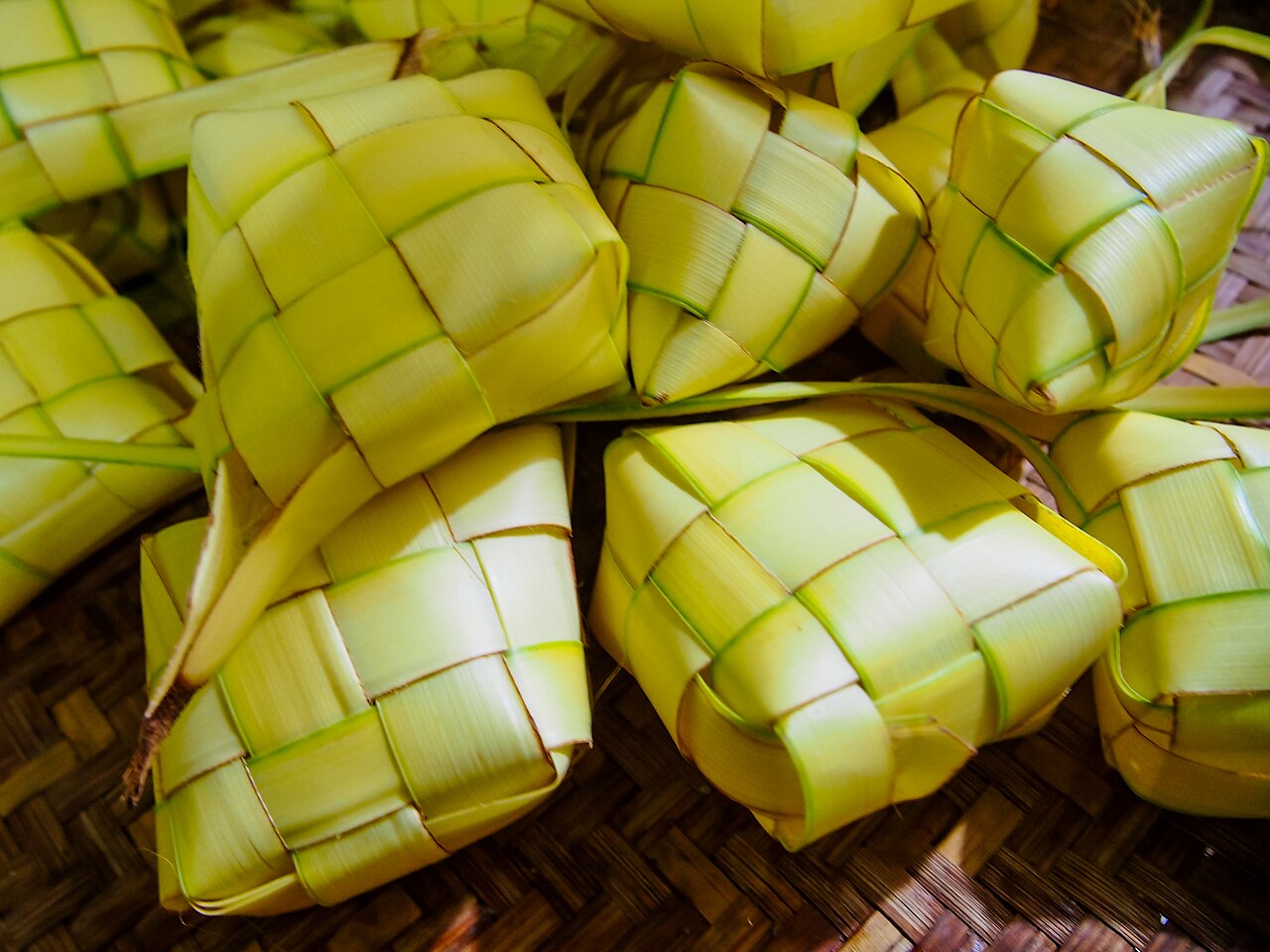
What is on the table: ketupat, compressed rice in woven palm pouches; lemang, glutinous rice roasted in bamboo; rendang; nasi minyak; kuah kacang, a peanut sauce; dodol, a dense palm-sugar toffee; and rows of kuih raya biscuits. It is all halal by definition — the halal food guide explains the certification system. Broader rules on greetings and personal space are in our Malaysian etiquette guide.
Duit raya: you are not expected to give any
Duit raya are small cash gifts in decorated green envelopes, given by adults to children and sometimes to unmarried adults. Reported amounts vary and we have not verified a reliable range — Malaysians describe symbolic sums of a few ringgit, with larger notes from close relatives — so treat any figure, including ours, as anecdotal. The point for you is simpler: a foreign visitor is not expected to give duit raya at all. If you want to reciprocate, bring food.
A Correction: The Penang–Langkawi Ferry Does Not Run
Several guides currently ranking on page one for Raya travel still tell readers to island-hop by taking the direct ferry from Penang to Langkawi. That service was suspended during the pandemic and has never resumed. If you plan around it you will arrive at Swettenham Pier and find nothing there.
Langkawi is reached by ferry from Kuala Perlis or Kuala Kedah, both on the mainland north of Penang, or by air from Kuala Lumpur, Penang and Subang. During Raya week the mainland jetties are the pinch point, because everyone driving north converges on them — fly if your dates fall inside the surge. The transport guide sets out the current routings.
Aidilfitri Is Not Hari Raya Haji
Guides conflate these constantly. They are different festivals, two months apart. Aidilfitri closes Ramadan and is the larger social event — the one that empties the cities. Hari Raya Haji, or Aidiladha, marks the end of the pilgrimage to Mecca and falls on Monday 17 May 2027, with a second holiday on 18 May in Kedah, Kelantan, Perlis and Terengganu.
Aidiladha centres on korban, the ritual sacrifice of livestock, with the meat divided three ways: a share for the family performing it, a share for relatives and friends, and a share for those in need. It is a quieter, more devotional day with far less travel attached, so May disruption on the peninsula is modest. In Borneo it overlaps Kaamatan and Gawai, so Sabah and Sarawak flights tighten instead. The year is mapped in our Malaysia festivals calendar.
The Verdict: Should You Be Here?
- Come, and base yourself in a city. For an empty, walkable Kuala Lumpur, short attraction queues, soft hotel rates and a real shot at an open house, Raya is the best week of the year. Arrive by 6 March 2027 and do not move until the 12th.
- Come, if you have been invited. A kampung Raya with a family is one of the great experiences in Southeast Asia. Accept.
- Move your dates if your trip is a route. Multi-city itineraries, island-hopping and anything on the east coast will be degraded. Shift a week later: 15–31 March is excellent and open houses still run.
- Move your dates if street food is the point. Three days of shuttered stalls in a short holiday is a real loss.
If the festival itself is what you are chasing rather than the country, note that Malaysia gives you three enormous ones — this, Chinese New Year in January or February, and Thaipusam at Batu Caves — and the last of those is the most visually extraordinary of the three.
Frequently Asked Questions
When is Hari Raya Aidilfitri 2027?
Wednesday 10 and Thursday 11 March 2027, expected, with both days nationwide public holidays. The date is confirmed by moon sighting shortly beforehand, so allow for a one-day shift.
What closes, and for how long?
Banks close for two days, government offices and state museums for the public holidays, and many hawker stalls for two to three days. Kelantan goes furthest, ordering malls, supermarkets, convenience stores and fast-food outlets shut on the first day of Syawal.
Can a tourist attend a Raya open house?
Yes. Private open houses genuinely welcome strangers, and government, state and corporate open houses are advertised publicly with a time and venue — anyone may walk in. Take your shoes off, greet the eldest person first, use your right hand, and keep the visit to about an hour.
Do I need to give duit raya?
No. Foreign visitors are not expected to give duit raya, and nobody will hold it against you. Bring kuih or fruit instead. If you are handed a packet, thank the giver and open it later, not in front of them.
How far ahead should I book trains and flights?
Trains, roughly six months — KTMB releases a rolling one-month block about that far ahead, and 86% of ETS seats had sold by the peak in 2026 despite 8,118 extra seats a day. Flights, four to six months, and treat the RM 548–569 fare caps as your ceiling.
Is Ramadan itself a good time to visit?
It is one of the best. Roads are normal, hotels are cheap, and the evening bazaars are the finest temporary food markets in the country. Late February 2027 gives you the atmosphere without the exodus.
Next step: cross-check your dates against the weather in the month-by-month guide to the best time to visit Malaysia, then lock the city hotel before the airfare. In Raya week, where you sleep matters more than how you got there.