Peranakan Heritage: The Baba Nyonya Culture of Melaka & Penang (2026)
A 500-year-old creole culture, two cities, and one Tuesday closure that ruins more trips than anything else. Museums, prices, food and a costed two-day route.
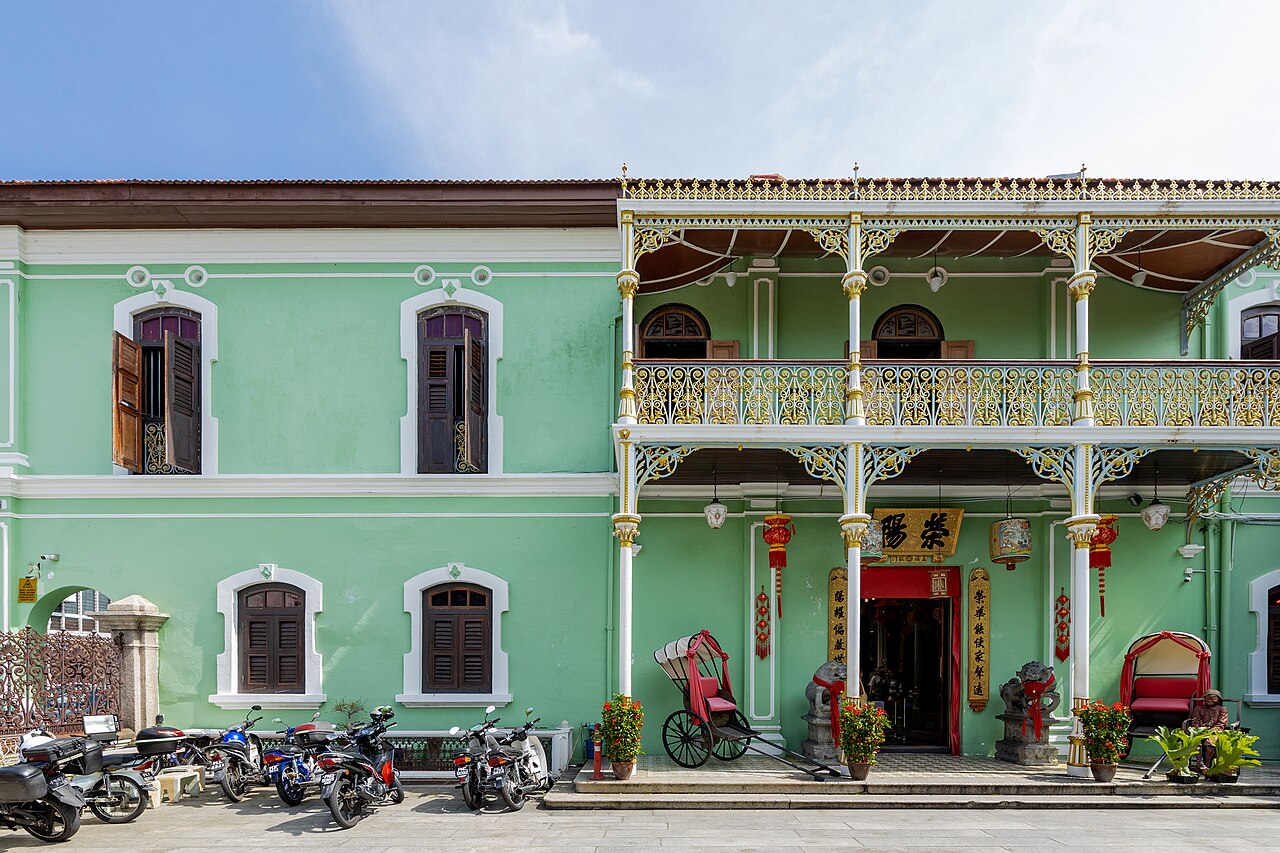
Peranakan culture is the thing Malaysia sells hardest and explains worst. You will see the word on hotel branding, on restaurant awnings, on tote bags in every heritage-zone gift shop between Melaka and George Town. What almost nobody tells you at the ticket desk is that Peranakan culture in Malaysia is a genuine creole — a 500-year-old fusion of Chinese ancestry, Malay language and dress, and later British colonial taste — and that the house you are photographing is not a set. In Melaka, the family that bought those three terrace lots in 1861 still owns them, and the people running the museum are the seventh generation.
The typical visit runs about four hours. You arrive knowing the word from a Netflix series or a bowl of laksa, tour two mansions, get told the porcelain is Nyonyaware, buy a pair of beaded slippers, and leave. What you miss in those four hours is the part that actually matters: the language these houses were built around is dying, spoken now mainly by older families in Melaka, and the material culture you just walked through — the kebaya, the kerongsang brooches, the tok panjang table — outlived the tongue that named it.
This guide fixes the mechanics first, because the mechanics are where trips break. The single most important fact on this page: the Baba & Nyonya Heritage Museum in Melaka closes on Tuesdays. The second most important: photography is banned inside the Pinang Peranakan Mansion in George Town, which blindsides roughly every visitor who arrives with a camera and a shot list.
| Question | Short answer |
|---|---|
| Where is it strongest? | Melaka and George Town, Penang — jointly inscribed as one UNESCO World Heritage property on 7 July 2008 |
| The trip-killer | Baba & Nyonya Heritage Museum, Melaka: closed Tuesdays |
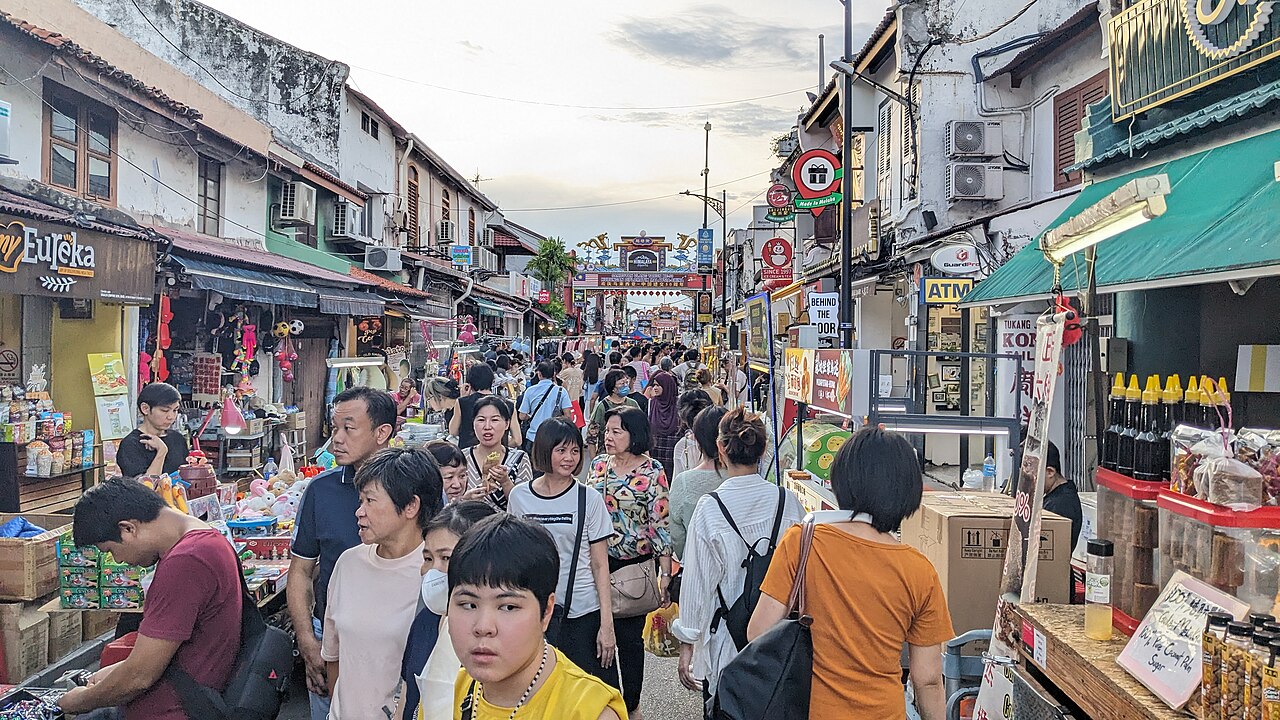
| Second trip-killer | Jonker Street night market runs Friday, Saturday and Sunday only, 18:00 to midnight |
| Cuisine split | Melaka leans coconut-lemak; Penang leans sour-tamarind (asam) |
| UNESCO intangible listings | Dondang Sayang (2018); the kebaya (4 December 2024, five countries jointly) |
| If you only have one city | Melaka — see the verdict section for why |
Peranakan vs Baba Nyonya vs Straits Chinese: getting the words right
Peranakan — the umbrella term
Peranakan comes from the Malay root anak, child, and carries the sense of “locally born” or “descendant”. It is a broad category for creole communities formed when foreign traders and settlers married locally and, over generations, produced a distinct culture that was neither the homeland’s nor the host’s. It is a description of a process, not of an ethnicity. That process happened more than once in the Straits of Melaka, which is why there are several Peranakan communities and not one.
- Chinese Peranakan — the Baba Nyonya. The largest and most documented group, and the one every mansion museum represents.
- Chitty Peranakan — Tamil Hindu traders who settled in Melaka and adopted Malay language and much local custom, while keeping Hindu religious practice. Their community is centred on Kampung Chitty in Melaka.
- Jawi Peranakan — descendants of South Indian and Arab Muslim traders who married Malay women, historically concentrated in Penang and central to early Malay-language publishing.
- Kristang — the Portuguese-Eurasian community of Melaka, descended from sixteenth-century Portuguese settlement, with their own creole language and a distinct food tradition.
If a tour describes “the Peranakans” as though they were a single people with a single religion and a single cuisine, it is describing the Baba Nyonya and using the wrong word for it. The broader picture of how these communities sit alongside Malay, Chinese, Indian and Indigenous Malaysia is laid out in our guide to Malaysian culture and heritage, which is worth reading before you set foot in a museum.
Baba Nyonya — the Chinese Peranakan specifically
Baba is the honorific for the men, Nyonya (also spelled Nonya) for the women. Together they name the Chinese Peranakan community that formed when Hokkien and other southern Chinese traders settled in the Melaka Sultanate’s port from roughly the fifteenth century onward and married locally. Their descendants kept Chinese ancestral religion and family structure but adopted Malay dress, Malay-derived language and a kitchen built on local aromatics — lemongrass, galangal, belacan, tamarind, candlenut, coconut.
Straits Chinese — a colonial administrative label
Straits Chinese is the term that came out of British administration, tied to the Straits Settlements — Melaka, Penang and Singapore. It marked out Chinese residents born within those territories, which had legal and status consequences under colonial rule. It overlaps heavily with Baba Nyonya but is not identical: it is a category of place and paperwork rather than of descent and culture. Plenty of Straits Chinese in the nineteenth century were recent arrivals with no creole background at all, and some prominent Straits Chinese figures were not Babas.
A creole culture, not a costume: language, song and the kebaya
Baba Malay is endangered
The Baba Nyonya spoke Baba Malay — a Malay-based creole carrying heavy Hokkien vocabulary and syntax, the everyday language of these houses for generations. It is now endangered. Fluent everyday use is concentrated among older families in Melaka; younger generations have largely shifted to English, Malay and Mandarin, and the language is far more often heard in recordings, classes and revival projects than across a dinner table. You will see published speaker figures online. Treat them all with suspicion — no Malaysian census breaks the community out, and the numbers that circulate are estimates repeated between articles rather than counts.
Dondang Sayang and the kebaya at UNESCO
Dondang Sayang was inscribed on 29 November 2018. It is a Malay poetic art of improvised, sung quatrains — pantun traded back and forth between singers, usually over violin, gong and rebana — and the Melaka Baba Nyonya community is one of its core custodians. It is performance, competition and flirtation at once, and it is very hard to do well.
The kebaya was inscribed on 4 December 2024 in a joint nomination by Brunei, Indonesia, Malaysia, Singapore and Thailand — the first time the garment received that recognition, and a rare five-country listing that quietly acknowledges the garment belongs to a region rather than a nation. The Nyonya kebaya is its most elaborate form: a sheer, fitted blouse worn over a batik sarong, fastened not with buttons but with a kerongsang, a linked set of three brooches, and finished with hand-embroidered openwork along the hems. It is worth knowing this before you walk into a mansion, because it reframes the display case: you are looking at an inscribed living tradition, not old clothes.
Melaka and George Town themselves were jointly inscribed as UNESCO World Heritage on 7 July 2008 — importantly, as a single serial property, “Melaka and George Town, Historic Cities of the Straits of Malacca”, not as two separate sites. That framing is a decent argument for seeing both. Our full rundown of Malaysia’s UNESCO World Heritage sites puts the pair in context alongside Mulu, Kinabalu and Lenggong.
The mansions and museums: prices, hours and the closure days that ruin trips
| Site | City | Adult price | Hours | Closed | Booking needed? |
|---|---|---|---|---|---|
| Baba & Nyonya Heritage Museum | Melaka | Around RM 16 (about US$3.80); child 5-12 around RM 11 | 10:00-16:15 weekdays; 10:00-16:45 weekends | Tuesdays | Not for individuals; required for groups over 15 |
| Pinang Peranakan Mansion | George Town | RM 25 (about US$6); child 6-12 RM 12; under 6 free | 09:30-17:00 daily, including public holidays | None | No — but photography is banned inside |
| Cheong Fatt Tze — The Blue Mansion (guided tour) | George Town | RM 25 (about US$6); child under 12 RM 12.50 | Tours 11:00 and 15:30, 45 minutes | None | Yes — capped at 24 people and frequently sold out |
| Blue Mansion (self-guided audio) | George Town | Charged separately from the guided tour | 11:00-18:00 daily | None | Max 10 guests per hour; bring your own phone and earphones |
| Blue Mansion (private tour) | George Town | RM 350 (about US$83) per group up to 12; RM 25pp above that, max 20 | 12:00-14:00 daily | None | Yes — 3 days’ notice required |
| Sun Yat Sen Museum | George Town | RM 5 (about US$1.20); student RM 3 | 09:30-17:30 daily | None | No; free guided tours in English, Mandarin and Malay |
| Straits Chinese Jewellery Museum | Melaka | Around RM 15 (about US$3.60) — confirm on arrival | Roughly a 45-minute guided visit | Confirm locally | No |
Baba & Nyonya Heritage Museum, Melaka — the one that matters
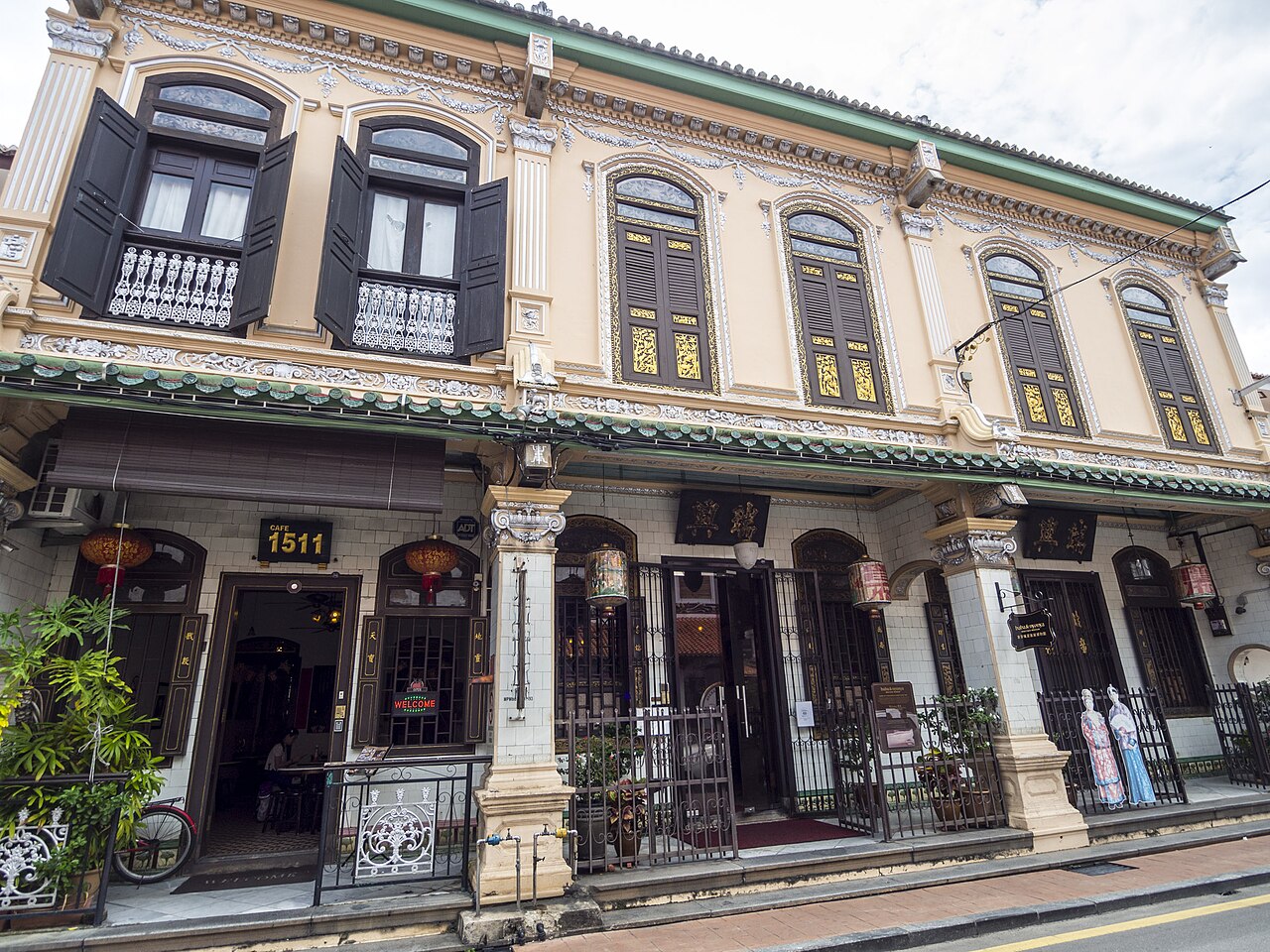
At 48 and 50 Jalan Tun Tan Cheng Lock, this is three terrace lots the Chan family acquired in 1861 and knocked into a single residence, and it is still in family hands — the people running it today are the seventh generation. That continuity is the point. This is not a re-creation assembled from auction lots; it is a house that was lived in, with the furniture where the family put it.
Admission runs around RM 16 (about US$3.80) for adults and around RM 11 for children aged 5-12 — those figures come from third-party listings rather than an official rate card, so budget slightly above them. Weekday hours are 10:00 to 16:15, weekends 10:00 to 16:45, and the last entry is earlier than closing, so do not turn up at 16:00 on a Wednesday expecting to get in. It is closed on Tuesdays. If your Melaka day is a Tuesday, move it.
Pinang Peranakan Mansion, George Town — no photography, and that is fine
At 29 Church Street, this is the green-and-gold one you have seen on every Penang listicle — and the interior shots in those listicles are old, or press images, because photography and videography are prohibited inside. Visitors arrive with a shot list and get stopped at the door. Accept it early and the visit improves: the collection runs to more than 1,000 antiques, complimentary guided tours are included with admission, and without a phone in your hand you will actually listen to what the guide says about the ancestral hall and the marriage rituals.
Cheong Fatt Tze — The Blue Mansion: book it or miss it
At 14 Leith Street, the indigo house is 130 years old, holds a UNESCO Conservation Award from 2000, and hosts the mahjong scene from Crazy Rich Asians. It also operates as a boutique hotel with 18 rooms across six categories, which is why access is tightly rationed.
Guided tours run twice daily at 11:00 and 15:30, last 45 minutes, and are capped at 24 people. They sell out routinely. Adult tickets are RM 25 (about US$6), under-12s RM 12.50. If both slots are gone, the self-guided audio tour runs 11:00 to 18:00 daily with a maximum of 10 guests per hour — and you must bring your own phone and earphones, which nobody mentions until you are standing in the courtyard. For a group, the private tour runs 12:00 to 14:00 daily at RM 350 (about US$83) for up to 12 people, or RM 25 per head above that up to a maximum of 20, with three days’ notice.
Nyonya food: the lemak and asam divide
Nyonya cuisine is the part of Peranakan culture most travellers meet first, usually without realising it is regionally split. The two heritage cities cook differently, and the difference is not subtle once you know what you are tasting. Melaka leans lemak — rich, coconut-milk-based, closer to Indonesian and Javanese influence, sweeter and rounder. Penang leans asam — sour with tamarind, sharpened by Thai influence from just up the coast, with more fish, more heat and far less coconut.
Melaka: coconut, candlenut and slow braises
Order ayam pongteh first — chicken braised slowly with fermented soybean paste, shallots and potato, a dish that tastes almost European in its patience. Then buah keluak, the black nut dish that is the community’s signature and the hardest thing in the kitchen: the nuts are toxic raw and require days of soaking before the earthy, bitter-chocolate flesh is scraped out, pounded with spices and packed back into the shell.
Nancy’s Kitchen is the long-standing Melaka name for this cooking. Dishes have been quoted in the RM 6 to RM 35 range — pai tee around RM 4.80 for five, curry chicken around RM 15, udang assam nenas around RM 27 — but those prices come from secondary listings rather than a current menu, so treat them as a rough band and expect a little more. Two addresses circulate online under the same name, so confirm which one you are heading to before you set off. It is closed on Tuesdays, which is the same day the Baba & Nyonya museum shuts — Tuesday is simply a bad day to attempt Peranakan Melaka.
Penang: tamarind, torch ginger and Thai edge
Penang’s version swaps richness for acidity. Asam laksa is the flagship — a tamarind-sour fish broth thickened with flaked mackerel, cut with torch ginger flower, mint, pineapple and a spoonful of hae ko prawn paste. Visitors expecting the creamy Melaka bowl often recoil at the first mouthful and then order it every day after. Otak-otak here is a spiced fish custard grilled in banana or nipah leaf; mee siam arrives sour and pink; kerabu salads are dressed with lime and chilli rather than dressing.
The reference table in George Town is Auntie Gaik Lean’s Old School Eatery at 1 Bishop Street, which has held one Michelin star since 2023. Expect roughly RM 40-60 (about US$10-14) per person — extraordinary value for a starred kitchen. The booking mechanics matter: a RM 200 (about US$48) deposit is required per booking, walk-ins are accepted only for parties of three or fewer, and it is closed Monday and Tuesday. Plan around that pair of days or you will eat somewhere far less interesting.
Penang’s Nyonya kitchen sits inside one of the densest food cities in Asia, and it is worth pairing with the hawker circuit rather than treating it as separate — our Penang food guide maps the stalls street by street. For the wider regional pattern this divide belongs to, Malaysian food by region traces how the cooking changes state by state, and the complete Malaysian food guide covers the techniques and pantry underneath all of it.
Melaka or Penang if you only have one? Melaka.
Here is the actual answer rather than the diplomatic one. If Peranakan heritage is your reason for the trip and you have one city, go to Melaka.
The reasoning is straightforward. Melaka is where the community formed — the Sultanate’s port is the origin point of the whole Chinese Peranakan story, roughly a century before Penang existed as a British settlement. The Baba & Nyonya Heritage Museum is a continuously family-owned house with seventh-generation descendants still involved, which no Penang property can match. The Peranakan sites in Melaka sit within a compact walk of each other on and around Jalan Tun Tan Cheng Lock. And the surviving Baba Malay speech community is centred there. On density of specifically Peranakan material per hour walked, Melaka wins clearly.
Penang wins on almost everything else. It is the better city — better food across the board, a far larger and more intact heritage zone, better hotels, an international airport, and grander individual buildings. If your trip is a general Malaysia trip with a Peranakan interest attached rather than the other way round, Penang is the stronger base and you should use our Penang travel guide to plan around it. If Peranakan culture is the point, take the day in Melaka and use the Melaka travel guide to fill the rest of the itinerary.
| Melaka | Penang (George Town) | |
|---|---|---|
| Cuisine style | Lemak — coconut-rich, Indonesian-influenced, sweeter. Nyonya laksa, ayam pongteh, cendol | Asam — tamarind-sour, Thai-influenced, sharper. Asam laksa, otak-otak, kerabu |
| Architecture | Compact terrace shophouses; Dutch-era squares alongside Straits Eclectic frontages | Larger, grander Straits Eclectic mansions; the most intact colonial-era streetscape in Malaysia |
| Flagship museum | Baba & Nyonya Heritage Museum — family-owned, seventh generation, closed Tuesdays | Pinang Peranakan Mansion — 1,000+ antiques, open daily, no photography |
| Depth of Peranakan material | Higher per hour walked; the origin community | Broader Straits merchant story, less specifically Baba Nyonya |
| Museum cost for the day | Roughly RM 31 (about US$7.40) for two sites | Roughly RM 55 (about US$13) for three sites |
| Food cost, one good meal | RM 25-45 (about US$6-11) | RM 40-60 (about US$10-14) at the starred option; RM 15-30 elsewhere |
| Getting there | About 2 hours by road from Kuala Lumpur; no airport | International airport; about 4-5 hours by road or a short flight from KL |
| Verdict | Choose this if Peranakan heritage is the reason for the trip | Choose this if you want the better all-round city |
A costed two-day Peranakan route (and how to dodge Tuesday)
Both heritage zones are walkable, so the plan below uses distances rather than taxis. Start it on a Friday, Saturday or Sunday and never on a Monday or Tuesday: Tuesday closes the Melaka museum and Nancy’s Kitchen, Monday and Tuesday close Auntie Gaik Lean’s, and the Jonker Street night market only runs Friday to Sunday, 18:00 to midnight.
Day 1 — Melaka (about 3 km on foot, all day)
Be at the Baba & Nyonya Heritage Museum on Jalan Tun Tan Cheng Lock for the 10:00 opening — around RM 16 (about US$3.80), roughly 60-75 minutes. Walk 200 m along the same street to the Straits Chinese Jewellery Museum, around RM 15 with a 45-minute guided visit. Lunch 400 m away: ayam pongteh, pai tee and Nyonya laksa, with buah keluak if the kitchen has it that day — several of these appear on our list of 50 must-try Malaysian dishes. Spend the afternoon on the Jonker Walk shophouses and Kampung Chitty, the Chitty Peranakan quarter about 1.5 km north-west, which almost no coach itinerary includes. Return for the night market at 18:00.
Day 2 — George Town (about 2.5 km on foot)
Book the Blue Mansion’s 11:00 guided tour days ahead — RM 25, 45 minutes, capped at 24 and regularly sold out. From 14 Leith Street it is roughly 900 m to the Pinang Peranakan Mansion at 29 Church Street (RM 25, phone in your pocket, complimentary guide, allow 90 minutes), passing the Sun Yat Sen Museum at 120 Armenian Street on the way — RM 5 and worth the 40-minute detour. Dinner at Auntie Gaik Lean’s on Bishop Street, 350 m on: roughly RM 40-60 a head, RM 200 deposit for parties of four or more, walk-ins only for three or fewer. With a spare hour, the clan houses around Armenian Street use the same carvers and roof ridges as the mansions — our guide to Malaysia’s finest temples covers them.
The one-city version
Compress Day 1 into a single Melaka day: both museums before 13:00, a long Nyonya lunch, Kampung Chitty at 15:00, Jonker Street from 18:00. That is roughly six hours of walking and about RM 31 in admissions, and it delivers more Peranakan substance than a rushed two-city dash.
| Item | Day 1 Melaka | Day 2 Penang |
|---|---|---|
| Admissions | RM 31 (about US$7.40) | RM 55 (about US$13) |
| Main meal | RM 25-45 | RM 40-60 |
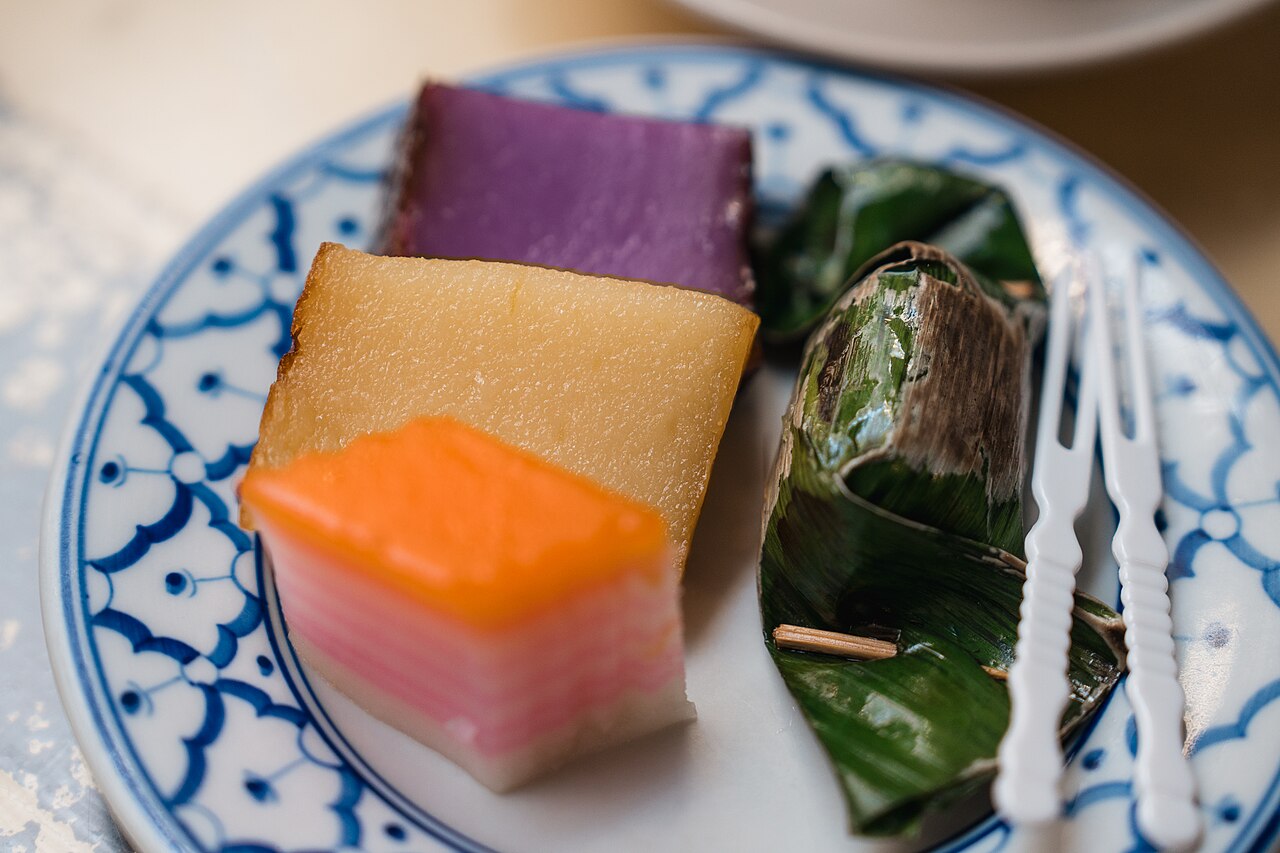
| Snacks, kueh, cendol, coffee | RM 20 | RM 20 |
| Local transport | RM 15 | RM 20 |
| Day total per person | RM 91-111 (about US$22-26) | RM 135-155 (about US$32-37) |
What to skip, and what visitors get wrong
- The kebaya-rental photo trade on Jonker Street. Rent one if you enjoy it, but change before the museum — the Baba & Nyonya Heritage Museum charges a RM 100 (about US$24) surcharge to anyone arriving in costume, which turns a RM 16 ticket into RM 116.
- Mansions with no interpretation. Several private houses in both cities are antique showrooms with a ticket desk: rooms of furniture, no guide, no context. If a property does not offer a tour or an audio guide, it is a shopping trip with an entry fee.
- Coach-party “Nyonya” restaurants. Buffet-format places with laminated multilingual menus and a car park cook to a flattened, sweetened template. The good kitchens are small, close two days a week and take deposits — the friction is the signal.
- Turning up with a camera plan. Photography and videography are prohibited inside the Pinang Peranakan Mansion. No exceptions, no phone shots, and it surprises nearly everyone.
- Treating a lived-in house as a set. The Melaka museum is still family property with descendants involved. Ask before photographing staff, remove shoes where asked, and keep your voice down in ancestral halls — our Malaysia cultural etiquette guide covers the rest.
What is actually worth buying
Hand-stitched kasut manek beaded slippers take weeks and cost accordingly; the RM 40 pairs on Jonker Street are machine-made souvenirs, and both are fine as long as you know which you are buying. Nyonyaware porcelain and kerongsang brooches reward a specialist dealer over a gift shop. Our guides to Malaysian arts and crafts and shopping in Malaysia cover how to tell handwork from import stock.
Frequently asked questions
What is the difference between Peranakan, Baba Nyonya and Straits Chinese?
Peranakan is the umbrella term for locally born creole communities, including Chitty, Jawi Peranakan and Kristang. Baba Nyonya means the Chinese Peranakan specifically. Straits Chinese is the colonial administrative label tied to the Straits Settlements of Melaka, Penang and Singapore.
What does the Baba & Nyonya Heritage Museum cost, and when is it closed?
Around RM 16 (about US$3.80) for adults and around RM 11 for children aged 5-12, based on third-party listings rather than an official rate card. It is closed every Tuesday, opens 10:00-16:15 on weekdays and 10:00-16:45 at weekends, and groups above 15 must book ahead.
Do you need to book the Blue Mansion tour?
Yes. The 11:00 and 15:30 guided tours are capped at 24 people and sell out regularly. If both are full, the self-guided audio tour runs 11:00-18:00 with 10 guests per hour, and you must bring your own phone and earphones.
What days is the Jonker Street night market open?
Friday, Saturday and Sunday only, from 18:00 to midnight, when the street closes to traffic. Entry is free. On any other evening Jonker Street is an ordinary shophouse road with most shutters down by 19:00.
Nyonya laksa or Penang asam laksa?
They share a name and almost nothing else. Nyonya laksa, the Melaka style, is a coconut-rich, mildly sweet noodle soup. Penang asam laksa is a sour tamarind and mackerel broth with torch ginger and prawn paste. Try both before deciding.
Is Baba Malay still spoken?
Barely, and it is endangered. Everyday fluency sits mainly with older Melaka families, while younger generations use English, Malay and Mandarin. Ignore any precise speaker count or Peranakan population figure you see quoted — no Malaysian census breaks the community out, so those numbers are estimates copied between articles.
Where to go next
Book the Blue Mansion tour first, check your Melaka day is not a Tuesday, and everything else falls into place. If you can time the trip to Chinese New Year in Malaysia, the Baba Nyonya houses come alive in a way no ticketed tour reproduces, and the collections make more sense once you have seen the wider field in our roundup of Malaysia’s best museums.
1 note