KL to Penang Road Trip: The Classic West Coast Route (2026)
The 370 km drive from Kuala Lumpur to Penang, exit by exit, with 2026 toll and fuel arithmetic, the Touch n Go system explained, and the stops that justify driving instead of taking the train.
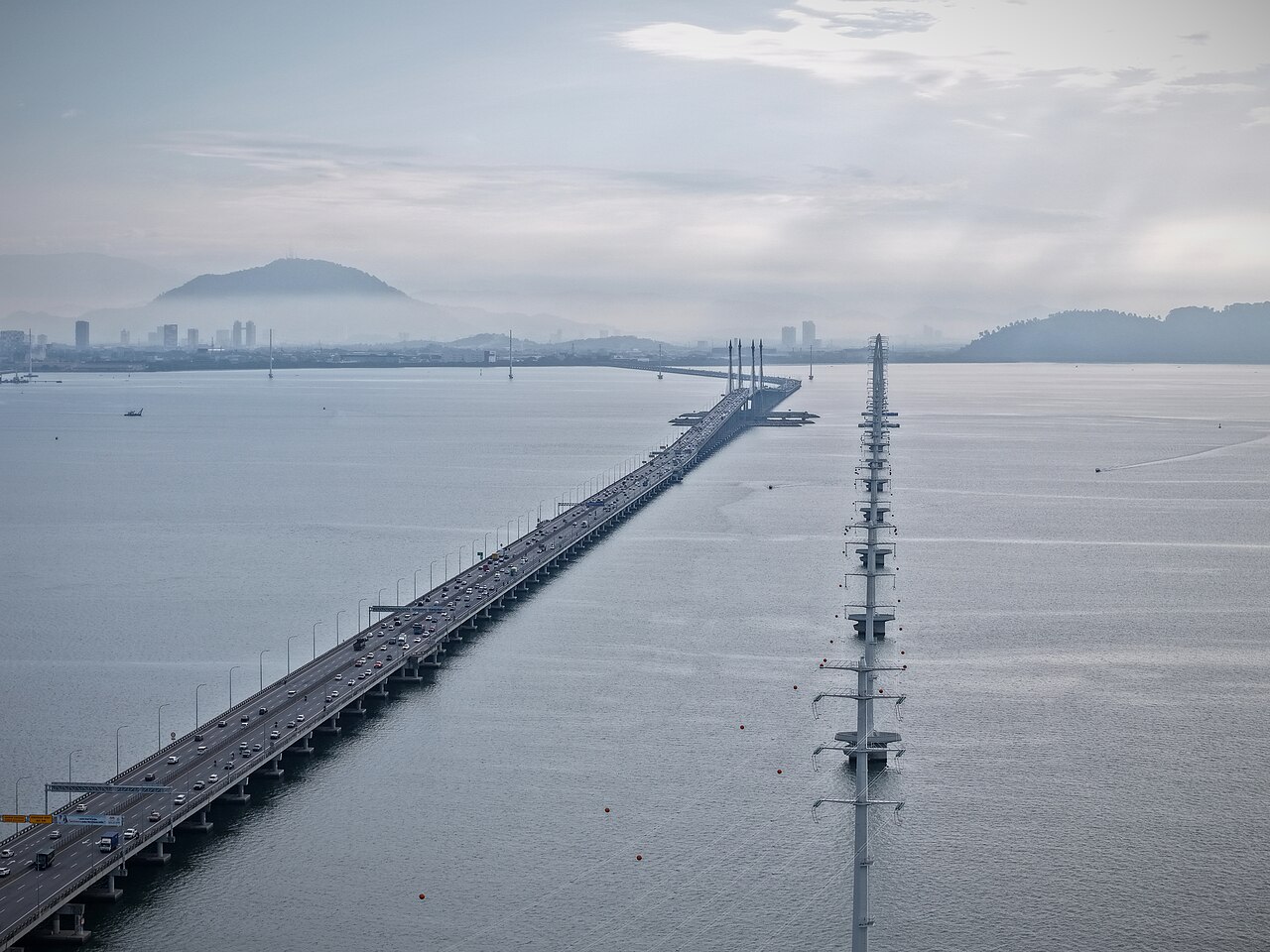
Kuala Lumpur to Penang is 370 km on the North–South Expressway and takes three and a half to four hours in normal traffic. The ETS train covers the same ground in 3 hours 35 minutes for RM66–96, drops you at Butterworth twenty minutes from George Town, and requires no parking, no tolls and no attention.
So the honest first question about a KL to Penang road trip is why you would drive at all. The answer is not the highway — it is everything within thirty minutes of it. Kellie’s Castle, an unfinished Scottish mansion in a Perak rubber estate. Taiping, the wettest town in the country and the most agreeable. The Kinta Valley limestone hills. Kuala Selangor’s fireflies. A dozen roadside stalls selling things you will not find on a train.
This guide gives you the route exit by exit, the actual toll and fuel arithmetic for 2026, an explanation of the Touch ‘n Go system that no rental agency will give you properly, and the specific mechanics of driving in Malaysia as a foreigner — including the fuel subsidy rule that means the pump price you pay is not the price advertised on the news.
The route, exit by exit
The whole journey is one road: the E1, the North–South Expressway, known universally as the PLUS highway after its operator. You join it in the Klang Valley and you leave it at Juru or the Second Bridge. Nothing about the navigation is difficult, but knowing the exit numbers turns a motorway drive into a route with options.
| Exit | Place | Distance from KL | What it opens up |
|---|---|---|---|
| — | Kuala Selangor (via LATAR, not E1) | 70 km | Fireflies at Kampung Kuantan, seafood, Bukit Melawati |
| 132 | Tapah | ~150 km | Cameron Highlands — 59–60 km further, 1.5–2 hr on Route 59 |
| 137 | Simpang Pulai | ~185 km | Second Cameron route; Gunung Lang, Kinta Valley |
| 138 | Ipoh South | ~200 km | Ipoh old town, cave temples, Kellie’s Castle |
| 143 | Kuala Kangsar | ~250 km | Royal town, Ubudiah Mosque, Istana Kenangan |
| 148 | Taiping North | ~270 km | Lake Gardens, Maxwell Hill, the best small town in Malaysia |
| 157 | Second Penang Bridge | ~340 km | Batu Kawan, southern Penang island |
| 162 | Juru | ~355 km | First Penang Bridge, direct to George Town |
One trap worth flagging, because no other guide mentions it: at the Ipoh South toll plaza the road forks, and taking the wrong side sends you past the city entirely with the next turnaround some distance north. Set your navigation to the specific address in Ipoh rather than “Ipoh”, and pay attention in the last kilometre.
What it costs
| Item | One way | Return | Note |
|---|---|---|---|
| PLUS toll, KL → Juru (Class 1) | ~RM36 | ~RM72 | RM35.26 from Damansara, RM37.60 from Sungai Besi |
| First Penang Bridge | RM7.00 | RM7.00 | Charged mainland → island only; leaving is free |
| Second Penang Bridge | RM7.00 | RM7.00 | Reduced from RM8.50 on 1 January 2020 |
| Fuel (740 km round trip) | — | RM155–166 | 1.3L sedan at 5.5–6 L/100 km, RM3.77/litre |
| Car rental | RM120–200/day | — | Perodua Axia at the low end, Myvi at the high |
| Touch ‘n Go card | RM10–20 | — | RM10 empty, or RM10–20 with starting value |
| George Town parking | RM0.60–1.20/hr | — | Street coupons; multi-storey RM2–5 per entry |
A three-day return trip in a small rental works out at roughly RM360 for the car, RM160 for fuel, RM86 in tolls and perhaps RM40 in parking — about RM650 all in, or RM325 each for two people. Two ETS tickets each way would cost RM264–384. The car wins on flexibility, not on price, and only once there are two of you.
Paying tolls: Touch ‘n Go, RFID and the cashless rule
Every toll plaza in Peninsular Malaysia is 100 percent cashless. You cannot pay with notes at any booth on the E1. Your options are a Touch ‘n Go card tapped at the barrier, a SmartTAG in-car device, an RFID sticker linked to the Touch ‘n Go eWallet, or a contactless bank card at plazas that accept it.
For a visitor, the card is the answer. A blank Touch ‘n Go card costs RM10, or RM10–20 with starting value, and is sold at 7-Eleven, Petronas stations, LRT and MRT stations and most convenience shops. Reload it at the same places or at toll plaza kiosks. The same card works on KL’s LRT, MRT and monorail, on Komuter trains and on many city buses, so buy one on arrival regardless of whether you drive.
An RFID tag costs RM35 as a one-off and links to the eWallet app, which requires a Malaysian phone number to register — awkward for short visitors, and unnecessary for a single trip. Most rental cars come with a SmartTAG or RFID already fitted, in which case the tolls are billed back to you; confirm which system the car uses before you drive off, and check whether the card in the holder actually has a balance. Running an empty card at a barrier with a queue behind you is the standard tourist experience on this route.
Fuel: why the price on the news is not your price
This is the part that has changed most recently and the part every older road-trip guide gets wrong.
Malaysia’s BUDI95 scheme fixes RON95 petrol at RM1.99 per litre for eligible Malaysians, subject to a monthly quota. That is the headline figure you will see quoted, and it does not apply to you. Foreign visitors pay the unsubsidised RON95 price, which floats weekly — it was RM3.77 per litre for the week of 20–26 August 2026, having been RM3.62 the week before and RM3.37 in early July. It moves by ten to twenty sen most weeks, so check the current figure before you budget.
One further wrinkle: the unsubsidised RON95 tier is available to non-Malaysians driving Malaysian-registered vehicles, which covers anyone in a local rental car. If you have driven in from Singapore or Thailand in a foreign-registered vehicle, you are restricted to RON97, which costs more again. Renting locally sidesteps the issue entirely.
Practically: a small Malaysian hatchback returns 5.5 to 6 litres per 100 km on the expressway, so the 740 km round trip burns 41 to 44 litres, or about RM155–166 at current unsubsidised prices. Fill up before you join the highway; prices at expressway stations are the same as everywhere else, but the queues at popular R&Rs are not.
Where to stop
Kuala Selangor and the fireflies
Not on the E1 at all — you reach it on the LATAR expressway, 70 km and 60 to 80 minutes northwest of KL — but worth a detour on the first evening. The firefly colonies at Kampung Kuantan, 51 km from the city and about an hour’s drive, put on a display along the mangrove-lined Selangor River that is genuinely startling the first time. Boats run after dark. Combine it with seafood at Pasir Penambang and the hilltop fort at Bukit Melawati. See our fireflies in Malaysia guide for the practicalities and the etiquette — no flash photography, and pick an operator using paddled rather than motorised boats.
Ipoh, the natural halfway point
At roughly 200 km, Ipoh is exactly half the drive and the obvious overnight. The old town is a grid of restored shophouses, the limestone hills around it hold cave temples — Perak Tong, Sam Poh Tong, Kek Look Tong — and the food is a serious rival to Penang’s, with bean sprout chicken, Ipoh hor fun and the white coffee that originated here. Two nights would not be wasted. Our Ipoh travel guide covers it properly.
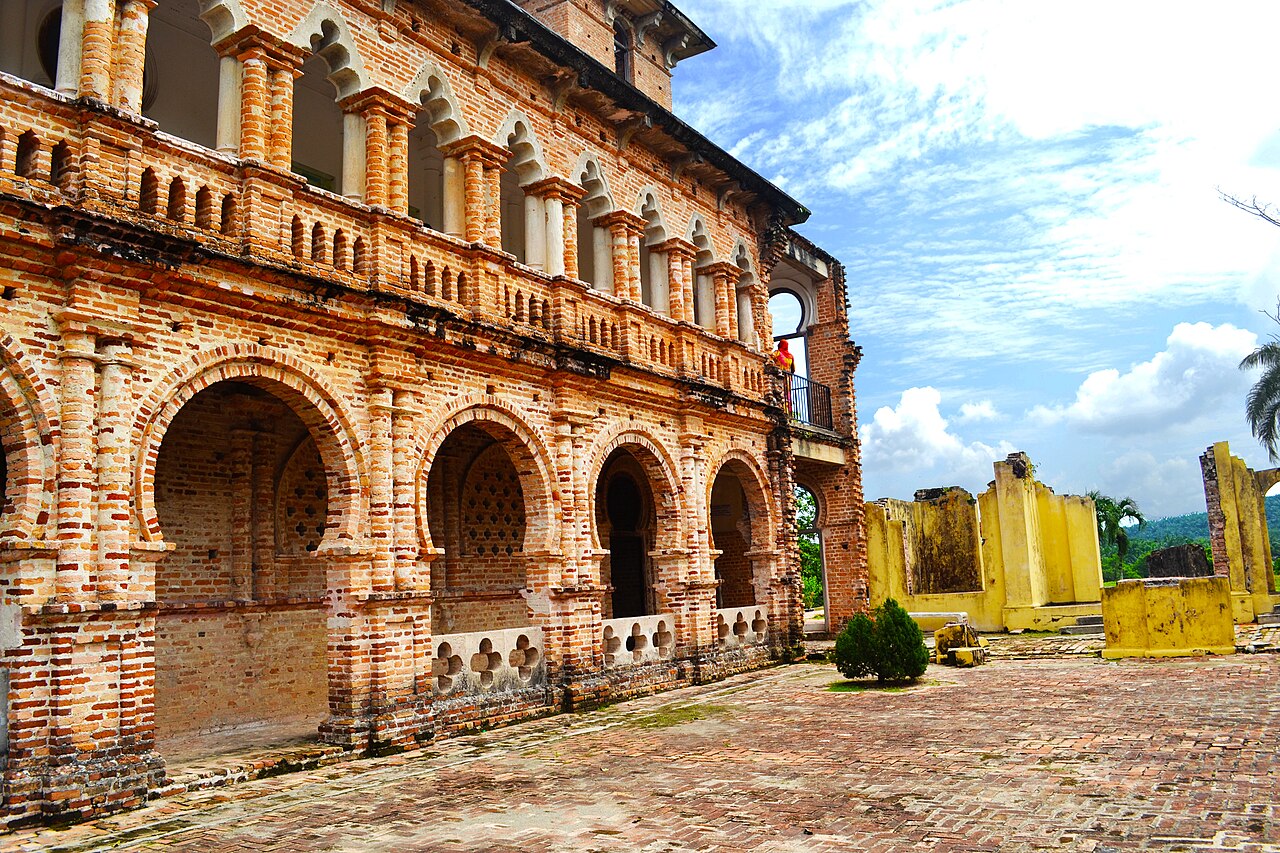
Kellie’s Castle, Batu Gajah
Fourteen kilometres and about thirty minutes south of Ipoh, an unfinished mansion begun in 1915 by a Scottish planter named William Kellie-Smith, abandoned when he died of pneumonia in Lisbon, and left to the jungle. Entry is RM10 for foreign adults and RM8 for children, RM5 and RM3 for Malaysians. It takes forty-five minutes and it is the single most photogenic stop on the whole route. Nearby, the Hindu temple built by Kellie-Smith’s Tamil workers still carries a small statue of him among the deities on the roof.
Taiping
Sixty-nine kilometres and about fifty minutes north of Ipoh, Taiping is the wettest town in Peninsular Malaysia and, partly as a result, the greenest. The Lake Gardens were laid out on a flooded tin mine in 1880 and the rain trees leaning over the water are the most photographed in the country. Malaysia’s oldest museum, oldest railway station and oldest prison are all here. Maxwell Hill (Bukit Larut) above the town is reached by government Land Rover on a road private vehicles cannot use.
Taiping is where the road trip justifies itself. No train stops usefully here, no tour bus comes, and the place is quietly lovely. From Taiping it is 85 to 89 km and about an hour to Butterworth.
The R&R stops
Malaysian expressways have Rehat & Rawat service areas roughly every 50 to 80 km, and they are considerably better than the European equivalent — proper food courts with local stalls rather than fast-food chains. Northbound on the E1 you pass Sungai Buloh Overhead Bridge Restaurant, Rawang, Tanjung Malim and Ulu Bernam, Behrang, Ladang Bikam, Gunung Tempurung, Simpang Pulai, Bukit Gantang, Taiping and Alor Pongsu. Gunung Tempurung sits below a limestone massif and is the most scenic; Tanjung Malim is known for its pau steamed buns.
Two versions of the trip
The two-day dash
Leave KL at 8am, stop at Kellie’s Castle late morning, lunch in Ipoh old town, an hour in Taiping’s Lake Gardens mid-afternoon, and cross the bridge into George Town by six. Two nights in Penang, then drive back in one four-hour run. This is the minimum version and it works, though it turns the outbound into a long day.
The five-day version
| Day | Drive | Night | The day |
|---|---|---|---|
| 1 | KL → Kuala Selangor, 70 km | Kuala Selangor | Bukit Melawati, seafood, fireflies after dark |
| 2 | → Ipoh, ~180 km | Ipoh | Kellie’s Castle, cave temples, old town |
| 3 | → Taiping, 69 km | Taiping | Lake Gardens, museum, Maxwell Hill |
| 4 | → George Town, ~90 km | Penang | Arrive lunchtime; street art, hawker dinner |
| 5 | — | Penang | Kek Lok Si, Penang Hill, Balik Pulau by car |
Five days is where the car earns its keep, because three of those five nights are in places that are awkward to reach any other way. If you have longer, add the Cameron Highlands: turn off at Exit 132 Tapah and climb 59 to 60 km on Route 59, which takes 1.5 to 2 hours of tight switchbacks and is not a road to drive tired or after dark. Our Cameron Highlands guide covers what waits at the top.
Driving in Malaysia: the rules that matter
Malaysia drives on the left, signs are in Malay with international symbols, and the expressway network is genuinely excellent — better surfaced and better lit than much of Europe. It is an easy country to drive in. A few specifics.
Licences. Most nationalities need an International Driving Permit alongside their home licence. Holders of licences from Singapore, Indonesia, Thailand, Myanmar, Laos, Vietnam, Cambodia, Brunei and the Philippines are exempt. Malaysia recognises the 1949 convention IDP, valid for one year. Rental companies typically set a minimum age of 23, though some accept 21 with a young-driver surcharge.
Speed limits and cameras. The default expressway limit is 110 km/h, dropping to 80 or 90 km/h through hilly and urban stretches. The automated enforcement system, formerly AES and now branded AWAS, operates 24 hours a day along the PLUS highway. The standard fine is RM300 plus two to four demerit points for 1–25 km/h over the limit, and the discount campaigns that used to soften these were removed in 2026. A summons goes to the registered keeper, which means your rental company, which means it finds you.
Motorcycles. The single biggest adjustment for foreign drivers. Motorcycles filter constantly, from both sides, in all conditions, and they will appear in your blind spot at speed. Check your mirrors before every lane change and expect to be undertaken. Most expressways have a dedicated motorcycle lane; urban roads do not.
Timing. Avoid Friday afternoons and Sunday evenings, when weekend traffic between KL and the northern states is heavy. Festival periods are worse: during the balik kampung exodus around Hari Raya and Chinese New Year, the KL–Ipoh leg alone can add one to two hours. If your dates fall in those windows, take the train.
Arriving in Penang: which bridge, and where to park
Two bridges cross to the island and they land in very different places. The First Penang Bridge is 13.5 km long, exits at Juru, and delivers you into the built-up south of George Town — the right choice if you are staying in the heritage core. The Second Bridge, formally the Sultan Abdul Halim Muadzam Shah Bridge, is 24 km and the longest in Southeast Asia, exits at Batu Kawan and lands in the island’s south, which is further from George Town but convenient for Penang’s southern beaches and the airport.
Both cost RM7.00 for a Class 1 car, and both charge mainland to island only — the return crossing is free. Leaving Penang, you simply drive off.
Parking in George Town is the genuine drawback of driving. The heritage core is a grid of narrow one-way streets built for bullock carts, and on-street coupon parking runs RM0.60–1.20 an hour with the coupons sold at convenience shops. Multi-storey car parks at KOMTAR and Prangin Mall charge RM2–5 per entry and are the sane option. Better still: park the car for the duration of your Penang stay and walk. The heritage zone is forty minutes end to end on foot, and driving it is actively unpleasant. Our Penang travel guide covers where to base yourself, and the Penang food guide the rest.
Renting the car
Rates in Kuala Lumpur run roughly RM120–200 a day. A Perodua Axia sits at the bottom of that range, a Myvi near the top, and both are more than adequate for a motorway drive with two people and luggage. Aggregators sometimes show lows around USD 15–18 a day, which usually means a basic manual with a high excess.
Four things to check before you drive off. Which toll system the car uses — SmartTAG, RFID or a plain Touch ‘n Go card in the holder — and whether it has a balance. The excess and whether your travel insurance covers it, since the rental desk’s own waiver is usually poor value; our Malaysia travel insurance guide covers what to look for. Whether a one-way drop in Penang is permitted and what it costs, because ending the trip in George Town and flying or training back is often the better shape. And photograph the car properly, all four corners plus the wheels, before you leave the lot.
Grab covers Kuala Lumpur, Ipoh and Penang well enough that you do not need a car within any of those cities, so a one-way rental for the drive itself is often the smartest arrangement.
Extending the drive
Penang is not the end of the road. Three extensions are worth knowing about.
North to Langkawi. Continue on the E1 to Kuala Perlis, about 130 km beyond Penang, and take the ferry — roughly 60 minutes, RM45 for non-Malaysian adults, first boat at 07:00 and the last around 19:00. Kuala Kedah is the alternative crossing at about 90 minutes and RM55. Note that the direct Penang–Langkawi ferry no longer exists; it was suspended during the pandemic and never resumed, despite what a number of route guides still say. Most operators will not allow a rental car onto the ferry, so plan to leave it in secure parking at the jetty. Our Langkawi travel guide covers the island.
East to the Cameron Highlands. Exit 132 at Tapah, then 59 to 60 km of switchbacks on Route 59 taking 1.5 to 2 hours. Simpang Pulai at Exit 137 is the alternative approach, wider and newer, and generally the better road. Either way, do not attempt it after dark or in heavy rain, and do not attempt it at all if anyone in the car is prone to motion sickness.
South to Melaka. Reverse the whole thing and continue past Kuala Lumpur down the E2 for another 145 km. Melaka completes the Straits story that George Town begins — both were inscribed by UNESCO together in 2008 — and driving lets you take the coastal road rather than the expressway for part of it. See our Melaka travel guide, and best places to visit in Malaysia if you are still shaping the trip.
Should you drive at all?
| Mode | Time | Cost (one way, per person) | Best for |
|---|---|---|---|
| Drive | 3.5–4 hr | ~RM110 for two sharing (rental, fuel, tolls) | Stopping en route; two or more people |
| ETS train | 3h35–4h20 | RM66–96 | Comfort, city-centre to city-centre |
| Bus | ~5 hr | From RM37 | Lowest cost; around 300 departures a day |
| Fly | 1 hr in the air, ~3.5 hr door to door | Varies | Nothing, on this route |
Drive if you want Kellie’s Castle, Taiping and Kuala Selangor, or if there are three or four of you and the per-head cost drops accordingly. Take the ETS if Penang is the destination and the journey is just the journey — it is faster than driving once you count the walk to the car park, and Butterworth is twenty minutes from George Town. Do not fly; the airport time cancels the airborne advantage. Our getting around Malaysia guide compares every route in the country.
Frequently asked questions
How long does it take to drive from KL to Penang?
Three and a half to four hours for the 370 km on the E1 North–South Expressway in normal conditions. Add one to two hours on the KL–Ipoh section during festival periods, Friday afternoons and Sunday evenings. With stops at Ipoh and Taiping, treat it as a full day rather than a transfer.
How much are the tolls from KL to Penang?
About RM36 for a Class 1 car from central Kuala Lumpur to Juru — RM35.26 from the Damansara plaza, RM37.60 from Sungai Besi — plus RM7.00 for either Penang bridge. The bridge toll is charged mainland to island only, so the return crossing is free. Total round trip: roughly RM79.
Can tourists buy subsidised RON95 petrol in Malaysia?
No. The BUDI95 subsidised rate of RM1.99 per litre is restricted to eligible Malaysians with a monthly quota. Foreign visitors pay the unsubsidised RON95 price, which floats weekly and stood at RM3.77 per litre for 20–26 August 2026. Note also that the unsubsidised RON95 tier applies to Malaysian-registered vehicles, so a foreign-registered car driven in from Singapore or Thailand must use RON97.
Where do I buy a Touch ‘n Go card and how much does it cost?
At 7-Eleven, Petronas stations, LRT and MRT stations and most convenience shops. A blank card costs RM10, or RM10–20 with starting value loaded. Every toll plaza in Peninsular Malaysia is cashless, so you need one — and it doubles as your ticket on KL’s LRT, MRT, monorail, Komuter trains and many buses.
Do I need an International Driving Permit to drive in Malaysia?
Most nationalities do, carried alongside the home licence. Licence holders from Singapore, Indonesia, Thailand, Myanmar, Laos, Vietnam, Cambodia, Brunei and the Philippines are exempt. Malaysia recognises the 1949 convention IDP, valid for one year. Rental firms usually require drivers to be at least 23, though some accept 21 with a surcharge.
Which Penang bridge should I use?
The First Penang Bridge from Juru if you are staying in George Town — it lands you closer to the heritage core. The Second Bridge from Batu Kawan if you are heading for the airport or the southern beaches. Both cost RM7.00 and both charge in the mainland-to-island direction only.
What are the best stops between Kuala Lumpur and Penang?
Kellie’s Castle near Batu Gajah (RM10 for foreign adults, thirty minutes south of Ipoh), Ipoh itself at the halfway mark, Kuala Kangsar’s royal architecture at Exit 143, and Taiping at Exit 148 for the Lake Gardens. Kuala Selangor’s fireflies are worth an evening but sit off the E1 on the LATAR route. The Cameron Highlands turnoff is Exit 132 at Tapah, with another 59–60 km of mountain road beyond it.
Where to go from here
This drive is the spine of most Malaysian trips, so it fits neatly into a longer plan. Our 7 days in Malaysia itinerary covers the same corridor without a car, and the Malaysia itineraries hub compares every route length. If you want more of Perak than a lunch stop allows, the Ipoh travel guide makes the case for two nights.