3 Weeks in Malaysia: The Ultimate Deep-Dive Itinerary (2026)
Three weeks is the first duration that reaches Taman Negara, Mulu, the Jungle Railway and the east coast mainland. A 21-day route built around what a fortnight forces you to cut.
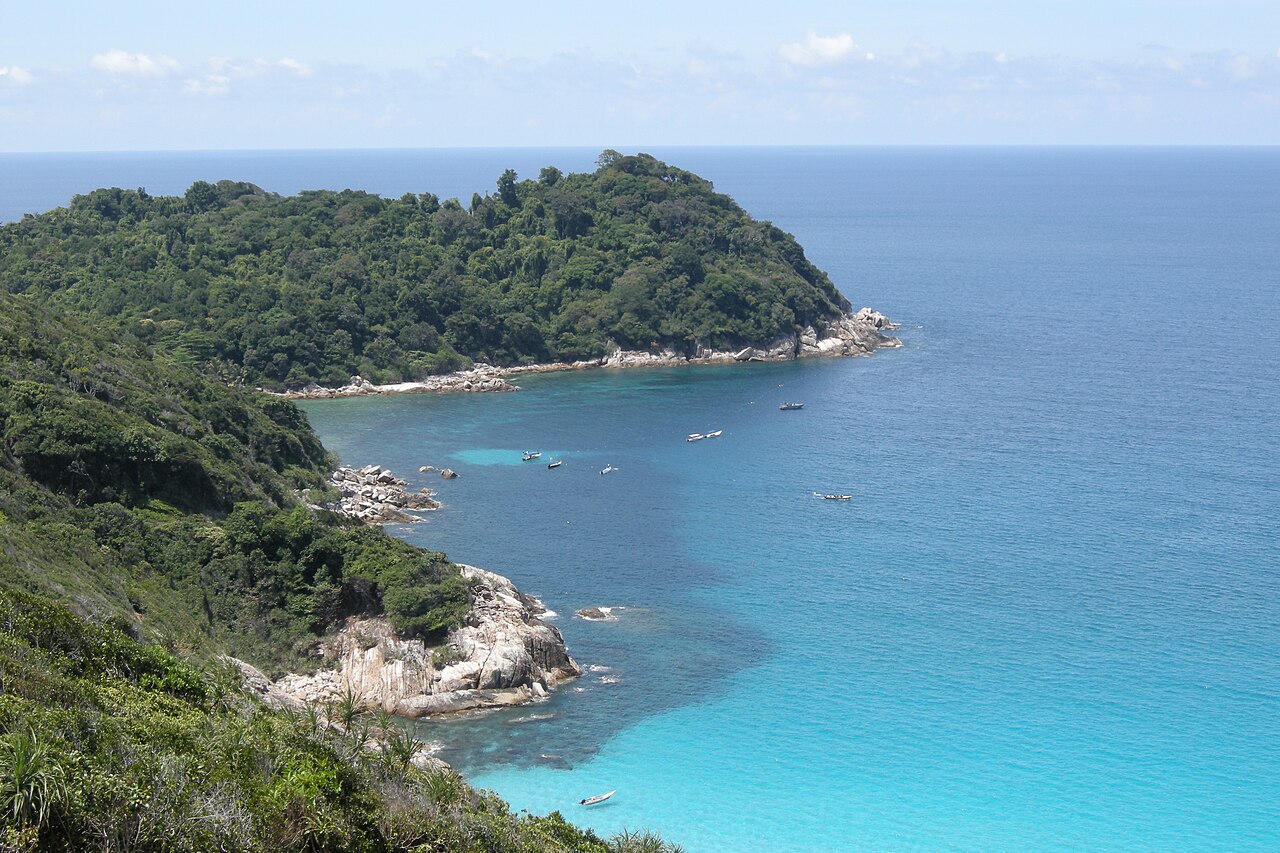
Every two-week Malaysia itinerary ends with a paragraph headed “if you have more time”. This article is that paragraph, expanded and costed.
3 weeks in Malaysia is not two weeks with a longer beach stay. It is the first duration at which a specific set of places becomes reachable: Taman Negara with enough nights to walk into the forest rather than photograph its edge, the caves at Gunung Mulu, the primary rainforest of the Danum Valley, the east coast mainland that everyone treats as a transit corridor, and the overnight Jungle Railway that crosses the interior at walking pace for the price of a hotel breakfast.
Those five things share a characteristic: each needs three nights and a slow approach, which is exactly what a fortnight cannot spare. Three weeks buys you two of them comfortably, or three if you are prepared to move quickly. This guide prices each one, builds a 21-day route around them, and is honest about which are worth the days.
What a fortnight forces you to cut
| Place | Nights needed | Access cost | Verdict on a 21-day trip |
|---|---|---|---|
| Taman Negara | 3 | Bus + boat combo ~RM150; permit RM1 | Take it. Cheapest big experience in the country. |
| Gunung Mulu | 3 | Flight only, from Miri 30 min; RM30 park pass | Take it if you like caves. Weather cancels flights. |
| Danum Valley | 3 | Field Centre 5D4N dorm from RM1,692; lodge far higher | Only if primary rainforest is the point of your trip. |
| East coast mainland | 2 | Bus #639 Kota Bharu–Kuala Besut RM6 | Take it. The most under-visited corner of the peninsula. |
| Jungle Railway | 1 (overnight) | Gemas–Tumpat from RM34 seat, RM40 berth | Take it. 12.5 hours, and the point is the journey. |
| Mount Kinabalu | 3 incl. travel | 2D1N package RM3,190–3,790 | Only if booked months ahead. Permits capped at 163/day. |
| Sipadan | 4–5 | Package only; Advanced Open Water required | A dedicated trip, not an add-on. |
Note the pattern. The three cheapest items on that list — Taman Negara, the east coast and the Jungle Railway — are also the three that a fortnight cuts first, because they are slow rather than expensive. Three weeks is a time budget, not a money budget. Our Malaysia itineraries hub compares this against every shorter option.
The 21-day route
| Days | Where | Nights | Move to get there |
|---|---|---|---|
| 1–3 | Kuala Lumpur & Melaka | 3 | KLIA Ekspres 28 min, RM55 |
| 4–6 | Taman Negara | 3 | Bus/boat via Jerantut, ~RM150 |
| 7 | Jungle Railway overnight | 1 (on board) | Gemas 01:18 → Tumpat 12:54 |
| 8–9 | Kota Bharu & Kelantan | 2 | Local bus from Wakaf Bharu |
| 10–12 | Perhentian Islands | 3 | Bus #639 RM6, boat RM80 return |
| 13–14 | Penang | 2 | Cross-country bus, 7–8 hr |
| 15–21 | Borneo — Sabah or Sarawak | 7 | Fly PEN/KUL → BKI or KCH |
This route runs anticlockwise: down the west coast, into the interior, up the east coast, across the top, then over the sea. It has seven base changes in 21 days, which is close to the sustainable maximum. If that reads as too much movement, the single best edit is to drop Penang to a stopover and give Borneo eight nights.
Days 4–6: Taman Negara, properly
Taman Negara is roughly 130 million years old, which makes it older than the Amazon and, by most reckonings, the oldest tropical rainforest on earth. It is also astonishingly cheap to enter: the park permit costs RM1 per person and a camera licence RM5, both valid for 30 days. Without the camera licence, phone cameras are technically not permitted inside the park, which is the kind of rule nobody mentions until you are at the counter.
Two ways in, and the slow one is better
Everything routes through Jerantut. From there, the road to Kuala Tahan covers 68 km in about an hour and fifteen minutes, with buses from around RM35. The alternative is the river: a two-and-a-half to three-hour longboat from Kuala Tembeling jetty, usually sold as a bus-and-boat combination that ran at RM140 and rose to RM150 from 1 April 2026.
Take the boat. On a two-week trip the extra ninety minutes is an unaffordable luxury; on a three-week trip it is the arrival the place deserves, sliding upriver between walls of forest with kingfishers going ahead of you. Once at Kuala Tahan, the little boats crossing to the park headquarters cost RM2, and gated parking in the village runs RM15 a day if you have driven.
What three nights buys
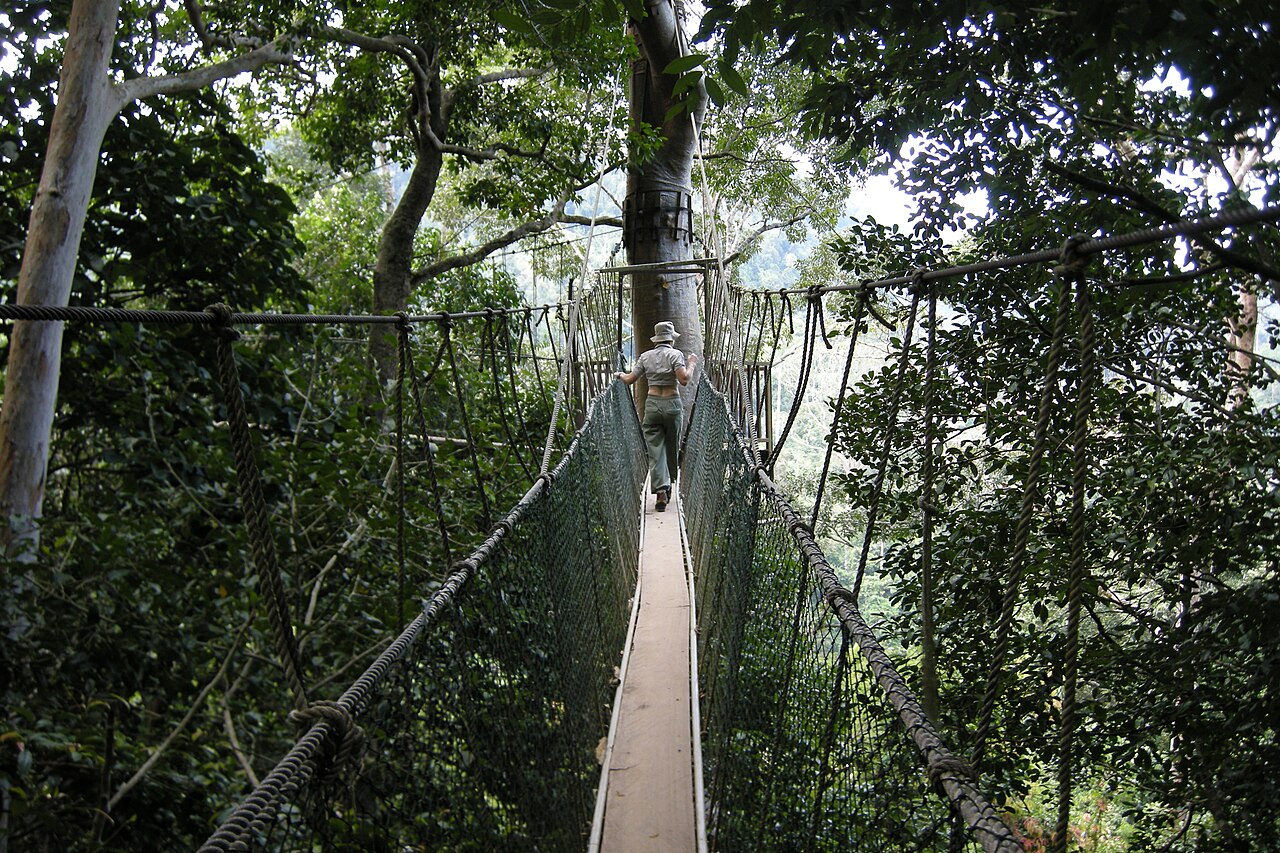
One night gets you the canopy walkway and a boat ride. Three nights gets you the Bukit Teresek climb at dawn, a night jungle walk, a hide overnight at Bumbun Kumbang where tapir and deer come to the salt lick, rapids-shooting at Lata Berkoh, and a visit to an Orang Asli settlement where the blowpipe demonstration is genuine rather than staged. A new canopy walk at Seberang Ara opened on 22 June 2026, adding a second aerial route to the original.
Expect leeches, expect rain, and expect not to see a tiger — Malayan tigers are down to perhaps 150 individuals nationwide and the odds are effectively nil. What you will see is a forest that functions, which is rarer than it sounds. Our Taman Negara guide covers the trails and lodgings in detail, and jungle trekking in Malaysia sets out what to carry.
Day 7: the Jungle Railway
The East Coast Line, universally called the Jungle Railway, runs from Gemas in Negeri Sembilan north through the interior to Tumpat near the Thai border. Service ERT 26 leaves Gemas at 01:18 and arrives at Tumpat at 12:54 — about twelve and a half hours, most of it through forest, plantation and small kampung stations where people get on with baskets of vegetables.
Fares from Gemas to Tumpat are RM34 for a superior seat, RM40 for a superior night berth and RM88 in premier class. Forty ringgit — about ten US dollars — for a bed on a train crossing the peninsula overnight is one of the best-value journeys in Southeast Asia, and it is completely absent from every competing three-week itinerary.
Two practical notes. The 01:18 departure is genuinely inconvenient and you will want a night in Gemas beforehand or a very long evening. And the line is a working local railway, not a tourist experience — there is no observation car, the catering is minimal, and delays are routine. Bring food and low expectations, and it will be one of the days you remember. See our getting around Malaysia guide for how it connects to the rest of the network.
Days 8–12: the east coast nobody visits
Kelantan and Terengganu are the most culturally distinct states on the peninsula: conservative, Malay-majority, with a dialect that KL taxi drivers struggle with and a craft tradition — batik, songket weaving, kite-making, shadow puppetry — that survives as living practice rather than museum display. Almost every itinerary treats Kota Bharu as a bus change on the way to the islands.
Give it two nights. The central market is the best in Malaysia and is run almost entirely by women; the Istana Jahar and the handicraft village are genuinely worth the entry; and the food — nasi kerabu, nasi dagang, ayam percik — is different enough from west coast Malay cooking to feel like another country. Bear in mind that Kelantan is dry, that Friday rather than Sunday is the weekend rest day across Kelantan, Terengganu, Kedah and Johor, and that dress standards are noticeably more conservative. Our Kuala Terengganu and east coast guide covers the region, and Malaysian cultural etiquette is worth reading before you go.
Getting to the Perhentians
Bus #639 runs from Kota Bharu to Kuala Besut for RM6 — about ninety minutes, eleven departures a day between 06:15 and 18:30. A Grab covers the same ground in just over an hour from around RM80. From Kuala Besut the return speedboat to the Perhentians costs RM80 for adults and RM50 for children and takes 40 to 45 minutes, plus a marine park conservation charge of RM30 for foreigners and RM5 for Malaysians, paid at the jetty before you board.
Three nights on Perhentian Kecil or Besar is the right length: enough for two proper snorkel trips, a day of doing nothing, and the walk over the headland between beaches. The water here is the clearest in Malaysia and the reason the east coast is worth the detour. Read the Perhentian Islands guide, and snorkelling in Malaysia for where the good sites are.
The absolute seasonal rule
The northeast monsoon runs from November to March on this coast, and it does not mean rain — it means closure. Perhentian resorts typically shut in early November and reopen between late February and mid-March. Redang and Tioman follow the same pattern. Boats stop, resorts board up, and no operator will take you across.
If your three weeks fall between November and February, invert the route: run the west coast from Melaka up through Ipoh, Penang and Langkawi, keep Taman Negara (which is open year-round though wetter), and give Borneo the full week. Do not build a plan around east coast islands in December. Our best time to visit Malaysia guide sets out the month-by-month picture.
Days 15–21: one week in Borneo, and you must pick a state
This is the decision no competing itinerary frames properly. Sabah and Sarawak are separate corners of the third-largest island on earth, with their own flight networks and about 800 km between their capitals. In one week you do one of them.
| Sabah | Sarawak | |
|---|---|---|
| Gateway | Kota Kinabalu, 2:35 from KL | Kuching, ~1:51 from KL, from RM206 |
| Wildlife | Sepilok, Kinabatangan, Danum — the densest in Malaysia | Semenggoh, Bako — good, more dispersed |
| Headline experience | Mount Kinabalu, Sipadan | Gunung Mulu caves |
| City | Kota Kinabalu — functional, great sunsets | Kuching — the most attractive city in Malaysia |
| Food | Seafood, night markets | Sarawak laksa, kolo mee, Dayak cooking |
| Best for | Animals | Caves, culture and a city worth lingering in |
Choose Sabah if you came for wildlife. A week runs Kota Kinabalu, Sepilok, two nights on the Kinabatangan and a night at Kinabalu Park, and it delivers more animals per day than anywhere else in the country. Kinabatangan lodge packages start around RM610 per person for a three-day, two-night dorm stay including cruises and meals, with twin deluxe rooms from around RM1,075. Our Borneo itinerary builds the full week.
Choose Sarawak if you came for caves and culture. A week runs Kuching, Bako National Park, Semenggoh and three nights at Gunung Mulu — and Mulu is the strongest three-week-only addition in Malaysia.
Gunung Mulu, and the fees that changed in 2026
Mulu is a UNESCO World Heritage Site holding the largest cave chamber in the world by area and a nightly exodus of two to three million bats from Deer Cave. It is reachable only by air, on 64-seat turboprops: 30 minutes from Miri, 55 minutes from Kota Kinabalu, 1 hour 20 from Kuching. The park warns openly that weather cancels flights, so do not book a tight onward connection.
The compulsory five-day park pass costs RM30 for foreign adults, RM10 for foreign children aged 6 to 18 and RM15 for Malaysians; stays beyond five days need a second ticket. From 1 February 2026 the park added conservation fees: RM20 per visitor using a freelance guide or tour operator, RM10 for the Camp 5 sustainability fee, and RM15 for the Summit and Headhunters Trail. One more thing that breaks old booking links — MASwings became AirBorneo on 2 January 2026 under Sarawak state ownership. See our Mulu National Park guide and caving in Malaysia.
Danum Valley: the honest assessment
Danum Valley is 438 square kilometres of undisturbed lowland dipterocarp forest in eastern Sabah — the real thing, never logged, with clouded leopards and Sumatran rhino habitat. It is also expensive and logistically stiff, which is why it belongs in a three-week conversation rather than a two-week one.
Borneo Rainforest Lodge, the luxury option, starts around RM5,370 per person for three days and two nights on a two-person basis, rising to about RM9,060 for five days and four nights. The Danum Valley Field Centre is the budget route at around RM1,692 per person for a five-day, four-night dormitory stay, and Infapro runs four-day, three-night stays from about RM1,300. Add RM10 per room per night in tourism tax.
The detail that silently breaks DIY plans: the Field Centre sits about 80 km from Lahad Datu on 2 to 2.5 hours of gravel road, entry is restricted to permit-registered vehicles so you cannot self-drive, and the shuttle runs only on Mondays, Wednesdays and Fridays. Your dates have to fit the shuttle, not the other way round. Our Danum Valley guide has the full picture.
The Sarawak week, day by day
If you take the Sarawak option, the week has an obvious shape. Two nights in Kuching to walk the waterfront, eat Sarawak laksa for breakfast and visit the Borneo Cultures Museum. A day trip to Bako National Park, where entry costs RM20 for foreign adults and RM7 for children, and the boat from Kampung Bako runs about RM40 return per person shared or roughly RM100 each way for a whole boat of up to five — Bako is the most reliable place in Malaysia to see proboscis monkeys, and the trails are genuinely good. A morning at Semenggoh Wildlife Centre, 24 km from the city, at RM10 for foreign adults and RM5 for children, open 08:00–10:00 and 14:00–16:00 with feedings around 09:00 and 15:00. Then three nights at Mulu, flying via Miri.
Semenggoh comes with the same caveat as Sepilok: its orangutans are semi-wild and genuinely do skip the feeding platform when the forest is fruiting. Two visits over two days roughly doubles your odds, and Kuching is a pleasant enough base that the extra morning costs you nothing. Our Kuching travel guide and Bako National Park guide cover both in detail.
Practicalities that only matter on a long trip
Three weeks changes a few things that a one-week visitor never has to think about.
Laundry becomes a scheduling problem. Self-service laundrettes are everywhere in Malaysian towns and cost a few ringgit a load, but Taman Negara, the Kinabatangan and Mulu have no reliable service and high humidity means nothing air-dries. Do a wash in Kota Bharu or Penang before you head into forest, not after.
Cash planning matters more. Malaysia is well banked in cities and effectively unbanked in the places this itinerary sends you. Sepilok’s ticket counter takes cash only and has no ATM. Sukau on the Kinabatangan has no ATM. Mulu has no ATM. Draw RM800–1,000 in Sandakan, Kota Kinabalu, Miri or Kuching before you go inland, and carry small notes — see our Malaysia currency guide.
Connectivity drops in the interior. Coverage is excellent along the highways and in every city, patchy in Taman Negara, and effectively absent at most Kinabatangan lodges and inside Mulu park. Download offline maps and your onward tickets before each forest leg. The Malaysia SIM card guide compares the operators.
Your packing list is doing two jobs. Three weeks that includes rainforest, an island and a hill station needs long sleeves, closed shoes, a dry bag, DEET repellent and something warm for Kundasang or Cameron at night, alongside the swimwear. Leech socks cost a few ringgit in Malaysia and are worth buying on arrival rather than at home. See what to pack for Malaysia.
The other way to spend three weeks: slow down instead
Everything above assumes you want to add places. There is a respectable alternative, which is to take the standard two-week route and simply stop rushing it.
Four nights in George Town rather than two changes what Penang is. You stop ticking off the street art and start noticing that the clan jetties are homes, that the Indian Muslim nasi kandar shops have queues at different hours than the Chinese hawker stalls, and that Balik Pulau on the far side of the island is a different island entirely. Five nights on an east coast island stops being a beach holiday and becomes a routine. A week in Kuala Lumpur, which nobody recommends, is how you find the neighbourhoods — Kampung Baru, Brickfields, Bangsar — that the two-day itinerary skips entirely.
There is a practical argument too. Longer stays in one place mean fewer transfer days, fewer taxis, less packing, and often better nightly rates, since many guesthouses and apartment hosts discount weekly stays. The three-week traveller who visits six places and the one who visits eleven spend roughly the same money; the first one has a better time.
The version we would actually recommend to a first-time visitor with 21 days: three nights KL, three Taman Negara, the Jungle Railway, two Kota Bharu, four Perhentians, three Penang, and a final week in Sabah. Seven bases in three weeks, four of them long enough to unpack.
What three weeks costs
Per person, excluding international flights. The ringgit is around RM4.2 to the US dollar in mid-2026.
| Item | Backpacker | Mid-range | Comfortable |
|---|---|---|---|
| Accommodation (20 nights) | RM900 | RM3,000 | RM6,500 |
| Food | RM840 | RM1,680 | RM3,150 |
| Internal flights (2–3) | RM700 | RM900 | RM1,400 |
| Ground transport, trains, boats | RM600 | RM800 | RM1,200 |
| Taman Negara (3 nights, activities) | RM400 | RM700 | RM1,200 |
| Borneo wildlife package | RM650 | RM1,400 | RM3,000 |
| Permits, park fees, tours | RM300 | RM600 | RM900 |
| Tourism tax (RM10/room/night) | RM200 | RM200 | RM200 |
| Total | ~RM4,590 | ~RM9,280 | ~RM17,550 |
Mid-range travellers in Malaysia typically run RM200–350 a day all in, and solo travellers eating at hawker stalls commonly land at RM180–300. Borneo pushes that up by roughly a third. Note that the backpacker column above still includes a Borneo week — cutting Borneo entirely brings a three-week peninsula trip in around RM3,200, which is a remarkable amount of travel for under USD 800. Our Malaysia travel budget guide breaks it down further.
One line item to plan for: the tourism tax of RM10 per room per night applies to foreign passport holders at licensed accommodation nationwide, is charged per room rather than per person, and is usually collected in cash at check-in. Over twenty nights that is RM200 you did not budget.
What still does not fit in 21 days
- Both Sabah and Sarawak. Two flights, two networks, 800 km apart. Even at three weeks, doing both means four nights in each and a lot of airports.
- Mount Kinabalu without months of notice. Permits are capped at 163 per day, packages are mandatory at RM3,190–3,790 for non-Malaysians on the 2D1N, and bookings are non-refundable with one date change allowed per year. It is not a decision you make in-country.
- Sipadan without a dive plan. Advanced Open Water certification has been required since October 2022, permits come only through licensed operators, and most resorts want a three-night minimum. The island also closes for the whole of November 2026.
- Mulu and Danum in the same trip. Different states, both requiring three nights and awkward access. Pick one piece of primary forest.
- Singapore, Thailand or Borneo’s Indonesian side as bolt-ons. Each is a border, a visa consideration and two travel days.
Frequently asked questions
Is 3 weeks enough time for Malaysia?
Three weeks covers the peninsula thoroughly plus one full week in either Sabah or Sarawak, with room for two of the slow, high-value destinations a fortnight cuts — typically Taman Negara and either Mulu or the east coast. It is not enough for both Borneo states, and it is not enough for Mount Kinabalu or Sipadan unless you booked those months in advance.
Can you visit both Peninsular Malaysia and Borneo in 21 days?
Comfortably. Fourteen days on the peninsula and seven in Borneo is the natural split, using a single internal flight of about 2 hours 35 minutes to Kota Kinabalu or 1 hour 51 minutes to Kuching. Booking an open-jaw international ticket — in to Kuala Lumpur, out of Kota Kinabalu or Kuching — saves you a full day of backtracking and usually costs the same.
How much does 3 weeks in Malaysia cost?
Excluding international flights, roughly RM4,590 per person (about USD 1,090) as a backpacker including a Borneo week, RM9,280 (about USD 2,210) mid-range, and RM17,550 or more at a comfortable standard with wildlife lodges. A peninsula-only three weeks on a backpacker budget comes in nearer RM3,200.
Should you go to Sabah or Sarawak with only one week in Borneo?
Sabah for wildlife — Sepilok, the Kinabatangan and Kinabalu Park in one tight circuit deliver more animals per day than anywhere else in Malaysia. Sarawak for caves, culture and a genuinely lovely capital, with Kuching, Bako, Semenggoh and three nights at Gunung Mulu. Trying to do both in a week produces two travel days and half of each.
Is Taman Negara worth it on a 3-week itinerary?
Yes, and it is the best value on the list. The permit costs RM1, the bus-and-boat access runs about RM150, and three nights gets you a dawn summit walk, a night safari, an overnight hide and a river trip. It is also the destination most likely to be cut from a shorter trip, which means you will be sharing it with fewer people than you would expect.
Are the Perhentian Islands open in December and January?
No. Resorts typically close in early November and reopen between late February and mid-March, with boat services suspended through the northeast monsoon. Redang and Tioman follow the same pattern. If your trip falls in that window, run the west coast instead — Langkawi and Penang are unaffected.
What is the best month for a 3-week Malaysia trip?
March to May and July to September. Both windows give you open east coast islands, navigable rivers in Sabah and the best of the diving season, without the heaviest rain on either coast. Avoid building around Chinese New Year or Hari Raya Aidilfitri unless you want to see them, because domestic transport sells out weeks ahead and fares rise sharply.
Do you need a visa for 21 days in Malaysia?
Most Western passport holders get 90 days visa-free, so 21 days is well inside the allowance, with six months of passport validity required. The free Malaysia Digital Arrival Card must still be filed online within three days before arrival. Note also that Sabah and Sarawak issue their own state visit passes on arrival, so carry your passport on internal flights. See our Malaysia visa requirements guide.
Where to go from here
If three weeks is aspirational and two is what you have, the 2 weeks in Malaysia itinerary shows the cleanest version of the split. If you are travelling on a tight budget and thinking in months rather than weeks, the Malaysia backpacking route covers the overland corridor from the Thai border to Singapore with hostel and bus costs. And if the Borneo week is the part you want to expand, our Borneo itinerary builds 7, 10 and 14-day versions.
Three weeks is the length at which Malaysia stops being a country you visited and becomes one you know slightly. It is worth the extra week.