UNESCO World Heritage Sites in Malaysia: All 6, Ranked and Costed (2026)
Google's page one says four, five, six and seven. The answer is six, two of them inscribed since 2024. Every site with 2026 entry fees, days needed and an honest verdict.
Ask Google how many UNESCO World Heritage Sites in Malaysia there are and page one will hand you four different answers. “Four” appears. So does “five”. So does “seven”. One heavily shared guide counts Langkawi among them, which is wrong in a specific and instructive way. The correct number, as of August 2026, is six.
The confusion has a cause. Two of the six were inscribed inside the last twenty-five months: the Niah Caves Complex in Sarawak on 27 July 2024, and FRIM Selangor Forest Park at Kepong on 11 July 2025. Most travel pages were written before either existed on the list and nobody has gone back to update them. If a guide tells you Malaysia has four sites, it was accurate in 2023 and has been quietly wrong ever since.
The other thing nobody tells you is where they are. Two sit in Sarawak, one in Sabah, three on the peninsula. That is a fundamental planning constraint, not trivia. Seeing all six is a two-flight, roughly three-week proposition with a five-figure ringgit budget if you climb anything — it is not a drive. Below: every site with its inscription year, its 2026 entry cost for a foreign adult, how long it actually takes, and an honest verdict on whether it earns a dedicated trip or is something you tack onto a route you were taking anyway.
All six sites at a glance
| Site | State | Inscribed | Type | Entry, foreign adult (2026) | Days needed |
|---|---|---|---|---|---|
| Kinabalu Park | Sabah | 2000 | Natural | RM 50 conservation fee (about US$12); RM 400 more to climb | 1 day, or 2–3 with the summit |
| Gunung Mulu National Park | Sarawak | 2000 | Natural | RM 30 (about US$7), 5-day pass, plus per-cave fees | 3–4 days |
| Melaka and George Town, Historic Cities of the Straits of Malacca | Melaka and Penang | 2008 (boundary modified 2011) | Cultural, one serial property in two cities | Free to walk; museums charge separately | 2 days each city |
| Archaeological Heritage of the Lenggong Valley | Perak | 2012 | Cultural | No gate on the valley; gallery admission nominal — confirm on arrival | 1 day |
| Niah National Park Caves Complex | Sarawak | 27 July 2024 | Cultural | Standard Sarawak parks fee; open status unconfirmed — call +60 85-737 454 first | 1 day |
| FRIM Selangor Forest Park | Selangor | 11 July 2025 | Cultural landscape | RM 5 (about US$1.20), car RM 5 | Half a day |
Melaka and George Town (2008): the site most people only half-visit
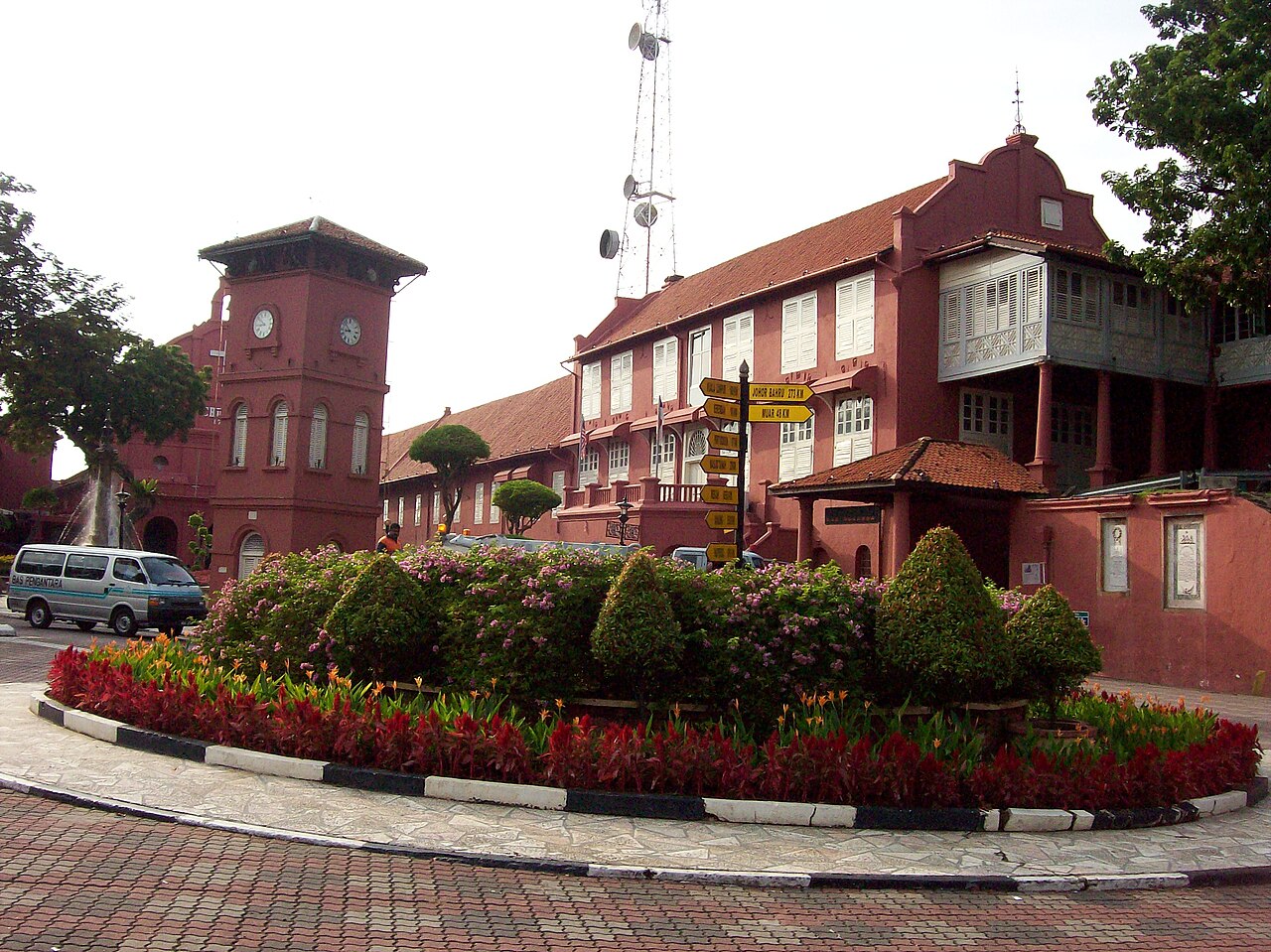
This is Malaysia’s most visited World Heritage property and the one most consistently misunderstood. It is one inscription — number 1223 on the World Heritage List, “Melaka and George Town, Historic Cities of the Straits of Malacca” — covering two cities 400 km apart. Fly into Penang, spend two days photographing shophouses, and you have seen roughly half of a single site. The listing was made under criteria (ii), (iii) and (iv): the two towns together document 500 years of trade between East and West, and neither half makes the case alone.
The core zone across both cities totals 154.68 hectares, with a further 392.8 hectares of buffer. George Town carries the larger share: 109.38 hectares of core and 150.04 hectares of buffer, containing 5,013 surveyed buildings, 37 places of worship and 82 Category I structures — the ones that cannot be altered externally at all. Melaka’s core is correspondingly smaller and denser, wrapped around the river and the Dutch square.
What that means on the ground: the heritage bit is a defined set of streets, not the whole city. In George Town it is the grid roughly bounded by the sea, Jalan Transfer and the old fort — Armenian Street, Lebuh Acheh, Lebuh Chulia, Love Lane, Lebuh Pantai. Walk twenty minutes inland and you are in ordinary Malaysian suburbs with the same 7-Elevens as anywhere else. Our full Penang planning guide maps the streets that are inside the line, which matters more than it sounds when you are choosing a hotel.
An 18 m height cap — five storeys — has applied across both the core and buffer zones since inscription in 2008. It is the single most visible piece of the listing and the reason the skyline behind you in every photograph is low. It also explains the hotel situation: there are no towers inside the zone, so heritage accommodation is small, converted and booked out months ahead. If a hotel advertises “heritage views” from the fourteenth floor, it is by definition outside the site.
Which half should you do if you only have time for one?
George Town, on almost every axis. The core zone is bigger, the built fabric is more intact, the food is better by a distance, and there are more days of walking in it before repetition sets in. Melaka is more compact and can be genuinely oppressive at weekends, when domestic day-trippers and the trishaw sound systems arrive together; go midweek and it is a different town. The Melaka side of the property rewards two unhurried days and punishes a rushed Saturday.
The through-line connecting both is the Baba-Nyonya community, whose townhouses, cuisine and ancestral halls are much of what the inscription is actually protecting. Reading up on Peranakan history before you go changes what you notice — the shophouse facades stop being pretty and start being legible.
Verdict: yes, worth a dedicated trip — but as one trip covering both halves, not two separate visits. Budget four days total plus the four-hour road transfer, and you have properly seen the site rather than half of it.
Gunung Mulu National Park (2000): the expensive one, and worth it
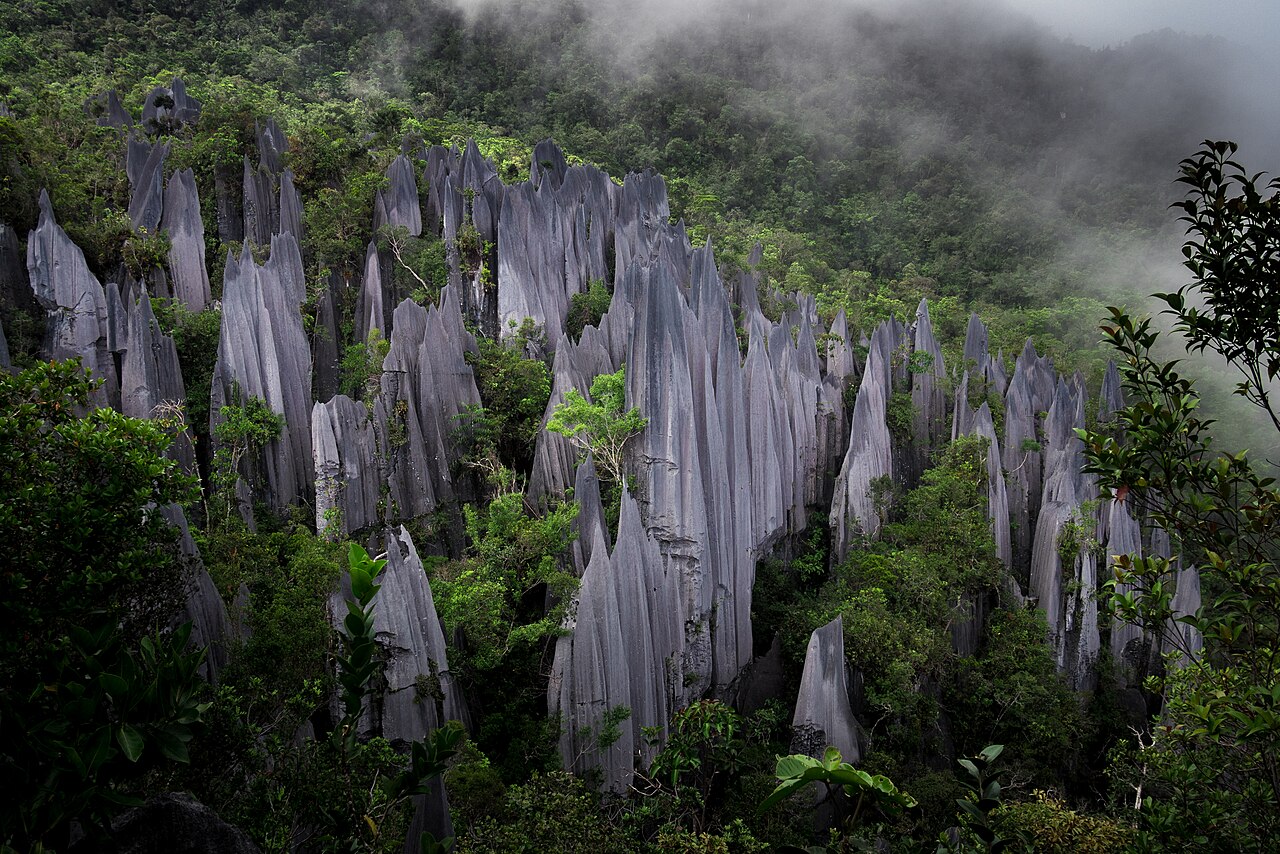
Mulu was inscribed in 2000 on all four natural criteria, which almost nothing on Earth manages. The headline numbers are the caves: Deer Cave’s passage, the Sarawak Chamber’s floor area, and the evening bat exodus when several million wrinkle-lipped bats spiral out in ribbons that hold their shape for twenty minutes. The Pinnacles — 45 m limestone blades on Gunung Api — are the other reason people come, and they are a serious climb, not a viewpoint.
The thing to understand about Mulu is that the park entry fee is trivial and everything else is not. RM 30 (about US$7) buys a foreign adult a five-day pass. Then every cave, every walkway and every trail carries its own charge, and from 1 February 2026 a new set of guided-visitor fees applies on top. Add flights — Mulu has no road — and a three-night stay lands somewhere between RM 900 and RM 2,000 per person depending on whether you attempt the Pinnacles.
| Mulu 2026 charge | Foreign adult | Approx. US$ | Notes |
|---|---|---|---|
| Park entry (5-day pass) | RM 30 | US$7 | Malaysian rate RM 15 |
| Guided visitor fee (from 1 Feb 2026) | RM 20 | US$5 | New charge, applies to guided activities |
| Camp 5 fee (from 1 Feb 2026) | RM 10 | US$2.40 | Overnight base for the Pinnacles |
| Summit / Headhunters’ Trail fee (from 1 Feb 2026) | RM 15 | US$3.60 | New charge |
| Deer Cave + Lang Cave | RM 35 | US$8 | Includes the bat exodus viewing area |
| Clearwater Cave + Wind Cave | RM 70 | US$17 | Reached by longboat |
| Canopy Walk | RM 55 | US$13 | 480 m of suspended walkway |
| Sarawak Chamber | RM 315 | US$75 | Adventure caving, fitness screening applies |
| Pinnacles 3D2N package | around RM 465 | around US$111 | The park’s own page also quotes RM 451 — confirm the figure when you book |
| Pinnacles, solo climber | RM 1,057 | US$252 | Price for a single climber with no group to share the guide |
| Flight from Miri (AirBorneo) | from RM 90 | from US$21 | Kota Kinabalu from RM 181, Kuching from RM 219 |
| Tourism tax | RM 10 per room per night | US$2.40 | Foreign guests only; published rates already include 8% SST |
Two cost traps. First, the solo-climber Pinnacles rate of RM 1,057 (about US$252) is not a penalty so much as the true cost of a guide when nobody splits it — join a group and you are back near RM 465. Second, if you are staying at the Mulu Marriott, a high-season surcharge of RM 120 per room per night (about US$29) applies from 1 July to 30 September 2026. That is RM 360 on a three-night stay, which is more than the entire Pinnacles package.
Getting there has also changed, and this is the second thing every older guide gets wrong. Mulu flights are now sold by AirBorneo, not MASwings. Searching the old carrier returns nothing useful and people conclude the route is gone. It is not. Fares start from RM 90 (about US$21) out of Miri, RM 181 (about US$43) from Kota Kinabalu and RM 219 (about US$52) from Kuching. Book the flight before the accommodation: aircraft are small, seats sell out, and there is no alternative overland.
Our dedicated Mulu guide goes deeper on which caves to pick if you only have two full days, and if you are weighing Mulu against the country’s other limestone systems, the comparison of Malaysia’s cave destinations is the faster way to decide. Most itineraries route through Kuching first, which is the sensible way to build the Sarawak leg.
Verdict: yes, unambiguously. Mulu is the one site on this list that justifies a long-haul flight on its own. It is also the one where skimping ruins the trip — two nights is not enough, and the Pinnacles at the end of a rushed schedule is how people end up turning back at the ladders.
Kinabalu Park (2000): a World Heritage Site you can visit without climbing anything
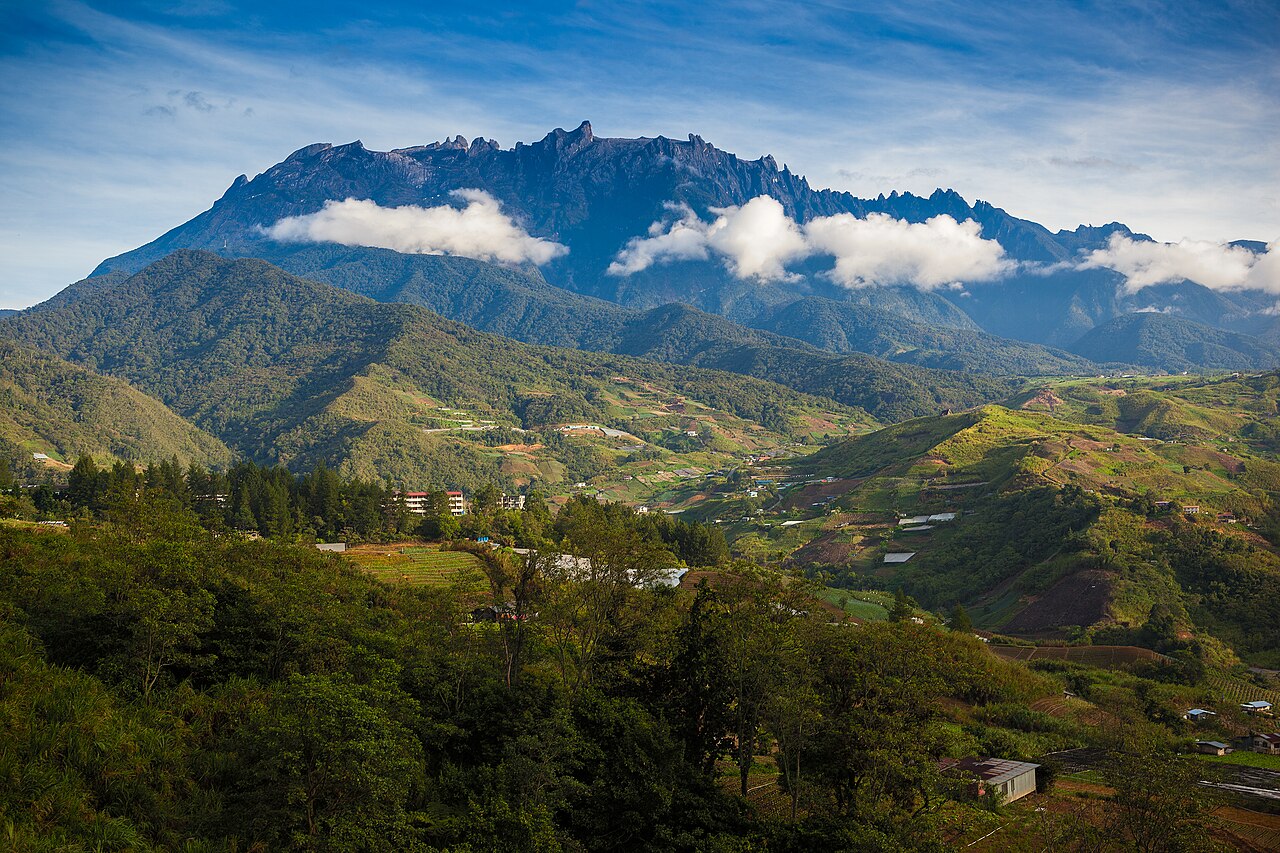
Malaysia’s first World Heritage inscription, listed the same year as Mulu, for biodiversity rather than the mountain itself. The 4,095 m summit gets the attention, but the inscription rests on the altitudinal sequence — lowland dipterocarp forest through montane oak and conifer to sub-alpine scrub — and the extraordinary endemism that comes with it. You do not need a permit, a guide or any fitness at all to visit the park. You need RM 50.
That distinction is worth labouring, because most coverage conflates “visiting Kinabalu Park” with “climbing Mount Kinabalu” and puts people off. The park headquarters at 1,563 m has a network of level nature trails, a botanical garden and the Liwagu trail, all of which are inside the World Heritage boundary. A day here from Kota Kinabalu costs about RM 100 (about US$24) all in including transport, and you have legitimately visited the site.
| Kinabalu Park 2026 charge | International | Malaysian | Approx. US$ (international) |
|---|---|---|---|
| Conservation fee, adult | RM 50 | RM 10 | US$12 |
| Conservation fee, child | RM 25 | RM 5 | US$6 |
| Climbing permit | RM 400 | RM 100 | US$95 |
| Mountain guide (mandatory) | RM 350 | RM 350 | US$83 |
| Climber insurance | RM 10 | RM 10 | US$2.40 |
| 2D1N Panalaban package | RM 1,043.25 | — | US$248 |
| Beds released per day | 50 total — Panalaban 30, Lemaing 20 | The real bottleneck | |
The number that governs everything is fifty. Sabah Parks releases 50 mountain beds a day — 30 at Panalaban, 20 at Lemaing — and no bed means no climb, regardless of what you are willing to pay. In practice you are booking four to six months ahead for peak months. You will see “163 permits a day” repeated across the internet; that figure does not appear on any official page and you should not plan around it.
Stack the climbing costs and a summit attempt is RM 400 permit plus RM 350 guide plus RM 10 insurance plus the RM 1,043.25 two-day Panalaban package plus the RM 50 conservation fee — comfortably over RM 1,850 (about US$440) per person before transport. The full trekking breakdown covers acclimatisation, the via ferrata add-on and what actually goes wrong on summit morning. For the park itself, including the trails you can walk for the price of the conservation fee, see the Kinabalu Park guide. Both are day-trippable from Kota Kinabalu, roughly two hours by road.
Verdict: worth a dedicated trip only if you are climbing. If you are not, it is an excellent full-day excursion from a city you were visiting anyway — genuinely one of the best-value World Heritage visits in Southeast Asia at RM 50, and one of the most expensive if you go up.
Archaeological Heritage of the Lenggong Valley (2012): the one that just got interesting again
Lenggong is a quiet valley in northern Perak with four archaeological sites across two clusters, inscribed in 2012 for an almost unbroken record of human occupation. The stone tools at Bukit Bunuh have been dated to 1.83 million years, which places early hominin activity here alongside the oldest evidence anywhere outside Africa. The valley’s celebrity resident is Perak Man, a near-complete skeleton dated to 10,120 years before present and the most complete of its age in Southeast Asia.
For over a decade, every guide to Lenggong carried the same warning: the Perak Man you see is a replica, the original is in Kuala Lumpur, do not travel for it. That advice is now out of date. The original skeleton returned to Lenggong on 26 June 2025, and the Lenggong Archaeological Gallery reopened on 10 April 2026 after an upgrade costing around RM 5 million (about US$1.2 million). What you see in the case is the real thing. Almost nothing on page one of Google reflects this.
Be realistic about the experience. This is an interpretation-led site: display cases, excavation trenches under shelters, a cave you walk into and look at. There is no spectacle. If you arrive expecting Mulu you will be disappointed within forty minutes. If you arrive having read something about the Palaeolithic first, it is one of the more affecting hours you will spend in Malaysia — the burial position, the tools placed with the body, the fact that a community 10,000 years ago cared enough to do that.
Practically, Lenggong sits about 100 km north of Ipoh, roughly ninety minutes by car, and there is no useful public transport into the valley — you are driving or hiring a car with a driver for the day. Combine it with a night in Ipoh rather than attempting it from Kuala Lumpur, which turns it into an eleven-hour round trip for one hour of gallery.
Verdict: not a dedicated international trip. It is a strong day out of Ipoh, and it is now the single most improved World Heritage experience in the country, which makes it worth adding if your route already goes up the west coast.
Niah National Park Caves Complex (2024): extraordinary, and you must phone first
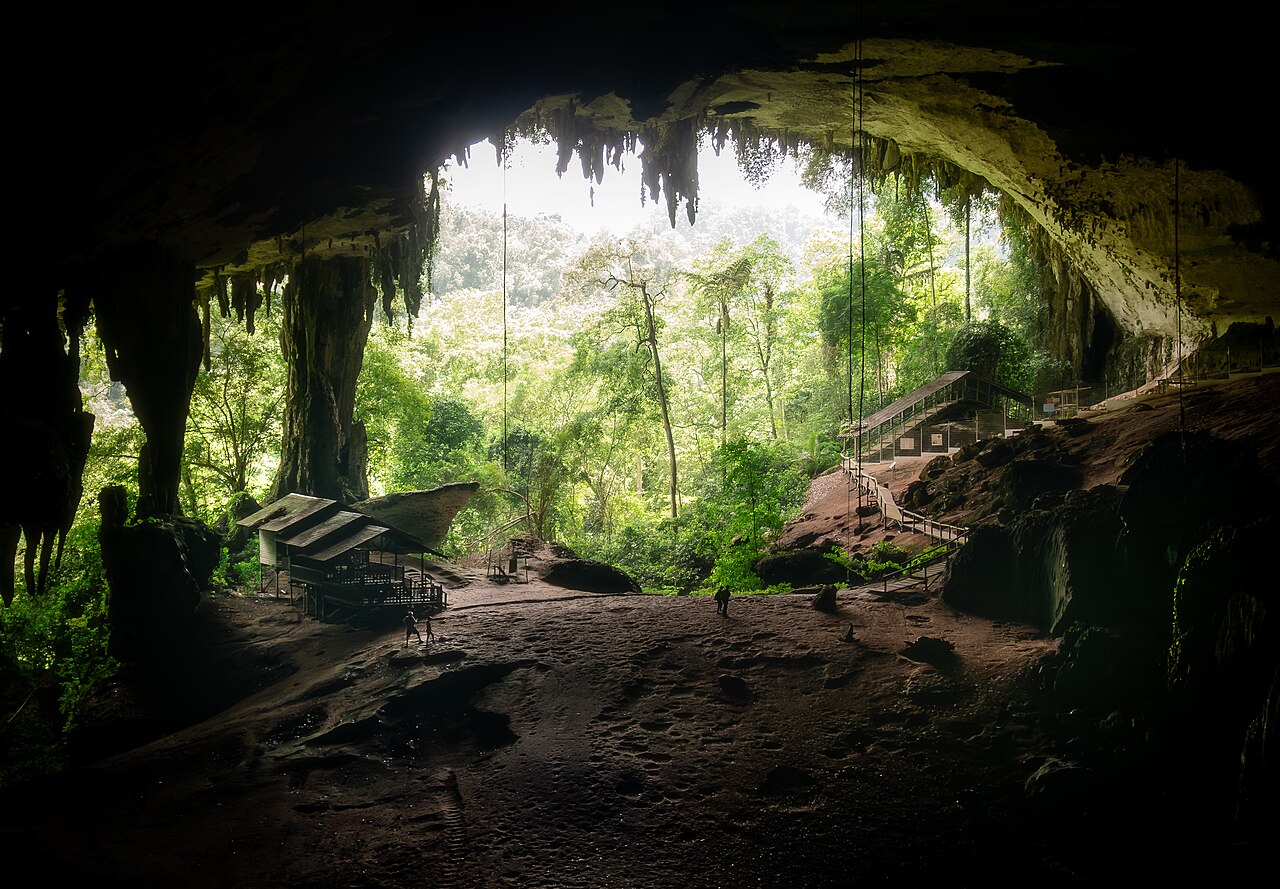
Inscribed on 27 July 2024 at the 46th session, Niah covers 3,609 hectares of limestone and lowland forest between Miri and Bintulu in Sarawak. It holds roughly a 50,000-year record of human presence — the longest continuous archaeological sequence in island Southeast Asia. The “Deep Skull” found in the West Mouth in 1958 has been redated to about 37,000 years, making it among the oldest anatomically modern human remains in the region. The Painted Cave carries haematite figures and boat-shaped burial coffins.
Now the caveat, and it matters more than anything else in this section. Niah has had a difficult 2026. Flood damage closed trails, and a lightning strike on 13 July 2026 started a fire in the park. As of writing, the current open status of the caves and the plankwalk is unconfirmed — we are not going to tell you it is open and we are not going to tell you it is closed, because neither claim is safe. Call Sarawak Forestry on +60 85-737 454 before you travel. Niah is a two-hour drive from Miri with nothing else nearby; arriving at a closed gate costs you a full day and a car hire.
If you are already flying to Mulu, Miri is your connection point anyway, which makes Niah the cheapest of the six sites to add — one extra day and a car. Building it into a wider Sabah and Sarawak route is far more efficient than treating it as a standalone destination.
Verdict: genuinely world-class, and conditional. Add it to a Sarawak trip if the phone call comes back positive. Do not build a trip around it in 2026 until access is confirmed.
FRIM Selangor Forest Park (2025): the newest site, and the cheapest
Inscribed in Paris on 11 July 2025 at the 47th session, FRIM Selangor Forest Park at Kepong is Malaysia’s newest World Heritage Site and its least understood. It is listed as a cultural landscape, not a nature reserve, and the distinction is the entire point: this is the world’s first successfully rehabilitated tropical rainforest planted on degraded, mined-out land. Everything you walk through was deliberately put there from the 1920s onwards, and it now functions as forest. That is the achievement being protected — a demonstration that tropical rainforest can be brought back, which nobody had proved before.
It is also, by a distance, the most accessible of the six. FRIM sits about 16 km northwest of central Kuala Lumpur, inside the Klang Valley. Entry for a non-citizen adult is RM 5 (about US$1.20), Malaysians pay RM 1, and a car is RM 5. You can be there and back from the city centre in half a day for less than the price of a coffee at the airport.
Here is where nearly every guide fails you. FRIM’s famous canopy walkway closed in 2017 and has not reopened. Articles still send people to Kepong expecting to walk it. The suspended walkway that is open is the Forest Skywalk at Kepong Botanic Gardens — a different site, a short distance away, run separately. Admission there is RM 40 for adults without MyKad (about US$9.50) and RM 15 with one, and it is closed on Fridays. Two places, two prices, one very persistent piece of misinformation.
Verdict: not a dedicated trip, but an obvious half-day if you are in Kuala Lumpur at all. At RM 5 it is the highest ratio of World Heritage significance to money anywhere in the country, and it is the fastest of the six to tick off.
World Heritage is not the same as a Geopark — and Langkawi is not on the list
This is the source of most of the miscounting. UNESCO runs several separate designations and travel writers merge them. A UNESCO Global Geopark is a territory managed for its geological heritage under a different programme with different rules: there is no legal protection obligation on the state, and the status is revalidated every four years rather than granted permanently. A World Heritage Site carries treaty obligations and does not expire. They are not tiers of the same thing.
Malaysia has four Global Geoparks. Langkawi was admitted to the Global Geoparks Network in 2007 and received the formal UNESCO label in 2015. Kinabalu followed in 2023 — which is why Sabah appears twice in UNESCO paperwork, once as a World Heritage Site and once as a Geopark, and why some guides double-count it. Lenggong and the Sarawak Delta were both certified at UNESCO headquarters on 27 April 2026. Jerai Geopark in Kedah is national-tier only and is not a UNESCO designation, despite being described as one in print.
So: Langkawi is a UNESCO Global Geopark. It is not a World Heritage Site and never has been. Any guide that lists it among Malaysia’s World Heritage Sites is wrong, and if it is wrong about that it is probably wrong about the count too.
There is a third list as well, and it is the one that most reflects daily life here: Intangible Cultural Heritage. Malaysia has nine inscribed elements, from court theatre to the way people eat before work. These are practices, not places, so you cannot visit them in the ordinary sense — but several are things you will encounter without trying, which is rather the point. The broader context sits in our guide to Malaysian culture and heritage.
| Designation | Programme | Year | Note |
|---|---|---|---|
| Langkawi | Global Geopark | GGN 2007, UNESCO label 2015 | Not a World Heritage Site |
| Kinabalu | Global Geopark | 2023 | Separate from the 2000 World Heritage inscription |
| Lenggong | Global Geopark | 2026 | Certified at UNESCO HQ, 27 April 2026 |
| Sarawak Delta | Global Geopark | 2026 | Certified at UNESCO HQ, 27 April 2026 |
| Jerai | National geopark | — | NOT a UNESCO designation |
| Mak Yong | Intangible Cultural Heritage | Proclaimed 2005, inscribed 2008 | Kelantanese dance-drama |
| Dondang Sayang | Intangible Cultural Heritage | 2018 | Melaka sung poetry |
| Silat | Intangible Cultural Heritage | 2019 | Martial art |
| Pantun | Intangible Cultural Heritage | 2020 | Joint with Indonesia |
| Ong Chun ceremony | Intangible Cultural Heritage | 2020 | Joint with China |
| Songket | Intangible Cultural Heritage | 2021 | Handwoven brocade |
| Mek Mulung | Intangible Cultural Heritage | 2023 | Urgent Safeguarding List |
| Kebaya | Intangible Cultural Heritage | 2024 | Five-country joint nomination |
| Malaysian Breakfast Culture | Intangible Cultural Heritage | 2024 | Nasi lemak, roti canai, kopitiam mornings |
Five things other guides get wrong
1. The count
Four, five, six and seven all appear on page one right now. It is six. “Four” is a 2023 answer that predates Niah and FRIM. “Seven” usually comes from counting Langkawi, or from counting Melaka and George Town as two separate sites — which is the same error in a different direction, since they share one inscription number.
2. “Perak Man is only a replica”
Repeated everywhere, and no longer true. The original skeleton returned to the valley on 26 June 2025 and the upgraded gallery reopened on 10 April 2026. If a guide tells you not to bother because it is a cast, it was written before mid-2025.
3. FRIM’s canopy walkway
Closed in 2017. The walkable structure is the Forest Skywalk at Kepong Botanic Gardens — a different place, RM 40 for adults without MyKad, and shut on Fridays. Turning up at FRIM on a Friday expecting a canopy walk gets you neither.
4. “Fly MASwings to Mulu”
Mulu flights are sold by AirBorneo now. Travellers search the old brand, find nothing, and assume the route has been cut. It has not — from RM 90 out of Miri. The transport guide covers how the Borneo air network has been reorganised.
5. Langkawi listed as a World Heritage Site
It is a Global Geopark. Different programme, different obligations, four-year revalidation cycle. Go to Langkawi — just do not count it towards the six.
Bonus: the tentative list is three, not four
Malaysia currently has three properties on its UNESCO tentative list: Taman Negara (submitted 2014), the Gombak Selangor Quartz Ridge (2017) and the Sungai Buloh Leprosarium (2019). Royal Belum is frequently listed as a fourth. It is not on the tentative list.
Can you actually see all six? The arithmetic
Yes, but not on one loop and not in a fortnight. Do the geography first: three sites are on the peninsula (FRIM, Lenggong, and the two halves of the Straits Cities property), two are in Sarawak (Mulu, Niah) and one is in Sabah (Kinabalu Park). Sarawak and Sabah are separated from the peninsula by 600 km of sea and from each other by a long, awkward drive. That is a minimum of two flights, realistically three.
- Days 1–2: Kuala Lumpur, with a half-day at FRIM (RM 5). Sleep in KL.
- Days 3–5: Drive north. Lenggong out of Ipoh (1 day), then on to Penang for George Town.
- Days 6–8: George Town, then the four-hour transfer south to Melaka. Both halves of site 1223 done.
- Days 9–13: Fly to Kota Kinabalu. Kinabalu Park as a day trip (RM 50) or the summit if you booked a bed six months ago.
- Days 14–18: Fly to Miri via Kuching. Niah as a day trip — after the phone call. Then AirBorneo to Mulu.
- Days 19–21: Mulu, three nights minimum, four if you want the Pinnacles.
Three weeks, three internal flights, and a realistic per-person cost of RM 9,000–14,000 (about US$2,150–3,300) including domestic air, mid-range rooms and every fee above. Compress it to two weeks and something has to go: it will be Lenggong or Niah, because they are the two with the worst effort-to-spectacle ratio. Our itinerary library has shorter routes that pick up three or four of the six without pretending you can do all of them.
Frequently asked questions
How many UNESCO World Heritage Sites are there in Malaysia?
Six, as of August 2026. Kinabalu Park (2000), Gunung Mulu (2000), Melaka and George Town (2008), the Lenggong Valley (2012), the Niah Caves Complex (2024) and FRIM Selangor Forest Park (2025). Three further properties sit on the tentative list.
What is Malaysia’s newest World Heritage Site?
FRIM Selangor Forest Park at Kepong, inscribed in Paris on 11 July 2025 at the 47th session. It is the world’s first successfully rehabilitated tropical rainforest on degraded land, and at RM 5 for a foreign adult it is also the cheapest of the six to visit.
Why are Melaka and George Town listed as one site?
Because the inscription is about the Straits of Malacca trading system, which neither city demonstrates alone. It is a single serial property, number 1223, with a combined core zone of 154.68 hectares and a 392.8-hectare buffer. Visiting only one means seeing half the site.
How much does it cost to enter Gunung Mulu?
RM 30 for a foreign adult, valid five days. Caves are extra: RM 35 for Deer and Lang, RM 70 for Clearwater and Wind, RM 55 for the canopy walk. New guided-visitor fees of RM 20, plus RM 10 for Camp 5 and RM 15 for summit trails, apply from 1 February 2026.
Can you still see Perak Man?
Yes, and it is now the original rather than a cast. The skeleton returned to Lenggong on 26 June 2025 and the Lenggong Archaeological Gallery reopened on 10 April 2026 after a roughly RM 5 million upgrade.
What is the difference between a World Heritage Site and a UNESCO Global Geopark?
A World Heritage Site carries binding protection obligations and does not expire. A Global Geopark recognises geological heritage under a separate programme, imposes no legal protection duty and is revalidated every four years. Malaysia has six of the former and four of the latter. Langkawi is a Geopark only.
Is Kinabalu Park worth visiting if I am not climbing?
Yes. The RM 50 conservation fee gives you the headquarters trails, the botanical garden and the montane forest that the inscription is actually based on. No permit, no guide and no bed booking required — which removes the only genuine bottleneck at the mountain.
Start with whichever two are already on your route, get the phone call to Sarawak Forestry out of the way early, and book Mulu flights and Kinabalu beds before anything else — those are the only two components that sell out.